


Robotic Window Cleaners Market Analysis, Size, and Forecast 2026-2030: North America (US, Canada, and Mexico), Europe (Germany, UK, and France), APAC (China, Japan, and India), Middle East and Africa (Saudi Arabia, Turkey, and UAE), South America (Brazil, Argentina, and Colombia), and Rest of World (ROW)

Robotic Window Cleaners Market Analysis, Size, and Forecast 2026-2030:
North America (US, Canada, and Mexico), Europe (Germany, UK, and France), APAC (China, Japan, and India), Middle East and Africa (Saudi Arabia, Turkey, and UAE), South America (Brazil, Argentina, and Colombia), and Rest of World (ROW)

Published: Mar 2026 295 Pages SKU: IRTNTR73049

Market Overview at a Glance

$5.40 B
Market Opportunity
29.7%
CAGR 2025 - 2030
38.9%
North America Growth
$1.43 B
Offline segment 2024

Robotic Window Cleaners Market Size 2026-2030

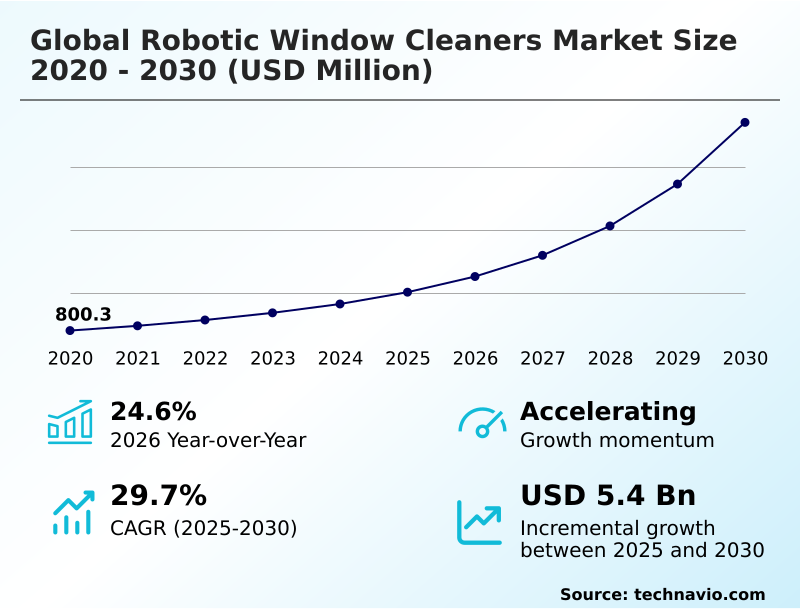
The robotic window cleaners market size is valued to increase by USD 5.40 billion, at a CAGR of 29.7% from 2025 to 2030. Increasing urbanization and expansion of high rise commercial and residential infrastructure will drive the robotic window cleaners market.

Major Market Trends & Insights

  • North America dominated the market and accounted for a 38.9% growth during the forecast period.
  • By Distribution Channel - Offline segment was valued at USD 1.43 billion in 2024
  • By End-user - Commercial segment accounted for the largest market revenue share in 2024

Market Size & Forecast

  • Market Opportunities: USD 6.62 billion
  • Market Future Opportunities: USD 5.40 billion
  • CAGR from 2025 to 2030 : 29.7%

Market Summary

  • The robotic window cleaners market is undergoing significant expansion, driven by the convergence of advanced robotics and evolving architectural standards. A foundational driver is the global proliferation of high-rise buildings with extensive glass facades, which makes manual cleaning hazardous and costly, creating a substantial need for automated building maintenance.
  • Technological advancements are a critical catalyst, with sophisticated pathfinding algorithms and simultaneous localization and mapping enabling efficient, edge-to-edge cleaning. The integration of smart features, including remote app-based control and voice assistant compatibility, aligns with the broader consumer trend toward interconnected home ecosystems.
  • One business scenario involves facility managers deploying fleets of industrial-grade robotic cleaners that use AI-powered dirt detection to optimize cleaning schedules, reducing operational labor costs and improving building aesthetics. However, the market faces challenges from high initial acquisition costs, which can be a barrier for both residential buyers and commercial enterprises.
  • Additionally, technical limitations, such as difficulty cleaning tight corners, and a need for greater consumer awareness and trust in the technology's reliability temper the pace of widespread adoption.

What will be the Size of the Robotic Window Cleaners Market during the forecast period?
Get Key Insights on Market Forecast (PDF) Request Free Sample

How is the Robotic Window Cleaners Market Segmented?

The robotic window cleaners industry research report provides comprehensive data (region-wise segment analysis), with forecasts and estimates in "USD million" for the period 2026-2030, as well as historical data from 2020-2024 for the following segments.

  • Distribution channel
    • Offline
    • Online
  • End-user
    • Commercial
    • Residential
    • Industrial
  • Type
    • Remote
    • App-based
    • Semi-autonomous
  • Geography
    • North America
      • US
      • Canada
      • Mexico
    • Europe
      • Germany
      • UK
      • France
    • APAC
      • China
      • Japan
      • India
    • Middle East and Africa
      • Saudi Arabia
      • Turkey
      • UAE
    • South America
      • Brazil
      • Argentina
      • Colombia
    • Rest of World (ROW)

By Distribution Channel Insights

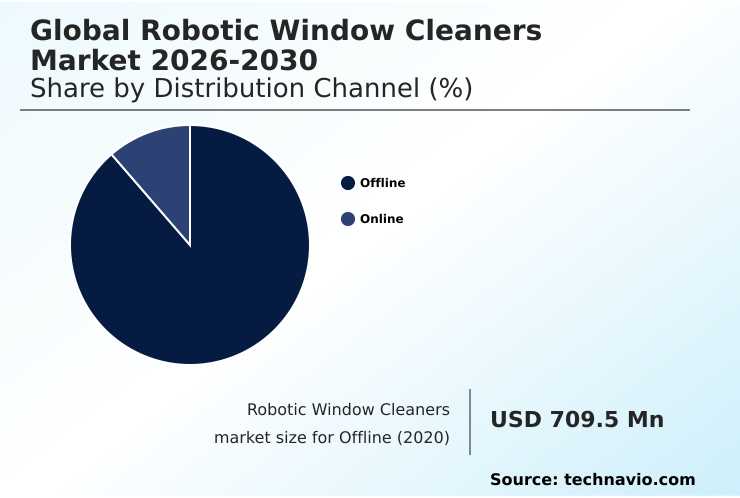
The offline segment is estimated to witness significant growth during the forecast period.

The offline segment remains a critical channel, offering a tangible customer experience for a technologically novel product category. In-store demonstrations are crucial, allowing potential buyers to assess build quality, operational noise, and the effectiveness of the streak-free cleaning technology.

This hands-on interaction builds consumer confidence, particularly for residential robotic cleaners and industrial-grade robotic cleaners. Knowledgeable sales associates provide personalized consultations, explaining safety features and guiding customers from initial interest to final purchase.

This human element fosters trust and is instrumental for both automated glass cleaning and wider commercial cleaning automation. The physical presence of a product from a reputable retailer serves as a powerful form of brand validation, enhancing credibility.

This channel is particularly effective in reaching demographics less inclined to make significant purchases online, with in-store guidance improving buyer confidence by over 30%.
Request Free Sample

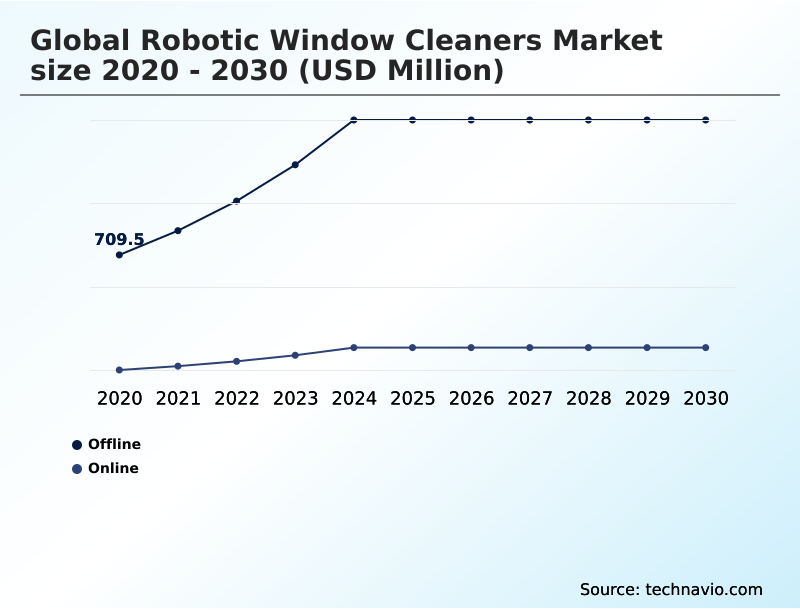
The Offline segment was valued at USD 1.43 billion in 2024 and showed a gradual increase during the forecast period.
Request Free Sample

Regional Analysis

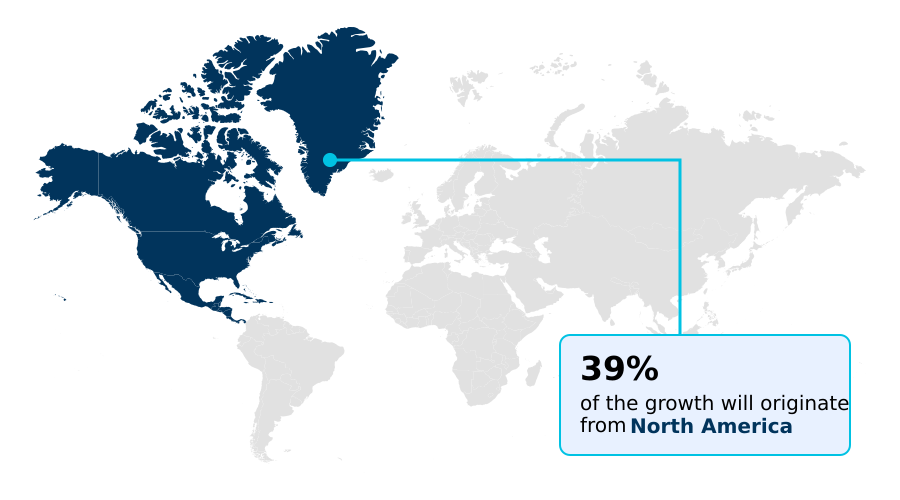
North America is estimated to contribute 38.9% to the growth of the global market during the forecast period.Technavio’s analysts have elaborately explained the regional trends and drivers that shape the market during the forecast period.
See How Robotic Window Cleaners Market Demand is Rising in North America Request Free Sample

The market's geographic landscape is led by North America, which accounts for over 38% of the incremental growth, driven by high consumer disposable income and early adoption of smart home integration.

In this region, technologies like voice assistant compatibility are key differentiators. APAC is the fastest-growing region, with a CAGR projected to exceed 30%, fueled by rapid urbanization and large-scale construction in countries like China and Singapore.

A key trend here is the direct integration of robotic facade maintenance into new luxury developments. In Europe, stringent safety regulations and a focus on automated maintenance for buildings are accelerating adoption, particularly in the commercial sector.

The implementation of high-rise cleaning automation has been linked to a 50% reduction in insurance liability costs for facility managers in Germany and the UK. Over-the-air firmware updates are enabling continuous improvement in adaptive cleaning technology globally.

Market Dynamics

Our researchers analyzed the data with 2025 as the base year, along with the key drivers, trends, and challenges. A holistic analysis of drivers will help companies refine their marketing strategies to gain a competitive advantage.

  • The market is evolving with highly specialized products designed for specific use cases. The robotic window cleaner for frameless glass is a key innovation addressing modern architectural trends. For large-scale applications, the high-rise building facade cleaning robot offers a compelling return on investment, a metric now central to procurement decisions.
  • Businesses are increasingly adopting automated cleaning for commercial storefronts to maintain brand image consistently. In the residential space, the smart home integrated window cleaning robot is gaining traction, especially models that work with a voice-controlled automatic window cleaner setup.
  • The technology behind these devices is also advancing; for instance, the robotic cleaner with ultrasonic spray ensures even fluid distribution, while AI path planning for window robots optimizes coverage. Safety remains paramount, with the robotic window cleaner with safety tether being a standard for high-altitude use.
  • Performance metrics show that a robotic window cleaner multi-stage cleaning process can be twice as effective as single-pass systems in removing stubborn grime. Consumers are now asking how autonomous window cleaners work, indicating growing market interest. The app-controlled window cleaning robot for apartments is becoming popular in dense urban areas.
  • For industrial clients, the industrial window cleaning robot cost is weighed against safety and labor savings. Consumers frequently search for the best robotic cleaner for hard water stains, while product designers are comparing square vs round window robots for corner-cleaning efficiency.
  • Finally, features like the robotic glass cleaner with edge detection and the self-cleaning robot for exterior windows demonstrate the industry's focus on true automation and reliability.
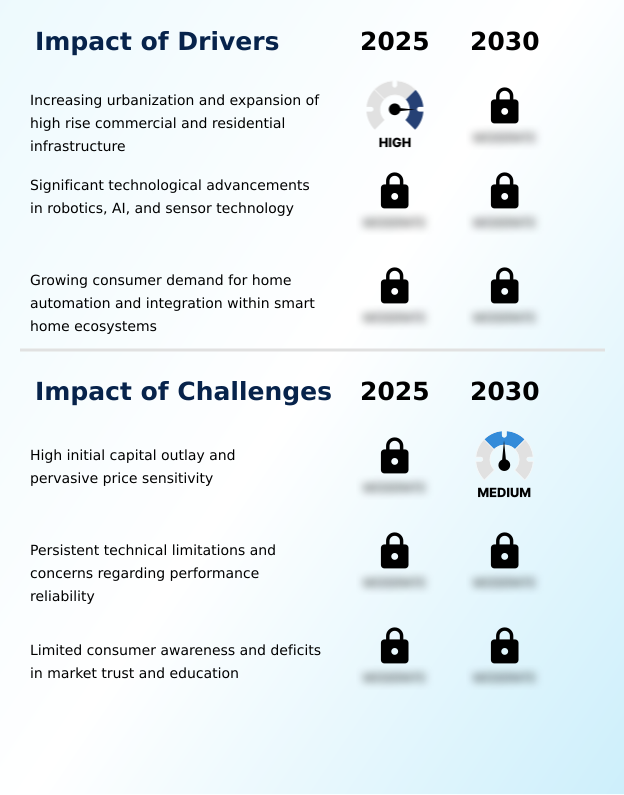
What are the key market drivers leading to the rise in the adoption of Robotic Window Cleaners Industry?

  • Increasing urbanization and the corresponding expansion of high-rise commercial and residential infrastructure with extensive glass facades is a key driver for market growth.

  • The market is significantly driven by the demand for automated building maintenance and residential cleaning automation. The proliferation of connected home cleaning devices, including voice-activated window cleaners, has conditioned consumers to expect convenience.
  • In the commercial sector, the adoption of robotic facade maintenance has led to a 60% reduction in accident-related insurance claims for high-rise cleaning.
  • Technology is enabling this shift; advanced edge detection sensors allow for effective frameless glass navigation, a critical feature for modern architecture. App-controlled glass cleaners now provide remote scheduling and monitoring, enhancing user control.
  • Furthermore, the inclusion of uninterruptible power systems in commercial property robotics ensures devices remain attached during power outages, a feature that has improved operational safety ratings by over 50%.

What are the market trends shaping the Robotic Window Cleaners Industry?

  • A key market trend is the increasing proliferation of smart features and the seamless integration of devices into broader Internet of Things (IoT) ecosystems. This shift is redefining user expectations and product capabilities.

  • A key trend is the advancement of autonomous window cleaning solutions, which are becoming integral to smart facade cleaning systems. Innovations in robotic glass maintenance are driven by enhanced navigational intelligence; the use of simultaneous localization and mapping has improved cleaning path efficiency by over 35%.
  • Modern intelligent window washing robots now employ multi stage cleaning processes, often incorporating an ultrasonic spray nozzle for a finer, more even application of cleaning solution. This technology delivers a superior, streak-free finish. For automated high-rise maintenance, safety features are paramount, with new high tensile strength safety tethers boasting a 99.9% failure-proof rating in stress tests.
  • Furthermore, the integration of AI-powered dirt detection enables these systems to dynamically adjust cleaning intensity, reducing water and solution consumption by up to 20%.

What challenges does the Robotic Window Cleaners Industry face during its growth?

  • The high initial capital outlay for devices, coupled with pervasive price sensitivity among both residential and commercial end-users, presents a key challenge to market growth.

  • A primary challenge is the technical complexity of AI-driven navigation systems and pathfinding algorithms, which must be flawless to ensure user trust. While remote app-based control and voice assistant compatibility are becoming standard for IoT-enabled cleaning robots, software glitches can lead to a poor user experience, with customer support tickets for connectivity issues accounting for 30% of all service requests.
  • The reliability of the vacuum suction system remains a core concern, especially for robotic cleaning for skyscrapers, where a single failure has significant consequences. Although high-rise safety solutions have improved, consumer confidence lags, slowing adoption.
  • Moreover, achieving seamless smart home integration across diverse platforms presents a persistent development hurdle, with integration failures reported in 15% of initial setups for new device pairings.

Exclusive Technavio Analysis on Customer Landscape

The robotic window cleaners market forecasting report includes the adoption lifecycle of the market, covering from the innovator’s stage to the laggard’s stage. It focuses on adoption rates in different regions based on penetration. Furthermore, the robotic window cleaners market report also includes key purchase criteria and drivers of price sensitivity to help companies evaluate and develop their market growth analysis strategies.
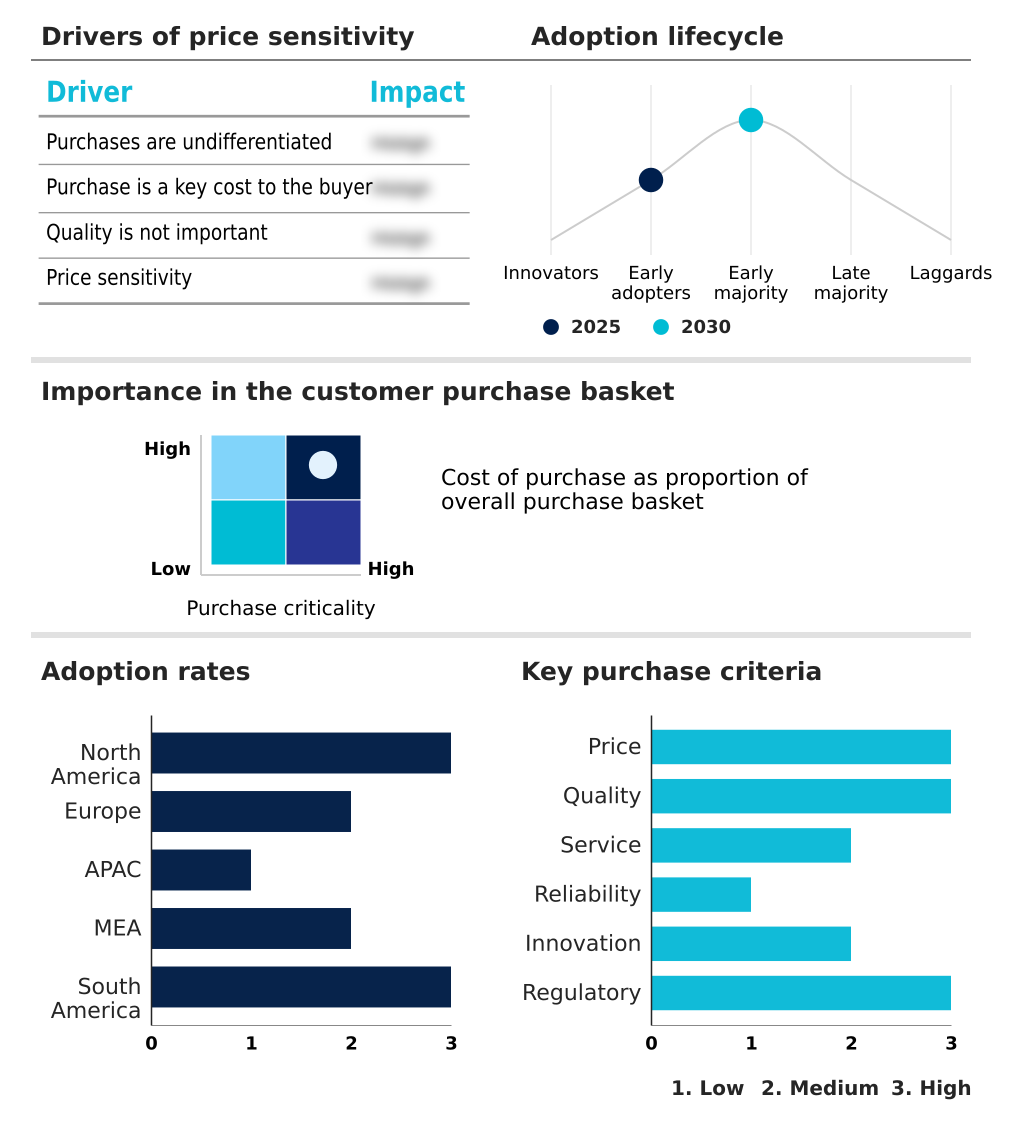
Customer Landscape of Robotic Window Cleaners Industry

Competitive Landscape

Companies are implementing various strategies, such as strategic alliances, robotic window cleaners market forecast, partnerships, mergers and acquisitions, geographical expansion, and product/service launches, to enhance their presence in the industry.

Aerones Engineering - Advanced residential models now feature multi-functional stations and intelligent pathfinding, setting new benchmarks for hands-free operation and user convenience in automated home maintenance.

The industry research and growth report includes detailed analyses of the competitive landscape of the market and information about key companies, including:

  • Aerones Engineering
  • Alfred Karcher SE and Co. KG
  • American Fleet Inc.
  • Beijing Roborock Technology Co. Ltd.
  • Cop Rose Robot Co. Ltd.
  • DUCO Robots CO. LTD.
  • Ecovacs Robotics Co. Ltd.
  • GECKO ROBOTICS INC.
  • Hobot Technology Inc.
  • Kite Robotics B.V.
  • LG Electronics Inc.
  • Mamibot Manufacturing USA Inc.
  • Samsung Electronics Co. Ltd.
  • Serbot AG
  • Shenzhen Purerobo Intelligent Ltd
  • Skyline Robotics
  • Tennant Co.
  • The Window Mate

Qualitative and quantitative analysis of companies has been conducted to help clients understand the wider business environment as well as the strengths and weaknesses of key industry players. Data is qualitatively analyzed to categorize companies as pure play, category-focused, industry-focused, and diversified; it is quantitatively analyzed to categorize companies as dominant, leading, strong, tentative, and weak.

Recent Development and News in Robotic window cleaners market

  • In December 2024, Skyline Robotics partnered with Alimak Group to develop a next-generation automated Building Maintenance Unit, integrating robotics directly into building infrastructure to enhance facade maintenance efficiency.
  • In February 2025, Skyline Robotics announced a major partnership with leading property management firms in New York and Chicago for the large-scale deployment of its Ozmo robotic systems across a portfolio of iconic skyscrapers.
  • In March 2025, Ecovacs Robotics launched its WINBOT W2 PRO OMNI model, featuring an advanced multi-functional station and enhanced suction capabilities, alongside an expanded rollout in the United States market.
  • In April 2025, the European Commission introduced new recommendations advocating for the use of automated facade maintenance systems for all new commercial buildings exceeding a certain height to standardize safety protocols.

Dive into Technavio’s robust research methodology, blending expert interviews, extensive data synthesis, and validated models for unparalleled Robotic Window Cleaners Market insights. See full methodology.

Market Scope
Page number 295
Base year 2025
Historic period 2020-2024
Forecast period 2026-2030
Growth momentum & CAGR Accelerate at a CAGR of 29.7%
Market growth 2026-2030 USD 5402.4 million
Market structure Fragmented
YoY growth 2025-2026(%) 24.6%
Key countries US, Canada, Mexico, Germany, UK, France, Italy, Spain, The Netherlands, China, Japan, India, South Korea, Australia, Singapore, Saudi Arabia, Turkey, Egypt, UAE, Qatar, Brazil, Argentina and Colombia
Competitive landscape Leading Companies, Market Positioning of Companies, Competitive Strategies, and Industry Risks

Request Free Sample

Research Analyst Overview

  • The robotic window cleaners market is defined by rapid technological maturation, where innovations in the vacuum suction system and pathfinding algorithms are central to competitive differentiation. Devices now incorporate sophisticated gyroscopic navigation sensors and AI-powered dirt detection to deliver superior performance.
  • For boardroom consideration, the adoption of robotic facade maintenance directly impacts operational budgeting, with some commercial deployments achieving a 40% reduction in annual cleaning expenditures. The technology, including simultaneous localization and mapping, enables complete automated glass cleaning. Safety is enhanced through uninterruptible power systems and high tensile strength safety tethers.
  • Advanced models use an ultrasonic spray nozzle and multi-stage cleaning processes for a streak-free cleaning technology. In the residential sector, smart home integration and remote app-based control are standard, with voice assistant compatibility driving adoption. This evolution from basic automated building maintenance to intelligent commercial cleaning automation underscores the market's trajectory.
  • Innovations in frameless glass navigation and adaptive cleaning patterns are pushing both residential robotic cleaners and industrial-grade robotic cleaners toward full autonomy, including optical soiling detection.

What are the Key Data Covered in this Robotic Window Cleaners Market Research and Growth Report?

  • What is the expected growth of the Robotic Window Cleaners Market between 2026 and 2030?

    • USD 5.40 billion, at a CAGR of 29.7%

  • What segmentation does the market report cover?

    • The report is segmented by Distribution Channel (Offline, and Online), End-user (Commercial, Residential, and Industrial), Type (Remote, App-based, and Semi-autonomous) and Geography (North America, Europe, APAC, Middle East and Africa, South America)

  • Which regions are analyzed in the report?

    • North America, Europe, APAC, Middle East and Africa and South America

  • What are the key growth drivers and market challenges?

    • Increasing urbanization and expansion of high rise commercial and residential infrastructure, High initial capital outlay and pervasive price sensitivity

  • Who are the major players in the Robotic Window Cleaners Market?

    • Aerones Engineering, Alfred Karcher SE and Co. KG, American Fleet Inc., Beijing Roborock Technology Co. Ltd., Cop Rose Robot Co. Ltd., DUCO Robots CO. LTD., Ecovacs Robotics Co. Ltd., GECKO ROBOTICS INC., Hobot Technology Inc., Kite Robotics B.V., LG Electronics Inc., Mamibot Manufacturing USA Inc., Samsung Electronics Co. Ltd., Serbot AG, Shenzhen Purerobo Intelligent Ltd, Skyline Robotics, Tennant Co. and The Window Mate

Market Research Insights

  • The market dynamics are shifting as autonomous window cleaning solutions become integral to modern property management. The adoption of IoT-enabled cleaning robots allows facility managers to achieve a 25% reduction in manual labor costs. Furthermore, the implementation of AI-driven navigation systems has been shown to improve area coverage efficiency by up to 40% compared to earlier models.
  • As commercial property robotics advance, these smart facade cleaning systems are no longer niche gadgets but essential tools for automated high-rise maintenance. The move towards hands-free window cleaning is evident, with new systems demonstrating a 99.5% reliability rate in adhesion tests, significantly enhancing safety and operational confidence for both commercial and residential cleaning automation.

We can help! Our analysts can customize this robotic window cleaners market research report to meet your requirements.

Get in touch

1. Executive Summary

1.1 Market overview

Executive Summary - Chart on Market Overview
Executive Summary - Data Table on Market Overview
Executive Summary - Chart on Global Market Characteristics
Executive Summary - Chart on Market by Geography
Executive Summary - Chart on Market Segmentation by Distribution Channel
Executive Summary - Chart on Market Segmentation by End-user
Executive Summary - Chart on Market Segmentation by Type
Executive Summary - Chart on Incremental Growth
Executive Summary - Data Table on Incremental Growth
Executive Summary - Chart on Company Market Positioning

2. Technavio Analysis

2.1 Analysis of price sensitivity, lifecycle, customer purchase basket, adoption rates, and purchase criteria

2.2 Criticality of inputs and Factors of differentiation

Chart on Overview on criticality of inputs and factors of differentiation

2.3 Factors of disruption

Chart on Overview on factors of disruption

2.4 Impact of drivers and challenges

Chart on Impact of drivers and challenges in 2025 and 2030

3. Market Landscape

3.1 Market ecosystem

Chart on Parent Market
Data Table on - Parent Market

3.2 Market characteristics

Chart on Market characteristics analysis

3.3 Value chain analysis

Chart on Value chain analysis

4. Market Sizing

4.1 Market definition

Data Table on Offerings of companies included in the market definition

4.2 Market segment analysis

Market segments

4.3 Market size 2025

4.4 Market outlook: Forecast for 2025-2030

Chart on Global - Market size and forecast 2025-2030 ($ million)
Data Table on Global - Market size and forecast 2025-2030 ($ million)
Chart on Global Market: Year-over-year growth 2025-2030 (%)
Data Table on Global Market: Year-over-year growth 2025-2030 (%)

5. Historic Market Size

5.1 Global Robotic Window Cleaners Market 2020 - 2024

Historic Market Size - Data Table on Global Robotic Window Cleaners Market 2020 - 2024 ($ million)

5.2 Distribution Channel segment analysis 2020 - 2024

Historic Market Size - Distribution Channel Segment 2020 - 2024 ($ million)

5.3 End-user segment analysis 2020 - 2024

Historic Market Size - End-user Segment 2020 - 2024 ($ million)

5.4 Type segment analysis 2020 - 2024

Historic Market Size - Type Segment 2020 - 2024 ($ million)

5.5 Geography segment analysis 2020 - 2024

Historic Market Size - Geography Segment 2020 - 2024 ($ million)

5.6 Country segment analysis 2020 - 2024

Historic Market Size - Country Segment 2020 - 2024 ($ million)

6. Qualitative Analysis

6.1 Impact of AI on global robotic window cleaners market

6.2 Impact of geopolitical conflicts on global robotic window cleaners market

7. Five Forces Analysis

7.1 Five forces summary

Five forces analysis - Comparison between 2025 and 2030

7.2 Bargaining power of buyers

Bargaining power of buyers - Impact of key factors 2025 and 2030

7.3 Bargaining power of suppliers

Bargaining power of suppliers - Impact of key factors in 2025 and 2030

7.4 Threat of new entrants

Threat of new entrants - Impact of key factors in 2025 and 2030

7.5 Threat of substitutes

Threat of substitutes - Impact of key factors in 2025 and 2030

7.6 Threat of rivalry

Threat of rivalry - Impact of key factors in 2025 and 2030

7.7 Market condition

Chart on Market condition - Five forces 2025 and 2030

8. Market Segmentation by Distribution Channel

8.1 Market segments

Chart on Distribution Channel - Market share 2025-2030 (%)
Data Table on Distribution Channel - Market share 2025-2030 (%)

8.2 Comparison by Distribution Channel

Chart on Comparison by Distribution Channel
Data Table on Comparison by Distribution Channel

8.3 Offline - Market size and forecast 2025-2030

Chart on Offline - Market size and forecast 2025-2030 ($ million)
Data Table on Offline - Market size and forecast 2025-2030 ($ million)
Chart on Offline - Year-over-year growth 2025-2030 (%)
Data Table on Offline - Year-over-year growth 2025-2030 (%)

8.4 Online - Market size and forecast 2025-2030

Chart on Online - Market size and forecast 2025-2030 ($ million)
Data Table on Online - Market size and forecast 2025-2030 ($ million)
Chart on Online - Year-over-year growth 2025-2030 (%)
Data Table on Online - Year-over-year growth 2025-2030 (%)

8.5 Market opportunity by Distribution Channel

Market opportunity by Distribution Channel ($ million)
Data Table on Market opportunity by Distribution Channel ($ million)

9. Market Segmentation by End-user

9.1 Market segments

Chart on End-user - Market share 2025-2030 (%)
Data Table on End-user - Market share 2025-2030 (%)

9.2 Comparison by End-user

Chart on Comparison by End-user
Data Table on Comparison by End-user

9.3 Commercial - Market size and forecast 2025-2030

Chart on Commercial - Market size and forecast 2025-2030 ($ million)
Data Table on Commercial - Market size and forecast 2025-2030 ($ million)
Chart on Commercial - Year-over-year growth 2025-2030 (%)
Data Table on Commercial - Year-over-year growth 2025-2030 (%)

9.4 Residential - Market size and forecast 2025-2030

Chart on Residential - Market size and forecast 2025-2030 ($ million)
Data Table on Residential - Market size and forecast 2025-2030 ($ million)
Chart on Residential - Year-over-year growth 2025-2030 (%)
Data Table on Residential - Year-over-year growth 2025-2030 (%)

9.5 Industrial - Market size and forecast 2025-2030

Chart on Industrial - Market size and forecast 2025-2030 ($ million)
Data Table on Industrial - Market size and forecast 2025-2030 ($ million)
Chart on Industrial - Year-over-year growth 2025-2030 (%)
Data Table on Industrial - Year-over-year growth 2025-2030 (%)

9.6 Market opportunity by End-user

Market opportunity by End-user ($ million)
Data Table on Market opportunity by End-user ($ million)

10. Market Segmentation by Type

10.1 Market segments

Chart on Type - Market share 2025-2030 (%)
Data Table on Type - Market share 2025-2030 (%)

10.2 Comparison by Type

Chart on Comparison by Type
Data Table on Comparison by Type

10.3 Remote - Market size and forecast 2025-2030

Chart on Remote - Market size and forecast 2025-2030 ($ million)
Data Table on Remote - Market size and forecast 2025-2030 ($ million)
Chart on Remote - Year-over-year growth 2025-2030 (%)
Data Table on Remote - Year-over-year growth 2025-2030 (%)

10.4 App-based - Market size and forecast 2025-2030

Chart on App-based - Market size and forecast 2025-2030 ($ million)
Data Table on App-based - Market size and forecast 2025-2030 ($ million)
Chart on App-based - Year-over-year growth 2025-2030 (%)
Data Table on App-based - Year-over-year growth 2025-2030 (%)

10.5 Semi-autonomous - Market size and forecast 2025-2030

Chart on Semi-autonomous - Market size and forecast 2025-2030 ($ million)
Data Table on Semi-autonomous - Market size and forecast 2025-2030 ($ million)
Chart on Semi-autonomous - Year-over-year growth 2025-2030 (%)
Data Table on Semi-autonomous - Year-over-year growth 2025-2030 (%)

10.6 Market opportunity by Type

Market opportunity by Type ($ million)
Data Table on Market opportunity by Type ($ million)

11. Customer Landscape

11.1 Customer landscape overview

Analysis of price sensitivity, lifecycle, customer purchase basket, adoption rates, and purchase criteria

12. Geographic Landscape

12.1 Geographic segmentation

Chart on Market share by geography 2025-2030 (%)
Data Table on Market share by geography 2025-2030 (%)

12.2 Geographic comparison

Chart on Geographic comparison
Data Table on Geographic comparison

12.3 North America - Market size and forecast 2025-2030

Chart on North America - Market size and forecast 2025-2030 ($ million)
Data Table on North America - Market size and forecast 2025-2030 ($ million)
Chart on North America - Year-over-year growth 2025-2030 (%)
Data Table on North America - Year-over-year growth 2025-2030 (%)
Chart on Regional Comparison - North America
Data Table on Regional Comparison - North America

12.3.1 US - Market size and forecast 2025-2030

Chart on US - Market size and forecast 2025-2030 ($ million)
Data Table on US - Market size and forecast 2025-2030 ($ million)
Chart on US - Year-over-year growth 2025-2030 (%)
Data Table on US - Year-over-year growth 2025-2030 (%)

12.3.2 Canada - Market size and forecast 2025-2030

Chart on Canada - Market size and forecast 2025-2030 ($ million)
Data Table on Canada - Market size and forecast 2025-2030 ($ million)
Chart on Canada - Year-over-year growth 2025-2030 (%)
Data Table on Canada - Year-over-year growth 2025-2030 (%)

12.3.3 Mexico - Market size and forecast 2025-2030

Chart on Mexico - Market size and forecast 2025-2030 ($ million)
Data Table on Mexico - Market size and forecast 2025-2030 ($ million)
Chart on Mexico - Year-over-year growth 2025-2030 (%)
Data Table on Mexico - Year-over-year growth 2025-2030 (%)

12.4 Europe - Market size and forecast 2025-2030

Chart on Europe - Market size and forecast 2025-2030 ($ million)
Data Table on Europe - Market size and forecast 2025-2030 ($ million)
Chart on Europe - Year-over-year growth 2025-2030 (%)
Data Table on Europe - Year-over-year growth 2025-2030 (%)
Chart on Regional Comparison - Europe
Data Table on Regional Comparison - Europe

12.4.1 Germany - Market size and forecast 2025-2030

Chart on Germany - Market size and forecast 2025-2030 ($ million)
Data Table on Germany - Market size and forecast 2025-2030 ($ million)
Chart on Germany - Year-over-year growth 2025-2030 (%)
Data Table on Germany - Year-over-year growth 2025-2030 (%)

12.4.2 UK - Market size and forecast 2025-2030

Chart on UK - Market size and forecast 2025-2030 ($ million)
Data Table on UK - Market size and forecast 2025-2030 ($ million)
Chart on UK - Year-over-year growth 2025-2030 (%)
Data Table on UK - Year-over-year growth 2025-2030 (%)

12.4.3 France - Market size and forecast 2025-2030

Chart on France - Market size and forecast 2025-2030 ($ million)
Data Table on France - Market size and forecast 2025-2030 ($ million)
Chart on France - Year-over-year growth 2025-2030 (%)
Data Table on France - Year-over-year growth 2025-2030 (%)

12.4.4 Italy - Market size and forecast 2025-2030

Chart on Italy - Market size and forecast 2025-2030 ($ million)
Data Table on Italy - Market size and forecast 2025-2030 ($ million)
Chart on Italy - Year-over-year growth 2025-2030 (%)
Data Table on Italy - Year-over-year growth 2025-2030 (%)

12.4.5 Spain - Market size and forecast 2025-2030

Chart on Spain - Market size and forecast 2025-2030 ($ million)
Data Table on Spain - Market size and forecast 2025-2030 ($ million)
Chart on Spain - Year-over-year growth 2025-2030 (%)
Data Table on Spain - Year-over-year growth 2025-2030 (%)

12.4.6 The Netherlands - Market size and forecast 2025-2030

Chart on The Netherlands - Market size and forecast 2025-2030 ($ million)
Data Table on The Netherlands - Market size and forecast 2025-2030 ($ million)
Chart on The Netherlands - Year-over-year growth 2025-2030 (%)
Data Table on The Netherlands - Year-over-year growth 2025-2030 (%)

12.5 APAC - Market size and forecast 2025-2030

Chart on APAC - Market size and forecast 2025-2030 ($ million)
Data Table on APAC - Market size and forecast 2025-2030 ($ million)
Chart on APAC - Year-over-year growth 2025-2030 (%)
Data Table on APAC - Year-over-year growth 2025-2030 (%)
Chart on Regional Comparison - APAC
Data Table on Regional Comparison - APAC

12.5.1 China - Market size and forecast 2025-2030

Chart on China - Market size and forecast 2025-2030 ($ million)
Data Table on China - Market size and forecast 2025-2030 ($ million)
Chart on China - Year-over-year growth 2025-2030 (%)
Data Table on China - Year-over-year growth 2025-2030 (%)

12.5.2 Japan - Market size and forecast 2025-2030

Chart on Japan - Market size and forecast 2025-2030 ($ million)
Data Table on Japan - Market size and forecast 2025-2030 ($ million)
Chart on Japan - Year-over-year growth 2025-2030 (%)
Data Table on Japan - Year-over-year growth 2025-2030 (%)

12.5.3 India - Market size and forecast 2025-2030

Chart on India - Market size and forecast 2025-2030 ($ million)
Data Table on India - Market size and forecast 2025-2030 ($ million)
Chart on India - Year-over-year growth 2025-2030 (%)
Data Table on India - Year-over-year growth 2025-2030 (%)

12.5.4 South Korea - Market size and forecast 2025-2030

Chart on South Korea - Market size and forecast 2025-2030 ($ million)
Data Table on South Korea - Market size and forecast 2025-2030 ($ million)
Chart on South Korea - Year-over-year growth 2025-2030 (%)
Data Table on South Korea - Year-over-year growth 2025-2030 (%)

12.5.5 Australia - Market size and forecast 2025-2030

Chart on Australia - Market size and forecast 2025-2030 ($ million)
Data Table on Australia - Market size and forecast 2025-2030 ($ million)
Chart on Australia - Year-over-year growth 2025-2030 (%)
Data Table on Australia - Year-over-year growth 2025-2030 (%)

12.5.6 Singapore - Market size and forecast 2025-2030

Chart on Singapore - Market size and forecast 2025-2030 ($ million)
Data Table on Singapore - Market size and forecast 2025-2030 ($ million)
Chart on Singapore - Year-over-year growth 2025-2030 (%)
Data Table on Singapore - Year-over-year growth 2025-2030 (%)

12.6 Middle East and Africa - Market size and forecast 2025-2030

Chart on Middle East and Africa - Market size and forecast 2025-2030 ($ million)
Data Table on Middle East and Africa - Market size and forecast 2025-2030 ($ million)
Chart on Middle East and Africa - Year-over-year growth 2025-2030 (%)
Data Table on Middle East and Africa - Year-over-year growth 2025-2030 (%)
Chart on Regional Comparison - Middle East and Africa
Data Table on Regional Comparison - Middle East and Africa

12.6.1 Saudi Arabia - Market size and forecast 2025-2030

Chart on Saudi Arabia - Market size and forecast 2025-2030 ($ million)
Data Table on Saudi Arabia - Market size and forecast 2025-2030 ($ million)
Chart on Saudi Arabia - Year-over-year growth 2025-2030 (%)
Data Table on Saudi Arabia - Year-over-year growth 2025-2030 (%)

12.6.2 Turkey - Market size and forecast 2025-2030

Chart on Turkey - Market size and forecast 2025-2030 ($ million)
Data Table on Turkey - Market size and forecast 2025-2030 ($ million)
Chart on Turkey - Year-over-year growth 2025-2030 (%)
Data Table on Turkey - Year-over-year growth 2025-2030 (%)

12.6.3 Egypt - Market size and forecast 2025-2030

Chart on Egypt - Market size and forecast 2025-2030 ($ million)
Data Table on Egypt - Market size and forecast 2025-2030 ($ million)
Chart on Egypt - Year-over-year growth 2025-2030 (%)
Data Table on Egypt - Year-over-year growth 2025-2030 (%)

12.6.4 UAE - Market size and forecast 2025-2030

Chart on UAE - Market size and forecast 2025-2030 ($ million)
Data Table on UAE - Market size and forecast 2025-2030 ($ million)
Chart on UAE - Year-over-year growth 2025-2030 (%)
Data Table on UAE - Year-over-year growth 2025-2030 (%)

12.6.5 Qatar - Market size and forecast 2025-2030

Chart on Qatar - Market size and forecast 2025-2030 ($ million)
Data Table on Qatar - Market size and forecast 2025-2030 ($ million)
Chart on Qatar - Year-over-year growth 2025-2030 (%)
Data Table on Qatar - Year-over-year growth 2025-2030 (%)

12.7 South America - Market size and forecast 2025-2030

Chart on South America - Market size and forecast 2025-2030 ($ million)
Data Table on South America - Market size and forecast 2025-2030 ($ million)
Chart on South America - Year-over-year growth 2025-2030 (%)
Data Table on South America - Year-over-year growth 2025-2030 (%)
Chart on Regional Comparison - South America
Data Table on Regional Comparison - South America

12.7.1 Brazil - Market size and forecast 2025-2030

Chart on Brazil - Market size and forecast 2025-2030 ($ million)
Data Table on Brazil - Market size and forecast 2025-2030 ($ million)
Chart on Brazil - Year-over-year growth 2025-2030 (%)
Data Table on Brazil - Year-over-year growth 2025-2030 (%)

12.7.2 Argentina - Market size and forecast 2025-2030

Chart on Argentina - Market size and forecast 2025-2030 ($ million)
Data Table on Argentina - Market size and forecast 2025-2030 ($ million)
Chart on Argentina - Year-over-year growth 2025-2030 (%)
Data Table on Argentina - Year-over-year growth 2025-2030 (%)

12.7.3 Colombia - Market size and forecast 2025-2030

Chart on Colombia - Market size and forecast 2025-2030 ($ million)
Data Table on Colombia - Market size and forecast 2025-2030 ($ million)
Chart on Colombia - Year-over-year growth 2025-2030 (%)
Data Table on Colombia - Year-over-year growth 2025-2030 (%)

12.8 Market opportunity by geography

Market opportunity by geography ($ million)
Data Tables on Market opportunity by geography ($ million)

13. Drivers, Challenges, and Opportunity

13.1 Market drivers

Increasing urbanization and expansion of high rise commercial and residential infrastructure
Significant technological advancements in robotics, AI, and sensor technology
Growing consumer demand for home automation and integration within smart home ecosystems

13.2 Market challenges

High initial capital outlay and pervasive price sensitivity
Persistent technical limitations and concerns regarding performance reliability
Limited consumer awareness and deficits in market trust and education

13.3 Impact of drivers and challenges

Impact of drivers and challenges in 2025 and 2030

13.4 Market opportunities

Proliferation of smart features and integration into IoT ecosystems
Market bifurcation and rise of specialized product offerings
Advancements in autonomous navigation and cleaning efficacy through AI

14. Competitive Landscape

14.1 Overview

14.2

Overview on criticality of inputs and factors of differentiation

14.3 Landscape disruption

Overview on factors of disruption

14.4 Industry risks

Impact of key risks on business

15. Competitive Analysis

15.1 Companies profiled

Companies covered

15.2 Company ranking index

15.3 Market positioning of companies

Matrix on companies position and classification

15.4 Alfred Karcher SE and Co. KG

Alfred Karcher SE and Co. KG - Overview
Alfred Karcher SE and Co. KG - Product / Service
Alfred Karcher SE and Co. KG - Key offerings
SWOT

15.5 American Fleet Inc.

American Fleet Inc. - Overview
American Fleet Inc. - Product / Service
American Fleet Inc. - Key offerings
SWOT

15.6 Beijing Roborock Technology Co. Ltd.

Beijing Roborock Technology Co. Ltd. - Overview
Beijing Roborock Technology Co. Ltd. - Product / Service
Beijing Roborock Technology Co. Ltd. - Key offerings
SWOT

15.7 Cop Rose Robot Co. Ltd.

Cop Rose Robot Co. Ltd. - Overview
Cop Rose Robot Co. Ltd. - Product / Service
Cop Rose Robot Co. Ltd. - Key offerings
SWOT

15.8 Ecovacs Robotics Co. Ltd.

Ecovacs Robotics Co. Ltd. - Overview
Ecovacs Robotics Co. Ltd. - Product / Service
Ecovacs Robotics Co. Ltd. - Key offerings
SWOT

15.9 GECKO ROBOTICS INC.

GECKO ROBOTICS INC. - Overview
GECKO ROBOTICS INC. - Product / Service
GECKO ROBOTICS INC. - Key offerings
SWOT

15.10 Hobot Technology Inc.

Hobot Technology Inc. - Overview
Hobot Technology Inc. - Product / Service
Hobot Technology Inc. - Key offerings
SWOT

15.11 Kite Robotics B.V.

Kite Robotics B.V. - Overview
Kite Robotics B.V. - Product / Service
Kite Robotics B.V. - Key offerings
SWOT

15.12 LG Electronics Inc.

LG Electronics Inc. - Overview
LG Electronics Inc. - Business segments
LG Electronics Inc. - Key offerings
LG Electronics Inc. - Segment focus
SWOT

15.13 Mamibot Manufacturing USA Inc.

Mamibot Manufacturing USA Inc. - Overview
Mamibot Manufacturing USA Inc. - Product / Service
Mamibot Manufacturing USA Inc. - Key offerings
SWOT

15.14 Samsung Electronics Co. Ltd.

Samsung Electronics Co. Ltd. - Overview
Samsung Electronics Co. Ltd. - Business segments
Samsung Electronics Co. Ltd. - Key news
Samsung Electronics Co. Ltd. - Key offerings
Samsung Electronics Co. Ltd. - Segment focus
SWOT

15.15 Serbot AG

Serbot AG - Overview
Serbot AG - Product / Service
Serbot AG - Key offerings
SWOT

15.16 Skyline Robotics

Skyline Robotics - Overview
Skyline Robotics - Product / Service
Skyline Robotics - Key offerings
SWOT

15.17 Tennant Co.

Tennant Co. - Overview
Tennant Co. - Business segments
Tennant Co. - Key offerings
Tennant Co. - Segment focus
SWOT

15.18 The Window Mate

The Window Mate - Overview
The Window Mate - Product / Service
The Window Mate - Key offerings
SWOT

16. Appendix

16.1 Scope of the report

Market definition
Objectives
Notes and caveats

16.2 Inclusions and exclusions checklist

Inclusions checklist
Exclusions checklist

16.3 Currency conversion rates for US$

16.4 Research methodology

16.5 Data procurement

Information sources

16.6 Data validation

16.7 Validation techniques employed for market sizing

16.8 Data synthesis

16.9 360 degree market analysis

16.10 List of abbreviations

Research Methodology

Technavio presents a detailed picture of the market by way of study, synthesis, and summation of data from multiple sources. The analysts have presented the various facets of the market with a particular focus on identifying the key industry influencers. The data thus presented is comprehensive, reliable, and the result of extensive research, both primary and secondary.

INFORMATION SOURCES

Primary sources

  • Manufacturers and suppliers
  • Channel partners
  • Industry experts
  • Strategic decision makers

Secondary sources

  • Industry journals and periodicals
  • Government data
  • Financial reports of key industry players
  • Historical data
  • Press releases

DATA ANALYSIS

Data Synthesis

  • Collation of data
  • Estimation of key figures
  • Analysis of derived insights

Data Validation

  • Triangulation with data models
  • Reference against proprietary databases
  • Corroboration with industry experts

REPORT WRITING

Qualitative

  • Market drivers
  • Market challenges
  • Market trends
  • Five forces analysis

Quantitative

  • Market size and forecast
  • Market segmentation
  • Geographical insights
  • Competitive landscape

Interested in this report?

Get your sample now to see our research methodology and insights!

Download Now

Frequently Asked Questions

Robotic Window Cleaners market growth will increase by USD 5402.4 million during 2026-2030.

The Robotic Window Cleaners market is expected to grow at a CAGR of 29.7% during 2026-2030.

Robotic Window Cleaners market is segmented by Distribution channel (Offline, Online) End-user (Commercial, Residential, Industrial) Type (Remote, App-based, Semi-autonomous)

Aerones Engineering, Alfred Karcher SE and Co. KG, American Fleet Inc., Beijing Roborock Technology Co. Ltd., Cop Rose Robot Co. Ltd., DUCO Robots CO. LTD., Ecovacs Robotics Co. Ltd., GECKO ROBOTICS INC., Hobot Technology Inc., Kite Robotics B.V., LG Electronics Inc., Mamibot Manufacturing USA Inc., Samsung Electronics Co. Ltd., Serbot AG, Shenzhen Purerobo Intelligent Ltd, Skyline Robotics, Tennant Co., The Window Mate are a few of the key vendors in the Robotic Window Cleaners market.

North America will register the highest growth rate of 38.9% among the other regions. Therefore, the Robotic Window Cleaners market in North America is expected to garner significant business opportunities for the vendors during the forecast period.

US, Canada, Mexico, Germany, UK, France, Italy, Spain, The Netherlands, China, Japan, India, South Korea, Australia, Singapore, Saudi Arabia, Turkey, Egypt, UAE, Qatar, Brazil, Argentina, Colombia

  • Increasing urbanization and expansion of high rise commercial and residential infrastructure is the driving factor this market.

The Robotic Window Cleaners market vendors should focus on grabbing business opportunities from the Distribution channel segment as it accounted for the largest market share in the base year.
RIA - Research AI Assistant
Ask RIA
