



Property Management Market Size 2026-2030
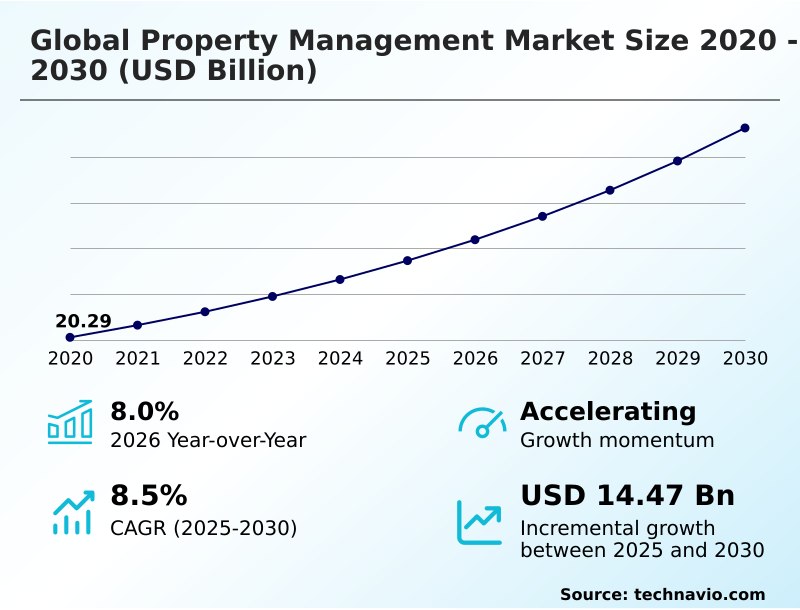
The property management market size is valued to increase by USD 14.47 billion, at a CAGR of 8.5% from 2025 to 2030. Growing institutional investment and professionalization of residential sector will drive the property management market.
Major Market Trends & Insights
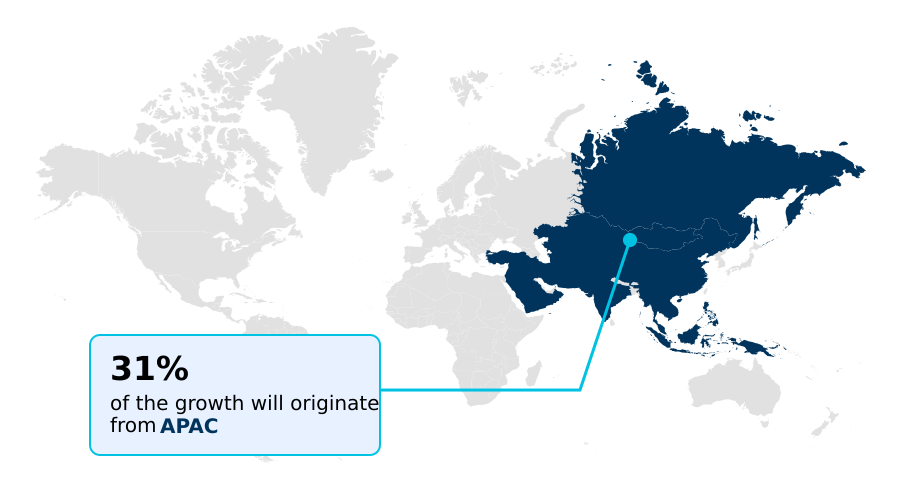
- APAC dominated the market and accounted for a 31% growth during the forecast period.
- By Application - Commercial segment was valued at USD 9.42 billion in 2024
- By Component - Solutions segment accounted for the largest market revenue share in 2024
Market Size & Forecast
- Market Opportunities: USD 22.84 billion
- Market Future Opportunities: USD 14.47 billion
- CAGR from 2025 to 2030 : 8.5%
Market Summary
- The property management market is undergoing a significant transformation, driven by the need for greater operational efficiency and enhanced tenant satisfaction. This evolution is marked by a widespread shift toward cloud-based platforms that centralize core functions like tenant management, lease management, and financial reporting.
- A key driver is the growing institutional investment in real estate, which demands sophisticated tools for asset optimization and detailed performance tracking. Concurrently, the proliferation of smart building technologies and IoT connectivity is redefining property operations, enabling predictive maintenance and real-time energy consumption monitoring.
- For instance, a large residential portfolio manager can leverage AI-driven analytics to automate lease renewals and maintenance schedules, reducing administrative overhead by up to 25% and improving tenant retention. However, this increased reliance on interconnected software ecosystems introduces significant challenges, particularly concerning cybersecurity vulnerabilities and data privacy compliance.
- Navigating the complex landscape of regulatory compliance while protecting sensitive tenant data remains a critical focus for firms aiming to capitalize on technological advancements and maintain a competitive edge in an increasingly digital-first industry. The integration of digital payment systems and mobile-first property management applications further streamlines operations, enhancing both manager productivity and the overall tenant experience.
What will be the Size of the Property Management Market during the forecast period?
Get Key Insights on Market Forecast (PDF) Get Free Sample
How is the Property Management Market Segmented?
The property management industry research report provides comprehensive data (region-wise segment analysis), with forecasts and estimates in "USD million" for the period 2026-2030, as well as historical data from 2020-2024 for the following segments.
- Application
- Commercial
- Industrial
- Residential
- Recreational marinas
- Component
- Solutions
- Services
- Deployment
- Cloud-based
- On-premises
- Geography
- North America
- US
- Canada
- Mexico
- Europe
- Germany
- UK
- France
- APAC
- China
- Japan
- India
- South America
- Brazil
- Argentina
- Middle East and Africa
- Saudi Arabia
- UAE
- South Africa
- Rest of World (ROW)
- North America
By Application Insights
The commercial segment is estimated to witness significant growth during the forecast period.
The commercial application segment is defined by a strategic pivot toward high-performance workspaces that emphasize tenant experience and operational sustainability. The adoption of unified platforms is accelerating to manage complex systems and meet stringent ESG compliance standards.
Property managers now provide strategic commercial property advisory, using predictive analytics to optimize asset performance and deliver automated financial reporting. This evolution reflects a shift from basic facility management solutions to creating integrated ecosystems that support hybrid work models.
The demand for flexible and hybrid spaces and robust digital infrastructure has increased tenant satisfaction by over 15%, transforming traditional offices into connected environments aligned with smart city infrastructure goals, thereby enhancing operational transparency and digital engagement.
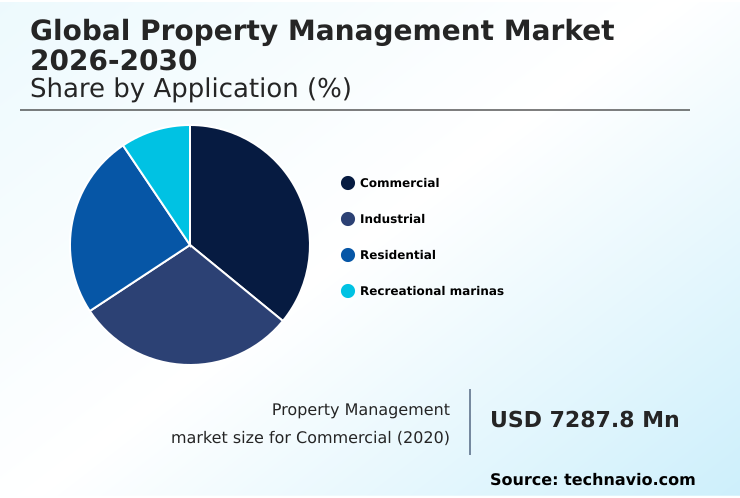
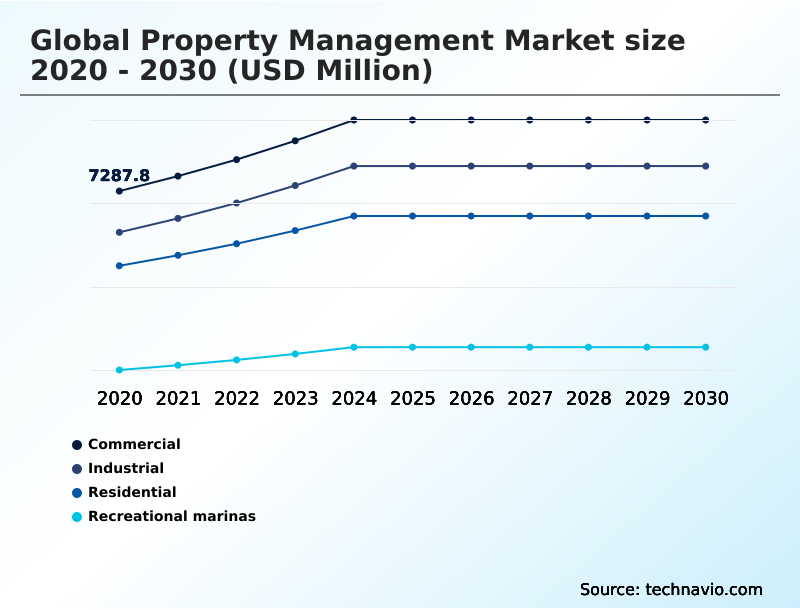
The Commercial segment was valued at USD 9.42 billion in 2024 and showed a gradual increase during the forecast period.
Regional Analysis
APAC is estimated to contribute 31% to the growth of the global market during the forecast period.Technavio’s analysts have elaborately explained the regional trends and drivers that shape the market during the forecast period.
See How Property Management Market Demand is Rising in APAC Get Free Sample
The geographic landscape reveals distinct regional adoption rates for advanced property management technologies.
North America leads in the deployment of centralized management systems for the multifamily housing market and single-family rental portfolios, where automated workflows have increased leasing efficiency by 20%.
In APAC, rapid urbanization is driving demand for solutions supporting logistics property management and smart city integration. European markets are focusing on real-time energy optimization, with IoT connectivity in commercial buildings reducing utility costs by over 15%.
The use of cloud-native platforms provides remote accessibility and facilitates asset optimization across global portfolios. These interconnected software ecosystems create data-driven building ecosystems, enabling predictive maintenance and transforming property leasing and management worldwide.
Market Dynamics
Our researchers analyzed the data with 2025 as the base year, along with the key drivers, trends, and challenges. A holistic analysis of drivers will help companies refine their marketing strategies to gain a competitive advantage.
- The strategic implementation of modern technologies is reshaping the property management market. Firms are leveraging ai-driven analytics in property management for deeper insights into operational patterns and tenant behaviors. The practice of integrating iot in commercial real estate is becoming standard, creating smarter, more responsive environments.
- A primary focus is addressing cybersecurity for property management software, as the digital shift expands potential threat vectors. In the residential sector, saas solutions for residential property management offer scalability and cost-efficiency, while tenant experience and digital engagement platforms are crucial for retention. The backbone of this transformation is cloud-based platforms for portfolio management, which centralize data and streamline oversight.
- Predictive maintenance for smart buildings is a key value proposition, reducing downtime and operational costs; one analysis showed it can lower unforeseen repair expenditures by up to 30% compared to reactive models. This is supported by automated workflows for lease administration, which minimize manual errors.
- Adherence to regulations is managed through a focus on data privacy compliance in real estate and specific tools for regulatory compliance for property managers. Security is enhanced through technologies like biometric access controls in residential properties. Sustainability goals are met via energy consumption monitoring for sustainability and comprehensive esg reporting for institutional investors.
- The shift is also toward mobile-first property management applications, providing flexibility for staff. Unified platforms for mixed-use properties and centralized systems for multifamily housing ensure consistent service delivery. Ultimately, the goal is to use real-time data for asset performance, thereby improving operational efficiency with ai and optimizing asset optimization through technology integration and digital payment systems for rent collection.
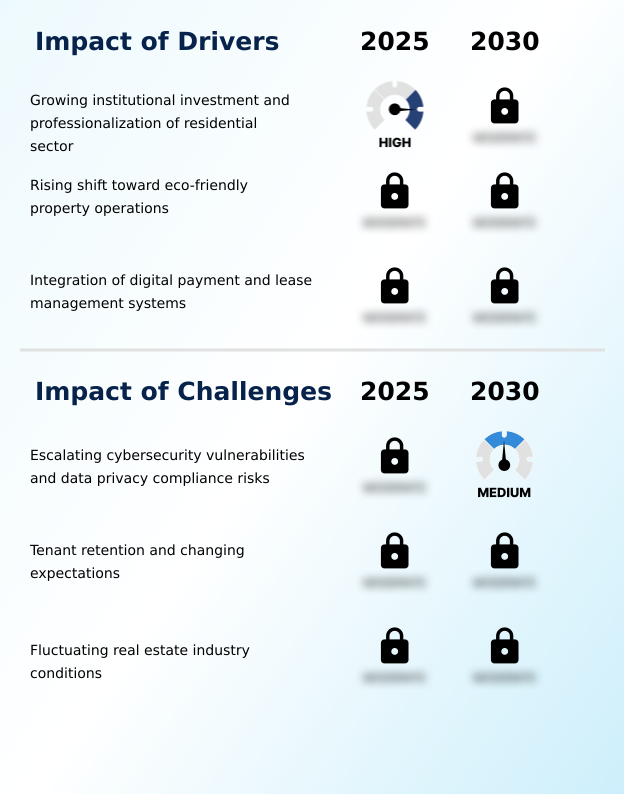
What are the key market drivers leading to the rise in the adoption of Property Management Industry?
- The growing institutional investment in real estate and the concurrent professionalization of the residential sector are key drivers fueling market expansion.
- A primary driver is the rise of institutional investment in real estate, particularly in the multifamily housing market and single-family rental portfolios. This shift necessitates sophisticated property portfolio management to ensure regulatory compliance and asset optimization.
- The adoption of cloud-based platforms and specialized property management software is critical for achieving operational efficiency in lease management and lease administration, with some firms reporting a 30% reduction in processing times.
- This professionalization of real estate asset management is also fueling growth in integrated, contractual-based outsourcing. The focus on data-driven decision-making supports investment sales by providing clear performance metrics, driving further market expansion.
What are the market trends shaping the Property Management Industry?
- The integration of smart city infrastructure and the proliferation of IoT connectivity are emerging as a pivotal trend. This development is reshaping property operations by enabling interconnected and data-driven building ecosystems.
- A key trend is the integration of property management into broader smart city infrastructure, driven by ubiquitous IoT connectivity. This enables advanced tenant management through platforms offering biometric access controls and digital payment systems, enhancing convenience. The focus on environmental sustainability is leading to the adoption of intelligent document processing, which has reduced paper-based workflows by over 40%.
- Mobile-first property management applications are becoming standard, supporting flexible and hybrid spaces and improving response times by 25%. In residential sectors, from HOA management to high-volume bookings for short-term rentals, the use of tenant communication portals and automated guest services is creating a more seamless experience, supported by comprehensive digital real estate solutions.
What challenges does the Property Management Industry face during its growth?
- Escalating cybersecurity vulnerabilities and the increasing complexity of data privacy compliance risks present a significant challenge to the industry's growth trajectory.
- The increasing reliance on interconnected software ecosystems creates significant cybersecurity vulnerabilities and challenges in data privacy compliance. Centralized management systems, while efficient, concentrate sensitive data from tenant screening service interactions and financial reporting, making data governance and security a top priority. A breach can disrupt facility operations and compromise property leasing data.
- In industrial real estate services and the global logistics portfolio, securing data-driven building ecosystems is critical, with a single security incident leading to operational downtime losses exceeding 20% in some cases. Firms providing end-to-end facilities management must address the complexities of securing multiple integrated systems, such as those for maintenance request routing, to protect both digital and physical assets.
Exclusive Technavio Analysis on Customer Landscape
The property management market forecasting report includes the adoption lifecycle of the market, covering from the innovator’s stage to the laggard’s stage. It focuses on adoption rates in different regions based on penetration. Furthermore, the property management market report also includes key purchase criteria and drivers of price sensitivity to help companies evaluate and develop their market growth analysis strategies.
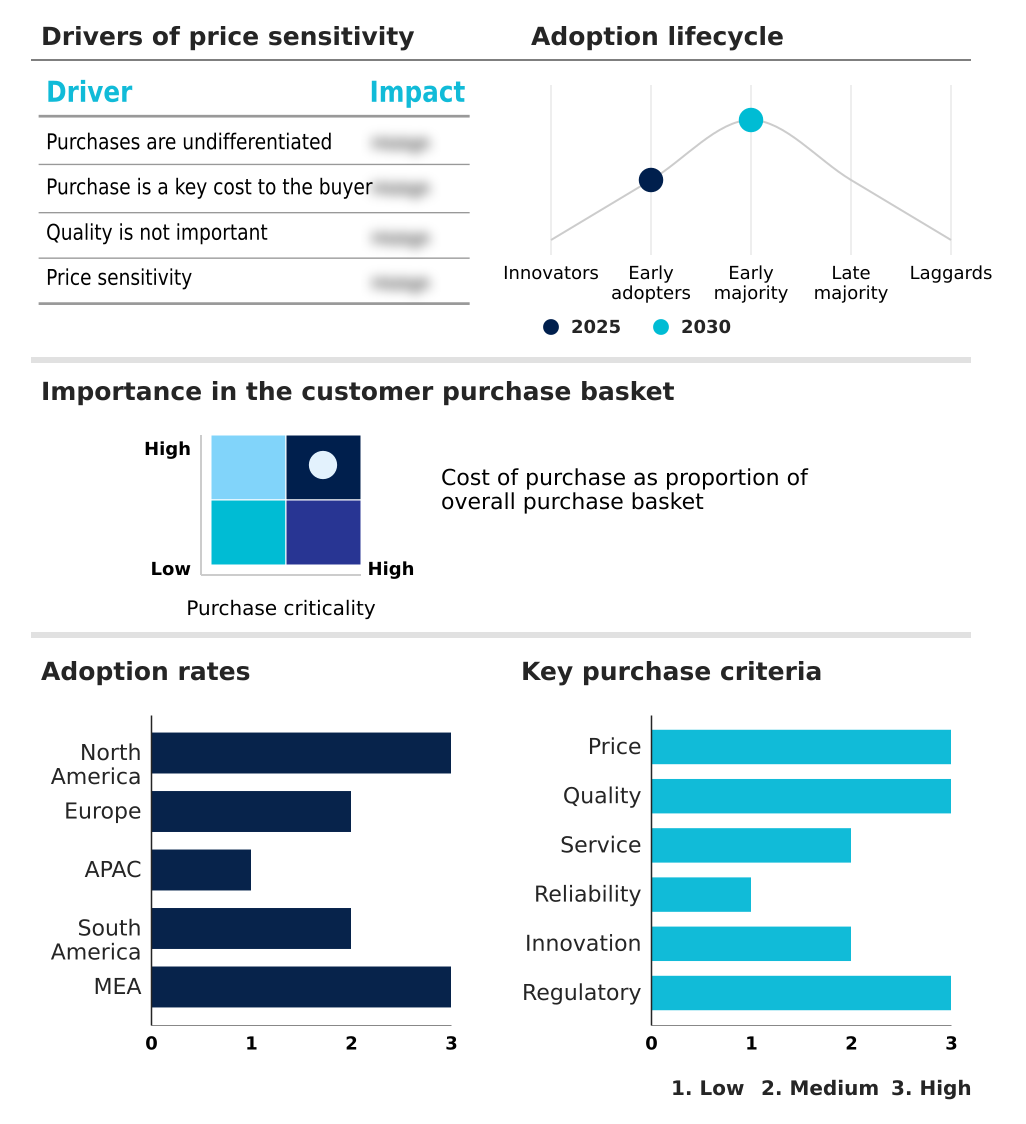
Customer Landscape of Property Management Industry
Competitive Landscape
Companies are implementing various strategies, such as strategic alliances, property management market forecast, partnerships, mergers and acquisitions, geographical expansion, and product/service launches, to enhance their presence in the industry.
Aareon AG - Delivering integrated property management software and digital real estate solutions designed to enhance asset administration and operational oversight.
The industry research and growth report includes detailed analyses of the competitive landscape of the market and information about key companies, including:
- Aareon AG
- Avison Young Inc.
- CBRE Group Inc.
- Colliers International Group
- Cushman and Wakefield Plc
- DMS Property Management
- FirstService Residential
- Greystar Worldwide LLC
- Jones Lang LaSalle Inc.
- Lincoln Property Co.
- NAI Global
- Newmark Group Inc.
- NoBroker Technologies Pvt. Ltd.
- Prologis Inc.
- Propshell Business Solutions
- RangeWater Real Estate
- Savills plc
- Stream Realty Partners LP
- The Bozzuto Group
- The RMR Group Inc.
Qualitative and quantitative analysis of companies has been conducted to help clients understand the wider business environment as well as the strengths and weaknesses of key industry players. Data is qualitatively analyzed to categorize companies as pure play, category-focused, industry-focused, and diversified; it is quantitatively analyzed to categorize companies as dominant, leading, strong, tentative, and weak.
Recent Development and News in Property management market
- In September 2024, JLL launched a new AI-powered platform designed for predictive maintenance and energy optimization in commercial buildings, enhancing operational efficiency for clients.
- In November 2024, CBRE Group announced the acquisition of a PropTech startup specializing in tenant experience and digital engagement solutions to expand its technology portfolio.
- In February 2025, Greystar Real Estate Partners revealed a strategic partnership with a leading smart home technology provider to deploy IoT devices across its North American residential portfolio.
- In April 2025, Cushman & Wakefield introduced a new global service line focused on providing ESG consulting and green building certification services for property owners and investors.
Dive into Technavio’s robust research methodology, blending expert interviews, extensive data synthesis, and validated models for unparalleled Property Management Market insights. See full methodology.
| Market Scope | |
|---|---|
| Page number | 290 |
| Base year | 2025 |
| Historic period | 2020-2024 |
| Forecast period | 2026-2030 |
| Growth momentum & CAGR | Accelerate at a CAGR of 8.5% |
| Market growth 2026-2030 | USD 14474.9 million |
| Market structure | Fragmented |
| YoY growth 2025-2026(%) | 8.0% |
| Key countries | US, Canada, Mexico, Germany, UK, France, Italy, Spain, The Netherlands, China, Japan, India, South Korea, Australia, Indonesia, Brazil, Argentina, Chile, Saudi Arabia, UAE, South Africa, Turkey and Israel |
| Competitive landscape | Leading Companies, Market Positioning of Companies, Competitive Strategies, and Industry Risks |
Research Analyst Overview
- The property management market is evolving into a technology-centric industry defined by a push for operational efficiency and superior tenant experience. The adoption of cloud-based platforms is foundational, enabling unified management platforms that integrate everything from tenant management to automated financial reporting. This digital shift facilitates deep AI-driven analytics, which in turn powers predictive maintenance and asset optimization strategies.
- Boardroom decisions are increasingly influenced by data privacy compliance and the need to mitigate cybersecurity vulnerabilities inherent in interconnected software ecosystems. The integration of smart building technologies, including IoT connectivity and biometric access controls, is no longer a luxury but a competitive necessity to enhance digital engagement.
- This technological weave supports automated workflows, from digital lease signing to interactions with a tenant screening service. For managers, achieving operational transparency and improving asset performance relies on robust financial reporting and centralized management systems. For tenants, the focus is on a seamless rental housing management experience, underscored by mobile-first property management and efficient digital payment systems.
- The goal is creating data-driven building ecosystems that prioritize environmental sustainability through intelligent document processing and energy consumption monitoring, ensuring robust property portfolio management in a dynamic landscape.
What are the Key Data Covered in this Property Management Market Research and Growth Report?
-
What is the expected growth of the Property Management Market between 2026 and 2030?
-
USD 14.47 billion, at a CAGR of 8.5%
-
-
What segmentation does the market report cover?
-
The report is segmented by Application (Commercial, Industrial, Residential, and Recreational marinas), Component (Solutions, and Services), Deployment (Cloud-based, and On-premises) and Geography (North America, Europe, APAC, South America, Middle East and Africa)
-
-
Which regions are analyzed in the report?
-
North America, Europe, APAC, South America and Middle East and Africa
-
-
What are the key growth drivers and market challenges?
-
Growing institutional investment and professionalization of residential sector, Escalating cybersecurity vulnerabilities and data privacy compliance risks
-
-
Who are the major players in the Property Management Market?
-
Aareon AG, Avison Young Inc., CBRE Group Inc., Colliers International Group, Cushman and Wakefield Plc, DMS Property Management, FirstService Residential, Greystar Worldwide LLC, Jones Lang LaSalle Inc., Lincoln Property Co., NAI Global, Newmark Group Inc., NoBroker Technologies Pvt. Ltd., Prologis Inc., Propshell Business Solutions, RangeWater Real Estate, Savills plc, Stream Realty Partners LP, The Bozzuto Group and The RMR Group Inc.
-
Market Research Insights
- Market dynamics are increasingly shaped by technological integration, where professional services are enhanced by digital platforms. For instance, the adoption of specialized tenant communication portals has been shown to improve resident satisfaction scores by up to 20%. In real estate asset management, leveraging data analytics has led to a 15% improvement in portfolio performance forecasting.
- Firms offering commercial property advisory now focus on optimizing facility operations, achieving energy cost reductions of 10% through smart systems. Similarly, in residential community management, automated systems streamline administrative tasks, enhancing service delivery and operational workflows. This convergence of technology and service is pivotal for maintaining a competitive advantage.
We can help! Our analysts can customize this property management market research report to meet your requirements.
 RIA -
RIA - 
