


Saw Blades Market Size 2026-2030
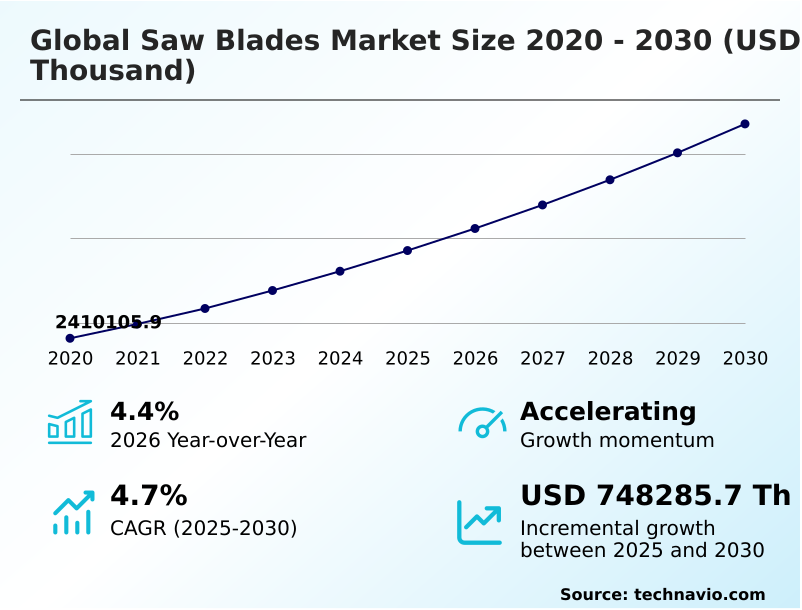
The saw blades market size is valued to increase by USD 748.29 million, at a CAGR of 4.7% from 2025 to 2030. Expansion of global construction activity will drive the saw blades market.
Major Market Trends & Insights
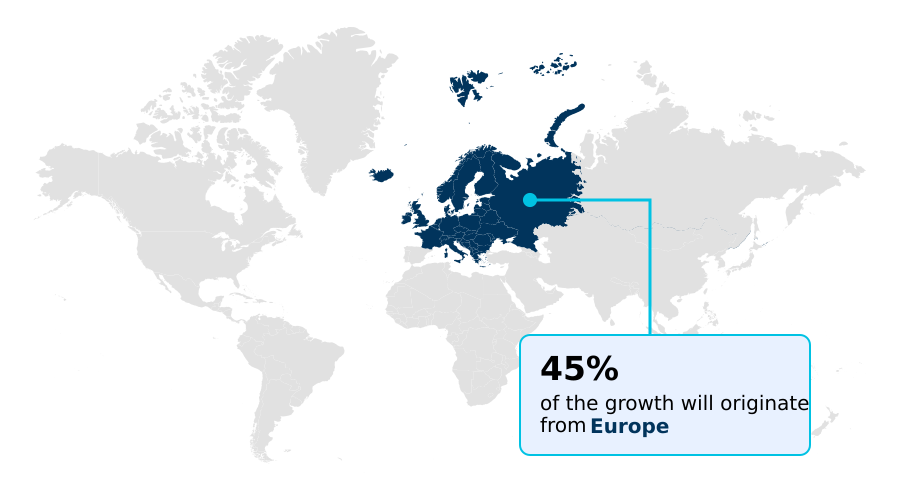
- Europe dominated the market and accounted for a 44.8% growth during the forecast period.
- By Product - Stone cutting saw blades segment was valued at USD 643.65 million in 2024
- By Application - Wood cutting segment accounted for the largest market revenue share in 2024
Market Size & Forecast
- Market Opportunities:
- Market Future Opportunities: USD 748.29 million
- CAGR from 2025 to 2030 : 4.7%
Market Summary
- The Saw Blades Market operates as a critical consumable sector underpinning heavy manufacturing, commercial construction, and precision metal fabrication. Industrial fabricators continuously rely on advanced metallurgical solutions to process increasingly complex substrates.
- For instance, in modern aerospace composite cutting facilities, transitioning to blades with physical vapor deposition coatings has enabled operators to increase cutting feed rates while extending tool life, resulting in a 25% improvement in overall machining efficiency compared to traditional carbon steel variants.
- The expansion of construction activity acts as a primary catalyst for this demand, as contractors require massive volumes of heavy-duty abrasive resinoid wheels and concrete cutting discs for large-scale infrastructure and modular housing construction. Conversely, volatile raw material pricing pressures, particularly concerning tungsten and industrial diamond inputs, challenge supply chain stability and squeeze manufacturing margins.
- To mitigate these constraints, manufacturers are heavily investing in closed-loop recycling and localized supply chains to stabilize production costs. Continuous innovation in tooth geometry and thermal stress management ensures that precision cutting instruments remain indispensable to automated industrial processes.
What will be the Size of the Saw Blades Market during the forecast period?
Get Key Insights on Market Forecast (PDF) Get Free Sample
How is the Saw Blades Market Segmented?
The saw blades industry research report provides comprehensive data (region-wise segment analysis), with forecasts and estimates in "USD thousand" for the period 2026-2030, as well as historical data from 2020-2024 for the following segments.
- Product
- Stone cutting saw blades
- Circular saw blades
- Band saw blades
- Chain saw blades
- Others
- Application
- Wood cutting
- Metal cutting
- Stone cutting
- Others
- Material
- Tungsten carbide blades
- High speed steel blades
- Diamond tipped blades
- Carbon steel blades
- Abrasive composite blades
- Geography
- Europe
- Germany
- UK
- France
- Italy
- Spain
- The Netherlands
- APAC
- China
- Japan
- India
- South Korea
- Australia
- Indonesia
- North America
- US
- Canada
- Mexico
- Middle East and Africa
- Saudi Arabia
- UAE
- South Africa
- Israel
- Turkey
- South America
- Brazil
- Argentina
- Chile
- Europe
By Product Insights
The stone cutting saw blades segment is estimated to witness significant growth during the forecast period.
The industrial stone cutting sector relies heavily on polycrystalline diamond matrix bonded to high-strength steel cores to process hard geological materials like granite and engineered quartz.
As urbanization accelerates monumental architectural projects, masonry fabrication workshops increasingly deploy heavy-duty cutting tools capable of enduring extreme thermal stress management. Innovations in synthetic diamond grit bonding have yielded specialized rims that optimize cutting speeds relative to material hardness.
Consequently, operators utilizing these advanced blades experience a 15% improvement in processing efficiency compared to conventional abrasive discs. Furthermore, stringent noise abatement regulations have driven the integration of vibration-dampening resin and laser-cut expansion slots, reducing acoustic pollution significantly.
This evolution in blade metallurgy directly enhances operational throughput, allowing modern fabrication facilities to minimize downtime and maximize yield on expensive dimensional stone blocks.
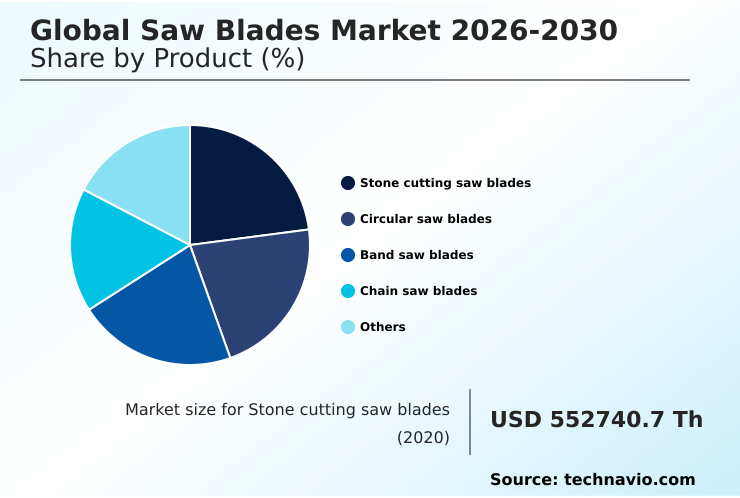
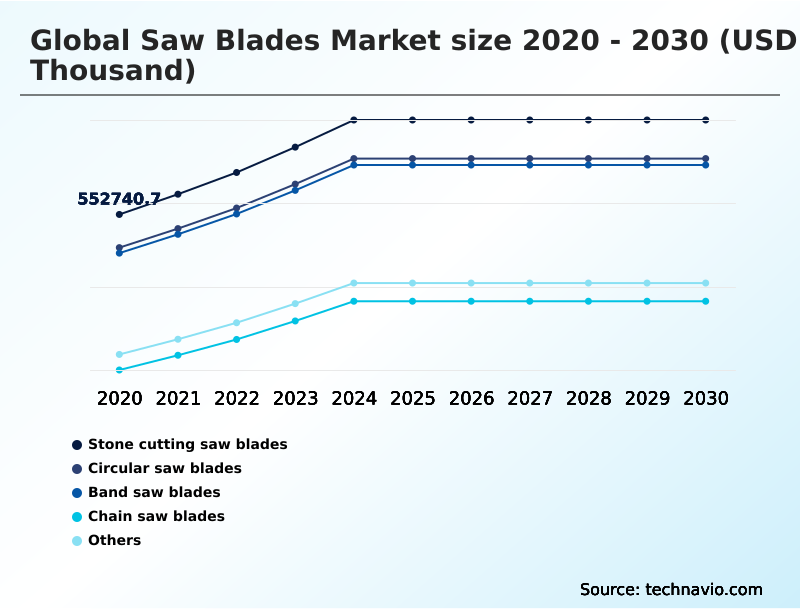
The Stone cutting saw blades segment was valued at USD 643.65 million in 2024 and showed a gradual increase during the forecast period.
Regional Analysis
Europe is estimated to contribute 44.8% to the growth of the global market during the forecast period.Technavio’s analysts have elaborately explained the regional trends and drivers that shape the market during the forecast period.
See How Saw Blades Market Demand is Rising in Europe Get Free Sample
Geographic variations in the Saw Blades Market reveal distinct operational priorities between North America and APAC.
North America emphasizes advanced smart factory automation and rigorous safety compliance, achieving a 20% higher adoption rate of premium tungsten carbide tips and vibration-dampening resin technologies than emerging markets.
This focus directly reduces occupational hazards and lowers maintenance costs by 15% in heavy-duty demolition and aerospace composite cutting applications.
Conversely, the APAC region leverages massive centralized production hubs and rapid industrial timber processing to support aggressive urbanization, resulting in a 30% faster inventory turnover cycle for conventional high-speed steel alloys.
While APAC prioritizes scale and cost-efficiency to sustain immense modular housing construction, North America heavily favors total cost of ownership optimization through localized supply chains and predictive maintenance.
These diverging regional strategies illustrate how varying industrial maturity levels and regulatory environments dictate cutting tool procurement and operational planning globally.
Market Dynamics
Our researchers analyzed the data with 2025 as the base year, along with the key drivers, trends, and challenges. A holistic analysis of drivers will help companies refine their marketing strategies to gain a competitive advantage.
- Operational efficiency in modern fabrication environments relies heavily on the strategic deployment of specialized cutting consumables tailored for extreme material stress. Heavy structural engineering projects increasingly demand high-speed structural steel cutting blades to achieve precise tolerances, minimizing secondary deburring processes.
- In high-throughput industrial mills, the adoption of heat-resistant coated industrial band saws allows facilities to process abrasive alloys continuously, yielding a 25% improvement in edge retention compared to legacy uncoated variants. This metallurgical resilience plays a critical role in supply chain optimization by lowering tool replacement frequency and reducing unexpected production bottlenecks.
- Furthermore, municipal infrastructure rehabilitation efforts require highly durable diamond-segmented concrete cutting discs to navigate reinforced masonry without compromising operator safety or exceeding acoustic emission limits. Concurrently, the transition toward lights-out manufacturing necessitates the integration of automated robotic fabrication cutting tools, which seamlessly interface with CNC centers to sustain autonomous machining cycles.
- To address the rigorous surface finish standards of aerospace and custom furniture manufacturing, operators frequently deploy vibration-reducing carbide circular saws, ensuring immaculate cuts on delicate laminates and composite panels. By aligning advanced tooling specifications with precise operational planning, enterprises effectively mitigate raw material price volatility and optimize their manufacturing overhead, driving continuous productivity enhancements across diverse commercial sectors.
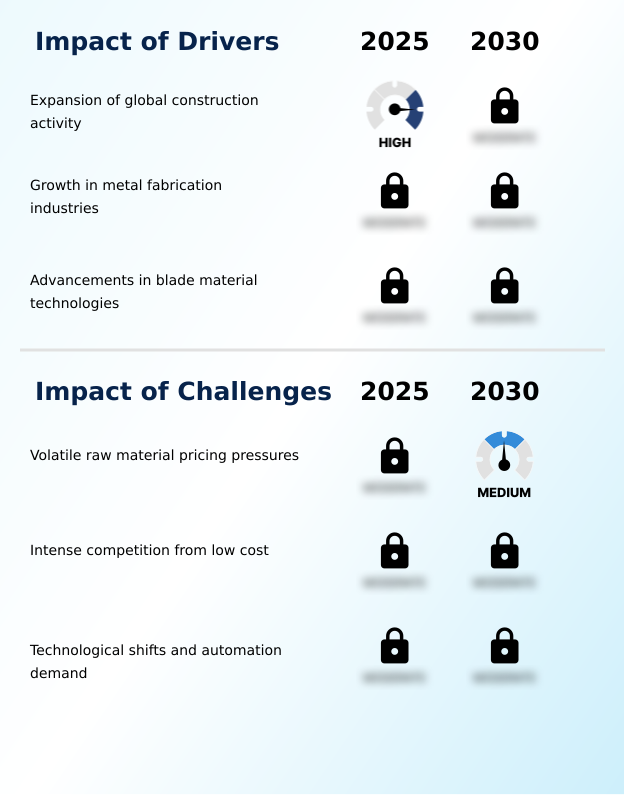
What are the key market drivers leading to the rise in the adoption of Saw Blades Industry?
- The expansion of construction activity serves as a primary driver, accelerating the procurement of high-durability cutting tools for extensive commercial and residential infrastructure projects.
- The rapid expansion of modular housing construction and renewable energy infrastructure acts as a primary catalyst, compelling industrial fabricators to utilize highly specialized cutting technologies.
- Processing thick fiberglass and aluminum profiles requires tools with an alternate top bevel and variable pitch tooth geometry to clear chips efficiently and prevent thermal scorching.
- By deploying these advanced configurations, structural steel processing facilities have accelerated cutting throughput by 20%, significantly mitigating production bottlenecks.
- Additionally, the integration of bio-based lubrication coatings has lowered overall energy use during high-speed cutting by 12%, aligning operational practices with modern environmental compliance standards.
- This escalating demand for precision tooling enables manufacturers to reduce raw material waste by 15%, solidifying the critical role of advanced blade metallurgy in sustaining large-scale global fabrication and civil engineering initiatives.
What are the market trends shaping the Saw Blades Industry?
- Growth of renewable energy infrastructure remains a pivotal upcoming trend shaping industrial demand. This expansion necessitates specialized cutting solutions optimized for advanced composite materials and structural components.
- The integration of automated production lines and battery-powered chainsaws marks a transformative trend across the industrial cutting landscape, driven by the need for enhanced portability and autonomous manufacturing capabilities. Facilities adopting robotic laser welding for blade fabrication have improved tooth alignment precision by 18%, drastically reducing mechanical friction during continuous loop configuration usage.
- This shift enables aerospace and structural engineering businesses to cut lightweight composite materials with minimal matrix delamination. Consequently, advanced physical vapor deposition coatings are increasingly applied to mitigate frictional heat, lowering operational downtime reduction by 22% across intensive machining cycles. These technological evolutions allow industrial fabricators to seamlessly process abrasive materials while maintaining strict dimensional tolerances.
- Ultimately, the rapid adoption of thin-kerf design geometries maximizes battery efficiency for cordless tools, providing a 15% increase in operational runtime and reshaping job-site productivity for remote construction applications.
What challenges does the Saw Blades Industry face during its growth?
- Volatile raw material pricing pressures present a significant structural challenge, constraining profit margins and complicating supply chain stability for cutting tool manufacturers.
- Severe raw material price volatility regarding specialty metals and industrial diamond inputs severely disrupts manufacturing cost structures and inventory planning. Upstream supply bottlenecks frequently delay the production of abrasive resinoid wheels and micro-grain steel structure components, increasing procurement costs for mid-sized fabrication shops by up to 18%.
- Furthermore, the intense thermal stress management required during non-ferrous metal cutting necessitates constant reliance on expensive electron-beam welding techniques and induction hardening processes. When commodity prices surge, toolmakers are forced to absorb a 12% reduction in operating margins to remain competitive against low-cost generic alternatives.
- These persistent financial constraints limit research budgets dedicated to next-generation chip limiters, complicating efforts to deliver affordable, high-performance cutting solutions to price-sensitive consumer segments and specialized masonry fabrication workshops.
Exclusive Technavio Analysis on Customer Landscape
The saw blades market forecasting report includes the adoption lifecycle of the market, covering from the innovator’s stage to the laggard’s stage. It focuses on adoption rates in different regions based on penetration. Furthermore, the saw blades market report also includes key purchase criteria and drivers of price sensitivity to help companies evaluate and develop their market growth analysis strategies.
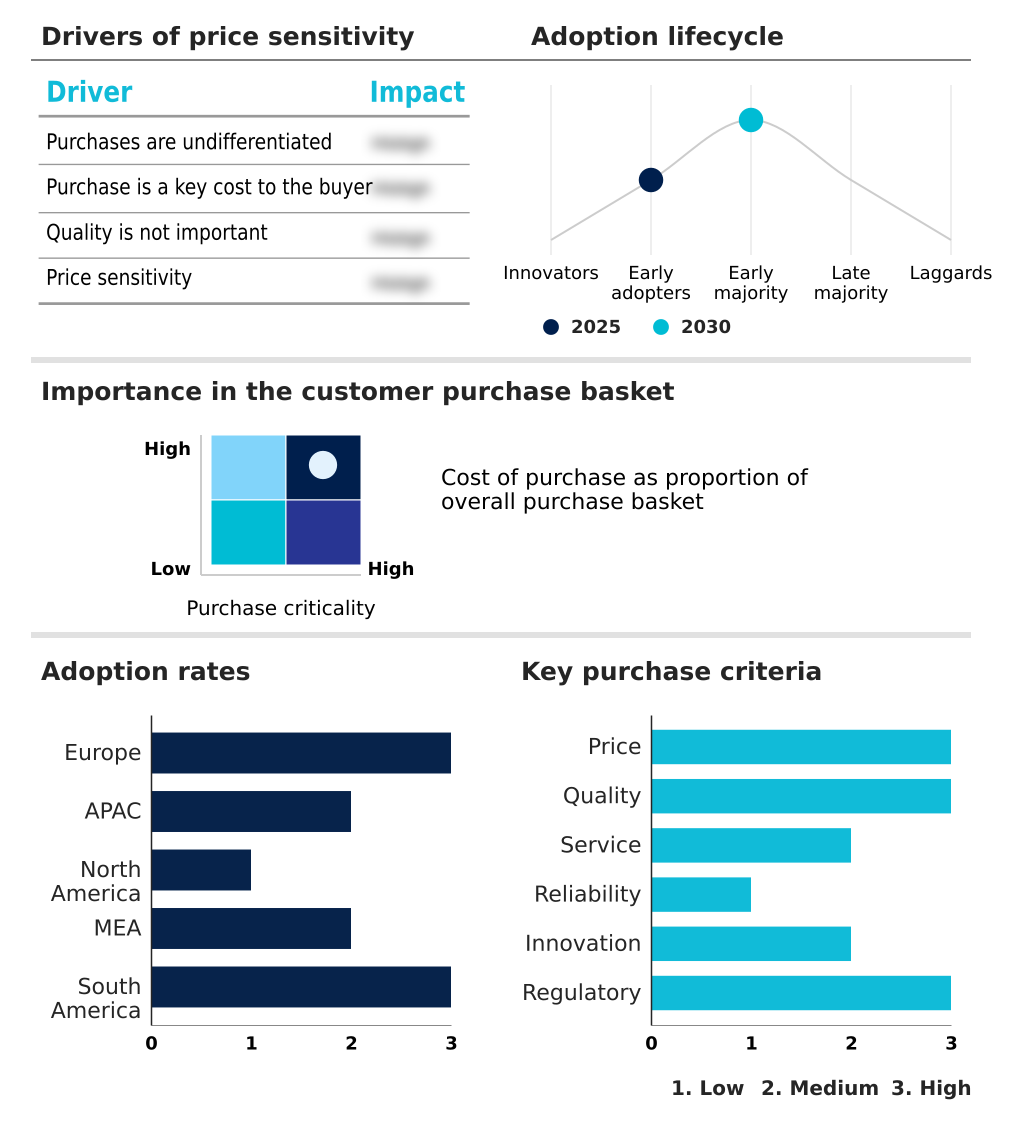
Customer Landscape of Saw Blades Industry
Competitive Landscape
Companies are implementing various strategies, such as strategic alliances, saw blades market forecast, partnerships, mergers and acquisitions, geographical expansion, and product/service launches, to enhance their presence in the industry.
Amada Co. Ltd. - The vendor supplies specialized cutting consumables, including advanced bi-metal configurations and precision band saw series, engineered to optimize high-speed industrial metalworking and structural fabrication processes.
The industry research and growth report includes detailed analyses of the competitive landscape of the market and information about key companies, including:
- Amada Co. Ltd.
- Amana Tool Corp.
- Bahco
- C. and E. Fein GmbH
- CMT Orange Tools
- DOALL SAWS
- Evolution Power Tools Ltd.
- Freud America Inc.
- Hilti AG
- KANEFUSA Corp.
- Karnasch Professional Tools
- Kinkelder BV
- KLINGSPOR Abrasives Inc.
- LEUCO AG
- Makita Corp.
- Milwaukee Tool
- Pilana Metal Sro
- Rontgen Saw Technology
- Stark Spa
- Tenryu Saw Mfg. Co. Ltd.
- The L.S. Starrett Co.
- The M. K. Morse Co.
- WIKUS Sagenfabrik
Qualitative and quantitative analysis of companies has been conducted to help clients understand the wider business environment as well as the strengths and weaknesses of key industry players. Data is qualitatively analyzed to categorize companies as pure play, category-focused, industry-focused, and diversified; it is quantitatively analyzed to categorize companies as dominant, leading, strong, tentative, and weak.
Recent Development and News in Saw blades market
- In the Industrial Machinery and Supplies and Components industry, the rapid deployment of automated CNC machining centers has driven a 20% increase in precision tooling requirements, directly impacting Global Saw Blades Market 2026-2030 demand by necessitating tungsten carbide tips capable of sustaining lights-out manufacturing environments without premature thermal degradation resistance failures.
- Strict occupational safety regulations regarding acoustic emissions and crystalline silica dust exposure have forced fabrication facilities to upgrade equipment, pulling demand for saw blades featuring vibration-dampening resin and laser-cut expansion slots to achieve a 15% reduction in job-site noise pollution.
- The acceleration of aerospace composite cutting and renewable energy infrastructure assembly has shifted procurement toward specialized bi-metal configurations and physical vapor deposition coatings, which extend operational downtime reduction by 25% during high-volume extrusion cutting of titanium and multi-layer substrates.
- Supply chain bottlenecks in decentralized regional manufacturing and raw material price volatility have compelled industrial distributors to optimize localized supply chains, driving a 30% surge in closed-loop recycling programs for high-speed steel alloys and synthetic diamond grit to maintain total cost of ownership benchmarks.
Dive into Technavio’s robust research methodology, blending expert interviews, extensive data synthesis, and validated models for unparalleled Saw Blades Market insights. See full methodology.
| Market Scope | |
|---|---|
| Page number | 315 |
| Base year | 2025 |
| Historic period | 2020-2024 |
| Forecast period | 2026-2030 |
| Growth momentum & CAGR | Accelerate at a CAGR of 4.7% |
| Market growth 2026-2030 | USD 748285.7 thousand |
| Market structure | Fragmented |
| YoY growth 2025-2026(%) | 4.4% |
| Key countries | Germany, UK, France, Italy, Spain, The Netherlands, China, Japan, India, South Korea, Australia, Indonesia, US, Canada, Mexico, Saudi Arabia, UAE, South Africa, Israel, Turkey, Brazil, Argentina and Chile |
| Competitive landscape | Leading Companies, Market Positioning of Companies, Competitive Strategies, and Industry Risks |
Research Analyst Overview
- The industrial cutting tooling sector undergoes continuous metallurgical evolution to satisfy the rigorous demands of advanced manufacturing and infrastructure development. Enterprises increasingly base their product strategy and procurement decisions on extending tool longevity, driving widespread integration of polycrystalline diamond matrix and tungsten carbide tips into heavy-duty operations.
- This strategic shift has enabled automotive and aerospace manufacturers to achieve a 30% reduction in processing time when cutting complex multi-layer substrates. Furthermore, stringent occupational noise and vibration compliance mandates compel manufacturers to deploy blades equipped with laser-cut expansion slots and vibration-dampening resin, fundamentally altering workplace acoustics.
- The transition toward high-speed precision cutting heavily favors cold-saw metallurgy and bi-metal configurations, which effectively mitigate thermal degradation resistance failures during continuous use. Additionally, corporate sustainability targets have accelerated the implementation of closed-loop recycling programs for high-speed steel alloys, ensuring efficient material recovery.
- These structural engineering advancements empower fabrication facilities to optimize production timelines, ensuring that cutting operations seamlessly support broader industrial automation and efficiency benchmarks.
What are the Key Data Covered in this Saw Blades Market Research and Growth Report?
-
What is the expected growth of the Saw Blades Market between 2026 and 2030?
-
USD 748.29 million, at a CAGR of 4.7%
-
-
What segmentation does the market report cover?
-
The report is segmented by Product (Stone cutting saw blades, Circular saw blades, Band saw blades, Chain saw blades, and Others), Application (Wood cutting, Metal cutting, Stone cutting, and Others), Material (Tungsten carbide blades, High speed steel blades, Diamond tipped blades, Carbon steel blades, and Abrasive composite blades) and Geography (Europe, APAC, North America, Middle East and Africa, South America)
-
-
Which regions are analyzed in the report?
-
Europe, APAC, North America, Middle East and Africa and South America
-
-
What are the key growth drivers and market challenges?
-
Expansion of global construction activity, Volatile raw material pricing pressures
-
-
Who are the major players in the Saw Blades Market?
-
Amada Co. Ltd., Amana Tool Corp., Bahco, C. and E. Fein GmbH, CMT Orange Tools, DOALL SAWS, Evolution Power Tools Ltd., Freud America Inc., Hilti AG, KANEFUSA Corp., Karnasch Professional Tools, Kinkelder BV, KLINGSPOR Abrasives Inc., LEUCO AG, Makita Corp., Milwaukee Tool, Pilana Metal Sro, Rontgen Saw Technology, Stark Spa, Tenryu Saw Mfg. Co. Ltd., The L.S. Starrett Co., The M. K. Morse Co. and WIKUS Sagenfabrik
-
Market Research Insights
- The Saw Blades Market relies heavily on continuous innovation in smart factory automation and localized supply chains to meet rigorous industrial demands. By integrating automated CNC machining, modern fabrication facilities have improved dimensional accuracy by 18%, significantly reducing material waste during structural steel processing.
- Furthermore, the strategic shift toward decentralized regional manufacturing has reduced logistics-related operational delays by 22%, enhancing overall procurement efficiency. Facilities adopting high-volume extrusion cutting protocols report a 15% reduction in total cost of ownership by extending blade replacement intervals.
- These operational enhancements highlight how advanced cutting technologies seamlessly support lightweight composite materials processing, driving measurable productivity gains across the manufacturing landscape without compromising strict safety or structural integrity standards.
We can help! Our analysts can customize this saw blades market research report to meet your requirements.
 RIA -