


Second Life EV Battery Market Size 2026-2030
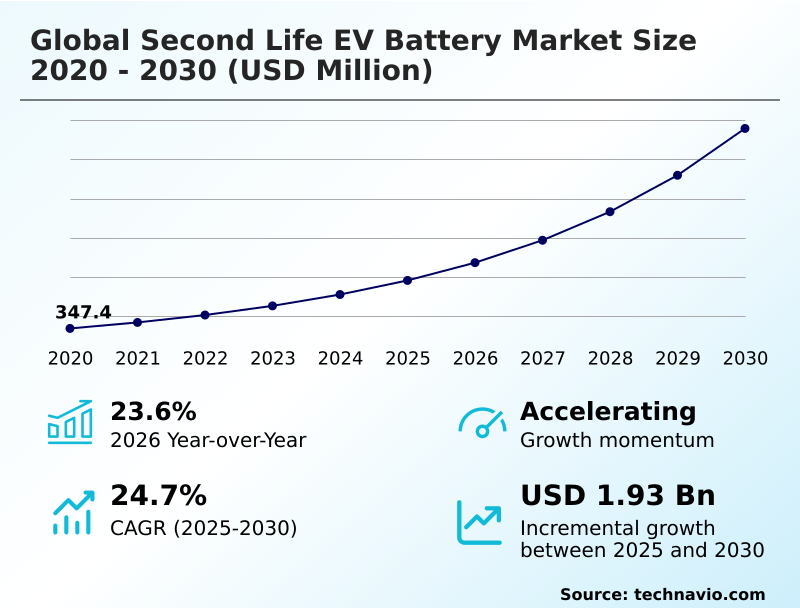
The second life ev battery market size is valued to increase by USD 1.93 billion, at a CAGR of 24.7% from 2025 to 2030. Escalating demand for economical energy storage solutions will drive the second life ev battery market.
Major Market Trends & Insights
- APAC dominated the market and accounted for a 60.2% growth during the forecast period.
- By Type - LFP segment was valued at USD 413 million in 2024
- By Application - Utilities and grid operators segment accounted for the largest market revenue share in 2024
Market Size & Forecast
- Market Opportunities: USD 2.55 billion
- Market Future Opportunities: USD 1.93 billion
- CAGR from 2025 to 2030 : 24.7%
Market Summary
- The second life EV battery market is a structured ecosystem for refurbishing and redeploying lithium-ion batteries from electric vehicles for stationary applications. A core driver is the escalating demand for economical energy storage, where repurposed batteries offer a cost-effective alternative to new units for grid stabilization and renewable energy integration.
- This market is defined by its commitment to circular economy principles, extending asset lifespans before resource-intensive material recovery is necessary. Key trends include the integration of digital battery passport systems, leveraging AI and blockchain to enhance transparency and accurately track battery state of health, which is critical for valuation and safety.
- However, the industry faces challenges from the technical heterogeneity among battery chemistries and form factors, which complicates the battery repurposing and battery remanufacturing processes. Proprietary battery management systems further hinder universal diagnostic efforts. For instance, a logistics firm can implement a behind-the-meter storage system using second-life batteries to power its warehouse operations.
- By charging the system during off-peak hours and discharging during peak times, the firm avoids high demand charges, significantly reducing operational energy costs and improving its environmental credentials without the high capital outlay for a new system.
What will be the Size of the Second Life EV Battery Market during the forecast period?
Get Key Insights on Market Forecast (PDF) Get Free Sample
How is the Second Life EV Battery Market Segmented?
The second life ev battery industry research report provides comprehensive data (region-wise segment analysis), with forecasts and estimates in "USD million" for the period 2026-2030, as well as historical data from 2020-2024 for the following segments.
- Type
- LFP
- NMC
- NCA
- Others
- Application
- Utilities and grid operators
- Commercial and industrial users
- Telecom and infrastructure
- Residential users
- Others
- Product
- Repurpose
- Refurbishment
- Reuse
- Geography
- APAC
- China
- Japan
- South Korea
- North America
- US
- Canada
- Mexico
- Europe
- Germany
- France
- UK
- Middle East and Africa
- Saudi Arabia
- UAE
- South Africa
- South America
- Brazil
- Argentina
- Colombia
- Rest of World (ROW)
- APAC
By Type Insights
The lfp segment is estimated to witness significant growth during the forecast period.
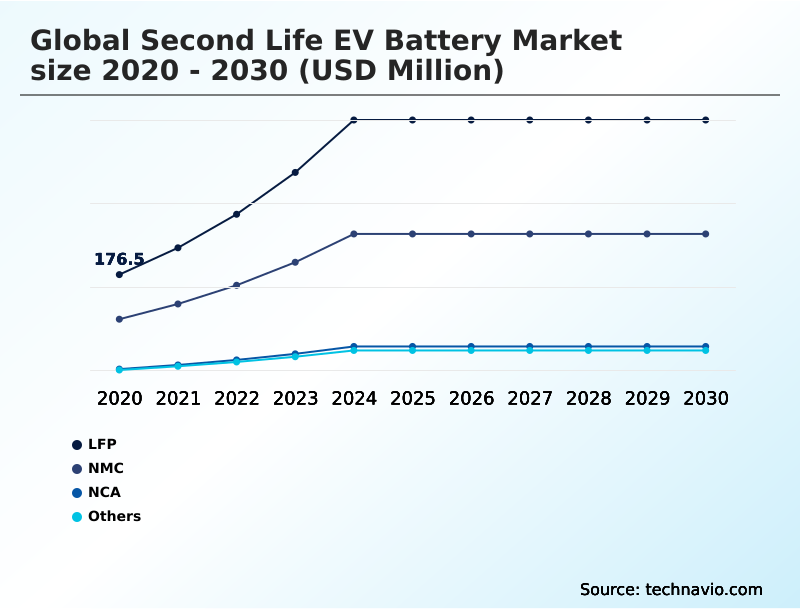
The lithium iron phosphate (LFP) segment is a cornerstone of the market, prized for its superior thermal safety and extended cycle life, which are critical for stationary energy storage.
As automotive manufacturers adopt LFP for mass-market vehicles, a substantial volume of decommissioned units enters the secondary market. These batteries, typically retaining approximately 80% of their original capacity, provide a cost-effective solution for various second life battery applications.
The battery repurposing process for LFP is streamlined due to the stability of prismatic cells, facilitating easier battery grading and sorting. This supports circular economy principles by maximizing asset utility before final battery remanufacturing.
The inherent resilience of LFP chemistry simplifies repurposed battery diagnostics and cell-level testing, solidifying its dominant position in effective end-of-life battery management.
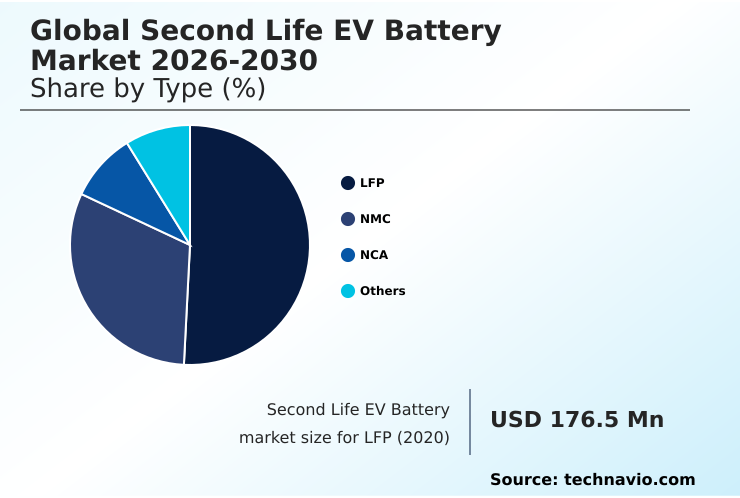
The LFP segment was valued at USD 413 million in 2024 and showed a gradual increase during the forecast period.
Regional Analysis
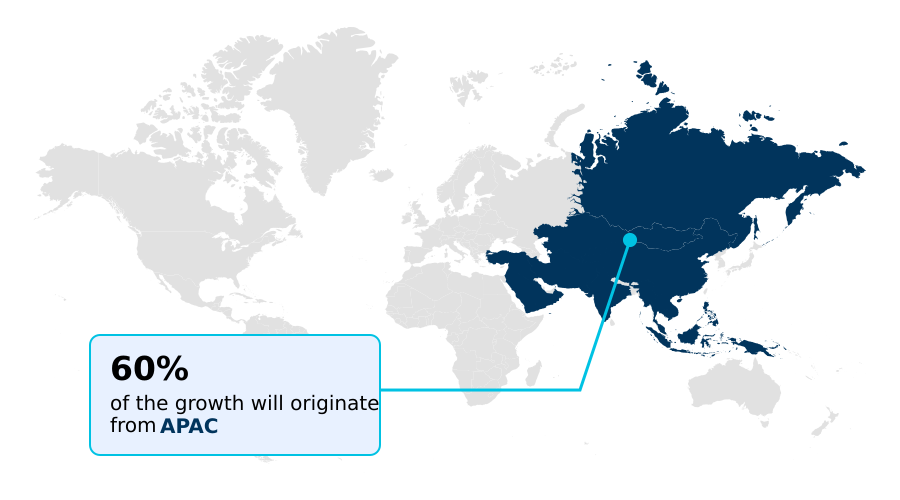
APAC is estimated to contribute 60.2% to the growth of the global market during the forecast period.Technavio’s analysts have elaborately explained the regional trends and drivers that shape the market during the forecast period.
See How Second Life EV Battery Market Demand is Rising in APAC Get Free Sample
The geographic landscape is dominated by the APAC region, which accounts for over 60% of the market's incremental growth, driven by its massive supply of retired batteries.
In this region, advanced battery degradation modeling improves the accuracy of residual value calculation for stationary energy storage assets. A key enabler is the development of a closed-loop supply chain supported by government-led second-life battery certification programs.
These initiatives, which include rigorous state of safety assessment protocols, have accelerated the deployment of microgrid power solutions. In North America and Europe, the focus is on professionalizing battery module assembly and battery pack disassembly processes.
Here, sophisticated analysis of battery state of health has led to a 25% improvement in sorting efficiency, enhancing the profitability of energy arbitrage and supporting the growth of battery swapping technology.
Market Dynamics
Our researchers analyzed the data with 2025 as the base year, along with the key drivers, trends, and challenges. A holistic analysis of drivers will help companies refine their marketing strategies to gain a competitive advantage.
- The long-term viability of the global second life EV battery market 2026-2030 hinges on addressing several complex factors. The impact of battery chemistry on second life value is a primary consideration, as is the overall cost of second life EV battery systems compared to new alternatives.
- Stakeholders must navigate evolving safety standards for repurposed EV batteries to build trust, particularly for the second life EV battery for residential use segment. A direct comparison of second life EV battery vs new battery performance reveals nuanced trade-offs in longevity and energy density.
- Success requires innovative business models for second life EV batteries, which must account for the crucial role of BMS in second life battery safety. For example, the LFP battery second life cycle performance is often more predictable than other chemistries.
- A core operational challenge is diagnosing state of health in used EV batteries, a process complicated by inconsistent regulatory frameworks for second life batteries. Integrating second life batteries with solar PV is a major opportunity, but challenges in EV battery refurbishment process remain. Proper end-of-life management for EV battery packs is essential for demonstrating the economic viability of battery repurposing.
- Furthermore, developing effective thermal management for second life storage is critical, especially for second life battery applications in telecom. The rise of containerized storage solutions using EV batteries simplifies deployment, but the underlying supply chain logistics for used EV batteries are complex.
- Using AI and machine learning in battery grading, supported by blockchain for EV battery traceability, offers a path forward. Implementing a digital traceability system reduces asset verification time by more than 50% compared to traditional manual inspection protocols, streamlining supply chain operations.
What are the key market drivers leading to the rise in the adoption of Second Life EV Battery Industry?
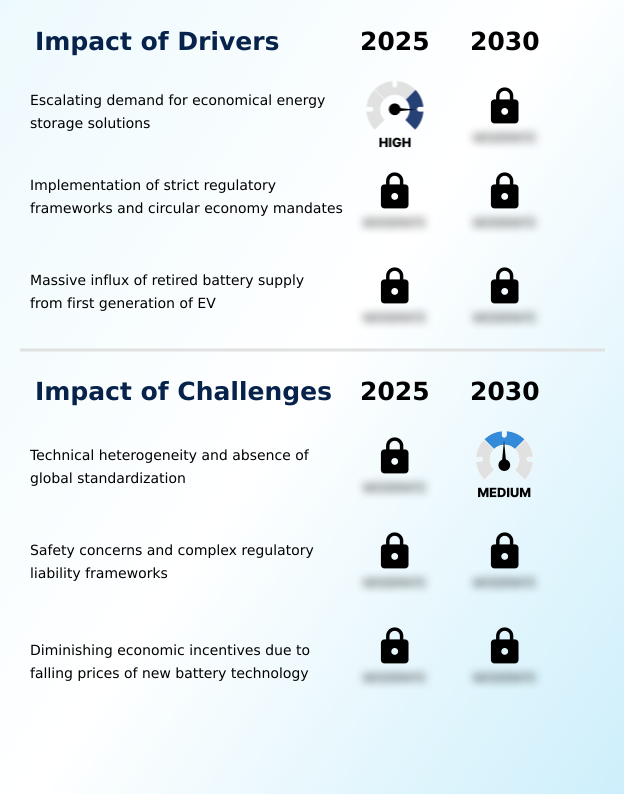
- The escalating demand for economical energy storage solutions serves as a key driver for the second life EV battery market.
- The primary driver is the compelling economic case for repurposed assets within the framework of circular economy principles. Utility-scale battery storage projects leveraging second-life units report capital cost reductions of up to 35% compared to new installations.
- This cost advantage is critical for applications like peak shaving and providing ancillary grid services, where financial viability is paramount.
- Concurrently, government mandates and incentives, including feed-in tariffs, are compelling stakeholders to optimize the entire battery value chain through improved EV battery traceability and lifecycle assessment.
- Advanced lithium-ion battery diagnostics and efficient thermal management systems enable a 20% increase in the operational lifespan for behind-the-meter storage, enhancing their role in voltage support. Remanufacturing process optimization further solidifies the financial appeal of these assets.
What are the market trends shaping the Second Life EV Battery Industry?
- An emerging market trend is the proliferation of artificial intelligence and blockchain technologies, which are being leveraged to enhance transparency throughout the battery lifecycle.
- The market is witnessing a transformative shift toward advanced digital technologies and modular designs. The adoption of a digital battery passport, for instance, has improved asset traceability for extended producer responsibility mandates, reducing verification overhead by up to 60%.
- Similarly, AI-driven state of charge estimation within advanced battery management systems now allows for a 15% improvement in optimizing nickel manganese cobalt cells for renewable energy buffering. This trend is complemented by the move toward modular energy storage and containerized energy storage solutions.
- These plug-and-play stationary storage systems enable rapid deployment for decentralized energy networks, cutting installation time by 40% and offering scalable energy storage as a service for grid stabilization and grid frequency regulation.
What challenges does the Second Life EV Battery Industry face during its growth?
- The technical heterogeneity of battery designs, coupled with the absence of global standardization, presents a key challenge to the market's growth.
- A significant market challenge is the lack of standardization across battery designs, including nickel cobalt aluminum packs utilizing diverse pouch cells and cylindrical cells. This heterogeneity increases refurbishment complexity, elevating operational costs by an estimated 30% and complicating automotive OEM partnerships.
- The proprietary nature of cell balancing algorithms and the data from electrochemical impedance spectroscopy tests are often inaccessible, creating barriers to effective repurposing. Moreover, the threat of thermal runaway necessitates rigorous, costly testing, impacting the viability of energy arbitrage strategies.
- As the price of new batteries declines, the economic incentive for repurposing diminishes, with new units sometimes offering a 15% better price-to-performance ratio for applications like capacity firming services. This dynamic pressures the industry to innovate in areas beyond material recovery to maintain a competitive edge.
Exclusive Technavio Analysis on Customer Landscape
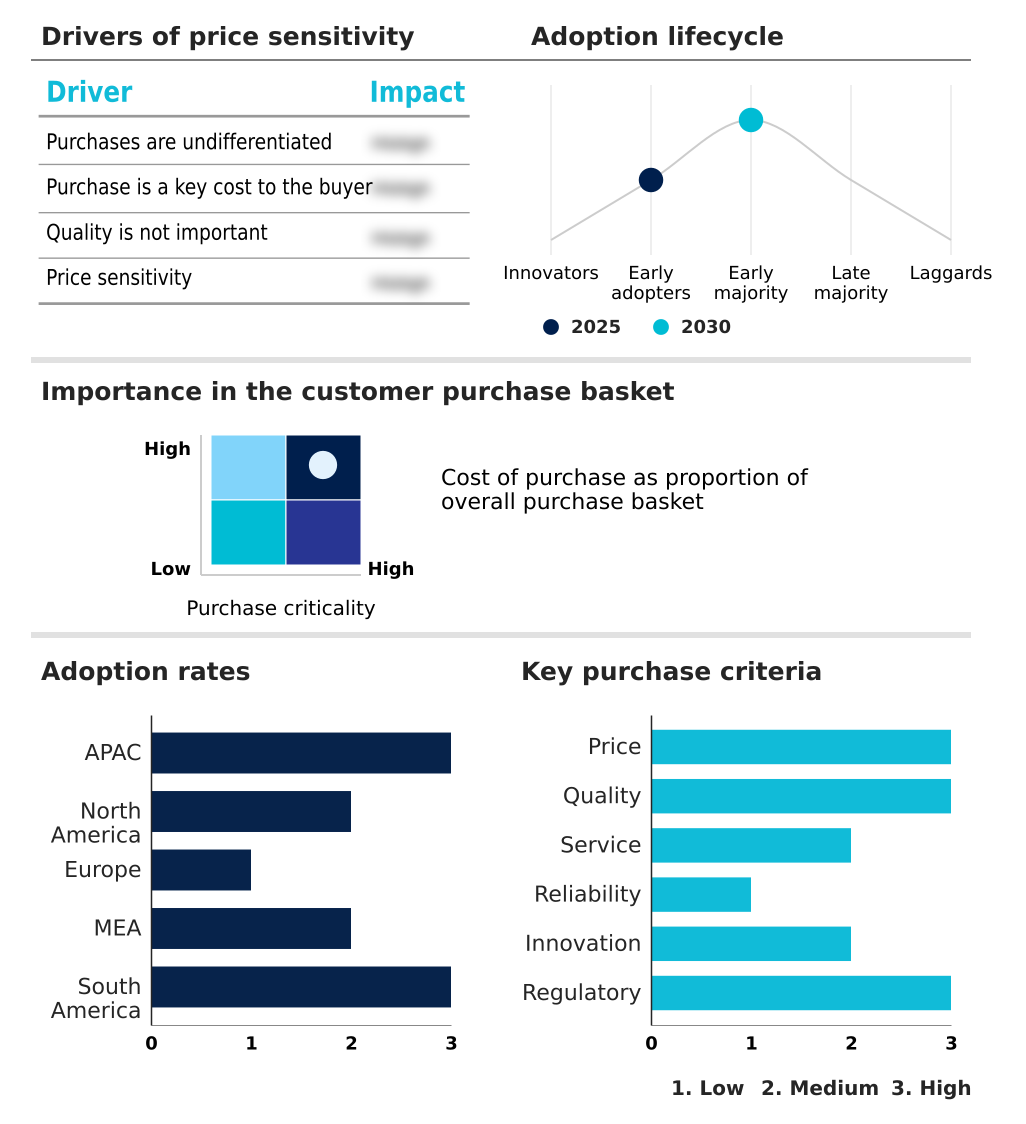
The second life ev battery market forecasting report includes the adoption lifecycle of the market, covering from the innovator’s stage to the laggard’s stage. It focuses on adoption rates in different regions based on penetration. Furthermore, the second life ev battery market report also includes key purchase criteria and drivers of price sensitivity to help companies evaluate and develop their market growth analysis strategies.
Customer Landscape of Second Life EV Battery Industry
Competitive Landscape
Companies are implementing various strategies, such as strategic alliances, second life ev battery market forecast, partnerships, mergers and acquisitions, geographical expansion, and product/service launches, to enhance their presence in the industry.
AB Volvo - Repurposed electric vehicle battery packs are integrated into utility-scale energy storage systems, supporting grid and commercial solar-plus-storage projects for enhanced stability and reliability.
The industry research and growth report includes detailed analyses of the competitive landscape of the market and information about key companies, including:
- AB Volvo
- B2U Storage Inc.
- BeePlanet Factory
- Circunomics GmbH
- Connected Energy Ltd
- ECO STOR GmbH
- Enel X Italia S.r.l.
- Envision Group
- Kempower Oyj
- Lohum Cleantech Pvt. Ltd.
- Micropower Group
- Moment Energy
- Octillion Power Systems
- Powervault Ltd
- Relectrify Pty Ltd
- Rivian Automotive Inc.
- RWE AG
- Tesla Inc.
- Valmet Automotive Group
- Zenobe Energy Limited
Qualitative and quantitative analysis of companies has been conducted to help clients understand the wider business environment as well as the strengths and weaknesses of key industry players. Data is qualitatively analyzed to categorize companies as pure play, category-focused, industry-focused, and diversified; it is quantitatively analyzed to categorize companies as dominant, leading, strong, tentative, and weak.
Recent Development and News in Second life ev battery market
- In June 2025, Enel X S.r.l. launched a ten-megawatt-hour battery energy storage system in Italy, exclusively utilizing second-life batteries sourced from decommissioned electric vehicle fleets.
- In September 2025, Moon Power, a subsidiary of Porsche, introduced RE:LIFE, a modular storage system designed to use second-life electric vehicle batteries from standardized platforms for solar energy storage.
- In May 2025, Battery X Metals Inc. completed the installation of a modular energy storage system for a large-scale industrial processing plant in North America using refurbished lithium-iron phosphate cells.
- In June 2025, Stellantis N.V. announced its formal participation in the PIONEER project, which is focused on deploying second-life batteries to support advanced mobility infrastructure and microgrids.
Dive into Technavio’s robust research methodology, blending expert interviews, extensive data synthesis, and validated models for unparalleled Second Life EV Battery Market insights. See full methodology.
| Market Scope | |
|---|---|
| Page number | 308 |
| Base year | 2025 |
| Historic period | 2020-2024 |
| Forecast period | 2026-2030 |
| Growth momentum & CAGR | Accelerate at a CAGR of 24.7% |
| Market growth 2026-2030 | USD 1934.3 million |
| Market structure | Fragmented |
| YoY growth 2025-2026(%) | 23.6% |
| Key countries | China, Japan, South Korea, India, Australia, Indonesia, US, Canada, Mexico, Germany, France, UK, Italy, Spain, The Netherlands, Saudi Arabia, UAE, South Africa, Israel, Turkey, Brazil, Argentina and Colombia |
| Competitive landscape | Leading Companies, Market Positioning of Companies, Competitive Strategies, and Industry Risks |
Research Analyst Overview
- The second life EV battery market's evolution is defined by the transition of assets from automotive use to roles in stationary energy storage. A critical trend influencing boardroom strategy is the adoption of the digital battery passport, a technology that directly addresses compliance with emerging end-of-life vehicle directive regulations and provides transparent data for asset valuation.
- This detailed tracking of battery state of health, using techniques like electrochemical impedance spectroscopy, is essential for a functional closed-loop supply chain. Advanced diagnostics now achieve over 98% accuracy in assessing degradation, a significant improvement that solidifies the financial case for battery repurposing and battery remanufacturing.
- This market balances various chemistries, from lithium iron phosphate to nickel manganese cobalt and nickel cobalt aluminum, each presenting unique characteristics for cell balancing and thermal management systems to prevent thermal runaway.
- As the industry scales, standardization across prismatic cells, pouch cells, and cylindrical cells remains a goal to optimize battery module assembly and enable services like grid stabilization, peak shaving, and energy arbitrage, all underpinned by circular economy principles.
What are the Key Data Covered in this Second Life EV Battery Market Research and Growth Report?
-
What is the expected growth of the Second Life EV Battery Market between 2026 and 2030?
-
USD 1.93 billion, at a CAGR of 24.7%
-
-
What segmentation does the market report cover?
-
The report is segmented by Type (LFP, NMC, NCA, and Others), Application (Utilities and grid operators, Commercial and industrial users, Telecom and infrastructure, Residential users, and Others), Product (Repurpose, Refurbishment, and Reuse) and Geography (APAC, North America, Europe, Middle East and Africa, South America)
-
-
Which regions are analyzed in the report?
-
APAC, North America, Europe, Middle East and Africa and South America
-
-
What are the key growth drivers and market challenges?
-
Escalating demand for economical energy storage solutions, Technical heterogeneity and absence of global standardization
-
-
Who are the major players in the Second Life EV Battery Market?
-
AB Volvo, B2U Storage Inc., BeePlanet Factory, Circunomics GmbH, Connected Energy Ltd, ECO STOR GmbH, Enel X Italia S.r.l., Envision Group, Kempower Oyj, Lohum Cleantech Pvt. Ltd., Micropower Group, Moment Energy, Octillion Power Systems, Powervault Ltd, Relectrify Pty Ltd, Rivian Automotive Inc., RWE AG, Tesla Inc., Valmet Automotive Group and Zenobe Energy Limited
-
Market Research Insights
- Market dynamics are increasingly shaped by strategic automotive OEM partnerships and the push for a comprehensive battery value chain. The adoption of advanced repurposed battery diagnostics has enabled a 40% reduction in testing and grading time, significantly improving throughput for refurbishment centers. This efficiency gain enhances the financial viability of second life battery applications.
- Furthermore, commercial and industrial users leveraging these systems for behind-the-meter storage are reporting an average reduction of 25% in peak electricity demand charges. As regulations around extended producer responsibility become stricter, a focus on the entire lifecycle assessment is compelling organizations to seek sustainable end-of-life battery management solutions, making repurposed assets a central component of modern energy strategies.
We can help! Our analysts can customize this second life ev battery market research report to meet your requirements.
 RIA -
RIA - 
