

Semiconductor Clock Market Analysis APAC, North America, Europe, South America, Middle East and Africa - US, China, Japan, Taiwan, South Korea - Size and Forecast 2024-2028

Semiconductor Clock Market Analysis APAC, North America, Europe, South America, Middle East and Africa - US, China, Japan, Taiwan, South Korea - Size and Forecast 2024-2028

Published: Jan 2024 180 Pages SKU: IRTNTR77381

Market Overview at a Glance

$1.59 B
Market Opportunity
5.39%
CAGR
5.25
YoY growth 2023-2024(%)

Semiconductor Clock Market Size 2024-2028 

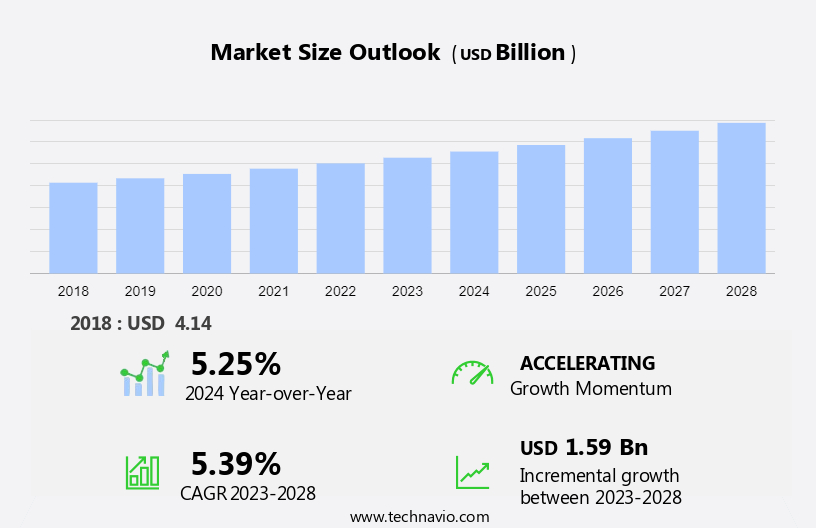
The semiconductor clock market size is forecast to increase by USD 1.59 billion at a CAGR of 5.39% between 2023 and 2028. The market is experiencing significant growth due to the increasing adoption of automotive electronics and advanced driver-assistance systems (ADAS), which rely heavily on precise timing provided by semiconductor clocks. Furthermore, the integration of advanced timing technologies, such as MEMS oscillators and crystal oscillators, in semiconductor clocks is driving market growth. However, global chip shortages pose a major challenge to market growth, as the production of semiconductor clocks and other electronic components is impacted. Despite this challenge, the market is expected to continue expanding due to the growing demand for high-performance electronic devices in various industries, including automotive, telecommunications, and consumer electronics.
Semiconductor Clock Market Size

 Request Free Sample

The market is driven by the increasing demand for timekeeping solutions in electronic devices, embedded systems, servers, personal computers, and various new-age electronic devices. Real-time clocks (RTCs) integrated in semiconductors play a crucial role in ensuring accurate timekeeping for these devices. The market is witnessing significant growth due to the increasing use of semiconductor clocks in time-critical operations, industrial devices, computing devices, consumer electronics, automotive systems, industrial automation, aerospace, telecommunications networks, and various new-age electronic devices such as smartphones, smart TVs, electric vehicles, and security systems. MEMS technologies, specifically MEMS oscillators, are gaining popularity due to their low power consumption and high precision.

Further, time base oscillators, such as crystal oscillators, continue to be widely used in semiconductor clock ICs. The automotive automation, chip production, and security systems industries also contribute to the growth of the market. The integration of semiconductor clock ICs in system-on-chip (SOC) and mems-based oscillators in AI applications is expected to further boost market growth.

Market Segmentation

The market research report provides comprehensive data (region-wise segment analysis), with forecasts and estimates in "USD billion" for the period 2024-2028, as well as historical data from 2018 - 2022 for the following segments.

  • Type
    • Oscillators
    • Resonators
    • Clock ICs
  • End-user
    • Consumer electronics
    • Telecom
    • Automobile
    • Others
  • Geography
    • APAC
      • China
      • Japan
      • South Korea
    • North America
      • US
    • Europe
    • South America
    • Middle East and Africa

By Type Insights

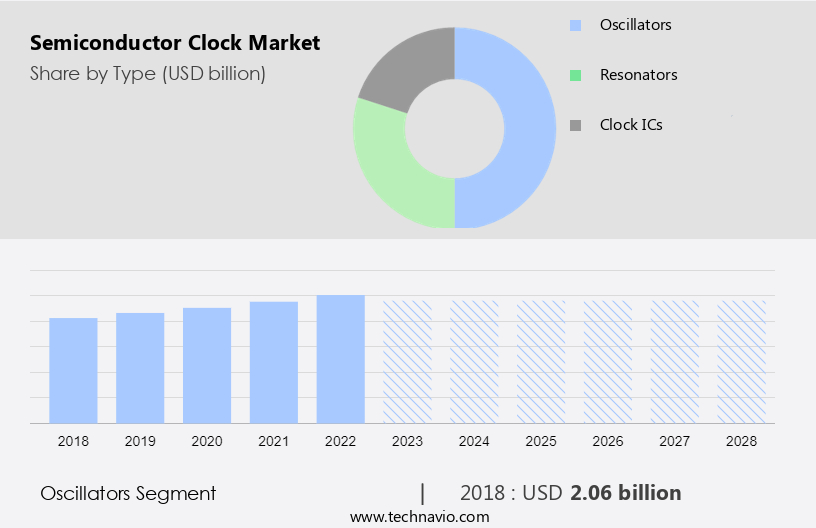
The oscillators segment is estimated to witness significant growth during the forecast period. Semiconductor clock oscillators, also known as Real-time clocks (RTC) or timebase oscillators, play a crucial role in microprocessors and microcontrollers by supplying the essential timing signals for instruction execution and synchronizing the operation of central processing units in electronic devices and embedded systems. In the realm of consumer electronics, semiconductor clock oscillators are indispensable components in various devices such as smartphones, tablets, smart TVs, and audio systems. These oscillators ensure precise timekeeping for the functioning of processors, memory, and other components. In the telecommunications sector, semiconductor clock oscillators are instrumental in maintaining synchronization and facilitating data transmission. They are employed extensively in networking equipment, including switches, routers, hubs, base stations, and other telecommunications devices.

Moreover, these clock oscillators provide synchronized clock signals for efficient data transmission and network coordination. Industrial applications, such as industrial automation, aerospace, and automotive systems, also heavily rely on semiconductor clock oscillators for time-critical operations. MEMS (Micro-Electro-Mechanical Systems) technologies, including MEMS oscillators, have emerged as a popular choice due to their low power consumption and high accuracy. Semiconductor clock ICs, which incorporate these MEMS-based oscillators, are increasingly being adopted in various applications, from computing devices and consumer electronics to industrial devices and new-age electronic devices. Semiconductor clock oscillators are also essential components in the production of chips, as they provide precise timing during the manufacturing process.
Semiconductor Clock Market Size

Get a glance at the market share of various segments Request Free Sample

The oscillators segment was valued at USD 2.06 billion in 2018 and showed a gradual increase during the forecast period. Furthermore, in the context of automotive automation, semiconductor clock oscillators ensure accurate timekeeping for various systems, including engine control, powertrain management, and safety systems. In the realm of security systems, semiconductor clock oscillators provide precise timing for various functions, including access control and alarm systems. The semiconductor sales landscape is significantly influenced by the demand for semiconductor clock oscillators, as they are integral components in various electronic devices, computing devices, consumer electronic devices, industrial devices, telecommunications networks, automotive systems, industrial automation, aerospace, and system-on-chip (SoC) applications. With the ongoing advancements in AI and other emerging technologies, the demand for semiconductor clock oscillators is expected to continue growing.

Regional Insights

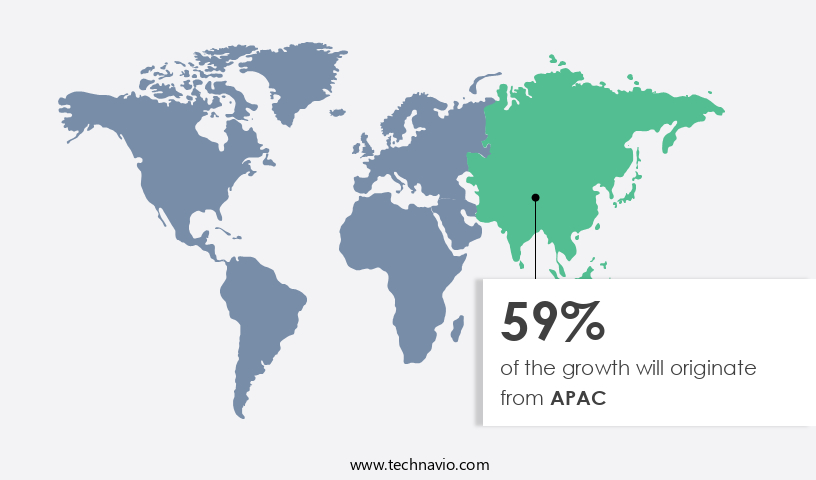
APAC is estimated to contribute 59% to the growth of the global market during the forecast period. Technavio's analysts have elaborately explained the regional trends and drivers that shape the market during the forecast period.
Semiconductor Clock Market Share by Geography

For more insights on the market share of various regions Request Free Sample

The market in the APAC region is poised for substantial expansion due to the rapid technological advancements in the semiconductor industry. Innovations in clock technologies, such as high-frequency clocks and advanced timing solutions, are driving market growth. The region's significant consumption of electronic devices and components, fueled by the increasing demand for smartphones, tablets, wearables, and consumer electronics, necessitates precise timing solutions provided by semiconductor clocks. Moreover, the expanding middle-class population and urbanization in APAC further boost the demand for electronic devices and semiconductor components, including clocks, in various applications, such as 5G networks, IoT devices, autonomous vehicles, and advanced driver-assistance systems (ADAS).

Additionally, machine learning algorithms and high data transmission rates in these applications necessitate timing accuracy, which is ensured by advanced clock technologies like Analog Devices' crystal oscillators, MEMS oscillators, and RC oscillators. Integration challenges in these complex systems necessitate the development of low-power clocks to maintain optimal performance and prolong battery life.

Our researchers analyzed the data with 2023 as the base year, along with the key drivers, trends, and challenges. A holistic analysis of drivers will help companies refine their marketing strategies to gain a competitive advantage.

Semiconductor Clock Market Driver

The growing adoption of automotive electronics and ADAS is the key driver of the market. Semiconductor clocks play a crucial role in modern electronic devices, including embedded systems, servers, personal computers, consumer electronic devices, telecommunications networks, industrial devices, automotive systems, aerospace, and system-on-chip (SoC) applications. Precise timekeeping is essential for time-critical operations, real-time data processing, and synchronization of sensors, cameras, and components. Integrated Circuit (IC) solutions, such as semiconductor clock ICs, are increasingly being adopted to meet the demands of these applications. MEMS technologies, including MEMS oscillators, have gained popularity due to their low power consumption and high stability. For instance, MEMS-based oscillators like Microchip Technology Inc.'s DSA557-03/04/05 family offer low noise jitter and high stability across a wide range of supply voltages and temperatures.

Moreover, these clocks are used in various applications, including automotive automation, ADAS technologies, and consumer electronics, such as smartphones, smart TVs, electric vehicles, and security systems. Semiconductor sales continue to grow as the demand for electronic devices and new-age electronic devices increases. Crystal oscillators and time base oscillators remain popular choices for clock generation, but MEMS-based oscillators offer advantages in terms of size, power consumption, and stability. Semiconductor clock ICs are essential components in these applications, ensuring accurate and timely responses and enabling advanced features in electronic devices.

Semiconductor Clock Market Trends

Integration of advanced timing technologies in semiconductor clocks is the upcoming trend in the market. Semiconductor clocks, integral to timekeeping in electronic devices, play a vital role in ensuring precise and synchronized operations. Real-time clocks (RTCs), a type of semiconductor clock, are widely used in embedded systems, servers, personal computers, and consumer electronic devices for maintaining accurate time. MEMS technologies, including MEMS oscillators, have emerged as a preferred choice for clock generation due to their low power consumption and high precision. In the era of IoT and AI, semiconductor clock ICs are increasingly being integrated into System-on-Chip (SoC) designs for various applications, including telecommunications networks, consumer electronics, automotive systems, industrial automation, aerospace, and more. Efficient clock distribution is essential for time-critical operations, requiring careful consideration of signal propagation, skew, and interference.

Furthermore, crystal oscillators and time base oscillators are traditional clock solutions, but MEMS-based oscillators offer advantages in terms of size, power consumption, and noise jitter. The market encompasses a diverse range of applications, from chip production and industrial devices to computing devices and consumer electronic devices, including smartphones, smart TVs, electric vehicles, and security systems.

Semiconductor Clock Market Challenge

Global chip shortages is a key challenge affecting the market growth. Semiconductor clocks, also known as Real-time clocks (RTC) or timebase oscillators, play a crucial role in timekeeping for various electronic devices, including embedded systems, servers, personal computers, consumer electronic devices, computing devices, industrial devices, telecommunications networks, automotive systems, industrial automation, aerospace, and system-on-chip (SoC). These Integrated Circuit (IC) components ensure accurate and reliable timekeeping for time-critical operations. Semiconductor clock sales have overflowed due to the increasing demand for electronic devices driven by trends such as remote work, online learning, and increased connectivity. MEMS technologies, specifically MEMS oscillators, have gained popularity due to their low power consumption and high precision.

However, the semiconductor industry has faced challenges in meeting the growing demand for semiconductor clocks due to chip shortages. Factors contributing to the chip shortages include increased demand, production challenges of semiconductor manufacturing, and geopolitical issues. The swell in demand for consumer electronic devices, such as smartphones, smart TVs, electric vehicles, and security systems, has outpaced the production capacity of semiconductor manufacturers. As a result, semiconductor clock manufacturers have faced challenges in fulfilling orders within expected timelines, leading to extended manufacturing lead times. Semiconductor clock manufacturers must navigate these challenges while maintaining high standards for noise jitter, power consumption, and precision.

Crystal oscillators and MEMS-based oscillators are popular choices due to their low power consumption and high precision. The market is expected to continue growing, driven by the increasing demand for electronic devices and the adoption of advanced technologies such as artificial intelligence (AI).

Exclusive Customer Landscape

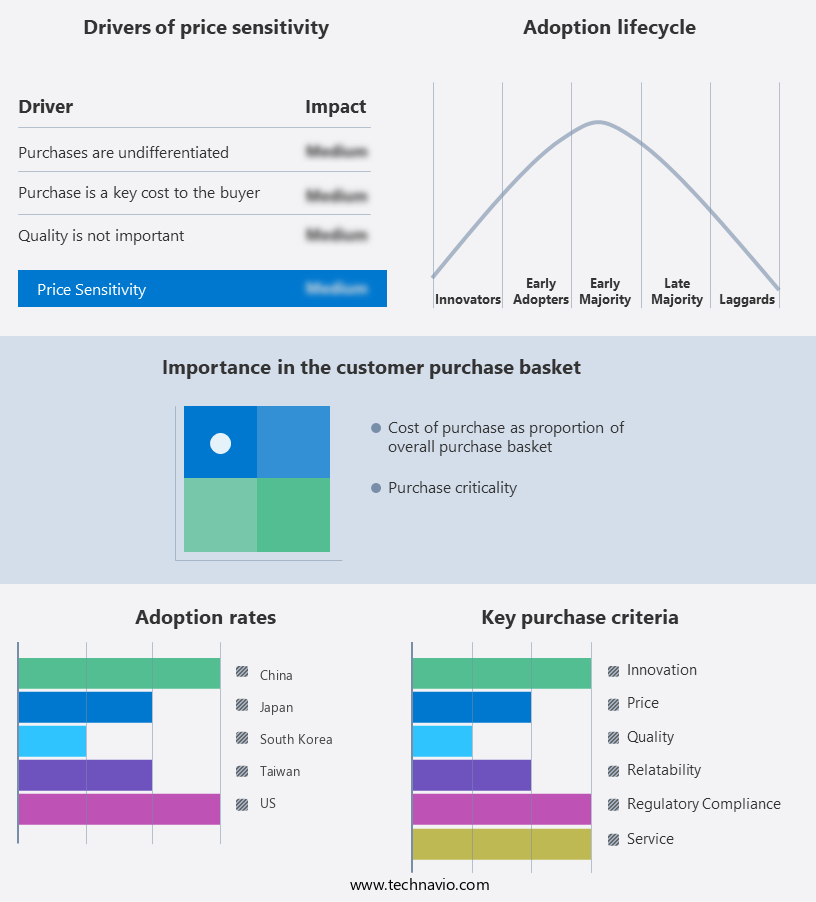
The market forecasting report includes the adoption lifecycle of the market, covering from the innovator's stage to the laggard's stage. It focuses on adoption rates in different regions based on penetration. Furthermore, the report also includes key purchase criteria and drivers of price sensitivity to help companies evaluate and develop their market growth analysis strategies.
Semiconductor Clock Market Share by Geography

 Customer Landscape

Key Companies & Market Insights

Companies are implementing various strategies, such as strategic alliances, partnerships, mergers and acquisitions, geographical expansion, and product/service launches, to enhance their presence in the market.

Abracon LLC - The company offers semiconductor clock such as ClearClock. They also offer PLL based ClearClock solutions and Third Overtone ClearClock solutions.

The market research and growth report includes detailed analyses of the competitive landscape of the market and information about key companies, including:

  • Adolf Wurth GmbH and Co. KG
  • Analog Devices Inc.
  • ASGN Inc.
  • Daishinku Corp.
  • ifm electronic gmbh
  • Infineon Technologies AG
  • KYOCERA Corp.
  • MegaChips Corp.
  • Microchip Technology Inc.
  • MinebeaMitsumi Inc.
  • Murata Manufacturing Co. Ltd.
  • NXP Semiconductors NV
  • Renesas Electronics Corp.
  • Ricoh Co. Ltd.
  • ROHM Co. Ltd.
  • Seiko Epson Corp.
  • STMicroelectronics International N.V.
  • Texas Instruments Inc.
  • TXC Corp.

Qualitative and quantitative analysis of companies has been conducted to help clients understand the wider business environment as well as the strengths and weaknesses of key market players. Data is qualitatively analyzed to categorize companies as pure play, category-focused, industry-focused, and diversified; it is quantitatively analyzed to categorize companies as dominant, leading, strong, tentative, and weak.

Research Analyst Overview

The market is driven by the increasing demand for real-time clock (RTC) integrated circuits (ICs) in various electronic devices. These ICs are essential for timekeeping in embedded systems, servers, personal computers, and consumer electronic devices. The market is witnessing significant growth due to the increasing usage of low power consumption clocks in time-critical operations. Mems technologies, such as mems oscillators, are gaining popularity in the market due to their high precision and low noise jitter. The semiconductor sales are expected to grow in the consumer electronic devices, computing devices, industrial devices, telecommunications networks, automotive systems, industrial automation, aerospace, and newage electronic devices sectors. However, the market faces challenges such as noise jitter and power consumption in high-frequency applications. The integration of AI and system-on-chip (SOC) technologies in semiconductor clocks is expected to provide opportunities for market growth.

Market Scope

Report Coverage

Details

Page number

180

Base year

2023

Historic period

2018 - 2022

Forecast period

2024-2028

Growth momentum & CAGR

Accelerate at a CAGR of 5.39%

Market Growth 2024-2028

USD 1.59 billion

Market structure

Fragmented

YoY growth 2023-2024(%)

5.25

Regional analysis

APAC, North America, Europe, South America, and Middle East and Africa

Performing market contribution

APAC at 59%

Key countries

US, China, Japan, Taiwan, and South Korea

Competitive landscape

Leading Companies, Market Positioning of Companies, Competitive Strategies, and Industry Risks

Key companies profiled

Abracon LLC, Adolf Wurth GmbH and Co. KG, Analog Devices Inc., ASGN Inc., Daishinku Corp., ifm electronic gmbh, Infineon Technologies AG, KYOCERA Corp., MegaChips Corp., Microchip Technology Inc., MinebeaMitsumi Inc., Murata Manufacturing Co. Ltd., NXP Semiconductors NV, Renesas Electronics Corp., Ricoh Co. Ltd., ROHM Co. Ltd., Seiko Epson Corp., STMicroelectronics International N.V., Texas Instruments Inc., and TXC Corp.

Market dynamics

Parent market analysis, market growth inducers and obstacles, market forecast, fast-growing and slow-growing segment analysis, COVID-19 impact and recovery analysis and future consumer dynamics, market condition analysis for the forecast period

Customization purview

If our market report has not included the data that you are looking for, you can reach out to our analysts and get segments customized.

Request Free Sample

What are the Key Data Covered in this Market Research and Growth Report?

  • CAGR of the market during the forecast period
  • Detailed information on factors that will drive the market growth and forecasting between 2024 and 2028
  • Precise estimation of the size of the market  and its contribution of the market in focus to the parent market
  • Accurate predictions about upcoming market growth and trends and changes in consumer behaviour
  • Growth of the market across APAC, North America, Europe, South America, and Middle East and Africa
  • A thorough analysis of the market's competitive landscape and detailed information about companies
  • Comprehensive analysis of factors that will challenge the growth of market companies

We can help! Our analysts can customize this market research report to meet your requirements. Get in touch

1 Executive Summary

  • 1.1 Market overview
    • Exhibit 01: Executive Summary – Chart on Market Overview
    • Exhibit 02: Executive Summary – Data Table on Market Overview
    • Exhibit 03: Executive Summary – Chart on Global Market Characteristics
    • Exhibit 04: Executive Summary – Chart on Market by Geography
    • Exhibit 05: Executive Summary – Chart on Market Segmentation by Type
    • Exhibit 06: Executive Summary – Chart on Market Segmentation by End-user
    • Exhibit 07: Executive Summary – Chart on Incremental Growth
    • Exhibit 08: Executive Summary – Data Table on Incremental Growth
    • Exhibit 09: Executive Summary – Chart on Vendor Market Positioning

2 Market Landscape

  • 2.1 Market ecosystem
    • Exhibit 10: Parent market
    • Exhibit 11: Market Characteristics

3 Market Sizing

  • 3.1 Market definition
    • Exhibit 12: Offerings of vendors included in the market definition
  • 3.2 Market segment analysis
    • Exhibit 13: Market segments
  • 3.3 Market size 2023
    • 3.4 Market outlook: Forecast for 2023-2028
      • Exhibit 14: Chart on Global - Market size and forecast 2023-2028 ($ billion)
      • Exhibit 15: Data Table on Global - Market size and forecast 2023-2028 ($ billion)
      • Exhibit 16: Chart on Global Market: Year-over-year growth 2023-2028 (%)
      • Exhibit 17: Data Table on Global Market: Year-over-year growth 2023-2028 (%)

    4 Historic Market Size

    • 4.1 Global semiconductor clock market 2018 - 2022
      • Exhibit 18: Historic Market Size – Data Table on global semiconductor clock market 2018 - 2022 ($ billion)
    • 4.2 Type Segment Analysis 2018 - 2022
      • Exhibit 19: Historic Market Size – Type Segment 2018 - 2022 ($ billion)
    • 4.3 End-user Segment Analysis 2018 - 2022
      • Exhibit 20: Historic Market Size – End-user Segment 2018 - 2022 ($ billion)
    • 4.4 Geography Segment Analysis 2018 - 2022
      • Exhibit 21: Historic Market Size – Geography Segment 2018 - 2022 ($ billion)
    • 4.5 Country Segment Analysis 2018 - 2022
      • Exhibit 22: Historic Market Size – Country Segment 2018 - 2022 ($ billion)

    5 Five Forces Analysis

    • 5.1 Five forces summary
      • Exhibit 23: Five forces analysis - Comparison between 2023 and 2028
    • 5.2 Bargaining power of buyers
      • Exhibit 24: Chart on Bargaining power of buyers – Impact of key factors 2023 and 2028
    • 5.3 Bargaining power of suppliers
      • Exhibit 25: Bargaining power of suppliers – Impact of key factors in 2023 and 2028
    • 5.4 Threat of new entrants
      • Exhibit 26: Threat of new entrants – Impact of key factors in 2023 and 2028
    • 5.5 Threat of substitutes
      • Exhibit 27: Threat of substitutes – Impact of key factors in 2023 and 2028
    • 5.6 Threat of rivalry
      • Exhibit 28: Threat of rivalry – Impact of key factors in 2023 and 2028
    • 5.7 Market condition
      • Exhibit 29: Chart on Market condition - Five forces 2023 and 2028

    6 Market Segmentation by Type

    • 6.1 Market segments
      • Exhibit 30: Chart on Type - Market share 2023-2028 (%)
      • Exhibit 31: Data Table on Type - Market share 2023-2028 (%)
    • 6.2 Comparison by Type
      • Exhibit 32: Chart on Comparison by Type
      • Exhibit 33: Data Table on Comparison by Type
    • 6.3 Oscillators - Market size and forecast 2023-2028
      • Exhibit 34: Chart on Oscillators - Market size and forecast 2023-2028 ($ billion)
      • Exhibit 35: Data Table on Oscillators - Market size and forecast 2023-2028 ($ billion)
      • Exhibit 36: Chart on Oscillators - Year-over-year growth 2023-2028 (%)
      • Exhibit 37: Data Table on Oscillators - Year-over-year growth 2023-2028 (%)
    • 6.4 Resonators - Market size and forecast 2023-2028
      • Exhibit 38: Chart on Resonators - Market size and forecast 2023-2028 ($ billion)
      • Exhibit 39: Data Table on Resonators - Market size and forecast 2023-2028 ($ billion)
      • Exhibit 40: Chart on Resonators - Year-over-year growth 2023-2028 (%)
      • Exhibit 41: Data Table on Resonators - Year-over-year growth 2023-2028 (%)
    • 6.5 Clock ICs - Market size and forecast 2023-2028
      • Exhibit 42: Chart on Clock ICs - Market size and forecast 2023-2028 ($ billion)
      • Exhibit 43: Data Table on Clock ICs - Market size and forecast 2023-2028 ($ billion)
      • Exhibit 44: Chart on Clock ICs - Year-over-year growth 2023-2028 (%)
      • Exhibit 45: Data Table on Clock ICs - Year-over-year growth 2023-2028 (%)
    • 6.6 Market opportunity by Type
      • Exhibit 46: Market opportunity by Type ($ billion)
      • Exhibit 47: Data Table on Market opportunity by Type ($ billion)

    7 Market Segmentation by End-user

    • 7.1 Market segments
      • Exhibit 48: Chart on End-user - Market share 2023-2028 (%)
      • Exhibit 49: Data Table on End-user - Market share 2023-2028 (%)
    • 7.2 Comparison by End-user
      • Exhibit 50: Chart on Comparison by End-user
      • Exhibit 51: Data Table on Comparison by End-user
    • 7.3 Consumer electronics - Market size and forecast 2023-2028
      • Exhibit 52: Chart on Consumer electronics - Market size and forecast 2023-2028 ($ billion)
      • Exhibit 53: Data Table on Consumer electronics - Market size and forecast 2023-2028 ($ billion)
      • Exhibit 54: Chart on Consumer electronics - Year-over-year growth 2023-2028 (%)
      • Exhibit 55: Data Table on Consumer electronics - Year-over-year growth 2023-2028 (%)
    • 7.4 Telecom - Market size and forecast 2023-2028
      • Exhibit 56: Chart on Telecom - Market size and forecast 2023-2028 ($ billion)
      • Exhibit 57: Data Table on Telecom - Market size and forecast 2023-2028 ($ billion)
      • Exhibit 58: Chart on Telecom - Year-over-year growth 2023-2028 (%)
      • Exhibit 59: Data Table on Telecom - Year-over-year growth 2023-2028 (%)
    • 7.5 Automobile - Market size and forecast 2023-2028
      • Exhibit 60: Chart on Automobile - Market size and forecast 2023-2028 ($ billion)
      • Exhibit 61: Data Table on Automobile - Market size and forecast 2023-2028 ($ billion)
      • Exhibit 62: Chart on Automobile - Year-over-year growth 2023-2028 (%)
      • Exhibit 63: Data Table on Automobile - Year-over-year growth 2023-2028 (%)
    • 7.6 Others - Market size and forecast 2023-2028
      • Exhibit 64: Chart on Others - Market size and forecast 2023-2028 ($ billion)
      • Exhibit 65: Data Table on Others - Market size and forecast 2023-2028 ($ billion)
      • Exhibit 66: Chart on Others - Year-over-year growth 2023-2028 (%)
      • Exhibit 67: Data Table on Others - Year-over-year growth 2023-2028 (%)
    • 7.7 Market opportunity by End-user
      • Exhibit 68: Market opportunity by End-user ($ billion)
      • Exhibit 69: Data Table on Market opportunity by End-user ($ billion)

    8 Customer Landscape

    • 8.1 Customer landscape overview
      • Exhibit 70: Analysis of price sensitivity, lifecycle, customer purchase basket, adoption rates, and purchase criteria

    9 Geographic Landscape

    • 9.1 Geographic segmentation
      • Exhibit 71: Chart on Market share by geography 2023-2028 (%)
      • Exhibit 72: Data Table on Market share by geography 2023-2028 (%)
    • 9.2 Geographic comparison
      • Exhibit 73: Chart on Geographic comparison
      • Exhibit 74: Data Table on Geographic comparison
    • 9.3 APAC - Market size and forecast 2023-2028
      • Exhibit 75: Chart on APAC - Market size and forecast 2023-2028 ($ billion)
      • Exhibit 76: Data Table on APAC - Market size and forecast 2023-2028 ($ billion)
      • Exhibit 77: Chart on APAC - Year-over-year growth 2023-2028 (%)
      • Exhibit 78: Data Table on APAC - Year-over-year growth 2023-2028 (%)
    • 9.4 North America - Market size and forecast 2023-2028
      • Exhibit 79: Chart on North America - Market size and forecast 2023-2028 ($ billion)
      • Exhibit 80: Data Table on North America - Market size and forecast 2023-2028 ($ billion)
      • Exhibit 81: Chart on North America - Year-over-year growth 2023-2028 (%)
      • Exhibit 82: Data Table on North America - Year-over-year growth 2023-2028 (%)
    • 9.5 Europe - Market size and forecast 2023-2028
      • Exhibit 83: Chart on Europe - Market size and forecast 2023-2028 ($ billion)
      • Exhibit 84: Data Table on Europe - Market size and forecast 2023-2028 ($ billion)
      • Exhibit 85: Chart on Europe - Year-over-year growth 2023-2028 (%)
      • Exhibit 86: Data Table on Europe - Year-over-year growth 2023-2028 (%)
    • 9.6 South America - Market size and forecast 2023-2028
      • Exhibit 87: Chart on South America - Market size and forecast 2023-2028 ($ billion)
      • Exhibit 88: Data Table on South America - Market size and forecast 2023-2028 ($ billion)
      • Exhibit 89: Chart on South America - Year-over-year growth 2023-2028 (%)
      • Exhibit 90: Data Table on South America - Year-over-year growth 2023-2028 (%)
    • 9.7 Middle East and Africa - Market size and forecast 2023-2028
      • Exhibit 91: Chart on Middle East and Africa - Market size and forecast 2023-2028 ($ billion)
      • Exhibit 92: Data Table on Middle East and Africa - Market size and forecast 2023-2028 ($ billion)
      • Exhibit 93: Chart on Middle East and Africa - Year-over-year growth 2023-2028 (%)
      • Exhibit 94: Data Table on Middle East and Africa - Year-over-year growth 2023-2028 (%)
    • 9.8 China - Market size and forecast 2023-2028
      • Exhibit 95: Chart on China - Market size and forecast 2023-2028 ($ billion)
      • Exhibit 96: Data Table on China - Market size and forecast 2023-2028 ($ billion)
      • Exhibit 97: Chart on China - Year-over-year growth 2023-2028 (%)
      • Exhibit 98: Data Table on China - Year-over-year growth 2023-2028 (%)
    • 9.9 US - Market size and forecast 2023-2028
      • Exhibit 99: Chart on US - Market size and forecast 2023-2028 ($ billion)
      • Exhibit 100: Data Table on US - Market size and forecast 2023-2028 ($ billion)
      • Exhibit 101: Chart on US - Year-over-year growth 2023-2028 (%)
      • Exhibit 102: Data Table on US - Year-over-year growth 2023-2028 (%)
    • 9.10 Japan - Market size and forecast 2023-2028
      • Exhibit 103: Chart on Japan - Market size and forecast 2023-2028 ($ billion)
      • Exhibit 104: Data Table on Japan - Market size and forecast 2023-2028 ($ billion)
      • Exhibit 105: Chart on Japan - Year-over-year growth 2023-2028 (%)
      • Exhibit 106: Data Table on Japan - Year-over-year growth 2023-2028 (%)
    • 9.11 Taiwan - Market size and forecast 2023-2028
      • Exhibit 107: Chart on Taiwan - Market size and forecast 2023-2028 ($ billion)
      • Exhibit 108: Data Table on Taiwan - Market size and forecast 2023-2028 ($ billion)
      • Exhibit 109: Chart on Taiwan - Year-over-year growth 2023-2028 (%)
      • Exhibit 110: Data Table on Taiwan - Year-over-year growth 2023-2028 (%)
    • 9.12 South Korea - Market size and forecast 2023-2028
      • Exhibit 111: Chart on South Korea - Market size and forecast 2023-2028 ($ billion)
      • Exhibit 112: Data Table on South Korea - Market size and forecast 2023-2028 ($ billion)
      • Exhibit 113: Chart on South Korea - Year-over-year growth 2023-2028 (%)
      • Exhibit 114: Data Table on South Korea - Year-over-year growth 2023-2028 (%)
    • 9.13 Market opportunity by geography
      • Exhibit 115: Market opportunity by geography ($ billion)
      • Exhibit 116: Data Tables on Market opportunity by geography ($ billion)

    10 Drivers, Challenges, and Trends

    • 10.1 Market drivers
      • 10.2 Market challenges
        • 10.3 Impact of drivers and challenges
          • Exhibit 117: Impact of drivers and challenges in 2023 and 2028
        • 10.4 Market trends

          11 Vendor Landscape

          • 11.1 Overview
            • 11.2 Vendor landscape
              • Exhibit 118: Overview on Criticality of inputs and Factors of differentiation
            • 11.3 Landscape disruption
              • Exhibit 119: Overview on factors of disruption
            • 11.4 Industry risks
              • Exhibit 120: Impact of key risks on business

            12 Vendor Analysis

            • 12.1 Vendors covered
              • Exhibit 121: Vendors covered
            • 12.2 Market positioning of vendors
              • Exhibit 122: Matrix on vendor position and classification
            • 12.3 Abracon LLC
              • Exhibit 123: Abracon LLC - Overview
              • Exhibit 124: Abracon LLC - Product / Service
              • Exhibit 125: Abracon LLC - Key offerings
            • 12.4 Adolf Wurth GmbH and Co. KG
              • Exhibit 126: Adolf Wurth GmbH and Co. KG - Overview
              • Exhibit 127: Adolf Wurth GmbH and Co. KG - Business segments
              • Exhibit 128: Adolf Wurth GmbH and Co. KG - Key news
              • Exhibit 129: Adolf Wurth GmbH and Co. KG - Key offerings
              • Exhibit 130: Adolf Wurth GmbH and Co. KG - Segment focus
            • 12.5 Analog Devices Inc.
              • Exhibit 131: Analog Devices Inc. - Overview
              • Exhibit 132: Analog Devices Inc. - Business segments
              • Exhibit 133: Analog Devices Inc. - Key news
              • Exhibit 134: Analog Devices Inc. - Key offerings
              • Exhibit 135: Analog Devices Inc. - Segment focus
            • 12.6 Infineon Technologies AG
              • Exhibit 136: Infineon Technologies AG - Overview
              • Exhibit 137: Infineon Technologies AG - Business segments
              • Exhibit 138: Infineon Technologies AG - Key news
              • Exhibit 139: Infineon Technologies AG - Key offerings
              • Exhibit 140: Infineon Technologies AG - Segment focus
            • 12.7 KYOCERA Corp.
              • Exhibit 141: KYOCERA Corp. - Overview
              • Exhibit 142: KYOCERA Corp. - Business segments
              • Exhibit 143: KYOCERA Corp. - Key news
              • Exhibit 144: KYOCERA Corp. - Key offerings
              • Exhibit 145: KYOCERA Corp. - Segment focus
            • 12.8 MegaChips Corp.
              • Exhibit 146: MegaChips Corp. - Overview
              • Exhibit 147: MegaChips Corp. - Product / Service
              • Exhibit 148: MegaChips Corp. - Key offerings
            • 12.9 Microchip Technology Inc.
              • Exhibit 149: Microchip Technology Inc. - Overview
              • Exhibit 150: Microchip Technology Inc. - Business segments
              • Exhibit 151: Microchip Technology Inc. - Key offerings
              • Exhibit 152: Microchip Technology Inc. - Segment focus
            • 12.10 Murata Manufacturing Co. Ltd.
              • Exhibit 153: Murata Manufacturing Co. Ltd. - Overview
              • Exhibit 154: Murata Manufacturing Co. Ltd. - Business segments
              • Exhibit 155: Murata Manufacturing Co. Ltd. - Key news
              • Exhibit 156: Murata Manufacturing Co. Ltd. - Key offerings
              • Exhibit 157: Murata Manufacturing Co. Ltd. - Segment focus
            • 12.11 NXP Semiconductors NV
              • Exhibit 158: NXP Semiconductors NV - Overview
              • Exhibit 159: NXP Semiconductors NV - Product / Service
              • Exhibit 160: NXP Semiconductors NV - Key news
              • Exhibit 161: NXP Semiconductors NV - Key offerings
            • 12.12 Renesas Electronics Corp.
              • Exhibit 162: Renesas Electronics Corp. - Overview
              • Exhibit 163: Renesas Electronics Corp. - Business segments
              • Exhibit 164: Renesas Electronics Corp. - Key offerings
              • Exhibit 165: Renesas Electronics Corp. - Segment focus
            • 12.13 Ricoh Co. Ltd.
              • Exhibit 166: Ricoh Co. Ltd. - Overview
              • Exhibit 167: Ricoh Co. Ltd. - Business segments
              • Exhibit 168: Ricoh Co. Ltd. - Key news
              • Exhibit 169: Ricoh Co. Ltd. - Key offerings
              • Exhibit 170: Ricoh Co. Ltd. - Segment focus
            • 12.14 Seiko Epson Corp.
              • Exhibit 171: Seiko Epson Corp. - Overview
              • Exhibit 172: Seiko Epson Corp. - Business segments
              • Exhibit 173: Seiko Epson Corp. - Key news
              • Exhibit 174: Seiko Epson Corp. - Key offerings
              • Exhibit 175: Seiko Epson Corp. - Segment focus
            • 12.15 STMicroelectronics International N.V.
              • Exhibit 176: STMicroelectronics International N.V. - Overview
              • Exhibit 177: STMicroelectronics International N.V. - Business segments
              • Exhibit 178: STMicroelectronics International N.V. - Key news
              • Exhibit 179: STMicroelectronics International N.V. - Key offerings
              • Exhibit 180: STMicroelectronics International N.V. - Segment focus
            • 12.16 Texas Instruments Inc.
              • Exhibit 181: Texas Instruments Inc. - Overview
              • Exhibit 182: Texas Instruments Inc. - Business segments
              • Exhibit 183: Texas Instruments Inc. - Key news
              • Exhibit 184: Texas Instruments Inc. - Key offerings
              • Exhibit 185: Texas Instruments Inc. - Segment focus
            • 12.17 TXC Corp.
              • Exhibit 186: TXC Corp. - Overview
              • Exhibit 187: TXC Corp. - Product / Service
              • Exhibit 188: TXC Corp. - Key offerings

            13 Appendix

            • 13.1 Scope of the report
              • 13.2 Inclusions and exclusions checklist
                • Exhibit 189: Inclusions checklist
                • Exhibit 190: Exclusions checklist
              • 13.3 Currency conversion rates for US$
                • Exhibit 191: Currency conversion rates for US$
              • 13.4 Research methodology
                • Exhibit 192: Research methodology
                • Exhibit 193: Validation techniques employed for market sizing
                • Exhibit 194: Information sources
              • 13.5 List of abbreviations
                • Exhibit 195: List of abbreviations

              Research Methodology

              Technavio presents a detailed picture of the market by way of study, synthesis, and summation of data from multiple sources. The analysts have presented the various facets of the market with a particular focus on identifying the key industry influencers. The data thus presented is comprehensive, reliable, and the result of extensive research, both primary and secondary.

              INFORMATION SOURCES

              Primary sources

              • Manufacturers and suppliers
              • Channel partners
              • Industry experts
              • Strategic decision makers

              Secondary sources

              • Industry journals and periodicals
              • Government data
              • Financial reports of key industry players
              • Historical data
              • Press releases

              DATA ANALYSIS

              Data Synthesis

              • Collation of data
              • Estimation of key figures
              • Analysis of derived insights

              Data Validation

              • Triangulation with data models
              • Reference against proprietary databases
              • Corroboration with industry experts

              REPORT WRITING

              Qualitative

              • Market drivers
              • Market challenges
              • Market trends
              • Five forces analysis

              Quantitative

              • Market size and forecast
              • Market segmentation
              • Geographical insights
              • Competitive landscape

              Interested in this report?

              Get your sample now to see our research methodology and insights!

              Download Now

              Frequently Asked Questions

              Semiconductor Clock market growth will increase by $ 1.59 bn during 2024-2028.

              The Semiconductor Clock market is expected to grow at a CAGR of 5.39% during 2024-2028.

              Semiconductor Clock market is segmented by Type( Oscillators, Resonators, Clock ICs) End-user( Consumer electronics, Telecom, Automobile, Others)

              Abracon LLC, Adolf Wurth GmbH and Co. KG, Analog Devices Inc., ASGN Inc., Daishinku Corp., ifm electronic gmbh, Infineon Technologies AG, KYOCERA Corp., MegaChips Corp., Microchip Technology Inc., MinebeaMitsumi Inc., Murata Manufacturing Co. Ltd., NXP Semiconductors NV, Renesas Electronics Corp., Ricoh Co. Ltd., ROHM Co. Ltd., Seiko Epson Corp., STMicroelectronics International N.V., Texas Instruments Inc., TXC Corp. are a few of the key vendors in the Semiconductor Clock market.

              APAC will register the highest growth rate of 59% among the other regions. Therefore, the Semiconductor Clock market in APAC is expected to garner significant business opportunities for the vendors during the forecast period.

              US, China, Japan, Taiwan, South Korea

              • Growing adoption of automotive electronics and ADASModern vehicles incorporate a wide range of electronic systems is the driving factor this market.
              • including infotainment systems is the driving factor this market.
              • navigation is the driving factor this market.
              • connectivity features is the driving factor this market.
              • and safety systems. The integration of these complex in-car electronics requires precise timing and synchronization is the driving factor this market.
              • driving the demand for semiconductor clocks. ADAS technologies is the driving factor this market.
              • such as adaptive cruise control is the driving factor this market.
              • lane departure warning is the driving factor this market.
              • automatic emergency braking is the driving factor this market.
              • and parking assistance is the driving factor this market.
              • rely on real-time data processing and coordination. Semiconductor clocks are essential for synchronizing sensors is the driving factor this market.
              • cameras is the driving factor this market.
              • and components to ensure accurate and timely responses. For instance is the driving factor this market.
              • the DSA557-03/04/05 family of crystal-less clock generators from Microchip Technology Inc. includes several PCIe-compliant clocks for ADAS computer applications. The clock generator employs tried-and-true silicon micro-electromechanical systems (MEMS) technology to produce 100 MHz differential output clocks with low jitter and high stability across a wide range of supply voltages and automotive grade-2 temperatures (-40 Degree Celsius to 105 Degree Celsius). Automotive-grade MEMS oscillators meet or exceed the timing-critical systems reliability is the driving factor this market.
              • temperature is the driving factor this market.
              • shock is the driving factor this market.
              • and vibration criteria. In addition to that is the driving factor this market.
              • as vehicles become more connected is the driving factor this market.
              • semiconductor clocks play a crucial role in coordinating communication networks within the vehicle. This includes the synchronization of in-vehicle communication buses is the driving factor this market.
              • such as controller area network (CAN) and Ethernet is the driving factor this market.
              • to facilitate data exchange between electronic control units (ECUs). Moreover is the driving factor this market.
              • V2X communication is the driving factor this market.
              • which enables vehicles to communicate with each other and with infrastructure is the driving factor this market.
              • relies on accurate timing for coordination. Semiconductor clocks contribute to synchronization in V2X communication systems is the driving factor this market.
              • supporting features such as cooperative collision avoidance. The integration of advanced in-cabin electronics and HMI features is the driving factor this market.
              • such as digital instrument clusters is the driving factor this market.
              • touchscreen displays is the driving factor this market.
              • and voice-activated controls is the driving factor this market.
              • requires precise timing. Semiconductor clocks contribute to the synchronization of these features for a seamless user experience. Furthermore is the driving factor this market.
              • electric vehicles (EVs) incorporate complex power management systems that require precise timing for efficient energy distribution and charging. Semiconductor clocks contribute to the coordination of power electronics in EVs. Thus is the driving factor this market.
              • the growing adoption of automotive electronics and ADAS will enhance the growth of the global semiconductor clock market during the forecast period. is the driving factor this market.

              The Semiconductor Clock market vendors should focus on grabbing business opportunities from the Oscillators segment as it accounted for the largest market share in the base year.
