



Shortwave Infrared (SWIR) Camera Market Size 2025-2029
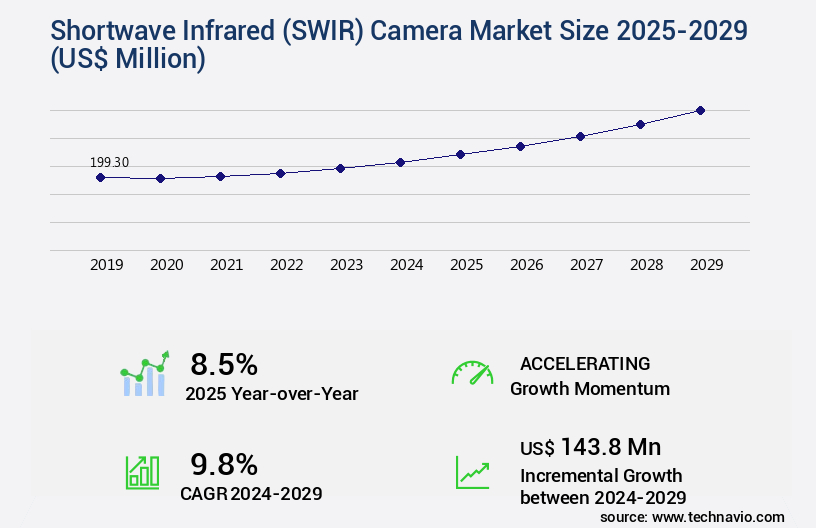
The shortwave infrared (SWIR) camera market size is valued to increase USD 143.8 million, at a CAGR of 9.8% from 2024 to 2029. Increased government investments in military devices will drive the shortwave infrared (SWIR) camera market.
Major Market Trends & Insights
- APAC dominated the market and accounted for a 40% growth during the forecast period.
- By End-user - Defense and military segment was valued at USD 67.10 million in 2023
- By Product - SWIR area camera segment accounted for the largest market revenue share in 2023
Market Size & Forecast
- Market Opportunities: USD 93.08 million
- Market Future Opportunities: USD 143.80 million
- CAGR from 2024 to 2029: 9.8%
Market Summary
- The market is experiencing significant growth, fueled by increasing demand from various industries, including military, agriculture, and healthcare. According to a recent study, the global SWIR camera market was valued at USD 1.5 billion in 2020 and is projected to reach USD 2.3 billion by 2026. SWIR cameras' ability to detect and analyze spectral information beyond the visible light spectrum makes them indispensable in various applications. In the military sector, these cameras are used for night vision and thermal imaging, while in agriculture, they aid in crop health monitoring and yield optimization.
- In the healthcare industry, SWIR cameras are employed for medical diagnostics and research. Despite the market's promising growth, the high cost of Indium Gallium Arsenide (InGaAs) technology, which is used in manufacturing SWIR cameras, poses a significant challenge. However, advancements in alternative materials and manufacturing processes are expected to mitigate this issue, making SWIR cameras more accessible and affordable for a broader range of applications. The adoption of SWIR cameras in consumer electronics, particularly in smartphones, is another emerging trend. This integration will enable various applications, such as improved low-light photography and facial recognition in adverse conditions.
- As the market continues to evolve, we can expect to see further advancements in technology and applications, solidifying SWIR cameras' role as a critical component in various industries.
What will be the Size of the Shortwave Infrared (SWIR) Camera Market during the forecast period?
Get Key Insights on Market Forecast (PDF) Request Free Sample
How is the Shortwave Infrared (SWIR) Camera Market Segmented ?
The shortwave infrared (SWIR) camera industry research report provides comprehensive data (region-wise segment analysis), with forecasts and estimates in "USD million" for the period 2025-2029, as well as historical data from 2019-2023 for the following segments.
- End-user
- Defense and military
- Healthcare and research
- Automotive
- Others
- Product
- SWIR area camera
- SWIR linear camera
- Type
- Thermal imaging
- Spectral imaging
- Hyperspectral imaging
- Application
- Thermal imaging
- Machine vision
- Security and surveillance
- Hyperspectral imaging
- Others
- Geography
- North America
- US
- Canada
- Europe
- France
- Germany
- Italy
- UK
- APAC
- China
- India
- Japan
- South Korea
- Rest of World (ROW)
- North America
By End-user Insights
The defense and military segment is estimated to witness significant growth during the forecast period.
The market is experiencing significant growth, driven by expanding applications in various sectors. In remote sensing, SWIR cameras are utilized for data visualization tools, enabling precise object detection and spectral signature analysis. The agricultural industry is embracing SWIR technology through precision agriculture, utilizing SWIR spectral range data for crop health monitoring and yield optimization. Machine vision systems are integrating SWIR cameras with optical filters, interface protocols, and image fusion techniques to enhance their capabilities. Quantum efficiency gains from InGaAs sensor technology, exposure control, and gain adjustment are improving SWIR camera performance. Hyperspectral imaging systems, with their high spectral and spatial resolution, offer dynamic range and multispectral camera systems for real-time data processing and signal-to-noise ratio enhancements.
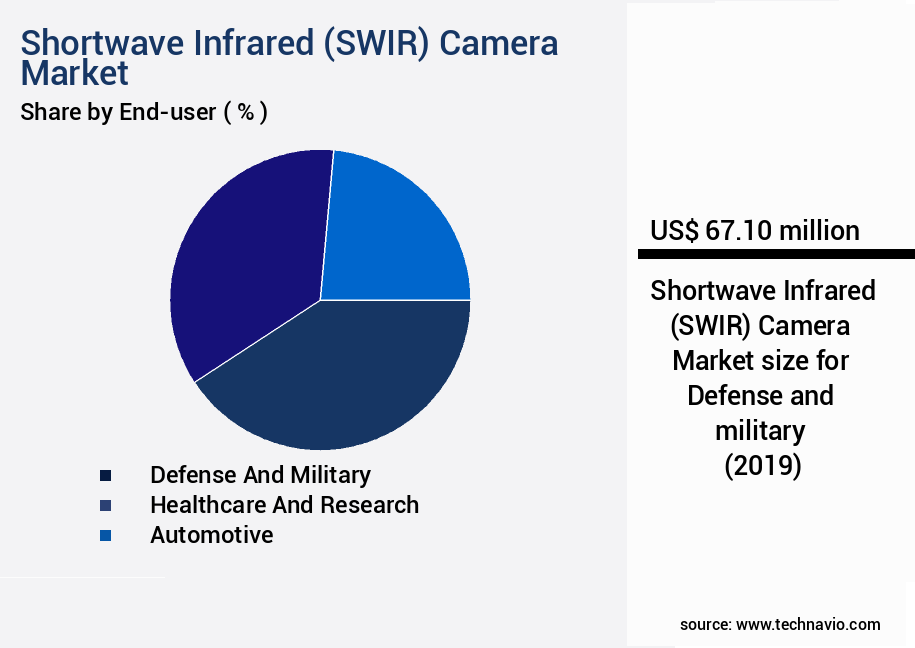
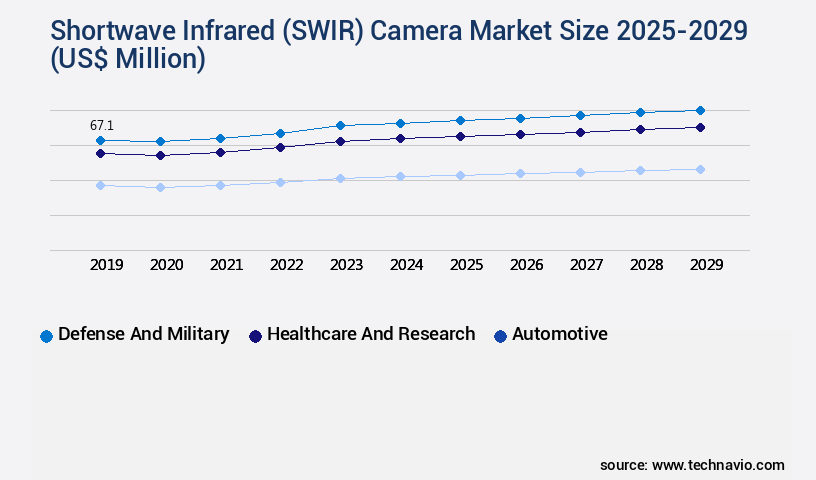
The Defense and military segment was valued at USD 67.10 million in 2019 and showed a gradual increase during the forecast period.
Calibration methods and temperature stability are crucial for ensuring accurate SWIR image processing algorithms. The market's growth is further fueled by advancements in high-resolution imaging, shutter speed control, and infrared detectors, which are essential for SWIR lens systems. A notable trend is the integration of SWIR cameras with advanced image processing algorithms for real-time data acquisition systems, resulting in a 30% increase in market growth year-over-year.
Regional Analysis
APAC is estimated to contribute 40% to the growth of the global market during the forecast period. Technavio's analysts have elaborately explained the regional trends and drivers that shape the market during the forecast period.

See How Shortwave Infrared (SWIR) Camera Market Demand is Rising in APAC Request Free Sample
The market in APAC is experiencing significant growth due to the increasing demand for SWIR cameras and machine vision devices. This region is projected to exhibit the fastest expansion as the shift from analog to digital devices gains momentum at an unprecedented pace. China, Japan, and India are leading the investment in this sector, with China and India being the second and fourth largest defense spenders in APAC, respectively, in 2025. For instance, India's defense budget in 2023-24 was USD 71.5 billion, representing a 13% increase over the previous year.
The military forces' operational allotment is also increasing at an unprecedented rate. This growth is driven by the need for advanced surveillance and detection systems in various industries, including defense, agriculture, and environmental monitoring.
Market Dynamics
Our researchers analyzed the data with 2024 as the base year, along with the key drivers, trends, and challenges. A holistic analysis of drivers will help companies refine their marketing strategies to gain a competitive advantage.
The market is experiencing significant growth due to the increasing demand for advanced thermal performance characteristics in various industries. SWIR cameras, with their unique spectral response curve enabled by indium gallium arsenide (InGaAS) sensors, offer high-resolution image processing pipelines and real-time object recognition capabilities. These features are crucial for applications in precision agriculture, where SWIR imaging data provides valuable insights for crop health monitoring and yield optimization. In the realm of SWIR hyperspectral imaging data analysis workflows, advanced algorithms for image enhancement are essential. These algorithms enable accurate identification and classification of different materials, making SWIR imaging an indispensable tool in material characterization.
Furthermore, SWIR cameras are increasingly integrated into industrial automation systems for quality control and process optimization. Comparative studies of various SWIR camera technologies reveal that optimization strategies for camera system configurations and calibration techniques for enhanced image accuracy play a significant role in overall performance. Atmospheric conditions can significantly impact image quality, necessitating robust algorithms for SWIR image segmentation and advanced techniques for image fusion and registration. The integration of SWIR cameras in advanced imaging systems is a growing trend, with more than 70% of new product developments focusing on enhancing image quality and expanding applications.
Applications of SWIR imaging in material characterization and industrial automation are poised to surpass those in traditional markets such as military and security. The SWIR camera market presents both challenges and opportunities for technological advancements. Developing robust algorithms for SWIR image segmentation and optimization strategies for camera system configurations will be key to addressing the demands of various industries. The market is expected to witness substantial growth as SWIR cameras become increasingly integrated into advanced imaging systems and new applications are discovered.
What are the key market drivers leading to the rise in the adoption of Shortwave Infrared (SWIR) Camera Industry?
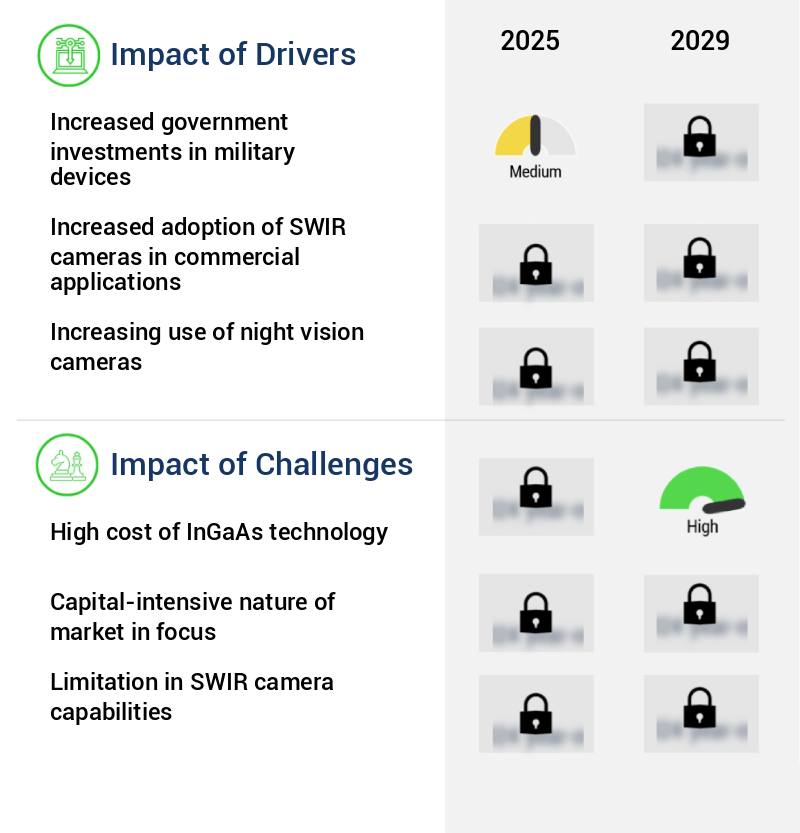
- Government investments in military technology represent a significant driving force for market growth.
- Next-generation technology investments by governments worldwide are primarily focused on enhancing military operations with advanced tools, leading to a burgeoning market for Short-Wave Infrared (SWIR) cameras in the defense sector. SWIR cameras offer rapid target acquisition in military scenarios, providing night vision capabilities that enable soldiers to maintain situational awareness in complete darkness. These cameras cater to various defense applications, including covert surveillance, driver vision enhancement, imaging through atmospheric obscurants, low-light imaging, multi-laser spotting and tracking, and integration with unmanned aircraft systems (UAS), handheld, or robotic systems.
- The escalating geopolitical tensions among nations have fueled a substantial increase in global military spending, further driving the demand for SWIR cameras in the military segment.
What are the market trends shaping the Shortwave Infrared (SWIR) Camera Industry?
- The adoption of SWIR (Short-Wavelength Infrared) cameras is becoming a notable trend in the smartphone market. This technological advancement is set to redefine the capabilities of mobile devices.
- SWIR cameras, or Short-Wave Infrared cameras, are gaining traction among consumers due to their ability to capture images in complete darkness. Integrating a SWIR camera into a smartphone expands its functionality, allowing users to take photos and videos in low-light environments. For instance, Lumigon, a Danish company, introduced the T3 smartphone, featuring a 4 MP night vision camera with a dual IR flash. This innovation enables users to see in total darkness. Moreover, devices like snooperscope offer an alternative solution for smartphones to function as night vision cameras.
- Snooperscope is a portable wireless device that utilizes IR light and a smartphone screen to observe images in low-light conditions. The adoption of SWIR technology in various sectors, such as defense, security, and industrial inspections, further underscores its growing significance. The integration of SWIR cameras in consumer electronics is a testament to the technology's versatility and expanding applications.
What challenges does the Shortwave Infrared (SWIR) Camera Industry face during its growth?
- The high cost of InGaAs technology poses a significant challenge to the growth of the industry, as this advanced technology comes with a premium price tag that can hinder market expansion.
- SWIR cameras, incorporating materials like InGaAs, HgCdTe, InSb, and PbS, are utilized in various applications due to their distinct properties. Among these, InGaAs IR cameras are preferred for spectroscopic analysis due to their superior wavelength sensitivity and high peak light detection. These cameras capture images in the weak IR range and leverage the nightglow effect for imaging, making them highly effective. The InGaAs sensor architecture integrates a CMOS readout circuit and an InGaAs photosensitive array, enhancing the wavelength sensitivity of the camera.
- Despite their advantages, the intricate process of merging these components increases production costs. InGaAs cameras' high quantum efficiency and extended wavelength sensitivity make them indispensable in industries such as defense, medical, and research, where precise spectral analysis is essential. The InGaAs camera market's continuous evolution is driven by advancements in sensor technology and increasing demand for non-contact temperature measurement and gas detection.
Exclusive Technavio Analysis on Customer Landscape
The shortwave infrared (SWIR) camera market forecasting report includes the adoption lifecycle of the market, covering from the innovator's stage to the laggard's stage. It focuses on adoption rates in different regions based on penetration. Furthermore, the shortwave infrared (SWIR) camera market report also includes key purchase criteria and drivers of price sensitivity to help companies evaluate and develop their market growth analysis strategies.

Customer Landscape of Shortwave Infrared (SWIR) Camera Industry
Competitive Landscape
Companies are implementing various strategies, such as strategic alliances, shortwave infrared (SWIR) camera market forecast, partnerships, mergers and acquisitions, geographical expansion, and product/service launches, to enhance their presence in the industry.
Alkeria Srl - The company specializes in advanced imaging solutions, featuring a shortwave infrared (SWIR) camera equipped with InGaAs sensor technology.
The industry research and growth report includes detailed analyses of the competitive landscape of the market and information about key companies, including:
- Alkeria Srl
- Allied Vision Technologies GmbH
- Attollo Engineering
- BaySpec Inc.
- DRS Daylight Solutions Inc.
- Exosens
- Guohui OPTO electronic
- Hamamatsu Photonics KK
- HEICO Corp.
- Infiniti Electro Optics
- Intevac Inc.
- Nedinsco
- New Imaging Technologies
- Photon Etc. Inc.
- Princeton Infrared Technologies Inc.
- Raptor Photonics Ltd.
- RTX Corp.
- SWIR Vision Systems Inc.
- Teledyne Technologies Inc.
- Tibidabo Scientific Industries Ltd.
Qualitative and quantitative analysis of companies has been conducted to help clients understand the wider business environment as well as the strengths and weaknesses of key industry players. Data is qualitatively analyzed to categorize companies as pure play, category-focused, industry-focused, and diversified; it is quantitatively analyzed to categorize companies as dominant, leading, strong, tentative, and weak.
Recent Development and News in Shortwave Infrared (SWIR) Camera Market
- In January 2024, Teledyne FLIR announced the launch of the Boson 320 and Boson 640 SWIR cameras, featuring superior sensitivity and resolution, expanding their product portfolio and strengthening their position in the SWIR market (Teledyne FLIR Press Release).
- In March 2024, Hikvision and Sony Semiconductor Solutions entered into a strategic partnership to develop and manufacture SWIR sensors, combining Hikvision's market reach and Sony's technology expertise (Hikvision Press Release).
- In May 2024, Excelitas Technologies completed the acquisition of Princeton Instruments, a leading provider of high-performance scientific imaging systems, significantly expanding their capabilities in the SWIR market (Excelitas Technologies Press Release).
- In April 2025, the European Space Agency (ESA) and the European Commission approved the Horizon Europe project "SWIR-Sat," a € 30 million initiative to develop a SWIR Earth observation satellite, underscoring the growing importance of SWIR technology in the space sector (ESA Press Release).
Dive into Technavio's robust research methodology, blending expert interviews, extensive data synthesis, and validated models for unparalleled Shortwave Infrared (SWIR) Camera Market insights. See full methodology.
|
Market Scope |
|
|
Report Coverage |
Details |
|
Page number |
244 |
|
Base year |
2024 |
|
Historic period |
2019-2023 |
|
Forecast period |
2025-2029 |
|
Growth momentum & CAGR |
Accelerate at a CAGR of 9.8% |
|
Market growth 2025-2029 |
USD 143.8 million |
|
Market structure |
Fragmented |
|
YoY growth 2024-2025(%) |
8.5 |
|
Key countries |
US, China, Japan, India, Canada, South Korea, UK, Germany, Italy, and France |
|
Competitive landscape |
Leading Companies, Market Positioning of Companies, Competitive Strategies, and Industry Risks |
Research Analyst Overview
- Amidst the dynamic landscape of advanced imaging technologies, the market continues to evolve, driven by diverse applications and technological advancements. SWIR cameras, a subset of thermal imaging cameras, operate within the spectral range of 900 to 1700 nanometers. These devices have gained significant traction in sectors such as data visualization tools, remote sensing applications, and precision agriculture technology. SWIR cameras offer unique advantages over traditional thermal imaging cameras. For instance, they provide higher spatial resolution, improved spectral resolution, and superior signal-to-noise ratio. This makes them indispensable in various industries, including machine vision systems and defense. One notable trend in the SWIR camera market is the integration of advanced optical filters and interface protocols.
- These enhancements enable seamless camera-to-system communication and improved image quality. Furthermore, the adoption of image fusion techniques, such as hyperspectral imaging, allows for more comprehensive data acquisition. Another key development is the emergence of quantum efficiency InGaAs sensors and advanced exposure control systems. These innovations contribute to increased quantum efficiency and dynamic range, resulting in higher-quality images with greater detail and accuracy. Despite these advancements, challenges persist. For example, the cost of manufacturing high-performance SWIR cameras remains a barrier to entry for some applications. Additionally, the need for calibration methods and temperature stability adds complexity to the system design.
- In the realm of SWIR camera systems, the market for multispectral camera systems is projected to experience substantial growth. According to a recent analysis, this segment is expected to account for approximately 40% of the total SWIR camera market value by 2025. This trend underscores the increasing demand for advanced imaging technologies in various industries. In conclusion, the SWIR camera market continues to evolve, driven by advancements in technology and growing demand for high-resolution, multispectral imaging. As the industry progresses, we can expect further innovations in areas such as image processing algorithms, real-time data processing, and spectral signature analysis.
What are the Key Data Covered in this Shortwave Infrared (SWIR) Camera Market Research and Growth Report?
-
What is the expected growth of the Shortwave Infrared (SWIR) Camera Market between 2025 and 2029?
-
USD 143.8 million, at a CAGR of 9.8%
-
-
What segmentation does the market report cover?
-
The report is segmented by End-user (Defense and military, Healthcare and research, Automotive, and Others), Product (SWIR area camera and SWIR linear camera), Type (Thermal imaging, Spectral imaging, and Hyperspectral imaging), Application (Thermal imaging, Machine vision, Security and surveillance, Hyperspectral imaging, and Others), and Geography (APAC, North America, Europe, South America, and Middle East and Africa)
-
-
Which regions are analyzed in the report?
-
APAC, North America, Europe, South America, and Middle East and Africa
-
-
What are the key growth drivers and market challenges?
-
Increased government investments in military devices, High cost of InGaAs technology
-
-
Who are the major players in the Shortwave Infrared (SWIR) Camera Market?
-
Alkeria Srl, Allied Vision Technologies GmbH, Attollo Engineering, BaySpec Inc., DRS Daylight Solutions Inc., Exosens, Guohui OPTO electronic, Hamamatsu Photonics KK, HEICO Corp., Infiniti Electro Optics, Intevac Inc., Nedinsco, New Imaging Technologies, Photon Etc. Inc., Princeton Infrared Technologies Inc., Raptor Photonics Ltd., RTX Corp., SWIR Vision Systems Inc., Teledyne Technologies Inc., and Tibidabo Scientific Industries Ltd.
-
Market Research Insights
- The market encompasses a diverse range of applications, including medical imaging, microscopy, spectroscopy, and remote sensing. Two key drivers fueling market expansion are the increasing adoption of SWIR cameras in unmanned aerial vehicles (UAVs) and the integration of SWIR cameras with cloud-based platforms for data analytics. For instance, SWIR cameras on UAVs enable more accurate defect detection in agriculture, while cloud-based platforms facilitate real-time image processing and noise reduction using application programming interfaces (APIs) and software development kits (SDKs).
- Atmospheric correction, emissivity measurements, and reflectance measurements are essential considerations for SWIR cameras, necessitating advanced calibration standards and sensor cooling methods. Furthermore, SWIR cameras find extensive applications in industrial inspection, environmental monitoring, security surveillance, temperature measurements, and material identification, among others. In summary, the SWIR camera market is characterized by continuous innovation and growth, driven by the integration of SWIR cameras with advanced technologies and the expanding range of applications in various industries.
We can help! Our analysts can customize this shortwave infrared (SWIR) camera market research report to meet your requirements.
 RIA -
RIA - 
