



Software Testing Services Market Size 2026-2030
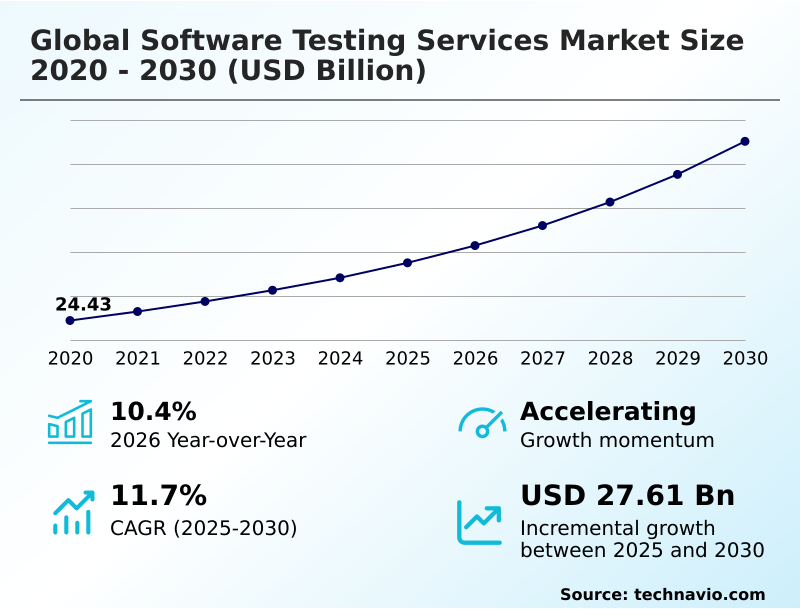
The software testing services market size is valued to increase by USD 27.61 billion, at a CAGR of 11.7% from 2025 to 2030. Pervasive digital transformation and escalating software complexity will drive the software testing services market.
Major Market Trends & Insights
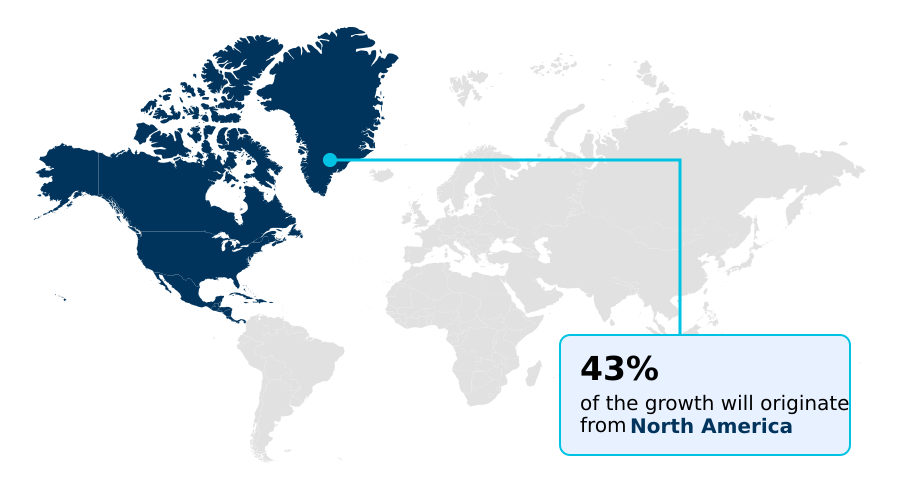
- North America dominated the market and accounted for a 42.8% growth during the forecast period.
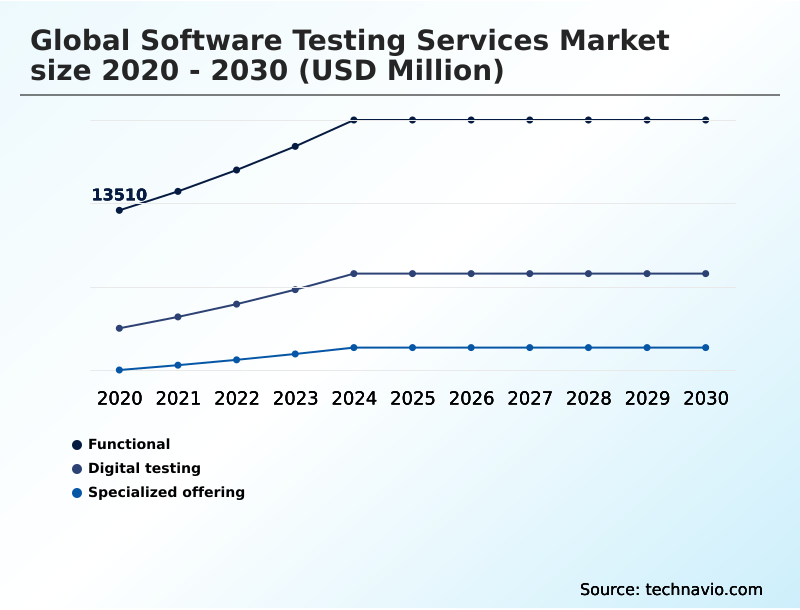
- By Service - Functional segment was valued at USD 18.75 billion in 2024
- By End-user - BFSI segment accounted for the largest market revenue share in 2024
Market Size & Forecast
- Market Opportunities: USD 40.72 billion
- Market Future Opportunities: USD 27.61 billion
- CAGR from 2025 to 2030 : 11.7%
Market Summary
- The software testing services market is undergoing a significant transformation, driven by the dual imperatives of digital acceleration and heightened software complexity. As enterprises adopt modern architectures like microservices and cloud-native applications, the need for robust quality assurance moves beyond simple defect detection to become a strategic business function.
- This evolution fuels demand for advanced capabilities, particularly in test automation, performance engineering, and cybersecurity validation. The integration of AI and machine learning is a key trend, enabling intelligent test case generation and predictive analytics to identify high-risk areas.
- In a business scenario involving a global logistics company, a failure in the supply chain management software could cause cascading delays, impacting thousands of deliveries. To prevent this, continuous testing is integrated into the DevOps pipeline, where automated scripts validate every code change in real-time.
- This 'shift-left' approach ensures quality is built in from the start, mitigating risks and ensuring the reliability of mission-critical systems. However, the market faces a significant challenge in the acute shortage of skilled professionals, particularly software development engineers in test (SDETs) who possess the hybrid skills needed for modern quality engineering.
What will be the Size of the Software Testing Services Market during the forecast period?
Get Key Insights on Market Forecast (PDF) Get Free Sample
How is the Software Testing Services Market Segmented?
The software testing services industry research report provides comprehensive data (region-wise segment analysis), with forecasts and estimates in "USD million" for the period 2026-2030, as well as historical data from 2020-2024 for the following segments.
- Service
- Functional
- Digital testing
- Specialized offering
- End-user
- BFSI
- Telecom and media
- Manufacturing
- Retail
- Others
- Product
- Application testing
- Product testing
- Geography
- North America
- US
- Canada
- Mexico
- Europe
- UK
- Germany
- France
- APAC
- China
- India
- Japan
- South America
- Brazil
- Argentina
- Colombia
- Middle East and Africa
- UAE
- Saudi Arabia
- South Africa
- Rest of World (ROW)
- North America
By Service Insights
The functional segment is estimated to witness significant growth during the forecast period.
The software testing services market segmentation reveals that functional validation remains a cornerstone, focused on verifying software against design specifications and business logic. This includes crucial activities like unit testing, system testing, and regression testing to prevent defects.
Service providers are enhancing this segment by moving beyond manual testing and adopting advanced test automation frameworks.
This shift toward intelligent automation is critical for managing complex software environments, where a data-driven approach can improve defect detection efficacy by over 15%.
This evolution makes functional testing a strategic enabler for reliable software delivery, incorporating AI in quality assurance and specialized testing domains to meet modern digital demands, ensuring robust test data management and improved test coverage.
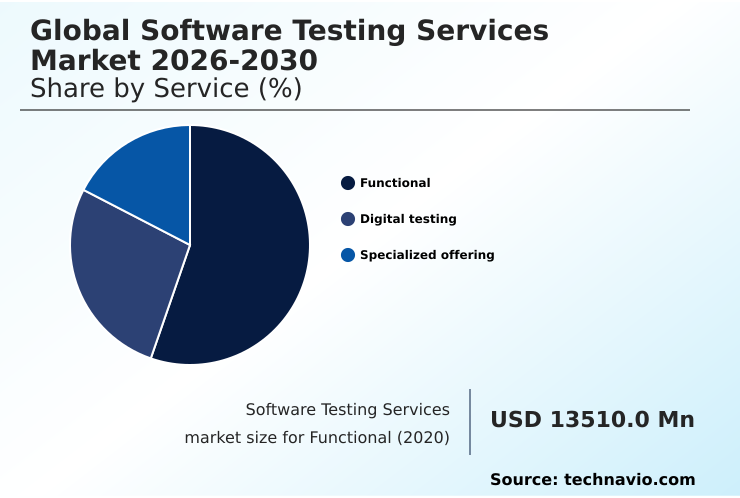
The Functional segment was valued at USD 18.75 billion in 2024 and showed a gradual increase during the forecast period.
Regional Analysis
North America is estimated to contribute 42.8% to the growth of the global market during the forecast period.Technavio’s analysts have elaborately explained the regional trends and drivers that shape the market during the forecast period.
See How Software Testing Services Market Demand is Rising in North America Get Free Sample
The global software testing services market exhibits distinct regional dynamics, with North America representing the largest segment, contributing over 42% of the incremental growth.
This dominance is driven by the region's early adoption of agile and DevOps methodologies and stringent regulatory demands in sectors like finance and healthcare. The focus here is on AI-powered visual testing and intelligent automation to manage complex software.
In contrast, the APAC region is the fastest-growing market, propelled by its role as a global IT outsourcing hub and a booming domestic digital economy.
In countries like India and China, the demand is fueled by mobile application compatibility testing for a massive consumer base.
European markets, led by Germany and the UK, prioritize security and embedded software testing, reflecting the needs of their strong automotive and financial technology industries. This geographic segmentation highlights a shift toward specialized, region-specific QA and testing services.
Market Dynamics
Our researchers analyzed the data with 2025 as the base year, along with the key drivers, trends, and challenges. A holistic analysis of drivers will help companies refine their marketing strategies to gain a competitive advantage.
- As organizations navigate digital transformation, understanding the nuances of modern quality assurance becomes critical. A key consideration is the cost of manual vs automated regression testing, where automation consistently delivers a higher ROI by reducing cycle times and freeing up resources. Implementing self-healing test automation scripts further enhances this value, drastically cutting down on maintenance overhead.
- Another vital area is establishing best practices for microservices api contract testing, which is essential for ensuring stability in distributed architectures. Businesses are also evaluating how to integrate SAST into the CI/CD pipeline effectively, shifting security validation to earlier stages of development.
- The challenges of IoT device interoperability testing require specialized strategies to validate performance across a fragmented ecosystem of hardware and protocols. Furthermore, the debate over in-house qa vs outsourced software testing services continues, with many firms finding that outsourcing provides access to specialized skills and advanced tools that are difficult to cultivate internally.
- Organizations that master these advanced testing disciplines often report significantly fewer production defects compared to those using traditional methods, directly impacting customer satisfaction and brand loyalty.
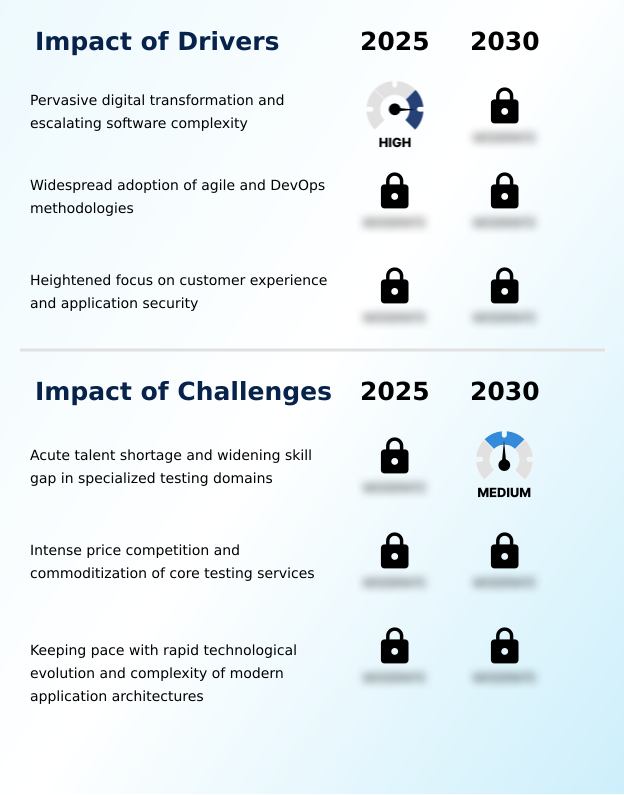
What are the key market drivers leading to the rise in the adoption of Software Testing Services Industry?
- Pervasive digital transformation and escalating software complexity are primary drivers for the software testing services market.
- The enterprise-wide adoption of digital transformation initiatives is a primary driver for the global software testing services market. As organizations shift to complex digital ecosystems built on microservices and cloud-native applications, the need for comprehensive testing escalates.
- This architectural complexity, combined with the proliferation of IoT devices and AI, often exceeds the capabilities of in-house teams. For example, ensuring interoperability across diverse platforms can increase testing efforts by over 50%.
- This capability gap creates a compelling case for engaging third-party providers who offer specialized expertise in end-to-end system testing and API validation.
- Their services are critical for mitigating the risks associated with deploying mission-critical applications, ensuring reliability and functionality in intricate IT environments and validating a secure software development lifecycle.
What are the market trends shaping the Software Testing Services Industry?
- The proliferation of artificial intelligence and machine learning in quality assurance is a dominant trend, marking a paradigm shift from traditional test automation to intelligent and autonomous testing.
- A dominant trend is the integration of artificial intelligence into the quality assurance lifecycle, enabling a shift to intelligent, autonomous testing. Service providers are leveraging machine learning for test case optimization, with data-driven approaches improving test coverage by up to 25%. This technology facilitates predictive analytics for quality, allowing teams to focus resources on high-risk modules.
- Furthermore, AI-powered visual testing is revolutionizing UI validation, detecting inconsistencies with near-perfect accuracy. The development of self-healing automation scripts, which adapt to UI changes, addresses a major challenge in test automation by reducing maintenance costs by over 40%.
- This evolution is compelling providers to offer high-value, technology-driven solutions, making AI-powered testing platforms a key competitive differentiator for delivering faster and more effective QA outcomes.
What challenges does the Software Testing Services Industry face during its growth?
- An acute talent shortage and a widening skill gap in specialized testing domains represent a key challenge affecting industry growth.
- A formidable challenge confronting the market is the acute shortage of skilled professionals, particularly software development engineers in test (SDETs). Modern DevOps environments demand a hybrid skill set combining deep testing expertise with strong development capabilities, a profile for which talent is scarce.
- This scarcity intensifies competition, driving up labor costs by as much as 20% in key markets and pressuring provider margins. The deficit is even more pronounced in specialized testing domains like application security and AI model validation, where the talent pool is exceptionally limited.
- This skills gap directly constrains the ability of service providers to scale operations, forcing substantial investment in internal training programs and impacting their capacity to meet complex client demands.
Exclusive Technavio Analysis on Customer Landscape
The software testing services market forecasting report includes the adoption lifecycle of the market, covering from the innovator’s stage to the laggard’s stage. It focuses on adoption rates in different regions based on penetration. Furthermore, the software testing services market report also includes key purchase criteria and drivers of price sensitivity to help companies evaluate and develop their market growth analysis strategies.
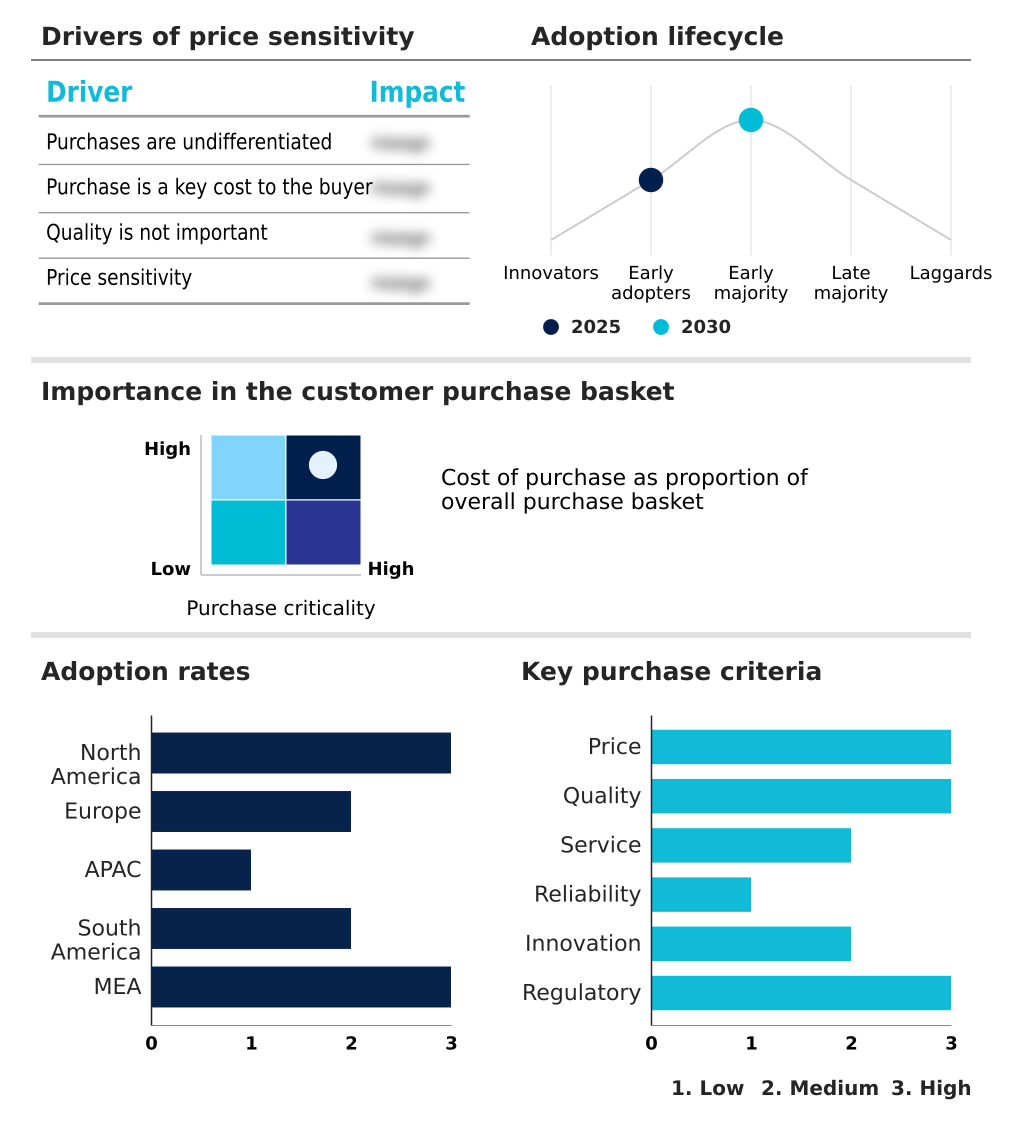
Customer Landscape of Software Testing Services Industry
Competitive Landscape
Companies are implementing various strategies, such as strategic alliances, software testing services market forecast, partnerships, mergers and acquisitions, geographical expansion, and product/service launches, to enhance their presence in the industry.
Accenture Plc - Offerings center on intelligent quality engineering and AI-driven automation, providing scalable, end-to-end validation for enterprise digital transformation and accelerated time-to-market.
The industry research and growth report includes detailed analyses of the competitive landscape of the market and information about key companies, including:
- Accenture Plc
- Amdocs Ltd.
- Atos SE
- Capgemini Service SAS
- Cigniti Technologies Ltd.
- Cognizant Technology Solution
- Deloitte Touche Tohmatsu Ltd.
- DXC Technology Co.
- EPAM Systems Inc.
- HCL Technologies Ltd.
- IBM Corp.
- Infosys Ltd.
- LTIMindtree Ltd.
- NTT DATA Corp.
- PricewaterhouseCoopers LLP
- QualiTest Group
- Sopra Steria Group SA
- Tata Consultancy Services
- Tech Mahindra Ltd.
- Wipro Ltd.
Qualitative and quantitative analysis of companies has been conducted to help clients understand the wider business environment as well as the strengths and weaknesses of key industry players. Data is qualitatively analyzed to categorize companies as pure play, category-focused, industry-focused, and diversified; it is quantitatively analyzed to categorize companies as dominant, leading, strong, tentative, and weak.
Recent Development and News in Software testing services market
- In May, 2025, Forethought launched its new AI-powered platform, Agatha, designed to automate the identification and prioritization of user experience issues on retail websites and mobile applications.
- In April, 2025, Microsoft announced the general availability of Azure DevOps Lab Services, a cloud-based solution enabling users to create and manage virtual environments for streamlined software testing.
- In March, 2025, Infosys launched Infostretch Conversational Testing, an innovative AI-powered test automation platform that utilizes natural language processing to simplify test script creation and execution.
- In January, 2025, EPAM Systems Inc. completed its acquisition of NEORIS, a digital accelerator with a strong presence across Latin America, significantly expanding its service delivery capabilities and talent base in the region.
Dive into Technavio’s robust research methodology, blending expert interviews, extensive data synthesis, and validated models for unparalleled Software Testing Services Market insights. See full methodology.
| Market Scope | |
|---|---|
| Page number | 315 |
| Base year | 2025 |
| Historic period | 2020-2024 |
| Forecast period | 2026-2030 |
| Growth momentum & CAGR | Accelerate at a CAGR of 11.7% |
| Market growth 2026-2030 | USD 27612.0 million |
| Market structure | Fragmented |
| YoY growth 2025-2026(%) | 10.4% |
| Key countries | US, Canada, Mexico, UK, Germany, France, Italy, The Netherlands, Spain, China, India, Japan, South Korea, Australia, Indonesia, Brazil, Argentina, Colombia, UAE, Saudi Arabia, South Africa, Qatar and Turkey |
| Competitive landscape | Leading Companies, Market Positioning of Companies, Competitive Strategies, and Industry Risks |
Research Analyst Overview
- The software testing services market is defined by a strategic pivot from traditional QA to integrated quality engineering, driven by digital transformation. The adoption of DevOps continuous testing solutions and agile test automation frameworks is no longer optional but a core requirement for competitive advantage.
- We observe a strong demand for specialized, non-functional testing, including performance engineering and robust application security testing. This shift is a direct response to the escalating complexity of modern software, particularly in cloud-native application testing and systems built on microservices architecture.
- Firms are leveraging AI-powered testing platforms for predictive analytics and intelligent test case generation, with some achieving a 30% reduction in critical defect slippage. The emphasis is on delivering a superior customer experience through comprehensive usability and compatibility testing, supported by advanced test data management and continuous integration practices.
- This evolution makes test automation a strategic enabler of business agility and resilience in a dynamic digital landscape.
What are the Key Data Covered in this Software Testing Services Market Research and Growth Report?
-
What is the expected growth of the Software Testing Services Market between 2026 and 2030?
-
USD 27.61 billion, at a CAGR of 11.7%
-
-
What segmentation does the market report cover?
-
The report is segmented by Service (Functional, Digital testing, and Specialized offering), End-user (BFSI, Telecom and media, Manufacturing, Retail, and Others), Product (Application testing, and Product testing) and Geography (North America, Europe, APAC, South America, Middle East and Africa)
-
-
Which regions are analyzed in the report?
-
North America, Europe, APAC, South America and Middle East and Africa
-
-
What are the key growth drivers and market challenges?
-
Pervasive digital transformation and escalating software complexity, Acute talent shortage and widening skill gap in specialized testing domains
-
-
Who are the major players in the Software Testing Services Market?
-
Accenture Plc, Amdocs Ltd., Atos SE, Capgemini Service SAS, Cigniti Technologies Ltd., Cognizant Technology Solution, Deloitte Touche Tohmatsu Ltd., DXC Technology Co., EPAM Systems Inc., HCL Technologies Ltd., IBM Corp., Infosys Ltd., LTIMindtree Ltd., NTT DATA Corp., PricewaterhouseCoopers LLP, QualiTest Group, Sopra Steria Group SA, Tata Consultancy Services, Tech Mahindra Ltd. and Wipro Ltd.
-
Market Research Insights
- Market dynamics are shaped by a strategic shift toward integrated quality engineering, where continuous testing is embedded within DevOps pipelines to accelerate delivery. Organizations are increasingly adopting cloud-based testing platforms, with adoption rates showing a 25% year-over-year increase, to achieve greater scalability and cost efficiency.
- This move is driven by the need for robust agile test automation frameworks capable of supporting rapid, iterative development cycles. The focus on non-functional testing is also intensifying, as performance and security directly impact business outcomes. For instance, implementing comprehensive penetration testing services can reduce security breach incidents by over 40%, safeguarding brand reputation.
- This heightened emphasis on quality, security, and speed makes specialized software testing services an indispensable component of modern software development, directly impacting ROI.
We can help! Our analysts can customize this software testing services market research report to meet your requirements.
 RIA -
RIA - 
