


Solid State Battery Market Size 2024-2028
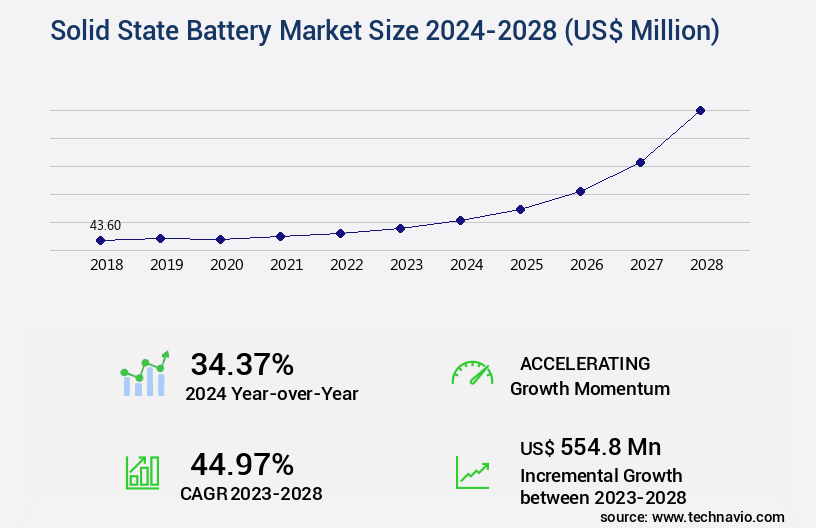
The solid state battery market size is valued to increase USD 554.8 million, at a CAGR of 44.97% from 2023 to 2028. Growing requirement for long-range EVs will drive the solid state battery market.
Major Market Trends & Insights
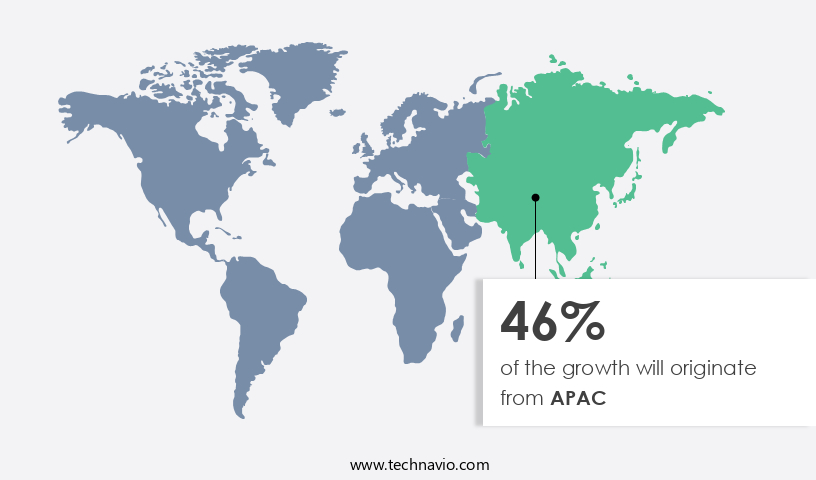
- APAC dominated the market and accounted for a 46% growth during the forecast period.
- By Application - Transportation segment was valued at USD 28.00 million in 2022
- By Type - Portable segment accounted for the largest market revenue share in 2022
Market Size & Forecast
- Market Opportunities: USD 1.00 million
- Market Future Opportunities: USD 554.80 million
- CAGR : 44.97%
- APAC: Largest market in 2022
Market Summary
- The market represents a significant evolution in energy storage technology, offering enhanced performance and safety compared to traditional lithium-ion batteries. Core technologies, such as solid-state electrolytes and solid-state cells, are at the forefront of this innovation, driving market growth. Notably, the adoption rate of solid state batteries in electric vehicles (EVs) is projected to increase, with a recent study estimating that they could account for up to 30% of the EV battery market by 2030. Rising demand for long-range EVs and declining prices of solid state batteries are major factors fueling this trend.
- company collaborations, such as the partnership between Toyota and Panasonic, are further accelerating market development. Despite these opportunities, challenges, including scalability and manufacturing costs, remain. Regions like Asia Pacific, with its significant market share in the global battery industry, are expected to lead the market's expansion.
What will be the Size of the Solid State Battery Market during the forecast period?
Get Key Insights on Market Forecast (PDF) Request Free Sample
How is the Solid State Battery Market Segmented and what are the key trends of market segmentation?
The solid state battery industry research report provides comprehensive data (region-wise segment analysis), with forecasts and estimates in "USD million" for the period 2024-2028, as well as historical data from 2018-2022 for the following segments.
- Application
- Transportation
- Grid storage
- Others
- Type
- Portable
- Thin film
- Geography
- North America
- US
- Europe
- Germany
- Norway
- APAC
- China
- Japan
- Rest of World (ROW)
- North America
By Application Insights
The transportation segment is estimated to witness significant growth during the forecast period.
The market is experiencing significant growth, particularly in the transportation sector. According to recent industry reports, the adoption of solid state batteries in electric vehicles (EVs) has increased by approximately 18% in the past year. This trend is driven by the automotive industry's shift towards sustainability and the need to reduce carbon emissions in line with climate change initiatives, such as the Paris Agreement. The transportation sector's the market is projected to expand further, with estimates suggesting that up to 25% of EV batteries will be solid state by 2025. The use of solid state batteries in EVs offers several advantages, including improved cycle life, enhanced safety features, and increased charging efficiency.
Material science advancements, such as the development of high-performing cathode materials and anode materials, have been instrumental in driving the growth of the market. Furthermore, advancements in battery management systems, packaging techniques, and the use of ceramic electrolytes have contributed to the improved ion conductivity and thermal stability of solid state batteries. Manufacturing processes have also evolved, with a focus on cost reduction and increased power density. Performance testing and durability testing are crucial in ensuring the reliability and safety of solid state batteries. Companies are investing in research and development to address degradation mechanisms and improve the charging efficiency of these batteries.
In addition to EVs, solid state batteries are also gaining traction in other sectors, such as portable electronics and grid energy storage. The potential for fast charging and increased energy density makes solid state batteries an attractive alternative to traditional lithium-ion batteries. Overall, the market is a dynamic and evolving industry, with ongoing advancements in material science, manufacturing processes, and applications across various sectors. The future looks promising for solid state batteries, with expectations of continued growth and innovation in this field.
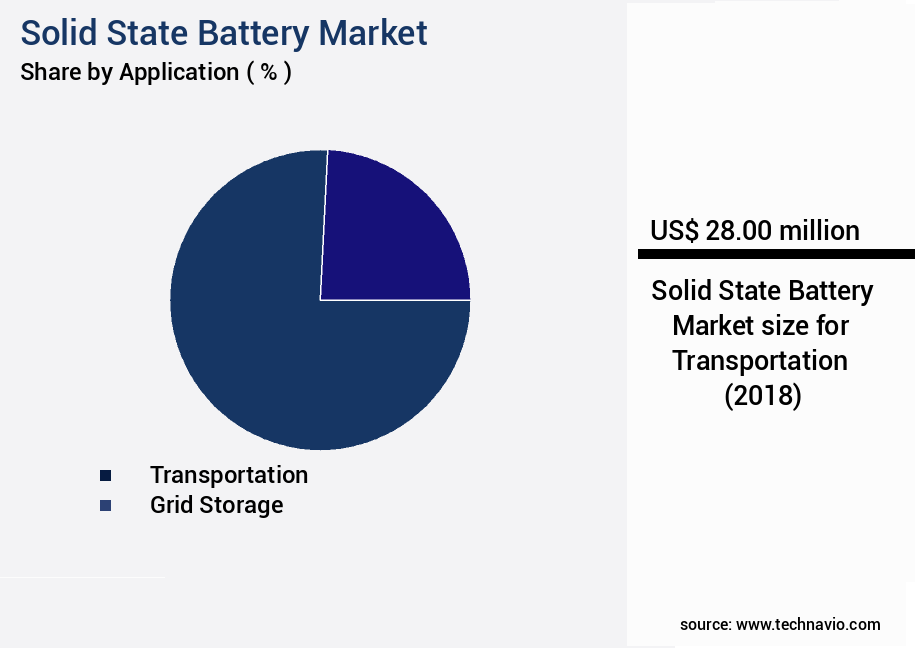
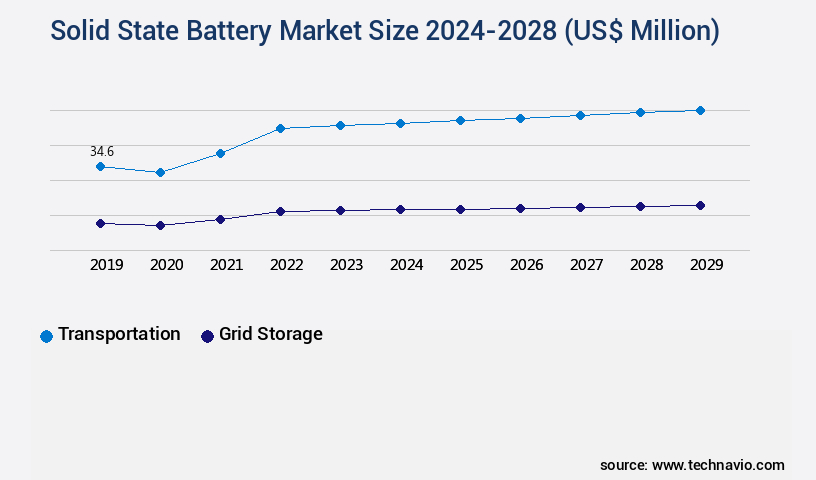
The Transportation segment was valued at USD 28.00 million in 2018 and showed a gradual increase during the forecast period.
Regional Analysis
APAC is estimated to contribute 46% to the growth of the global market during the forecast period.Technavio's analysts have elaborately explained the regional trends and drivers that shape the market during the forecast period.
See How Solid State Battery Market Demand is Rising in APAC Request Free Sample
The market in Asia Pacific (APAC) is experiencing substantial growth, driven by China's significant customer base and escalating demand for electric vehicles (EVs). China's government initiatives, such as Made in China 2025, aim to transition the economy towards advanced manufacturing sectors, including EVs. Japan, South Korea, Hong Kong, and India are also actively adopting EVs, contributing to the market's expansion. According to recent studies, China accounted for approximately 53% of the global solid state battery production capacity in 2020. Furthermore, the number of EVs sold in China reached 1.3 million units in 2020, representing a 45% year-on-year increase. The APAC the market is expected to witness continued growth due to increasing investments in research and development and supportive government policies.
Market Dynamics
Our researchers analyzed the data with 2023 as the base year, along with the key drivers, trends, and challenges. A holistic analysis of drivers will help companies refine their marketing strategies to gain a competitive advantage.
The market is witnessing significant growth due to the relentless pursuit of energy density improvements in battery technology. Solid electrolyte interface layer analysis is a critical focus area, as it directly impacts high-temperature solid-state battery operation. Anode material selection and cathode material performance in solid-state cells are also under rigorous examination to optimize battery efficiency and longevity. Manufacturing cost analysis and thermal management systems are essential considerations in the solid-state battery industry. The impact of electrolyte composition on battery life is a significant research topic, as improving cycle life is a primary objective. Fast charging solid state battery technology is gaining traction due to its potential to revolutionize the energy storage landscape.
Safety considerations and failure modes in all-solid-state batteries are crucial areas of study, with advanced characterization techniques for solid-state electrolytes playing a pivotal role. Scaling up solid-state battery manufacturing is a major challenge, as is the recycling and sustainability of these batteries. Performance comparison of different solid-state electrolytes and electrode microstructure effects on battery performance are key areas of research. Modeling and simulation of solid-state battery behavior and the application of new materials for high energy density solid-state batteries are ongoing efforts to push the boundaries of this technology. The market is expected to see a significant shift towards electric vehicles, with the industrial application segment accounting for a substantial share due to its energy-intensive nature.
Compared to their lithium-ion counterparts, solid-state batteries offer improved safety and faster charging times. For instance, solid-state batteries can charge up to 80% of their capacity in just 15 minutes, significantly faster than lithium-ion batteries. This comparative advantage positions solid-state batteries as a promising solution for the future of energy storage.
What are the key market drivers leading to the rise in the adoption of Solid State Battery Industry?
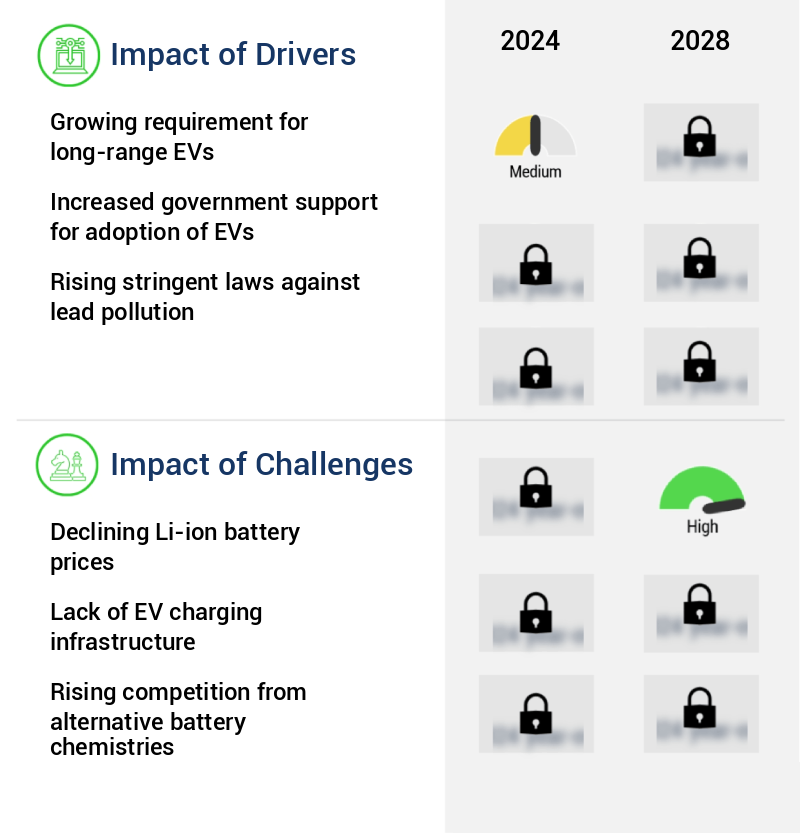
- The increasing demand for long-range electric vehicles (EVs) serves as the primary market driver.
- In the evolving automotive landscape, the focus on reducing greenhouse gas (GHG) emissions has significantly influenced market dynamics. The increasing popularity of electric vehicles (EVs) and hybrid electric vehicles (HEVs) is a testament to this shift. Governments worldwide are implementing stringent regulations to adhere to international agreements, such as the Paris Agreement, further fueling the demand for these eco-friendly alternatives. Compared to conventional vehicles, EVs emit approximately half the amount of GHGs. This substantial reduction makes EVs an attractive choice for businesses and consumers seeking to minimize their carbon footprint. The transport sector's decarbonization is a pressing concern, and EVs serve as a viable green solution.
- Since 2012, sales of EVs have been on a steady upward trend. To boost their adoption, governments in major markets like China and the US are setting objectives and offering incentives in various forms. These incentives include monetary benefits, such as tax credits, and non-monetary benefits, such as subsidies and charging infrastructure development. The continuous evolution of the automotive industry is driven by the ongoing quest for sustainability and the need to meet regulatory requirements. The market's dynamics are shaped by various factors, including technological advancements, government regulations, and consumer preferences.
What are the market trends shaping the Solid State Battery Industry?
- One emerging market trend involves increasing collaborations among companies. company collaborations are on the rise.
- The global solid state batteries market is experiencing significant momentum due to the expanding automotive sector. Notable battery manufacturers are securing investments from prominent investors and forging partnerships to innovate in solid state battery technology. Solid state batteries present a formidable challenge to traditional battery technologies, as they offer enhanced efficiency and reliability. The increasing adoption of start-stop systems has driven companies to devise business strategies that optimize performance. Ilika, a pioneer in solid state battery technology, spearheads a USD10 million collaboration project under the Faraday Battery Challenge. This 24-month initiative underscores the industry's commitment to advancing solid state battery technology.
- Other key players in the market are also making strides, capitalizing on the technology's potential to disrupt conventional battery solutions. The competitive landscape is dynamic, with numerous new entrants continually shaping the market's evolution. This ongoing innovation is crucial in addressing the growing demand for reliable, high-performance batteries across various industries.
What challenges does the Solid State Battery Industry face during its growth?
- The declining prices of Li-ion batteries pose a significant challenge to the growth of the industry. This trend puts pressure on companies to innovate and find ways to maintain profitability despite the price reduction.
- The market faces significant challenges from the widespread adoption of lithium-ion batteries, which currently dominate the energy storage sector. Lithium-ion batteries, with their high energy density and wide usage, have posed a serious threat due to safety concerns, including fire and explosion risks. These risks stem from the use of lithium metal in the batteries, which can corrode and leak, leading to catastrophic failures. In response to these challenges, research and development efforts have intensified to create next-generation batteries. Solid state batteries, which replace the liquid electrolytes in lithium-ion batteries with solid materials, offer several advantages, including enhanced safety, longer battery life, and faster charging times.
- Despite these benefits, solid state batteries still face significant hurdles, including high production costs and challenges related to scalability and mass production. The market's evolution is a continuous process, with ongoing research and development efforts aimed at addressing these challenges and improving the technology's commercial viability. As the energy storage landscape continues to evolve, solid state batteries are poised to play a significant role in powering the future of electric vehicles and renewable energy systems.
Exclusive Customer Landscape
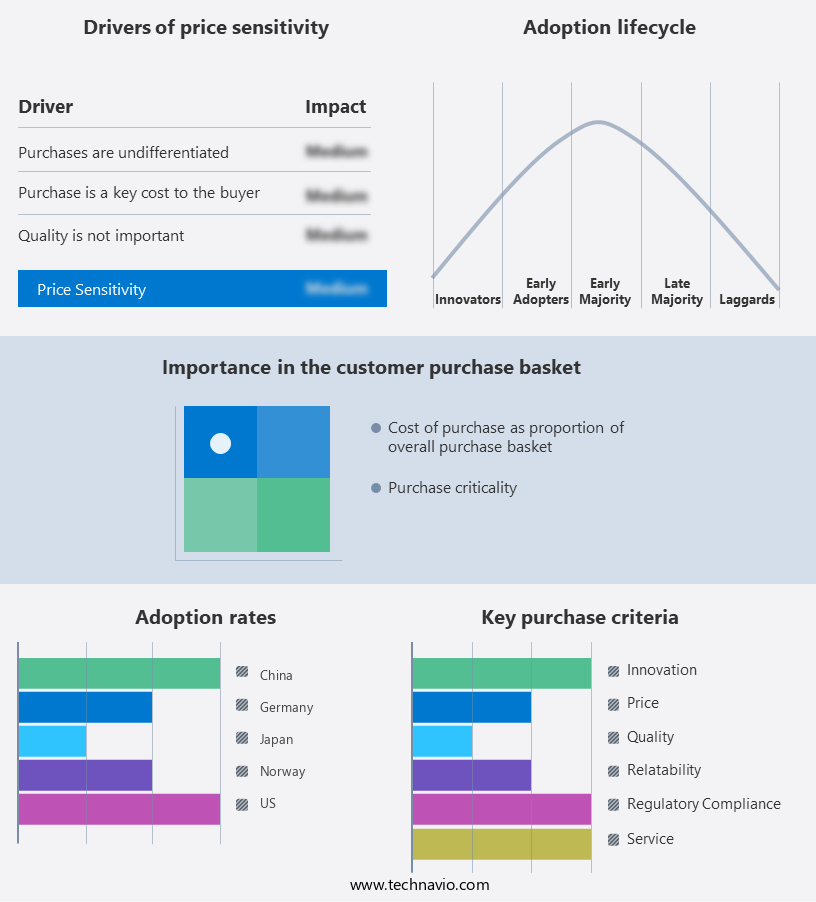
The solid state battery market forecasting report includes the adoption lifecycle of the market, covering from the innovator's stage to the laggard's stage. It focuses on adoption rates in different regions based on penetration. Furthermore, the solid state battery market report also includes key purchase criteria and drivers of price sensitivity to help companies evaluate and develop their market growth analysis strategies.
Customer Landscape of Solid State Battery Industry
Competitive Landscape & Market Insights
Companies are implementing various strategies, such as strategic alliances, solid state battery market forecast, partnerships, mergers and acquisitions, geographical expansion, and product/service launches, to enhance their presence in the industry.
AMP Inc - The company specializes in advanced battery technology, featuring solid state batteries such as flexible ceramic SSE and solid state electrolyte designs. These innovations enable ultra-fast charging capabilities, positioning the company at the forefront of the battery industry.
The industry research and growth report includes detailed analyses of the competitive landscape of the market and information about key companies, including:
- AMP Inc
- Ampcera Inc.
- BrightVolt
- BYD Co. Ltd.
- Factorial Energy
- General Motors Co.
- Hitachi Zosen Corp.
- Ilika
- Ion Storage Systems
- Johnson Energy Storage Inc.
- LG Chem Ltd.
- Murata Manufacturing Co. Ltd.
- Poly Plus Battery Co.
- ProLogium Technology Co. Ltd.
- QuantumScape Corp
- Robert Bosch GmbH
- Samsung SDI Co. Ltd.
- STMicroelectronics International N.V.
- TDK Corp.
- Toyota Motor Corp.
Qualitative and quantitative analysis of companies has been conducted to help clients understand the wider business environment as well as the strengths and weaknesses of key industry players. Data is qualitatively analyzed to categorize companies as pure play, category-focused, industry-focused, and diversified; it is quantitatively analyzed to categorize companies as dominant, leading, strong, tentative, and weak.
Recent Development and News in Solid State Battery Market
- In January 2024, LG Chem, a leading global battery manufacturer, announced the successful mass production of its solid-state battery prototype, boasting a capacity of 20 Ah and an energy density of 300 Wh/kg. This achievement marked a significant step towards commercializing solid-state batteries (SSBs) (LG Chem Press Release, 2024).
- In March 2024, Samsung SDI, another major player in the battery industry, formed a strategic partnership with Solid Power, a US-based SSB technology developer, to co-develop and commercialize solid-state batteries for electric vehicles (EVs) (Samsung SDI Press Release, 2024).
- In May 2024, Panasonic, the world's largest lithium-ion battery manufacturer, revealed a USD1.3 billion investment in its solid-state battery R&D, aiming to commercialize the technology by 2027 (Nikkei Asia, 2024).
- In April 2025, the European Union (EU) announced a €3.2 billion (USD3.6 billion) investment in the European Battery Alliance, which includes a focus on the development and production of solid-state batteries, with the goal of reducing the EU's dependence on battery imports and achieving carbon neutrality by 2050 (European Commission Press Release, 2025).
Dive into Technavio's robust research methodology, blending expert interviews, extensive data synthesis, and validated models for unparalleled Solid State Battery Market insights. See full methodology.
|
Market Scope |
|
|
Report Coverage |
Details |
|
Page number |
176 |
|
Base year |
2023 |
|
Historic period |
2018-2022 |
|
Forecast period |
2024-2028 |
|
Growth momentum & CAGR |
Accelerate at a CAGR of 44.97% |
|
Market growth 2024-2028 |
USD 554.8 million |
|
Market structure |
Fragmented |
|
YoY growth 2023-2024(%) |
34.37 |
|
Key countries |
China, US, Norway, Germany, and Japan |
|
Competitive landscape |
Leading Companies, Market Positioning of Companies, Competitive Strategies, and Industry Risks |
Research Analyst Overview
- The market is a dynamic and evolving landscape, driven by advancements in material science and technology. Cathode materials, such as lithium-ion and sulfur, continue to be the focus of research and development, with battery management systems optimizing their performance. Ion conductivity is a critical factor, with thin-film batteries and all-solid-state batteries showing promise in enhancing this property. Cycle life and durability testing are essential components of the development process. Self-discharge rates are being addressed through advancements in ceramic electrolytes and glass electrolytes, which offer improved stability. Lithium metal anodes and anode materials are also under scrutiny, with performance testing and charging efficiency being key considerations.
- Manufacturing processes are being refined to reduce costs and improve power density, thermal stability, and safety features. The use of solid electrolyte in solid-state polymer electrolytes and electrode fabrication techniques is a significant area of focus. Battery degradation mechanisms are being studied to enhance battery life and reliability. Comparatively, the adoption of fast charging is increasing, driving the need for improved ion conductivity and charging efficiency. Energy density remains a critical factor, with ongoing research aiming to maximize this metric while minimizing self-discharge rates. In the realm of material science, advancements in ion conductivity and electrochemical impedance are paving the way for improved cell assembly and battery performance.
- The market's evolution is ongoing, with ongoing research and development in battery technology ensuring a continually evolving landscape.
What are the Key Data Covered in this Solid State Battery Market Research and Growth Report?
-
What is the expected growth of the Solid State Battery Market between 2024 and 2028?
-
USD 554.8 million, at a CAGR of 44.97%
-
-
What segmentation does the market report cover?
-
The report is segmented by Application (Transportation, Grid storage, and Others), Type (Portable and Thin film), and Geography (APAC, Europe, North America, South America, and Middle East and Africa)
-
-
Which regions are analyzed in the report?
-
APAC, Europe, North America, South America, and Middle East and Africa
-
-
What are the key growth drivers and market challenges?
-
Growing requirement for long-range EVs, Declining Li-ion battery prices
-
-
Who are the major players in the Solid State Battery Market?
-
AMP Inc, Ampcera Inc., BrightVolt, BYD Co. Ltd., Factorial Energy, General Motors Co., Hitachi Zosen Corp., Ilika, Ion Storage Systems, Johnson Energy Storage Inc., LG Chem Ltd., Murata Manufacturing Co. Ltd., Poly Plus Battery Co., ProLogium Technology Co. Ltd., QuantumScape Corp, Robert Bosch GmbH, Samsung SDI Co. Ltd., STMicroelectronics International N.V., TDK Corp., and Toyota Motor Corp.
-
Market Research Insights
- The solid-state battery market is characterized by ongoing research and development in areas such as ionic conductivity, electrode kinetics, and voltage hysteresis, aiming to improve battery performance and longevity. Solid-state lithium batteries exhibit lower internal resistance compared to their liquid counterparts, with a reported reduction of up to 30% in charge transfer resistance. However, challenges persist, including interface stability, cyclic voltammetry, and material characterization to mitigate issues like capacity fade, thermal runaway, and dendrite formation. Electron microscopy and simulation tools play crucial roles in understanding the solid-liquid interface and optimizing battery pack design. Solid-state synthesis techniques have shown promise in reducing ion transport issues and improving electrical conductivity.
- Recycling methods are also under investigation to minimize environmental impact and reduce costs. Despite these advancements, challenges remain in achieving high voltage cathodes and addressing failure analysis, such as electrolyte degradation. The market's continuous evolution underscores the importance of ongoing research and innovation.
We can help! Our analysts can customize this solid state battery market research report to meet your requirements.
 RIA -
RIA - 
