


Titanium Dioxide (TiO2) Market Size 2025-2029
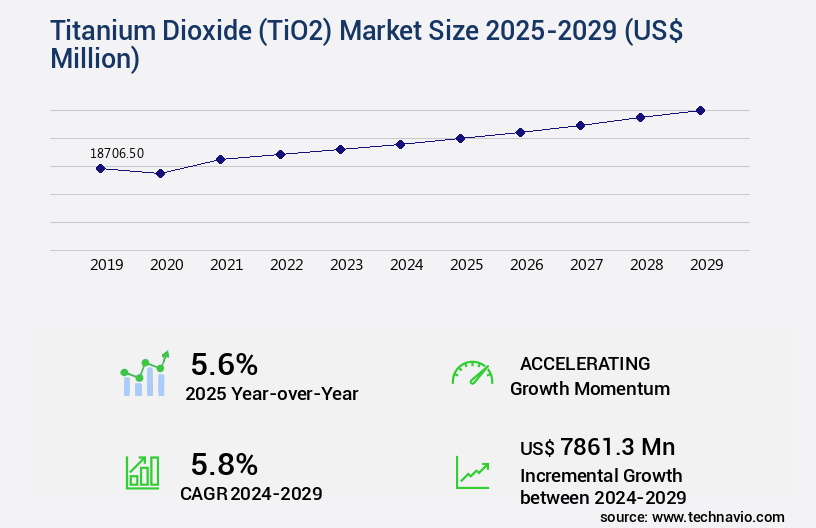
The titanium dioxide (TiO2) market size is valued to increase USD 7.86 billion, at a CAGR of 5.8% from 2024 to 2029. Increasing use of TiO2 as absorbent of pollutants will drive the titanium dioxide (tio2) market.
Major Market Trends & Insights
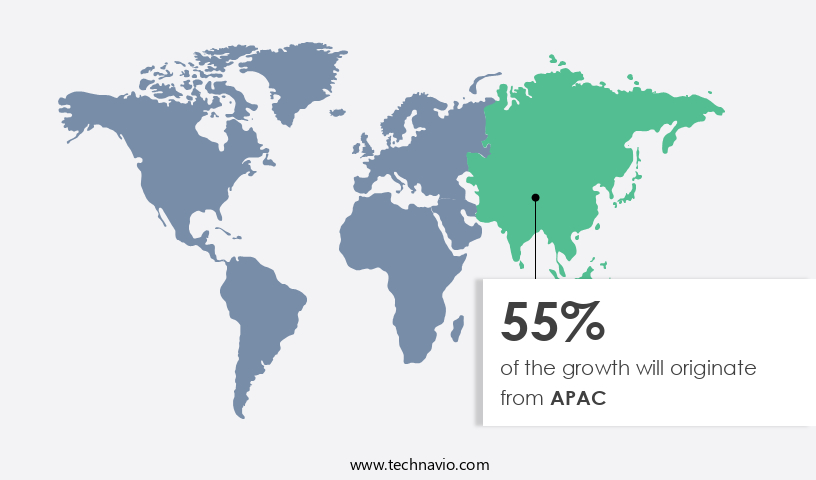
- APAC dominated the market and accounted for a 55% growth during the forecast period.
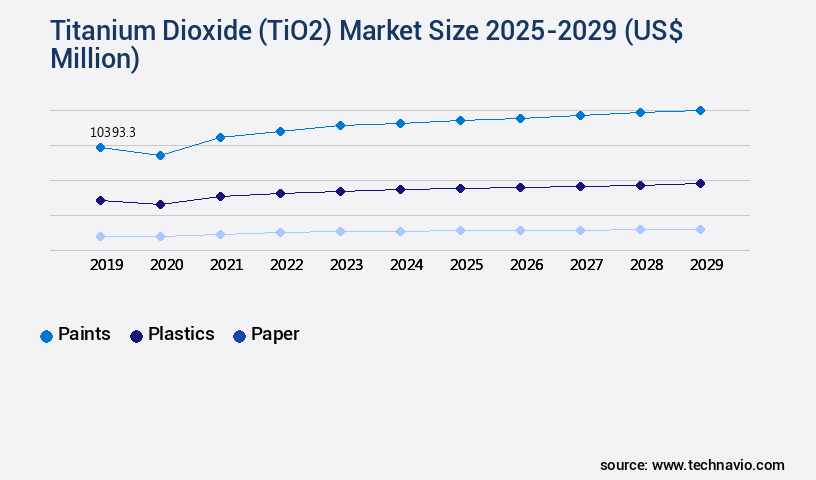
- By Application - Paints segment was valued at USD 10.39 billion in 2023
- By Type - Sulfate process segment accounted for the largest market revenue share in 2023
Market Size & Forecast
- Market Opportunities: USD 71.41 million
- Market Future Opportunities: USD 7861.30 million
- CAGR from 2024 to 2029 : 5.8%
Market Summary
- The market encompasses the production, application, and innovation surrounding this versatile inorganic compound. Core technologies and applications span various industries, including paint and coatings, plastics, paper, and food and pharmaceuticals. The market's evolution is marked by the increasing use of TiO2 as an absorbent of pollutants, contributing to its growing popularity in environmental applications. Furthermore, the emergence of three-dimensional (3D) printed TiO2 is revolutionizing industries such as construction and automotive, offering advantages in terms of durability and design flexibility. However, the market faces challenges, such as the ongoing price increase of TiO2, which may impact its adoption rate in certain sectors.
- According to a recent study, TiO2 holds a significant market share of over 70% in the pigment industry, underscoring its importance in various applications. The dynamic nature of the TiO2 Market continues to unfold, presenting both challenges and opportunities for stakeholders.
What will be the Size of the Titanium Dioxide (TiO2) Market during the forecast period?
Get Key Insights on Market Forecast (PDF) Request Free Sample
How is the Titanium Dioxide (TiO2) Market Segmented ?
The titanium dioxide (tio2) industry research report provides comprehensive data (region-wise segment analysis), with forecasts and estimates in "USD million" for the period 2025-2029, as well as historical data from 2019-2023 for the following segments.
- Application
- Paints
- Plastics
- Paper
- Others
- Type
- Sulfate process
- Chloride process
- Grade Type
- Rutile
- Anatase
- End-User
- Architectural Coatings
- Industrial Coatings
- Packaging
- Skincare Products
- Geography
- North America
- US
- Canada
- Europe
- France
- Germany
- Italy
- UK
- Middle East and Africa
- Egypt
- KSA
- Oman
- UAE
- APAC
- China
- India
- Japan
- South America
- Argentina
- Brazil
- Rest of World (ROW)
- North America
By Application Insights
The paints segment is estimated to witness significant growth during the forecast period.
Titanium Dioxide (TiO2) is a versatile inorganic pigment widely used across various industries due to its unique properties. In the coating applications sector, TiO2 acts as a vital whitener, scattering visible light for an opaque appearance and enhancing the brightness and durability of surfaces. The paints segment dominates the global TiO2 market, with approximately 60% of the total consumption. In electron microscopy, TiO2's rutile phase is particularly significant due to its high crystalline quality and excellent electron transparency. In the field of air purification, TiO2 exhibits photodegradation efficiency, making it a popular choice for removing pollutants.
Surface area measurement is crucial in TiO2 synthesis, as it significantly influences the material's reactivity and performance. Titanium dioxide's environmental impact is a topic of ongoing research, with efforts focusing on improving its chemical stability and reducing its toxicity assessment. Solar cells, such as dye-sensitized solar cells, benefit from TiO2's high UV absorption properties and excellent thermal stability. Composite materials and catalytic performance are other essential applications for TiO2, which is known for its excellent UV protection and antimicrobial properties. The market for TiO2 is continuously evolving, with advancements in nanomaterial characterization, crystal structure analysis, and wastewater treatment driving growth.
The nanoparticle form of TiO2, with its unique surface modification capabilities, is increasingly being used in self-cleaning coatings and electronic applications. According to recent industry reports, the TiO2 market is expected to grow by 15% in the next two years, driven by the increasing demand for UV protection coatings and the expansion of the solar energy sector. Meanwhile, the market is projected to reach a value of 20% by 2025, reflecting the growing importance of TiO2 in various industries. The TiO2 market's ongoing evolution is a testament to its versatility and the continuous research and development efforts to unlock new applications and enhance its properties.
With its unique combination of optical, electronic, and catalytic properties, TiO2 is poised to remain a key player in various industries, from paints and coatings to electronics and energy.
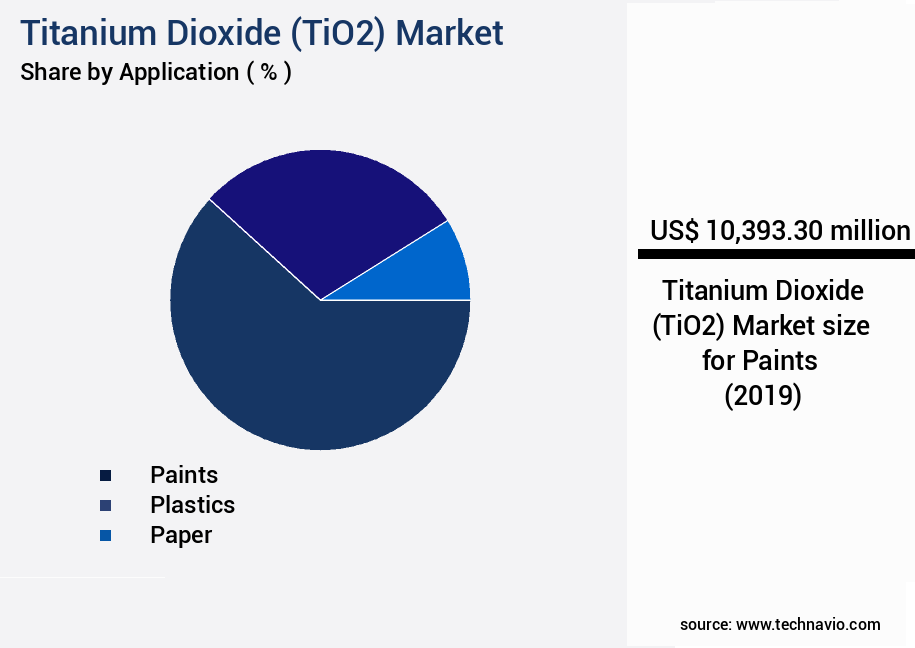
The Paints segment was valued at USD 10.39 billion in 2019 and showed a gradual increase during the forecast period.
Regional Analysis
APAC is estimated to contribute 55% to the growth of the global market during the forecast period.Technavio's analysts have elaborately explained the regional trends and drivers that shape the market during the forecast period.
See How Titanium Dioxide (TiO2) Market Demand is Rising in APAC Request Free Sample
The Asia Pacific (APAC) region is expected to dominate the market due to robust demand from key countries such as China, Japan, India, and Australia. China, in particular, is a significant contributor to the regional market's revenue growth, with a substantial number of TiO2 producers located there. The commercial and residential construction sector in APAC is witnessing strong activity, driving the demand for TiO2.
Furthermore, increasing investments in infrastructure development in countries like China, with plans to invest nearly USD1.4 trillion in major projects over the next five years, are expected to fuel the market's expansion.
Market Dynamics
Our researchers analyzed the data with 2024 as the base year, along with the key drivers, trends, and challenges. A holistic analysis of drivers will help companies refine their marketing strategies to gain a competitive advantage.
Titanium dioxide (Tio2), a versatile inorganic pigment and photocatalyst, continues to garner significant attention due to its extensive applications in various industries. Tio2 nanoparticles, with their unique properties, have emerged as a key focus area, driving market growth. The crystal structure and surface area of Tio2 nanoparticles significantly influence their photocatalytic activity. Tio2's anatase and rutile forms exhibit different photocatalytic performances, with anatase being more efficient in degrading organic pollutants through the tio2 nanoparticle photocatalytic degradation process. Surface modification techniques enhance photoactivity, making Tio2 an ideal candidate for self-cleaning surfaces and dye-sensitized solar cells. Tio2 nanoparticles' antimicrobial activity mechanism and environmental impact assessment are crucial aspects of the market.
In wastewater treatment, Tio2 photocatalysis plays a vital role, making it a preferred choice for industries seeking eco-friendly solutions. Tio2 composite materials exhibit enhanced performance, further expanding their applications. Photoelectrochemical water splitting using Tio2 is a promising area of research, offering potential for sustainable energy production. Characterization techniques for Tio2 nanomaterials are essential for understanding their properties and optimizing their performance. Thermal stability and chemical stability in various environments are crucial factors influencing Tio2's photocatalytic efficiency. The toxicity assessment of Tio2 towards different organisms is a significant concern for the market. Despite this, Tio2 nanoparticles find extensive use in industrial applications, particularly in coatings.
Improving Tio2 photocatalyst stability methods and controlling particle size during synthesis are ongoing research areas to address these challenges. Compared to traditional methods, the adoption of advanced Tio2 synthesis techniques is gaining momentum, accounting for a substantial portion of research and development efforts in the market. This shift towards innovative approaches underscores the industry's commitment to enhancing Tio2's performance and sustainability.
What are the key market drivers leading to the rise in the adoption of Titanium Dioxide (TiO2) Industry?
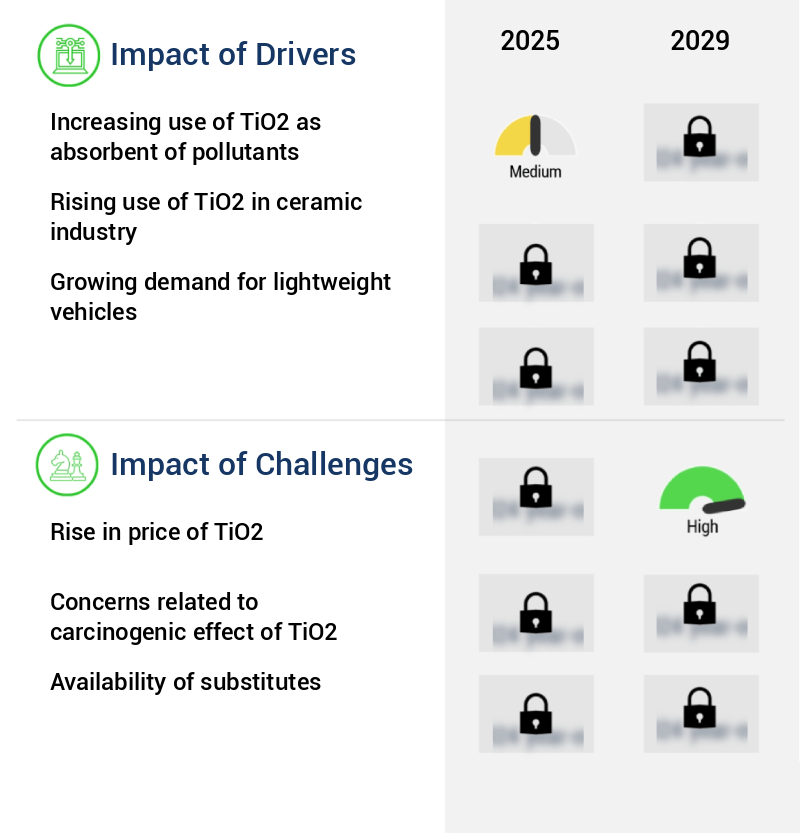
- The significant rise in the application of TiO2 as a pollutant absorber is the primary market catalyst.
- Nitrogen oxide, a significant air pollutant primarily emitted by diesel and petrol engines, contributes to smog formation and poses health risks. TiO2, a photocatalyst, plays a crucial role in mitigating this issue. Photocatalysis, a light-accelerated chemical reaction called photolysis, is the process TiO2 employs to absorb nitrogen oxide. This conversion renders the pollutants harmless. TiO2's applications extend to various sectors, including painting and building materials.
- By incorporating TiO2 coatings into cement, paints, tiles, and windows, we enhance their ability to absorb and decompose environmental pollutants. This eco-friendly innovation underscores the importance of TiO2 as an active ingredient in numerous industries. By harnessing the power of TiO2 and photocatalysis, we can contribute to cleaner air and healthier environments.
What are the market trends shaping the Titanium Dioxide (TiO2) Industry?
- The growing popularity of three-dimensional (3D) printed TiO2 represents an emerging market trend. Three-dimensional printing technology is increasingly being utilized to produce TiO2, a significant development in this industry.
- Three-dimensional printing, or additive manufacturing, is a progressive process of creating three-dimensional solid objects from digital files. Advancements in additive manufacturing using Titanium Dioxide (TiO2) are paving the way for the production of robust and durable 3D-printed components. This material's versatility extends to various sectors, including construction, automotive, and healthcare. In the construction industry, 3D-printed TiO2 is instrumental in bringing intricate designs and diagrams to life.
- Architects can utilize these prints as facades for diverse infrastructure, offering unlimited possibilities in shaping the exteriors of houses and buildings. By integrating 3D-printed TiO2, architects can create complex and innovative designs, thereby enhancing the aesthetic appeal and functionality of structures.
What challenges does the Titanium Dioxide (TiO2) Industry face during its growth?
- The escalating cost of TiO2 poses a significant challenge and significantly impacts the growth trajectory of the industry.
- TiO2, a critical pigment in various industries, experiences ongoing price fluctuations due to several factors. One significant contributor to the rising prices is the export market in China, which has seen an increase in spot cargo prices between 2019 and 2022. China is the world's leading producer of TiO2, and export price adjustments can significantly impact the global market. Another influential factor is the closure of numerous TiO2 manufacturing plants in China. In 2017, the Chinese government mandated the shutdown of 73 TiO2 feedstock plants due to non-compliance with environmental regulations.
- These closures have reduced the overall supply of TiO2, further contributing to the price surge. Despite these challenges, TiO2 remains indispensable in numerous sectors, including paint, paper, and plastics, due to its unique properties, such as high refractive index and excellent opacity.
Exclusive Technavio Analysis on Customer Landscape
The titanium dioxide (tio2) market forecasting report includes the adoption lifecycle of the market, covering from the innovator's stage to the laggard's stage. It focuses on adoption rates in different regions based on penetration. Furthermore, the titanium dioxide (tio2) market report also includes key purchase criteria and drivers of price sensitivity to help companies evaluate and develop their market growth analysis strategies.

Customer Landscape of Titanium Dioxide (TiO2) Industry
Competitive Landscape
Companies are implementing various strategies, such as strategic alliances, titanium dioxide (tio2) market forecast, partnerships, mergers and acquisitions, geographical expansion, and product/service launches, to enhance their presence in the industry.
Argex Titanium Inc. - The company specializes in the production and supply of high-quality titanium dioxide, specifically TR 315 Rutile Type. This pigment is known for its superior whiteness and opacity, making it an essential ingredient in various industries such as paint, plastics, and paper. The company's rigorous research and development efforts ensure the production of consistent, high-performing titanium dioxide.
The industry research and growth report includes detailed analyses of the competitive landscape of the market and information about key companies, including:
- Argex Titanium Inc.
- CATHAY INDUSTRIES
- CNNC HUAN YUAN Titanium Dioxide Co., Ltd.
- Cinkarna Celje d.d.
- Evonik Industries AG
- Foshan Xintu Chemical Co., Ltd.
- Glantreo
- Huntsman Corporation
- Ishihara Sangyo Kaisha, Ltd.
- KERALA MINERALS & METALS LTD
- KRONOS Worldwide Inc.
- LB Group
- Lomon Billions Group
- PPG Industries Inc.
- Precheza A.S.
- Reade International Corp.
- TOR Minerals International, Inc.
- The Chemours Company
- Tronox Holdings PLC
- Venator Materials PLC
Qualitative and quantitative analysis of companies has been conducted to help clients understand the wider business environment as well as the strengths and weaknesses of key industry players. Data is qualitatively analyzed to categorize companies as pure play, category-focused, industry-focused, and diversified; it is quantitatively analyzed to categorize companies as dominant, leading, strong, tentative, and weak.
Recent Development and News in Titanium Dioxide (TiO2) Market
- In January 2024, Tronox Holdings Plc, a leading global miner and producer of titanium dioxide (TiO2), announced the acquisition of Cristal's TiO2 business for approximately USD1.75 billion (Reuters). This strategic move expanded Tronox's global footprint and strengthened its position as a leading TiO2 supplier.
- In March 2024, DuPont Titanium Technologies, another major TiO2 producer, launched a new product, Rulide TiO2 Pigment 101R. This innovative product offers improved brightness and opacity, making it an attractive option for paint and coatings manufacturers (DuPont press release).
- In April 2025, the European Chemicals Agency (ECHA) approved the renewal of titanium dioxide's registration under the European Union's REACH regulation. This approval ensured the continued use of TiO2 in various industries, providing stability to the European market (ECHA press release).
- In May 2025, Huntsman Corporation and Clariant AG announced their merger, creating a leading global specialty materials company. The combined entity will have a significant presence in the TiO2 market, positioning itself as a major player (Huntsman and Clariant press releases).
Dive into Technavio's robust research methodology, blending expert interviews, extensive data synthesis, and validated models for unparalleled Titanium Dioxide (TiO2) Market insights. See full methodology.
|
Market Scope |
|
|
Report Coverage |
Details |
|
Page number |
218 |
|
Base year |
2024 |
|
Historic period |
2019-2023 |
|
Forecast period |
2025-2029 |
|
Growth momentum & CAGR |
Accelerate at a CAGR of 5.8% |
|
Market growth 2025-2029 |
USD 7861.3 million |
|
Market structure |
Fragmented |
|
YoY growth 2024-2025(%) |
5.6 |
|
Key countries |
US, Canada, Germany, UK, Italy, France, China, India, Japan, Brazil, Egypt, UAE, Oman, Argentina, KSA, UAE, Brazil, and Rest of World (ROW) |
|
Competitive landscape |
Leading Companies, Market Positioning of Companies, Competitive Strategies, and Industry Risks |
Research Analyst Overview
- Titanium Dioxide (Tio2) continues to be a focal point in various industries due to its versatile properties and extensive applications. This inorganic compound, known for its white pigmentation, is employed in a multitude of sectors, including coating applications, electron microscopy, air purification, and photodegradation efficiency studies. In the realm of coating applications, Tio2 is a popular choice due to its excellent UV protection and self-cleaning properties. Its use extends to electron microscopy, where its rutile phase is crucial for achieving high-resolution images. Tio2 also plays a significant role in air purification, effectively removing pollutants through photocatalytic activity. The synthesis of Tio2 and its subsequent characterization, including surface area measurement, particle size distribution, and nanomaterial characterization, are essential aspects of its production.
- The crystal structure analysis of Tio2, whether in the anatase or rutile phase, provides valuable insights into its properties and behavior. Tio2's photocatalytic activity is a key factor in its application in water purification and solar cell efficiency enhancement. Its band gap energy and UV absorption properties make it an ideal material for dye-sensitized solar cells. Furthermore, Tio2's catalytic performance and chemical stability are crucial in various industrial applications, including the production of composite materials and catalysts. In the field of electronics, Tio2's electronic properties and thermal stability contribute to its use in self-cleaning coatings, antimicrobial properties, and surface modification.
- Its role in water purification, wastewater treatment, and photocatalytic activity continues to unfold, revealing new potential applications and market dynamics. The ongoing research and development in Tio2 synthesis, characterization, and application fields underscore the compound's importance and the continuous evolution of its market.
What are the Key Data Covered in this Titanium Dioxide (TiO2) Market Research and Growth Report?
-
What is the expected growth of the Titanium Dioxide (TiO2) Market between 2025 and 2029?
-
USD 7.86 billion, at a CAGR of 5.8%
-
-
What segmentation does the market report cover?
-
The report is segmented by Application (Paints, Plastics, Paper, and Others), Type (Sulfate process and Chloride process), Grade Type (Rutile and Anatase), Geography (APAC, North America, Europe, South America, and Middle East and Africa), and End-User (Architectural Coatings, Industrial Coatings, Packaging, and Skincare Products)
-
-
Which regions are analyzed in the report?
-
APAC, North America, Europe, South America, and Middle East and Africa
-
-
What are the key growth drivers and market challenges?
-
Increasing use of TiO2 as absorbent of pollutants, Rise in price of TiO2
-
-
Who are the major players in the Titanium Dioxide (TiO2) Market?
-
Argex Titanium Inc., CATHAY INDUSTRIES, CNNC HUAN YUAN Titanium Dioxide Co., Ltd., Cinkarna Celje d.d., Evonik Industries AG, Foshan Xintu Chemical Co., Ltd., Glantreo, Huntsman Corporation, Ishihara Sangyo Kaisha, Ltd., KERALA MINERALS & METALS LTD, KRONOS Worldwide Inc., LB Group, Lomon Billions Group, PPG Industries Inc., Precheza A.S., Reade International Corp., TOR Minerals International, Inc., The Chemours Company, Tronox Holdings PLC, and Venator Materials PLC
-
Market Research Insights
- Titanium dioxide (TiO2) is a versatile inorganic compound with extensive applications in various industries, particularly in coatings, pigments, and electronics. The global TiO2 market size was valued at USD14.5 billion in 2020, with a projected compound annual growth rate (CAGR) of 4.5% from 2021 to 2026. One of the key areas of research in TiO2 is surface functionalization to enhance hydrophilicity, achieved through nanotube synthesis and other methods. This functionalization can improve coating durability and charge carrier dynamics, as well as increase surface charge density for applications in heterogeneous catalysis and nanowire synthesis. However, UV degradation pathways remain a challenge, necessitating chemical resistance testing and abrasion resistance evaluation.
- TiO2 is also explored for energy conversion applications, including quantum dots, light harvesting, and photocatalysts, which require precise pigment dispersion and composite formulation to optimize rheological properties and energy conversion efficiency. Environmental remediation applications, such as degradation kinetics and recombination rate studies, are also significant areas of research to address toxicity testing methods and the mineralization process. Film thickness measurement and doped TiO2 materials further expand the scope of TiO2 research in photoelectrochemical cells and other advanced technologies.
We can help! Our analysts can customize this titanium dioxide (TiO2) market research report to meet your requirements.
 RIA -
RIA - 
