


Titanium Mill Products Market Size 2026-2030
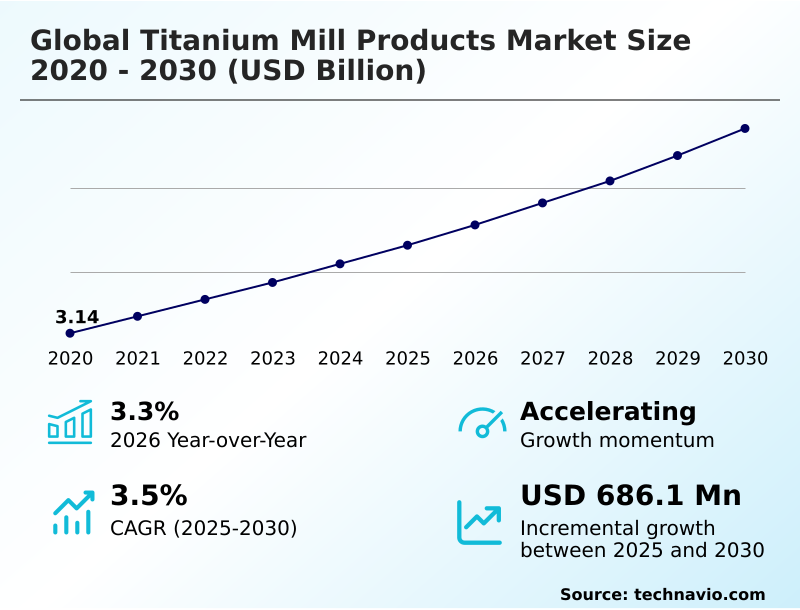
The titanium mill products market size is valued to increase by USD 686.1 million, at a CAGR of 3.5% from 2025 to 2030. Resurgent demand from aerospace and defense sectors will drive the titanium mill products market.
Major Market Trends & Insights
- North America dominated the market and accounted for a 40.4% growth during the forecast period.
- By End-user - Industrial segment was valued at USD 1.57 billion in 2024
- By Product - Sheets and plates segment accounted for the largest market revenue share in 2024
Market Size & Forecast
- Market Opportunities: USD 1.20 billion
- Market Future Opportunities: USD 686.1 million
- CAGR from 2025 to 2030 : 3.5%
Market Summary
- The titanium mill products market is defined by its critical role in high-performance industries where materials must meet uncompromising standards. The market's momentum is sustained by robust demand from the aerospace sector, where the exceptional strength-to-weight ratio and corrosion resistance of titanium alloys are essential for manufacturing fuel-efficient aircraft and durable jet engines.
- Beyond aviation, growth is fueled by expanding applications in the medical field for biocompatible implants and in industrial settings for chemical processing and desalination equipment. A key trend involves major manufacturers moving toward greater vertical integration to secure supply chains and manage costs.
- For instance, an aerospace original equipment manufacturer might partner directly with a mill to develop a proprietary alloy and a closed-loop recycling program, ensuring material traceability and mitigating price volatility. This strategic control over the supply chain is becoming crucial.
- However, the industry contends with challenges, including the high energy consumption of primary production and the technical difficulties of machining titanium, which tempers its adoption in more cost-sensitive sectors. Ongoing innovation in additive manufacturing and alloy development is critical to expanding the material's application envelope.
What will be the Size of the Titanium Mill Products Market during the forecast period?
Get Key Insights on Market Forecast (PDF) Get Free Sample
How is the Titanium Mill Products Market Segmented?
The titanium mill products industry research report provides comprehensive data (region-wise segment analysis), with forecasts and estimates in "USD million" for the period 2026-2030, as well as historical data from 2020-2024 for the following segments.
- End-user
- Industrial
- Commercial aerospace
- Defense
- Product
- Sheets and plates
- Billets and bars
- Others
- Grade type
- Titanium alloys
- Commercially pure titanium (grades 1-4)
- Geography
- North America
- US
- Canada
- Mexico
- APAC
- China
- Japan
- India
- Europe
- Germany
- UK
- France
- Middle East and Africa
- Saudi Arabia
- UAE
- South Africa
- South America
- Brazil
- Argentina
- Rest of World (ROW)
- North America
By End-user Insights
The industrial segment is estimated to witness significant growth during the forecast period.
The industrial segment's demand is driven by applications where material integrity is paramount. In chemical processing and across desalination facilities, commercially pure titanium is essential for fabricating durable heat exchangers and condenser tubing due to its inertness.
Its use in marine applications mitigates saltwater corrosion, directly impacting lifecycle cost analysis. In parallel, the use of titanium for biomedical devices is expanding, governed by stringent medical device regulations and quality management systems that ensure safety and performance.
This diversification, supported by robust stockholder distribution networks, highlights a shift toward sustainable manufacturing, with firms reporting equipment failure rate reductions of over 25% in corrosive environments.
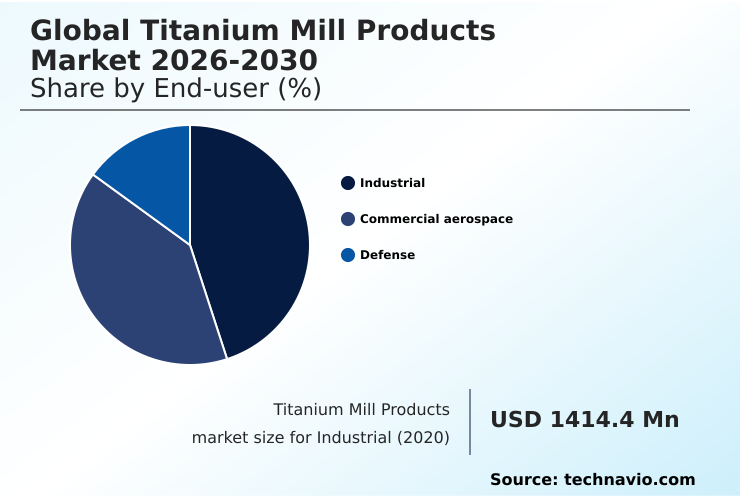
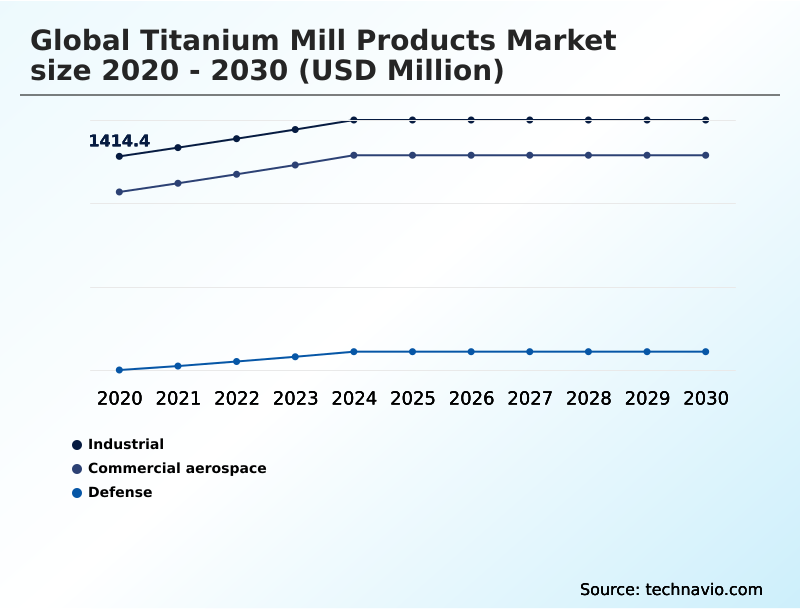
The Industrial segment was valued at USD 1.57 billion in 2024 and showed a gradual increase during the forecast period.
Regional Analysis
North America is estimated to contribute 40.4% to the growth of the global market during the forecast period.Technavio’s analysts have elaborately explained the regional trends and drivers that shape the market during the forecast period.
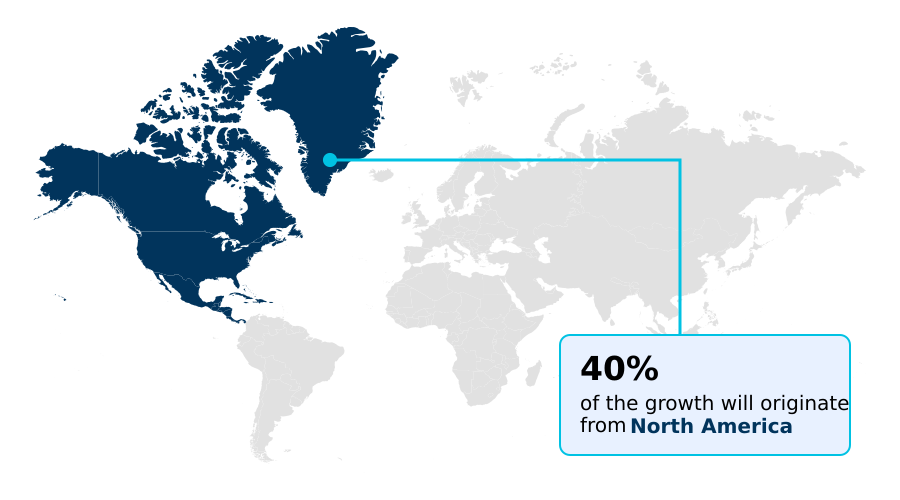
See How Titanium Mill Products Market Demand is Rising in North America Get Free Sample
The geographic landscape of the market for titanium mill products is concentrated in technologically advanced regions.
North America leads, driven by its massive aerospace and defense industries, which consume a vast quantity of specialized titanium alloys produced via vacuum arc remelting and electron beam melting. This region accounts for over 40% of all aerospace-grade alloy consumption.
In Europe, the focus is on high-value applications in automotive, medical, and precision engineering.
APAC, led by China and Japan, is a major hub for both production and consumption, with significant use in industrial applications and a growing demand for high-purity titanium for sputtering targets in the electronics sector.
Across these regions, advanced non-destructive testing has improved component reliability, reducing rejection rates by 12% and reinforcing the importance of quality in the global supply chain.
Market Dynamics
Our researchers analyzed the data with 2025 as the base year, along with the key drivers, trends, and challenges. A holistic analysis of drivers will help companies refine their marketing strategies to gain a competitive advantage.
- Strategic decision-making in the titanium mill products market is increasingly complex, shaped by a confluence of technical and economic factors. A critical consideration is the high temperature performance of titanium alloys, which dictates their use in demanding aerospace applications.
- The ongoing debate over titanium versus composites in airframe design continues, with lifecycle assessment of titanium production showing environmental benefits through recycling that composites currently lack. This has intensified the focus on the cost effective manufacturing of titanium components.
- Central to this is the advancement of additive manufacturing techniques for titanium parts and investment casting of complex titanium shapes, which promise to reduce waste and production time. Simultaneously, efforts to improve the machinability of titanium materials are crucial, as manufacturing challenges in forging large titanium components and the complexities of welding processes for titanium structures remain significant cost drivers.
- In the medical field, advanced titanium alloys for medical implants are being developed, with biocompatibility testing for titanium implants ensuring patient safety. In parallel, the market for recycled titanium materials is growing, supported by robust supply chain management for strategic metals.
- This recycled feedstock is vital for industrial uses, including titanium applications in chemical processing equipment and titanium use in desalination plant technology. The emerging role of titanium in hydrogen energy systems also presents a significant future opportunity.
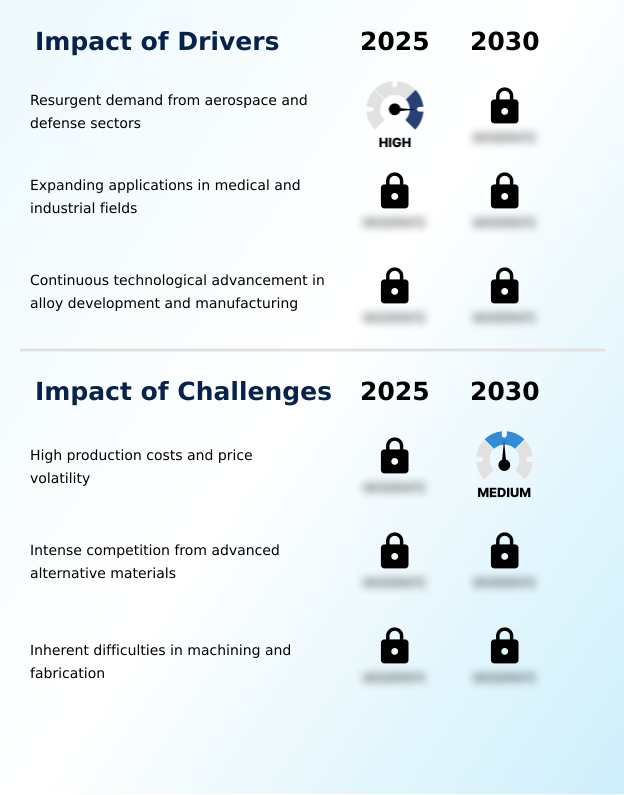
What are the key market drivers leading to the rise in the adoption of Titanium Mill Products Industry?
- Resurgent demand from the aerospace and defense sectors serves as the primary driver for market growth.
- Market growth is fundamentally driven by the material's unique properties and expanding applications in high-value sectors.
- The unparalleled strength-to-weight ratio of titanium alloys is a primary factor in lightweighting initiatives, particularly in aerospace, enabling a 10% increase in engine thrust-to-weight ratios in some next-generation aero-engines.
- In the medical field, its superior biocompatibility is critical for orthopedic implants and biomedical devices, where material qualification processes confirm over a 99.9% success rate in avoiding adverse biological responses.
- This demand is bolstered by stringent medical device regulations that favor proven materials.
- Furthermore, continuous innovation in materials like titanium aluminides and advancements in high-performance automotive parts are opening new avenues for growth beyond traditional strongholds, solidifying the market's robust trajectory.
What are the market trends shaping the Titanium Mill Products Industry?
- A strategic focus on vertical integration is shaping the market, driven by the need to enhance supply chain security and operational control.
- Key trends are reshaping the competitive landscape, pushing firms toward greater operational control and sustainability. A pronounced shift toward vertical integration is evident, as companies seek to mitigate geopolitical supply risk and improve supply chain security. This strategy enhances material traceability from raw material to finished product, a critical factor for aerospace and medical customers.
- Concurrently, the circular economy is gaining traction, with an emphasis on creating robust closed-loop recycling systems. Utilizing titanium scrap recycling can reduce the energy required for production by up to 90%, a significant step for a traditionally energy-intensive industry.
- This focus on sustainable manufacturing is driving a regionalization of supply chains, which shortens lead times by an average of 15% and builds more resilient industrial ecosystems.
What challenges does the Titanium Mill Products Industry face during its growth?
- High production costs and significant price volatility present a key challenge to sustained industry growth.
- Significant challenges persist, primarily related to cost, competition, and manufacturing complexity. The primary production of titanium sponge via the energy-intensive kroll process establishes a high cost floor, while fluctuating production lead times add to price instability.
- In application, titanium faces intense competition from advanced alternatives; carbon fiber reinforced polymers and aluminum-lithium alloys can offer a 20% weight reduction in specific non-critical aerospace applications. Furthermore, the inherent difficulty in machining and fabrication, including issues like galling, requires specialized tooling and processes, with machining speeds often 50-75% slower than for alloy steels.
- Overcoming these hurdles requires significant investment in process control automation and the development of more cost-effective manufacturing routes to expand market penetration.
Exclusive Technavio Analysis on Customer Landscape
The titanium mill products market forecasting report includes the adoption lifecycle of the market, covering from the innovator’s stage to the laggard’s stage. It focuses on adoption rates in different regions based on penetration. Furthermore, the titanium mill products market report also includes key purchase criteria and drivers of price sensitivity to help companies evaluate and develop their market growth analysis strategies.
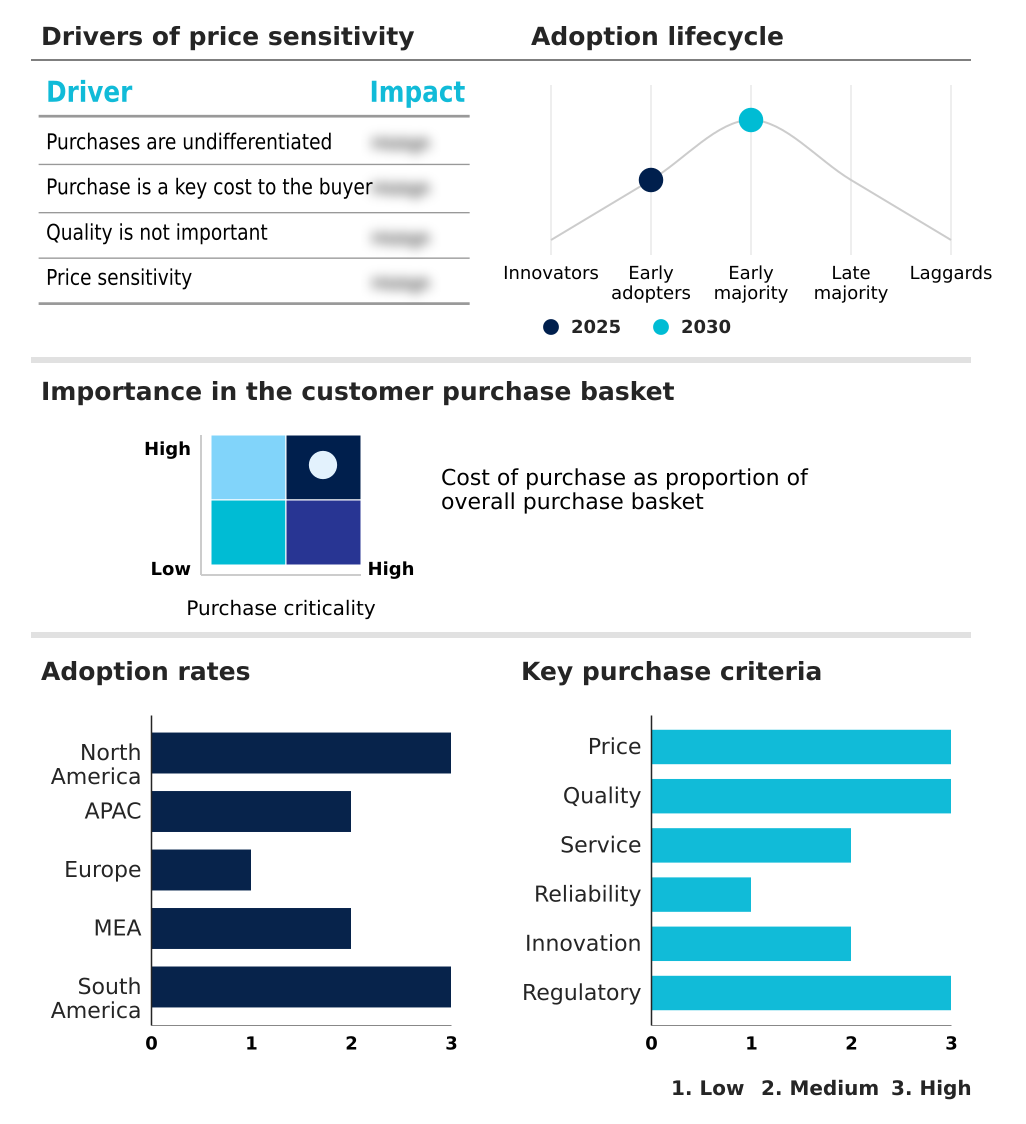
Customer Landscape of Titanium Mill Products Industry
Competitive Landscape
Companies are implementing various strategies, such as strategic alliances, titanium mill products market forecast, partnerships, mergers and acquisitions, geographical expansion, and product/service launches, to enhance their presence in the industry.
Acerinox SA - Provides specialized titanium mill products, including high-performance sheets and plates, for critical industrial and high-performance alloy applications.
The industry research and growth report includes detailed analyses of the competitive landscape of the market and information about key companies, including:
- Acerinox SA
- Allegheny Technologies Inc.
- Auremo GmbH
- BAOTI Group Co. Ltd.
- EAZALL Metal Company
- Kobe Steel Ltd.
- Nippon Steel Corp.
- Norsk Titanium AS
- OSAKA Titanium Technologies
- Precision Castparts Corp.
- Reliance Steel and Aluminum Co.
- Rostec State Corporation
- Smiths Metal Centres Ltd.
- Supra Alloys
- Titan Engineering Pte Ltd.
- Titanium Industries Inc.
- Toho Titanium Co. Ltd.
- Tricor Metals Inc.
- United Titanium Inc.
- WST Co. Ltd.
Qualitative and quantitative analysis of companies has been conducted to help clients understand the wider business environment as well as the strengths and weaknesses of key industry players. Data is qualitatively analyzed to categorize companies as pure play, category-focused, industry-focused, and diversified; it is quantitatively analyzed to categorize companies as dominant, leading, strong, tentative, and weak.
Recent Development and News in Titanium mill products market
- In August 2025, ATI Inc. announced the extension and expansion of its long-term agreement with The Boeing Co. to ensure a stable supply of high-performance titanium products for all of Boeing's commercial aircraft programs.
- In June 2025, ATI Inc. inaugurated a new, state-of-the-art production facility in South Carolina, dedicated to manufacturing advanced titanium alloy sheets to support major aerospace and defense contractors.
- In May 2025, Titanium Industries Inc. completed its acquisition of Millennium Alloys, a strategic move intended to create a more integrated and efficient supply chain for its customer base.
- In May 2025, VDM Metals launched a new electron beam melting production line in Germany, specifically designed to produce high-integrity titanium slabs for critical aerospace engine components.
Dive into Technavio’s robust research methodology, blending expert interviews, extensive data synthesis, and validated models for unparalleled Titanium Mill Products Market insights. See full methodology.
| Market Scope | |
|---|---|
| Page number | 290 |
| Base year | 2025 |
| Historic period | 2020-2024 |
| Forecast period | 2026-2030 |
| Growth momentum & CAGR | Accelerate at a CAGR of 3.5% |
| Market growth 2026-2030 | USD 686.1 million |
| Market structure | Fragmented |
| YoY growth 2025-2026(%) | 3.3% |
| Key countries | US, Canada, Mexico, China, Japan, India, South Korea, Australia, Indonesia, Germany, UK, France, Italy, Spain, The Netherlands, Saudi Arabia, UAE, South Africa, Israel, Turkey, Brazil, Argentina and Chile |
| Competitive landscape | Leading Companies, Market Positioning of Companies, Competitive Strategies, and Industry Risks |
Research Analyst Overview
- The titanium mill products market remains essential for sectors where material failure is not an option. The landscape is dominated by the production of titanium alloys and commercially pure titanium, with processes like the kroll process, vacuum arc remelting, and electron beam melting being fundamental to achieving the required purity and metallurgical properties for high-performance use.
- The exceptional corrosion resistance, strength-to-weight ratio, and biocompatibility of the material make it indispensable for aero-engines, airframe structures, orthopedic implants, and equipment for chemical processing and desalination facilities. A significant trend is the rise of additive manufacturing, which enables the creation of complex, near-net shape parts.
- Boardroom decisions are now centered on the high capital expenditure for this technology versus the long-term savings from reduced material waste, as adoption has been shown to reduce raw material usage by up to 90% compared to traditional machining.
- Innovations in isothermal forging and the development of advanced titanium aluminides and beta titanium alloys are further expanding the material's application envelope.
What are the Key Data Covered in this Titanium Mill Products Market Research and Growth Report?
-
What is the expected growth of the Titanium Mill Products Market between 2026 and 2030?
-
USD 686.1 million, at a CAGR of 3.5%
-
-
What segmentation does the market report cover?
-
The report is segmented by End-user (Industrial, Commercial aerospace, and Defense), Product (Sheets and plates, Billets and bars, and Others), Grade Type (Titanium alloys, and Commercially pure titanium (grades 1-4)) and Geography (North America, APAC, Europe, Middle East and Africa, South America)
-
-
Which regions are analyzed in the report?
-
North America, APAC, Europe, Middle East and Africa and South America
-
-
What are the key growth drivers and market challenges?
-
Resurgent demand from aerospace and defense sectors, High production costs and price volatility
-
-
Who are the major players in the Titanium Mill Products Market?
-
Acerinox SA, Allegheny Technologies Inc., Auremo GmbH, BAOTI Group Co. Ltd., EAZALL Metal Company, Kobe Steel Ltd., Nippon Steel Corp., Norsk Titanium AS, OSAKA Titanium Technologies, Precision Castparts Corp., Reliance Steel and Aluminum Co., Rostec State Corporation, Smiths Metal Centres Ltd., Supra Alloys, Titan Engineering Pte Ltd., Titanium Industries Inc., Toho Titanium Co. Ltd., Tricor Metals Inc., United Titanium Inc. and WST Co. Ltd.
-
Market Research Insights
- Market dynamics are increasingly shaped by strategic sourcing and operational efficiency. The emphasis on supply chain security and material traceability has become a key performance indicator, with integrated firms demonstrating a 20% lower exposure to geopolitical supply risks.
- The adoption of a circular economy model, centered on titanium scrap recycling, is not only a sustainability initiative but also a financial one, as it can lower the energy input for material production by over 90% compared to primary processing. Firms leveraging advanced lifecycle cost analysis report a 15% improvement in long-term profitability over those focused on initial procurement costs.
- These trends underscore a market where competitive advantage is gained through operational resilience and sustainable practices rather than purely by production volume.
We can help! Our analysts can customize this titanium mill products market research report to meet your requirements.
 RIA -
RIA - 
