



Traumatic Brain Injury Assessment And Management Devices Market Size 2024-2028
The traumatic brain injury assessment and management devices market size is forecast to increase by USD 1.71 billion at a CAGR of 8.09% between 2023 and 2028.
- Market for traumatic brain injury (TBI) assessment and management devices is experiencing strong growth, driven by several key factors. The rising number of brain surgeries has amplified the demand for advanced diagnostic tools, while the expansion of neurology specialty hospitals and clinics is fueling the need for sophisticated TBI assessment devices and neurodiagnostics.
- However, a shortage of skilled neurologists and neurodiagnostic technicians remains a significant challenge. As the global population ages and TBI cases increase, this demand is expected to grow further. Additionally, the industry is witnessing the rise of innovative solutions, such as telemedicine and portable neuroimaging devices, which are enhancing accessibility and convenience in TBI assessment and management. Overall, the TBI assessment and management devices market is poised for robust growth In the coming years.
What will be the Traumatic Brain Injury Assessment And Management Devices Market Size During the Forecast Period?
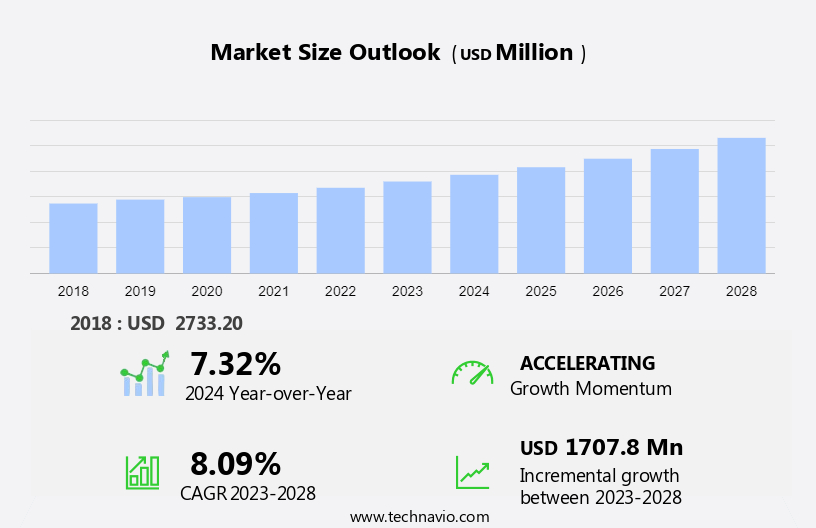
- The traumatic brain injury (TBI) assessment and management devices market In the US is experiencing significant growth due to the increasing prevalence of TBIs caused by various factors, including sports injuries, falls, gunshot wounds, and domestic violence. According to recent studies, road traffic accidents are a leading cause of TBIs, accounting for approximately 28% of all cases. Technologically advanced imaging devices, such as CT and X-ray, play a crucial role In the initial diagnosis and assessment of TBIs. Furthermore, monitoring devices, including intracranial pressure monitoring, are essential for managing TBIs in hospitals, diagnostic centers, and healthcare systems. The market is segmented into imaging devices and monitoring devices.
- Supply chain disruptions, referral patterns, and collaboration between organizations like Stanford Children's Health, Brain Injury Association of America (BIAA), and Domestic Violence Brain Injury Consortium (DV-BIC), are key trends shaping the market dynamics. Military personnel are also a significant consumer base due to their high risk of TBIs.
How is this Traumatic Brain Injury Assessment And Management Devices Industry segmented and which is the largest segment?
The traumatic brain injury assessment and management devices industry research report provides comprehensive data (region-wise segment analysis), with forecasts and estimates in "USD billion" for the period 2024-2028, as well as historical data from 2018-2022 for the following segments.
- End-user
- Hospitals
- Diagnostic centers
- Others
- Device
- Imaging
- Monitoring devices
- Geography
- North America
- US
- Europe
- Germany
- UK
- Asia
- China
- Japan
- Rest of World (ROW)
- North America
By End-user Insights
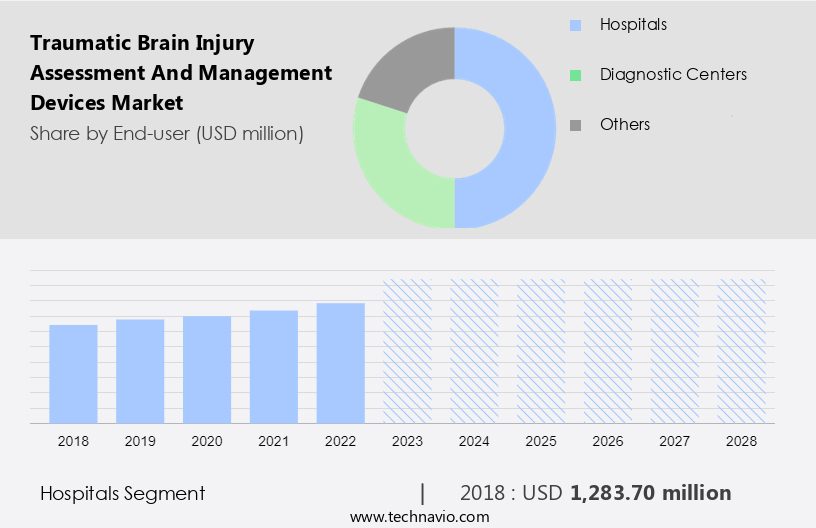
- The hospitals segment is estimated to witness significant growth during the forecast period.
Traumatic brain injuries (TBIs) are a significant medical concern, leading to various neurological disorders and functional impairments. High-cost advanced devices are increasingly being used in hospitals and primary care settings for diagnosing and treating TBIs, including CT scans, MRI machines, and electroencephalograms (EEGs). These devices aid in identifying brain abnormalities and monitoring patient progress during treatment, such as surgery and rehabilitation procedures. TBIs can result from road accidents, sports-related injuries, or patient visits to the emergency room. Long-term care facilities also provide essential care for patients with TBIs. The use of these devices in hospitals contributes to effective diagnosis and treatment of medical conditions, ultimately improving patient outcomes.
Get a glance at the Traumatic Brain Injury Assessment And Management Devices Industry report of share of various segments Request Free Sample
The Hospitals segment was valued at USD 1.28 billion in 2018 and showed a gradual increase during the forecast period.
Regional Analysis
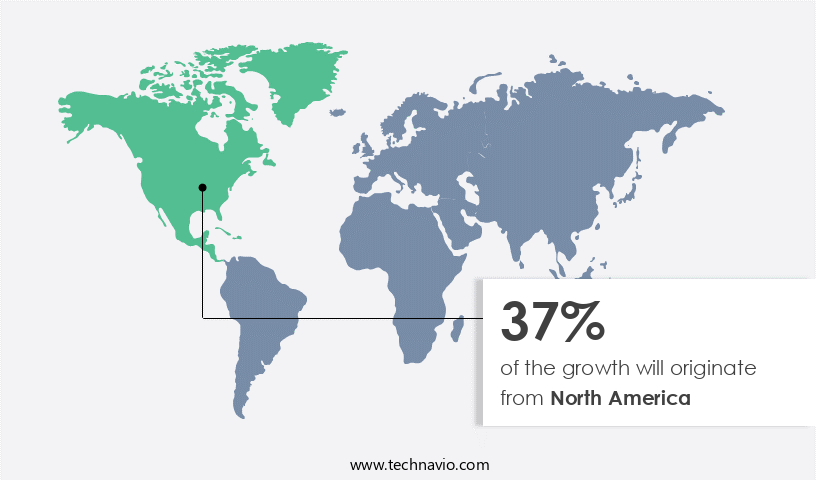
- North America is estimated to contribute 37% to the growth of the global market during the forecast period.
Technavio's analysts have elaborately explained the regional trends and drivers that shape the market during the forecast period.
For more insights on the market share of various regions, Request Free Sample
The Traumatic Brain Injury (TBI) assessment and management devices market In the US is experiencing significant growth due to the country's large healthcare devices market. Despite the therapeutic market's dominance, the lack of advanced diagnostic methods for TBI indications often results in delayed diagnosis and treatment. In situations where brain injuries, such as those from sports injuries, falls, gunshot wounds, domestic violence, or road traffic accidents, cannot be diagnosed immediately, TBI assessment and management devices become the preferred option. These devices offer non-invasive and minimally invasive procedures to evaluate brain function and provide crucial information for effective treatment. The market's growth is further driven by the increasing awareness and prioritization of brain health, leading to an increased demand for technologically advanced assessment and management devices.
Market Dynamics
Our traumatic brain injury assessment and management devices market researchers analyzed the data with 2023 as the base year, along with the key drivers, trends, and challenges. A holistic analysis of drivers will help companies refine their marketing strategies to gain a competitive advantage.
What are the key market drivers leading to the rise In the adoption of Traumatic Brain Injury Assessment And Management Devices Industry?
Increasing prevalence of brain surgeries is the key driver of the market.
- Traumatic brain injuries (TBIs) result from various causes, including sports injuries, falls, gunshot wounds, and domestic violence, among others. These injuries can lead to significant health complications and require timely and effective assessment and management. Technologically advanced devices play a crucial role in diagnosing and treating TBIs. Imaging devices, such as CT and X-ray, are commonly used to identify brain abnormalities, while monitoring devices help track intracranial pressure. Hospitals and diagnostic centers are integral to the management of TBIs. The healthcare system's referral patterns play a significant role in determining the patient's journey, from emergency department visits to hospital admissions and surgical operations.
- The high cost of advanced devices and long-term care facilities can pose a challenge to the effective implementation of these technologies. The market for TBI assessment and management devices is segmented into various categories, including minimally invasive procedures, imaging devices, and monitoring devices. The increasing incidence of TBIs, particularly In the adolescent and adult population, is driving the growth of this market. For instance, according to the Brain Injury Association of America (BIAA) and the Defense and Veterans Brain Injury Center (DVBIC), over 1.5 million TBIs occur annually In the US. Primary care settings and long-term care facilities also play a critical role in diagnosing and treating TBIs.
- For instance, the Stanford Children's Hospital has implemented a Q-Collar, a device that applies compressive force to the neck to reduce the risk of sports-related brain injuries. Similarly, the FDA-cleared algorithm by BrainScope can help diagnose concussions In the emergency department. The market for TBI assessment and management devices is expected to grow significantly due to the rising incidence of TBIs and the development of advanced devices. However, supply chain disruptions and product approval processes can pose challenges to market growth. The article "Traumatic Brain Injury: Current Status and Future Directions" in World Neurosurgery provides further insights into the current state and future directions of TBI research and treatment.
- In conclusion, TBIs are a significant public health concern, and the development and implementation of advanced assessment and management devices are crucial to improving patient outcomes. Hospitals, governments, and other organizations are investing In these technologies to provide effective care to the growing number of TBI patients. The market for TBI assessment and management devices is expected to grow significantly due to the rising incidence of TBIs and the development of advanced technologies. However, challenges such as supply chain disruptions and product approval processes must be addressed to ensure the effective implementation of these devices.
What are the market trends shaping the Traumatic Brain Injury Assessment And Management Devices Industry?
Growing neurology specialty hospitals and clinics is the upcoming market trend.
- Traumatic brain injuries (TBIs) result from various causes, including sports injuries, falls, gunshot wounds, and domestic violence, among others. These injuries can lead to significant health complications and require advanced treatment and management. Minimally invasive procedures have emerged as a popular approach to treating TBIs, with technologically advanced imaging and monitoring devices playing a crucial role. Hospitals and diagnostic centers are integrating these devices into their healthcare systems to improve patient outcomes. The burden of TBIs is high, with a significant number of severe head injuries leading to hospital visits, surgical operations, and long-term care facility stays. According to a study In the Journal of Clinical Medicine, the incidence of TBIs is rising, particularly among adolescents and adults.
- Road traffic accidents are a leading cause of TBIs, accounting for a significant number of traumatic death cases. Healthcare systems are investing In the development and expansion of neurology facilities to address the growing need for specialized care. For instance, Stanford Children's Hospital has a dedicated Brain Injury and Concussion Program, while the Brain Injury Association of America (BIAA) and the Defense and Veterans Brain Injury Center (DVBIC) focus on military personnel and veterans. Advanced devices, such as intracranial pressure monitoring systems, CT and X-ray scanners, and the FDA-cleared BrainScope Concussion Index, are essential for diagnosing and treating TBIs.
- These devices help doctors assess brain abnormalities and monitor patient progress. However, their high cost can pose a challenge to their widespread adoption in primary care settings. Referral patterns and hospital admissions for TBIs can be influenced by various factors, including the severity of the injury and the availability of specialized care. The American Institute of Medical Sciences (AIIMS) and other healthcare organizations are working to address these challenges by improving access to care and increasing awareness of TBI prevention and management. The market for TBI assessment and management devices is expected to grow significantly In the coming years, driven by the rising incidence of TBIs and the development of new, cost-effective technologies.
- The segment for monitoring devices is expected to see particularly strong growth, as these devices offer a non-invasive and cost-effective way to assess brain injury severity and monitor patient progress. In conclusion, TBIs are a significant health concern, with a high burden on healthcare systems and patients. The development and adoption of advanced assessment and management devices are crucial for improving patient outcomes and reducing the long-term impact of TBIs. Hospitals, governments, and other organizations are investing In these technologies to expand access to specialized care and improve patient outcomes.
What challenges does the Traumatic Brain Injury Assessment And Management Devices Industry face during its growth?
Scarcity of skilled neurologists and neurodiagnostic technicians is a key challenge affecting the industry growth.
- Traumatic Brain Injury (TBI) assessment and management devices market encompasses technologically advanced tools used in diagnosing and treating various brain injuries, including sports-related injuries, falls, gunshot wounds, and domestic violence. These devices consist of minimally invasive procedures, imaging devices such as CT and X-ray, monitoring devices for intracranial pressure, and other advanced devices. Hospitals, diagnostic centers, and healthcare systems utilize these devices to manage surgical conditions resulting from TBIs, leading to an increase in patient visits and hospital admissions. The market is segmented into imaging devices, monitoring devices, and other advanced devices. Imaging devices include CT and X-ray, which help in diagnosing brain abnormalities.
- Monitoring devices, such as intracranial pressure monitors, assist in managing severe head injuries. Other advanced devices include gadgets like the Q-Collar, which applies compressive force to reduce blood volume in the brain, and devices used in long-term care facilities for rehabilitation procedures. The rising incidence of TBIs, particularly in adolescents and adults, due to road traffic accidents and sports-related brain injuries, is driving the growth of this market. The burden of TBI is significant, with numerous clinical studies published in reputed journals like World Neurosurgery, Neurosurgical facility, BMJ Journals, and Clinical Medicine Journal, highlighting the need for effective TBI assessment and management devices.
- Mergers and product approvals contribute to the market's growth, with companies continuously innovating to provide more accurate and cost-effective solutions. The market is dynamic, with ongoing research and development, and the introduction of FDA-cleared algorithms like BrainScope's Concussion Index, further enhancing the physiological market's potential. Doctors and patients rely on these devices to diagnose and treat medical conditions effectively, making it essential to maintaIn their accuracy and reliability. Neurodiagnostic technicians, who perform EEG and EMG tests, play a crucial role in ensuring the devices' optimal performance. Their expertise in recognizing brainwave patterns and correcting artifacts is vital for effective clinical outcomes.
- In conclusion, the TBI assessment and management devices market is a significant and growing sector In the healthcare industry, with a focus on developing minimally invasive procedures and technologically advanced tools to improve patient outcomes. The market's growth is driven by the increasing incidence of TBIs, ongoing research and development, and the need for accurate and reliable diagnostic and treatment solutions.
Exclusive Customer Landscape
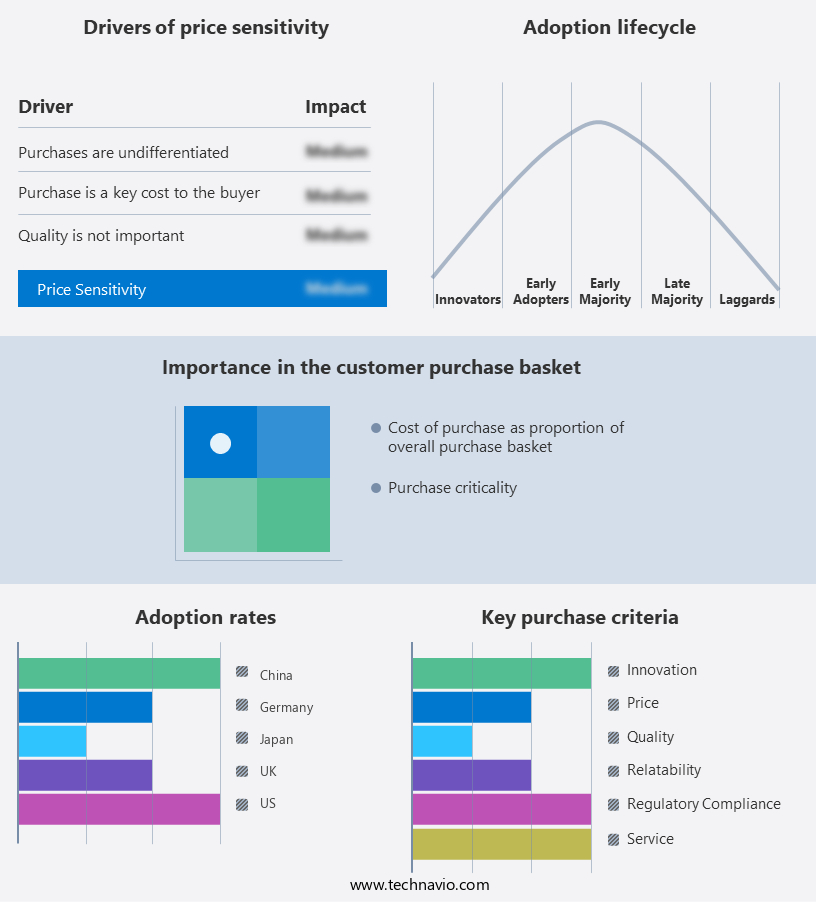
The traumatic brain injury assessment and management devices market forecasting report includes the adoption lifecycle of the market, covering from the innovator's stage to the laggard's stage. It focuses on adoption rates in different regions based on penetration. Furthermore, the traumatic brain injury assessment and management devices market report also includes key purchase criteria and drivers of price sensitivity to help companies evaluate and develop their market growth analysis strategies.
Customer Landscape
Key Companies & Market Insights
Companies are implementing various strategies, such as strategic alliances, traumatic brain injury assessment and management devices market forecast, partnerships, mergers and acquisitions, geographical expansion, and product/service launches, to enhance their presence In the industry.
Advanced Brain Monitoring Inc. - The company provides a solution for traumatic brain injury assessment through the Stat X-Series mobile Electroencephalography (EEG) systems. This advanced device is designed to effectively evaluate and manage brain injuries on-site, offering healthcare professionals a valuable tool for improving patient outcomes.
The industry research and growth report includes detailed analyses of the competitive landscape of the market and information about key companies, including:
- Advanced Brain Monitoring Inc.
- Boston Scientific Corp.
- BrainScope Co. Inc.
- Canon Inc.
- Compumedics Ltd.
- Elekta AB
- Esaote Spa
- General Electric Co.
- ICON plc
- InfraScan Inc.
- Integra Lifesciences Corp.
- Koninklijke Philips N.V.
- NanoDx Inc.
- Natus Medical Inc.
- Nihon Kohden Corp.
- NovaSignal Corp.
- Oculogica
- RAUMEDIC AG
- Siemens AG
- Vivonics Inc.
Qualitative and quantitative analysis of companies has been conducted to help clients understand the wider business environment as well as the strengths and weaknesses of key industry players. Data is qualitatively analyzed to categorize companies as pure play, category-focused, industry-focused, and diversified; it is quantitatively analyzed to categorize companies as dominant, leading, strong, tentative, and weak.
Research Analyst Overview
Traumatic Brain Injuries (TBIs) are a significant public health concern, resulting from various causes such as sports injuries, falls, gunshot wounds, and domestic violence, among others. The global market for devices used in the assessment and management of TBIs is witnessing robust growth due to the increasing incidence of these injuries and the development of technologically advanced solutions. The market for TBI assessment and management devices is driven by several factors, including the rising burden of TBIs, the need for early and accurate diagnosis, and the growing preference for minimally invasive procedures. The market is segmented into imaging devices and monitoring devices.
Imaging devices, such as CT scans and X-rays, are used for diagnosing brain abnormalities and identifying the extent of damage. Monitoring devices, on the other hand, are used to monitor intracranial pressure and other physiological parameters to ensure effective management of TBIs. Hospitals and diagnostic centers are the primary users of these devices, with neurosurgical facilities and emergency departments being the major end-users. The supply chain for these devices is experiencing disruptions due to various factors, including product approval processes, mergers, and rising costs. The high cost of advanced devices is a significant challenge for the market, as they are often not affordable for primary care settings or long-term care facilities.
However, the development of cost-effective solutions and the increasing adoption of these devices in various healthcare systems are expected to drive market growth. Referral patterns and management of surgical conditions also play a crucial role In the market dynamics. For instance, patients with severe head injuries often require multiple hospital visits and surgical operations, which increase the demand for TBI assessment and management devices. The article "Traumatic Brain Injury: Current Perspectives and Future Directions" published In the journal World Neurosurgery provides insights into the latest advancements in TBI diagnosis and management. The article discusses various gadgets, including Q-collars and compressive devices, that are used to reduce the risk of secondary brain injury.
The use of artificial intelligence (AI) in TBI assessment and management is a promising trend. For example, BrainScope's FDA-cleared algorithm can help diagnose concussions by analyzing the electrical activity In the brain. The Concussion Index, another AI-powered tool, uses a physiological marker to assess the severity of a concussion. The market for TBI assessment and management devices is expected to grow significantly In the coming years, driven by the rising incidence of TBIs and the development of technologically advanced solutions. The market is also being influenced by various factors, including clinical research, regulatory approvals, and changing healthcare dynamics.
In conclusion, the market for TBI assessment and management devices is a dynamic and evolving field, driven by the increasing burden of TBIs and the development of technologically advanced solutions. The market is segmented into imaging devices and monitoring devices, with hospitals and diagnostic centers being the primary end-users. The market is experiencing various challenges, including product approval processes, rising costs, and the need for cost-effective solutions. The use of AI in TBI assessment and management is a promising trend, and the market is expected to grow significantly In the coming years.
|
Traumatic Brain Injury Assessment And Management Devices Market Scope |
|
|
Report Coverage |
Details |
|
Page number |
169 |
|
Base year |
2023 |
|
Historic period |
2018-2022 |
|
Forecast period |
2024-2028 |
|
Growth momentum & CAGR |
Accelerate at a CAGR of 8.09% |
|
Market growth 2024-2028 |
USD 1.71 billion |
|
Market structure |
Fragmented |
|
YoY growth 2023-2024(%) |
7.32 |
|
Key countries |
US, Germany, UK, China, and Japan |
|
Competitive landscape |
Leading Companies, Market Positioning of Companies, Competitive Strategies, and Industry Risks |
What are the Key Data Covered in this Traumatic Brain Injury Assessment And Management Devices Market Research and Growth Report?
- CAGR of the Traumatic Brain Injury Assessment And Management Devices industry during the forecast period
- Detailed information on factors that will drive the Traumatic Brain Injury Assessment And Management Devices growth and forecasting between 2024 and 2028
- Precise estimation of the size of the market and its contribution of the industry in focus to the parent market
- Accurate predictions about upcoming growth and trends and changes in consumer behaviour
- Growth of the market across North America, Europe, Asia, and Rest of World (ROW)
- Thorough analysis of the market's competitive landscape and detailed information about companies
- Comprehensive analysis of factors that will challenge the traumatic brain injury assessment and management devices market growth of industry companies
We can help! Our analysts can customize this traumatic brain injury assessment and management devices market research report to meet your requirements.
 RIA -
RIA - 
