



Trinitrotoluene (TNT) Market Size 2026-2030
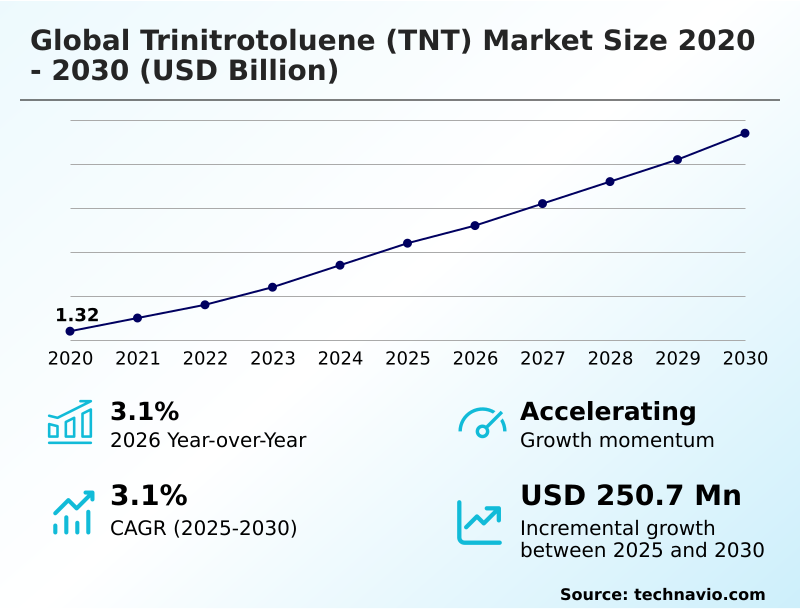
The trinitrotoluene (tnt) market size is valued to increase by USD 250.7 million, at a CAGR of 3.1% from 2025 to 2030. Significant steps against TNT smuggling by government will drive the trinitrotoluene (tnt) market.
Major Market Trends & Insights
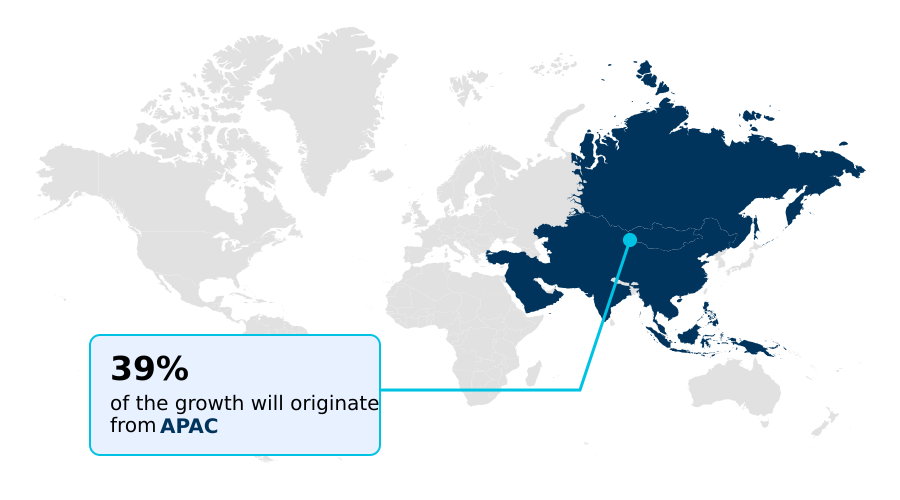
- APAC dominated the market and accounted for a 39% growth during the forecast period.
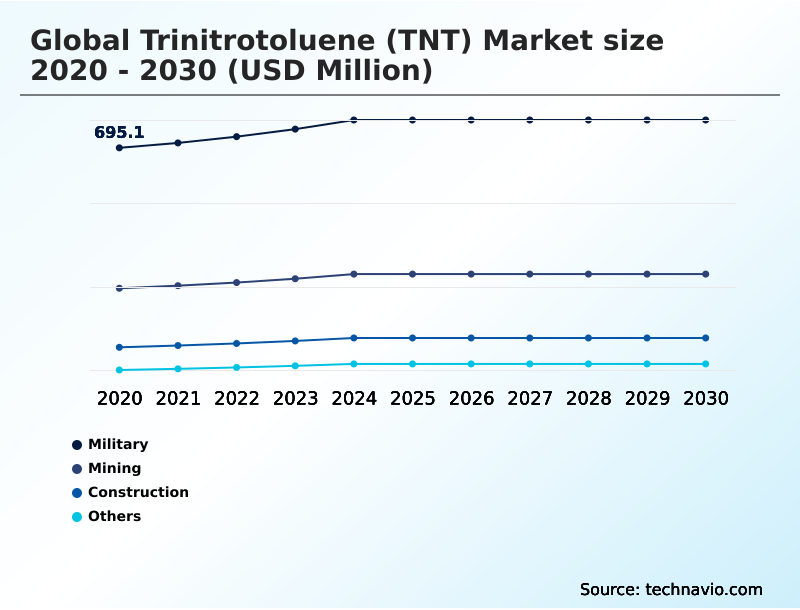
- By Application - Military segment was valued at USD 767.2 million in 2024
- By Grade Type - Military grade segment accounted for the largest market revenue share in 2024
Market Size & Forecast
- Market Opportunities: USD 444 million
- Market Future Opportunities: USD 250.7 million
- CAGR from 2025 to 2030 : 3.1%
Market Summary
- The trinitrotoluene (tnt) market is navigating a period of significant transformation, driven by unprecedented demand from the defense sector and persistent needs in mining and construction. This heightened demand is compelling a structural realignment toward supply chain regionalization and the reactivation of domestic energetic material plants to ensure national security.
- A key business scenario involves organizations balancing urgent production timelines with rising operational costs stemming from supply chain disruptions and stringent environmental compliance. For instance, manufacturers must now integrate advanced wastewater filtration technologies to manage toxic byproducts like red water, which adds cost volatility.
- Simultaneously, the industry is focused on enhancing product stability and manufacturing efficiency through improved chemical processing and quality control, ensuring the reliable performance of explosive materials in high-stakes applications. The market's trajectory is increasingly defined by resilience, localization, and the ability to manage geopolitical risks affecting raw material access and logistics.
What will be the Size of the Trinitrotoluene (TNT) Market during the forecast period?
Get Key Insights on Market Forecast (PDF) Get Free Sample
How is the Trinitrotoluene (TNT) Market Segmented?
The trinitrotoluene (tnt) industry research report provides comprehensive data (region-wise segment analysis), with forecasts and estimates in "USD million" for the period 2026-2030, as well as historical data from 2020-2024 for the following segments.
- Application
- Military
- Mining
- Construction
- Others
- Grade type
- Military grade
- Industrial grade
- Form factor
- Solid
- Liquid
- Geography
- APAC
- China
- India
- South Korea
- Europe
- Germany
- France
- UK
- North America
- US
- Canada
- Mexico
- South America
- Brazil
- Middle East and Africa
- South Africa
- Saudi Arabia
- UAE
- Rest of World (ROW)
- APAC
By Application Insights
The military segment is estimated to witness significant growth during the forecast period.
The military application segment is the central force shaping the trinitrotoluene (tnt) market, driven by a surge in munitions procurement contracts.
Geopolitical fragmentation has accelerated demand for munition fillers, such as artillery shell filler and aerial bomb charges, compelling a strategic realignment of production capacity. This shift prioritizes defense explosives over industrial-grade applications, impacting sectors that rely on industrial explosives.
The focus is on securing strategic munitions reserves and ensuring a stable supply of high-energy explosive applications. Consequently, producers of nitrated aromatics face heightened pressure to meet military-grade purity standards while managing disruptions in the supply of chemical precursors.
This dynamic reinforces the need for resilient domestic energetic material production to support national security imperatives.
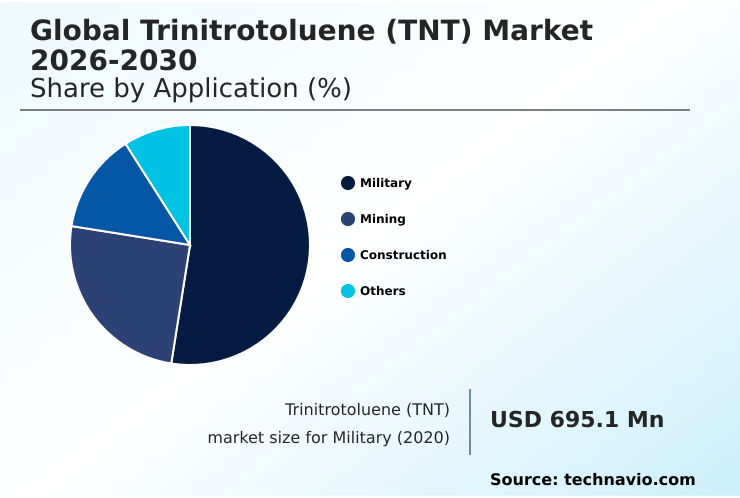
The Military segment was valued at USD 767.2 million in 2024 and showed a gradual increase during the forecast period.
Regional Analysis
APAC is estimated to contribute 39% to the growth of the global market during the forecast period.Technavio’s analysts have elaborately explained the regional trends and drivers that shape the market during the forecast period.
See How Trinitrotoluene (TNT) Market Demand is Rising in APAC Get Free Sample
The geographic landscape of the trinitrotoluene (tnt) market is undergoing a significant realignment, with APAC emerging as the dominant region, accounting for 39% of the incremental growth. This is driven by a dual demand for both industrial and defense explosives.
The region's robust mining activities, especially for quarrying explosives, are complemented by expanding defense budgets that require reliable sources of aerial bomb charges and mortar round components.
North America follows, contributing approximately 24% to the market's expansion, largely due to renewed investment in domestic energetic material production. This shift toward localization aims to enhance explosive supply chain security and reduce dependency on volatile international trade routes.
The need for secure hazardous material transport is reshaping logistics, favoring regionalized networks that offer greater control over nitration process efficiency.
Market Dynamics
Our researchers analyzed the data with 2025 as the base year, along with the key drivers, trends, and challenges. A holistic analysis of drivers will help companies refine their marketing strategies to gain a competitive advantage.
- The trinitrotoluene (tnt) market is increasingly shaped by intricate, long-term strategic considerations that extend beyond simple supply and demand. The geopolitical impact on tnt prices remains a core concern, compelling a deeper examination of supply chain challenges for tnt. Stakeholders are now focused on advancements in tnt manufacturing to enhance efficiency and reduce dependency on contested resources.
- A critical element in this shift is understanding the environmental impact of tnt production, which directly influences capital investment decisions. For example, the cost analysis of tnt production now includes significant allocations for wastewater treatment in tnt plants and the safe disposal of tnt waste. The regulatory framework for tnt export has also become more stringent, demanding greater transparency.
- In parallel, a comparative analysis of military-grade tnt purity requirements versus industrial-grade tnt for mining reveals diverging value chains. As organizations assess tnt alternatives for construction demolition, the market is witnessing a move toward integrated production hubs.
- These hubs, often localized, can reduce logistics and transportation security risks by co-locating precursor synthesis and final casting, reflecting a strategic pivot toward resilience.
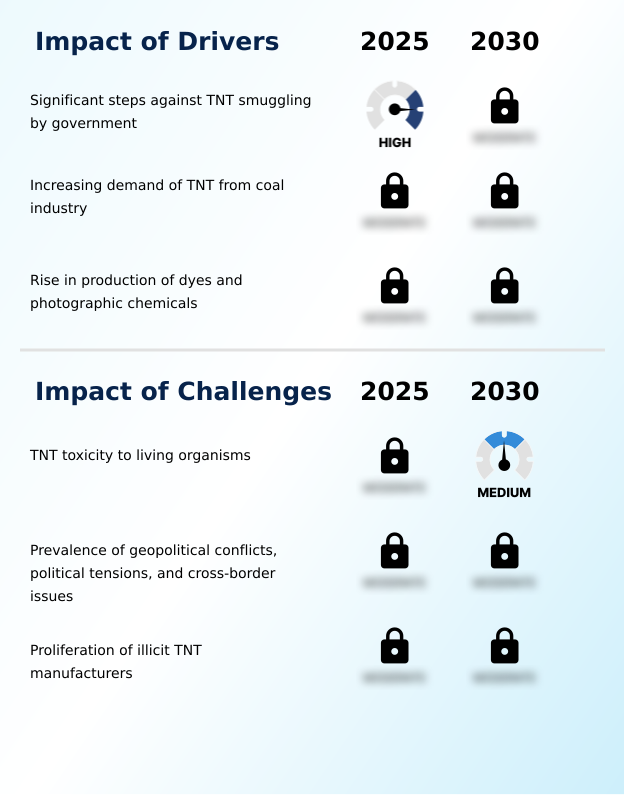
What are the key market drivers leading to the rise in the adoption of Trinitrotoluene (TNT) Industry?
- A key market driver is the implementation of significant government measures to counter the smuggling of energetic materials, which has intensified due to geopolitical fragmentation.
- A significant driver for the trinitrotoluene (tnt) market is the stringent enforcement of anti-smuggling measures and enhanced digital tracking systems by governments.
- These initiatives, which include rigorous end-user certificate protocols, are designed to ensure supply chain transparency and prevent the diversion of dual-use chemicals.
- The implementation of such regulations has increased administrative burdens, with compliance-related operational effects leading to a more than 15% rise in verification costs for some shippers. This focus on security directly influences the pricing of explosive formulations and petrochemical derivatives.
- Furthermore, it promotes a competitive restructuring toward strategic sourcing diversification, favoring producers who can demonstrate robust control over their supply chains for blasting technologies and explosive charges.
What are the market trends shaping the Trinitrotoluene (TNT) Industry?
- The market is shaped by a significant trend of increased defense activities by governments worldwide. This has led to a sustained rise in munitions procurement to replenish depleted national stockpiles.
- A prominent trend in the trinitrotoluene (tnt) market is the surge in government defense spending, leading to a massive increase in munitions procurement contracts. This has caused a significant trade realignment, with production capacity for high explosives being diverted to meet military demand.
- The depletion of strategic munitions reserves has driven many nations to authorize emergency funding, in some cases doubling their stockpiles. This prioritization of defense sector explosives directly impacts the availability and pricing of industrial-grade applications, including those for construction demolition explosives.
- Consequently, the market for energetic materials is experiencing heightened demand for reliable munition fillers and secondary detonators, reinforcing the need for secure and resilient supply chains to support both military and civil engineering explosives.
What challenges does the Trinitrotoluene (TNT) Industry face during its growth?
- A primary challenge affecting market growth is the inherent toxicity of trinitrotoluene (tnt) to living organisms, which complicates production and disposal amid stringent environmental regulations.
- A primary challenge confronting the trinitrotoluene (tnt) market is the material's inherent toxicity, which necessitates costly environmental safeguards. The expense of managing byproducts, such as implementing red water treatment, has increased operational costs by up to 20% for some producers, directly impacting the price of final explosive products.
- This issue is amplified by heightened production demands, creating a tension between output and regulatory compliance. The challenge extends to the supply chain, where procurement uncertainty for specialized chemical treatment agents is exacerbated by logistical disruptions.
- For example, shipping rerouting has delayed deliveries of essential remediation inputs by several weeks, complicating adherence to strict toxicity limits for solid-form stability and liquid-form handling.
Exclusive Technavio Analysis on Customer Landscape
The trinitrotoluene (tnt) market forecasting report includes the adoption lifecycle of the market, covering from the innovator’s stage to the laggard’s stage. It focuses on adoption rates in different regions based on penetration. Furthermore, the trinitrotoluene (tnt) market report also includes key purchase criteria and drivers of price sensitivity to help companies evaluate and develop their market growth analysis strategies.
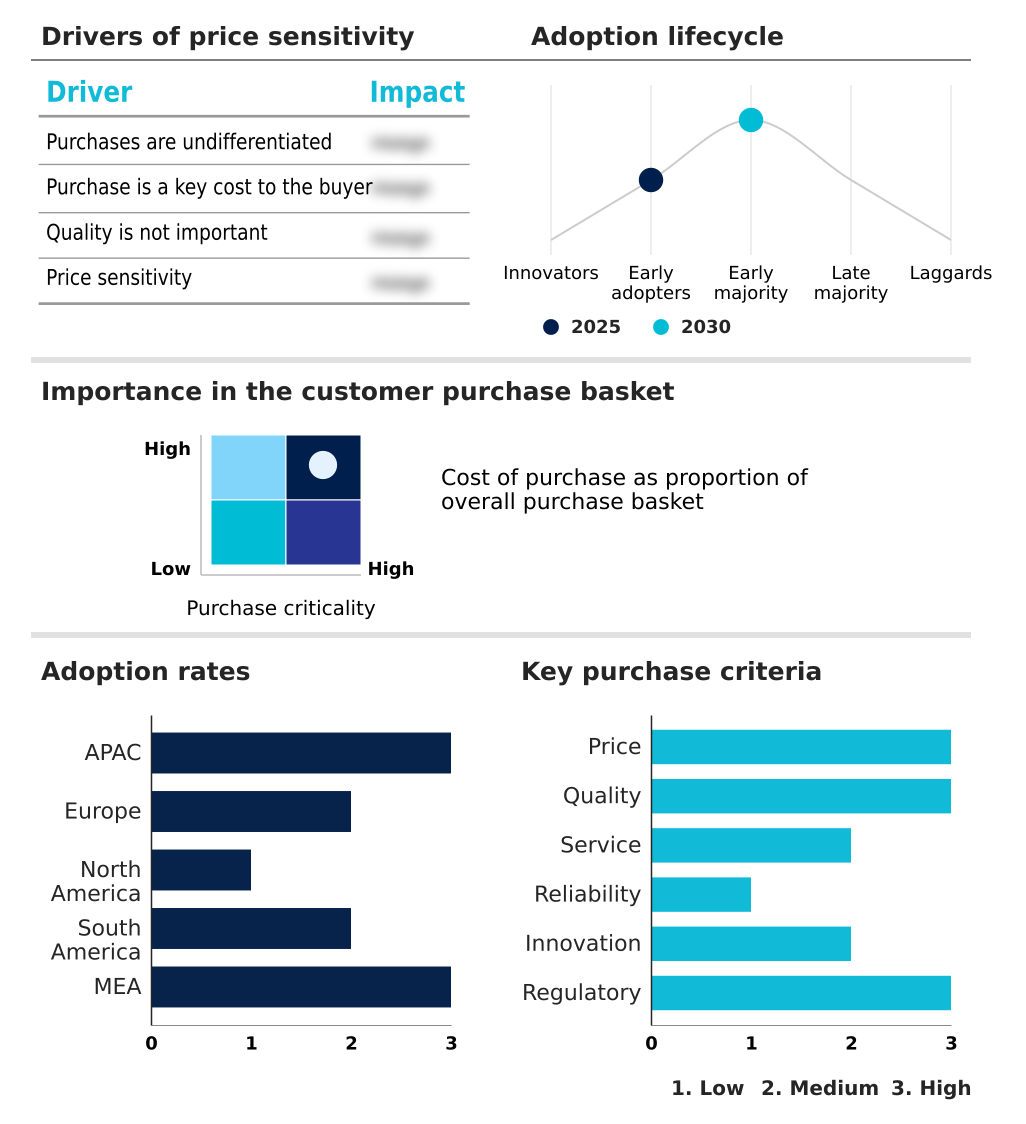
Customer Landscape of Trinitrotoluene (TNT) Industry
Competitive Landscape
Companies are implementing various strategies, such as strategic alliances, trinitrotoluene (tnt) market forecast, partnerships, mergers and acquisitions, geographical expansion, and product/service launches, to enhance their presence in the industry.
AECI Mining - Key offerings include a comprehensive range of high explosives, propellants, and combustible modular charges for heavy and medium caliber ammunition.
The industry research and growth report includes detailed analyses of the competitive landscape of the market and information about key companies, including:
- AECI Mining
- Austin Powder
- Chemring Group Plc
- Dyno Nobel
- EPC Groupe
- Eurenco
- Explosia as
- Hanwha Group
- MaxamCorp Holding S.L.
- Mil Spec Industries Corp.
- NORINCOGROUP.com Inc.
- Omnia Holdings Ltd.
- Orica Ltd.
- Oy Forcit Ab
- PRVA ISKRA NAMENSKA
- Rheinmetall AG
- Sasol Ltd.
- Solar Industries India Ltd.
- Yugoimport SDPR J.P.
- Zaklady Chemiczne Nitro Chem
Qualitative and quantitative analysis of companies has been conducted to help clients understand the wider business environment as well as the strengths and weaknesses of key industry players. Data is qualitatively analyzed to categorize companies as pure play, category-focused, industry-focused, and diversified; it is quantitatively analyzed to categorize companies as dominant, leading, strong, tentative, and weak.
Recent Development and News in Trinitrotoluene (tnt) market
- In March, 2025, various NATO member states initiated multi-year procurement contracts and authorized emergency funding to double their strategic munitions reserves, responding to depleted stockpiles.
- In March, 2025, Chinese authorities adjusted toluene precursor pricing indices following the implementation of new export quotas designed to secure domestic supply stability for energetic materials.
- In February, 2025, major producing nations implemented enhanced digital tracking systems and end-user certificate protocols to secure compliant supply chains and prevent material diversion.
- In January, 2025, several European producers faced increased operational costs after being mandated to install advanced wastewater filtration technologies to manage toxic byproducts from nitration cycles.
Dive into Technavio’s robust research methodology, blending expert interviews, extensive data synthesis, and validated models for unparalleled Trinitrotoluene (TNT) Market insights. See full methodology.
| Market Scope | |
|---|---|
| Page number | 294 |
| Base year | 2025 |
| Historic period | 2020-2024 |
| Forecast period | 2026-2030 |
| Growth momentum & CAGR | Accelerate at a CAGR of 3.1% |
| Market growth 2026-2030 | USD 250.7 million |
| Market structure | Fragmented |
| YoY growth 2025-2026(%) | 3.1% |
| Key countries | China, India, South Korea, Japan, Australia, Indonesia, Russia, Germany, France, UK, Poland, Italy, US, Canada, Mexico, Brazil, Chile, Peru, South Africa, Saudi Arabia, UAE, Turkey and Egypt |
| Competitive landscape | Leading Companies, Market Positioning of Companies, Competitive Strategies, and Industry Risks |
Research Analyst Overview
- The trinitrotoluene (tnt) market is defined by its critical role in both defense and industrial sectors, where product reliability is non-negotiable. Current dynamics show a pronounced shift toward securing supply chains for energetic materials. The nitration process remains central to production, demanding high-purity toluene feedstock and other chemical precursors like sulfuric acid and nitric acid.
- Boardroom decisions are increasingly focused on capital allocation for localizing energetic material plants to mitigate geopolitical risks associated with hazardous cargo. For instance, reliance on regional suppliers has proven to reduce procurement lead times by over 25% compared to complex global routes.
- This shift is driven by the need for stable access to high explosives, including melt-cast explosives and cast boosters for munition fillers. The industry is also contending with the environmental legacy of nitrated aromatics, investing in advanced red water treatment and wastewater filtration technologies.
- This focus on both security and sustainability is reshaping the competitive landscape for industrial explosives and demolition tools.
What are the Key Data Covered in this Trinitrotoluene (TNT) Market Research and Growth Report?
-
What is the expected growth of the Trinitrotoluene (TNT) Market between 2026 and 2030?
-
USD 250.7 million, at a CAGR of 3.1%
-
-
What segmentation does the market report cover?
-
The report is segmented by Application (Military, Mining, Construction, and Others), Grade Type (Military grade, and Industrial grade), Form Factor (Solid, and Liquid) and Geography (APAC, Europe, North America, South America, Middle East and Africa)
-
-
Which regions are analyzed in the report?
-
APAC, Europe, North America, South America and Middle East and Africa
-
-
What are the key growth drivers and market challenges?
-
Significant steps against TNT smuggling by government, TNT toxicity to living organisms
-
-
Who are the major players in the Trinitrotoluene (TNT) Market?
-
AECI Mining, Austin Powder, Chemring Group Plc, Dyno Nobel, EPC Groupe, Eurenco, Explosia as, Hanwha Group, MaxamCorp Holding S.L., Mil Spec Industries Corp., NORINCOGROUP.com Inc., Omnia Holdings Ltd., Orica Ltd., Oy Forcit Ab, PRVA ISKRA NAMENSKA, Rheinmetall AG, Sasol Ltd., Solar Industries India Ltd., Yugoimport SDPR J.P. and Zaklady Chemiczne Nitro Chem
-
Market Research Insights
- The trinitrotoluene (tnt) market is characterized by complex dynamics where operational resilience is paramount. Geopolitical instability acts as a primary catalyst, directly impacting explosive material stability and creating procurement uncertainty. For instance, disruptions to maritime routes have extended shipping timelines by up to 30%, increasing freight and insurance costs.
- This environment necessitates strategic sourcing diversification, with a clear trend toward localizing the production of explosive precursor chemicals. As a result, the emphasis on hazardous material transport security has intensified, with regulatory compliance for explosives becoming a critical differentiator.
- This has led to a more than 15% rise in administrative costs for some operators to ensure supply chain security, reflecting a market where reliability and safety command a premium over pure cost efficiency.
We can help! Our analysts can customize this trinitrotoluene (tnt) market research report to meet your requirements.
 RIA -
RIA - 
