

Uv-Cured Powder Coatings Market Size 2026-2030
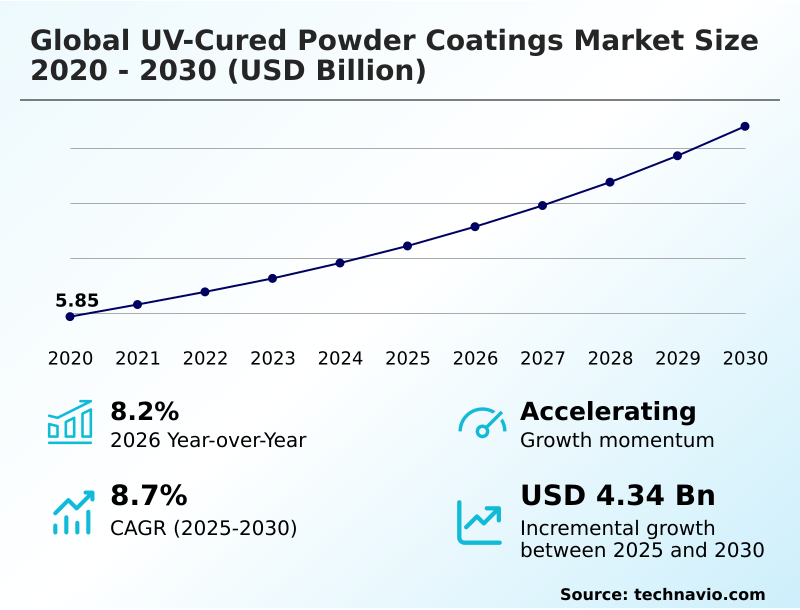
The uv-cured powder coatings market size is valued to increase by USD 4.34 billion, at a CAGR of 8.7% from 2025 to 2030. Environmental sustainability and regulatory mandates will drive the uv-cured powder coatings market.
Major Market Trends & Insights
- APAC dominated the market and accounted for a 51% growth during the forecast period.
- By Application - Furniture segment was valued at USD 4.16 billion in 2024
- By Type - Epoxy segment accounted for the largest market revenue share in 2024
Market Size & Forecast
- Market Opportunities: USD 6.92 billion
- Market Future Opportunities: USD 4.34 billion
- CAGR from 2025 to 2030 : 8.7%
Market Summary
- The UV-Cured Powder Coatings Market demonstrates robust acceleration as industrial finishing sectors prioritize energy efficiency and regulatory compliance over traditional thermal baking methods. By decoupling the melting phase from the crosslinking cycle, these advanced finishes allow manufacturers to process heat-sensitive materials without structural degradation.
- In a typical consumer electronics supply chain scenario, automated coating lines apply these specialized formulations to delicate plastic device housings, enabling instant packing and shipping straight off the conveyor. This instantaneous processing capability yields up to a 35% reduction in overall cycle time compared to conventional gas-fired convection systems, drastically improving factory throughput.
- The pressing demand for zero-emission operations acts as a major driver, compelling businesses to eliminate volatile organic compounds and reclaim oversprayed materials to meet strict environmental mandates. Conversely, the necessity for direct line-of-sight radiation exposure presents a significant challenge, as complex three-dimensional geometries often experience shadowing that prevents complete polymerization in recessed areas.
- Despite these physical limitations, continuous formulation advancements ensure this technology remains a vital component of sustainable, high-speed modern manufacturing.
What will be the Size of the Uv-Cured Powder Coatings Market during the forecast period?
Get Key Insights on Market Forecast (PDF) Get Free Sample
How is the Uv-Cured Powder Coatings Market Segmented?
The uv-cured powder coatings industry research report provides comprehensive data (region-wise segment analysis), with forecasts and estimates in "USD million" for the period 2026-2030, as well as historical data from 2020-2024 for the following segments.
- Application
- Furniture
- Transportation
- Healthcare
- Others
- Type
- Epoxy
- Epoxy polyester hybrid
- Others
- Technology
- Mercury lamp curing
- UV LED curing
- Others
- Geography
- APAC
- China
- Japan
- India
- South Korea
- Australia
- Indonesia
- Europe
- Germany
- UK
- France
- Italy
- Spain
- The Netherlands
- North America
- US
- Canada
- Mexico
- Middle East and Africa
- Saudi Arabia
- UAE
- South Africa
- Israel
- Turkey
- South America
- Brazil
- Argentina
- Chile
- APAC
By Application Insights
The furniture segment is estimated to witness significant growth during the forecast period.
The furniture application segment demonstrates robust expansion as fabricators transition toward advanced heat-sensitive substrate finishing methods. Unlike traditional thermal baking that damages medium-density fiberboard substrates, low-temperature curing uncouples the melt and crosslinking phases to prevent structural warping.
Facilities deploying solid epoxy resins and sustainable chemical formulations achieve a 15% reduction in production defect rates by eliminating wood moisture evaporation. This outgassing mitigation ensures superior aesthetic clarity improvement across interior cabinetry and retail displays.
Furthermore, the rapid polymerization of crosslinked polymer networks provides seamless edge encapsulation without requiring secondary laminates.
By shifting away from solvent-heavy liquids, commercial office furniture manufacturers enhance operational throughput and comply with stringent indoor air quality standards, solidifying the operational supremacy of ultraviolet-responsive coatings in modern woodworking lines.
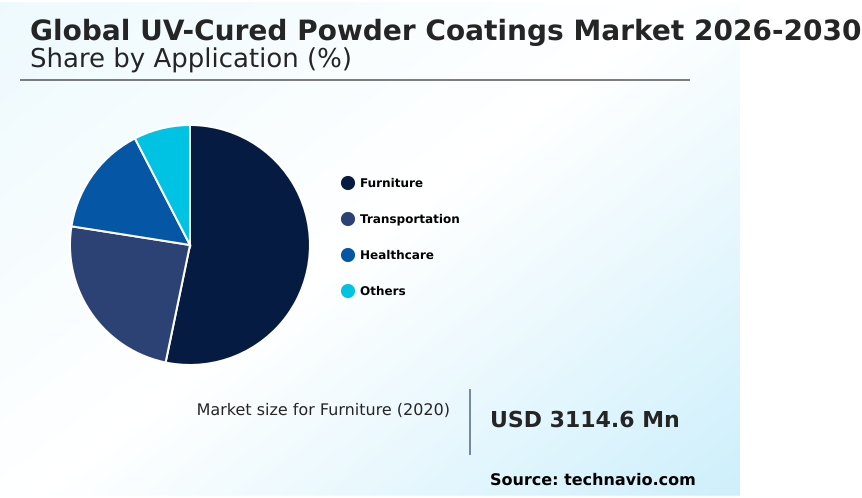
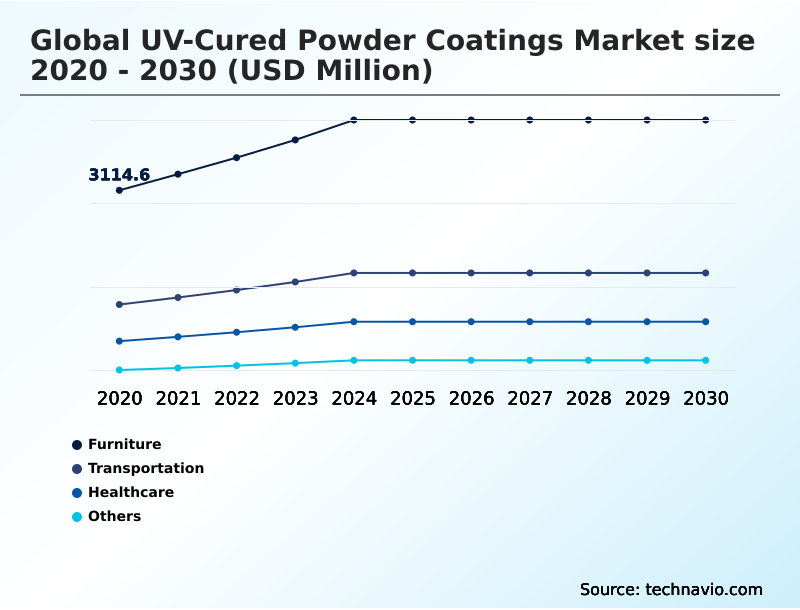
The Furniture segment was valued at USD 4.16 billion in 2024 and showed a gradual increase during the forecast period.
Regional Analysis
APAC is estimated to contribute 51% to the growth of the global market during the forecast period.Technavio’s analysts have elaborately explained the regional trends and drivers that shape the market during the forecast period.
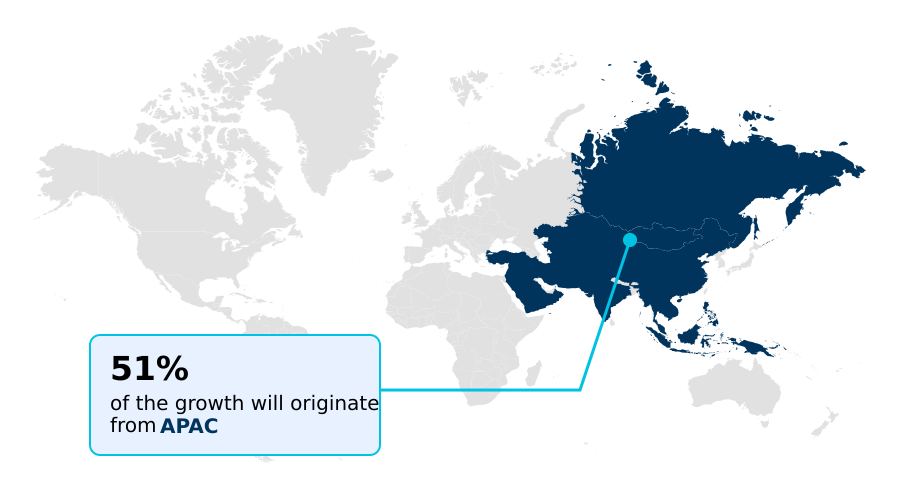
See How Uv-Cured Powder Coatings Market Demand is Rising in APAC Get Free Sample
Regional adoption dynamics for the UV-Cured Powder Coatings Market reveal a stark contrast between APAC and Europe.
European facilities, driven by stringent directives on volatile organic compound reduction, demonstrate a 35% higher adoption rate of bio-derived resin synthesis compared to their Asian counterparts.
This regulatory pressure accelerates the integration of advanced robotic spraying and multi-axis robotic applicators to guarantee a zero-emission profile across high-volume automotive lines.
Conversely, manufacturers in APAC focus heavily on raw throughput, utilizing medium-pressure mercury arc systems combined with automated powder recovery to handle massive consumer electronics production. This operational shift yields a 20% improvement in energy efficiency by bypassing traditional thermal ovens.
Consequently, rapid cycle times and strict thermal distortion prevention ensure superior industrial surface protection on delicate plastic housings, defining regional strategies tailored either toward ecological compliance or mass-scale manufacturing velocity.
Market Dynamics
Our researchers analyzed the data with 2025 as the base year, along with the key drivers, trends, and challenges. A holistic analysis of drivers will help companies refine their marketing strategies to gain a competitive advantage.
- As modern manufacturing environments increasingly prioritize decarbonization and rapid throughput, the integration of advanced radiation-curable technologies fundamentally alters operational planning. The shift toward sustainable zero-emission industrial surface finishes allows massive fabrication facilities to bypass the severe environmental penalties associated with volatile solvent emissions.
- A critical factor in this transition is the capability to achieve low-temperature finishing for engineered plastics, which empowers original equipment manufacturers to incorporate lightweight composite components into automotive and electronic designs without risking thermal degradation.
- From a supply chain perspective, implementing high-speed automated ultraviolet curing systems condenses the physical footprint of the coating line, reducing work-in-progress inventory by approximately 40% compared to legacy thermal baking corridors. This dramatic efficiency gain enables immediate downstream assembly and packaging.
- Furthermore, chemical formulators continuously enhance resin performance, utilizing bio-based photoinitiators for heat-sensitive materials to satisfy corporate mandates for renewable material sourcing. To overcome the inherent line-of-sight limitations of photon exposure on complex three-dimensional geometries, plant managers invest heavily in the robotic application of solid oligomer blends.
- These multi-axis robotic arms ensure uniform irradiance across deep recesses and intricate contours, guaranteeing consistent film hardness and aesthetic clarity. By synergizing advanced polymer chemistry with intelligent automation, contract coaters achieve superior mechanical durability while simultaneously optimizing their energy expenditure and long-term sustainability metrics.
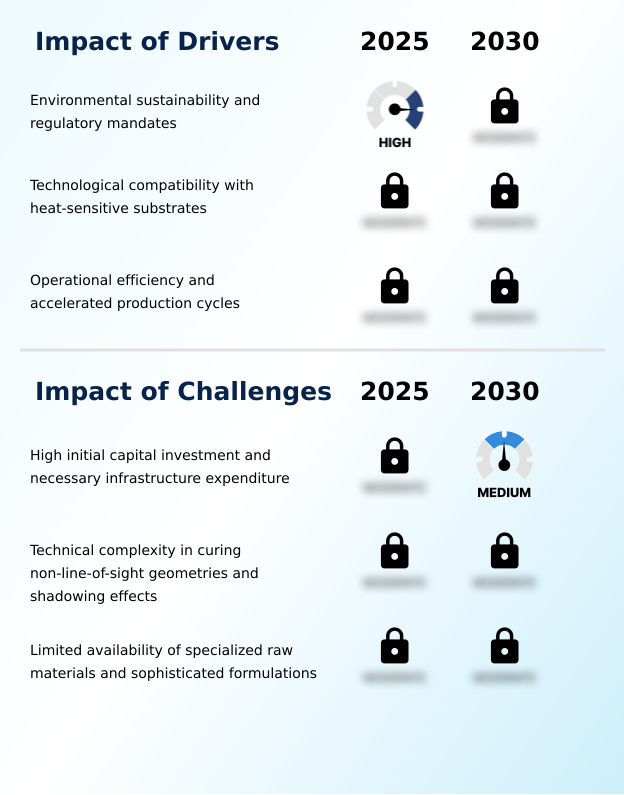
What are the key market drivers leading to the rise in the adoption of Uv-Cured Powder Coatings Industry?
- Stringent environmental sustainability initiatives and regulatory mandates function as primary drivers propelling the adoption of low-emission industrial coating technologies.
- The pressing need to coat heat-sensitive substrates rapidly acts as a primary catalyst for the UV-Cured Powder Coatings Market. Because original equipment manufacturers increasingly favor multi-material construction and lightweight composite assemblies, standard high-heat baking is no longer viable.
- The adoption of ultraviolet photopolymerization provides a highly effective thermal convection alternative. After a brief infrared melting phase, exposure to high-intensity light exposure triggers instantaneous film hardening on delicate engineered structural plastics.
- This instantaneous reaction allows facilities to lower overall energy use by 25% and increase daily throughput volume by 30%. Moreover, the integration of hybrid oligomer formulations alongside closed-loop overspray recovery maximizes material utilization.
- Consequently, industrial finishers can achieve superior mechanical durability without degrading internal electronics, driving widespread adoption across automotive and appliance manufacturing.
What are the market trends shaping the Uv-Cured Powder Coatings Industry?
- The strategic transition toward light-emitting diode curing solutions represents a prominent market trend. This technological shift enhances operational efficiency while minimizing thermal stress on delicate manufacturing substrates.
- A transformative shift toward energy-efficient processing is redefining modern industrial finishing lines. The rapid transition from conventional gas ovens to light-emitting diode arrays and electron beam acceleration occurs because manufacturers require precise thermal management for composite substrates. This equipment upgrade delivers a 40% reduction in electricity consumption and improves production line uptime by 18%.
- Utilizing quasi-monochromatic radiation with a narrow spectral output prevents substrate warping, while short-wave ultraviolet radiation ensures optimal superficial micro-folding for super-matte finishes. Furthermore, the integration of digital process monitoring and closed-loop control systems enables real-time adjustments to dichroic reflectors and lamp intensity.
- As a result, commercial applicators experience fewer curing defects and maintain consistent film hardness, proving that intelligent radiation technologies fundamentally optimize both operational economics and environmental sustainability.
What challenges does the Uv-Cured Powder Coatings Industry face during its growth?
- High initial capital investments and substantial infrastructure expenditures for specialized radiation equipment remain critical challenges constraining broader industrial deployment.
- The inherent line-of-sight limitations of radiation technology present a formidable barrier to seamless industrial integration. Because free-radical crosslinking and the activation of cationic photoinitiators require direct photon exposure, complex three-dimensional geometries often experience shadowing effects. This lack of uniform vacuum ultraviolet emission results in incomplete volumetric curing depth, leaving recessed cavities tacky and structurally compromised.
- Manufacturers attempting exterior durability optimization with saturated carboxylated polyesters face a 15% increase in defect rates when processing convoluted parts. While specialized photoactive crosslinking agents offer excellent chemical barrier properties and scratch resistance enhancement on flat surfaces, the engineering required to rotate lamps around intricate components inflates operational setup costs by 22%.
- Ultimately, this physical constraint forces applicators to heavily invest in complex robotics, slowing widespread adoption among mid-sized fabrication shops.
Exclusive Technavio Analysis on Customer Landscape
The uv-cured powder coatings market forecasting report includes the adoption lifecycle of the market, covering from the innovator’s stage to the laggard’s stage. It focuses on adoption rates in different regions based on penetration. Furthermore, the uv-cured powder coatings market report also includes key purchase criteria and drivers of price sensitivity to help companies evaluate and develop their market growth analysis strategies.
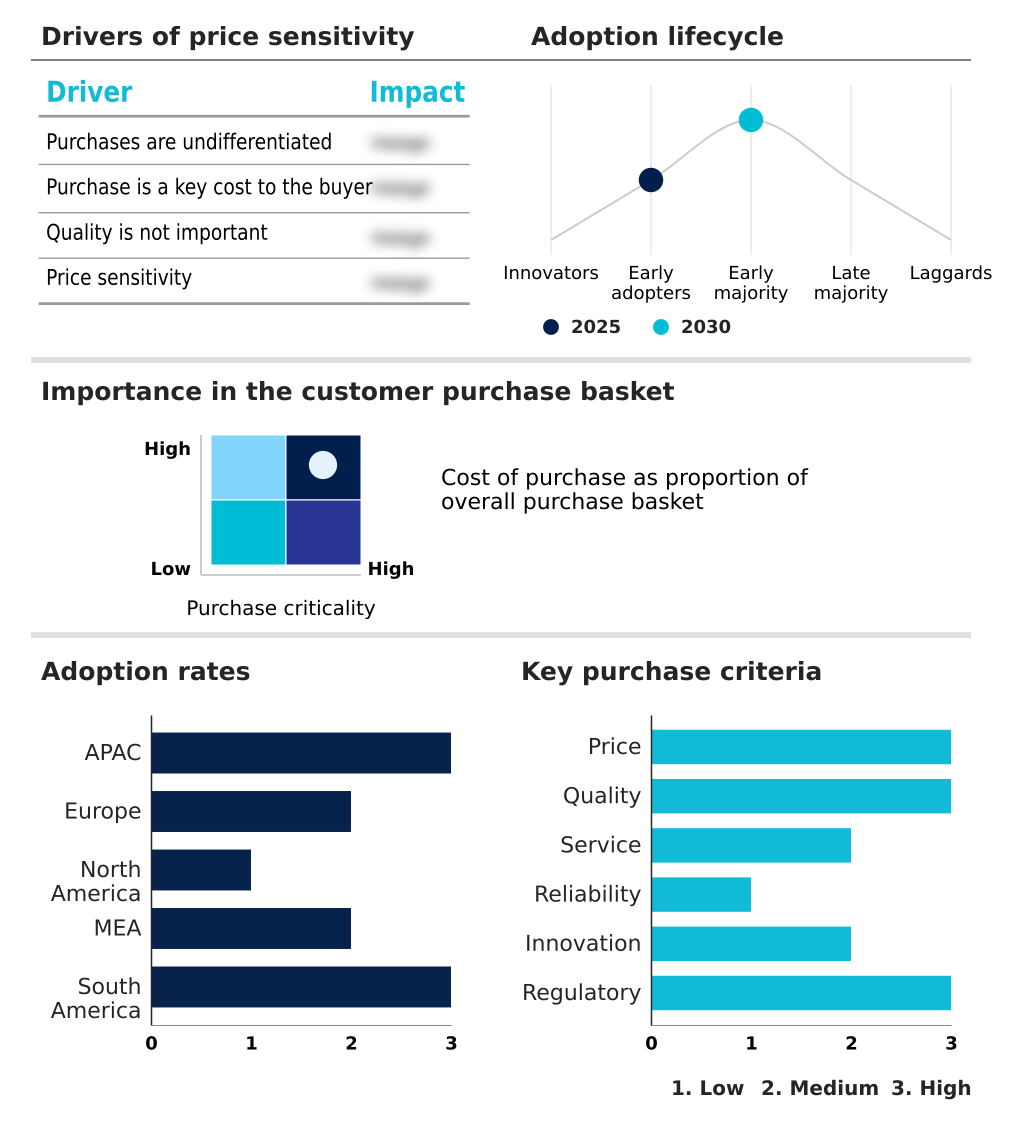
Customer Landscape of Uv-Cured Powder Coatings Industry
Competitive Landscape
Companies are implementing various strategies, such as strategic alliances, uv-cured powder coatings market forecast, partnerships, mergers and acquisitions, geographical expansion, and product/service launches, to enhance their presence in the industry.
Adapta Color S.L. - The vendor portfolio features advanced radiation-curable resins, specialized architectural finishes, and energy-efficient formulation additives designed to enhance scratch resistance and streamline processing times for diverse industrial coating applications.
The industry research and growth report includes detailed analyses of the competitive landscape of the market and information about key companies, including:
- Adapta Color S.L.
- Akzo Nobel NV
- Allnex GMBH
- Arkema Group
- Arsonsisi S.p.A.
- Axalta Coating Systems Ltd.
- BASF SE
- BPC Boya
- Cardinal Paint and Powder Inc.
- Covestro AG
- Dymax
- Eternal Materials Co. Ltd.
- IFS Coatings
- Keyland Polymer
- Nippon Paint Holdings Co Ltd.
- PPG Industries Inc.
- Resonac Holdings Corp.
- The Protech Group
- The Sherwin Williams Co.
- Toagosei Co. Ltd.
Qualitative and quantitative analysis of companies has been conducted to help clients understand the wider business environment as well as the strengths and weaknesses of key industry players. Data is qualitatively analyzed to categorize companies as pure play, category-focused, industry-focused, and diversified; it is quantitatively analyzed to categorize companies as dominant, leading, strong, tentative, and weak.
Recent Development and News in Uv-cured powder coatings market
- In the Specialty Chemicals industry, the widespread implementation of strict volatile organic compound emission limits mandated the transition from solvent-borne formulations to 100% solid systems, directly impacting UV-cured powder coatings demand by forcing contract coaters to adopt zero-emission finishing alternatives.
- In the Specialty Chemicals industry, the accelerated synthesis of bio-based aliphatic polyurethanes provided renewable feedstock options for industrial resins, actively shaping UV-cured powder coatings market formulations by enabling manufacturers to replace up to 20% of petroleum-derived oligomers with sustainable equivalents.
- In the Specialty Chemicals industry, the rapid commercialization of high-efficiency photoactive agents tailored for 395-nanometer wavelengths eliminated the reliance on toxic mercury catalysts, heavily influencing UV-cured powder coatings market adoption by allowing assemblers to utilize safer, cold-cure semiconductor arrays.
- In the Specialty Chemicals industry, the surging production of lightweight carbon-fiber-reinforced polymers for automotive weight reduction exposed the thermal limitations of traditional bake ovens, significantly driving UV-cured powder coatings market expansion as fabricators sought surface finishing methods that prevent substrate deformation.
Dive into Technavio’s robust research methodology, blending expert interviews, extensive data synthesis, and validated models for unparalleled Uv-Cured Powder Coatings Market insights. See full methodology.
| Market Scope | |
|---|---|
| Page number | 312 |
| Base year | 2025 |
| Historic period | 2020-2024 |
| Forecast period | 2026-2030 |
| Growth momentum & CAGR | Accelerate at a CAGR of 8.7% |
| Market growth 2026-2030 | USD 4342.5 million |
| Market structure | Fragmented |
| YoY growth 2025-2026(%) | 8.2% |
| Key countries | China, Japan, India, South Korea, Australia, Indonesia, Germany, UK, France, Italy, Spain, The Netherlands, US, Canada, Mexico, Saudi Arabia, UAE, South Africa, Israel, Turkey, Brazil, Argentina and Chile |
| Competitive landscape | Leading Companies, Market Positioning of Companies, Competitive Strategies, and Industry Risks |
Research Analyst Overview
- The landscape of industrial surface protection is undergoing a structural paradigm shift as manufacturers abandon energy-intensive thermal baking in favor of ultraviolet photopolymerization. This continuous evolution directly influences boardroom budgeting strategies, as executives prioritize capital expenditure on light-emitting diode arrays to mitigate the escalating costs of fossil fuels.
- By implementing low-temperature curing techniques, fabricators successfully apply highly durable solid epoxy resins to heat-sensitive materials such as medium-density fiberboard substrates without compromising structural integrity. These advanced coatings form dense crosslinked polymer networks upon exposure to targeted radiation, ensuring immediate surface hardness.
- Operationally, the elimination of lengthy cooling zones results in a 40% reduction in spatial footprint requirements, allowing facilities to reallocate valuable floor space to downstream assembly. Furthermore, the specialized integration of cationic photoinitiators ensures superior adhesion and chemical resistance on complex parts, significantly reducing post-production defect rates by nearly 18%.
- Ultimately, this strategic transition away from conventional heating methods empowers corporate leaders to achieve rigorous environmental compliance while simultaneously maximizing daily manufacturing throughput and overall supply chain agility.
What are the Key Data Covered in this Uv-Cured Powder Coatings Market Research and Growth Report?
-
What is the expected growth of the Uv-Cured Powder Coatings Market between 2026 and 2030?
-
USD 4.34 billion, at a CAGR of 8.7%
-
-
What segmentation does the market report cover?
-
The report is segmented by Application (Furniture, Transportation, Healthcare, and Others), Type (Epoxy, Epoxy polyester hybrid, and Others), Technology (Mercury lamp curing, UV LED curing, and Others) and Geography (APAC, Europe, North America, Middle East and Africa, South America)
-
-
Which regions are analyzed in the report?
-
APAC, Europe, North America, Middle East and Africa and South America
-
-
What are the key growth drivers and market challenges?
-
Environmental sustainability and regulatory mandates, High initial capital investment and necessary infrastructure expenditure
-
-
Who are the major players in the Uv-Cured Powder Coatings Market?
-
Adapta Color S.L., Akzo Nobel NV, Allnex GMBH, Arkema Group, Arsonsisi S.p.A., Axalta Coating Systems Ltd., BASF SE, BPC Boya, Cardinal Paint and Powder Inc., Covestro AG, Dymax, Eternal Materials Co. Ltd., IFS Coatings, Keyland Polymer, Nippon Paint Holdings Co Ltd., PPG Industries Inc., Resonac Holdings Corp., The Protech Group, The Sherwin Williams Co. and Toagosei Co. Ltd.
-
Market Research Insights
- The UV-Cured Powder Coatings Market is rapidly evolving as industrial fabricators seek sustainable alternatives to conventional thermal finishing. By integrating energy-efficient processing, facilities successfully lower their utility expenditures by 30% compared to heavy gas-fired ovens. Furthermore, the implementation of closed-loop overspray recovery allows manufacturers to achieve material utilization rates exceeding 95%, drastically reducing hazardous waste disposal costs.
- This technology guarantees complete thermal distortion prevention on delicate substrates, expanding design possibilities for consumer electronics and composite automotive parts. Consequently, rapid cycle times enable a 25% increase in daily production volume, allowing supply chain managers to execute just-in-time inventory strategies and maximize overall operational profitability without compromising surface durability.
We can help! Our analysts can customize this uv-cured powder coatings market research report to meet your requirements.
 RIA -