
Vertical AI Market Size 2025-2029
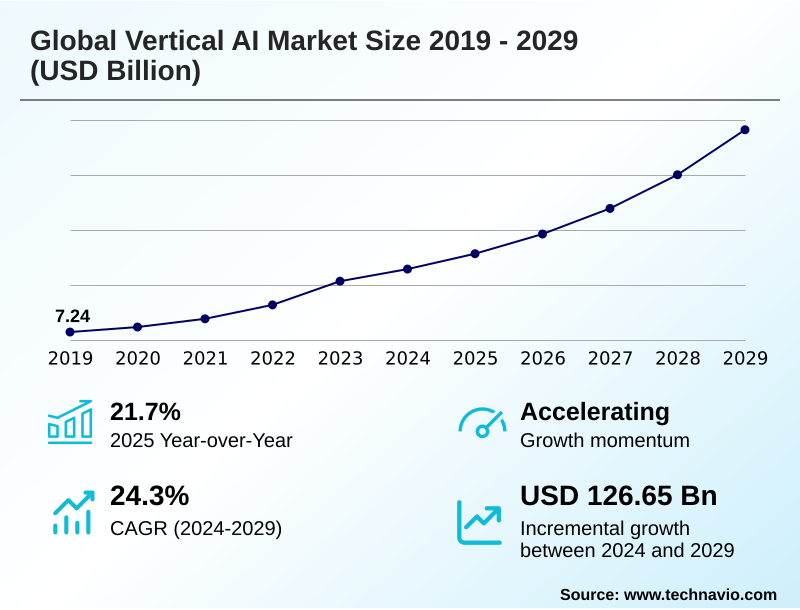
The vertical ai market size is forecast to increase by USD 126.7 billion, at a CAGR of 24.3% between 2024 and 2029.
The global vertical AI market is defined by the increasing demand for specialized, domain-specific solutions, as generic models are proving insufficient for the complex needs of specific industries. This shift is driven by the need for AI systems embedded with deep industry knowledge to achieve a true competitive edge. The proliferation of generative AI in core vertical operations marks a significant trend, moving beyond simple task automation to complex problem-solving and content generation. This is evident in the development of sophisticated platforms using adaptive AI and human-centered AI principles. This specialization allows for highly contextual outputs, transforming professional capabilities by making AI a collaborative partner in decision-making and innovation.The integration of generative AI into core business functions is advancing rapidly, with a focus on creating tailored experiences and solutions. For example, generative AI in gaming is enhancing interactive entertainment, while developments in autonomous AI are pushing the boundaries of automation. However, high implementation costs and the complexity of deploying bespoke vertical AI solutions remain a significant challenge. These specialized systems require substantial upfront investment in software engineering, data infrastructure, and integration with legacy systems, which can be prohibitive for many organizations. The total cost of ownership, including maintenance and the need for specialized personnel, further complicates widespread adoption and tempers market growth.
What will be the Size of the Vertical AI Market during the forecast period?
Explore in-depth regional segment analysis with market size data - historical 2019 - 2023 and forecasts 2025-2029 - in the full report.
Request Free Sample
The evolution of the global vertical AI market is characterized by the continuous refinement of domain-specific intelligence. As industries digitize, the increasing availability of curated datasets is enhancing the precision of predictive analytics and machine learning models. This is particularly evident in sectors where AI in computer vision is being applied to tasks requiring high accuracy, such as medical imaging analysis and quality control in manufacturing. The focus is on developing algorithms that not only recognize patterns but also understand context, leading to more reliable and actionable insights for specialized business functions.Simultaneously, advancements in hardware and software are expanding the scope of what is possible with vertical AI. The development of specialized AI chips and platforms provides the computational power necessary to run increasingly complex models. This has led to the emergence of agentic AI in digital engineering, where autonomous systems can design, test, and optimize processes with minimal human intervention. The integration of these advanced capabilities is reshaping operational workflows, driving a continuous cycle of innovation as organizations seek to leverage AI for a sustained competitive advantage in their respective domains.
How is this Vertical AI Industry segmented?
The vertical ai industry research report provides comprehensive data (region-wise segment analysis), with forecasts and estimates in "USD million" for the period 2025-2029, as well as historical data from 2019 - 2023 for the following segments.
- Component
- Deployment
- End-user
- IT and telecom
- BFSI
- Healthcare
- Retail
- Others
- Geography
- North America
- APAC
- China
- Japan
- South Korea
- India
- Australia
- Indonesia
- Europe
- Germany
- UK
- France
- Italy
- Spain
- The Netherlands
- Middle East and Africa
- South America
- Rest of World (ROW)
By Component Insights
The software segment is estimated to witness significant growth during the forecast period.
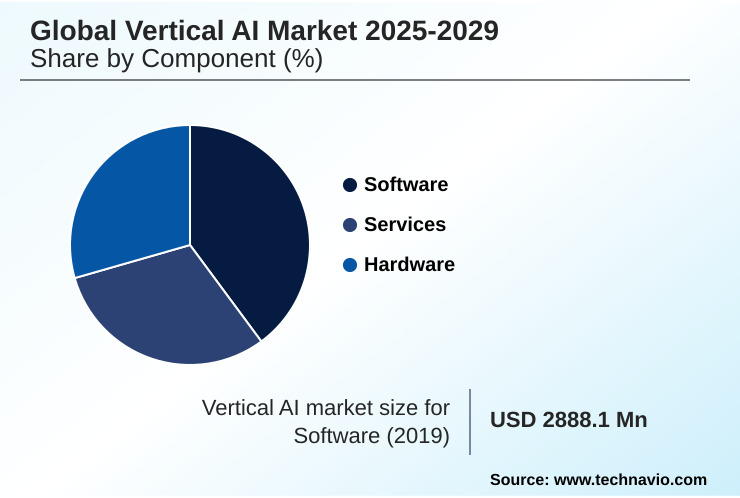
The vertical AI software segment is defined by its focus on providing industry-specific functionalities that address unique and complex challenges. Unlike horizontal systems with broad applications, this software is designed for seamless integration into the workflows of specific sectors. This specialization enables a more impactful application of artificial intelligence, driving operational efficiencies and enhancing decision-making. The software segment contributes to approximately 40% of the market share, reflecting its central role in the market's structure.
Demand for these tailored solutions is driven by the recognition that a one-size-fits-all approach to AI is suboptimal for achieving a competitive advantage. Organizations are moving beyond general tools to invest in software that understands the nuances of their particular industry, from regulatory compliance to diagnostic accuracy. The development of AI-powered diagnostic tools and automated legal research platforms are instances of this trend. These applications underscore the momentum of vertical AI software as organizations recognize its potential to unlock significant value.

Request Free Sample
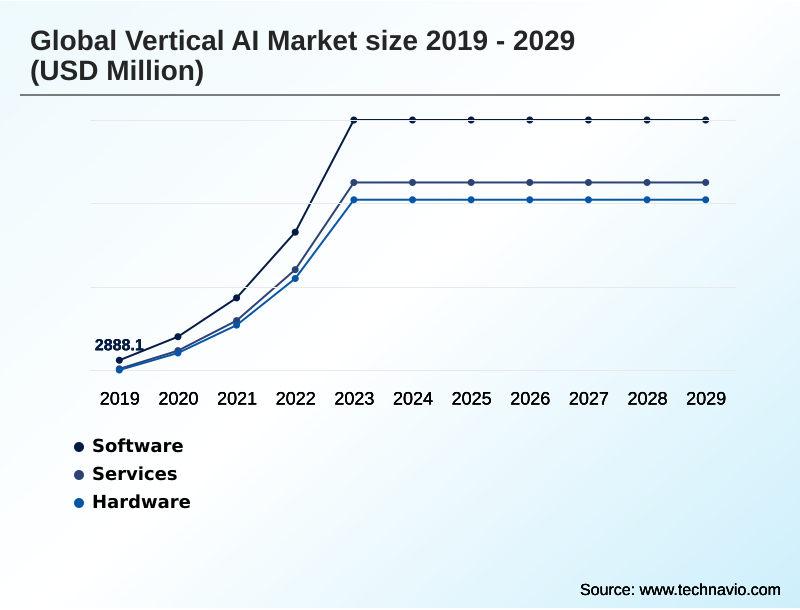
The Software segment was valued at USD 2.9 billion in 2019 and showed a gradual increase during the forecast period.
Regional Analysis
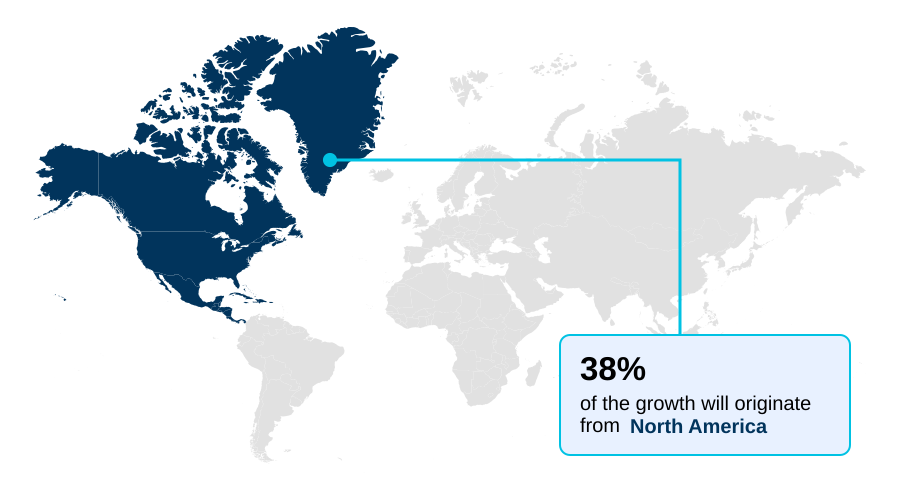
North America is estimated to contribute 38.2% to the growth of the global market during the forecast period.Technavio’s analysts have elaborately explained the regional trends and drivers that shape the market during the forecast period.
Request Free Sample
The North America region commands a significant share of the global vertical AI market, underpinned by its robust technological infrastructure and substantial investment from both public and private sectors. The presence of leading technology corporations and innovative startups creates a vibrant ecosystem for industry-specific AI applications. The United States, in particular, serves as the engine of growth, with its dynamic venture capital landscape fueling continuous advancements. Key verticals spearheading adoption include healthcare, finance, and retail, where specialized AI is driving transformation.
North America is projected to contribute to 38.2% of the market's incremental growth, highlighting its continued dominance. This is supported by a favorable regulatory environment and a strong emphasis on research and development. The financial services industry in the region leverages vertical AI for fraud detection and algorithmic trading, while the retail sector uses it for supply chain optimization and personalized customer experiences. This widespread adoption across critical sectors solidifies the region's leadership position and creates fertile ground for sustained innovation and market expansion.
Market Dynamics
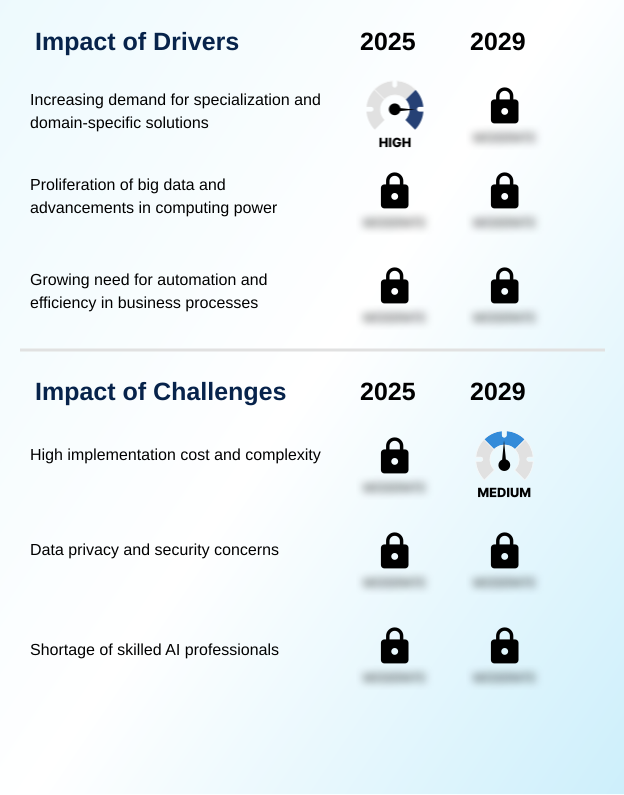
Our researchers analyzed the data with 2024 as the base year, along with the key drivers, trends, and challenges. A holistic analysis of drivers will help companies refine their marketing strategies to gain a competitive advantage.
The Global Vertical AI market is rapidly expanding as industries adopt targeted solutions. Sectors are leveraging specific applications, such as vertical AI solutions for healthcare diagnostics and deep learning for medical image analysis, alongside specialized AI models for drug discovery in the life sciences. The financial sector sees change with generative AI applications in financial services, robust AI-driven fraud detection in BFSI, and enhanced AI in regulatory compliance and reporting. Similarly, manufacturing benefits from AI-powered predictive maintenance for manufacturing, while logistics rely on machine learning for supply chain optimization. In retail, hyper-personalization using AI in retail sector is redefining customer experience, supported by computer vision for in-store retail analytics and generative AI for personalized marketing content. Other key areas include autonomous systems in automotive vertical AI, AI applications for telecom network optimization, and the growing use of natural language processing for legal tech.Successful adoption hinges on a thorough cost-benefit analysis of vertical AI implementation and understanding the critical role of big data in training vertical AI. Companies must choose between flexible cloud-based vertical AI deployment models and secure on-premises AI for data-sensitive industries. However, significant hurdles remain, including addressing the prominent data security challenges in vertical AI and sourcing skilled AI talent for vertical solutions, which are essential for developing and maintaining these sophisticated systems and ensuring a positive return on investment.

What are the key market drivers leading to the rise in the adoption of Vertical AI Industry?
- The primary driver for the vertical AI market is the escalating need for highly specialized, industry-specific intelligence solutions that surpass the capabilities of general-purpose AI.
The increasing demand for domain-specific intelligence is a primary factor shaping the market. Generic, one-size-fits-all AI models are inadequate for the nuanced requirements of specialized industries. Businesses recognize that unlocking true value requires AI systems deeply embedded with industry-specific knowledge, data, and workflows. This trend is a response to the limitations of horizontal AI, which often lacks the contextual understanding for critical, industry-specific challenges. This demand for specialized AI is evident across sectors, where predictive modeling and deep learning algorithms are trained on curated datasets to deliver superior performance in tasks such as medical diagnostics, financial fraud detection, and autonomous navigation. The focus remains on developing solutions that provide precise, actionable insights.The market is also significantly influenced by the exponential growth of big data and advancements in computing power. The unprecedented volume, velocity, and variety of data from IoT devices, sensor networks, and digital operations provide the necessary raw material for training sophisticated vertical AI models. Concurrently, the decreasing cost and increasing capability of specialized hardware like GPUs have democratized access to high-performance computing, enabling a wider range of organizations to develop cutting-edge AI. For instance, the retail sector leverages vast customer data for creating personalized recommendation engines. It is estimated that a single region can contribute up to 38.21% of the market's incremental growth, highlighting the concentrated impact of these drivers.
What are the market trends shaping the Vertical AI Industry?
- A key market trend is the widespread integration of generative AI into the core operational frameworks of various industries, enabling complex problem-solving and content generation.
The integration of generative AI into core business operations marks a significant inflection point, moving beyond task automation to address complex problem-solving and content generation. Unlike horizontal models, vertical generative AI is trained on domain-specific datasets to understand the intricate nuances of specialized sectors. This deep learning approach enables the technology to produce highly contextual outputs, from sophisticated legal contract drafts to complex protein structures, enhancing professional capabilities and accelerating innovation cycles. This trend toward agentic AI in digital engineering and other specialized fields is transforming how experts work, with AI acting as a collaborative partner. The Asia-Pacific region is a key contributor to this trend, accounting for over 28.18% of the market opportunity, driven by its strong manufacturing and technology sectors.Hyper-personalization at scale is becoming an operational reality, driven by vertical AI's ability to deliver individualized customer experiences. This involves using sophisticated AI models, trained on industry-specific customer data, to predict consumer behaviors and needs with unprecedented granularity. By moving beyond broad demographic segmentation, this trend enables a one-to-one dialogue, offering tailored product recommendations, personalized marketing, and customized service interactions. The use of a multimodal AI model allows for the analysis of varied datasets, including transaction histories and browsing patterns, to create dynamic customer profiles. This deep level of personalization fosters stronger customer engagement and loyalty, providing a significant competitive advantage.
What challenges does the Vertical AI Industry face during its growth?
- A significant challenge hindering market growth is the substantial initial investment and intricate complexity associated with deploying customized vertical AI solutions.
A primary obstacle to widespread market adoption is the significant financial outlay and intricate nature of deploying vertical AI solutions. Unlike generalized AI, vertical AI requires deep customization to address the unique operational and regulatory landscapes of specific industries. This bespoke development process increases initial investment costs, which include specialized software engineering, data infrastructure enhancements, and integration with legacy systems. For many organizations, these upfront expenditures are prohibitive. The total cost of ownership is also a concern, as it includes ongoing expenses for system maintenance, model retraining, and the specialized personnel needed to manage these sophisticated systems. This financial barrier often delays or prevents full-scale rollouts.The increasing reliance on vast and often sensitive industry-specific datasets presents formidable data privacy and security challenges. As organizations adopt AI solutions, they must ensure the responsible handling of confidential information. Potential data breaches, misuse of personal information, and the amplification of biases in training data are significant concerns that can erode trust and lead to severe regulatory penalties. Navigating the complex web of data protection regulations adds another layer of complexity. Furthermore, a critical impediment is the shortage of skilled professionals; a recent survey found that 61% of firms in a key sector identified a lack of experience with AI tools as a top reason for limited adoption.
Exclusive Customer Landscape
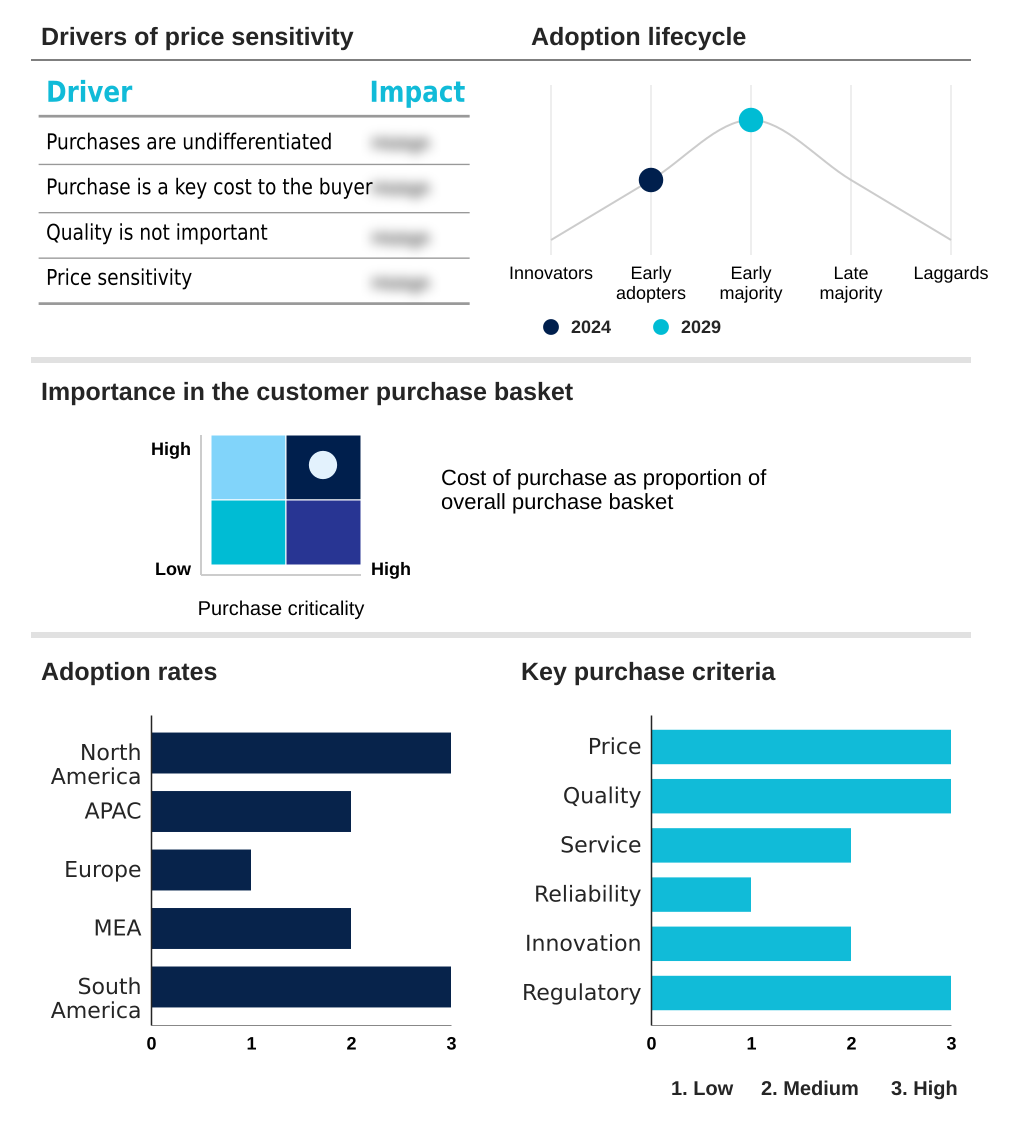
The vertical ai market forecasting report includes the adoption lifecycle of the market, covering from the innovator’s stage to the laggard’s stage. It focuses on adoption rates in different regions based on penetration. Furthermore, the vertical ai market report also includes key purchase criteria and drivers of price sensitivity to help companies evaluate and develop their market growth analysis strategies.
Customer Landscape
Key Companies & Market Insights
Companies are implementing various strategies, such as strategic alliances, vertical ai market forecast, partnerships, mergers and acquisitions, geographical expansion, and product/service launches, to enhance their presence in the industry.
Accenture PLC - The company provides vertical AI solutions that deliver tailored intelligence for specific industries. These offerings leverage domain-specific models, retrieval-augmented generation, and governance tools to enable customized applications. The focus is on embedding generative AI and agentic orchestration into workflows for sectors such as finance, healthcare, and manufacturing, facilitating contextual automation and personalized engagement. This approach allows enterprises to address unique operational challenges and enhance decision-making by using AI that is deeply integrated with industry-specific data and processes. The solutions are designed to support a range of functions, from predictive analytics and risk analysis to supply chain optimization and enhanced customer experiences, driving efficiency and competitive advantage.
The industry research and growth report includes detailed analyses of the competitive landscape of the market and information about key companies, including:
- Accenture PLC
- Alphabet Inc.
- Amazon Web Services Inc.
- C3.ai Inc.
- CentralReach LLC
- Counsel AI Corp.
- Fieldguide Inc.
- H2O.ai Inc.
- HighRadius Corp.
- International Business Machines Corp.
- LeadGenius
- Matellio Inc.
- Microsoft Corp.
- NVIDIA Corp.
- Oracle Corp.
- Salesforce Inc.
- Seamless.AI
- Siemens Healthineers AG
- Suki AI Inc.
- ZestFinance Inc.
Qualitative and quantitative analysis of companies has been conducted to help clients understand the wider business environment as well as the strengths and weaknesses of key industry players. Data is qualitatively analyzed to categorize companies as pure play, category-focused, industry-focused, and diversified; it is quantitatively analyzed to categorize companies as dominant, leading, strong, tentative, and weak.
Recent Development and News in Vertical Ai Market
In June 2024, Hewlett Packard Enterprise announced a partnership with NVIDIA to deliver a turnkey private AI cloud solution, integrating Nvidia's full AI computing stack with HPE's private cloud technology to enable on-premises generative AI development.In May 2024, Dell Technologies launched its AI Factory, an initiative providing organizations with the infrastructure, solutions, and services needed to deploy AI at scale within their own data centers, including servers optimized for the latest processors.In March 2024, NVIDIA introduced its next-generation GPU architecture, Blackwell, featuring the B200 chip designed to significantly enhance the training and inference of large language models and other complex AI applications.In January 2024, Google Cloud announced a suite of new generative AI technologies tailored for the retail sector, designed to personalize online shopping and modernize customer service operations with powerful virtual agents.
Research Analyst Overview
The global vertical AI market is distinguished by its focus on domain-specific AI solutions that are precisely engineered for industry-specific workflows. These systems rely on specialized AI models trained with industry-specific datasets to achieve advanced contextual understanding in AI, enabling deep industry applications across various sectors. Deployment approaches include both cloud-based AI deployment and on-premises AI infrastructure to satisfy unique operational requirements. Key sectors are actively adopting these technologies; for instance, AI in IT and telecom is used for network optimization with AI, while the AI in BFSI sector and AI in retail analytics leverage generative AI chatbots. Moreover, AI in healthcare diagnostics is advancing rapidly, and predictive maintenance AI is becoming a standard for industrial operations, showcasing the breadth of integration.Advanced applications highlight the market's evolution, including AI for medical imaging and AI in drug discovery, which facilitate personalized treatment planning. In parallel, AI in financial services is crucial for sophisticated fraud detection, algorithmic trading platforms, AI for risk management, and AI for credit scoring. AI-driven predictive analytics also underpins AI for demand forecasting within the AI in supply chain. Progress is evident in AI in transportation with autonomous driving systems and in AI in manufacturing automation through computer vision for quality control. Despite challenges such as high implementation complexity, data privacy in AI, and a skilled AI professional shortage, market expansion expectations exceed 25% annually. Generative AI integration allows hyper-personalization at scale using AI-powered recommendation engines, in-store AI analytics, and natural language processing for compliance, with applications extending to AI for smart grids and AI in smart city management.
Dive into Technavio’s robust research methodology, blending expert interviews, extensive data synthesis, and validated models for unparalleled Vertical AI Market insights. See full methodology.
|
Market Scope
|
|
Report Coverage
|
Details
|
|
Page number
|
307
|
|
Base year
|
2024
|
|
Historic period
|
2019 - 2023 |
|
Forecast period
|
2025-2029
|
|
Growth momentum & CAGR
|
Accelerating at a CAGR of 24.3%
|
|
Market growth 2024-2029
|
USD 126.7 billion
|
|
Market structure
|
Fragmented
|
|
YoY growth 2024-2029(%)
|
21.7%
|
|
Key countries
|
US, Canada, Mexico, China, Japan, South Korea, India, Australia, Indonesia, Germany, UK, France, Italy, Spain, The Netherlands, UAE, Saudi Arabia, Israel, South Africa, Turkey, Brazil, Argentina, Colombia
|
|
Competitive landscape
|
Leading Companies, Market Positioning of Companies, Competitive Strategies, and Industry Risks
|
Request Free Sample
What are the Key Data Covered in this Vertical AI Market Research and Growth Report?
- CAGR of the Vertical AI industry during the forecast period
- Detailed information on factors that will drive the growth and forecasting between 2024 and 2029
- Precise estimation of the size of the market and its contribution of the industry in focus to the parent market
- Accurate predictions about upcoming growth and trends and changes in consumer behaviour
- Growth of the market across North America, APAC, Europe, Middle East and Africa, South America
- Thorough analysis of the market’s competitive landscape and detailed information about companies
- Comprehensive analysis of factors that will challenge the vertical ai market growth of industry companies
We can help! Our analysts can customize this vertical ai market research report to meet your requirements.
Get in touch
1 Executive Summary
- 1 Executive Summary
- 1.1 Market overview
- Executive Summary - Chart on Market Overview
- Executive Summary - Data Table on Market Overview
- Executive Summary - Chart on Global Market Characteristics
- Executive Summary - Chart on Market by Geography
- Executive Summary - Chart on Market Segmentation by Component
- Executive Summary - Chart on Market Segmentation by Deployment
- Executive Summary - Chart on Market Segmentation by End-user
- Executive Summary - Chart on Incremental Growth
- Executive Summary - Data Table on Incremental Growth
- Executive Summary - Chart on Company Market Positioning
2 Technavio Analysis
- 2 Technavio Analysis
- 2.1 Analysis of price sensitivity, lifecycle, customer purchase basket, adoption rates, and purchase criteria
- Analysis of price sensitivity, lifecycle, customer purchase basket, adoption rates, and purchase criteria
- 2.2 Criticality of inputs and Factors of differentiation
- Chart on Overview on criticality of inputs and factors of differentiation
- 2.3 Factors of disruption
- Chart on Overview on factors of disruption
- 2.4 Impact of drivers and challenges
- Chart on Impact of drivers and challenges in 2024 and 2029
3 Market Landscape
- 3 Market Landscape
- 3.1 Market ecosystem
- Chart on Parent Market
- Data Table on - Parent Market
- 3.2 Market characteristics
- Chart on Market characteristics analysis
- 3.3 Value chain analysis
- Chart on Value chain analysis
4 Market Sizing
- 4 Market Sizing
- 4.1 Market definition
- Data Table on Offerings of companies included in the market definition
- 4.2 Market segment analysis
- 4.3 Market size 2024
- 4.4 Market outlook: Forecast for 2024-2029
- Chart on Global - Market size and forecast 2024-2029 ($ billion)
- Data Table on Global - Market size and forecast 2024-2029 ($ billion)
- Chart on Global Market: Year-over-year growth 2024-2029 (%)
- Data Table on Global Market: Year-over-year growth 2024-2029 (%)
5 Historic Market Size
- 5 Historic Market Size
- 5.1 Global Vertical AI Market 2019 - 2023
- Historic Market Size - Data Table on Global Vertical AI Market 2019 - 2023 ($ billion)
- 5.2 Component segment analysis 2019 - 2023
- Historic Market Size - Component Segment 2019 - 2023 ($ billion)
- 5.3 Deployment segment analysis 2019 - 2023
- Historic Market Size - Deployment Segment 2019 - 2023 ($ billion)
- 5.4 End-user segment analysis 2019 - 2023
- Historic Market Size - End-user Segment 2019 - 2023 ($ billion)
- 5.5 Geography segment analysis 2019 - 2023
- Historic Market Size - Geography Segment 2019 - 2023 ($ billion)
- 5.6 Country segment analysis 2019 - 2023
- Historic Market Size - Country Segment 2019 - 2023 ($ billion)
6 Five Forces Analysis
- 6 Five Forces Analysis
- 6.1 Five forces summary
- Five forces analysis - Comparison between 2024 and 2029
- 6.2 Bargaining power of buyers
- Bargaining power of buyers - Impact of key factors 2024 and 2029
- 6.3 Bargaining power of suppliers
- Bargaining power of suppliers - Impact of key factors in 2024 and 2029
- 6.4 Threat of new entrants
- Threat of new entrants - Impact of key factors in 2024 and 2029
- 6.5 Threat of substitutes
- Threat of substitutes - Impact of key factors in 2024 and 2029
- 6.6 Threat of rivalry
- Threat of rivalry - Impact of key factors in 2024 and 2029
- 6.7 Market condition
- Chart on Market condition - Five forces 2024 and 2029
7 Market Segmentation by Component
- 7 Market Segmentation by Component
- 7.1 Market segments
- Chart on Component - Market share 2024-2029 (%)
- Data Table on Component - Market share 2024-2029 (%)
- 7.2 Comparison by Component
- Chart on Comparison by Component
- Data Table on Comparison by Component
- 7.3 Software - Market size and forecast 2024-2029
- Chart on Software - Market size and forecast 2024-2029 ($ billion)
- Data Table on Software - Market size and forecast 2024-2029 ($ billion)
- Chart on Software - Year-over-year growth 2024-2029 (%)
- Data Table on Software - Year-over-year growth 2024-2029 (%)
- 7.4 Services - Market size and forecast 2024-2029
- Chart on Services - Market size and forecast 2024-2029 ($ billion)
- Data Table on Services - Market size and forecast 2024-2029 ($ billion)
- Chart on Services - Year-over-year growth 2024-2029 (%)
- Data Table on Services - Year-over-year growth 2024-2029 (%)
- 7.5 Hardware - Market size and forecast 2024-2029
- Chart on Hardware - Market size and forecast 2024-2029 ($ billion)
- Data Table on Hardware - Market size and forecast 2024-2029 ($ billion)
- Chart on Hardware - Year-over-year growth 2024-2029 (%)
- Data Table on Hardware - Year-over-year growth 2024-2029 (%)
- 7.6 Market opportunity by Component
- Market opportunity by Component ($ billion)
- Data Table on Market opportunity by Component ($ billion)
8 Market Segmentation by Deployment
- 8 Market Segmentation by Deployment
- 8.1 Market segments
- Chart on Deployment - Market share 2024-2029 (%)
- Data Table on Deployment - Market share 2024-2029 (%)
- 8.2 Comparison by Deployment
- Chart on Comparison by Deployment
- Data Table on Comparison by Deployment
- 8.3 Cloud-based - Market size and forecast 2024-2029
- Chart on Cloud-based - Market size and forecast 2024-2029 ($ billion)
- Data Table on Cloud-based - Market size and forecast 2024-2029 ($ billion)
- Chart on Cloud-based - Year-over-year growth 2024-2029 (%)
- Data Table on Cloud-based - Year-over-year growth 2024-2029 (%)
- 8.4 On-premises - Market size and forecast 2024-2029
- Chart on On-premises - Market size and forecast 2024-2029 ($ billion)
- Data Table on On-premises - Market size and forecast 2024-2029 ($ billion)
- Chart on On-premises - Year-over-year growth 2024-2029 (%)
- Data Table on On-premises - Year-over-year growth 2024-2029 (%)
- 8.5 Market opportunity by Deployment
- Market opportunity by Deployment ($ billion)
- Data Table on Market opportunity by Deployment ($ billion)
9 Market Segmentation by End-user
- 9 Market Segmentation by End-user
- 9.1 Market segments
- Chart on End-user - Market share 2024-2029 (%)
- Data Table on End-user - Market share 2024-2029 (%)
- 9.2 Comparison by End-user
- Chart on Comparison by End-user
- Data Table on Comparison by End-user
- 9.3 IT and telecom - Market size and forecast 2024-2029
- Chart on IT and telecom - Market size and forecast 2024-2029 ($ billion)
- Data Table on IT and telecom - Market size and forecast 2024-2029 ($ billion)
- Chart on IT and telecom - Year-over-year growth 2024-2029 (%)
- Data Table on IT and telecom - Year-over-year growth 2024-2029 (%)
- 9.4 BFSI - Market size and forecast 2024-2029
- Chart on BFSI - Market size and forecast 2024-2029 ($ billion)
- Data Table on BFSI - Market size and forecast 2024-2029 ($ billion)
- Chart on BFSI - Year-over-year growth 2024-2029 (%)
- Data Table on BFSI - Year-over-year growth 2024-2029 (%)
- 9.5 Healthcare - Market size and forecast 2024-2029
- Chart on Healthcare - Market size and forecast 2024-2029 ($ billion)
- Data Table on Healthcare - Market size and forecast 2024-2029 ($ billion)
- Chart on Healthcare - Year-over-year growth 2024-2029 (%)
- Data Table on Healthcare - Year-over-year growth 2024-2029 (%)
- 9.6 Retail - Market size and forecast 2024-2029
- Chart on Retail - Market size and forecast 2024-2029 ($ billion)
- Data Table on Retail - Market size and forecast 2024-2029 ($ billion)
- Chart on Retail - Year-over-year growth 2024-2029 (%)
- Data Table on Retail - Year-over-year growth 2024-2029 (%)
- 9.7 Others - Market size and forecast 2024-2029
- Chart on Others - Market size and forecast 2024-2029 ($ billion)
- Data Table on Others - Market size and forecast 2024-2029 ($ billion)
- Chart on Others - Year-over-year growth 2024-2029 (%)
- Data Table on Others - Year-over-year growth 2024-2029 (%)
- 9.8 Market opportunity by End-user
- Market opportunity by End-user ($ billion)
- Data Table on Market opportunity by End-user ($ billion)
10 Customer Landscape
- 10 Customer Landscape
- 10.1 Customer landscape overview
- Analysis of price sensitivity, lifecycle, customer purchase basket, adoption rates, and purchase criteria
11 Geographic Landscape
- 11 Geographic Landscape
- 11.1 Geographic segmentation
- Chart on Market share by geography 2024-2029 (%)
- Data Table on Market share by geography 2024-2029 (%)
- 11.2 Geographic comparison
- Chart on Geographic comparison
- Data Table on Geographic comparison
- 11.3 North America - Market size and forecast 2024-2029
- Chart on North America - Market size and forecast 2024-2029 ($ billion)
- Data Table on North America - Market size and forecast 2024-2029 ($ billion)
- Chart on North America - Year-over-year growth 2024-2029 (%)
- Data Table on North America - Year-over-year growth 2024-2029 (%)
- Chart on Regional Comparison - North America
- Data Table on Regional Comparison - North America
- 11.3.1 US - Market size and forecast 2024-2029
- Chart on US - Market size and forecast 2024-2029 ($ billion)
- Data Table on US - Market size and forecast 2024-2029 ($ billion)
- Chart on US - Year-over-year growth 2024-2029 (%)
- Data Table on US - Year-over-year growth 2024-2029 (%)
- 11.3.2 Canada - Market size and forecast 2024-2029
- Chart on Canada - Market size and forecast 2024-2029 ($ billion)
- Data Table on Canada - Market size and forecast 2024-2029 ($ billion)
- Chart on Canada - Year-over-year growth 2024-2029 (%)
- Data Table on Canada - Year-over-year growth 2024-2029 (%)
- 11.3.3 Mexico - Market size and forecast 2024-2029
- Chart on Mexico - Market size and forecast 2024-2029 ($ billion)
- Data Table on Mexico - Market size and forecast 2024-2029 ($ billion)
- Chart on Mexico - Year-over-year growth 2024-2029 (%)
- Data Table on Mexico - Year-over-year growth 2024-2029 (%)
- 11.4 APAC - Market size and forecast 2024-2029
- Chart on APAC - Market size and forecast 2024-2029 ($ billion)
- Data Table on APAC - Market size and forecast 2024-2029 ($ billion)
- Chart on APAC - Year-over-year growth 2024-2029 (%)
- Data Table on APAC - Year-over-year growth 2024-2029 (%)
- Chart on Regional Comparison - APAC
- Data Table on Regional Comparison - APAC
- 11.4.1 China - Market size and forecast 2024-2029
- Chart on China - Market size and forecast 2024-2029 ($ billion)
- Data Table on China - Market size and forecast 2024-2029 ($ billion)
- Chart on China - Year-over-year growth 2024-2029 (%)
- Data Table on China - Year-over-year growth 2024-2029 (%)
- 11.4.2 Japan - Market size and forecast 2024-2029
- Chart on Japan - Market size and forecast 2024-2029 ($ billion)
- Data Table on Japan - Market size and forecast 2024-2029 ($ billion)
- Chart on Japan - Year-over-year growth 2024-2029 (%)
- Data Table on Japan - Year-over-year growth 2024-2029 (%)
- 11.4.3 South Korea - Market size and forecast 2024-2029
- Chart on South Korea - Market size and forecast 2024-2029 ($ billion)
- Data Table on South Korea - Market size and forecast 2024-2029 ($ billion)
- Chart on South Korea - Year-over-year growth 2024-2029 (%)
- Data Table on South Korea - Year-over-year growth 2024-2029 (%)
- 11.4.4 India - Market size and forecast 2024-2029
- Chart on India - Market size and forecast 2024-2029 ($ billion)
- Data Table on India - Market size and forecast 2024-2029 ($ billion)
- Chart on India - Year-over-year growth 2024-2029 (%)
- Data Table on India - Year-over-year growth 2024-2029 (%)
- 11.4.5 Australia - Market size and forecast 2024-2029
- Chart on Australia - Market size and forecast 2024-2029 ($ billion)
- Data Table on Australia - Market size and forecast 2024-2029 ($ billion)
- Chart on Australia - Year-over-year growth 2024-2029 (%)
- Data Table on Australia - Year-over-year growth 2024-2029 (%)
- 11.4.6 Indonesia - Market size and forecast 2024-2029
- Chart on Indonesia - Market size and forecast 2024-2029 ($ billion)
- Data Table on Indonesia - Market size and forecast 2024-2029 ($ billion)
- Chart on Indonesia - Year-over-year growth 2024-2029 (%)
- Data Table on Indonesia - Year-over-year growth 2024-2029 (%)
- 11.5 Europe - Market size and forecast 2024-2029
- Chart on Europe - Market size and forecast 2024-2029 ($ billion)
- Data Table on Europe - Market size and forecast 2024-2029 ($ billion)
- Chart on Europe - Year-over-year growth 2024-2029 (%)
- Data Table on Europe - Year-over-year growth 2024-2029 (%)
- Chart on Regional Comparison - Europe
- Data Table on Regional Comparison - Europe
- 11.5.1 Germany - Market size and forecast 2024-2029
- Chart on Germany - Market size and forecast 2024-2029 ($ billion)
- Data Table on Germany - Market size and forecast 2024-2029 ($ billion)
- Chart on Germany - Year-over-year growth 2024-2029 (%)
- Data Table on Germany - Year-over-year growth 2024-2029 (%)
- 11.5.2 UK - Market size and forecast 2024-2029
- Chart on UK - Market size and forecast 2024-2029 ($ billion)
- Data Table on UK - Market size and forecast 2024-2029 ($ billion)
- Chart on UK - Year-over-year growth 2024-2029 (%)
- Data Table on UK - Year-over-year growth 2024-2029 (%)
- 11.5.3 France - Market size and forecast 2024-2029
- Chart on France - Market size and forecast 2024-2029 ($ billion)
- Data Table on France - Market size and forecast 2024-2029 ($ billion)
- Chart on France - Year-over-year growth 2024-2029 (%)
- Data Table on France - Year-over-year growth 2024-2029 (%)
- 11.5.4 Italy - Market size and forecast 2024-2029
- Chart on Italy - Market size and forecast 2024-2029 ($ billion)
- Data Table on Italy - Market size and forecast 2024-2029 ($ billion)
- Chart on Italy - Year-over-year growth 2024-2029 (%)
- Data Table on Italy - Year-over-year growth 2024-2029 (%)
- 11.5.5 Spain - Market size and forecast 2024-2029
- Chart on Spain - Market size and forecast 2024-2029 ($ billion)
- Data Table on Spain - Market size and forecast 2024-2029 ($ billion)
- Chart on Spain - Year-over-year growth 2024-2029 (%)
- Data Table on Spain - Year-over-year growth 2024-2029 (%)
- 11.5.6 The Netherlands - Market size and forecast 2024-2029
- Chart on The Netherlands - Market size and forecast 2024-2029 ($ billion)
- Data Table on The Netherlands - Market size and forecast 2024-2029 ($ billion)
- Chart on The Netherlands - Year-over-year growth 2024-2029 (%)
- Data Table on The Netherlands - Year-over-year growth 2024-2029 (%)
- 11.6 Middle East and Africa - Market size and forecast 2024-2029
- Chart on Middle East and Africa - Market size and forecast 2024-2029 ($ billion)
- Data Table on Middle East and Africa - Market size and forecast 2024-2029 ($ billion)
- Chart on Middle East and Africa - Year-over-year growth 2024-2029 (%)
- Data Table on Middle East and Africa - Year-over-year growth 2024-2029 (%)
- Chart on Regional Comparison - Middle East and Africa
- Data Table on Regional Comparison - Middle East and Africa
- 11.6.1 UAE - Market size and forecast 2024-2029
- Chart on UAE - Market size and forecast 2024-2029 ($ billion)
- Data Table on UAE - Market size and forecast 2024-2029 ($ billion)
- Chart on UAE - Year-over-year growth 2024-2029 (%)
- Data Table on UAE - Year-over-year growth 2024-2029 (%)
- 11.6.2 Saudi Arabia - Market size and forecast 2024-2029
- Chart on Saudi Arabia - Market size and forecast 2024-2029 ($ billion)
- Data Table on Saudi Arabia - Market size and forecast 2024-2029 ($ billion)
- Chart on Saudi Arabia - Year-over-year growth 2024-2029 (%)
- Data Table on Saudi Arabia - Year-over-year growth 2024-2029 (%)
- 11.6.3 Israel - Market size and forecast 2024-2029
- Chart on Israel - Market size and forecast 2024-2029 ($ billion)
- Data Table on Israel - Market size and forecast 2024-2029 ($ billion)
- Chart on Israel - Year-over-year growth 2024-2029 (%)
- Data Table on Israel - Year-over-year growth 2024-2029 (%)
- 11.6.4 South Africa - Market size and forecast 2024-2029
- Chart on South Africa - Market size and forecast 2024-2029 ($ billion)
- Data Table on South Africa - Market size and forecast 2024-2029 ($ billion)
- Chart on South Africa - Year-over-year growth 2024-2029 (%)
- Data Table on South Africa - Year-over-year growth 2024-2029 (%)
- 11.6.5 Turkey - Market size and forecast 2024-2029
- Chart on Turkey - Market size and forecast 2024-2029 ($ billion)
- Data Table on Turkey - Market size and forecast 2024-2029 ($ billion)
- Chart on Turkey - Year-over-year growth 2024-2029 (%)
- Data Table on Turkey - Year-over-year growth 2024-2029 (%)
- 11.7 South America - Market size and forecast 2024-2029
- Chart on South America - Market size and forecast 2024-2029 ($ billion)
- Data Table on South America - Market size and forecast 2024-2029 ($ billion)
- Chart on South America - Year-over-year growth 2024-2029 (%)
- Data Table on South America - Year-over-year growth 2024-2029 (%)
- Chart on Regional Comparison - South America
- Data Table on Regional Comparison - South America
- 11.7.1 Brazil - Market size and forecast 2024-2029
- Chart on Brazil - Market size and forecast 2024-2029 ($ billion)
- Data Table on Brazil - Market size and forecast 2024-2029 ($ billion)
- Chart on Brazil - Year-over-year growth 2024-2029 (%)
- Data Table on Brazil - Year-over-year growth 2024-2029 (%)
- 11.7.2 Argentina - Market size and forecast 2024-2029
- Chart on Argentina - Market size and forecast 2024-2029 ($ billion)
- Data Table on Argentina - Market size and forecast 2024-2029 ($ billion)
- Chart on Argentina - Year-over-year growth 2024-2029 (%)
- Data Table on Argentina - Year-over-year growth 2024-2029 (%)
- 11.7.3 Colombia - Market size and forecast 2024-2029
- Chart on Colombia - Market size and forecast 2024-2029 ($ billion)
- Data Table on Colombia - Market size and forecast 2024-2029 ($ billion)
- Chart on Colombia - Year-over-year growth 2024-2029 (%)
- Data Table on Colombia - Year-over-year growth 2024-2029 (%)
- 11.8 Market opportunity by geography
- Market opportunity by geography ($ billion)
- Data Tables on Market opportunity by geography ($ billion)
12 Drivers, Challenges, and Opportunity
- 12 Drivers, Challenges, and Opportunity
- 12.1 Market drivers
- Increasing demand for specialization and domain-specific solutions
- Proliferation of big data and advancements in computing power
- Growing need for automation and efficiency in business processes
- 12.2 Market challenges
- High implementation cost and complexity
- Data privacy and security concerns
- Shortage of skilled AI professionals
- 12.3 Impact of drivers and challenges
- Impact of drivers and challenges in 2024 and 2029
- 12.4 Market opportunities
- Proliferation of generative AI in core vertical operations
- Hyper-personalization at scale driven by vertical AI
- Deepening industry-specific applications in healthcare and finance
13 Competitive Landscape
- 13 Competitive Landscape
- 13.1 Overview
- 13.2 Competitive Landscape
- Overview on criticality of inputs and factors of differentiation
- 13.3 Landscape disruption
- Overview on factors of disruption
- 13.4 Industry risks
- Impact of key risks on business
14 Competitive Analysis
- 14 Competitive Analysis
- 14.1 Companies profiled
- 14.2 Company ranking index
- 14.3 Market positioning of companies
- Matrix on companies position and classification
- 14.4 Accenture PLC
- Accenture PLC - Overview
- Accenture PLC - Business segments
- Accenture PLC - Key news
- Accenture PLC - Key offerings
- Accenture PLC - Segment focus
- SWOT
- 14.5 Alphabet Inc.
- Alphabet Inc. - Overview
- Alphabet Inc. - Business segments
- Alphabet Inc. - Key offerings
- Alphabet Inc. - Segment focus
- SWOT
- 14.6 Amazon Web Services Inc.
- Amazon Web Services Inc. - Overview
- Amazon Web Services Inc. - Product / Service
- Amazon Web Services Inc. - Key news
- Amazon Web Services Inc. - Key offerings
- SWOT
- 14.7 C3.ai Inc.
- C3.ai Inc. - Overview
- C3.ai Inc. - Product / Service
- C3.ai Inc. - Key news
- C3.ai Inc. - Key offerings
- SWOT
- 14.8 Counsel AI Corp.
- Counsel AI Corp. - Overview
- Counsel AI Corp. - Product / Service
- Counsel AI Corp. - Key offerings
- SWOT
- 14.9 H2O.ai Inc.
- H2O.ai Inc. - Overview
- H2O.ai Inc. - Product / Service
- H2O.ai Inc. - Key offerings
- SWOT
- 14.10 HighRadius Corp.
- HighRadius Corp. - Overview
- HighRadius Corp. - Product / Service
- HighRadius Corp. - Key offerings
- SWOT
- 14.11 International Business Machines Corp.
- International Business Machines Corp. - Overview
- International Business Machines Corp. - Business segments
- International Business Machines Corp. - Key news
- International Business Machines Corp. - Key offerings
- International Business Machines Corp. - Segment focus
- SWOT
- 14.12 Matellio Inc.
- Matellio Inc. - Overview
- Matellio Inc. - Product / Service
- Matellio Inc. - Key offerings
- SWOT
- 14.13 Microsoft Corp.
- Microsoft Corp. - Overview
- Microsoft Corp. - Business segments
- Microsoft Corp. - Key news
- Microsoft Corp. - Key offerings
- Microsoft Corp. - Segment focus
- SWOT
- 14.14 NVIDIA Corp.
- NVIDIA Corp. - Overview
- NVIDIA Corp. - Business segments
- NVIDIA Corp. - Key news
- NVIDIA Corp. - Key offerings
- NVIDIA Corp. - Segment focus
- SWOT
- 14.15 Oracle Corp.
- Oracle Corp. - Overview
- Oracle Corp. - Business segments
- Oracle Corp. - Key news
- Oracle Corp. - Key offerings
- Oracle Corp. - Segment focus
- SWOT
- 14.16 Salesforce Inc.
- Salesforce Inc. - Overview
- Salesforce Inc. - Product / Service
- Salesforce Inc. - Key news
- Salesforce Inc. - Key offerings
- SWOT
- 14.17 Siemens Healthineers AG
- Siemens Healthineers AG - Overview
- Siemens Healthineers AG - Business segments
- Siemens Healthineers AG - Key news
- Siemens Healthineers AG - Key offerings
- Siemens Healthineers AG - Segment focus
- SWOT
- 14.18 ZestFinance Inc.
- ZestFinance Inc. - Overview
- ZestFinance Inc. - Product / Service
- ZestFinance Inc. - Key offerings
- SWOT
15 Appendix
- 15 Appendix
- 15.1 Scope of the report
- Market definition
- Objectives
- Notes and caveats
- 15.2 Inclusions and exclusions checklist
- Inclusions checklist
- Exclusions checklist
- 15.3 Currency conversion rates for US$
- Currency conversion rates for US$
- 15.4 Research methodology
- 15.5 Data procurement
- 15.6 Data validation
- 15.7 Validation techniques employed for market sizing
- Validation techniques employed for market sizing
- 15.8 Data synthesis
- 15.9 360 degree market analysis
- 360 degree market analysis
- 15.10 List of abbreviations
Research Framework
Technavio presents a detailed picture of the market by way of study, synthesis, and summation of data from multiple sources. The analysts have presented the various facets of the market with a particular focus on identifying the key industry influencers. The data thus presented is comprehensive, reliable, and the result of extensive research, both primary and secondary.
INFORMATION SOURCES
Primary sources
- Manufacturers and suppliers
- Channel partners
- Industry experts
- Strategic decision makers
Secondary sources
- Industry journals and periodicals
- Government data
- Financial reports of key industry players
- Historical data
- Press releases

DATA ANALYSIS
Data Synthesis
- Collation of data
- Estimation of key figures
- Analysis of derived insights
Data Validation
- Triangulation with data models
- Reference against proprietary databases
- Corroboration with industry experts

REPORT WRITING
Qualitative
- Market drivers
- Market challenges
- Market trends
- Five forces analysis
Quantitative
- Market size and forecast
- Market segmentation
- Geographical insights
- Competitive landscape