
Workforce Upskilling Analytics Market Analysis, Size, and Forecast 2026-2030: North America (US, Canada, and Mexico), Europe (Germany, France, and UK), APAC (China, India, and Japan), Middle East and Africa (Saudi Arabia, UAE, and South Africa), South America (Brazil, Argentina, and Colombia), and Rest of World (ROW)

Workforce Upskilling Analytics Market Analysis, Size, and Forecast 2026-2030:
North America (US, Canada, and Mexico), Europe (Germany, France, and UK), APAC (China, India, and Japan), Middle East and Africa (Saudi Arabia, UAE, and South Africa), South America (Brazil, Argentina, and Colombia), and Rest of World (ROW)

Published: Mar 2026 299 Pages SKU: IRTNTR81304

Market Overview at a Glance

$921.8 Mn
Market Opportunity
16.5%
CAGR 2025 - 2030
44.2%
North America Growth
$513.7 Mn
Software segment 2024

Workforce Upskilling Analytics Market Size 2026-2030

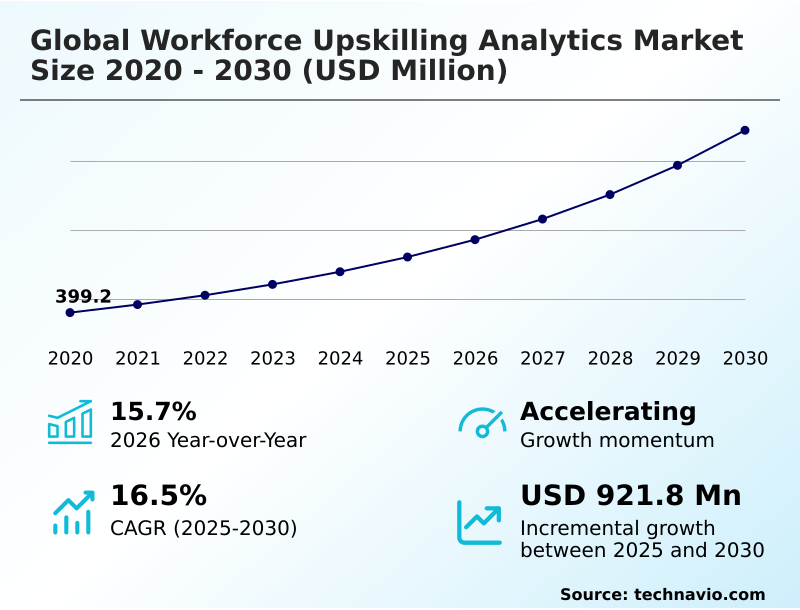
The workforce upskilling analytics market size is valued to increase by USD 921.8 million, at a CAGR of 16.5% from 2025 to 2030. Rapid proliferation of AI and resulting technical skills gap will drive the workforce upskilling analytics market.

Major Market Trends & Insights

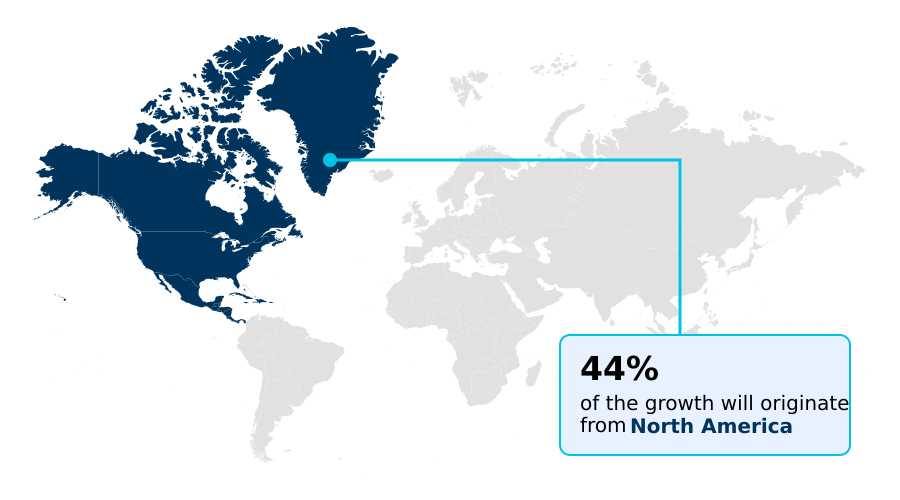
  • North America dominated the market and accounted for a 44.2% growth during the forecast period.
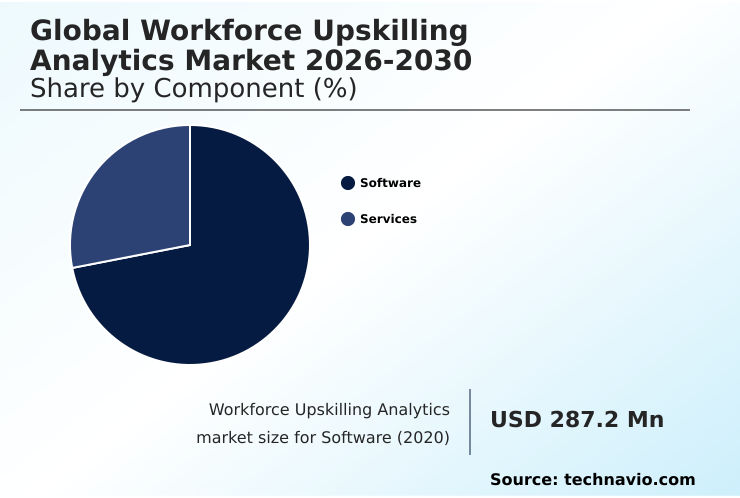
  • By Component - Software segment was valued at USD 513.7 million in 2024
  • By Deployment - Cloud based segment accounted for the largest market revenue share in 2024

Market Size & Forecast

  • Market Opportunities: USD 1.33 billion
  • Market Future Opportunities: USD 921.8 million
  • CAGR from 2025 to 2030 : 16.5%

Market Summary

  • The workforce upskilling analytics market is defined by digital platforms and data-driven solutions designed to identify, evaluate, and bridge skills gaps within organizations. A core driver is the rapid proliferation of AI, creating a technical skills gap that traditional talent assessment methods cannot manage. This reality fuels reliance on sophisticated platforms using AI-driven insights for strategic workforce planning.
  • A key trend is the use of a generative AI career coach for hyper-personalized learning, moving beyond standardized training. For instance, in manufacturing, these analytics facilitate the transition to automated environments by identifying which employees can be retrained for advanced robotics roles, ensuring operational continuity.
  • However, this data collection introduces challenges related to data privacy and the complexity of integrating analytics with legacy HRIS. Success requires a culture of continuous learning and strategic buy-in, ensuring technology empowers employees.
  • By using a skill verification engine and talent marketplace analytics, firms can foster a resilient workforce prepared for technological shifts, ultimately linking human capital development directly to business objectives and improving employee retention.

What will be the Size of the Workforce Upskilling Analytics Market during the forecast period?

Get Key Insights on Market Forecast (PDF) Request Free Sample

How is the Workforce Upskilling Analytics Market Segmented?

The workforce upskilling analytics industry research report provides comprehensive data (region-wise segment analysis), with forecasts and estimates in "USD million" for the period 2026-2030, as well as historical data from 2020-2024 for the following segments.

  • Component
    • Software
    • Services
  • Deployment
    • Cloud based
    • On premises
  • Application
    • Skills gap analysis and forecasting
    • Personalized learning recommendations
    • Upskilling ROI and progress tracking
    • Talent mobility and internal marketplace analytics
    • Others
  • Geography
    • North America
      • US
      • Canada
      • Mexico
    • Europe
      • Germany
      • France
      • UK
    • APAC
      • China
      • India
      • Japan
    • Middle East and Africa
      • Saudi Arabia
      • UAE
      • South Africa
    • South America
      • Brazil
      • Argentina
      • Colombia
    • Rest of World (ROW)

By Component Insights

The software segment is estimated to witness significant growth during the forecast period.

The software segment is central to the global workforce upskilling analytics market 2026-2030, providing the core engines for data aggregation and insight generation.

These platforms feature sophisticated tools like skills ontologies and career pathing models to establish a standardized language for professional capabilities.

Through detailed gap analysis dashboards, human resource leaders can make evidence-based decisions, with some platforms improving the accuracy of talent assessments by over 20% compared to manual methods.

This component also includes predictive modeling, which utilizes historical data for strategic workforce planning and forecasting future competency needs.

By leveraging an ai-powered talent experience platform, organizations can automate personalized learning recommendations, ensuring training aligns with specific employee career trajectories and broader business objectives, thereby boosting workforce agility.

Request Free Sample

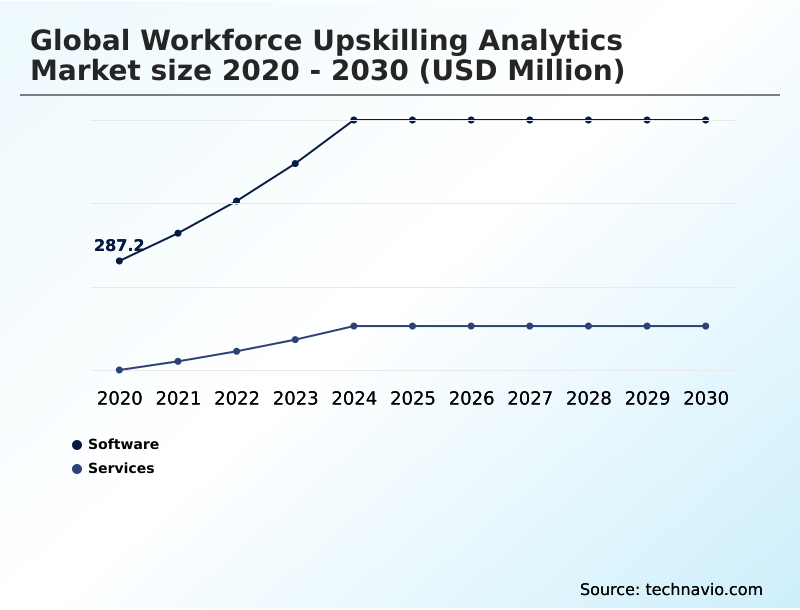
The Software segment was valued at USD 513.7 million in 2024 and showed a gradual increase during the forecast period.
Request Free Sample

Regional Analysis

North America is estimated to contribute 44.2% to the growth of the global market during the forecast period.Technavio’s analysts have elaborately explained the regional trends and drivers that shape the market during the forecast period.

See How Workforce Upskilling Analytics Market Demand is Rising in North America Request Free Sample

The geographic landscape of the global workforce upskilling analytics market 2026-2030 is led by North America, where a high concentration of technology firms drives aggressive adoption.

In this region, organizations are leading the transition to skills-based organizational architectures, with talent mobility programs showing an adoption rate 44% higher than in other regions. APAC is the fastest-growing market, with reskilling simulations and digital literacy programs fueling expansion.

Europe's market is shaped by a strong focus on data privacy, influencing the development of analytics tools that prioritize regulatory compliance.

The focus on ESG reporting standards is also higher in Europe, with a 15% greater emphasis on tracking sustainability-related competencies. This regional differentiation highlights how local economic priorities and regulatory environments shape the implementation of workforce analytics.

Market Dynamics

Our researchers analyzed the data with 2025 as the base year, along with the key drivers, trends, and challenges. A holistic analysis of drivers will help companies refine their marketing strategies to gain a competitive advantage.

  • Successfully deploying advanced workforce analytics requires a multi-stage approach that many organizations find complex. A primary hurdle involves integrating analytics with legacy hris, as disparate systems can compromise data integrity. Once integrated, the focus shifts to using predictive modeling for workforce planning, allowing leadership to anticipate future competency requirements.
  • A key business justification is measuring upskilling roi progress tracking, as firms that effectively quantify returns see a nearly twofold improvement in training budget allocation accuracy. The implementation of skills-based organizational architectures is another critical step, fostering a culture where verified competencies are valued over traditional credentials.
  • This is supported by creating internal talent marketplaces for career development, which helps improve employee retention. Furthermore, analyzing skill gaps with generative ai provides a more dynamic and real-time view of organizational readiness. This technology also facilitates creating personalized learning paths with ai, ensuring training is relevant and engaging.
  • The ability to build custom internal talent dashboards gives managers actionable insights, while providing a clear human-in-the-loop verification process addresses ethical concerns. Ultimately, the goal is optimizing human capital in a digital-first economy by using data to manage talent proactively.

What are the key market drivers leading to the rise in the adoption of Workforce Upskilling Analytics Industry?

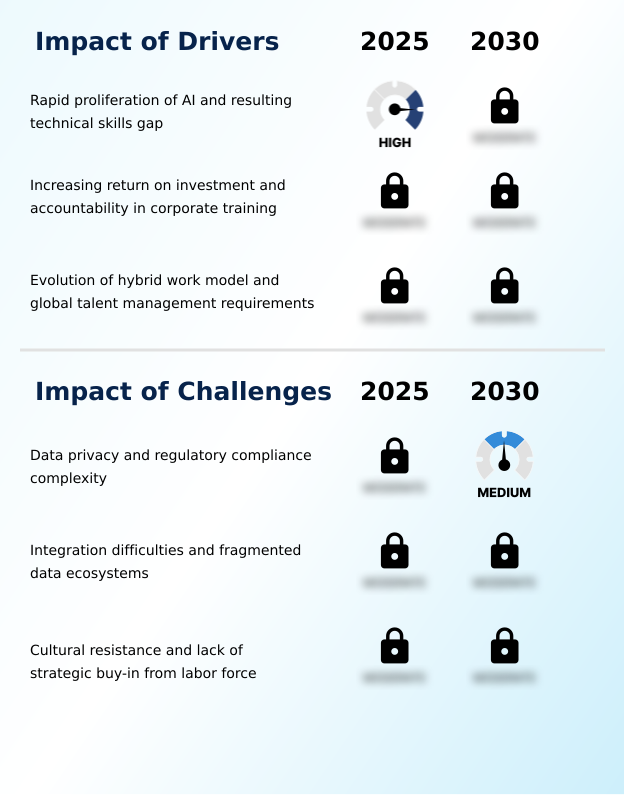
  • The market is primarily driven by the rapid proliferation of AI, which creates a significant technical skills gap that organizations must address through data-driven upskilling initiatives.

  • The market's growth is propelled by the urgent need for businesses to adapt to technological disruption. The rapid integration of AI across industries has created a technical skills gap, a primary driver for analytics adoption.
  • Modern platforms can identify these critical deficiencies 50% faster than traditional manual reviews. Another major driver is the increasing demand for quantifiable return on investment in corporate training.
  • Analytics dashboards provide the necessary metrics for learning impact measurement, allowing HR departments to validate their strategies. Firms that effectively demonstrate training ROI achieve up to 10% better budget approval rates.
  • This shift toward evidence-based talent management and continuous professional evolution ensures that workforce development is directly aligned with strategic business objectives.

What are the market trends shaping the Workforce Upskilling Analytics Industry?

  • A key market trend is the proliferation of generative AI, which facilitates the creation of hyper-personalized educational pathways to address individual employee skill gaps effectively.

  • Key market trends are revolutionizing talent management by leveraging advanced technology. The proliferation of generative ai for hyper-personalized learning is paramount, enabling platforms to create dynamic educational pathways. This approach improves learning content relevance by over 40% compared to static curricula.
  • Another significant shift is the move toward skills-based organizational architectures, where verified competencies, tracked by a skills graph, take precedence over traditional job titles. This model fosters greater internal mobility, with organizations adopting it reporting a 25% increase in filling roles from within.
  • These trends are supported by the use of immersive career pathing tools and reskilling simulations, which create engaging and effective developmental experiences, contributing to a more agile and future-ready labor force.

What challenges does the Workforce Upskilling Analytics Industry face during its growth?

  • The complexity surrounding data privacy and regulatory compliance presents a key challenge to industry growth, requiring careful management of employee information.

  • Despite strong drivers, the market faces significant challenges, primarily revolving around data and system complexities. Integration difficulties with fragmented data ecosystems and legacy hris are a major hurdle. This lack of interoperability can lead to analytics reports with an error rate as high as 15%, undermining leadership confidence.
  • Additionally, the complexities of data privacy and regulatory compliance, such as gdpr, add another layer of difficulty. Ensuring compliance can increase project implementation timelines by up to 20% and requires robust data governance frameworks.
  • Overcoming these challenges requires a unified data strategy and a focus on building a seamless data environment to unlock the full potential of these powerful analytical tools.

Exclusive Technavio Analysis on Customer Landscape

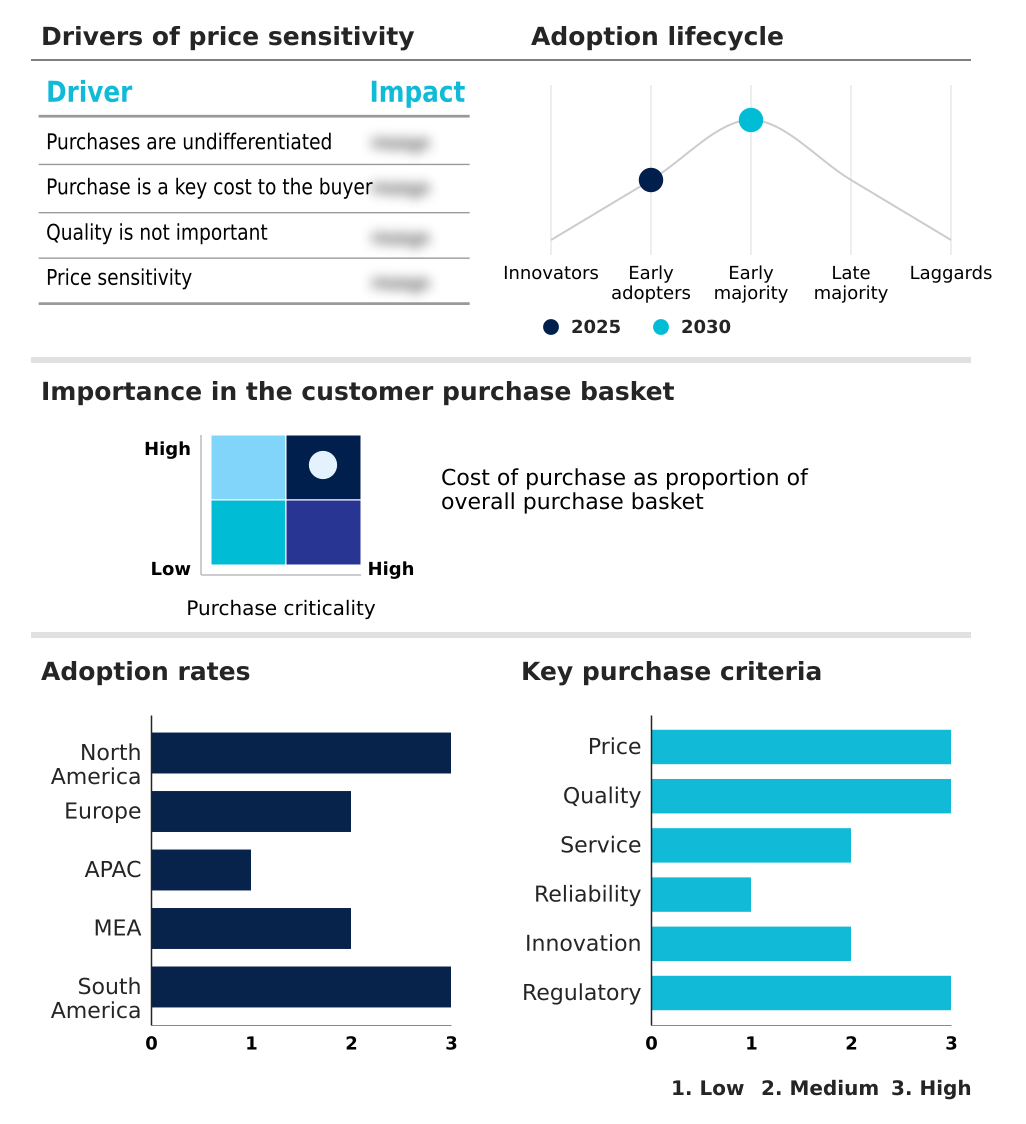
The workforce upskilling analytics market forecasting report includes the adoption lifecycle of the market, covering from the innovator’s stage to the laggard’s stage. It focuses on adoption rates in different regions based on penetration. Furthermore, the workforce upskilling analytics market report also includes key purchase criteria and drivers of price sensitivity to help companies evaluate and develop their market growth analysis strategies.
Customer Landscape of Workforce Upskilling Analytics Industry

Competitive Landscape

Companies are implementing various strategies, such as strategic alliances, workforce upskilling analytics market forecast, partnerships, mergers and acquisitions, geographical expansion, and product/service launches, to enhance their presence in the industry.

360Learning SA - The vendor landscape includes specialized talent intelligence platforms, major HCM suite providers, and dedicated learning experience companies, all offering advanced workforce analytics solutions.

The industry research and growth report includes detailed analyses of the competitive landscape of the market and information about key companies, including:

  • 360Learning SA
  • Beamery Inc.
  • Cornerstone OnDemand Inc.
  • Coursera Inc.
  • Degreed Inc.
  • Docebo Inc.
  • Gloat Inc.
  • Guild Education Inc.
  • LinkedIn Corp.
  • Microsoft Corp.
  • Monster Inc.
  • MuchSkills AB
  • Oracle Corp.
  • Phenom People Inc.
  • Pluralsight LLC
  • SAP SE
  • Skillsoft Corp.
  • Udemy Inc.
  • Valamis Group
  • Workday Inc.

Qualitative and quantitative analysis of companies has been conducted to help clients understand the wider business environment as well as the strengths and weaknesses of key industry players. Data is qualitatively analyzed to categorize companies as pure play, category-focused, industry-focused, and diversified; it is quantitatively analyzed to categorize companies as dominant, leading, strong, tentative, and weak.

Recent Development and News in Workforce upskilling analytics market

  • In April, 2025, Google Cloud launched its AI Skills Navigator, a platform designed to provide enterprise leaders with granular analytics on the readiness of their workforce for artificial intelligence implementation.
  • In March, 2025, Udemy Business introduced an advanced generative artificial intelligence assistant that creates dynamic learning paths for enterprise users by analyzing metadata from integrated project management tools.
  • In May, 2025, Microsoft announced a significant update to its Viva suite that included an automated skills mapping engine, which utilizes large language models to build a dynamic skills ontology from internal company data.
  • In March, 2025, SAP SuccessFactors introduced a Future-Ready Skills Engine that utilizes deep learning to analyze global labor market trends and automatically identify specific skill deficits within a company's internal workforce.
  • In May, 2025, Gloat released an Agile Resource Management module that uses real-time skill data to recommend project teams based on task requirements and the developmental needs of staff members.

Dive into Technavio’s robust research methodology, blending expert interviews, extensive data synthesis, and validated models for unparalleled Workforce Upskilling Analytics Market insights. See full methodology.

Market Scope
Page number 299
Base year 2025
Historic period 2020-2024
Forecast period 2026-2030
Growth momentum & CAGR Accelerate at a CAGR of 16.5%
Market growth 2026-2030 USD 921.8 million
Market structure Fragmented
YoY growth 2025-2026(%) 15.7%
Key countries US, Canada, Mexico, Germany, France, UK, Italy, Spain, The Netherlands, China, India, Japan, Australia, South Korea, Indonesia, Saudi Arabia, UAE, South Africa, Egypt, Nigeria, Brazil, Argentina and Colombia
Competitive landscape Leading Companies, Market Positioning of Companies, Competitive Strategies, and Industry Risks

Request Free Sample

Research Analyst Overview

  • The workforce upskilling analytics market revolves around sophisticated digital platforms designed for proactive human capital management. Core components include skills ontologies and talent marketplace analytics, which create a standardized language for classifying professional capabilities and facilitate internal mobility. By leveraging a skill verification engine and gap analysis dashboards, organizations can identify critical competency deficits and create data-driven development programs.
  • The use of a generative AI career coach and an AI-powered talent experience platform enables the delivery of personalized learning recommendations, a significant shift from traditional training models. This trend toward data-driven talent management is a boardroom-level concern, as predictive modeling for strategic workforce planning directly influences long-term financial and operational strategies.
  • Moreover, the integration of performance-based credentialing allows for tangible measurement of training effectiveness, with some systems reducing employee time-to-competency by over 30%. These tools are essential for fostering employee retention, managing career pathing, and ensuring a resilient workforce in an era of constant technological change.

What are the Key Data Covered in this Workforce Upskilling Analytics Market Research and Growth Report?

  • What is the expected growth of the Workforce Upskilling Analytics Market between 2026 and 2030?

    • USD 921.8 million, at a CAGR of 16.5%

  • What segmentation does the market report cover?

    • The report is segmented by Component (Software, and Services), Deployment (Cloud based, and On premises), Application (Skills gap analysis and forecasting, Personalized learning recommendations, Upskilling ROI and progress tracking, Talent mobility and internal marketplace analytics, and Others) and Geography (North America, Europe, APAC, Middle East and Africa, South America)

  • Which regions are analyzed in the report?

    • North America, Europe, APAC, Middle East and Africa and South America

  • What are the key growth drivers and market challenges?

    • Rapid proliferation of AI and resulting technical skills gap, Data privacy and regulatory compliance complexity

  • Who are the major players in the Workforce Upskilling Analytics Market?

    • 360Learning SA, Beamery Inc., Cornerstone OnDemand Inc., Coursera Inc., Degreed Inc., Docebo Inc., Gloat Inc., Guild Education Inc., LinkedIn Corp., Microsoft Corp., Monster Inc., MuchSkills AB, Oracle Corp., Phenom People Inc., Pluralsight LLC, SAP SE, Skillsoft Corp., Udemy Inc., Valamis Group and Workday Inc.

Market Research Insights

  • The market's momentum is tied to demonstrating measurable business outcomes. Organizations leveraging these analytics report that strategic workforce planning improves talent allocation efficiency by over 20%, directly impacting project success rates. The shift toward hyper-personalized learning is critical, with platforms offering this capability seeing a 15% higher employee engagement rate compared to generic training modules.
  • This focus on individual development is reshaping internal talent marketplaces, where data-driven competency models are used for career pathing. The ability to provide quantifiable learning impact measurement is becoming a standard expectation, as it justifies investment and aligns human resource functions with strategic financial goals.
  • This evidence-based approach to talent management and continuous professional evolution is central to building an agile and competitive workforce.

We can help! Our analysts can customize this workforce upskilling analytics market research report to meet your requirements.

Get in touch

1. Executive Summary

1.1 Market overview

Executive Summary - Chart on Market Overview
Executive Summary - Data Table on Market Overview
Executive Summary - Chart on Global Market Characteristics
Executive Summary - Chart on Market by Geography
Executive Summary - Chart on Market Segmentation by Component
Executive Summary - Chart on Market Segmentation by Deployment
Executive Summary - Chart on Market Segmentation by Application
Executive Summary - Chart on Incremental Growth
Executive Summary - Data Table on Incremental Growth
Executive Summary - Chart on Company Market Positioning

2. Technavio Analysis

2.1 Analysis of price sensitivity, lifecycle, customer purchase basket, adoption rates, and purchase criteria

2.2 Criticality of inputs and Factors of differentiation

Chart on Overview on criticality of inputs and factors of differentiation

2.3 Factors of disruption

Chart on Overview on factors of disruption

2.4 Impact of drivers and challenges

Chart on Impact of drivers and challenges in 2025 and 2030

3. Market Landscape

3.1 Market ecosystem

Chart on Parent Market
Data Table on - Parent Market

3.2 Market characteristics

Chart on Market characteristics analysis

3.3 Value chain analysis

Chart on Value chain analysis

4. Market Sizing

4.1 Market definition

Data Table on Offerings of companies included in the market definition

4.2 Market segment analysis

Market segments

4.3 Market size 2025

4.4 Market outlook: Forecast for 2025-2030

Chart on Global - Market size and forecast 2025-2030 ($ million)
Data Table on Global - Market size and forecast 2025-2030 ($ million)
Chart on Global Market: Year-over-year growth 2025-2030 (%)
Data Table on Global Market: Year-over-year growth 2025-2030 (%)

5. Historic Market Size

5.1 Global Workforce Upskilling Analytics Market 2020 - 2024

Historic Market Size - Data Table on Global Workforce Upskilling Analytics Market 2020 - 2024 ($ million)

5.2 Component segment analysis 2020 - 2024

Historic Market Size - Component Segment 2020 - 2024 ($ million)

5.3 Deployment segment analysis 2020 - 2024

Historic Market Size - Deployment Segment 2020 - 2024 ($ million)

5.4 Application segment analysis 2020 - 2024

Historic Market Size - Application Segment 2020 - 2024 ($ million)

5.5 Geography segment analysis 2020 - 2024

Historic Market Size - Geography Segment 2020 - 2024 ($ million)

5.6 Country segment analysis 2020 - 2024

Historic Market Size - Country Segment 2020 - 2024 ($ million)

6. Qualitative Analysis

6.1 The AI impact on Global Workforce Upskilling Analytics Market

7. Five Forces Analysis

7.1 Five forces summary

Five forces analysis - Comparison between 2025 and 2030

7.2 Bargaining power of buyers

Bargaining power of buyers - Impact of key factors 2025 and 2030

7.3 Bargaining power of suppliers

Bargaining power of suppliers - Impact of key factors in 2025 and 2030

7.4 Threat of new entrants

Threat of new entrants - Impact of key factors in 2025 and 2030

7.5 Threat of substitutes

Threat of substitutes - Impact of key factors in 2025 and 2030

7.6 Threat of rivalry

Threat of rivalry - Impact of key factors in 2025 and 2030

7.7 Market condition

Chart on Market condition - Five forces 2025 and 2030

8. Market Segmentation by Component

8.1 Market segments

Chart on Component - Market share 2025-2030 (%)
Data Table on Component - Market share 2025-2030 (%)

8.2 Comparison by Component

Chart on Comparison by Component
Data Table on Comparison by Component

8.3 Software - Market size and forecast 2025-2030

Chart on Software - Market size and forecast 2025-2030 ($ million)
Data Table on Software - Market size and forecast 2025-2030 ($ million)
Chart on Software - Year-over-year growth 2025-2030 (%)
Data Table on Software - Year-over-year growth 2025-2030 (%)

8.4 Services - Market size and forecast 2025-2030

Chart on Services - Market size and forecast 2025-2030 ($ million)
Data Table on Services - Market size and forecast 2025-2030 ($ million)
Chart on Services - Year-over-year growth 2025-2030 (%)
Data Table on Services - Year-over-year growth 2025-2030 (%)

8.5 Market opportunity by Component

Market opportunity by Component ($ million)
Data Table on Market opportunity by Component ($ million)

9. Market Segmentation by Deployment

9.1 Market segments

Chart on Deployment - Market share 2025-2030 (%)
Data Table on Deployment - Market share 2025-2030 (%)

9.2 Comparison by Deployment

Chart on Comparison by Deployment
Data Table on Comparison by Deployment

9.3 Cloud based - Market size and forecast 2025-2030

Chart on Cloud based - Market size and forecast 2025-2030 ($ million)
Data Table on Cloud based - Market size and forecast 2025-2030 ($ million)
Chart on Cloud based - Year-over-year growth 2025-2030 (%)
Data Table on Cloud based - Year-over-year growth 2025-2030 (%)

9.4 On premises - Market size and forecast 2025-2030

Chart on On premises - Market size and forecast 2025-2030 ($ million)
Data Table on On premises - Market size and forecast 2025-2030 ($ million)
Chart on On premises - Year-over-year growth 2025-2030 (%)
Data Table on On premises - Year-over-year growth 2025-2030 (%)

9.5 Market opportunity by Deployment

Market opportunity by Deployment ($ million)
Data Table on Market opportunity by Deployment ($ million)

10. Market Segmentation by Application

10.1 Market segments

Chart on Application - Market share 2025-2030 (%)
Data Table on Application - Market share 2025-2030 (%)

10.2 Comparison by Application

Chart on Comparison by Application
Data Table on Comparison by Application

10.3 Skills gap analysis and forecasting - Market size and forecast 2025-2030

Chart on Skills gap analysis and forecasting - Market size and forecast 2025-2030 ($ million)
Data Table on Skills gap analysis and forecasting - Market size and forecast 2025-2030 ($ million)
Chart on Skills gap analysis and forecasting - Year-over-year growth 2025-2030 (%)
Data Table on Skills gap analysis and forecasting - Year-over-year growth 2025-2030 (%)

10.4 Personalized learning recommendations - Market size and forecast 2025-2030

Chart on Personalized learning recommendations - Market size and forecast 2025-2030 ($ million)
Data Table on Personalized learning recommendations - Market size and forecast 2025-2030 ($ million)
Chart on Personalized learning recommendations - Year-over-year growth 2025-2030 (%)
Data Table on Personalized learning recommendations - Year-over-year growth 2025-2030 (%)

10.5 Upskilling ROI and progress tracking - Market size and forecast 2025-2030

Chart on Upskilling ROI and progress tracking - Market size and forecast 2025-2030 ($ million)
Data Table on Upskilling ROI and progress tracking - Market size and forecast 2025-2030 ($ million)
Chart on Upskilling ROI and progress tracking - Year-over-year growth 2025-2030 (%)
Data Table on Upskilling ROI and progress tracking - Year-over-year growth 2025-2030 (%)

10.6 Talent mobility and internal marketplace analytics - Market size and forecast 2025-2030

Chart on Talent mobility and internal marketplace analytics - Market size and forecast 2025-2030 ($ million)
Data Table on Talent mobility and internal marketplace analytics - Market size and forecast 2025-2030 ($ million)
Chart on Talent mobility and internal marketplace analytics - Year-over-year growth 2025-2030 (%)
Data Table on Talent mobility and internal marketplace analytics - Year-over-year growth 2025-2030 (%)

10.7 Others - Market size and forecast 2025-2030

Chart on Others - Market size and forecast 2025-2030 ($ million)
Data Table on Others - Market size and forecast 2025-2030 ($ million)
Chart on Others - Year-over-year growth 2025-2030 (%)
Data Table on Others - Year-over-year growth 2025-2030 (%)

10.8 Market opportunity by Application

Market opportunity by Application ($ million)
Data Table on Market opportunity by Application ($ million)

11. Customer Landscape

11.1 Customer landscape overview

Analysis of price sensitivity, lifecycle, customer purchase basket, adoption rates, and purchase criteria

12. Geographic Landscape

12.1 Geographic segmentation

Chart on Market share by geography 2025-2030 (%)
Data Table on Market share by geography 2025-2030 (%)

12.2 Geographic comparison

Chart on Geographic comparison
Data Table on Geographic comparison

12.3 North America - Market size and forecast 2025-2030

Chart on North America - Market size and forecast 2025-2030 ($ million)
Data Table on North America - Market size and forecast 2025-2030 ($ million)
Chart on North America - Year-over-year growth 2025-2030 (%)
Data Table on North America - Year-over-year growth 2025-2030 (%)
Chart on Regional Comparison - North America
Data Table on Regional Comparison - North America

12.3.1 US - Market size and forecast 2025-2030

Chart on US - Market size and forecast 2025-2030 ($ million)
Data Table on US - Market size and forecast 2025-2030 ($ million)
Chart on US - Year-over-year growth 2025-2030 (%)
Data Table on US - Year-over-year growth 2025-2030 (%)

12.3.2 Canada - Market size and forecast 2025-2030

Chart on Canada - Market size and forecast 2025-2030 ($ million)
Data Table on Canada - Market size and forecast 2025-2030 ($ million)
Chart on Canada - Year-over-year growth 2025-2030 (%)
Data Table on Canada - Year-over-year growth 2025-2030 (%)

12.3.3 Mexico - Market size and forecast 2025-2030

Chart on Mexico - Market size and forecast 2025-2030 ($ million)
Data Table on Mexico - Market size and forecast 2025-2030 ($ million)
Chart on Mexico - Year-over-year growth 2025-2030 (%)
Data Table on Mexico - Year-over-year growth 2025-2030 (%)

12.4 Europe - Market size and forecast 2025-2030

Chart on Europe - Market size and forecast 2025-2030 ($ million)
Data Table on Europe - Market size and forecast 2025-2030 ($ million)
Chart on Europe - Year-over-year growth 2025-2030 (%)
Data Table on Europe - Year-over-year growth 2025-2030 (%)
Chart on Regional Comparison - Europe
Data Table on Regional Comparison - Europe

12.4.1 Germany - Market size and forecast 2025-2030

Chart on Germany - Market size and forecast 2025-2030 ($ million)
Data Table on Germany - Market size and forecast 2025-2030 ($ million)
Chart on Germany - Year-over-year growth 2025-2030 (%)
Data Table on Germany - Year-over-year growth 2025-2030 (%)

12.4.2 France - Market size and forecast 2025-2030

Chart on France - Market size and forecast 2025-2030 ($ million)
Data Table on France - Market size and forecast 2025-2030 ($ million)
Chart on France - Year-over-year growth 2025-2030 (%)
Data Table on France - Year-over-year growth 2025-2030 (%)

12.4.3 UK - Market size and forecast 2025-2030

Chart on UK - Market size and forecast 2025-2030 ($ million)
Data Table on UK - Market size and forecast 2025-2030 ($ million)
Chart on UK - Year-over-year growth 2025-2030 (%)
Data Table on UK - Year-over-year growth 2025-2030 (%)

12.4.4 Italy - Market size and forecast 2025-2030

Chart on Italy - Market size and forecast 2025-2030 ($ million)
Data Table on Italy - Market size and forecast 2025-2030 ($ million)
Chart on Italy - Year-over-year growth 2025-2030 (%)
Data Table on Italy - Year-over-year growth 2025-2030 (%)

12.4.5 Spain - Market size and forecast 2025-2030

Chart on Spain - Market size and forecast 2025-2030 ($ million)
Data Table on Spain - Market size and forecast 2025-2030 ($ million)
Chart on Spain - Year-over-year growth 2025-2030 (%)
Data Table on Spain - Year-over-year growth 2025-2030 (%)

12.4.6 The Netherlands - Market size and forecast 2025-2030

Chart on The Netherlands - Market size and forecast 2025-2030 ($ million)
Data Table on The Netherlands - Market size and forecast 2025-2030 ($ million)
Chart on The Netherlands - Year-over-year growth 2025-2030 (%)
Data Table on The Netherlands - Year-over-year growth 2025-2030 (%)

12.5 APAC - Market size and forecast 2025-2030

Chart on APAC - Market size and forecast 2025-2030 ($ million)
Data Table on APAC - Market size and forecast 2025-2030 ($ million)
Chart on APAC - Year-over-year growth 2025-2030 (%)
Data Table on APAC - Year-over-year growth 2025-2030 (%)
Chart on Regional Comparison - APAC
Data Table on Regional Comparison - APAC

12.5.1 China - Market size and forecast 2025-2030

Chart on China - Market size and forecast 2025-2030 ($ million)
Data Table on China - Market size and forecast 2025-2030 ($ million)
Chart on China - Year-over-year growth 2025-2030 (%)
Data Table on China - Year-over-year growth 2025-2030 (%)

12.5.2 India - Market size and forecast 2025-2030

Chart on India - Market size and forecast 2025-2030 ($ million)
Data Table on India - Market size and forecast 2025-2030 ($ million)
Chart on India - Year-over-year growth 2025-2030 (%)
Data Table on India - Year-over-year growth 2025-2030 (%)

12.5.3 Japan - Market size and forecast 2025-2030

Chart on Japan - Market size and forecast 2025-2030 ($ million)
Data Table on Japan - Market size and forecast 2025-2030 ($ million)
Chart on Japan - Year-over-year growth 2025-2030 (%)
Data Table on Japan - Year-over-year growth 2025-2030 (%)

12.5.4 Australia - Market size and forecast 2025-2030

Chart on Australia - Market size and forecast 2025-2030 ($ million)
Data Table on Australia - Market size and forecast 2025-2030 ($ million)
Chart on Australia - Year-over-year growth 2025-2030 (%)
Data Table on Australia - Year-over-year growth 2025-2030 (%)

12.5.5 South Korea - Market size and forecast 2025-2030

Chart on South Korea - Market size and forecast 2025-2030 ($ million)
Data Table on South Korea - Market size and forecast 2025-2030 ($ million)
Chart on South Korea - Year-over-year growth 2025-2030 (%)
Data Table on South Korea - Year-over-year growth 2025-2030 (%)

12.5.6 Indonesia - Market size and forecast 2025-2030

Chart on Indonesia - Market size and forecast 2025-2030 ($ million)
Data Table on Indonesia - Market size and forecast 2025-2030 ($ million)
Chart on Indonesia - Year-over-year growth 2025-2030 (%)
Data Table on Indonesia - Year-over-year growth 2025-2030 (%)

12.6 Middle East and Africa - Market size and forecast 2025-2030

Chart on Middle East and Africa - Market size and forecast 2025-2030 ($ million)
Data Table on Middle East and Africa - Market size and forecast 2025-2030 ($ million)
Chart on Middle East and Africa - Year-over-year growth 2025-2030 (%)
Data Table on Middle East and Africa - Year-over-year growth 2025-2030 (%)
Chart on Regional Comparison - Middle East and Africa
Data Table on Regional Comparison - Middle East and Africa

12.6.1 Saudi Arabia - Market size and forecast 2025-2030

Chart on Saudi Arabia - Market size and forecast 2025-2030 ($ million)
Data Table on Saudi Arabia - Market size and forecast 2025-2030 ($ million)
Chart on Saudi Arabia - Year-over-year growth 2025-2030 (%)
Data Table on Saudi Arabia - Year-over-year growth 2025-2030 (%)

12.6.2 UAE - Market size and forecast 2025-2030

Chart on UAE - Market size and forecast 2025-2030 ($ million)
Data Table on UAE - Market size and forecast 2025-2030 ($ million)
Chart on UAE - Year-over-year growth 2025-2030 (%)
Data Table on UAE - Year-over-year growth 2025-2030 (%)

12.6.3 South Africa - Market size and forecast 2025-2030

Chart on South Africa - Market size and forecast 2025-2030 ($ million)
Data Table on South Africa - Market size and forecast 2025-2030 ($ million)
Chart on South Africa - Year-over-year growth 2025-2030 (%)
Data Table on South Africa - Year-over-year growth 2025-2030 (%)

12.6.4 Egypt - Market size and forecast 2025-2030

Chart on Egypt - Market size and forecast 2025-2030 ($ million)
Data Table on Egypt - Market size and forecast 2025-2030 ($ million)
Chart on Egypt - Year-over-year growth 2025-2030 (%)
Data Table on Egypt - Year-over-year growth 2025-2030 (%)

12.6.5 Nigeria - Market size and forecast 2025-2030

Chart on Nigeria - Market size and forecast 2025-2030 ($ million)
Data Table on Nigeria - Market size and forecast 2025-2030 ($ million)
Chart on Nigeria - Year-over-year growth 2025-2030 (%)
Data Table on Nigeria - Year-over-year growth 2025-2030 (%)

12.7 South America - Market size and forecast 2025-2030

Chart on South America - Market size and forecast 2025-2030 ($ million)
Data Table on South America - Market size and forecast 2025-2030 ($ million)
Chart on South America - Year-over-year growth 2025-2030 (%)
Data Table on South America - Year-over-year growth 2025-2030 (%)
Chart on Regional Comparison - South America
Data Table on Regional Comparison - South America

12.7.1 Brazil - Market size and forecast 2025-2030

Chart on Brazil - Market size and forecast 2025-2030 ($ million)
Data Table on Brazil - Market size and forecast 2025-2030 ($ million)
Chart on Brazil - Year-over-year growth 2025-2030 (%)
Data Table on Brazil - Year-over-year growth 2025-2030 (%)

12.7.2 Argentina - Market size and forecast 2025-2030

Chart on Argentina - Market size and forecast 2025-2030 ($ million)
Data Table on Argentina - Market size and forecast 2025-2030 ($ million)
Chart on Argentina - Year-over-year growth 2025-2030 (%)
Data Table on Argentina - Year-over-year growth 2025-2030 (%)

12.7.3 Colombia - Market size and forecast 2025-2030

Chart on Colombia - Market size and forecast 2025-2030 ($ million)
Data Table on Colombia - Market size and forecast 2025-2030 ($ million)
Chart on Colombia - Year-over-year growth 2025-2030 (%)
Data Table on Colombia - Year-over-year growth 2025-2030 (%)

12.8 Market opportunity by geography

Market opportunity by geography ($ million)
Data Tables on Market opportunity by geography ($ million)

13. Drivers, Challenges, and Opportunity

13.1 Market drivers

Rapid proliferation of AI and resulting technical skills gap
Increasing return on investment and accountability in corporate training
Evolution of hybrid work model and global talent management requirements

13.2 Market challenges

Data privacy and regulatory compliance complexity
Integration difficulties and fragmented data ecosystems
Cultural resistance and lack of strategic buy-in from labor force

13.3 Impact of drivers and challenges

Impact of drivers and challenges in 2025 and 2030

13.4 Market opportunities

Proliferation of generative AI for hyper-personalized educational pathways
Transition toward skills-based organizational architectures and internal talent marketplaces
Implementation of predictive modeling for strategic workforce scenario planning

14. Competitive Landscape

14.1 Overview

14.2

Overview on criticality of inputs and factors of differentiation

14.3 Landscape disruption

Overview on factors of disruption

14.4 Industry risks

Impact of key risks on business

15. Competitive Analysis

15.1 Companies profiled

Companies covered

15.2 Company ranking index

15.3 Market positioning of companies

Matrix on companies position and classification

15.4 360Learning SA

360Learning SA - Overview
360Learning SA - Product / Service
360Learning SA - Key offerings
SWOT

15.5 Beamery Inc.

Beamery Inc. - Overview
Beamery Inc. - Product / Service
Beamery Inc. - Key offerings
SWOT

15.6 Cornerstone OnDemand Inc.

Cornerstone OnDemand Inc. - Overview
Cornerstone OnDemand Inc. - Product / Service
Cornerstone OnDemand Inc. - Key news
Cornerstone OnDemand Inc. - Key offerings
SWOT

15.7 Coursera Inc.

Coursera Inc. - Overview
Coursera Inc. - Business segments
Coursera Inc. - Key news
Coursera Inc. - Key offerings
Coursera Inc. - Segment focus
SWOT

15.8 Degreed Inc.

Degreed Inc. - Overview
Degreed Inc. - Product / Service
Degreed Inc. - Key offerings
SWOT

15.9 Docebo Inc.

Docebo Inc. - Overview
Docebo Inc. - Product / Service
Docebo Inc. - Key news
Docebo Inc. - Key offerings
SWOT

15.10 Gloat Inc.

Gloat Inc. - Overview
Gloat Inc. - Product / Service
Gloat Inc. - Key offerings
SWOT

15.11 Guild Education Inc.

Guild Education Inc. - Overview
Guild Education Inc. - Product / Service
Guild Education Inc. - Key offerings
SWOT

15.12 LinkedIn Corp.

LinkedIn Corp. - Overview
LinkedIn Corp. - Product / Service
LinkedIn Corp. - Key offerings
SWOT

15.13 Microsoft Corp.

Microsoft Corp. - Overview
Microsoft Corp. - Business segments
Microsoft Corp. - Key news
Microsoft Corp. - Key offerings
Microsoft Corp. - Segment focus
SWOT

15.14 Monster Inc.

Monster Inc. - Overview
Monster Inc. - Product / Service
Monster Inc. - Key offerings
SWOT

15.15 MuchSkills AB

MuchSkills AB - Overview
MuchSkills AB - Product / Service
MuchSkills AB - Key offerings
SWOT

15.16 Oracle Corp.

Oracle Corp. - Overview
Oracle Corp. - Business segments
Oracle Corp. - Key news
Oracle Corp. - Key offerings
Oracle Corp. - Segment focus
SWOT

15.17 Phenom People Inc.

Phenom People Inc. - Overview
Phenom People Inc. - Product / Service
Phenom People Inc. - Key offerings
SWOT

15.18 Pluralsight LLC

Pluralsight LLC - Overview
Pluralsight LLC - Product / Service
Pluralsight LLC - Key offerings
SWOT

16. Appendix

16.1 Scope of the report

Market definition
Objectives
Notes and caveats

16.2 Inclusions and exclusions checklist

Inclusions checklist
Exclusions checklist

16.3 Currency conversion rates for US$

16.4 Research methodology

16.5 Data procurement

Information sources

16.6 Data validation

16.7 Validation techniques employed for market sizing

16.8 Data synthesis

16.9 360 degree market analysis

16.10 List of abbreviations

Research Methodology

Technavio presents a detailed picture of the market by way of study, synthesis, and summation of data from multiple sources. The analysts have presented the various facets of the market with a particular focus on identifying the key industry influencers. The data thus presented is comprehensive, reliable, and the result of extensive research, both primary and secondary.

INFORMATION SOURCES

Primary sources

  • Manufacturers and suppliers
  • Channel partners
  • Industry experts
  • Strategic decision makers

Secondary sources

  • Industry journals and periodicals
  • Government data
  • Financial reports of key industry players
  • Historical data
  • Press releases

DATA ANALYSIS

Data Synthesis

  • Collation of data
  • Estimation of key figures
  • Analysis of derived insights

Data Validation

  • Triangulation with data models
  • Reference against proprietary databases
  • Corroboration with industry experts

REPORT WRITING

Qualitative

  • Market drivers
  • Market challenges
  • Market trends
  • Five forces analysis

Quantitative

  • Market size and forecast
  • Market segmentation
  • Geographical insights
  • Competitive landscape

Interested in this report?

Get your sample now to see our research methodology and insights!

Download Now

Frequently Asked Questions

Workforce Upskilling Analytics market growth will increase by USD 921.8 million during 2026-2030.

The Workforce Upskilling Analytics market is expected to grow at a CAGR of 16.5% during 2026-2030.

Workforce Upskilling Analytics market is segmented by Component (Software, Services) Deployment (Cloud based, On premises) Application (Skills gap analysis and forecasting, Personalized learning recommendations, Upskilling ROI and progress tracking, Talent mobility and internal marketplace analytics, Others)

360Learning SA, Beamery Inc., Cornerstone OnDemand Inc., Coursera Inc., Degreed Inc., Docebo Inc., Gloat Inc., Guild Education Inc., LinkedIn Corp., Microsoft Corp., Monster Inc., MuchSkills AB, Oracle Corp., Phenom People Inc., Pluralsight LLC, SAP SE, Skillsoft Corp., Udemy Inc., Valamis Group, Workday Inc. are a few of the key vendors in the Workforce Upskilling Analytics market.

North America will register the highest growth rate of 44.2% among the other regions. Therefore, the Workforce Upskilling Analytics market in North America is expected to garner significant business opportunities for the vendors during the forecast period.

US, Canada, Mexico, Germany, France, UK, Italy, Spain, The Netherlands, China, India, Japan, Australia, South Korea, Indonesia, Saudi Arabia, UAE, South Africa, Egypt, Nigeria, Brazil, Argentina, Colombia

  • Rapid proliferation of AI and resulting technical skills gap is the driving factor this market.

The Workforce Upskilling Analytics market vendors should focus on grabbing business opportunities from the Component segment as it accounted for the largest market share in the base year.
RIA - Research AI Assistant
Ask RIA