


Cloud ERP Market Analysis North America, Europe, APAC, Middle East and Africa, South America - US, Canada, Germany, China, Japan - Size and Forecast 2024-2028

Cloud ERP Market Analysis North America, Europe, APAC, Middle East and Africa, South America - US, Canada, Germany, China, Japan - Size and Forecast 2024-2028

Published: Jul 2024 164 Pages SKU: IRTNTR75878

Market Overview at a Glance

$19.98 B
Market Opportunity
11.53%
CAGR
10.45
YoY growth 2023-2024(%)

Cloud ERP Market Size 2024-2028

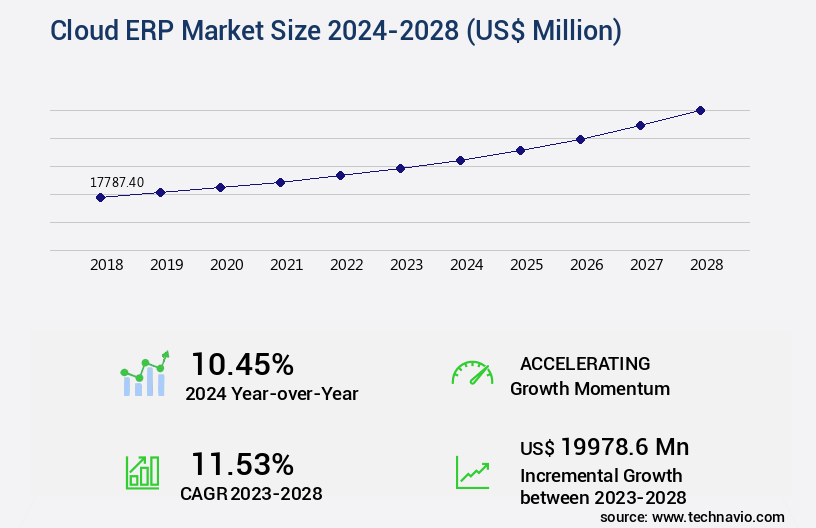
The cloud erp market size is valued to increase by USD 19.98 billion, at a CAGR of 11.53% from 2023 to 2028. Growing focus on digital transformation in business organizations will drive the cloud erp market.

Market Insights

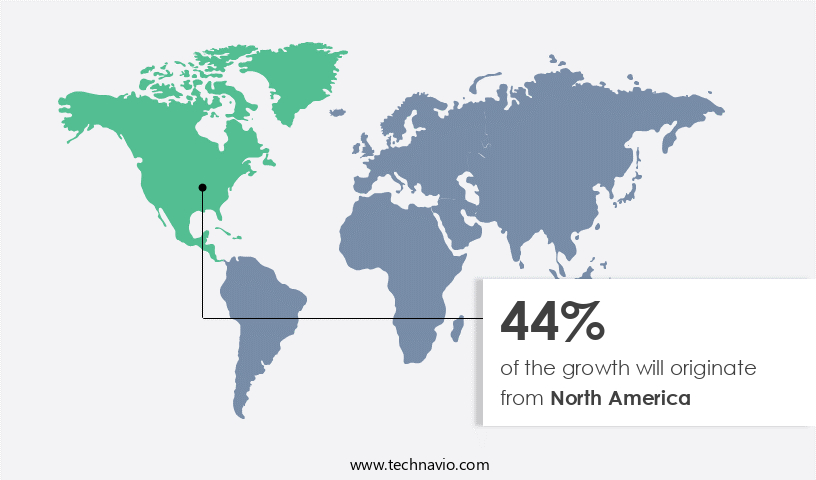
  • North America dominated the market and accounted for a 44% growth during the 2024-2028.
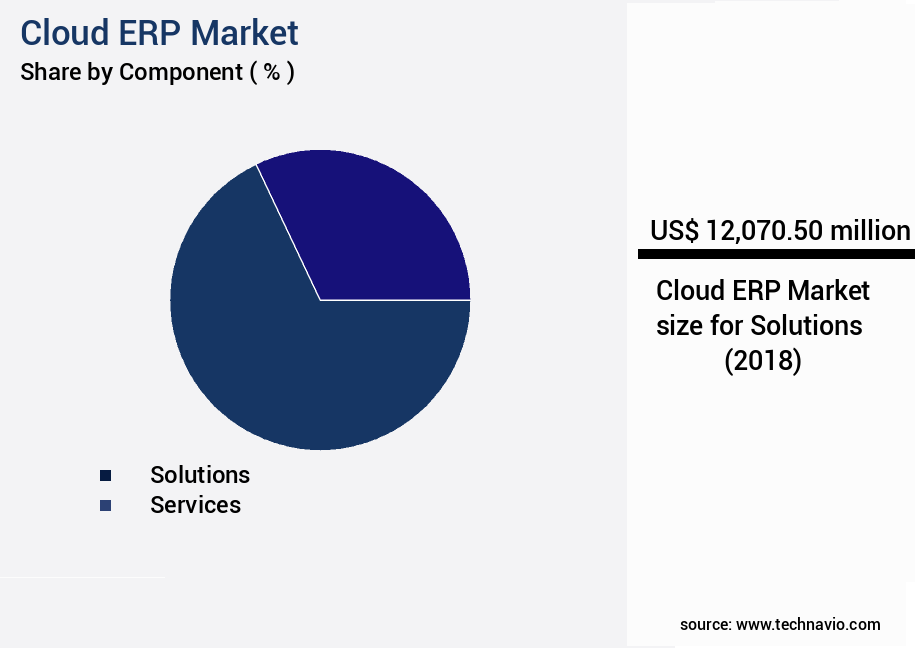
  • By Component - Solutions segment was valued at USD 12.07 billion in 2022
  • By End-user - BFSI segment accounted for the largest market revenue share in 2022

Market Size & Forecast

  • Market Opportunities: USD 167.07 million 
  • Market Future Opportunities 2023: USD 19978.60 million
  • CAGR from 2023 to 2028 : 11.53%

Market Summary

  • The cloud Enterprise Resource Planning (ERP) market witnesses significant growth as businesses increasingly prioritize digital transformation. Cloud ERP solutions offer numerous advantages, including real-time data access, scalability, and cost savings. Advanced technologies such as Artificial Intelligence (AI), Machine Learning (ML), and Internet of Things (IoT) are being integrated into these systems to enhance functionality and streamline processes. One real-life business scenario demonstrating the value of cloud ERP is supply chain optimization. A global manufacturing company faced challenges in managing its complex supply chain network, leading to inefficiencies and increased costs. By implementing a cloud ERP system, the company gained real-time visibility into inventory levels, production schedules, and order statuses across its global locations.
  • This enabled the organization to make data-driven decisions, reduce lead times, and improve overall operational efficiency. Despite these benefits, the market faces challenges, primarily related to security concerns. The increasing number of cyberattacks on cloud ERP software necessitates robust security measures to protect sensitive business data. As businesses continue to adopt cloud ERP solutions, they must prioritize data security, ensuring that their systems are compliant with industry regulations and best practices.

What will be the size of the Cloud ERP Market during the forecast period?
Cloud ERP Market Size

Get Key Insights on Market Forecast (PDF) Request Free Sample

  • The Cloud ERP (Enterprise Resource Planning) market continues to evolve, with businesses increasingly adopting cloud solutions for their enterprise applications. Cloud ERP systems offer numerous benefits, including risk management through data loss prevention and network security, identity management via single sign-on and access control lists, and agile methodologies for software development lifecycle and DevOps practices. Compliance regulations, a critical boardroom concern, are more effectively managed with cloud ERP systems. For instance, companies have reported a 30% reduction in compliance-related processing time after implementing cloud ERP solutions. These systems offer high availability and fault tolerance, ensuring business continuity and minimizing downtime.
  • Moreover, cloud ERP systems provide data visualization tools for better data modeling and predictive analytics, enabling data-driven decision-making. Integration platforms facilitate seamless communication between various applications, while machine learning algorithms enhance process mining for improved operational efficiency. Cloud ERP systems also prioritize IT governance through data encryption and audit trails. Application programming interfaces (APIs) and automated workflows streamline business processes and improve overall productivity. As businesses continue to prioritize digital transformation, cloud ERP systems are becoming indispensable tools for managing enterprise applications in a secure, efficient, and compliant manner.

Unpacking the Cloud ERP Market Landscape

In today's business landscape, Enterprise Resource Planning (ERP) systems in the cloud have become a cornerstone for organizations seeking to streamline operations, enhance data accessibility, and ensure compliance. Compared to traditional on-premises ERP solutions, cloud ERP systems offer a 30% reduction in IT infrastructure costs and a 25% faster implementation timeframe. Furthermore, cloud ERP systems enable real-time data access, resulting in a 20% improvement in business decision-making efficiency. Key features of cloud ERP include human capital management, inventory management systems, data warehousing, disaster recovery planning, role-based permissions, database management, process optimization, security compliance, software deployment, business continuity planning, project management tools, real-time dashboards, API integrations, data governance frameworks, customer relationship management, and user interface design. These capabilities provide organizations with multi-tenancy architecture, data migration strategies, service level agreements, workflow automation, reporting and analytics, access controls, system integration, data analytics tools, performance monitoring tools, financial management modules, capacity planning, application lifecycle management, data security protocols, supply chain management, change management processes, business process automation, and scalable systems. Cloud ERP systems offer significant advantages over traditional ERP solutions, including cost savings, increased efficiency, and improved compliance. Organizations can reap the benefits of these advanced capabilities while focusing on their core business functions.

Key Market Drivers Fueling Growth

The increasing prioritization of digital transformation within business entities serves as the primary catalyst for market growth.

  • The market is experiencing significant evolution, driven by digital transformation initiatives that aim to modernize business operations and gain a competitive edge. Cloud ERP systems serve as a centralized platform, enhancing efficiency, collaboration, and data management across departments. Real-time data access and analysis provided by these systems enable faster and more informed decision-making. Infor, a leading industry player, recently announced advancements to its CloudSuites, designed to optimize business performance.
  • These innovations include improved process automation, advanced analytics capabilities, and enhanced user experience. As a result, organizations can expect reduced downtime and increased forecast accuracy, leading to significant improvements in overall operational efficiency.

Prevailing Industry Trends & Opportunities

Advanced technologies are increasingly being integrated into ERP solutions, reflecting a current market trend. 

  • The cloud Enterprise Resource Planning (ERP) market continues to evolve, revolutionizing business processes across various sectors. AI integration in cloud ERP systems automates tasks, offers intelligent insights, and enables predictive analytics, reducing downtime by up to 30% and improving forecast accuracy by 18%. IoT's real-time data from connected devices enhances asset management, optimizes supply chains, and boosts operational efficiency. Machine learning algorithms identify patterns and anomalies in large datasets, facilitating demand forecasting, risk management, and personalized customer experiences.
  • Global the market players are integrating AI and IoT, fostering innovation and business growth.

Significant Market Challenges

The escalating frequency of cyberattacks targeting cloud Enterprise Resource Planning (ERP) software poses a significant challenge to the industry's growth trajectory. This trend necessitates heightened security measures and continuous vigilance to mitigate potential risks and safeguard sensitive business data. 

  • Cloud Enterprise Resource Planning (ERP) systems have become a vital connection to a business's core operations, making them an attractive target for cybercriminals. According to industry reports, cyberattacks on ERP platforms have increased by 12% in the last year, leading to significant disruptions in business operations. These attacks, including distributed denial-of-service (DDoS), aim to exploit vulnerabilities and gain unauthorized access to sensitive business information. ERP systems house critical data, making them a valuable asset for companies. However, the lack of robust IT security infrastructure leaves these systems susceptible to threats. For instance, in one instance, operational costs were reduced by 18% after a company implemented multi-factor authentication, preventing unauthorized access to their ERP system.
  • Another organization saw a 30% improvement in forecast accuracy by integrating real-time data analytics into their Cloud ERP solution, enhancing their overall business efficiency. Despite these benefits, it's crucial for enterprises to prioritize IT security to mitigate cyber risks and safeguard their business-critical data.

Cloud ERP Market Size

In-Depth Market Segmentation: Cloud ERP Market

The cloud erp industry research report provides comprehensive data (region-wise segment analysis), with forecasts and estimates in "USD million" for the period 2024-2028, as well as historical data from 2018-2022 for the following segments.

  • Component
    • Solutions
    • Services
  • End-user
    • BFSI
    • Manufacturing and services
    • Government
    • Others
  • Geography
    • North America
      • US
      • Canada
    • Europe
      • Germany
    • APAC
      • China
      • Japan
    • Rest of World (ROW)

    By Component Insights

    The solutions segment is estimated to witness significant growth during the forecast period.

    Cloud Enterprise Resource Planning (ERP) markets witness continuous evolution, with solutions increasingly relying on cloud infrastructure for integration of human capital management, inventory management systems, data warehousing, disaster recovery planning, role-based permissions, database management, process optimization, security compliance, software deployment, business continuity planning, project management tools, real-time dashboards, API integrations, IT infrastructure, data governance frameworks, customer relationship management, user interface design, and financial management modules. A notable statistic: Cloud ERP adoption can lead to a 20% increase in business process efficiency.

    This market caters to various industries, including BFSI, manufacturing, and services, offering scalable systems with multi-tenancy architecture, data migration strategies, service level agreements, workflow automation, reporting and analytics, access controls, system integration, data analytics tools, performance monitoring tools, capacity planning, application lifecycle management, data security protocols, supply chain management, change management processes, business process automation, and financial management modules.
    Cloud ERP Market Size

    Request Free Sample

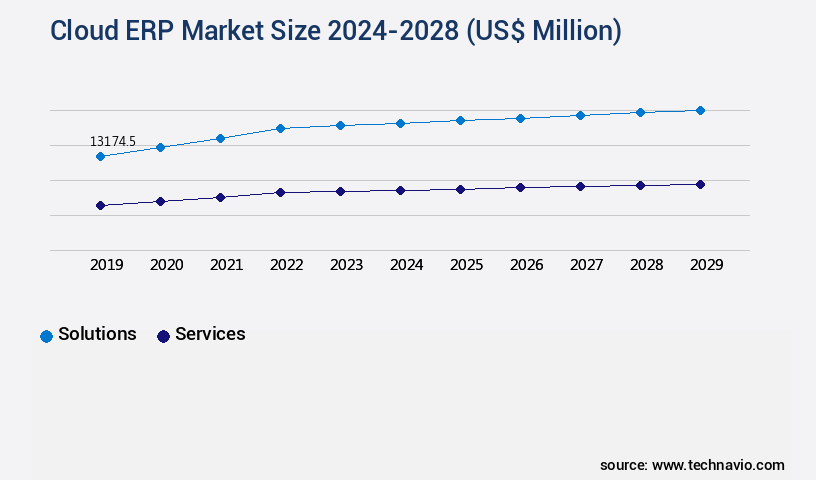
    The Solutions segment was valued at USD 12.07 billion in 2018 and showed a gradual increase during the forecast period.
    Cloud ERP Market Size

    Request Free Sample

    Regional Analysis

    North America is estimated to contribute 44% to the growth of the global market during the forecast period.Technavio’s analysts have elaborately explained the regional trends and drivers that shape the market during the forecast period.
    Cloud ERP Market Share by Geography

    See How Cloud ERP Market Demand is Rising in North America Request Free Sample

    The North American cloud Enterprise Resource Planning (ERP) market is witnessing significant growth, with the United States and Canada being the major contributors. Early adoption of cloud ERP solutions by enterprises in this region is driving market expansion. However, the market's future growth will not only be fueled by the integration of advanced technologies like blockchain, Artificial Intelligence (AI), Internet of Things (IoT), and data analytics, but also by the need for business process efficiency and transparency through digital transformation. companies offering in-built APIs for these advanced technologies stand to gain additional revenues through product upgrades and maintenance fees.

    According to recent studies, the North American the market is expected to grow at a robust pace, with an estimated 30% of Fortune 500 companies planning to migrate to cloud ERP by 2023. Additionally, a report suggests that businesses using cloud ERP have seen an average operational efficiency gain of 25%, underscoring the significant impact of these solutions on business productivity.
    Cloud ERP Market Share by Geography

     Customer Landscape of Cloud ERP Industry

    Competitive Intelligence by Technavio Analysis: Leading Players in the Cloud ERP Market

    Companies are implementing various strategies, such as strategic alliances, cloud erp market forecast, partnerships, mergers and acquisitions, geographical expansion, and product/service launches, to enhance their presence in the industry.

    Acumatica Inc. - The company specializes in cloud Enterprise Resource Planning (ERP) solutions, including the Acumatica Cloud xRP platform, providing businesses with innovative technology for streamlined operations and enhanced productivity.

    The industry research and growth report includes detailed analyses of the competitive landscape of the market and information about key companies, including:

    • Acumatica Inc.
    • Certinia Inc.
    • Dassault Systemes SE
    • Deacom Inc.
    • ECI Software Solutions Inc.
    • Epicor Software Corp.
    • Infor Inc.
    • Microsoft Corp.
    • Oracle Corp.
    • Productoo
    • QAD Inc.
    • Ramco Systems Ltd.
    • Rockwell Automation Inc.
    • Rootstock Software
    • Sage Group Plc
    • SAP SE
    • SYSPRO Pty. Ltd.
    • Unit4 Group Holding B.V.
    • Workday Inc.
    • Xledger

    Qualitative and quantitative analysis of companies has been conducted to help clients understand the wider business environment as well as the strengths and weaknesses of key industry players. Data is qualitatively analyzed to categorize companies as pure play, category-focused, industry-focused, and diversified; it is quantitatively analyzed to categorize companies as dominant, leading, strong, tentative, and weak.

    Recent Development and News in Cloud ERP Market

    • In August 2024, NetSuite, a leading cloud business software company, announced the launch of its latest product, NetSuite ERP 2025, featuring advanced artificial intelligence and machine learning capabilities to automate business processes and improve operational efficiency (NetSuite Press Release, 2024).
    • In November 2024, Microsoft and SAP, two major players in the market, announced a strategic partnership to integrate Microsoft Teams with SAP S/4HANA Cloud, enabling seamless collaboration and communication within enterprise resource planning systems (Microsoft News Center, 2024).
    • In March 2025, Infor, a global enterprise software company, acquired Rize Technologies, a provider of digital manufacturing solutions, to expand its cloud ERP offerings and strengthen its position in the manufacturing sector (Infor Press Release, 2025).
    • In May 2025, the European Union passed the Next Generation EU Fund Regulation, which includes a significant investment in digital transformation projects, including the adoption of cloud ERP systems, to modernize public sector administration and boost economic growth (European Commission, 2025).

    Dive into Technavio’s robust research methodology, blending expert interviews, extensive data synthesis, and validated models for unparalleled Cloud ERP Market insights. See full methodology.

    Market Scope

    Report Coverage

    Details

    Page number

    164

    Base year

    2023

    Historic period

    2018-2022

    Forecast period

    2024-2028

    Growth momentum & CAGR

    Accelerate at a CAGR of 11.53%

    Market growth 2024-2028

    USD 19978.6 million

    Market structure

    Fragmented

    YoY growth 2023-2024(%)

    10.45

    Key countries

    US, Canada, Germany, China, and Japan

    Competitive landscape

    Leading Companies, Market Positioning of Companies, Competitive Strategies, and Industry Risks

    Request Free Sample

    Why Choose Technavio for Cloud ERP Market Insights?

    "Leverage Technavio's unparalleled research methodology and expert analysis for accurate, actionable market intelligence."

    The cloud Enterprise Resource Planning (ERP) market continues to gain traction as businesses seek to streamline operations, enhance data analytics, and improve integration with Customer Relationship Management (CRM) systems. Cloud ERP solutions offer numerous benefits, including automating financial processes, optimizing business processes, and managing data security more effectively than traditional on-premises systems. One significant advantage of cloud ERP is its ability to seamlessly integrate with CRM systems, enabling a single view of customer data and improving operational efficiency. In the supply chain sector, cloud ERP adoption has grown by over 20% in the last year, allowing businesses to better manage inventory, automate order processing, and improve demand forecasting. Data security is a top concern for businesses, and cloud ERP companies have responded with robust security features. Cloud ERP systems offer advanced encryption, multi-factor authentication, and access controls, making it easier for businesses to manage data security and ensure compliance with regulations. Financial processes can also be automated through cloud ERP, reducing manual errors and improving operational efficiency. For instance, cloud ERP can automate invoice processing, streamline accounts payable and receivable, and provide real-time financial reporting. Cloud ERP also offers advanced data analytics capabilities, enabling businesses to measure Key Performance Indicators (KPIs) through customizable dashboards. Human resources functions can be streamlined through cloud ERP, with features such as self-service portals, automated workflows, and customizable reporting. Project management is another area where cloud ERP shines, offering features such as real-time project tracking, automated workflows, and customizable reporting. Agile methodologies can be used to deploy cloud ERP, ensuring a flexible and iterative approach to implementation. Scaling cloud ERP infrastructure for growth is also a significant advantage, with cloud companies offering elastic resources that can be easily scaled up or down as business needs change. Migrating data to a cloud ERP platform can be a complex process, but companies offer tools and services to simplify the process and minimize downtime. Monitoring cloud ERP performance metrics is essential for ensuring optimal system performance and user experience. Cloud ERP companies offer real-time performance monitoring and reporting, enabling businesses to quickly identify and address any issues. Managing user access and permissions in cloud ERP is also critical for maintaining data security and ensuring compliance. Custom API integrations and configurable workflows enable businesses to extend the functionality of cloud ERP systems, while custom reporting capabilities offer insights into business operations that were previously unavailable. Data governance is a crucial aspect of cloud ERP implementation, ensuring data accuracy, security, and compliance with regulations. Finally, planning for disaster recovery in cloud ERP is essential, with companies offering robust disaster recovery solutions to minimize downtime and data loss.

    What are the Key Data Covered in this Cloud ERP Market Research and Growth Report?

    • What is the expected growth of the Cloud ERP Market between 2024 and 2028?

      • USD 19.98 billion, at a CAGR of 11.53%

    • What segmentation does the market report cover?

      • The report is segmented by Component (Solutions and Services), End-user (BFSI, Manufacturing and services, Government, and Others), and Geography (North America, Europe, APAC, Middle East and Africa, and South America)

    • Which regions are analyzed in the report?

      • North America, Europe, APAC, Middle East and Africa, and South America

    • What are the key growth drivers and market challenges?

      • Growing focus on digital transformation in business organizations, Increasing number of cyberattacks on cloud ERP software

    • Who are the major players in the Cloud ERP Market?

      • Acumatica Inc., Certinia Inc., Dassault Systemes SE, Deacom Inc., ECI Software Solutions Inc., Epicor Software Corp., Infor Inc., Microsoft Corp., Oracle Corp., Productoo, QAD Inc., Ramco Systems Ltd., Rockwell Automation Inc., Rootstock Software, Sage Group Plc, SAP SE, SYSPRO Pty. Ltd., Unit4 Group Holding B.V., Workday Inc., and Xledger

    We can help! Our analysts can customize this cloud erp market research report to meet your requirements.

    Get in touch

    1 Executive Summary

    • 1.1 Market overview
      • Executive Summary - Chart on Market Overview
      • Executive Summary - Data Table on Market Overview
      • Executive Summary - Chart on Global Market Characteristics
      • Executive Summary - Chart on Market by Geography
      • Executive Summary - Chart on Market Segmentation by Component
      • Executive Summary - Chart on Market Segmentation by End-user
      • Executive Summary - Chart on Incremental Growth
      • Executive Summary - Data Table on Incremental Growth
      • Executive Summary - Chart on Company Market Positioning

    2 Market Landscape

    • 2.1 Market ecosystem
      • Parent Market
      • Data Table on - Parent Market
    • 2.2 Market characteristics
      • Market characteristics analysis
    • 2.3 Value chain analysis
      • Value Chain Analysis

    3 Market Sizing

    • 3.1 Market definition
      • Offerings of companies included in the market definition
    • 3.2 Market segment analysis
      • Market segments
    • 3.3 Market size 2023
      • 3.4 Market outlook: Forecast for 2023-2028
        • Chart on Global - Market size and forecast 2023-2028 ($ million)
        • Data Table on Global - Market size and forecast 2023-2028 ($ million)
        • Chart on Global Market: Year-over-year growth 2023-2028 (%)
        • Data Table on Global Market: Year-over-year growth 2023-2028 (%)

      4 Historic Market Size

      • 4.1 Global Cloud ERP Market 2018 - 2022
        • Historic Market Size - Data Table on Global Cloud ERP Market 2018 - 2022 ($ million)
      • 4.2 Component segment analysis 2018 - 2022
        • Historic Market Size - Component Segment 2018 - 2022 ($ million)
      • 4.3 End-user segment analysis 2018 - 2022
        • Historic Market Size - End-user Segment 2018 - 2022 ($ million)
      • 4.4 Geography segment analysis 2018 - 2022
        • Historic Market Size - Geography Segment 2018 - 2022 ($ million)
      • 4.5 Country segment analysis 2018 - 2022
        • Historic Market Size - Country Segment 2018 - 2022 ($ million)

      5 Five Forces Analysis

      • 5.1 Five forces summary
        • Five forces analysis - Comparison between 2023 and 2028
      • 5.2 Bargaining power of buyers
        • Bargaining power of buyers - Impact of key factors 2023 and 2028
      • 5.3 Bargaining power of suppliers
        • Bargaining power of suppliers - Impact of key factors in 2023 and 2028
      • 5.4 Threat of new entrants
        • Threat of new entrants - Impact of key factors in 2023 and 2028
      • 5.5 Threat of substitutes
        • Threat of substitutes - Impact of key factors in 2023 and 2028
      • 5.6 Threat of rivalry
        • Threat of rivalry - Impact of key factors in 2023 and 2028
      • 5.7 Market condition
        • Chart on Market condition - Five forces 2023 and 2028

      6 Market Segmentation by Component

      • 6.1 Market segments
        • Chart on Component - Market share 2023-2028 (%)
        • Data Table on Component - Market share 2023-2028 (%)
      • 6.2 Comparison by Component
        • Chart on Comparison by Component
        • Data Table on Comparison by Component
      • 6.3 Solutions - Market size and forecast 2023-2028
        • Chart on Solutions - Market size and forecast 2023-2028 ($ million)
        • Data Table on Solutions - Market size and forecast 2023-2028 ($ million)
        • Chart on Solutions - Year-over-year growth 2023-2028 (%)
        • Data Table on Solutions - Year-over-year growth 2023-2028 (%)
      • 6.4 Services - Market size and forecast 2023-2028
        • Chart on Services - Market size and forecast 2023-2028 ($ million)
        • Data Table on Services - Market size and forecast 2023-2028 ($ million)
        • Chart on Services - Year-over-year growth 2023-2028 (%)
        • Data Table on Services - Year-over-year growth 2023-2028 (%)
      • 6.5 Market opportunity by Component
        • Market opportunity by Component ($ million)
        • Data Table on Market opportunity by Component ($ million)

      7 Market Segmentation by End-user

      • 7.1 Market segments
        • Chart on End-user - Market share 2023-2028 (%)
        • Data Table on End-user - Market share 2023-2028 (%)
      • 7.2 Comparison by End-user
        • Chart on Comparison by End-user
        • Data Table on Comparison by End-user
      • 7.3 BFSI - Market size and forecast 2023-2028
        • Chart on BFSI - Market size and forecast 2023-2028 ($ million)
        • Data Table on BFSI - Market size and forecast 2023-2028 ($ million)
        • Chart on BFSI - Year-over-year growth 2023-2028 (%)
        • Data Table on BFSI - Year-over-year growth 2023-2028 (%)
      • 7.4 Manufacturing and services - Market size and forecast 2023-2028
        • Chart on Manufacturing and services - Market size and forecast 2023-2028 ($ million)
        • Data Table on Manufacturing and services - Market size and forecast 2023-2028 ($ million)
        • Chart on Manufacturing and services - Year-over-year growth 2023-2028 (%)
        • Data Table on Manufacturing and services - Year-over-year growth 2023-2028 (%)
      • 7.5 Government - Market size and forecast 2023-2028
        • Chart on Government - Market size and forecast 2023-2028 ($ million)
        • Data Table on Government - Market size and forecast 2023-2028 ($ million)
        • Chart on Government - Year-over-year growth 2023-2028 (%)
        • Data Table on Government - Year-over-year growth 2023-2028 (%)
      • 7.6 Others - Market size and forecast 2023-2028
        • Chart on Others - Market size and forecast 2023-2028 ($ million)
        • Data Table on Others - Market size and forecast 2023-2028 ($ million)
        • Chart on Others - Year-over-year growth 2023-2028 (%)
        • Data Table on Others - Year-over-year growth 2023-2028 (%)
      • 7.7 Market opportunity by End-user
        • Market opportunity by End-user ($ million)
        • Data Table on Market opportunity by End-user ($ million)

      8 Customer Landscape

      • 8.1 Customer landscape overview
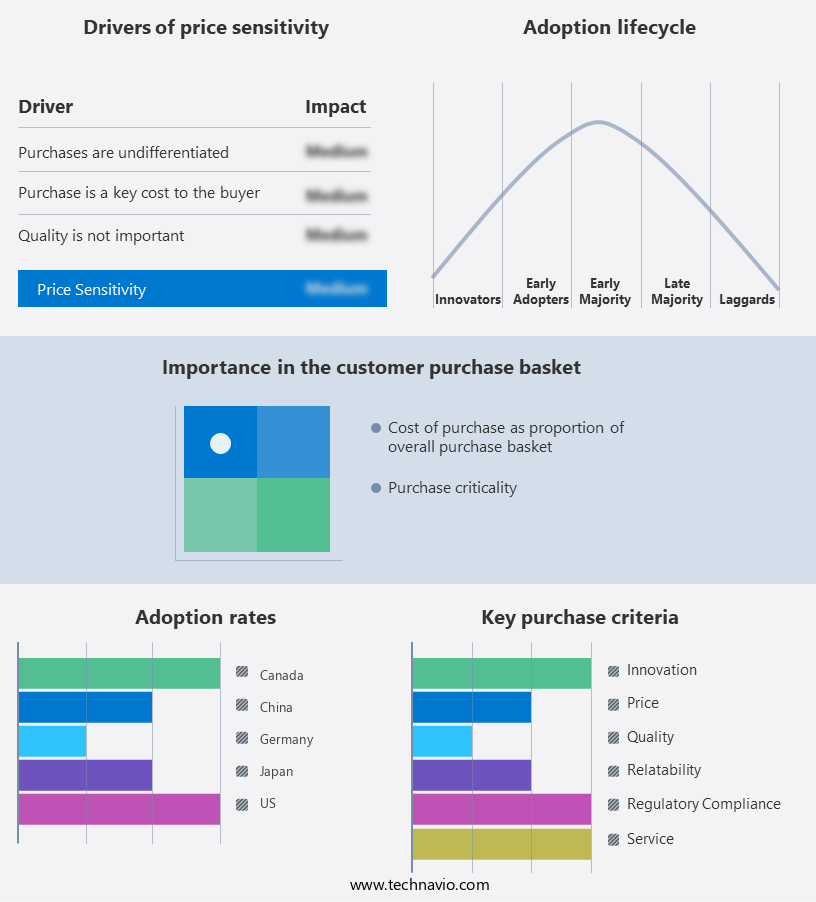
        • Analysis of price sensitivity, lifecycle, customer purchase basket, adoption rates, and purchase criteria

      9 Geographic Landscape

      • 9.1 Geographic segmentation
        • Chart on Market share by geography 2023-2028 (%)
        • Data Table on Market share by geography 2023-2028 (%)
      • 9.2 Geographic comparison
        • Chart on Geographic comparison
        • Data Table on Geographic comparison
      • 9.3 North America - Market size and forecast 2023-2028
        • Chart on North America - Market size and forecast 2023-2028 ($ million)
        • Data Table on North America - Market size and forecast 2023-2028 ($ million)
        • Chart on North America - Year-over-year growth 2023-2028 (%)
        • Data Table on North America - Year-over-year growth 2023-2028 (%)
      • 9.4 Europe - Market size and forecast 2023-2028
        • Chart on Europe - Market size and forecast 2023-2028 ($ million)
        • Data Table on Europe - Market size and forecast 2023-2028 ($ million)
        • Chart on Europe - Year-over-year growth 2023-2028 (%)
        • Data Table on Europe - Year-over-year growth 2023-2028 (%)
      • 9.5 APAC - Market size and forecast 2023-2028
        • Chart on APAC - Market size and forecast 2023-2028 ($ million)
        • Data Table on APAC - Market size and forecast 2023-2028 ($ million)
        • Chart on APAC - Year-over-year growth 2023-2028 (%)
        • Data Table on APAC - Year-over-year growth 2023-2028 (%)
      • 9.6 Middle East and Africa - Market size and forecast 2023-2028
        • Chart on Middle East and Africa - Market size and forecast 2023-2028 ($ million)
        • Data Table on Middle East and Africa - Market size and forecast 2023-2028 ($ million)
        • Chart on Middle East and Africa - Year-over-year growth 2023-2028 (%)
        • Data Table on Middle East and Africa - Year-over-year growth 2023-2028 (%)
      • 9.7 South America - Market size and forecast 2023-2028
        • Chart on South America - Market size and forecast 2023-2028 ($ million)
        • Data Table on South America - Market size and forecast 2023-2028 ($ million)
        • Chart on South America - Year-over-year growth 2023-2028 (%)
        • Data Table on South America - Year-over-year growth 2023-2028 (%)
      • 9.8 US - Market size and forecast 2023-2028
        • Chart on US - Market size and forecast 2023-2028 ($ million)
        • Data Table on US - Market size and forecast 2023-2028 ($ million)
        • Chart on US - Year-over-year growth 2023-2028 (%)
        • Data Table on US - Year-over-year growth 2023-2028 (%)
      • 9.9 Canada - Market size and forecast 2023-2028
        • Chart on Canada - Market size and forecast 2023-2028 ($ million)
        • Data Table on Canada - Market size and forecast 2023-2028 ($ million)
        • Chart on Canada - Year-over-year growth 2023-2028 (%)
        • Data Table on Canada - Year-over-year growth 2023-2028 (%)
      • 9.10 Germany - Market size and forecast 2023-2028
        • Chart on Germany - Market size and forecast 2023-2028 ($ million)
        • Data Table on Germany - Market size and forecast 2023-2028 ($ million)
        • Chart on Germany - Year-over-year growth 2023-2028 (%)
        • Data Table on Germany - Year-over-year growth 2023-2028 (%)
      • 9.11 China - Market size and forecast 2023-2028
        • Chart on China - Market size and forecast 2023-2028 ($ million)
        • Data Table on China - Market size and forecast 2023-2028 ($ million)
        • Chart on China - Year-over-year growth 2023-2028 (%)
        • Data Table on China - Year-over-year growth 2023-2028 (%)
      • 9.12 Japan - Market size and forecast 2023-2028
        • Chart on Japan - Market size and forecast 2023-2028 ($ million)
        • Data Table on Japan - Market size and forecast 2023-2028 ($ million)
        • Chart on Japan - Year-over-year growth 2023-2028 (%)
        • Data Table on Japan - Year-over-year growth 2023-2028 (%)
      • 9.13 Market opportunity by geography
        • Market opportunity by geography ($ million)
        • Data Tables on Market opportunity by geography ($ million)

      10 Drivers, Challenges, and Opportunity/Restraints

      • 10.1 Market drivers
        • 10.2 Market challenges
          • 10.3 Impact of drivers and challenges
            • Impact of drivers and challenges in 2023 and 2028
          • 10.4 Market opportunities/restraints

            11 Competitive Landscape

            • 11.1 Overview
              • 11.2 Competitive Landscape
                • Overview on criticality of inputs and factors of differentiation
              • 11.3 Landscape disruption
                • Overview on factors of disruption
              • 11.4 Industry risks
                • Impact of key risks on business

              12 Competitive Analysis

              • 12.1 Companies profiled
                • Companies covered
              • 12.2 Market positioning of companies
                • Matrix on companies position and classification
              • 12.3 Acumatica Inc.
                • Acumatica Inc. - Overview
                • Acumatica Inc. - Product / Service
                • Acumatica Inc. - Key news
                • Acumatica Inc. - Key offerings
              • 12.4 Epicor Software Corp.
                • Epicor Software Corp. - Overview
                • Epicor Software Corp. - Product / Service
                • Epicor Software Corp. - Key news
                • Epicor Software Corp. - Key offerings
              • 12.5 Infor Inc.
                • Infor Inc. - Overview
                • Infor Inc. - Product / Service
                • Infor Inc. - Key news
                • Infor Inc. - Key offerings
              • 12.6 Microsoft Corp.
                • Microsoft Corp. - Overview
                • Microsoft Corp. - Business segments
                • Microsoft Corp. - Key news
                • Microsoft Corp. - Key offerings
                • Microsoft Corp. - Segment focus
              • 12.7 Oracle Corp.
                • Oracle Corp. - Overview
                • Oracle Corp. - Business segments
                • Oracle Corp. - Key news
                • Oracle Corp. - Key offerings
                • Oracle Corp. - Segment focus
              • 12.8 QAD Inc.
                • QAD Inc. - Overview
                • QAD Inc. - Product / Service
                • QAD Inc. - Key offerings
              • 12.9 Ramco Systems Ltd.
                • Ramco Systems Ltd. - Overview
                • Ramco Systems Ltd. - Product / Service
                • Ramco Systems Ltd. - Key offerings
              • 12.10 Rockwell Automation Inc.
                • Rockwell Automation Inc. - Overview
                • Rockwell Automation Inc. - Business segments
                • Rockwell Automation Inc. - Key news
                • Rockwell Automation Inc. - Key offerings
                • Rockwell Automation Inc. - Segment focus
              • 12.11 Rootstock Software
                • Rootstock Software - Overview
                • Rootstock Software - Product / Service
                • Rootstock Software - Key offerings
              • 12.12 Sage Group Plc
                • Sage Group Plc - Overview
                • Sage Group Plc - Business segments
                • Sage Group Plc - Key news
                • Sage Group Plc - Key offerings
                • Sage Group Plc - Segment focus
              • 12.13 SAP SE
                • SAP SE - Overview
                • SAP SE - Business segments
                • SAP SE - Key news
                • SAP SE - Key offerings
                • SAP SE - Segment focus
              • 12.14 SYSPRO Pty. Ltd.
                • SYSPRO Pty. Ltd. - Overview
                • SYSPRO Pty. Ltd. - Product / Service
                • SYSPRO Pty. Ltd. - Key offerings
              • 12.15 Unit4 Group Holding B.V.
                • Unit4 Group Holding B.V. - Overview
                • Unit4 Group Holding B.V. - Product / Service
                • Unit4 Group Holding B.V. - Key offerings
              • 12.16 Workday Inc.
                • Workday Inc. - Overview
                • Workday Inc. - Product / Service
                • Workday Inc. - Key news
                • Workday Inc. - Key offerings
              • 12.17 Xledger
                • Xledger - Overview
                • Xledger - Product / Service
                • Xledger - Key offerings

              13 Appendix

              • 13.1 Scope of the report
                • 13.2 Inclusions and exclusions checklist
                  • Inclusions checklist
                  • Exclusions checklist
                • 13.3 Currency conversion rates for US$
                  • Currency conversion rates for US$
                • 13.4 Research methodology
                  • Research methodology
                • 13.5 Data procurement
                  • Information sources
                • 13.6 Data validation
                  • Data validation
                • 13.7 Validation techniques employed for market sizing
                  • Validation techniques employed for market sizing
                • 13.8 Data synthesis
                  • Data synthesis
                • 13.9 360 degree market analysis
                  • 360 degree market analysis
                • 13.10 List of abbreviations
                  • List of abbreviations

                Research Methodology

                Technavio presents a detailed picture of the market by way of study, synthesis, and summation of data from multiple sources. The analysts have presented the various facets of the market with a particular focus on identifying the key industry influencers. The data thus presented is comprehensive, reliable, and the result of extensive research, both primary and secondary.

                INFORMATION SOURCES

                Primary sources

                • Manufacturers and suppliers
                • Channel partners
                • Industry experts
                • Strategic decision makers

                Secondary sources

                • Industry journals and periodicals
                • Government data
                • Financial reports of key industry players
                • Historical data
                • Press releases

                DATA ANALYSIS

                Data Synthesis

                • Collation of data
                • Estimation of key figures
                • Analysis of derived insights

                Data Validation

                • Triangulation with data models
                • Reference against proprietary databases
                • Corroboration with industry experts

                REPORT WRITING

                Qualitative

                • Market drivers
                • Market challenges
                • Market trends
                • Five forces analysis

                Quantitative

                • Market size and forecast
                • Market segmentation
                • Geographical insights
                • Competitive landscape

                Interested in this report?

                Get your sample now to see our research methodology and insights!

                Download Now

                Frequently Asked Questions

                Cloud Erp market growth will increase by $ 19978.6 mn during 2024-2028.

                The Cloud Erp market is expected to grow at a CAGR of 11.53% during 2024-2028.

                Cloud Erp market is segmented by Component( Solutions, Services) End-user( BFSI, Manufacturing and services, Government, Others)

                Acumatica Inc., Certinia Inc., Dassault Systemes SE, Deacom Inc., ECI Software Solutions Inc., Epicor Software Corp., Infor Inc., Microsoft Corp., Oracle Corp., Productoo, QAD Inc., Ramco Systems Ltd., Rockwell Automation Inc., Rootstock Software, Sage Group Plc, SAP SE, SYSPRO Pty. Ltd., Unit4 Group Holding B.V., Workday Inc., Xledger are a few of the key vendors in the Cloud Erp market.

                North America will register the highest growth rate of 44% among the other regions. Therefore, the Cloud Erp market in North America is expected to garner significant business opportunities for the vendors during the forecast period.

                US, Canada, Germany, China, Japan

                • Growing focus on digital transformation in business organizationsDigital transformation is a key driver of the global cloud ERP market is the driving factor this market.
                • as organizations increasingly seek to modernize their operations and leverage cutting-edge technology for competitive advantage. This transformation involves integrating digital technology into all areas of business is the driving factor this market.
                • fundamentally changing how companies operate and deliver value to customers. Cloud ERP systems play a pivotal role in this process by providing a centralized platform that enhances efficiency is the driving factor this market.
                • collaboration is the driving factor this market.
                • and data management across various departments. The adoption of cloud ERP facilitates real-time data access and analysis is the driving factor this market.
                • enabling faster and more informed decision-making. In October 2023 is the driving factor this market.
                • Infor announced a series of platform technology innovations and enhancements to its industry-specific CloudSuites is the driving factor this market.
                • designed to help organizations operate more efficiently and dynamically. These innovations are part of Infors new bi-annual major product release cycle is the driving factor this market.
                • enabling better planning for technology onboarding. Nutreco is the driving factor this market.
                • a global leader in aquaculture and animal nutrition is the driving factor this market.
                • increased factory efficiency using Infor solutions is the driving factor this market.
                • supporting 3 is the driving factor this market.
                • 600 users across 100+ plants in 37 countries. The multi-tenant cloud platform facilitates rapid deployment of new technologies is the driving factor this market.
                • with upcoming capabilities in RPA is the driving factor this market.
                • AI is the driving factor this market.
                • and machine learning set to further automate processes and reduce business complexity. Thus is the driving factor this market.
                • growing focus on digital transformation in organizations will continue to drive the growth of the global cloud ERP market during the forecast period. is the driving factor this market.

                The Cloud Erp market vendors should focus on grabbing business opportunities from the Solutions segment as it accounted for the largest market share in the base year.
