



Business Information Market Size 2026-2030
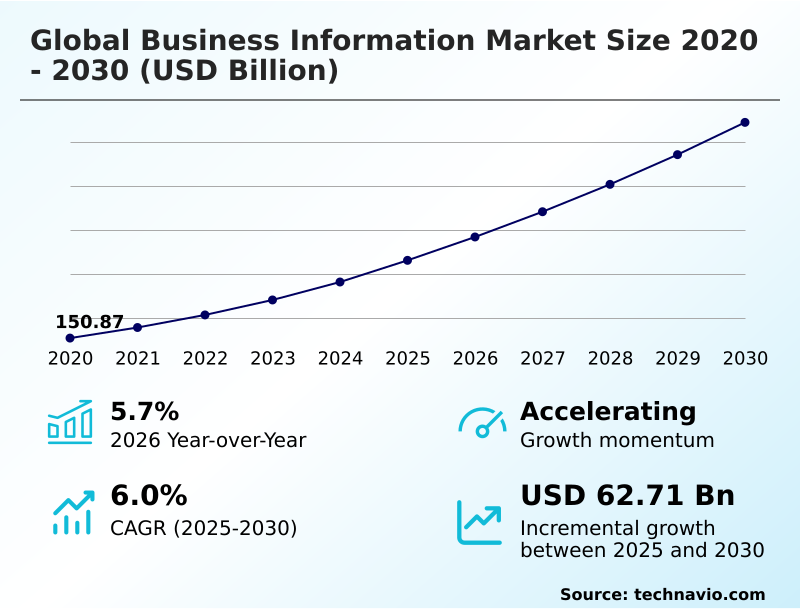
The business information market size is valued to increase by USD 62.71 billion, at a CAGR of 6% from 2025 to 2030. Mainstreaming of agentic AI and autonomous knowledge workflows will drive the business information market.
Major Market Trends & Insights
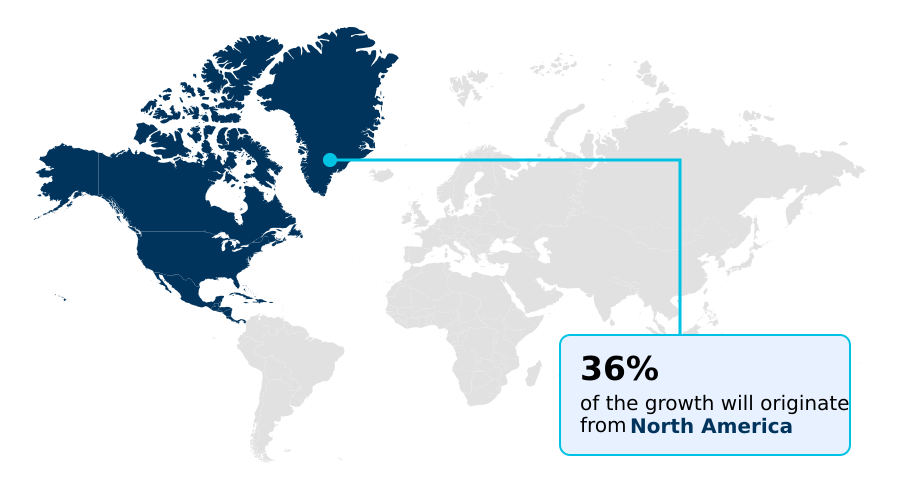
- North America dominated the market and accounted for a 36.4% growth during the forecast period.
- By End-user - BFSI segment was valued at USD 53.12 billion in 2024
- By Application - B2B segment accounted for the largest market revenue share in 2024
Market Size & Forecast
- Market Opportunities: USD 98.05 billion
- Market Future Opportunities: USD 62.71 billion
- CAGR from 2025 to 2030 : 6%
Market Summary
- The Business Information Market is undergoing a structural transformation, moving beyond static data provision to dynamic, intelligence-as-a-service models. This shift is propelled by the integration of agentic AI workflows and autonomous knowledge systems, which are becoming default infrastructure capabilities for routine research and data summarization.
- Organizations now prioritize sovereign compute infrastructure and localized data autonomy to meet stringent data residency requirements. A key application is in supply chain management, where esg intelligence platforms and circular economy compliance tools provide verifiable data on carbon intensity and supply chain ethics tracking.
- This allows companies to leverage high-frequency market data for real-time monitoring, significantly reducing time-to-insight and enabling a focus on high-level validation. The use of data clean room technology and privacy-preserving analytics facilitates secure collaboration, while no-code bi platforms and natural language query interfaces democratize access to sophisticated analysis, empowering non-technical users to derive insights and improve operational efficiency.
- This evolution is underpinned by a growing demand for generative model transparency and reliable human-in-the-loop verification to maintain trust in AI-generated content.
What will be the Size of the Business Information Market during the forecast period?
Get Key Insights on Market Forecast (PDF) Get Free Sample
How is the Business Information Market Segmented?
The business information industry research report provides comprehensive data (region-wise segment analysis), with forecasts and estimates in "USD million" for the period 2026-2030, as well as historical data from 2020-2024 for the following segments.
- End-user
- BFSI
- Retail
- Healthcare and life sciences
- Manufacturing
- Others
- Application
- B2B
- B2C
- Component
- Software
- Services
- Geography
- North America
- US
- Canada
- Mexico
- Europe
- UK
- Germany
- France
- APAC
- China
- Japan
- India
- Middle East and Africa
- UAE
- Saudi Arabia
- South Africa
- South America
- Brazil
- Argentina
- Colombia
- Rest of World (ROW)
- North America
By End-user Insights
The bfsi segment is estimated to witness significant growth during the forecast period.
The BFSI segment is the largest consumer in the Business Information Market, driven by a fundamental need for high-fidelity data to manage risk and ensure regulatory adherence.
Financial institutions utilize comprehensive firmographic data feeds and api-first solutions for rigorous credit risk assessments and first-party fraud detection.
The adoption of predictive modeling software and hyper-personalization engines is critical for optimizing portfolio management and refining underwriting models, where the accuracy of real-time brand health tracking can impact investment strategies.
As institutions face increasing pressure, api-driven connectivity allows for seamless integration into enterprise decision engines, improving risk management and compliance functions.
Advanced credit abuse risk modeling has become essential, reducing customer churn prediction errors by over 15% and delivering actionable intelligence delivery for account-based marketing intelligence.
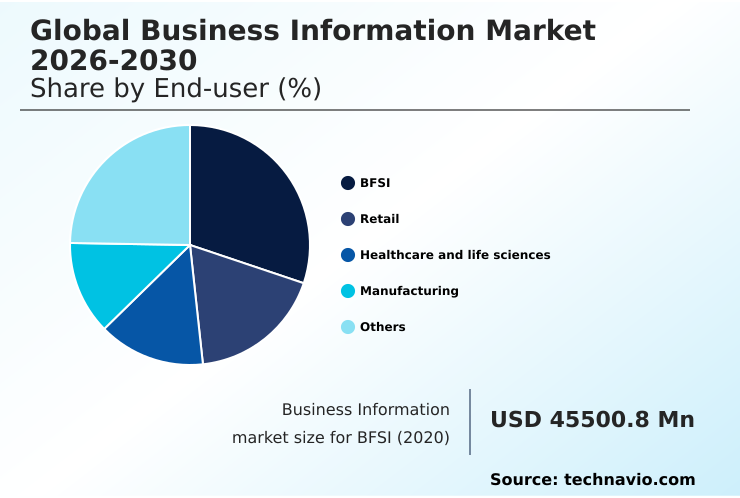
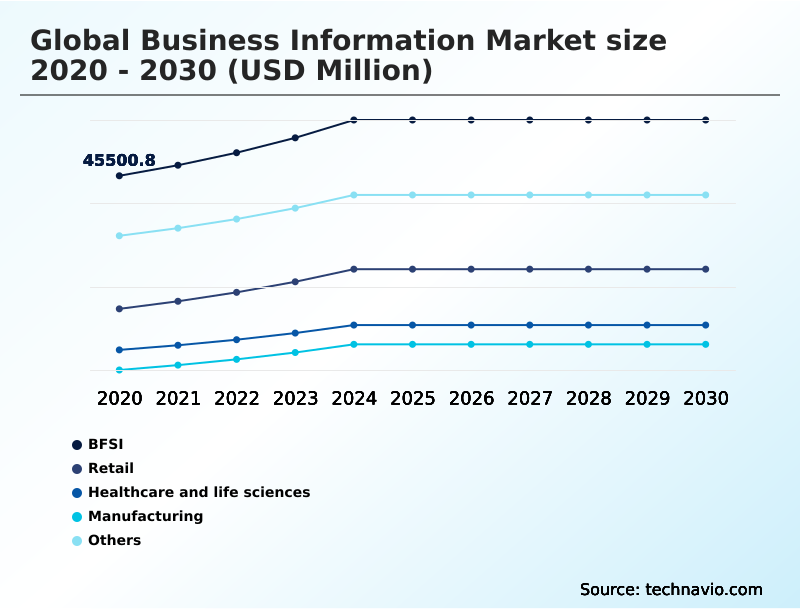
The BFSI segment was valued at USD 53.12 billion in 2024 and showed a gradual increase during the forecast period.
Regional Analysis
North America is estimated to contribute 36.4% to the growth of the global market during the forecast period.Technavio’s analysts have elaborately explained the regional trends and drivers that shape the market during the forecast period.
See How Business Information Market Demand is Rising in North America Get Free Sample
The global geographic landscape is increasingly shaped by the push for sovereign compute infrastructure and localized data autonomy, with North America contributing over 36% of the market's incremental growth.
Regions like APAC are rapidly adopting digital public infrastructure and no-code bi platforms to support data-driven governance and democratization of analytics.
This trend empowers local enterprises with natural language query interfaces, enabling automated consumer profiling and account-based experience data without extensive technical expertise. In Europe, the focus is on stringent regulatory compliance, driving investment in localized data centers.
For instance, manufacturers use insights from predictive maintenance data to optimize operations and sustainability metrics reporting to meet ESG goals, while retailers leverage dynamic pricing models for competitive advantage.
Market Dynamics
Our researchers analyzed the data with 2025 as the base year, along with the key drivers, trends, and challenges. A holistic analysis of drivers will help companies refine their marketing strategies to gain a competitive advantage.
- Strategic decision-making is increasingly dependent on integrating real-time alternative data sources, which provides a competitive edge over reliance on delayed public filings. The use of agentic ai for financial modeling and generative ai in corporate research is revolutionizing how organizations synthesize complex information, allowing for unified search across proprietary data to accelerate insight generation.
- Concurrently, esg compliance tracking for supply chains and localized processing for trade compliance have become non-negotiable, driven by regulatory pressures and consumer demand for transparency, which is further supported by blockchain traceability for raw materials. To navigate privacy mandates, firms are turning to data clean rooms for collaborative analytics and privacy-preserving technology in fintech.
- The challenge of ai-generated information integrity verification is being addressed through robust human-in-the-loop for ai accuracy protocols. The market is also seeing widespread adoption of no-code business intelligence platform adoption and natural language interfaces for data analysis, which democratize access to tools for predictive analytics for retail inventory and credit risk assessment automation.
- This shift toward accessible, secure, and real-time intelligence is enabled by api integration for enterprise workflows and sovereign compute for data residency, while process intelligence for operational efficiency and geospatial data for location analysis deliver tangible business outcomes, with firms reporting efficiency gains of over 20% in logistics planning.
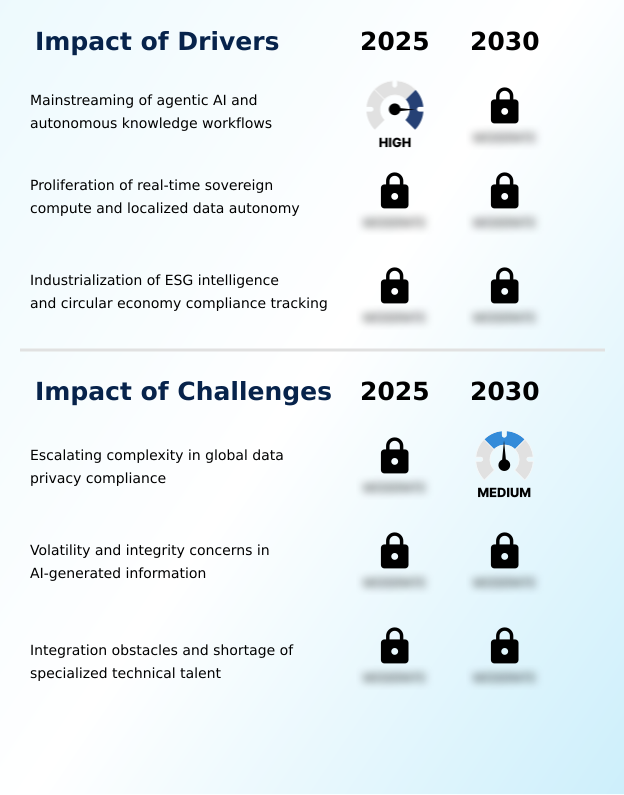
What are the key market drivers leading to the rise in the adoption of Business Information Industry?
- The mainstreaming of agentic AI and autonomous knowledge workflows that independently plan, execute, and synthesize complex research tasks represents a key driver for the market.
- A primary driver is the mainstreaming of agentic ai workflows and autonomous knowledge systems, which transform raw data into an intelligence-as-a-service model.
- These tools, which are now used by nearly 75% of knowledge workers, allow for unstructured data processing and decentralized decision-making. The industrialization of esg intelligence platforms is also critical, as corporate accountability metrics become foundational to corporate strategy.
- Circular economy compliance tracking is now mandatory in many regions, fueling demand for verifiable data. Technologies like farm-to-face traceability and supply chain ethics tracking, often powered by blockchain, provide unprecedented transparency.
- This evolution supports b2b marketing technology and enhances the capabilities of human-in-the-loop verification systems to ensure data integrity within unified search workspaces.
What are the market trends shaping the Business Information Industry?
- The market is increasingly defined by a shift toward high-frequency market intelligence, where the value of information is measured by its real-time availability. This is driven by the integration of alternative data sources into core financial and operational streams.
- The market is shifting toward a high-frequency market data model, where latency is a key performance metric. The integration of real-time alternative data, such as satellite imagery and real-time market sentiment, provides a significant competitive advantage, with advanced real-time purchasing managers index surveys now serving as a primary indicator for GDP projections.
- This trend facilitates the creation of collaborative data ecosystems through data clean room technology and privacy-preserving analytics. It also enables new data monetization strategies and dark data utilization, unlocking value from previously untapped information sources. This approach supports enhanced strategic decision support for digital-native brand partnerships.
- The use of federated learning models and geospatial data analysis is also growing, allowing firms to gain deeper insights while maintaining compliance.
What challenges does the Business Information Industry face during its growth?
- The escalating complexity and fragmentation of the global data privacy regulatory landscape presents a key challenge to market growth.
- A significant challenge is navigating complex information governance policies and ensuring data residency compliance amid fragmented global regulations, which complicates cross-border data transfers. The need for generative model transparency is paramount to combat AI hallucinations and maintain trust in ai-augmented insights. However, the scarcity of talent for data-literate workforce development creates a major bottleneck.
- Integrating disparate systems requires robust interoperability frameworks and effective process mining and optimization strategies. Many firms are now turning to managed data services for specialized expertise. The adoption of process intelligence integration is hindered by legacy architectures, while handling corporate transaction intelligence and identity resolution services requires advanced tools like homomorphic encryption processing to ensure security and privacy.
Exclusive Technavio Analysis on Customer Landscape
The business information market forecasting report includes the adoption lifecycle of the market, covering from the innovator’s stage to the laggard’s stage. It focuses on adoption rates in different regions based on penetration. Furthermore, the business information market report also includes key purchase criteria and drivers of price sensitivity to help companies evaluate and develop their market growth analysis strategies.
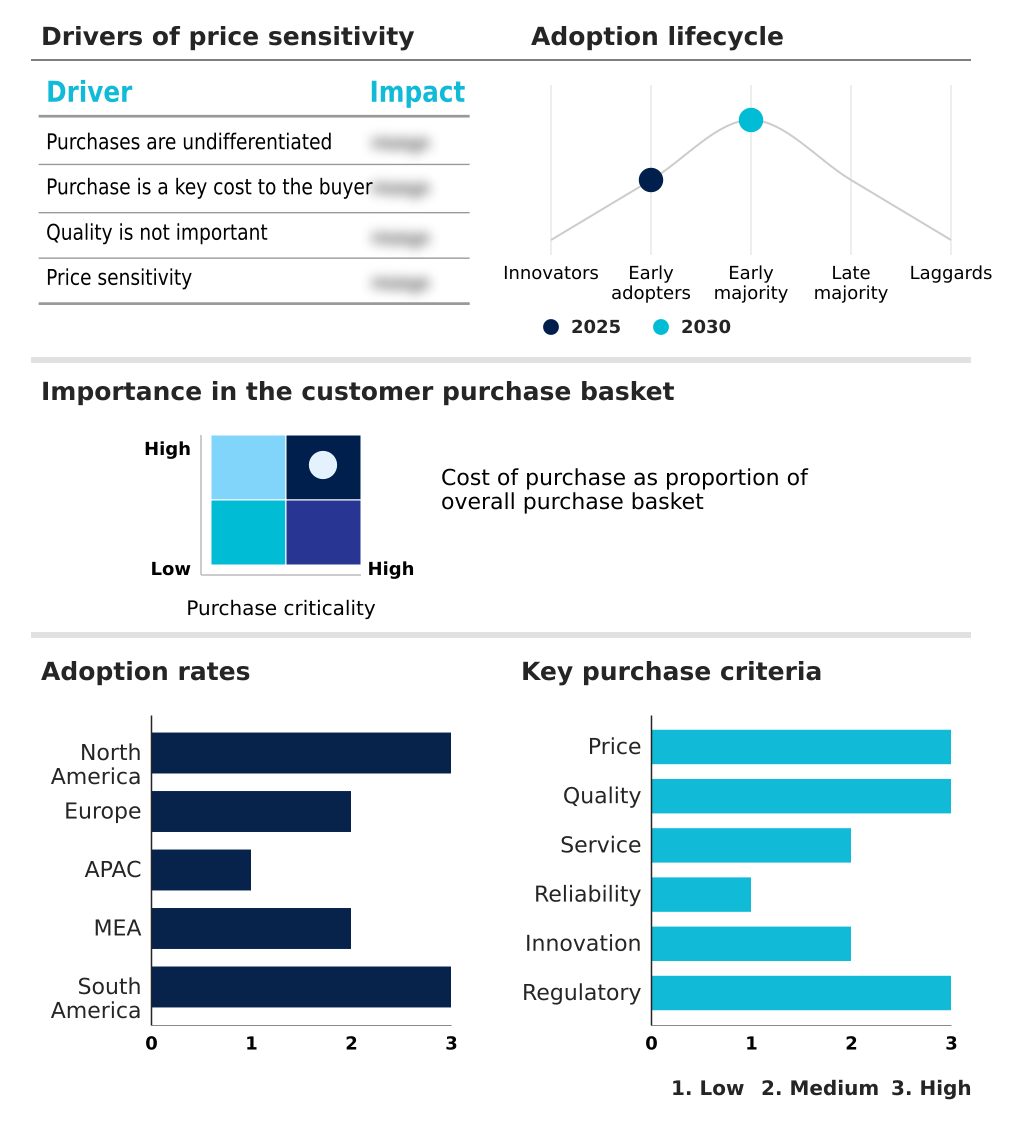
Customer Landscape of Business Information Industry
Competitive Landscape
Companies are implementing various strategies, such as strategic alliances, business information market forecast, partnerships, mergers and acquisitions, geographical expansion, and product/service launches, to enhance their presence in the industry.
Bloomberg LP - A leading provider of real-time financial data, analytics, and news, delivering actionable business information to global markets, investors, and enterprises.
The industry research and growth report includes detailed analyses of the competitive landscape of the market and information about key companies, including:
- Bloomberg LP
- Capita Plc
- CQG
- Deloitte Touche Tohmatsu Ltd.
- Dun and Bradstreet Holdings Inc
- Equifax Inc.
- Ernst and Young Global Ltd.
- Experian Plc
- FactSet Research Systems Inc.
- Informa PLC
- KPMG International Ltd.
- Moodys Corp.
- Morningstar Inc.
- News Corp.
- PricewaterhouseCoopers LLP
- Refinitiv
- RELX Plc
- S and P Global Inc.
- Thomson Reuters Corp.
- Wolters Kluwer NV
Qualitative and quantitative analysis of companies has been conducted to help clients understand the wider business environment as well as the strengths and weaknesses of key industry players. Data is qualitatively analyzed to categorize companies as pure play, category-focused, industry-focused, and diversified; it is quantitatively analyzed to categorize companies as dominant, leading, strong, tentative, and weak.
Recent Development and News in Business information market
- In March, 2025, Databricks entered into a strategic five-year agreement with Anthropic valued at $100 million to integrate sophisticated AI models directly into enterprise data platforms, accelerating the deployment of autonomous agents for complex business analysis.
- In November, 2024, Thomson Reuters Corp. completed its acquisition of Noetica, Inc., an AI-native platform specializing in corporate transaction intelligence, to embed structured market intelligence and benchmarking tools into legal and financial workflows.
- In January, 2025, Equifax Inc. launched its Equifax Credit Abuse Risk Model, a new tool designed to protect lenders from the financial impact of first-party fraud by identifying high-risk behaviors.
- In October, 2024, NTT DATA officially expanded its presence into the Middle East by acquiring the cloud consultancy Zero and One, securing specialized generative AI and data analytics competencies to meet regional compliance and intelligence needs.
Dive into Technavio’s robust research methodology, blending expert interviews, extensive data synthesis, and validated models for unparalleled Business Information Market insights. See full methodology.
| Market Scope | |
|---|---|
| Page number | 302 |
| Base year | 2025 |
| Historic period | 2020-2024 |
| Forecast period | 2026-2030 |
| Growth momentum & CAGR | Accelerate at a CAGR of 6% |
| Market growth 2026-2030 | USD 62710.9 million |
| Market structure | Fragmented |
| YoY growth 2025-2026(%) | 5.7% |
| Key countries | US, Canada, Mexico, UK, Germany, France, Italy, Spain, The Netherlands, China, Japan, India, South Korea, Australia, Indonesia, UAE, Saudi Arabia, South Africa, Egypt, Israel, Brazil, Argentina and Colombia |
| Competitive landscape | Leading Companies, Market Positioning of Companies, Competitive Strategies, and Industry Risks |
Research Analyst Overview
- The Business Information Market is defined by a technological pivot toward ai-augmented insights and automated decision-support systems. Agentic ai workflows and autonomous knowledge systems are fundamentally rearchitecting the value proposition, shifting from raw data to intelligence-as-a-service models. Organizations prioritize sovereign compute infrastructure and localized data autonomy to navigate complex data residency laws.
- The industrialization of esg intelligence platforms and circular economy compliance tracking is a major driver, compelling firms to adopt supply chain ethics tracking and transparent reporting. The integration of high-frequency market data with real-time alternative data using predictive modeling software provides a significant competitive edge. In response to privacy regulations, data clean room technology and privacy-preserving analytics are becoming standard.
- Meanwhile, no-code bi platforms and natural language query interfaces are democratizing access to firmographic data feeds and corporate transaction intelligence. Ensuring accuracy in this automated environment requires generative model transparency, federated learning models, and rigorous human-in-the-loop verification.
- Companies that successfully implement process intelligence integration have reported a 30% reduction in workflow processing times, directly impacting boardroom-level strategies for operational efficiency and compliance.
What are the Key Data Covered in this Business Information Market Research and Growth Report?
-
What is the expected growth of the Business Information Market between 2026 and 2030?
-
USD 62.71 billion, at a CAGR of 6%
-
-
What segmentation does the market report cover?
-
The report is segmented by End-user (BFSI, Retail, Healthcare and life sciences, Manufacturing, and Others), Application (B2B, and B2C), Component (Software, and Services) and Geography (North America, Europe, APAC, Middle East and Africa, South America)
-
-
Which regions are analyzed in the report?
-
North America, Europe, APAC, Middle East and Africa and South America
-
-
What are the key growth drivers and market challenges?
-
Mainstreaming of agentic AI and autonomous knowledge workflows, Escalating complexity in global data privacy compliance
-
-
Who are the major players in the Business Information Market?
-
Bloomberg LP, Capita Plc, CQG, Deloitte Touche Tohmatsu Ltd., Dun and Bradstreet Holdings Inc, Equifax Inc., Ernst and Young Global Ltd., Experian Plc, FactSet Research Systems Inc., Informa PLC, KPMG International Ltd., Moodys Corp., Morningstar Inc., News Corp., PricewaterhouseCoopers LLP, Refinitiv, RELX Plc, S and P Global Inc., Thomson Reuters Corp. and Wolters Kluwer NV
-
Market Research Insights
- The market's dynamism is shaped by the transition toward actionable intelligence delivery and sophisticated strategic decision support. The adoption of an intelligence-as-a-service model allows organizations to move beyond raw data, with nearly 75% of knowledge workers now leveraging autonomous tools for reporting. This is critical for risk management and compliance, where real-time monitoring of regulatory shifts is paramount.
- As enterprises prioritize corporate accountability metrics and transparent sustainability metrics reporting, the demand for verified data has intensified. This is particularly true for digital-native brand partnerships, which rely on secure data monetization strategies to grow. The challenge of a 16% growth in demand for specialized roles highlights the need for better data-literate workforce development to manage these advanced systems effectively.
We can help! Our analysts can customize this business information market research report to meet your requirements.
 RIA -
RIA - 
