

3D Vascular Ultrasound Imaging Market Analysis North America, Europe, Asia, Rest of World (ROW) - US, China, Germany, Canada, UK - Size and Forecast 2024-2028

3D Vascular Ultrasound Imaging Market Analysis North America, Europe, Asia, Rest of World (ROW) - US, China, Germany, Canada, UK - Size and Forecast 2024-2028

Published: Jul 2024 144 Pages SKU: IRTNTR74448

Market Overview at a Glance

$383.8 Mn
Market Opportunity
4.5%
CAGR
4.23
YoY growth 2023-2024(%)

3D Vascular Ultrasound Imaging Market Size 2024-2028

The 3d vascular ultrasound imaging market size is forecast to increase by USD 383.8 million, at a CAGR of 4.5% between 2023 and 2028.

  • The market is experiencing significant growth, driven by the increasing adoption of virtual reality (VR) devices in the healthcare industry. The integration of VR technology in ultrasound imaging enhances the diagnostic accuracy and enables a more immersive experience for medical professionals. This trend is expected to continue as VR technology advances and becomes more accessible. However, the market faces challenges from the stringent regulatory process. Regulatory bodies require extensive testing and approval processes for new imaging technologies, which can delay market entry and increase costs for manufacturers.
  • Additionally, ensuring compliance with these regulations can be a complex and time-consuming process. Companies seeking to capitalize on market opportunities must navigate these challenges effectively, investing in robust regulatory strategies and staying informed of evolving regulatory requirements.

What will be the Size of the 3D Vascular Ultrasound Imaging Market during the forecast period?
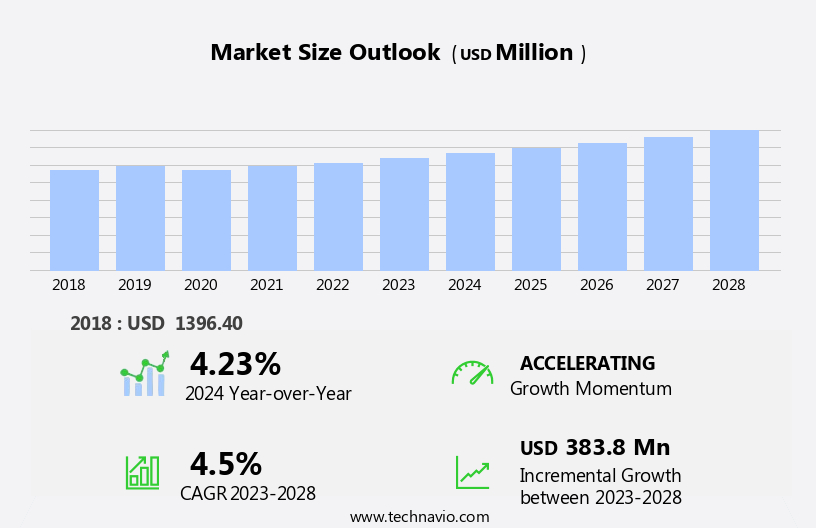
3D Vascular Ultrasound Imaging Market Size

Explore in-depth regional segment analysis with market size data - historical 2018-2022 and forecasts 2024-2028 - in the full report.  
Request Free Sample

The market continues to evolve, driven by advancements in technologies such as temporal resolution enhancement, power doppler imaging, plaque characterization, intravascular ultrasound, plaque volume measurement, and image segmentation methods. These innovations enable more precise and detailed visualization of blood vessels, enhancing procedural guidance and clinical decision support. Blood flow velocity assessment through 3D vessel reconstruction and contrast-enhanced ultrasound is increasingly utilized in various sectors, including cardiology and radiology. Ultrasound transducer array technology and motion artifact reduction techniques contribute to improved image quality, while quantitative parameters and diagnostic accuracy are enhanced through the application of artificial intelligence algorithms. Strain imaging and deep learning applications are emerging trends in the market, offering potential for enhanced angiogenesis assessment, stenosis quantification, and shear wave elastography.

Vessel wall analysis and 3D visualization software enable more comprehensive vascular assessments, while 3D volume rendering and spatial resolution enhancement contribute to a more comprehensive understanding of complex vascular structures. The ongoing development of noise reduction algorithms, image registration techniques, tissue harmonic imaging, and adaptive filtering continues to refine the capabilities of 3D vascular ultrasound imaging, enabling more accurate and reliable assessments of microvascular flow and vessel lumen diameter. Continuous innovation in this field is expected to drive market growth and expand its applications across various sectors.

How is this 3D Vascular Ultrasound Imaging Industry segmented?

The 3d vascular ultrasound imaging industry research report provides comprehensive data (region-wise segment analysis), with forecasts and estimates in "USD million" for the period 2024-2028, as well as historical data from 2018-2022 for the following segments.

  • Application
    • Vascular imaging
    • Fetal cardiac
    • Gynecology
    • Opthalmology
    • Others
  • Geography
    • North America
      • US
      • Canada
    • Europe
      • Germany
      • UK
    • APAC
      • China
    • Rest of World (ROW)

By Application Insights

The vascular imaging segment is estimated to witness significant growth during the forecast period.

The market is experiencing notable advancements, driven by the integration of several innovative technologies. Temporal resolution enhancement enables more accurate and precise imaging, while power doppler imaging improves the detection of low-velocity blood flow. Plaque characterization and intravascular ultrasound offer enhanced insights into plaque morphology and volume measurement. Image segmentation methods facilitate automated analysis, and blood flow velocity assessment is crucial for diagnosing various vascular conditions. Three-dimensional vessel reconstruction provides a more comprehensive understanding of complex vascular structures, and contrast-enhanced ultrasound enhances image contrast for better visualization. Ultrasound transducer arrays offer higher resolution, and motion artifact reduction techniques ensure image clarity.

Quantitative parameters, clinical decision support, and procedural guidance enable more accurate diagnoses and treatment planning. Advanced imaging fusion techniques, artificial intelligence algorithms, strain imaging, deep learning applications, and contrast agent kinetics contribute to improved diagnostic accuracy. Shear wave elastography, vessel wall analysis, and 3D visualization software offer enhanced diagnostic capabilities. Spatial resolution enhancement, noise reduction algorithms, and image registration techniques ensure high-quality images. Tissue harmonic imaging and adaptive filtering further refine image quality. Microvascular flow assessment through speckle tracking echocardiography and vascular flow quantification are essential for comprehensive vascular assessments. These advancements underscore the market's dynamic growth and evolving trends.
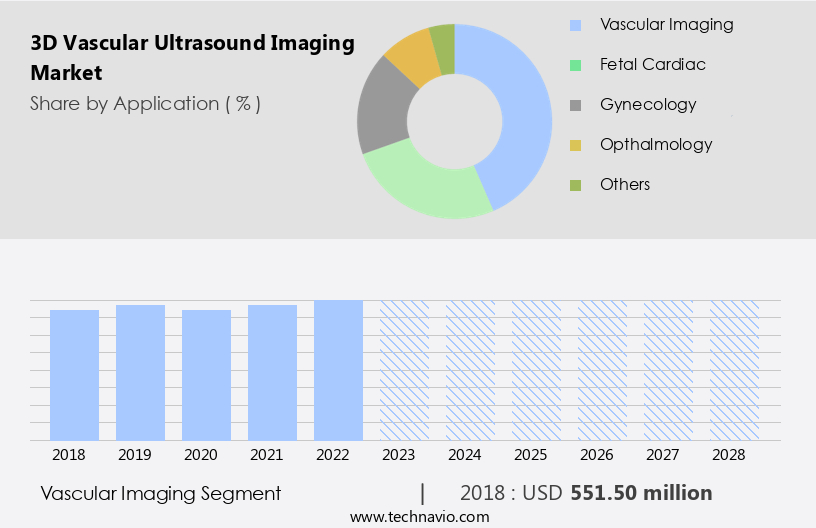
3D Vascular Ultrasound Imaging Market Size

Request Free Sample

The Vascular imaging segment was valued at USD 551.50 million in 2018 and showed a gradual increase during the forecast period.

Regional Analysis

North America is estimated to contribute 44% to the growth of the global market during the forecast period. Technavio's analysts have elaborately explained the regional trends and drivers that shape the market during the forecast period.
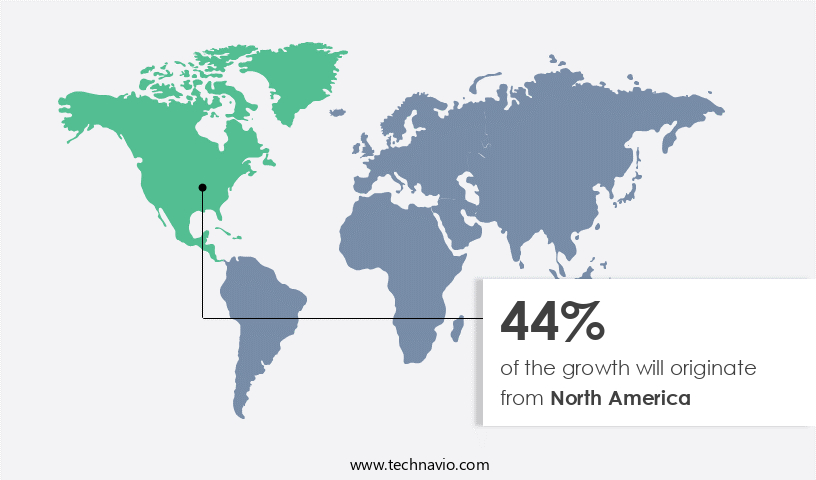
3D Vascular Ultrasound Imaging Market Share by Geography

 Request Free Sample

In the dynamic market, advanced technologies are revolutionizing diagnostic accuracy and procedural guidance. Temporal resolution enhancement and power doppler imaging facilitate plaque characterization, enabling early detection and precise diagnosis. Intravascular ultrasound and plaque volume measurement offer quantitative parameters for clinical decision support, while image segmentation methods refine vessel lumen diameter assessments. Blood flow velocity quantification through 3D vessel reconstruction is crucial for contrast-enhanced ultrasound and motion artifact reduction. Ultrasound transducer arrays enable shear wave elastography and vessel wall analysis, providing valuable insights into angiogenesis assessment and stenosis quantification. Artificial intelligence algorithms and deep learning applications streamline contrast agent kinetics and speckle tracking echocardiography.

Strain imaging and deep learning techniques contribute to diagnostic accuracy, while image fusion and tissue harmonic imaging enhance spatial resolution. Adaptive filtering and noise reduction algorithms improve signal quality, and 3D visualization software and 3D volume rendering offer immersive, harmonious experiences for healthcare professionals. Microvascular flow assessment and vascular flow quantification expand the scope of 3D vascular ultrasound imaging, making it an essential tool in the healthcare industry.

Market Dynamics

Our researchers analyzed the data with 2023 as the base year, along with the key drivers, trends, and challenges. A holistic analysis of drivers will help companies refine their marketing strategies to gain a competitive advantage.

What are the key market drivers leading to the rise in the adoption of 3D Vascular Ultrasound Imaging Industry?

  • The growing adoption of virtual reality (VR) technology in the healthcare sector is the primary factor fueling market expansion. 
  • Virtual Reality (VR) technology is revolutionizing the healthcare industry, particularly in the field of vascular imaging. This advanced technology goes beyond traditional 2D imaging by generating 3D pictures and films, creating a more engaging and informative experience for healthcare professionals. VR systems achieve this by utilizing computer vision and powerful graphics to reduce noise and improve image registration, resulting in clearer and more accurate images. Advanced imaging techniques, such as tissue harmonic imaging, adaptive filtering, speckle tracking echocardiography, and vascular flow quantification, are crucial in enhancing diagnostic accuracy in vascular ultrasound imaging. These techniques enable the detection of microvascular flow and the assessment of vascular wall structures, leading to more precise diagnoses and effective treatment plans.
  • Noise reduction algorithms and image registration techniques are essential components of VR systems, ensuring that images are clear and free from distortions. These improvements contribute to the overall success of VR technology in the healthcare industry, making it an indispensable tool for vascular imaging applications.

What are the market trends shaping the 3D Vascular Ultrasound Imaging Industry?

  • The current market trend is shaped by significant technological advances. It is essential to stay informed about these innovations to maintain a competitive edge in your industry.
  • Companies in the market are innovating to address the limitations of traditional cardiovascular ultrasound systems. New systems offer quicker scanning times and enhanced image visualization. For instance, Philips' EPIQ CVx cardiovascular ultrasound system delivers fast data processing and sharper imaging. It utilizes anatomical knowledge to automatically quantify left ventricle function, generating multi-beat analysis for cardiac output estimation. This information aids doctors in understanding the mitral heart valve anatomy of their patients and provides guidance for treating structural cardiac diseases. Additionally, advanced imaging technologies like temporal resolution enhancement, power doppler imaging, plaque characterization, intravascular ultrasound, plaque volume measurement, image segmentation methods, blood flow velocity, and 3D vessel reconstruction are increasingly being adopted.
  • Contrast-enhanced ultrasound is another emerging technology that enhances image contrast and provides clearer visualization of blood vessels and plaque. These advancements contribute to improved diagnostic accuracy and more effective treatment plans.

What challenges does the 3D Vascular Ultrasound Imaging Industry face during its growth?

  • The stringent regulatory process poses a significant challenge to the industry's growth, requiring companies to adhere to rigorous compliance standards and lengthy approval processes. 
  • The market faces rigorous product approval processes and safety regulations set by the US Food and Drug Administration (FDA). These stringent measures ensure that only effective and safe medical devices reach the market. The FDA imposes a comprehensive labeling requirement and regulatory framework on manufacturers of cardiovascular ultrasound imaging systems. Before obtaining FDA approval, these devices undergo rigorous clinical trials and safety studies to demonstrate their efficacy and safety. These measures protect the healthcare industry and patients from unsafe and ineffective medical devices.
  • Advancements in 3D vascular ultrasound imaging technology continue to drive market growth. For instance, the use of ultrasound transducer arrays enables motion artifact reduction, resulting in clearer and more accurate images. Furthermore, quantitative parameters, clinical decision support, procedural guidance, image fusion techniques, artificial intelligence algorithms, and strain imaging are increasingly being integrated into these systems to enhance diagnostic accuracy and improve patient outcomes.

Exclusive Customer Landscape

The 3D vascular ultrasound imaging market forecasting report includes the adoption lifecycle of the market, covering from the innovator's stage to the laggard's stage. It focuses on adoption rates in different regions based on penetration. Furthermore, the 3D vascular ultrasound imaging market report also includes key purchase criteria and drivers of price sensitivity to help companies evaluate and develop their market growth analysis strategies.
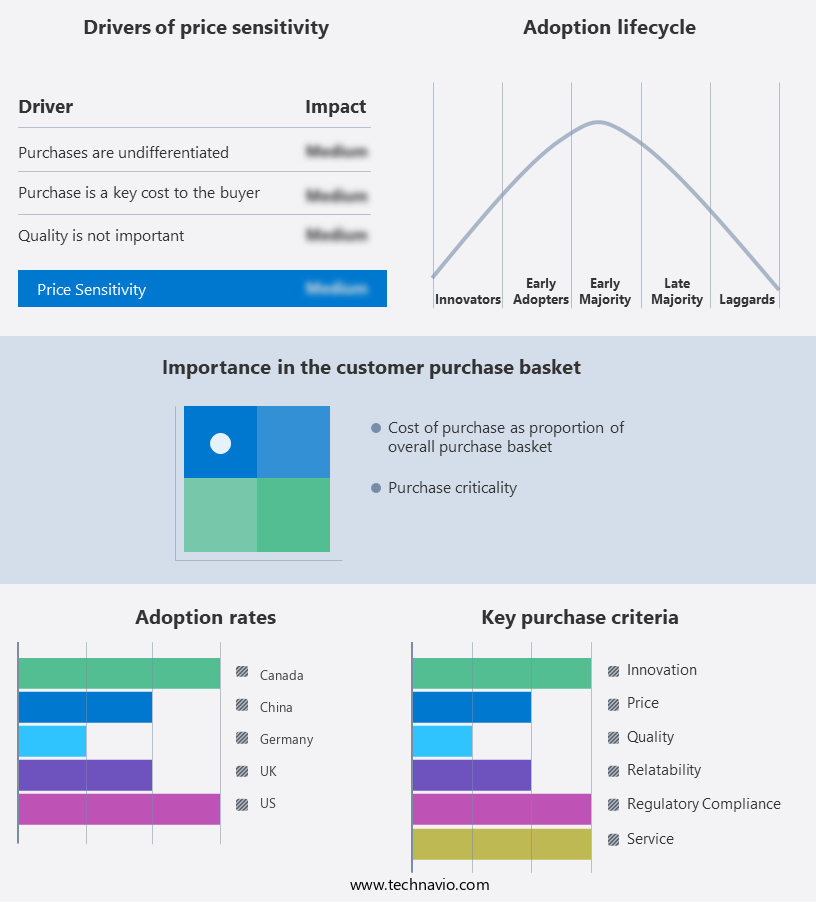
3D Vascular Ultrasound Imaging Market Share by Geography

 Customer Landscape

Key Companies & Market Insights

Companies are implementing various strategies, such as strategic alliances, 3d vascular ultrasound imaging market forecast, partnerships, mergers and acquisitions, geographical expansion, and product/service launches, to enhance their presence in the industry.

Canon Inc. - Canon Medical Systems Corp., a subsidiary of the company, innovates in pediatric radiology with the 3D Superb Micro Vascular Imaging system, a leading 3D vascular ultrasound technology. 

The industry research and growth report includes detailed analyses of the competitive landscape of the market and information about key companies, including:

  • BPL MEDICAL TECHNOLOGIES Pvt. Ltd.
  • Canon Inc.
  • Carestream Health Inc.
  • Chison Medical Technologies Co. Ltd.
  • ContextVision AB
  • Digirad Corp.
  • Esaote Spa
  • FUJIFILM Corp.
  • General Electric Co.
  • Hitachi Ltd.
  • Hologic Inc.
  • Koninklijke Philips N.V.
  • Piur imaging GmbH
  • Promed Technology Co. Ltd.
  • Samsung Electronics Co. Ltd.
  • Shantou Institute of Ultrasonic Instruments Co. Ltd.
  • Shenzhen Mindray BioMedical Electronics Co. Ltd
  • Shimadzu Corp.
  • Siemens Healthineers AG
  • Toposens GmbH

Qualitative and quantitative analysis of companies has been conducted to help clients understand the wider business environment as well as the strengths and weaknesses of key industry players. Data is qualitatively analyzed to categorize companies as pure play, category-focused, industry-focused, and diversified; it is quantitatively analyzed to categorize companies as dominant, leading, strong, tentative, and weak.

Recent Development and News in 3D Vascular Ultrasound Imaging Market

  • In January 2024, GE Healthcare launched its new 3D vascular ultrasound system, the Vscan Extend, featuring handheld probe technology for bedside and point-of-care applications. This innovation expanded the company's portfolio, catering to the growing demand for portable diagnostic solutions (GE Healthcare Press Release).
  • In March 2024, Philips and Siemens Healthineers announced a strategic collaboration to co-develop next-generation 3D ultrasound technology, aiming to enhance image quality and diagnostic accuracy (Philips Press Release).
  • In May 2024, Butterfly Network, a digital diagnostics company, raised USD 200 million in a Series E funding round, boosting its efforts to commercialize its portable ultrasound device, Butterfly iQ, which includes 3D imaging capabilities (Butterfly Network Press Release).
  • In April 2025, the US Food and Drug Administration (FDA) granted 510(k) clearance to Canon Medical Systems for its new 3D ultrasound system, Aquilion ONE GENESIS Edition, enabling real-time, volumetric imaging for improved diagnostic confidence (Canon Medical Systems Press Release).

Research Analyst Overview

  • The market encompasses advanced technologies such as low-frequency ultrasound, beamforming techniques, and contrast-specific imaging, enabling precise assessment of arterial walls and blood flow. Wall shear stress and plaque composition analysis are crucial for identifying early signs of vascular diseases. Image processing techniques, including speckle reduction and artifact suppression, enhance image quality metrics. Transcranial doppler and color doppler technologies facilitate real-time monitoring of blood flow and thrombus detection. Finite element analysis and computational fluid dynamics are essential for treatment planning and understanding vessel compliance and pulse wave velocity. High-frequency ultrasound and grayscale imaging offer detailed insights into arterial structures, while B-mode imaging and M-mode imaging provide valuable information on vascular remodeling.
  • Doppler ultrasound and perfusion imaging offer insights into blood flow dynamics, while image-guided interventions improve accuracy and safety. Arterial stiffness assessment using pulse wave velocity is a key trend, as is attenuation correction to improve image quality. The market is driven by the need for non-invasive, cost-effective, and real-time diagnostic solutions for various vascular conditions.

Dive into Technavio's robust research methodology, blending expert interviews, extensive data synthesis, and validated models for unparalleled 3D Vascular Ultrasound Imaging Market insights. See full methodology.

Market Scope

Report Coverage

Details

Page number

144

Base year

2023

Historic period

2018-2022

Forecast period

2024-2028

Growth momentum & CAGR

Accelerate at a CAGR of 4.5%

Market growth 2024-2028

USD 383.8 million

Market structure

Fragmented

YoY growth 2023-2024(%)

4.23

Key countries

US, China, Germany, Canada, and UK

Competitive landscape

Leading Companies, Market Positioning of Companies, Competitive Strategies, and Industry Risks

Request Free Sample

What are the Key Data Covered in this 3D Vascular Ultrasound Imaging Market Research and Growth Report?

  • CAGR of the 3D Vascular Ultrasound Imaging industry during the forecast period
  • Detailed information on factors that will drive the growth and forecasting between 2024 and 2028
  • Precise estimation of the size of the market and its contribution of the industry in focus to the parent market
  • Accurate predictions about upcoming growth and trends and changes in consumer behaviour
  • Growth of the market across North America, Europe, Asia, and Rest of World (ROW)
  • Thorough analysis of the market's competitive landscape and detailed information about companies
  • Comprehensive analysis of factors that will challenge the 3d vascular ultrasound imaging market growth of industry companies

We can help! Our analysts can customize this 3d vascular ultrasound imaging market research report to meet your requirements.

Get in touch

1 Executive Summary

  • 1.1 Market overview
    • Executive Summary - Chart on Market Overview
    • Executive Summary - Data Table on Market Overview
    • Executive Summary - Chart on Global Market Characteristics
    • Executive Summary - Chart on Market by Geography
    • Executive Summary - Chart on Market Segmentation by Application
    • Executive Summary - Chart on Incremental Growth
    • Executive Summary - Data Table on Incremental Growth
    • Executive Summary - Chart on Company Market Positioning

2 Market Landscape

  • 2.1 Market ecosystem
    • Parent Market
    • Data Table on - Parent Market
  • 2.2 Market characteristics
    • Market characteristics analysis
  • 2.3 Value chain analysis
    • Value Chain Analysis

3 Market Sizing

  • 3.1 Market definition
    • Offerings of companies included in the market definition
  • 3.2 Market segment analysis
    • Market segments
  • 3.3 Market size 2023
    • 3.4 Market outlook: Forecast for 2023-2028
      • Chart on Global - Market size and forecast 2023-2028 ($ million)
      • Data Table on Global - Market size and forecast 2023-2028 ($ million)
      • Chart on Global Market: Year-over-year growth 2023-2028 (%)
      • Data Table on Global Market: Year-over-year growth 2023-2028 (%)

    4 Historic Market Size

    • 4.1 Global 3D Vascular Ultrasound Imaging Market 2018 - 2022
      • Historic Market Size - Data Table on Global 3D Vascular Ultrasound Imaging Market 2018 - 2022 ($ million)
    • 4.2 Application segment analysis 2018 - 2022
      • Historic Market Size - Application Segment 2018 - 2022 ($ million)
    • 4.3 Geography segment analysis 2018 - 2022
      • Historic Market Size - Geography Segment 2018 - 2022 ($ million)
    • 4.4 Country segment analysis 2018 - 2022
      • Historic Market Size - Country Segment 2018 - 2022 ($ million)

    5 Five Forces Analysis

    • 5.1 Five forces summary
      • Five forces analysis - Comparison between 2023 and 2028
    • 5.2 Bargaining power of buyers
      • Bargaining power of buyers - Impact of key factors 2023 and 2028
    • 5.3 Bargaining power of suppliers
      • Bargaining power of suppliers - Impact of key factors in 2023 and 2028
    • 5.4 Threat of new entrants
      • Threat of new entrants - Impact of key factors in 2023 and 2028
    • 5.5 Threat of substitutes
      • Threat of substitutes - Impact of key factors in 2023 and 2028
    • 5.6 Threat of rivalry
      • Threat of rivalry - Impact of key factors in 2023 and 2028
    • 5.7 Market condition
      • Chart on Market condition - Five forces 2023 and 2028

    6 Market Segmentation by Application

    • 6.1 Market segments
      • Chart on Application - Market share 2023-2028 (%)
      • Data Table on Application - Market share 2023-2028 (%)
    • 6.2 Comparison by Application
      • Chart on Comparison by Application
      • Data Table on Comparison by Application
    • 6.3 Vascular imaging - Market size and forecast 2023-2028
      • Chart on Vascular imaging - Market size and forecast 2023-2028 ($ million)
      • Data Table on Vascular imaging - Market size and forecast 2023-2028 ($ million)
      • Chart on Vascular imaging - Year-over-year growth 2023-2028 (%)
      • Data Table on Vascular imaging - Year-over-year growth 2023-2028 (%)
    • 6.4 Fetal cardiac - Market size and forecast 2023-2028
      • Chart on Fetal cardiac - Market size and forecast 2023-2028 ($ million)
      • Data Table on Fetal cardiac - Market size and forecast 2023-2028 ($ million)
      • Chart on Fetal cardiac - Year-over-year growth 2023-2028 (%)
      • Data Table on Fetal cardiac - Year-over-year growth 2023-2028 (%)
    • 6.5 Gynecology - Market size and forecast 2023-2028
      • Chart on Gynecology - Market size and forecast 2023-2028 ($ million)
      • Data Table on Gynecology - Market size and forecast 2023-2028 ($ million)
      • Chart on Gynecology - Year-over-year growth 2023-2028 (%)
      • Data Table on Gynecology - Year-over-year growth 2023-2028 (%)
    • 6.6 Opthalmology - Market size and forecast 2023-2028
      • Chart on Opthalmology - Market size and forecast 2023-2028 ($ million)
      • Data Table on Opthalmology - Market size and forecast 2023-2028 ($ million)
      • Chart on Opthalmology - Year-over-year growth 2023-2028 (%)
      • Data Table on Opthalmology - Year-over-year growth 2023-2028 (%)
    • 6.7 Others - Market size and forecast 2023-2028
      • Chart on Others - Market size and forecast 2023-2028 ($ million)
      • Data Table on Others - Market size and forecast 2023-2028 ($ million)
      • Chart on Others - Year-over-year growth 2023-2028 (%)
      • Data Table on Others - Year-over-year growth 2023-2028 (%)
    • 6.8 Market opportunity by Application
      • Market opportunity by Application ($ million)
      • Data Table on Market opportunity by Application ($ million)

    7 Customer Landscape

    • 7.1 Customer landscape overview
      • Analysis of price sensitivity, lifecycle, customer purchase basket, adoption rates, and purchase criteria

    8 Geographic Landscape

    • 8.1 Geographic segmentation
      • Chart on Market share by geography 2023-2028 (%)
      • Data Table on Market share by geography 2023-2028 (%)
    • 8.2 Geographic comparison
      • Chart on Geographic comparison
      • Data Table on Geographic comparison
    • 8.3 North America - Market size and forecast 2023-2028
      • Chart on North America - Market size and forecast 2023-2028 ($ million)
      • Data Table on North America - Market size and forecast 2023-2028 ($ million)
      • Chart on North America - Year-over-year growth 2023-2028 (%)
      • Data Table on North America - Year-over-year growth 2023-2028 (%)
    • 8.4 Europe - Market size and forecast 2023-2028
      • Chart on Europe - Market size and forecast 2023-2028 ($ million)
      • Data Table on Europe - Market size and forecast 2023-2028 ($ million)
      • Chart on Europe - Year-over-year growth 2023-2028 (%)
      • Data Table on Europe - Year-over-year growth 2023-2028 (%)
    • 8.5 Asia - Market size and forecast 2023-2028
      • Chart on Asia - Market size and forecast 2023-2028 ($ million)
      • Data Table on Asia - Market size and forecast 2023-2028 ($ million)
      • Chart on Asia - Year-over-year growth 2023-2028 (%)
      • Data Table on Asia - Year-over-year growth 2023-2028 (%)
    • 8.6 Rest of World (ROW) - Market size and forecast 2023-2028
      • Chart on Rest of World (ROW) - Market size and forecast 2023-2028 ($ million)
      • Data Table on Rest of World (ROW) - Market size and forecast 2023-2028 ($ million)
      • Chart on Rest of World (ROW) - Year-over-year growth 2023-2028 (%)
      • Data Table on Rest of World (ROW) - Year-over-year growth 2023-2028 (%)
    • 8.7 US - Market size and forecast 2023-2028
      • Chart on US - Market size and forecast 2023-2028 ($ million)
      • Data Table on US - Market size and forecast 2023-2028 ($ million)
      • Chart on US - Year-over-year growth 2023-2028 (%)
      • Data Table on US - Year-over-year growth 2023-2028 (%)
    • 8.8 China - Market size and forecast 2023-2028
      • Chart on China - Market size and forecast 2023-2028 ($ million)
      • Data Table on China - Market size and forecast 2023-2028 ($ million)
      • Chart on China - Year-over-year growth 2023-2028 (%)
      • Data Table on China - Year-over-year growth 2023-2028 (%)
    • 8.9 Germany - Market size and forecast 2023-2028
      • Chart on Germany - Market size and forecast 2023-2028 ($ million)
      • Data Table on Germany - Market size and forecast 2023-2028 ($ million)
      • Chart on Germany - Year-over-year growth 2023-2028 (%)
      • Data Table on Germany - Year-over-year growth 2023-2028 (%)
    • 8.10 Canada - Market size and forecast 2023-2028
      • Chart on Canada - Market size and forecast 2023-2028 ($ million)
      • Data Table on Canada - Market size and forecast 2023-2028 ($ million)
      • Chart on Canada - Year-over-year growth 2023-2028 (%)
      • Data Table on Canada - Year-over-year growth 2023-2028 (%)
    • 8.11 UK - Market size and forecast 2023-2028
      • Chart on UK - Market size and forecast 2023-2028 ($ million)
      • Data Table on UK - Market size and forecast 2023-2028 ($ million)
      • Chart on UK - Year-over-year growth 2023-2028 (%)
      • Data Table on UK - Year-over-year growth 2023-2028 (%)
    • 8.12 Market opportunity by geography
      • Market opportunity by geography ($ million)
      • Data Tables on Market opportunity by geography ($ million)

    9 Drivers, Challenges, and Opportunity/Restraints

    • 9.1 Market drivers
      • 9.2 Market challenges
        • 9.3 Impact of drivers and challenges
          • Impact of drivers and challenges in 2023 and 2028
        • 9.4 Market opportunities/restraints

          10 Competitive Landscape

          • 10.1 Overview
            • 10.2 Competitive Landscape
              • Overview on criticality of inputs and factors of differentiation
            • 10.3 Landscape disruption
              • Overview on factors of disruption
            • 10.4 Industry risks
              • Impact of key risks on business

            11 Competitive Analysis

            • 11.1 Companies profiled
              • Companies covered
            • 11.2 Market positioning of companies
              • Matrix on companies position and classification
            • 11.3 Canon Inc.
              • Canon Inc. - Overview
              • Canon Inc. - Business segments
              • Canon Inc. - Key news
              • Canon Inc. - Key offerings
              • Canon Inc. - Segment focus
            • 11.4 Carestream Health Inc.
              • Carestream Health Inc. - Overview
              • Carestream Health Inc. - Product / Service
              • Carestream Health Inc. - Key offerings
            • 11.5 ContextVision AB
              • ContextVision AB - Overview
              • ContextVision AB - Product / Service
              • ContextVision AB - Key offerings
            • 11.6 Digirad Corp.
              • Digirad Corp. - Overview
              • Digirad Corp. - Product / Service
              • Digirad Corp. - Key offerings
            • 11.7 Esaote Spa
              • Esaote Spa - Overview
              • Esaote Spa - Product / Service
              • Esaote Spa - Key offerings
            • 11.8 FUJIFILM Corp.
              • FUJIFILM Corp. - Overview
              • FUJIFILM Corp. - Business segments
              • FUJIFILM Corp. - Key news
              • FUJIFILM Corp. - Key offerings
              • FUJIFILM Corp. - Segment focus
            • 11.9 General Electric Co.
              • General Electric Co. - Overview
              • General Electric Co. - Business segments
              • General Electric Co. - Key news
              • General Electric Co. - Key offerings
              • General Electric Co. - Segment focus
            • 11.10 Hitachi Ltd.
              • Hitachi Ltd. - Overview
              • Hitachi Ltd. - Business segments
              • Hitachi Ltd. - Key news
              • Hitachi Ltd. - Key offerings
              • Hitachi Ltd. - Segment focus
            • 11.11 Koninklijke Philips N.V.
              • Koninklijke Philips N.V. - Overview
              • Koninklijke Philips N.V. - Business segments
              • Koninklijke Philips N.V. - Key news
              • Koninklijke Philips N.V. - Key offerings
              • Koninklijke Philips N.V. - Segment focus
            • 11.12 Samsung Electronics Co. Ltd.
              • Samsung Electronics Co. Ltd. - Overview
              • Samsung Electronics Co. Ltd. - Business segments
              • Samsung Electronics Co. Ltd. - Key news
              • Samsung Electronics Co. Ltd. - Key offerings
              • Samsung Electronics Co. Ltd. - Segment focus

            12 Appendix

            • 12.1 Scope of the report
              • 12.2 Inclusions and exclusions checklist
                • Inclusions checklist
                • Exclusions checklist
              • 12.3 Currency conversion rates for US$
                • Currency conversion rates for US$
              • 12.4 Research methodology
                • Research methodology
              • 12.5 Data procurement
                • Information sources
              • 12.6 Data validation
                • Data validation
              • 12.7 Validation techniques employed for market sizing
                • Validation techniques employed for market sizing
              • 12.8 Data synthesis
                • Data synthesis
              • 12.9 360 degree market analysis
                • 360 degree market analysis
              • 12.10 List of abbreviations
                • List of abbreviations

              Research Methodology

              Technavio presents a detailed picture of the market by way of study, synthesis, and summation of data from multiple sources. The analysts have presented the various facets of the market with a particular focus on identifying the key industry influencers. The data thus presented is comprehensive, reliable, and the result of extensive research, both primary and secondary.

              INFORMATION SOURCES

              Primary sources

              • Manufacturers and suppliers
              • Channel partners
              • Industry experts
              • Strategic decision makers

              Secondary sources

              • Industry journals and periodicals
              • Government data
              • Financial reports of key industry players
              • Historical data
              • Press releases

              DATA ANALYSIS

              Data Synthesis

              • Collation of data
              • Estimation of key figures
              • Analysis of derived insights

              Data Validation

              • Triangulation with data models
              • Reference against proprietary databases
              • Corroboration with industry experts

              REPORT WRITING

              Qualitative

              • Market drivers
              • Market challenges
              • Market trends
              • Five forces analysis

              Quantitative

              • Market size and forecast
              • Market segmentation
              • Geographical insights
              • Competitive landscape

              Interested in this report?

              Get your sample now to see our research methodology and insights!

              Download Now

              Frequently Asked Questions

              3D Vascular Ultrasound Imaging market growth will increase by $ 383.8 mn during 2024-2028 .

              The 3D Vascular Ultrasound Imaging market is expected to grow at a CAGR of 4.5% during 2024-2028 .

              3D Vascular Ultrasound Imaging market is segmented by Application( Vascular imaging, Fetal cardiac, Gynecology, Opthalmology, Others)

              BPL MEDICAL TECHNOLOGIES Pvt. Ltd., Canon Inc., Carestream Health Inc., Chison Medical Technologies Co. Ltd., ContextVision AB, Digirad Corp., Esaote Spa, FUJIFILM Corp., General Electric Co., Hitachi Ltd., Hologic Inc., Koninklijke Philips N.V., Piur imaging GmbH, Promed Technology Co. Ltd., Samsung Electronics Co. Ltd., Shantou Institute of Ultrasonic Instruments Co. Ltd., Shenzhen Mindray BioMedical Electronics Co. Ltd, Shimadzu Corp., Siemens Healthineers AG, Toposens GmbH are a few of the key vendors in the 3D Vascular Ultrasound Imaging market.

              North America will register the highest growth rate of 44% among the other regions. Therefore, the 3D Vascular Ultrasound Imaging market in North America is expected to garner significant business opportunities for the vendors during the forecast period.

              US, China, Germany, Canada, UK

              • Increasing use of virtual reality (VR) devices in healthcare industryVR is a cutting-edge technology that generates real-life visual experiences that go beyond what can be achieved on standard computer monitors and phones by recreating computer graphics. VR systems can do so by relying heavily on computer vision and powerful graphics to produce 3D pictures and films. Furthermore is the driving factor this market.
              • VR reconstructs and modifies the scale and spacing between static two-dimensional (2D) pictures is the driving factor this market.
              • resulting in a better and more engaging 3D experience for end-users such as hospitals and others.The healthcare industry is one of the most enthusiastic users of virtual reality (VR) technologies is the driving factor this market.
              • which include traditional methods such as robotic surgery and surgery simulation is the driving factor this market.
              • to significantly reduce overall treatment time and provide healthcare professionals with better visibility while performing surgery. The demand for VR devices is increasing as healthcare facilities across the world are benefiting from deploying VR technology for a variety of end-use applications. Furthermore is the driving factor this market.
              • the emergence of VR devices such as the Oculus Rift and HTC Vive has accelerated the acceptance of VR technology across a wide range of end-user industries. VR technologies are used for a variety of reasons in the healthcare industry. VR simulation technologies is the driving factor this market.
              • for instance is the driving factor this market.
              • are utilized in medical education and training. Major industry players are working on VR technologies that can mix 360 degree films effectively to deliver interactive learning experiences to physicians and medical students. The technology also allows them to rehearse complicated real-life scenarios is the driving factor this market.
              • which helps them improve their hands-on abilities. The use of VR in surgeries and its benefits are significant is the driving factor this market.
              • as VR may significantly reduce the time and risks associated with surgery is the driving factor this market.
              • while also assisting doctors in measuring the amount of pressure required for delicate surgical procedures. During the forecast period is the driving factor this market.
              • such developments are expected to drive the growth of the global 3D vascular ultrasound imaging market. is the driving factor this market.

              The 3D Vascular Ultrasound Imaging market vendors should focus on grabbing business opportunities from the Vascular imaging segment as it accounted for the largest market share in the base year.
