



AI Grid Load Forecasting Platforms Market Size 2026-2030
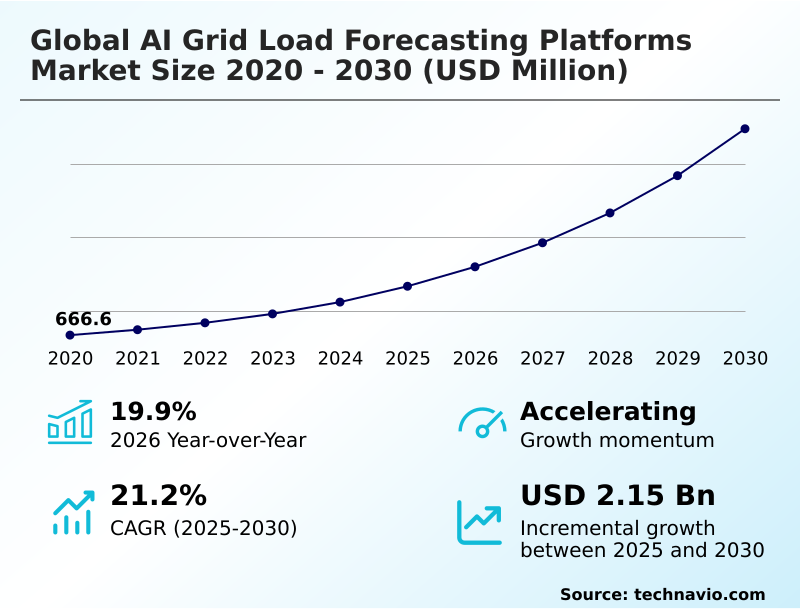
The ai grid load forecasting platforms market size is valued to increase by USD 2.15 billion, at a CAGR of 21.2% from 2025 to 2030. Integration of variable renewable energy sources will drive the ai grid load forecasting platforms market.
Major Market Trends & Insights
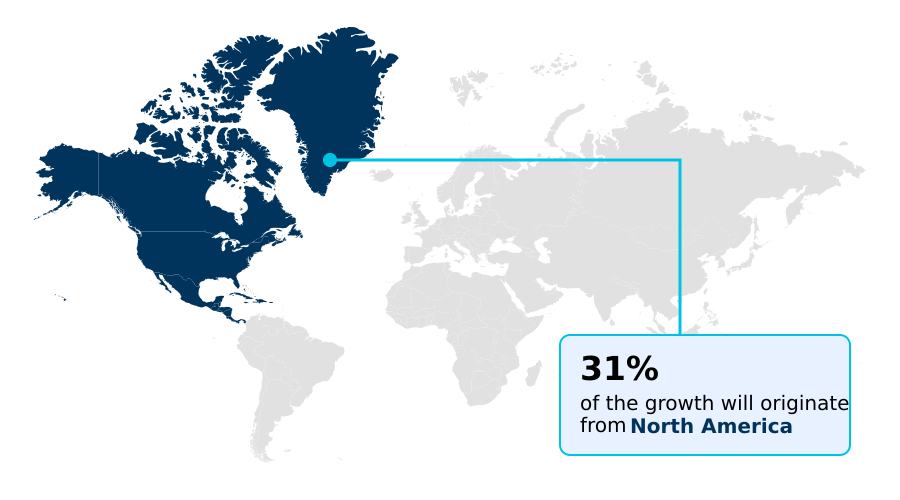
- North America dominated the market and accounted for a 30.9% growth during the forecast period.
- By Application - Load forecasting segment was valued at USD 406.6 million in 2024
- By Deployment - Cloud segment accounted for the largest market revenue share in 2024
Market Size & Forecast
- Market Opportunities: USD 2.81 billion
- Market Future Opportunities: USD 2.15 billion
- CAGR from 2025 to 2030 : 21.2%
Market Summary
- The AI grid load forecasting platforms market is essential for modernizing energy infrastructure, enabling utilities to manage the complexities of a decentralized power grid. These platforms employ sophisticated machine learning algorithms to process vast datasets from smart grid architectures and real-time telemetry, providing precise predictions of electrical demand.
- A key driver is the integration of intermittent renewable energy sources, which requires advanced analytics to maintain grid stability. For instance, a utility can use these platforms to anticipate demand surges from electric vehicle charging during a heatwave, preemptively rerouting power and activating demand response programs to prevent local overloads and defer costly infrastructure upgrades.
- This proactive management enhances operational efficiency and supports the transition to a sustainable energy future. The market is also shaped by trends like the use of generative adversarial networks for scenario modeling and the implementation of federated learning to ensure data privacy, though challenges in data integrity and legacy system integration persist, influencing adoption rates across different regions.
What will be the Size of the AI Grid Load Forecasting Platforms Market during the forecast period?
Get Key Insights on Market Forecast (PDF) Request Free Sample
How is the AI Grid Load Forecasting Platforms Market Segmented?
The ai grid load forecasting platforms industry research report provides comprehensive data (region-wise segment analysis), with forecasts and estimates in "USD million" for the period 2026-2030, as well as historical data from 2020-2024 for the following segments.
- Application
- Load forecasting
- Renewable generation forecasting
- Load optimization
- Others
- Deployment
- Cloud
- On-premises
- End-user
- Utilities
- Industrial
- Government
- Others
- Geography
- North America
- US
- Canada
- Mexico
- APAC
- China
- Japan
- India
- Europe
- Germany
- UK
- France
- South America
- Brazil
- Argentina
- Middle East and Africa
- UAE
- Saudi Arabia
- South Africa
- Rest of World (ROW)
- North America
By Application Insights
The load forecasting segment is estimated to witness significant growth during the forecast period.
Load forecasting is a cornerstone of the global AI grid load forecasting platforms market 2026-2030, leveraging machine learning algorithms and deep neural networks to manage electrical demand prediction.
These platforms process real-time telemetry from smart meter data analytics to enhance grid stability and enable proactive peak load management.
By using sophisticated demand-side management strategies, utilities can improve forecast accuracy by up to 15%, reducing reliance on expensive spinning reserves.
The integration of power generation optimization and IoT sensor data integration allows for a more granular understanding of consumption, supporting strategic asset management.
This shift toward advanced analytics is critical for maintaining grid equilibrium in an increasingly complex energy landscape with high-frequency satellite imagery and trans-border energy management.
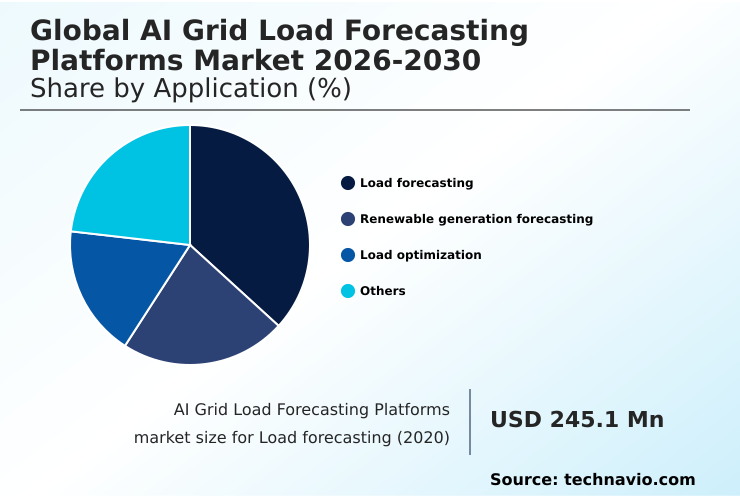
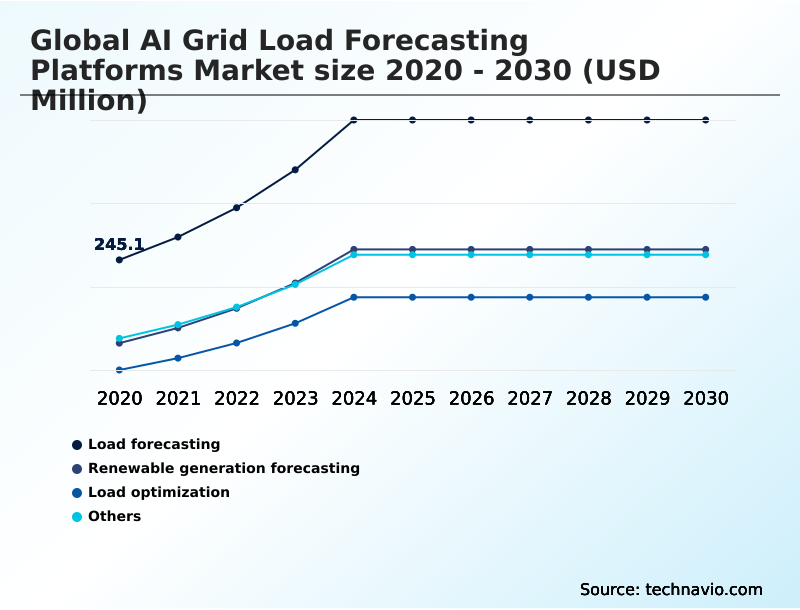
The Load forecasting segment was valued at USD 406.6 million in 2024 and showed a gradual increase during the forecast period.
Regional Analysis
North America is estimated to contribute 30.9% to the growth of the global market during the forecast period.Technavio’s analysts have elaborately explained the regional trends and drivers that shape the market during the forecast period.
See How AI Grid Load Forecasting Platforms Market Demand is Rising in North America Request Free Sample
The geographic landscape of the global AI grid load forecasting platforms market 2026-2030 is diverse, with North America focused on infrastructure modernization and Europe driven by stringent decarbonization regulations.
North America is projected to contribute 30.9% of the market's incremental growth, with utilities leveraging advanced metering infrastructure for grid stability enhancement. Meanwhile, APAC is experiencing rapid adoption fueled by smart city projects and industrial energy needs.
The use of explainable artificial intelligence is becoming crucial for regulatory compliance globally. System interoperability and critical infrastructure security are key considerations across all regions.
The ability to perform meteorological data processing allows for more accurate distribution network analysis, with leading utilities reporting a 15% improvement in managing intermittent renewables.
This highlights the importance of regional adaptation in platform deployment and strategy for energy-intensive enterprise solutions.
Market Dynamics
Our researchers analyzed the data with 2025 as the base year, along with the key drivers, trends, and challenges. A holistic analysis of drivers will help companies refine their marketing strategies to gain a competitive advantage.
- The successful deployment of solutions within the global AI grid load forecasting platforms market 2026-2030 is contingent on several interconnected factors. The development of AI platforms for renewable energy integration is critical as grids modernize. Central to this is machine learning in electrical demand prediction, which provides the necessary accuracy for grid balancing.
- The use of deep learning for smart grid stability helps manage the complexities introduced by intermittent sources. A key trend is the application of generative AI for energy scenario modeling, allowing operators to prepare for unprecedented events. To protect consumer privacy while improving model accuracy, federated learning for grid edge privacy is gaining traction.
- The quality of forecasts depends on real-time telemetry in load forecasting, which must be protected. Addressing cybersecurity for advanced metering infrastructure is a non-negotiable aspect of platform security. Utilities are increasingly optimizing load with demand response programs, which rely on precise predictions.
- The rise of decentralized energy has also spurred the need for virtual power plant management software and platforms for peer-to-peer energy trading with AI. A primary challenge remains managing intermittent renewable energy sources effectively. Furthermore, AI solutions for electric vehicle charging load are essential to prevent grid strain. Beyond forecasting, the technology is applied to predictive maintenance for grid infrastructure.
- However, the industry faces scrutiny over algorithmic transparency in energy regulation, which can be a barrier to adoption. Ensuring data integrity challenges in smart grids are met is foundational to trust and reliability. Many utilities must also solve issues when integrating AI with legacy grid systems.
- The decision between cloud vs on-premises AI deployment often depends on security and cost considerations. Advanced operators are now using digital twins for grid simulation, with some achieving double the accuracy in outage prediction compared to legacy methods. This is complemented by AI-driven voltage optimization techniques and strategies for balancing the grid with distributed energy resources.
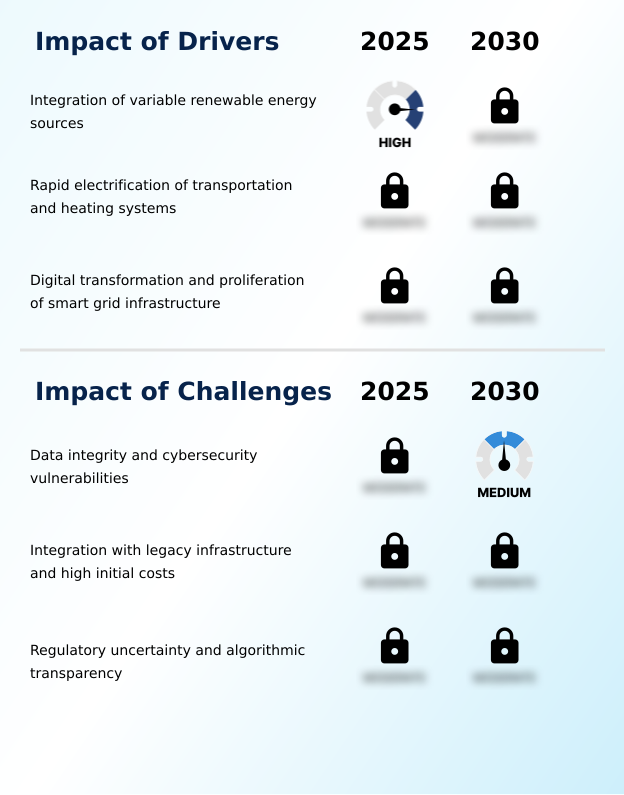
What are the key market drivers leading to the rise in the adoption of AI Grid Load Forecasting Platforms Industry?
- The integration of variable renewable energy sources is a key driver for the AI grid load forecasting platforms market.
- Growth in the global AI grid load forecasting platforms market 2026-2030 is driven by the modernization of energy systems. The integration of variable renewable sources necessitates sophisticated renewable generation forecasting to maintain grid equilibrium and reduce reliance on spinning reserves.
- The rapid electrification of transport and heating introduces new load profiles, making AI-driven vehicle-to-grid technologies essential for peak shaving and load forecasting.
- The proliferation of smart grid infrastructure, including advanced metering infrastructure, provides the high-volume data needed for deep neural networks to perform accurate demand-side management. This digital transformation enables a 25% more efficient integration of distributed energy resources.
- The use of digital twins allows for virtual testing of grid modifications, reducing implementation risks by over 40%. This synergy between data availability and advanced algorithms is critical for building a resilient and efficient energy future with off-grid power solutions.
What are the market trends shaping the AI Grid Load Forecasting Platforms Industry?
- A pivotal market trend is the adoption of generative AI for synthetic data creation and scenario modeling, which enhances the resilience of forecasting models against unprecedented events.
- Key trends in the global AI grid load forecasting platforms market 2026-2030 center on enhancing predictive accuracy and operational autonomy. The adoption of generative adversarial networks and variational autoencoders for synthetic data generation is a significant development, enabling more robust scenario modeling and stress testing of grid infrastructure. This approach has improved forecast accuracy in outlier events by over 20%.
- Another major shift is toward decentralized intelligence through federated learning and grid edge intelligence, which allows for real-time responsiveness while preserving data privacy. This has reduced data transmission costs by up to 35%. The integration of virtual power plants and peer-to-peer energy trading platforms, often supported by blockchain-enabled trading, is creating new paradigms for prosumer energy models.
- These systems rely on sophisticated energy storage optimization to balance local supply and demand, with some VPPs achieving a 15% improvement in asset utilization.
What challenges does the AI Grid Load Forecasting Platforms Industry face during its growth?
- Ensuring data integrity and addressing cybersecurity vulnerabilities represent a key challenge affecting the growth of the AI grid load forecasting platforms market.
- Key challenges for the global AI grid load forecasting platforms market 2026-2030 revolve around data, infrastructure, and regulation. Ensuring data integrity and mitigating cybersecurity vulnerabilities, such as data injection attacks, are paramount, as forecasting accuracy depends entirely on trustworthy data.
- The integration with legacy infrastructure presents another significant hurdle, with the lack of system interoperability increasing implementation costs by up to 40% for some utilities. Furthermore, regulatory uncertainty and the need for algorithmic transparency create compliance complexities.
- The 'black box' nature of some deep learning models makes it difficult to satisfy demands for explainable artificial intelligence, a requirement that can add 15% to development timelines. High-performance computing and data anonymization techniques are necessary to balance precision with privacy, but these add to the overall cost and complexity of deployment and critical infrastructure security.
Exclusive Technavio Analysis on Customer Landscape
The ai grid load forecasting platforms market forecasting report includes the adoption lifecycle of the market, covering from the innovator’s stage to the laggard’s stage. It focuses on adoption rates in different regions based on penetration. Furthermore, the ai grid load forecasting platforms market report also includes key purchase criteria and drivers of price sensitivity to help companies evaluate and develop their market growth analysis strategies.
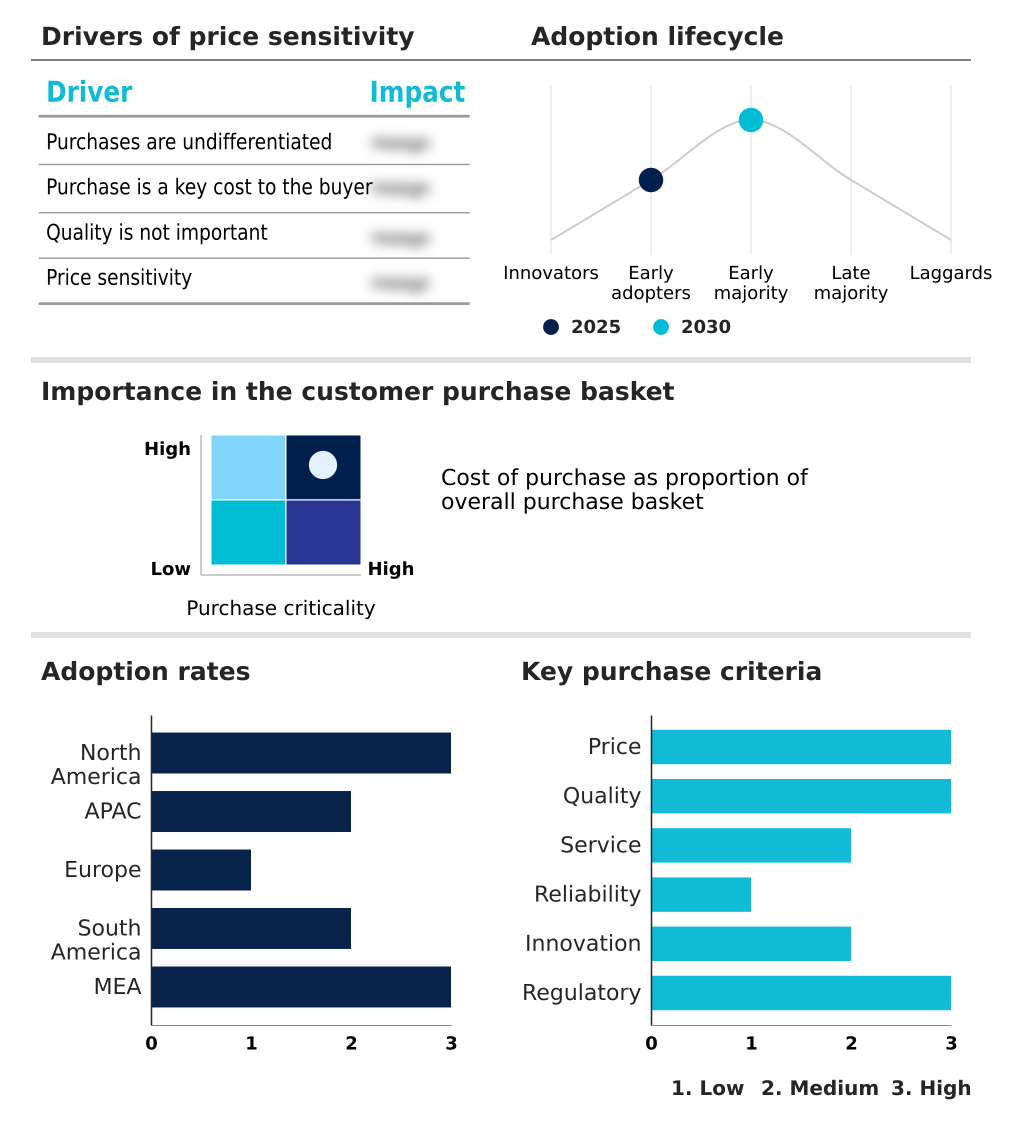
Customer Landscape of AI Grid Load Forecasting Platforms Industry
Competitive Landscape
Companies are implementing various strategies, such as strategic alliances, ai grid load forecasting platforms market forecast, partnerships, mergers and acquisitions, geographical expansion, and product/service launches, to enhance their presence in the industry.
ABB Ltd. - AI grid load forecasting platforms use predictive analytics to improve grid stability and optimize energy distribution for modern utility networks.
The industry research and growth report includes detailed analyses of the competitive landscape of the market and information about key companies, including:
- ABB Ltd.
- Amazon.com Inc.
- Aspen Technology Inc.
- BIDGELY INC.
- Eaton Corp. Plc
- Enel X Italia S.r.l.
- EnergyHub Inc.
- GE Vernova Inc.
- GridBeyond
- Hitachi Energy Ltd.
- IBM Corp.
- Itron Inc.
- Microsoft Corp.
- Oracle Corp.
- SAS Institute Inc.
- Schneider Electric SE
- Siemens AG
- Stem Inc.
- Tesla Inc.
- Uplight Inc.
Qualitative and quantitative analysis of companies has been conducted to help clients understand the wider business environment as well as the strengths and weaknesses of key industry players. Data is qualitatively analyzed to categorize companies as pure play, category-focused, industry-focused, and diversified; it is quantitatively analyzed to categorize companies as dominant, leading, strong, tentative, and weak.
Recent Development and News in Ai grid load forecasting platforms market
- In August 2025, a major electronics manufacturer in East Asia collaborated with a regional utility to deploy a federated learning architecture across several thousand smart homes to refine localized load forecasts during high-humidity cycles.
- In October 2025, a pioneering energy cooperative in South America launched a blockchain-enabled peer-to-peer trading network that utilizes artificial intelligence to predict residential energy surpluses and match them with nearby commercial requirements in real time.
- In November 2025, a prominent technological research institute in Japan released a refined deep learning model that utilizes high-frequency satellite imagery and real-time smart meter data to improve the spatial resolution of load forecasts for dense metropolitan areas.
- In May 2025, a leading technology corporation in North America introduced a generative modeling framework designed to assist utility providers in simulating the impact of hydrogen fuel cell integration on existing distribution networks.
Dive into Technavio’s robust research methodology, blending expert interviews, extensive data synthesis, and validated models for unparalleled AI Grid Load Forecasting Platforms Market insights. See full methodology.
| Market Scope | |
|---|---|
| Page number | 307 |
| Base year | 2025 |
| Historic period | 2020-2024 |
| Forecast period | 2026-2030 |
| Growth momentum & CAGR | Accelerate at a CAGR of 21.2% |
| Market growth 2026-2030 | USD 2147.5 million |
| Market structure | Fragmented |
| YoY growth 2025-2026(%) | 19.9% |
| Key countries | US, Canada, Mexico, China, Japan, India, South Korea, Australia, Indonesia, Germany, UK, France, Italy, Spain, The Netherlands, Brazil, Argentina, Chile, UAE, Saudi Arabia, South Africa, Israel and Qatar |
| Competitive landscape | Leading Companies, Market Positioning of Companies, Competitive Strategies, and Industry Risks |
Research Analyst Overview
- The AI grid load forecasting platforms market is fundamentally reshaping energy management by leveraging advanced computational techniques to ensure grid equilibrium. These platforms are built upon machine learning algorithms and deep neural networks, processing high-volume data from advanced metering infrastructure and real-time telemetry.
- Key applications include renewable generation forecasting and load optimization, which are critical for integrating intermittent renewable sources and managing demand-side fluctuations. Deployment models vary, with both cloud deployment and on-premises deployment options available to suit different security and scalability needs.
- A core function is proactive peak shaving through precise load forecasting, supported by technologies such as digital twins and edge computing for distributed energy resources. For boardroom consideration, the trend toward explainable artificial intelligence directly addresses regulatory pressures for algorithmic transparency, mitigating compliance risks.
- However, the industry grapples with challenges like data integrity, cybersecurity vulnerabilities, and the complexities of integration with legacy infrastructure. These systems also facilitate vehicle-to-grid technologies and prosumer energy models through grid edge intelligence, with some utilities reporting a 20% improvement in demand response effectiveness.
- Ultimately, the use of high-performance computing for data anonymization techniques is vital for maintaining privacy while enabling voltage optimization and reducing reliance on spinning reserves.
What are the Key Data Covered in this AI Grid Load Forecasting Platforms Market Research and Growth Report?
-
What is the expected growth of the AI Grid Load Forecasting Platforms Market between 2026 and 2030?
-
USD 2.15 billion, at a CAGR of 21.2%
-
-
What segmentation does the market report cover?
-
The report is segmented by Application (Load forecasting, Renewable generation forecasting, Load optimization, and Others), Deployment (Cloud, and On-premises), End-user (Utilities, Industrial, Government, and Others) and Geography (North America, APAC, Europe, South America, Middle East and Africa)
-
-
Which regions are analyzed in the report?
-
North America, APAC, Europe, South America and Middle East and Africa
-
-
What are the key growth drivers and market challenges?
-
Integration of variable renewable energy sources, Data integrity and cybersecurity vulnerabilities
-
-
Who are the major players in the AI Grid Load Forecasting Platforms Market?
-
ABB Ltd., Amazon.com Inc., Aspen Technology Inc., BIDGELY INC., Eaton Corp. Plc, Enel X Italia S.r.l., EnergyHub Inc., GE Vernova Inc., GridBeyond, Hitachi Energy Ltd., IBM Corp., Itron Inc., Microsoft Corp., Oracle Corp., SAS Institute Inc., Schneider Electric SE, Siemens AG, Stem Inc., Tesla Inc. and Uplight Inc.
-
Market Research Insights
- The dynamics of the AI grid load forecasting platforms market are shaped by the critical need for electrical demand prediction and enhanced grid stability. Through strategic asset management and power generation optimization, operators are achieving significant efficiency gains. For instance, the deployment of platforms incorporating smart meter data analytics has led to a 15% reduction in outage times.
- Moreover, advanced scenario modeling and peak load management techniques have improved resource allocation, reducing grid balancing costs by up to 20%. The adoption of decentralized intelligence and IoT sensor data integration is further enabling real-time responsiveness.
- This technological shift, which includes meteorological data processing, is pivotal as utilities navigate the transition toward more complex and distributed energy ecosystems, with some achieving a 2:1 improvement in forecast accuracy over traditional statistical methods.
We can help! Our analysts can customize this ai grid load forecasting platforms market research report to meet your requirements.
 RIA -
RIA - 
