
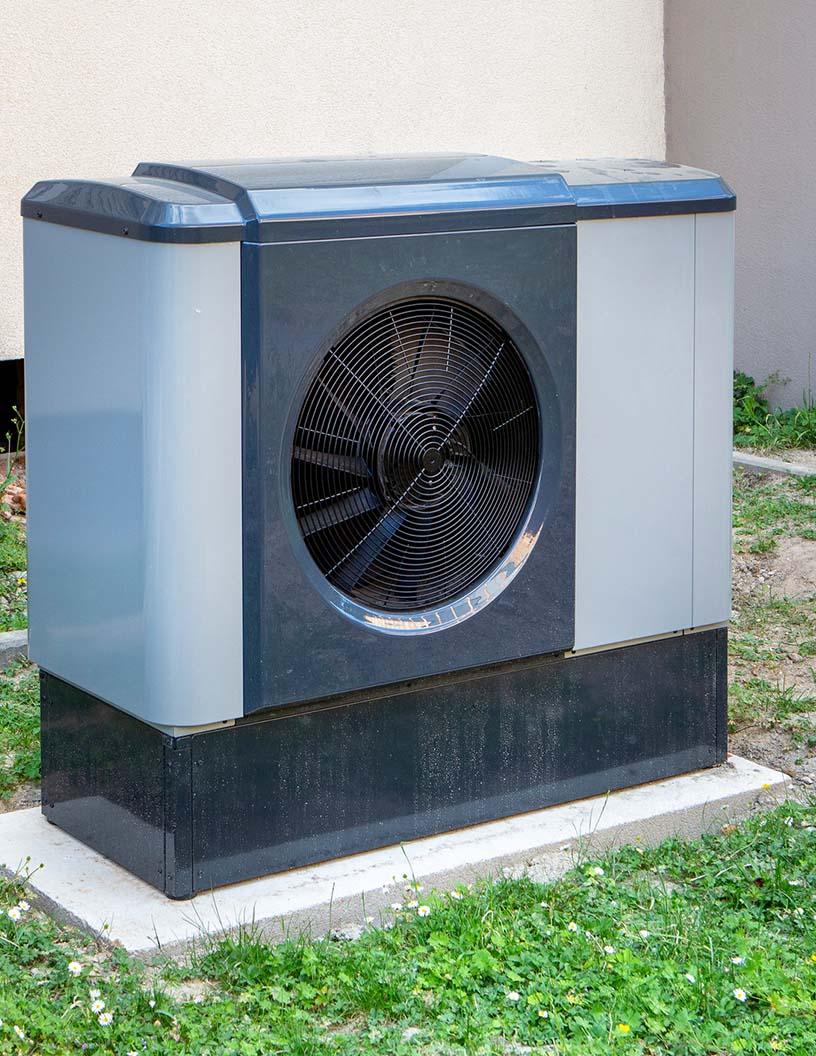


Air Source Heat Pump Market Size 2025-2029
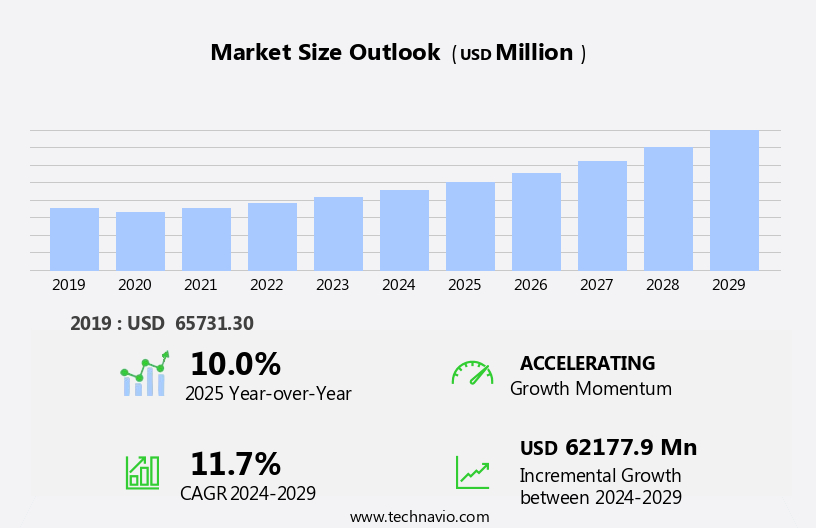
The air source heat pump market size is forecast to increase by USD 62.18 billion at a CAGR of 11.7% between 2024 and 2029.
- The Air Source Heat Pump (ASHP) market is experiencing significant growth, driven by escalating environmental concerns and the integration of advanced technologies such as smart technology and IoT features. These systems offer energy efficiency and reduced carbon emissions, aligning with global efforts to mitigate climate change. However, the high initial investment costs represent a substantial challenge for market expansion. Regulatory hurdles, including complex approval processes and varying standards across regions, also impact adoption. The market is witnessing significant growth due to the increasing demand for energy-efficient HVAC solutions in various sectors, particularly in the construction industry.
- To capitalize on the market's potential, companies must focus on cost reduction strategies, collaborative partnerships, and the development of standardized regulations. By addressing these challenges and continuing to innovate, ASHP manufacturers can seize opportunities in the growing demand for sustainable heating solutions.
What will be the Size of the Air Source Heat Pump Market during the forecast period?
- The market is experiencing significant growth, driven by the increasing adoption of green building standards and the integration of renewable energy sources into HVAC design. Building automation and HVAC optimization are key trends, with demand response, energy management, and maintenance scheduling playing crucial roles in enhancing energy efficiency. Predictive maintenance, smart controls, and hybrid systems are transforming HVAC operations, while passive heating and performance optimization are essential for reducing carbon emissions. HVAC modeling, system upgrades, and energy efficiency standards continue to shape the market, with solar thermal, connected devices, remote monitoring, and remote diagnostics also gaining traction.
- Inverter technology is a significant factor in improving efficiency and integrating renewable energy sources, making it a vital component of the evolving HVAC landscape.
How is this Air Source Heat Pump Industry segmented?
The air source heat pump industry research report provides comprehensive data (region-wise segment analysis), with forecasts and estimates in "USD million" for the period 2025-2029, as well as historical data from 2019-2023 for the following segments.
- Product
- Air-to-water
- Air-to-air
- Application
- Residential
- Industrial
- Commercial
- Type
- Ductless
- Ducted
- Short run ducted
- Geography
- North America
- US
- Canada
- Europe
- France
- Germany
- Italy
- UK
- APAC
- China
- India
- Japan
- South Korea
- Rest of World (ROW)
- North America
By Product Insights
The air-to-water segment is estimated to witness significant growth during the forecast period. In the evolving global market for air source heat pumps in 2024, the air-to-water segment is experiencing significant growth. This trend is fueled by the growing emphasis on environmental sustainability and energy efficiency in heating solutions. Air-to-water heat pumps offer the advantage of providing both space heating and hot water, while consuming less energy than traditional systems. Their versatility in various climates and cost-effectiveness make them a popular choice for both residential and commercial applications. Furthermore, government incentives and regulatory policies encouraging the adoption of clean energy technologies are accelerating the market's expansion. Energy efficiency, thermal comfort, and indoor air quality are key considerations in the design and implementation of these systems.
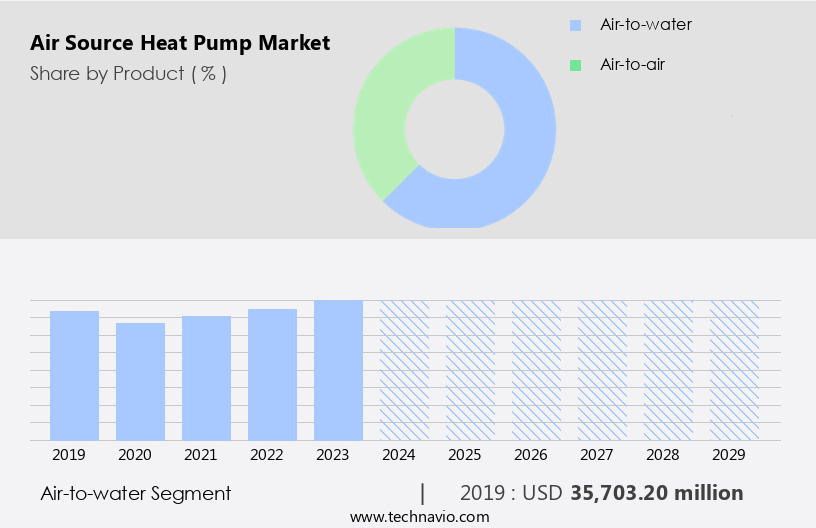
The Air-to-water segment was valued at USD 35.7 billion in 2019 and showed a gradual increase during the forecast period. R-410a refrigerant, air filtration, and humidity control are essential features that contribute to the overall performance and energy savings. Building codes and load calculations are crucial factors in system design, while HSPF rating, seer rating, and energy performance are essential metrics for evaluating system efficiency. Data analytics and performance monitoring are essential for optimizing energy usage and reducing operating costs. Geothermal heat pumps, heat recovery, and ductless systems are alternative technologies that complement the market. Renewable energy integration and smart home technology are emerging trends that are expected to further drive market growth. These are increasingly being adopted due to their energy efficiency and ability to reduce greenhouse gas emissions, aligning with the region's focus on renewable energy and sustainability.
Regional Analysis
North America is estimated to contribute 40% to the growth of the global market during the forecast period. Technavio's analysts have elaborately explained the regional trends and drivers that shape the market during the forecast period.
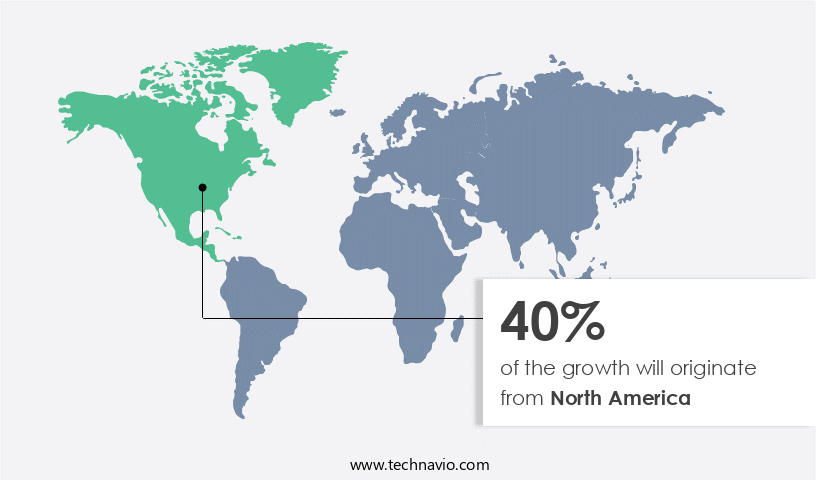
The North American market for air source heat pumps is experiencing notable growth, driven by several significant factors. The emphasis on environmental sustainability and energy efficiency is leading to an increased demand for these systems. Legislation such as the US Clean Energy for America Act, which offers tax incentives for the installation of energy-efficient heating and cooling equipment, is a prime example. Moreover, consumers are becoming more conscious of their energy expenses and carbon footprint, resulting in a higher adoption rate of air source heat pumps. In Canada, the Home Efficiency Rebate program encourages homeowners to install energy-efficient appliances, including air-source heat pumps, by offering incentives.
Air source heat pumps offer various benefits, such as energy efficiency, thermal comfort, and humidity control. They use refrigerant R-410a, which is more environmentally friendly than the older R-22 refrigerant. These systems also incorporate air filtration, ensuring good indoor air quality. Heat pump sizing and load calculations are crucial for optimal system performance, while the use of variable speed compressors and smart home integration enhances energy savings. Building codes mandate energy performance standards, making air source heat pumps a popular choice for new construction. Renewable energy integration, heat recovery, and geothermal heat pumps are emerging trends in the market.
Performance monitoring and data analytics enable users to optimize their systems and reduce operating costs. Ductless and ducted systems cater to various building designs and architectural preferences. Overall, the market for air source heat pumps in North America is dynamic and evolving, driven by a combination of consumer preferences, government incentives, and technological advancements.
Market Dynamics
Our researchers analyzed the data with 2024 as the base year, along with the key drivers, trends, and challenges. A holistic analysis of drivers will help companies refine their marketing strategies to gain a competitive advantage.
What are the Air Source Heat Pump market drivers leading to the rise in the adoption of Industry?
- The increasing concern for environmental issues serves as the primary catalyst for market growth. The market is experiencing significant growth due to increasing concerns regarding carbon emissions and the promotion of environmental sustainability. Governments and consumers worldwide are embracing energy-efficient heating and cooling solutions as part of their efforts to combat climate change. Air source heat pumps, which produce minimal greenhouse gas emissions, have emerged as a popular alternative to traditional fossil fuel-based systems. In Europe, strict emission reduction policies have accelerated the adoption of these systems, resulting in substantial carbon emission reductions. The trend is not limited to Europe; North America and Asia Pacific are also witnessing increased usage of air source heat pumps.
- Governments in these regions are offering incentives and regulatory frameworks to encourage the transition to cleaner energy solutions. Indoor air quality, thermal comfort, and energy efficiency are key considerations for consumers when choosing air source heat pumps. Air filtration systems and R-410a refrigerant are commonly used to enhance indoor air quality and ensure thermal comfort. The energy efficiency of air source heat pumps makes them a cost-effective and eco-friendly option for both residential and commercial applications in the context of green building.
What are the Air Source Heat Pump market trends shaping the Industry?
- Air source heat pumps are increasingly incorporating smart technology and Internet of Things (IoT) features. This integration is a significant market trend, enhancing system efficiency, user convenience, and remote monitoring capabilities. Air source heat pumps are gaining popularity as energy-efficient solutions for heating and cooling, offering humidity control and improved comfort. The integration of smart technology and IoT features enhances their functionality, allowing users to remotely monitor and control systems via apps or web interfaces. This capability enables real-time adjustments for energy optimization, such as pre-cooling or pre-heating spaces before arrival. Predictive maintenance and diagnostics also help minimize downtime and lower maintenance costs, aligning with the push towards sustainable HVAC solutions. Applications in sectors like metals, iron & steel, adhesives, rubber, chemicals, and plastics further expand the market's potential.
- Building codes increasingly require energy performance, making the SEER (Seasonal Energy Efficiency Ratio) and HSPF (Heating Seasonal Performance Factor) ratings crucial considerations. Load calculations ensure proper system sizing for optimal energy usage and efficiency. Data analytics can further enhance system performance by identifying trends and providing recommendations for improvements. Overall, air source heat pumps offer a cost-effective and eco-friendly alternative to traditional HVAC systems.
How does Air Source Heat Pump market faces challenges during its growth?
- The high initial costs represent a significant challenge impeding the growth of the industry. Air source heat pumps offer long-term energy savings but face a significant challenge due to their high initial cost. This expense includes the purchase and installation of the system, as well as necessary home modifications such as ductwork and insulation upgrades. In areas with limited financial incentives or subsidies, consumers may be deterred from investing in these energy-efficient solutions. However, industry players and governments are implementing cost-reduction strategies, including improved manufacturing processes and economies of scale, to make air source heat pumps more affordable. Furthermore, technological advancements are helping to offset the financial burden of installation. These factors are expected to increase the accessibility of air source heat pumps to a wider audience.
- Heat recovery and ductless systems are popular types of air source heat pumps that utilize renewable energy to provide heating and cooling. Energy audits can help determine the feasibility of installing these systems and identify potential cost savings. Tax credits and incentives may also be available to offset the initial investment. Heat transfer, airflow management, and ventilation systems are integral components of heat pumps, which also facilitate the integration of building automation and smart systems, including utility meters and refrigerants.
Exclusive Customer Landscape
The air source heat pump market forecasting report includes the adoption lifecycle of the market, covering from the innovator's stage to the laggard's stage. It focuses on adoption rates in different regions based on penetration. Furthermore, the air source heat pump market report also includes key purchase criteria and drivers of price sensitivity to help companies evaluate and develop their market growth analysis strategies.
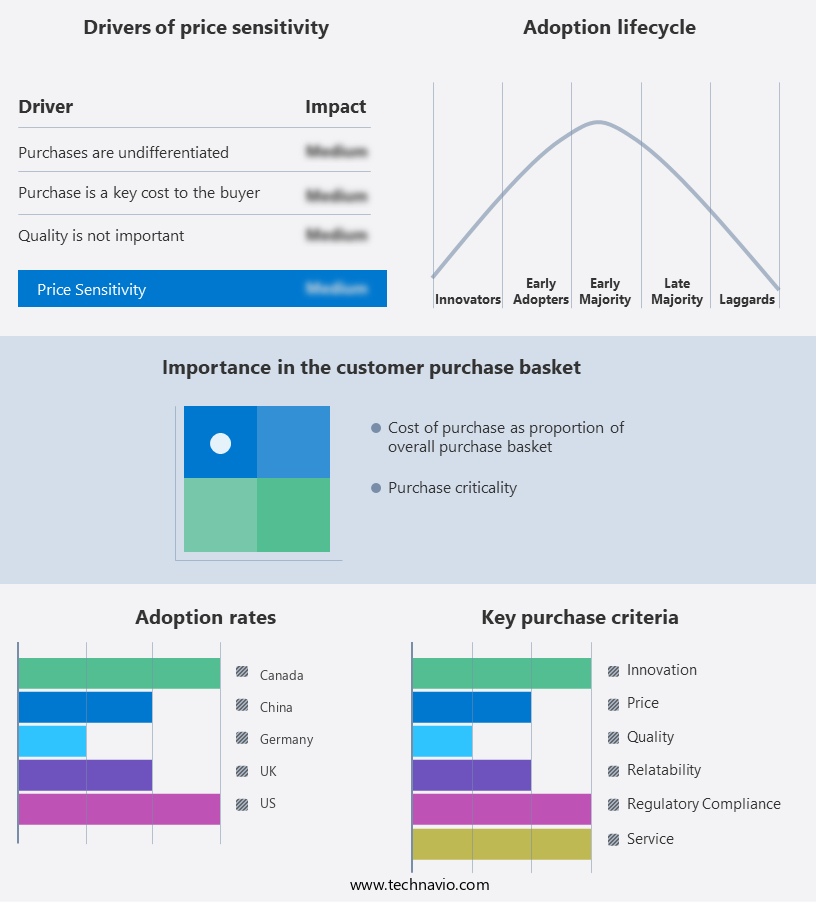
Customer Landscape
Key Companies & Market Insights
Companies are implementing various strategies, such as strategic alliances, air source heat pump market forecast, partnerships, mergers and acquisitions, geographical expansion, and product/service launches, to enhance their presence in the industry.
A. O. Smith India Water Products Pvt. Ltd. - The company offers air-source heat pumps and solutions for heating and hot water needs.
The industry research and growth report includes detailed analyses of the competitive landscape of the market and information about key companies, including:
- A. O. Smith India Water Products Pvt. Ltd.
- Alibaba Group Holding Ltd.
- Ariston Holding NV
- BDR Thermea Group
- Carrier Global Corp.
- Colmac Industries Inc.
- Daikin Industries Ltd.
- Danfoss AS
- Emerson Electric Co.
- Fujitsu General Ltd.
- Glen Dimplex Group.
- Grant Engineering UK Ltd.
- Groupe Airwell
- Haier Smart Home Co. Ltd.
- Hitachi Ltd.
- Ingersoll Rand Inc.
- Jaquar India
- Mitsubishi Electric Corp.
- NIBE Industrier AB
- Robert Bosch GmbH
Qualitative and quantitative analysis of companies has been conducted to help clients understand the wider business environment as well as the strengths and weaknesses of key industry players. Data is qualitatively analyzed to categorize companies as pure play, category-focused, industry-focused, and diversified; it is quantitatively analyzed to categorize companies as dominant, leading, strong, tentative, and weak.
Recent Development and News in Air Source Heat Pump Market
- In February 2023, leading heating and cooling solutions provider, Daikin Industries, announced the global launch of their new residential air-source heat pump system, the Daikin Altherma Wave. This innovative product boasts a high heating capacity and improved energy efficiency, making it a significant addition to the competitive market (Daikin Industries Press Release).
- In June 2024, Siemens Energy and Siemens Gamesa Renewable Energy entered into a strategic partnership to integrate heat pumps into wind turbines, aiming to increase the overall efficiency of renewable energy systems. This collaboration marks a significant step towards the integration of heating and cooling solutions into renewable energy infrastructure (Siemens Energy Press Release).
- In March 2025, the European Commission approved the Horizon Europe research and innovation program, which includes a significant focus on the development and deployment of renewable heating and cooling technologies, including air source heat pumps. This policy change is expected to drive market growth and investment in the sector (European Commission Press Release).
Research Analyst Overview
The market continues to evolve, driven by the increasing demand for energy-efficient heating and cooling solutions. These systems offer thermal comfort, humidity control, and indoor air quality, making them an attractive option for various sectors, including commercial and residential buildings. The market dynamics are influenced by several factors, including building codes, HSPF rating, and SEER rating. HSPF rating, which measures heating efficiency, and SEER rating, which measures cooling efficiency, are crucial factors in determining the energy performance of air source heat pumps. Load calculations and energy performance data analytics are essential for optimal system design and performance monitoring. Renewable energy integration, such as heat recovery and geothermal heat pumps, is a growing trend in the market. Key raw materials, including metals, adhesives, rubber, chemicals, and plastics, are used in the production of heat pump components.
Variable speed compressors and smart home integration are also gaining popularity, contributing to energy savings and reduced operating costs. Tax credits and incentives for green building and new construction projects further fuel the market's growth. Air filtration systems and ductless systems are also gaining traction due to their energy efficiency and ease of installation. The market's continuous evolution is shaped by ongoing research and development, with a focus on improving system design, energy audits, and system size optimization using R-410a refrigerant. The market's dynamics remain fluid, reflecting the industry's commitment to reducing carbon footprint and enhancing thermal comfort while minimizing energy consumption.
Dive into Technavio's strong research methodology, blending expert interviews, extensive data synthesis, and validated models for unparalleled Air Source Heat Pump Market insights. See full methodology.
|
Market Scope |
|
|
Report Coverage |
Details |
|
Page number |
204 |
|
Base year |
2024 |
|
Historic period |
2019-2023 |
|
Forecast period |
2025-2029 |
|
Growth momentum & CAGR |
Accelerate at a CAGR of 11.7% |
|
Market growth 2025-2029 |
USD 62.18 billion |
|
Market structure |
Fragmented |
|
YoY growth 2024-2025(%) |
10.0 |
|
Key countries |
US, Canada, China, UK, Japan, Germany, France, India, Italy, and South Korea |
|
Competitive landscape |
Leading Companies, Market Positioning of Companies, Competitive Strategies, and Industry Risks |
What are the Key Data Covered in this Air Source Heat Pump Market Research and Growth Report?
- CAGR of the Air Source Heat Pump industry during the forecast period
- Detailed information on factors that will drive the growth and forecasting between 2025 and 2029
- Precise estimation of the size of the market and its contribution of the industry in focus to the parent market
- Accurate predictions about upcoming growth and trends and changes in consumer behaviour
- Growth of the market across North America, Europe, APAC, South America, and Middle East and Africa
- Thorough analysis of the market's competitive landscape and detailed information about companies
- Comprehensive analysis of factors that will challenge the air source heat pump market growth of industry companies
We can help! Our analysts can customize this air source heat pump market research report to meet your requirements.
 RIA -
RIA - 
