


Aroma Chemicals Market Size 2024-2028
The aroma chemicals market size is forecast to increase by USD 2.22 billion, at a CAGR of 5.97% between 2023 and 2028.
- The market is experiencing significant shifts, driven by evolving consumer preferences towards natural and organic products. This trend is fueling a surge in demand for natural aroma chemicals, as consumers increasingly seek out products that align with their health-conscious lifestyles. Additionally, the rise in demand for natural aroma chemicals in various end-use industries, including food and beverage, cosmetics, and fragrances, is further propelling market growth. However, this market is not without challenges. High Research and Development costs pose a significant obstacle for companies looking to innovate and bring new, natural aroma chemical solutions to market. As the competition intensifies, companies must navigate these challenges to capitalize on the opportunities presented by this dynamic market.
- To remain competitive, strategic investments in R&D and a focus on sustainability and transparency will be essential for success. Companies that can effectively address these market drivers and challenges will be well-positioned to thrive in the evolving aroma chemicals landscape.
What will be the Size of the Aroma Chemicals Market during the forecast period?

Explore in-depth regional segment analysis with market size data - historical 2018-2022 and forecasts 2024-2028 - in the full report.
Request Free Sample
The market is characterized by its continuous evolution, driven by dynamic market dynamics and diverse applications across various sectors. Home care fragrances, industrial fragrances, cosmetic ingredients, food flavorings, and perfumery compounds all contribute to the market's growth. Production capacity expansion and advanced manufacturing processes enable the production of a wide range of aroma chemicals, from natural to synthetic. Ingredient sourcing and sales forecasting play crucial roles in supply chain management, ensuring the availability of high-quality raw materials and timely delivery to customers. Odor neutralization and scent delivery systems are essential components of the market, with ongoing research and development focusing on improving sensory perception and scent longevity.
Regulations and safety standards continue to evolve, influencing product formulation and quality control. Consumer preferences for natural aroma chemicals and sustainable practices are shaping the market, with ethical sourcing and environmental impact becoming increasingly important considerations. Marketing campaigns and new product development are key strategies for companies to differentiate themselves in the competitive landscape. Intellectual property protection and risk management are also critical aspects of the market, with patent protection and brand positioning essential for long-term success. The market is a complex and dynamic industry, with ongoing activities and evolving patterns shaping its future. Scent profiles, concentration levels, and scent masking are essential factors in sensory evaluation and product formulation.
Fragrance oils, essential oils, and flavor chemicals all play a role in delivering unique and appealing scents. Aroma intensity and scent notes contribute to the overall consumer experience, with base notes, heart notes, and top notes adding depth and complexity to fragrances. The market's global demand continues to grow, with distribution networks and consumer panels essential for understanding and meeting the needs of diverse markets. Industry standards and toxicity testing ensure product safety and quality, while scent diffusion and olfactory receptors influence the way consumers perceive and experience fragrances. The market is a dynamic and intricate industry, with ongoing innovation and evolution shaping its future.
How is this Aroma Chemicals Industry segmented?
The aroma chemicals industry research report provides comprehensive data (region-wise segment analysis), with forecasts and estimates in "USD million" for the period 2024-2028, as well as historical data from 2018-2022 for the following segments.
- Application
- Soaps and detergents
- Cosmetics and toiletries
- Fine fragrances
- Others
- Type
- Terpenes
- Benzenoids
- Musk chemicals
- Others
- Geography
- North America
- US
- Europe
- Germany
- UK
- APAC
- China
- India
- Rest of World (ROW)
- North America
By Application Insights
The soaps and detergents segment is estimated to witness significant growth during the forecast period.
The market encompasses a diverse range of applications, including home care fragrances, industrial fragrances, cosmetic ingredients, food flavorings, and perfumery compounds. Manufacturers prioritize stability testing, allergen assessment, and sensory evaluation to ensure product quality and consumer safety. Ingredient traceability, environmental impact, and sustainable practices are essential considerations in the production process. Pricing strategies, product innovation, and consumer preferences significantly influence market dynamics. New product development, concentration levels, and marketing campaigns are key factors driving growth. Safety standards, toxicity testing, and intellectual property protection are crucial aspects of risk management. The market is characterized by a complex supply chain, involving raw material sourcing, manufacturing processes, sales forecasting, and distribution networks.
Fragrance oils, essential oils, and synthetic aroma chemicals are integral components of the market. Natural aroma chemicals and sustainable practices are gaining popularity due to changing consumer preferences. The market's evolution is influenced by various factors, including regulatory compliance, production capacity, and industry standards. Ethical sourcing, scent masking, and scent delivery systems are essential elements of product formulation. Quality assurance, brand positioning, and scent notes contribute to the overall consumer experience. The market is subject to international regulations and stringent safety standards. Manufacturers employ various strategies, such as patent protection, trade secrets, and scent diffusion technologies, to maintain a competitive edge.
The market's future growth is expected to be driven by increasing consumer demand for personalized fragrances, scent intensity, and longer scent longevity.
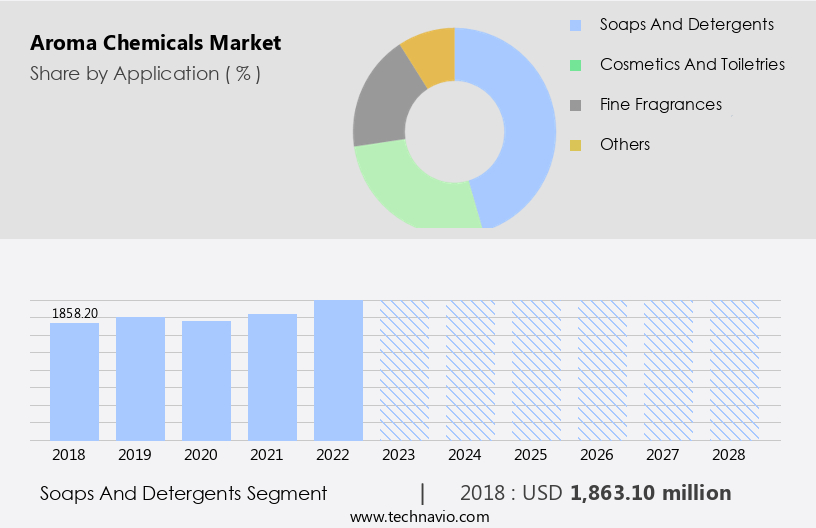
The Soaps and detergents segment was valued at USD 1.86 billion in 2018 and showed a gradual increase during the forecast period.
Regional Analysis
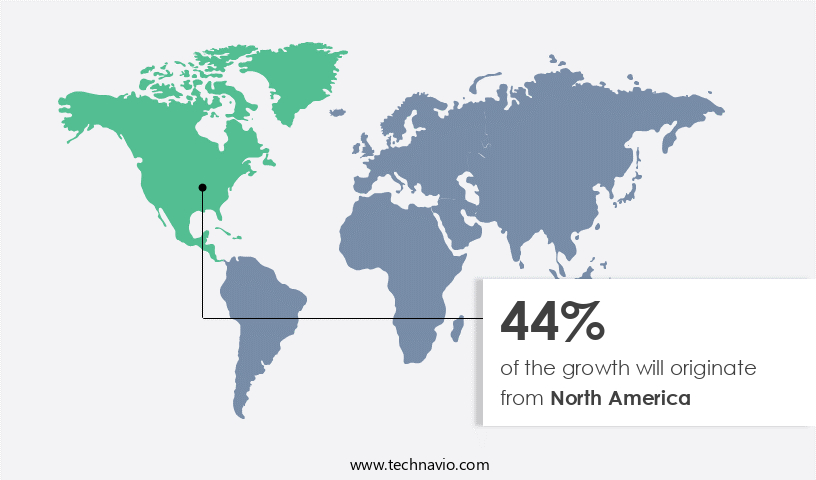
North America is estimated to contribute 44% to the growth of the global market during the forecast period. Technavio's analysts have elaborately explained the regional trends and drivers that shape the market during the forecast period.
The market in North America is characterized by a mature consumer base and a high demand for premium fragrance products. With numerous established companies and end-user industries present in the region, market growth is driven by buyers open to innovation. However, the COVID-19 pandemic in 2020 negatively impacted the market due to reduced cosmetic product demand. Allergen assessment and safety standards are crucial considerations in the production of aroma chemicals. Top notes, heart notes, and base notes contribute to the overall scent profile, with natural and synthetic aroma chemicals used in various concentrations. Product innovation, such as scent masking and delivery systems, is essential for staying competitive.
Industrial fragrances are used in home care and detergent applications, while cosmetic ingredients require strict regulation and traceability. Sustainable practices and ethical sourcing are increasingly important, as is quality control, sensory evaluation, and shelf life management. Pricing strategies, sales forecasting, and supply chain management are also critical factors in the market. The market's future trends include new product development, concentration level adjustments, and marketing campaigns tailored to consumer preferences. Regulatory compliance, risk management, and intellectual property protection are ongoing challenges. The market's environmental impact and toxicity testing are also under scrutiny, with a focus on reducing odor neutralization and improving scent longevity.
Market Dynamics
Our researchers analyzed the data with 2023 as the base year, along with the key drivers, trends, and challenges. A holistic analysis of drivers will help companies refine their marketing strategies to gain a competitive advantage.
What are the key market drivers leading to the rise in the adoption of Aroma Chemicals Industry?
- Consumer preferences hold significant influence over market trends, with continuous shifts in preferences serving as the primary driver for market evolution.
- The market is experiencing significant growth due to the increasing demand for fragrances in various applications, including home care and industrial uses. Stability testing and allergen assessment are crucial factors in ensuring the quality and safety of these chemicals. Top notes, ingredient traceability, and sensory evaluation are essential elements of product innovation in this market. Consumer preference for natural and eco-friendly ingredients has led to a focus on environmental impact reduction. Pricing strategies and safety standards are also vital considerations in the market. Cosmetic ingredients and food flavorings are significant sectors utilizing aroma chemicals. The global demand for aroma chemicals is driven by consumer behavior trends, such as the acceptance of personal care products with enhanced fragrances.
- The men's grooming industry's rapid development and the introduction of a wide range of personal care products further fuel market growth. Quality control and safety standards are essential to maintain consumer trust and ensure the effectiveness of aroma chemicals. Sensory evaluation and market research are ongoing processes to meet evolving consumer preferences and regulatory requirements. The market's future growth is expected to be influenced by technological advancements and innovation in fragrance creation.
What are the market trends shaping the Aroma Chemicals Industry?
- The trend in the market is characterized by a rising demand for natural aroma chemicals. This growing preference for natural ingredients is shaping the aroma chemicals industry.
- Aroma chemicals, specifically perfumery compounds, play a significant role in various consumer products, including cosmetics and household items. However, concerns regarding the health risks associated with synthetic aroma chemicals have emerged. Approximately 90% of these chemicals originate from petroleum and natural gas. The skin absorbs these chemicals through contact or fragrance exposure, leading to their accumulation in the body. Some common compounds and their adverse effects include parabens, which interfere with hormone release; phthalates, which are carcinogenic and can impact the liver and kidney; and synthetic musks, which disrupt hormones and accumulate in body parts.
- To mitigate these risks, consumers are increasingly seeking out natural alternatives, such as essential oils. Product lifecycle management and toxicity testing are essential for ensuring the safety and sustainability of aroma chemicals. Additionally, brand positioning and aroma profiles are critical factors in the market, with consumers favoring immersive, harmonious scents. Aroma diffusion techniques, such as olfactory receptors and scent longevity, also impact consumer preferences. Distribution networks and sustainable practices are crucial for companies to remain competitive in this market. Overall, the market requires a professional and informed approach to address consumer concerns and maintain regulatory compliance.
What challenges does the Aroma Chemicals Industry face during its growth?
- The significant cost associated with Research and Development (R&D) is a major challenge impeding industry growth.
- Aroma chemicals play a significant role in the production of various consumer goods, including detergent fragrances. The market for these essential ingredients is experiencing dynamic changes due to shifting consumer preferences and the need for innovative solutions. Manufacturers face increasing pressure to invest heavily in research and development (R&D) to enhance product offerings and retain customers. However, the high costs associated with R&D, ingredient sourcing, and certification processes pose challenges for companies in this competitive market. Scent delivery systems, sensory perception, and odor neutralization are critical factors influencing the market's growth. Natural aroma chemicals and aroma intensity are emerging trends, driven by consumers' growing preference for eco-friendly and healthier alternatives.
- International regulations and packaging materials also impact the market's dynamics. Effective supply chain management and sales forecasting are essential for maintaining profitability and staying competitive. Manufacturing processes must be optimized to ensure the aroma chemicals' shelf life and harmonious blend with other ingredients. Trade secrets and proprietary technologies are essential for differentiating products and securing a competitive edge. In conclusion, the market is characterized by continuous innovation and a focus on improving sensory experiences. Despite the high costs and regulatory challenges, companies are investing in R&D to cater to evolving consumer preferences and meet the demands of various industries.
Exclusive Customer Landscape
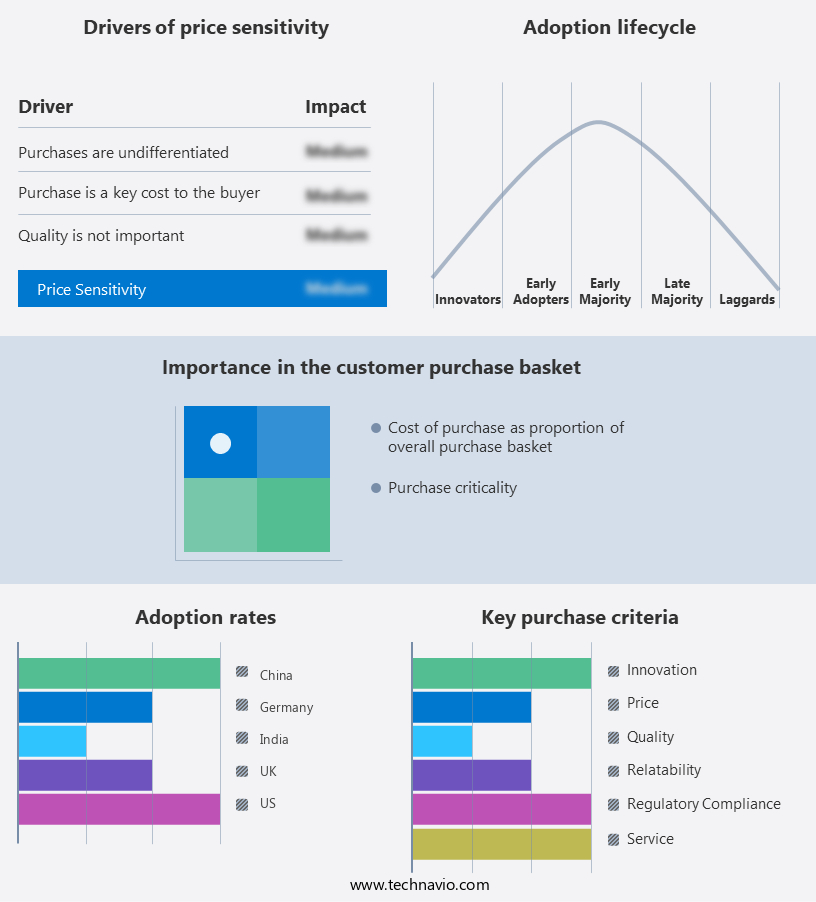
The aroma chemicals market forecasting report includes the adoption lifecycle of the market, covering from the innovator's stage to the laggard's stage. It focuses on adoption rates in different regions based on penetration. Furthermore, the aroma chemicals market report also includes key purchase criteria and drivers of price sensitivity to help companies evaluate and develop their market growth analysis strategies.
Customer Landscape
Key Companies & Market Insights
Companies are implementing various strategies, such as strategic alliances, aroma chemicals market forecast, partnerships, mergers and acquisitions, geographical expansion, and product/service launches, to enhance their presence in the industry.
Aroma Aromatics and Flavours - This company specializes in the production and supply of aroma chemicals, including Citronellol, Citral N, and Linalyl acetate, which are essential components in various fragrance formulations for industries such as cosmetics, perfumes, and food and beverage.
The industry research and growth report includes detailed analyses of the competitive landscape of the market and information about key companies, including:
- Aroma Aromatics and Flavours
- BASF SE
- Bell Flavors and Fragrances GmbH
- Bordas SA
- De Monchy Aromatics Ltd.
- Ernesto Ventos SA
- Eternis Fine Chemicals Ltd.
- Givaudan SA
- Indesso
- Kao Corp.
- Koninklijke DSM NV
- KURARAY Co. Ltd.
- Lanxess AG
- Norex Flavours Pvt. Ltd.
- Oriental Aromatics Ltd.
- S H Kelkar and Co. Ltd.
- Symrise AG
- Takasago International Corp.
- Zeon Corp.
Qualitative and quantitative analysis of companies has been conducted to help clients understand the wider business environment as well as the strengths and weaknesses of key industry players. Data is qualitatively analyzed to categorize companies as pure play, category-focused, industry-focused, and diversified; it is quantitatively analyzed to categorize companies as dominant, leading, strong, tentative, and weak.
Recent Development and News in Aroma Chemicals Market
- In January 2024, Firmenich, a leading global manufacturer of fragrances and flavors, announced the launch of its new line of sustainable aroma chemicals, named "Nature & Scent." This innovative product line is derived from renewable sources and aims to reduce the carbon footprint in the aroma chemicals industry (Firmenich Press Release).
- In March 2024, International Flavors & Fragrances Inc. (IFF) and Symrise AG, two major players in the market, entered into a strategic partnership to expand their combined capabilities in the natural ingredients segment. The collaboration will enable the companies to offer a broader range of natural ingredients and solutions to their customers (IFF Press Release).
- In May 2024, Mitsui Chemicals, a Japanese chemical manufacturer, completed the acquisition of a majority stake in the aroma chemicals business of Sigma-Aldrich Corporation. This acquisition strengthened Mitsui Chemicals' position in the market and expanded its product portfolio (Mitsui Chemicals Press Release).
- In April 2025, the European Commission approved the renewal of the authorization of the aroma chemical ethyl maltol. This approval allows the continued use of ethyl maltol in food and beverages, ensuring the stability and growth of the market in Europe (European Commission Press Release).
Research Analyst Overview
- The market exhibits dynamic growth, driven by consumer trends toward natural and organic products and the expanding application scope in industries such as air fresheners, aroma therapy, and fragrance formulations. New product development, particularly in the realm of sustainable extraction methods and synthesis techniques, is a key market driver. However, challenges persist, including global competition, regulatory compliance updates, and supply chain optimization. Pricing strategy analysis and risk mitigation strategies are essential for market players to maintain profitability. Environmental sustainability and application technologies are shaping the future outlook of the aroma chemicals industry. Market segmentation analysis and consumer perception studies provide valuable insights into evolving preferences and trends.
- Blending techniques and formulation methods continue to evolve, offering opportunities for product differentiation.
Dive into Technavio's robust research methodology, blending expert interviews, extensive data synthesis, and validated models for unparalleled Aroma Chemicals Market insights. See full methodology.
|
Market Scope |
|
|
Report Coverage |
Details |
|
Page number |
182 |
|
Base year |
2023 |
|
Historic period |
2018-2022 |
|
Forecast period |
2024-2028 |
|
Growth momentum & CAGR |
Accelerate at a CAGR of 5.97% |
|
Market growth 2024-2028 |
USD 2216.8 million |
|
Market structure |
Fragmented |
|
YoY growth 2023-2024(%) |
5.27 |
|
Key countries |
US, China, Germany, India, and UK |
|
Competitive landscape |
Leading Companies, Market Positioning of Companies, Competitive Strategies, and Industry Risks |
What are the Key Data Covered in this Aroma Chemicals Market Research and Growth Report?
- CAGR of the Aroma Chemicals industry during the forecast period
- Detailed information on factors that will drive the growth and forecasting between 2024 and 2028
- Precise estimation of the size of the market and its contribution of the industry in focus to the parent market
- Accurate predictions about upcoming growth and trends and changes in consumer behaviour
- Growth of the market across North America, APAC, Europe, Middle East and Africa, and South America
- Thorough analysis of the market's competitive landscape and detailed information about companies
- Comprehensive analysis of factors that will challenge the aroma chemicals market growth of industry companies
We can help! Our analysts can customize this aroma chemicals market research report to meet your requirements.
 RIA -
RIA - 
