



Automotive Fascia Market Size 2026-2030
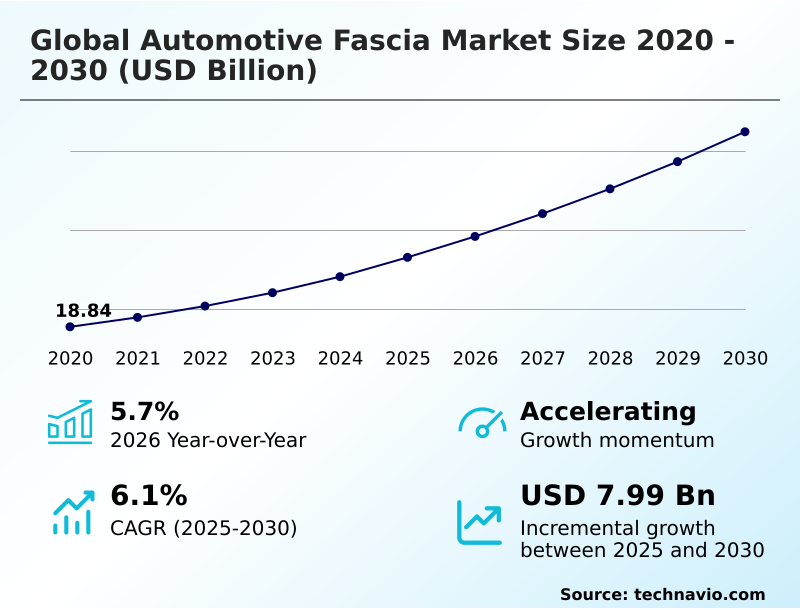
The automotive fascia market size is valued to increase by USD 7.99 billion, at a CAGR of 6.1% from 2025 to 2030. Proliferation of electric vehicles and redefinition of front end design will drive the automotive fascia market.
Major Market Trends & Insights
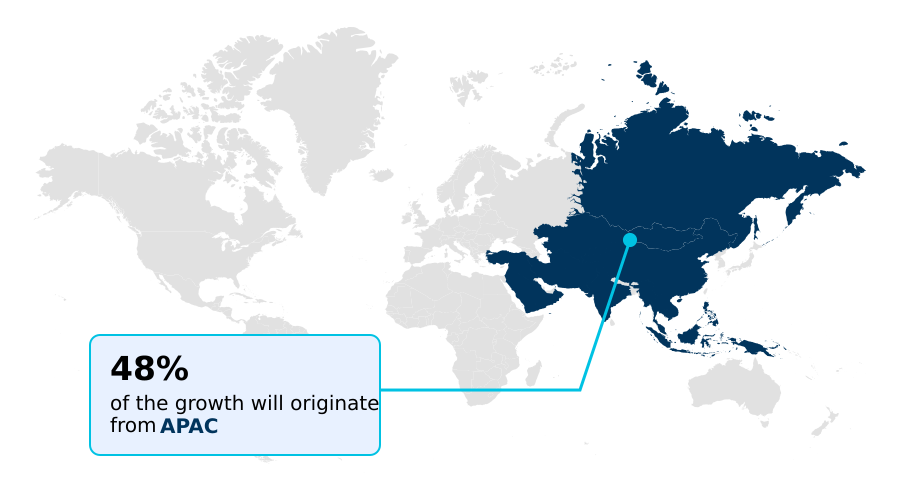
- APAC dominated the market and accounted for a 47.9% growth during the forecast period.
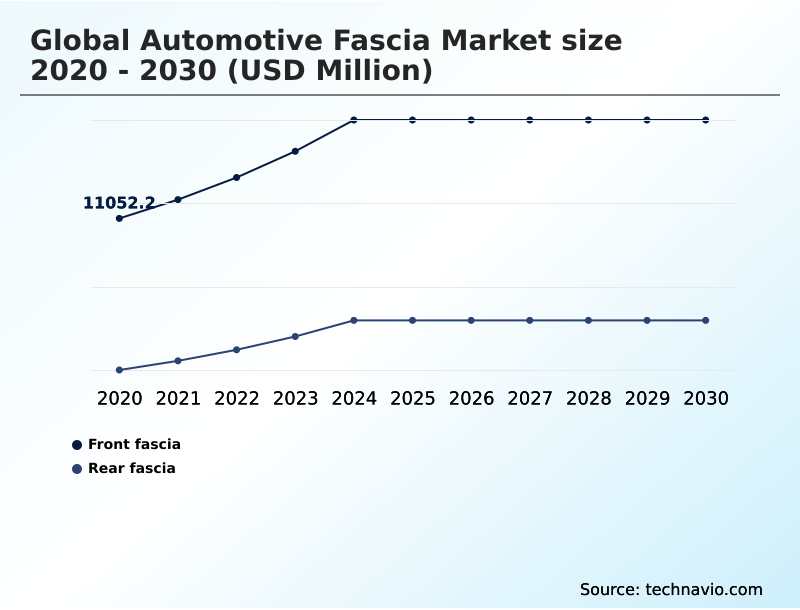
- By Product - Front fascia segment was valued at USD 13.17 billion in 2024
- By Vehicle Type - Passenger vehicles segment accounted for the largest market revenue share in 2024
Market Size & Forecast
- Market Opportunities: USD 12.40 billion
- Market Future Opportunities: USD 7.99 billion
- CAGR from 2025 to 2030 : 6.1%
Market Summary
- The automotive fascia market is at the forefront of vehicle evolution, balancing aesthetic appeal with profound functional demands. This sector is no longer defined by simple bumper covers; it is a hub of innovation where design meets advanced technology.
- Key market drivers include the transition to electric vehicles, which allows for radical new front-end styling, and the critical integration of sensors for driver-assistance systems. These shifts compel manufacturers to explore new materials and production methods.
- A central operational scenario involves automakers specifying a fascia that is not only lightweight and aerodynamic but also transparent to radar signals and capable of housing complex lighting systems. This creates challenges in material science and manufacturing precision, pushing suppliers to develop integrated solutions that address form, function, and regulatory compliance simultaneously.
- The emphasis on sustainability further complicates this dynamic, demanding the use of recycled and bio-based polymers without compromising performance. Consequently, the market is characterized by a continuous cycle of innovation in response to technological, regulatory, and consumer pressures.
What will be the Size of the Automotive Fascia Market during the forecast period?
Get Key Insights on Market Forecast (PDF) Get Free Sample
How is the Automotive Fascia Market Segmented?
The automotive fascia industry research report provides comprehensive data (region-wise segment analysis), with forecasts and estimates in "USD million" for the period 2026-2030, as well as historical data from 2020-2024 for the following segments.
- Product
- Front fascia
- Rear fascia
- Vehicle type
- Passenger vehicles
- Commercial vehicle
- Material
- Plastic
- Metal
- Rubber
- Geography
- APAC
- China
- Japan
- India
- North America
- US
- Mexico
- Canada
- Europe
- Germany
- UK
- France
- Middle East and Africa
- Saudi Arabia
- UAE
- South Africa
- South America
- Brazil
- Argentina
- Colombia
- Rest of World (ROW)
- APAC
By Product Insights
The front fascia segment is estimated to witness significant growth during the forecast period.
The front fascia segment is undergoing a technological renaissance, evolving from a cosmetic panel to a critical nexus of vehicle intelligence.
This shift is driven by the need for advanced polymer materials that enable autonomous driving sensor integration while supporting complex exterior molding.
The concept of the intelligent front panel, or smart face, is central to this evolution, especially for the electric vehicle front-end. These designs incorporate integrated lighting solutions and demand a Class-A surface finish that conceals an array of sensors.
For suppliers, mastering innovative molding processes has become essential, as these advanced components represent a value increase of over 35% compared to their traditional counterparts. This complexity necessitates robust digital design and simulation to ensure performance and manufacturability.
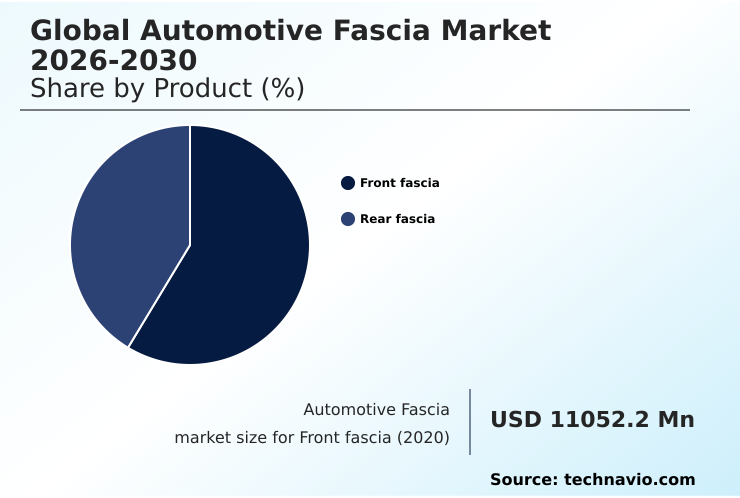
The Front fascia segment was valued at USD 13.17 billion in 2024 and showed a gradual increase during the forecast period.
Regional Analysis
APAC is estimated to contribute 47.9% to the growth of the global market during the forecast period.Technavio’s analysts have elaborately explained the regional trends and drivers that shape the market during the forecast period.
See How Automotive Fascia Market Demand is Rising in APAC Get Free Sample
The geographic landscape of the automotive fascia market is defined by divergent regional priorities, with APAC accounting for nearly 48% of the incremental growth.
This region, led by China, is a crucible for the electric vehicle front-end, pushing the boundaries of functional component integration and complex exterior molding.
In North America, the market is driven by large vehicle platforms, emphasizing durability and OEM appearance packages. Europe is heavily influenced by a fragmented regulatory framework, particularly around pedestrian impact protection and end-of-life vehicle recycling.
This forces a focus on sustainable material sourcing and advanced driver-assistance systems calibration.
Across all regions, the move toward autonomous driving sensor integration acts as a unifying driver, compelling a global approach to developing radar-transparent polycarbonate and sensor-compatible paints, improving all-weather sensor performance by 15%.
Market Dynamics
Our researchers analyzed the data with 2025 as the base year, along with the key drivers, trends, and challenges. A holistic analysis of drivers will help companies refine their marketing strategies to gain a competitive advantage.
- The future of the automotive fascia market is being shaped by several interconnected, long-tail developments. The impact of electrification on front fascia design is paramount, creating a need for a specialized aerodynamic design for electric vehicle fascias to maximize range. This shift necessitates a re-evaluation of lightweight materials for automotive fascia systems, moving beyond traditional plastics.
- Concurrently, the role of fascia in autonomous vehicle sensor suites grows more critical, driving innovation in ADAS sensor integration in front bumper covers and creating challenges in manufacturing intelligent front panels. This includes the crucial material selection for radar-transparent fascias.
- The industry is also responding to sustainability mandates, exploring sustainable polymers in exterior vehicle components and grappling with the challenges of using recycled plastics in fascias without compromising quality. Advanced lighting integration in automotive fascias is central to personalization trends in vehicle exterior design, leading to complex assemblies.
- However, this complexity results in high cost implications of smart fascia repair, a concern amplified by the impact of cybersecurity rules on smart fascias, which demand secure electronic components.
- The future of fascia design in connected cars depends on advancements in thin-wall injection molding and managing supply chain risks for fascia raw materials, while comparing TPO and PC/ABS for bumper covers remains a key engineering decision.
- Managing manufacturing complexity in fascia production is now a core competency, as firms that streamline this process report a 10% shorter time-to-market than competitors.
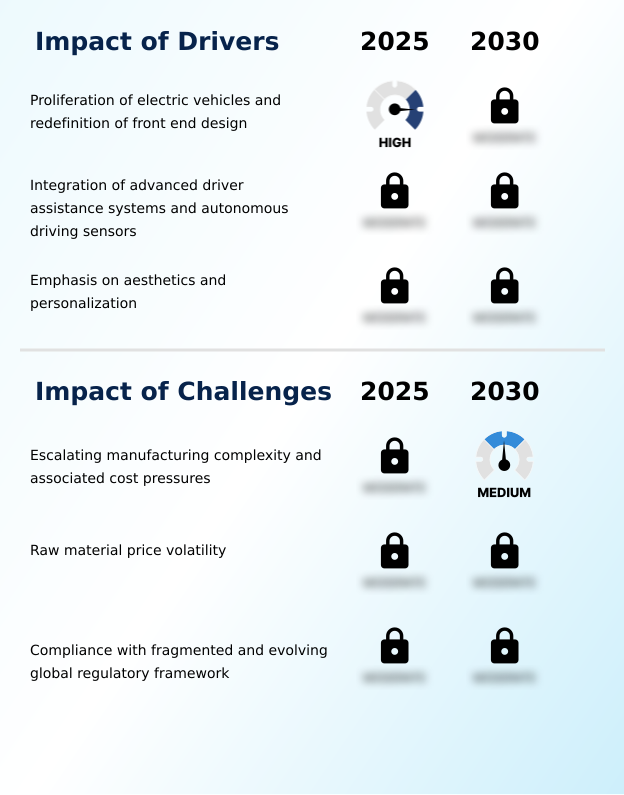
What are the key market drivers leading to the rise in the adoption of Automotive Fascia Industry?
- The proliferation of electric vehicles, which redefines front-end design by removing the need for traditional grilles, stands as a key driver for the automotive fascia market's innovation.
- Market growth is significantly influenced by the integration of advanced driver-assistance systems and the industry's shift toward electrification.
- The redefinition of the electric vehicle front-end allows for greater design freedom, enabling automakers to leverage personalized vehicle aesthetics and custom fascia designs as key differentiators.
- This trend increases the value per vehicle by incorporating complex front-end module integration and sophisticated electronic control units. The requirement for seamless autonomous driving sensor integration is fueling demand for high-performance composites and advanced manufacturing techniques.
- The proliferation of these features means modern vehicles can contain over 100 million lines of code, with a significant portion dedicated to ADAS functions, representing a 50% increase in software complexity compared to previous-generation models.
What are the market trends shaping the Automotive Fascia Industry?
- The market is experiencing a significant trend where automotive fascias are evolving from passive components into intelligent, integrated technology hubs, a transformation driven by the convergence of advanced driver-assistance systems and sophisticated vehicle lighting.
- Key market trends are transforming automotive fascias into intelligent technology hubs, driven by vehicle aerodynamics enhancement and the imperative for sustainability. The focus on circular economy in automotive is compelling the adoption of sustainable exterior components and advanced polymer materials. Designs are evolving to integrate sophisticated ADAS sensor housing and next-generation lighting systems, creating a distinct brand identity through design.
- This functional integration allows for aerodynamic improvements that can reduce vehicle energy consumption by up to 8%. Furthermore, the implementation of end-of-life vehicle recycling initiatives has led to the development of new thermoplastic polyolefin composites, with some suppliers achieving a 25% recycled content in Class-A surface finish parts, showcasing a tangible shift toward more environmentally responsible manufacturing.
What challenges does the Automotive Fascia Industry face during its growth?
- The automotive fascia market faces significant growth challenges from escalating manufacturing complexity and the associated cost pressures tied to producing technologically advanced components.
- The primary challenges facing the market stem from escalating manufacturing complexity and significant cost pressures. Integrating a dense array of sensors for advanced driver-assistance systems and ensuring cyber-security in vehicles requires substantial R&D investment, increasing component costs by over 40% in some premium applications.
- This complexity is compounded by a fragmented regulatory framework and volatile raw material price volatility, which disrupt cost-effective manufacturing and impact supply chain resilience. Consequently, post-collision repair costs have surged, as ADAS calibration requires specialized equipment and expertise.
- Navigating these manufacturing complexity challenges while adhering to diverse global safety standards remains a critical operational hurdle for all suppliers in the sector.
Exclusive Technavio Analysis on Customer Landscape
The automotive fascia market forecasting report includes the adoption lifecycle of the market, covering from the innovator’s stage to the laggard’s stage. It focuses on adoption rates in different regions based on penetration. Furthermore, the automotive fascia market report also includes key purchase criteria and drivers of price sensitivity to help companies evaluate and develop their market growth analysis strategies.
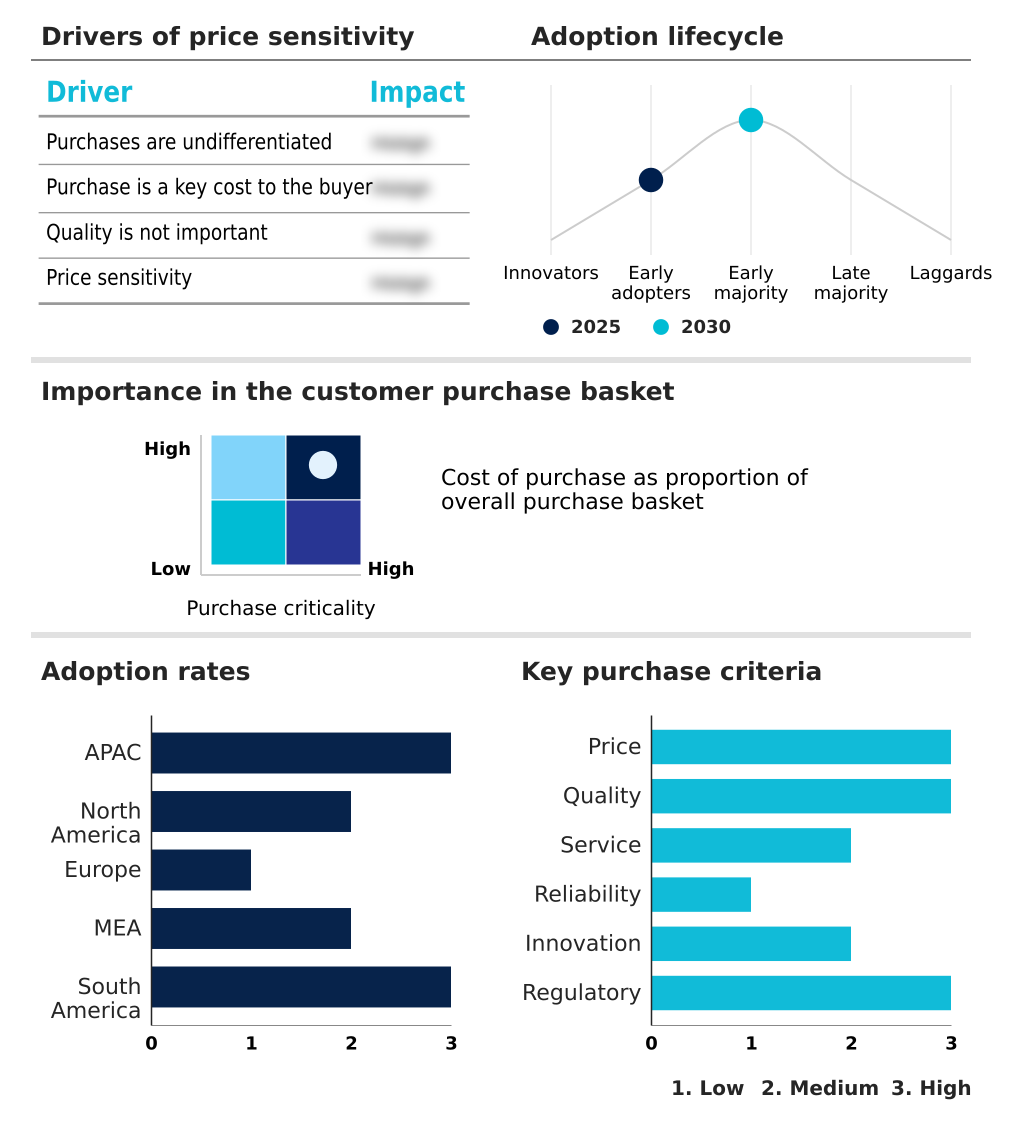
Customer Landscape of Automotive Fascia Industry
Competitive Landscape
Companies are implementing various strategies, such as strategic alliances, automotive fascia market forecast, partnerships, mergers and acquisitions, geographical expansion, and product/service launches, to enhance their presence in the industry.
AGS Automotive Systems - Analysis reveals a focus on engineering complete front-end modules and smart fascia systems, integrating advanced lighting, ADAS sensor technology, and sustainable exterior components.
The industry research and growth report includes detailed analyses of the competitive landscape of the market and information about key companies, including:
- AGS Automotive Systems
- ams OSRAM AG
- Dorman Products Inc.
- FALTEC Co. Ltd.
- FlexNGate Group of Companies
- Forvia SE
- HELLA GmbH and Co. KGaA
- Hyundai Mobis Co. Ltd.
- INOAC Corp.
- Magna International Inc.
- Motherson Group
- Novares
- Shiloh Industries Inc.
- Toyoda Gosei Co. Ltd.
- T-Rex Truck Products Inc.
- Valeo SA
- Yanfeng IAT Co. Ltd.
Qualitative and quantitative analysis of companies has been conducted to help clients understand the wider business environment as well as the strengths and weaknesses of key industry players. Data is qualitatively analyzed to categorize companies as pure play, category-focused, industry-focused, and diversified; it is quantitatively analyzed to categorize companies as dominant, leading, strong, tentative, and weak.
Recent Development and News in Automotive fascia market
- In October 2024, Polymer Innovations Corp. announced a new line of certified circular TPO compounds containing 40% post-consumer recycled content, targeting automotive exterior applications including fascias and bumpers.
- In January 2025, Omni Exteriors Inc. inaugurated its $300 million smart factory in South Carolina, dedicated to producing intelligent front panels and front-end modules for next-generation electric vehicles.
- In March 2025, Visionary Lidar Systems revealed a strategic partnership with a major European OEM to seamlessly integrate its next-generation solid-state LiDAR units within the front fascia of all new models launching from 2027.
- In May 2025, AutoTech Alliance, a consortium of leading Tier 1 suppliers and insurance groups, published new draft standards for the post-collision calibration of fascia-integrated ADAS sensors to reduce repair complexity and costs.
Dive into Technavio’s robust research methodology, blending expert interviews, extensive data synthesis, and validated models for unparalleled Automotive Fascia Market insights. See full methodology.
| Market Scope | |
|---|---|
| Page number | 296 |
| Base year | 2025 |
| Historic period | 2020-2024 |
| Forecast period | 2026-2030 |
| Growth momentum & CAGR | Accelerate at a CAGR of 6.1% |
| Market growth 2026-2030 | USD 7990.3 million |
| Market structure | Fragmented |
| YoY growth 2025-2026(%) | 5.7% |
| Key countries | China, Japan, India, South Korea, Australia, Indonesia, US, Mexico, Canada, Germany, UK, France, Italy, Spain, The Netherlands, Saudi Arabia, UAE, South Africa, Israel, Turkey, Brazil, Argentina and Colombia |
| Competitive landscape | Leading Companies, Market Positioning of Companies, Competitive Strategies, and Industry Risks |
Research Analyst Overview
- Boardroom-level strategy in the automotive fascia market is now dictated by the convergence of technology and materials science. Strategic investment decisions focus on advanced manufacturing techniques, including multi-shot injection molding and precision tooling and molding, to enable complete front-end module integration. The adoption of thermoplastic polyolefin composites and carbon fiber reinforced plastics is critical for developing lightweight structural components.
- These material choices directly influence structural integrity analysis and impact resistance testing, which are essential for pedestrian impact protection. Decisions are complicated by the need to support custom fascia designs and diverse OEM appearance packages featuring illuminated grille technology and dynamic light signatures.
- The shift to an intelligent front panel that houses ADAS sensor housing requires radar-transparent polycarbonate, sensor-compatible paints, and robust thermal management solutions. This necessitates expertise in multi-material joining and creating energy-absorbing structures with a Class-A surface finish.
- As firms navigate the market for aftermarket replacement parts and address low-speed collision repair, they must also plan for vehicle-to-everything communication and over-the-air updates for integrated electronic control units, with some achieving a 20% reduction in validation cycles through advanced simulation.
What are the Key Data Covered in this Automotive Fascia Market Research and Growth Report?
-
What is the expected growth of the Automotive Fascia Market between 2026 and 2030?
-
USD 7.99 billion, at a CAGR of 6.1%
-
-
What segmentation does the market report cover?
-
The report is segmented by Product (Front fascia, and Rear fascia), Vehicle Type (Passenger vehicles, and Commercial vehicles), Material (Plastic, Metal, and Rubber) and Geography (APAC, North America, Europe, Middle East and Africa, South America)
-
-
Which regions are analyzed in the report?
-
APAC, North America, Europe, Middle East and Africa and South America
-
-
What are the key growth drivers and market challenges?
-
Proliferation of electric vehicles and redefinition of front end design, Escalating manufacturing complexity and associated cost pressures
-
-
Who are the major players in the Automotive Fascia Market?
-
AGS Automotive Systems, ams OSRAM AG, Dorman Products Inc., FALTEC Co. Ltd., FlexNGate Group of Companies, Forvia SE, HELLA GmbH and Co. KGaA, Hyundai Mobis Co. Ltd., INOAC Corp., Magna International Inc., Motherson Group, Novares, Shiloh Industries Inc., Toyoda Gosei Co. Ltd., T-Rex Truck Products Inc., Valeo SA and Yanfeng IAT Co. Ltd.
-
Market Research Insights
- The market's dynamism is driven by a complex interplay of consumer design preferences and technological imperatives. Vehicle lightweighting strategies are critical, with new high-performance composites enabling designs that contribute to a 5% improvement in vehicle efficiency. This is balanced against the need for effective regulatory compliance management, particularly concerning global safety standards.
- OEM-supplier collaboration is intensifying to manage manufacturing complexity challenges and ensure supply chain resilience. Innovations in smart surface technology and next-generation lighting systems are transforming personalized vehicle aesthetics, allowing for unprecedented brand identity through design.
- However, this integration leads to a spike in post-collision repair costs, which can be over 200% higher than for traditional components, presenting a significant consideration for the total cost of ownership.
We can help! Our analysts can customize this automotive fascia market research report to meet your requirements.
 RIA -
RIA - 
