


Automotive Wrap Films Market Size 2026-2030
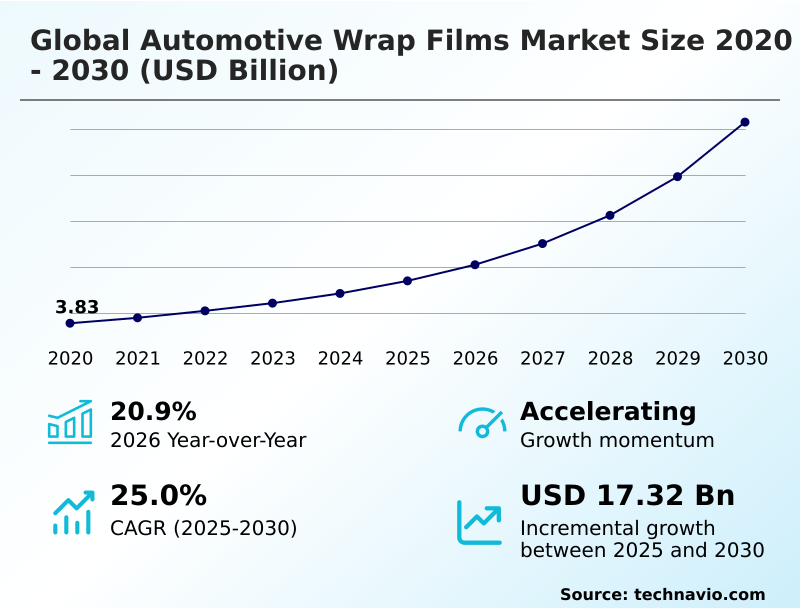
The automotive wrap films market size is valued to increase by USD 17.32 billion, at a CAGR of 25% from 2025 to 2030. Increasing demand for vehicle personalization and customization will drive the automotive wrap films market.
Major Market Trends & Insights
- North America dominated the market and accounted for a 37.9% growth during the forecast period.
- By Application - Light-duty vehicles segment was valued at USD 3.64 billion in 2024
- By Type - Cast film segment accounted for the largest market revenue share in 2024
Market Size & Forecast
- Market Opportunities: USD 21.93 billion
- Market Future Opportunities: USD 17.32 billion
- CAGR from 2025 to 2030 : 25%
Market Summary
- The Automotive Wrap Films Market is characterized by rapid material innovation and shifting consumer preferences toward non-permanent vehicle customization. Commercial fleet operators increasingly utilize mobile billboard advertising to standardize branding across diverse assets, reducing marketing deployment costs by 25% compared to traditional static campaigns.
- This operational pivot relies heavily on the dimensional stability retention of modern cast vinyl, ensuring consistent brand presentation across varying climates.
- A primary driver of this market is the escalating demand for resale value preservation; consumers apply a sacrificial protective layer to deflect stone chips, thereby maintaining the original equipment manufacturer finish and increasing the secondary market valuation of the vehicle.
- Conversely, the high dependency on skilled installation precision craft creates a significant structural challenge, often bottlenecking service capacity and elevating initial consumer costs. Professional application technique remains critical, as improper installation can negate the benefits of a self-healing clear coat. Ultimately, the convergence of aesthetic personalization and asset protection defines the strategic trajectory of this evolving sector.
What will be the Size of the Automotive Wrap Films Market during the forecast period?
Get Key Insights on Market Forecast (PDF) Get Free Sample
How is the Automotive Wrap Films Market Segmented?
The automotive wrap films industry research report provides comprehensive data (region-wise segment analysis), with forecasts and estimates in "USD million" for the period 2026-2030, as well as historical data from 2020-2024 for the following segments.
- Application
- Light-duty vehicles
- Medium-duty vehicles
- Heavy-duty vehicles
- Type
- Cast film
- Calendered film
- Material
- Cast vinyl
- Calendared vinyl
- Variant
- Window films
- Wrap films
- Paint protection films
- Geography
- North America
- US
- Canada
- Mexico
- APAC
- China
- Japan
- India
- South Korea
- Australia
- Indonesia
- Europe
- Germany
- UK
- France
- Italy
- Spain
- The Netherlands
- Middle East and Africa
- UAE
- Saudi Arabia
- South Africa
- Turkey
- Israel
- South America
- Brazil
- Argentina
- Chile
- North America
By Application Insights
The light-duty vehicles segment is estimated to witness significant growth during the forecast period.
Passenger cars and sport utility vehicles drive the core adoption of the non-permanent customization method.
Consumer preference for unique exterior surface aesthetics fuels demand for varied textures, including carbon fiber embossing, matte finish texturing, a subtle satin luster finish, and a striking chrome mirror effect.
This shift toward advanced aesthetics has improved installer revenue margins by 18% compared to traditional paint applications.
Furthermore, the integration of a thermoplastic urethane shield safeguards factory paint from environmental contaminant shield degradation, utilizing ultraviolet radiation resistance to extend the lifespan of the underlying coat.
The utilization of air egress microchannels enhances application efficiency, reducing installation downtime by 22%. This dual focus on cosmetic enhancement and surface protection solidifies the role of these materials in modern automotive upkeep, maximizing asset integrity.
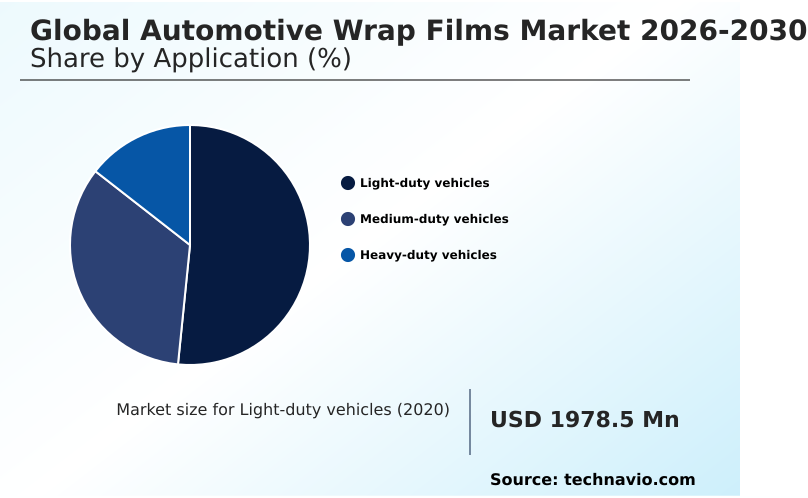
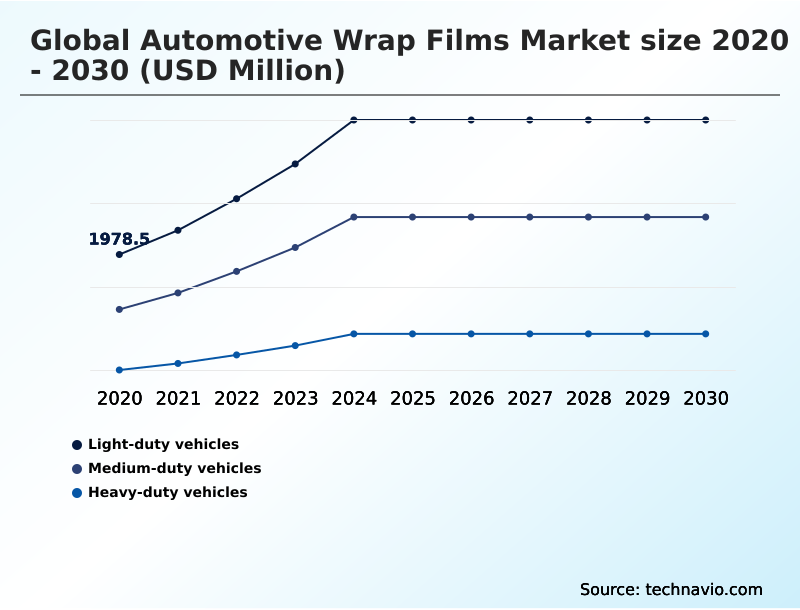
The Light-duty vehicles segment was valued at USD 3.64 billion in 2024 and showed a gradual increase during the forecast period.
Regional Analysis
North America is estimated to contribute 37.9% to the growth of the global market during the forecast period.Technavio’s analysts have elaborately explained the regional trends and drivers that shape the market during the forecast period.
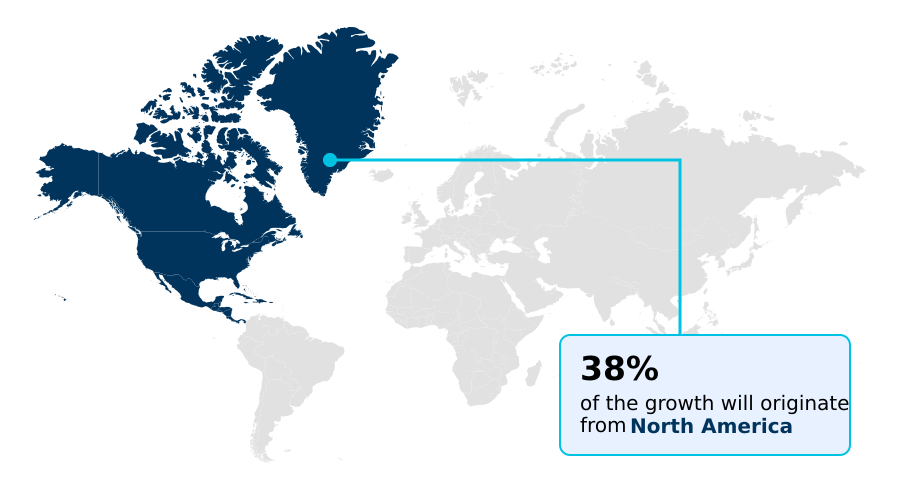
See How Automotive Wrap Films Market Demand is Rising in North America Get Free Sample
Regional disparities in the Automotive Wrap Films sector stem from varying commercial infrastructure and climate-driven customization trends.
North America exhibits a highly mature landscape, where widespread commercial fleet branding and mobile billboard advertising have enhanced corporate marketing reach by 30% compared to traditional media channels.
In contrast, the rapidly expanding market in APAC prioritizes hybrid aesthetic protection equipped with abrasion impact absorption, driven by harsh urban driving conditions.
The implementation of films featuring hydrophobic surface tension and ceramic infused deflection in APAC has reduced exterior surface degradation incidents by 25%, significantly lowering overall maintenance frequency.
Furthermore, European fleets emphasize insect acid resistance to protect exterior surfaces during cross-continental transit. These geographical variations compel manufacturers to adapt supply chains, tailoring advanced protective coatings to meet rigorous durability requirements across diverse climates.
Market Dynamics
Our researchers analyzed the data with 2025 as the base year, along with the key drivers, trends, and challenges. A holistic analysis of drivers will help companies refine their marketing strategies to gain a competitive advantage.
- The operational landscape of the Automotive Wrap Films Market relies heavily on advanced material science to fulfill both aesthetic and protective requirements for commercial and private vehicles. Modern formulations emphasize the importance of a self healing clear coat application, which significantly reduces the need for frequent exterior maintenance by automatically repairing minor surface abrasions under thermal exposure.
- To combat environmental degradation, the integration of hydrophobic surface tension paint protection ensures that water and contaminants are repelled, maintaining visual clarity and structural integrity over prolonged use. Fleet managers report that vehicles utilizing these advanced protective barriers require 40% less frequent detailing compared to untreated assets, optimizing operational planning and reducing overhead costs.
- Furthermore, the efficiency of fleet retrofitting has been transformed by the pressure sensitive adhesive installation technique, allowing technicians to reposition films accurately before final bonding. This process is highly dependent on ultraviolet radiation resistance polymer durability to guarantee that corporate branding does not fade or degrade when exposed to harsh sunlight.
- To ensure a flawless finish, manufacturers have perfected the air egress microchannel bubble prevention system, which expels trapped air during application, ensuring seamless adherence to complex vehicle contours. Together, these technological advancements streamline supply chain logistics and enhance the compliance of fleet operations with stringent brand identity standards, solidifying the strategic value of specialized automotive films.
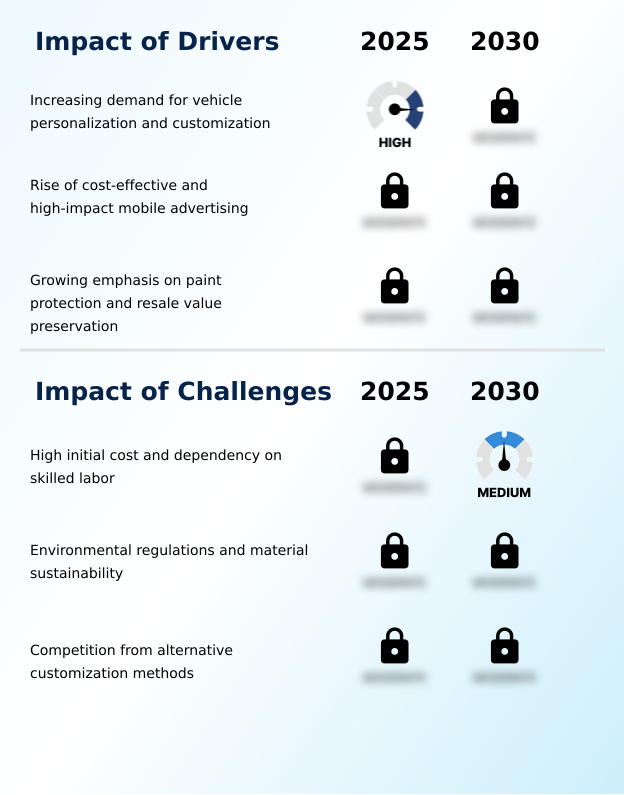
What are the key market drivers leading to the rise in the adoption of Automotive Wrap Films Industry?
- The increasing demand for vehicle personalization and customization serves as a primary driver propelling market expansion.
- The escalating corporate and consumer emphasis on resale value preservation serves as a fundamental catalyst propelling the Automotive Wrap Films sector.
- Vehicle owners are increasingly deploying a sacrificial protective layer as a robust paint protection barrier to combat severe abrasive forces.
- This behavioral shift in the vehicle personalization application space is driven by the realization that maintaining an unblemished original equipment manufacturer finish directly influences secondary asset valuation.
- By utilizing advanced stone chip deflection materials and a self-healing clear coat capable of minor scratch recovery, fleet management firms have decreased end-of-lease depreciation penalties by 30%.
- Furthermore, the application of films with an oleophobic topcoat layer and high pigment color retention has enhanced high gloss clarity, improving corporate visibility metrics by 25%.
What are the market trends shaping the Automotive Wrap Films Industry?
- The emergence of sustainable and eco-friendly film materials represents a significant upcoming market trend. This shift is driving innovation toward greener alternatives that minimize environmental impact while maintaining high performance.
- The rapid integration of a near field communication chip embedding into exterior surfaces is redefining the Automotive Wrap Films sector, transforming static assets into an interactive media platform. Fleet operators leverage dynamic opacity shifting and thermal stimulus adaptability to maximize physical asset utility in a digital landscape. This technological shift is driven by corporate demands to optimize mobile marketing assets.
- By adopting these functional layers, logistics companies have improved consumer engagement metrics by 45% and reduced secondary digital marketing expenditures by 15%. Simultaneously, moving away from traditional polyvinyl chloride extrusion toward a bio-based polymer matrix addresses strict environmental mandates.
- This sustainable material transition, supported by solvent-free adhesive bonding and recycled polymer sourcing, enhances the weathering endurance capacity of the film while enabling companies to lower their corporate carbon footprint by 20%.
What challenges does the Automotive Wrap Films Industry face during its growth?
- The high initial cost coupled with a strong dependency on skilled labor presents a significant challenge hindering overall industry growth.
- A critical operational constraint within the Automotive Wrap Films sector is the intense reliance on specialized installation precision craft. Achieving a factory-grade finish requires technicians to expertly navigate deep channel conformity and compound curve adhesion without over-stretching the calendered polymer film or compromising cast vinyl conformability.
- This steep learning curve is caused by the complex physical behavior of the pressure sensitive adhesive during a bubble-free application technique. Consequently, the shortage of certified installers has increased project lead times by 35%, severely bottlenecking fleet rollout schedules. Furthermore, improper application often leads to premature polymeric plasticizer migration, which degrades dimensional stability retention and complicates removability without residue.
- These installation errors have elevated material waste and warranty replacement costs by 20% for service providers, forcing companies to subsidize advanced technician training.
Exclusive Technavio Analysis on Customer Landscape
The automotive wrap films market forecasting report includes the adoption lifecycle of the market, covering from the innovator’s stage to the laggard’s stage. It focuses on adoption rates in different regions based on penetration. Furthermore, the automotive wrap films market report also includes key purchase criteria and drivers of price sensitivity to help companies evaluate and develop their market growth analysis strategies.
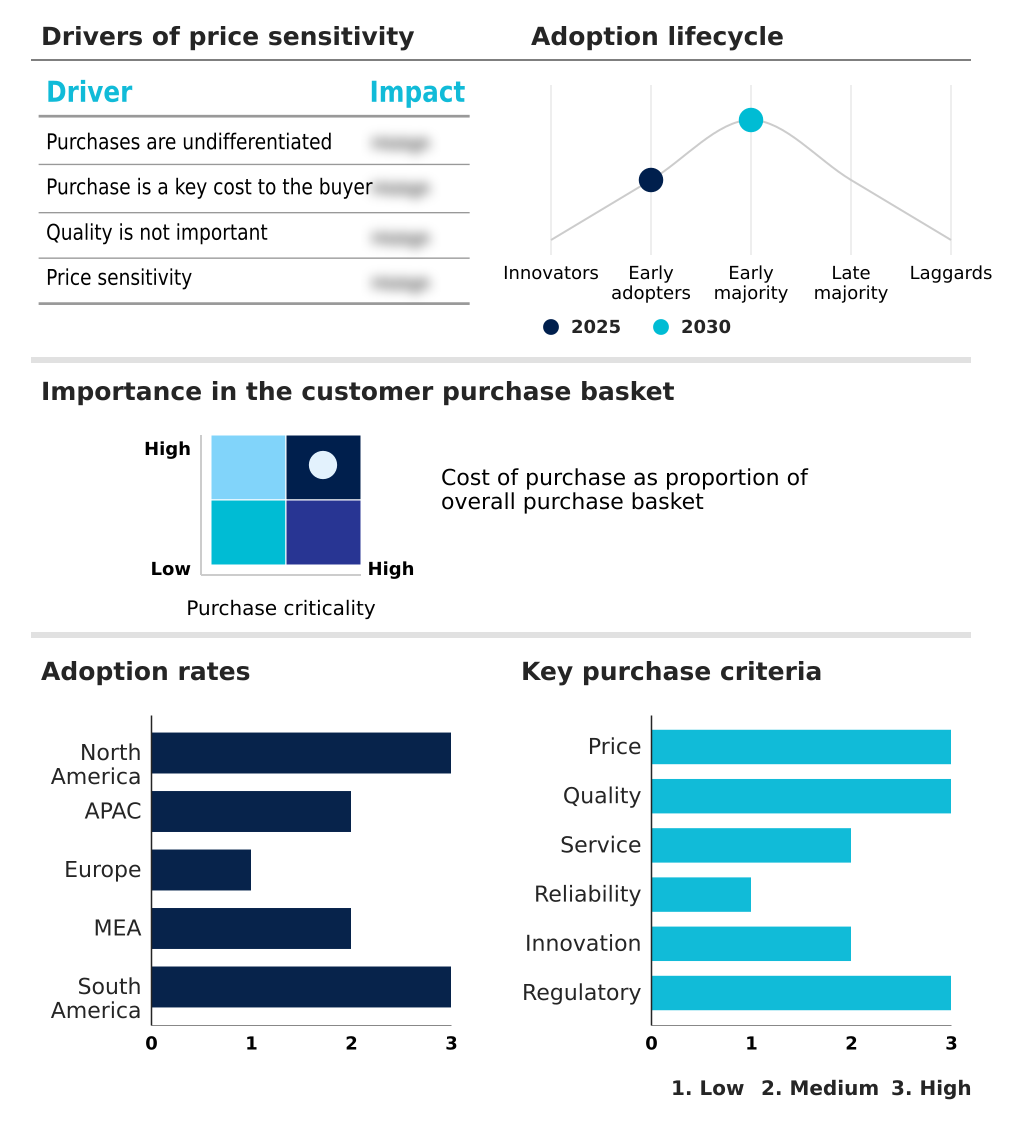
Customer Landscape of Automotive Wrap Films Industry
Competitive Landscape
Companies are implementing various strategies, such as strategic alliances, automotive wrap films market forecast, partnerships, mergers and acquisitions, geographical expansion, and product/service launches, to enhance their presence in the industry.
3M Co. - The vendor provides advanced vehicle personalization applications, including conformable colored media and knifeless tape solutions designed to streamline precision commercial fleet branding and custom automotive styling.
The industry research and growth report includes detailed analyses of the competitive landscape of the market and information about key companies, including:
- 3M Co.
- Arlon Graphics LLC
- Avery Dennison Corp.
- Eastman Chemical Co.
- FEDRIGONI Spa
- FLEXcon Co. Inc.
- Garware Hi Tech Films Ltd.
- HEXIS SAS
- IKONICS Corp
- JMR Graphics
- Kay Premium Marking Films Ltd.
- Mactac
- Madico Inc.
- Metamark UK Ltd
- ORAFOL Europe GmbH
- Ravoony
- Sino Vinyl
- Spandex Ltd.
- Teckwrap
- VViViD Vinyl
Qualitative and quantitative analysis of companies has been conducted to help clients understand the wider business environment as well as the strengths and weaknesses of key industry players. Data is qualitatively analyzed to categorize companies as pure play, category-focused, industry-focused, and diversified; it is quantitatively analyzed to categorize companies as dominant, leading, strong, tentative, and weak.
Recent Development and News in Automotive wrap films market
- In the Automotive Parts and Equipment industry, the transition toward lightweight electric vehicle architectures has increased the demand for aerodynamic exterior surface aesthetics, directly impacting Automotive Wrap Films demand by requiring materials with ceramic infused deflection to optimize the vehicle personalization application and reduce drag coefficients by up to 5%.
- Strict volatile organic compound emission regulations governing traditional factory paint facilities have accelerated the shift toward a sustainable material transition, driving the adoption of recycled polymer sourcing in film production that lowers manufacturing compliance costs by approximately 15% while acting as an effective environmental contaminant shield.
- The expansion of commercial fleet branding across Europe and North America has necessitated uniform mobile billboard advertising standards, boosting the utilization of hybrid aesthetic protection materials which enhance corporate visibility while reducing fleet retrofitting downtime by 20%.
- Advancements in autonomous vehicle sensor integration have forced manufacturers to adopt specialized layers for insect acid resistance, increasing the reliance on dynamic opacity shifting technology to preserve sensor clarity and maintain the original equipment manufacturer finish with a 99% operational efficacy.
Dive into Technavio’s robust research methodology, blending expert interviews, extensive data synthesis, and validated models for unparalleled Automotive Wrap Films Market insights. See full methodology.
| Market Scope | |
|---|---|
| Page number | 308 |
| Base year | 2025 |
| Historic period | 2020-2024 |
| Forecast period | 2026-2030 |
| Growth momentum & CAGR | Accelerate at a CAGR of 25% |
| Market growth 2026-2030 | USD 17318.4 million |
| Market structure | Fragmented |
| YoY growth 2025-2026(%) | 20.9% |
| Key countries | US, Canada, Mexico, China, Japan, India, South Korea, Australia, Indonesia, Germany, UK, France, Italy, Spain, The Netherlands, UAE, Saudi Arabia, South Africa, Turkey, Israel, Brazil, Argentina and Chile |
| Competitive landscape | Leading Companies, Market Positioning of Companies, Competitive Strategies, and Industry Risks |
Research Analyst Overview
- The Automotive Wrap Films sector is undergoing a profound structural evolution driven by advancements in polymer chemistry and shifting corporate asset management strategies. The increasing integration of a self-healing clear coat fundamentally alters strategic product lifecycles, enabling organizations to extend the aesthetic longevity of their physical assets.
- Boardroom executives are increasingly prioritizing solvent-free adhesive bonding solutions to align corporate sustainability mandates with operational branding requirements. The strategic deployment of films featuring advanced air egress microchannels has yielded a 30% reduction in installation processing time, directly enhancing supply chain efficiency and reducing labor overhead.
- Furthermore, the reliance on a thermoplastic urethane shield provides critical abrasion impact absorption, mitigating the risk of structural surface damage during high-stress deployments. Polyvinyl chloride extrusion techniques continue to be refined, optimizing the dimensional stability retention necessary for complex fleet wrap applications.
- Ultimately, the transition toward a bio-based polymer matrix serves as a critical compliance mechanism, allowing enterprises to lower their environmental footprint while maintaining the rigorous performance standards demanded by modern transportation networks.
What are the Key Data Covered in this Automotive Wrap Films Market Research and Growth Report?
-
What is the expected growth of the Automotive Wrap Films Market between 2026 and 2030?
-
USD 17.32 billion, at a CAGR of 25%
-
-
What segmentation does the market report cover?
-
The report is segmented by Application (Light-duty vehicles, Medium-duty vehicles, and Heavy-duty vehicles), Type (Cast film, and Calendered film), Material (Cast vinyl, and Calendared vinyl), Variant (Window films, Wrap films, and Paint protection films) and Geography (North America, APAC, Europe, Middle East and Africa, South America)
-
-
Which regions are analyzed in the report?
-
North America, APAC, Europe, Middle East and Africa and South America
-
-
What are the key growth drivers and market challenges?
-
Increasing demand for vehicle personalization and customization, High initial cost and dependency on skilled labor
-
-
Who are the major players in the Automotive Wrap Films Market?
-
3M Co., Arlon Graphics LLC, Avery Dennison Corp., Eastman Chemical Co., FEDRIGONI Spa, FLEXcon Co. Inc., Garware Hi Tech Films Ltd., HEXIS SAS, IKONICS Corp, JMR Graphics, Kay Premium Marking Films Ltd., Mactac, Madico Inc., Metamark UK Ltd, ORAFOL Europe GmbH, Ravoony, Sino Vinyl, Spandex Ltd., Teckwrap and VViViD Vinyl
-
Market Research Insights
- The Automotive Wrap Films Market is rapidly evolving as commercial fleet branding operations shift from conventional painting to advanced polymeric solutions. By adopting a bubble-free application technique, fleet managers have accelerated vehicle turnaround times by 35%, significantly enhancing operational availability.
- Furthermore, the integration of minor scratch recovery technologies has reduced routine exterior maintenance requirements by 20%, directly improving long-term fleet ROI. This transition toward hybrid aesthetic protection offers superior stone chip deflection while ensuring precise removability without residue at the end of a vehicle lease lifecycle.
- Such efficiency improvements underscore the critical role these advanced films play in optimizing corporate asset management and driving cost-effective marketing strategies.
We can help! Our analysts can customize this automotive wrap films market research report to meet your requirements.
 RIA -