

Barcode Label Printer Market Size 2026-2030
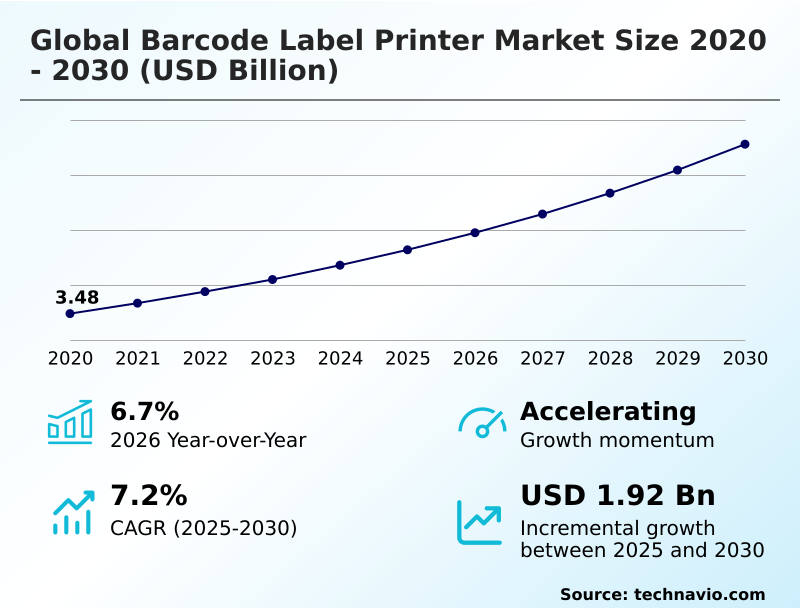
The barcode label printer market size is valued to increase by USD 1.92 billion, at a CAGR of 7.2% from 2025 to 2030. Rapid E commerce expansion omnichannel supply chain logistics growth will drive the barcode label printer market.
Major Market Trends & Insights
- APAC dominated the market and accounted for a 35.7% growth during the forecast period.
- By Product - Industrial printers segment was valued at USD 2.29 billion in 2024
- By Application - Manufacturing segment accounted for the largest market revenue share in 2024
Market Size & Forecast
- Market Opportunities: USD 3.08 billion
- Market Future Opportunities: USD 1.92 billion
- CAGR from 2025 to 2030 : 7.2%
Market Summary
- The Barcode Label Printer is experiencing structural transformation as enterprises transition from standalone labeling stations to highly integrated cloud-connected identification networks. Advanced automated identification technologies now dictate the pace of modern fulfillment operations.
- Within omnichannel retail distribution, facility managers are replacing legacy dot-matrix systems with intelligent thermal transfer hardware, improving cross-docking processing speeds by 22% compared to previous manual entry methods. The rapid expansion of e-commerce logistics acts as a primary growth driver, compelling warehouses to deploy high-speed mobile and industrial printing units to handle massive daily shipping volumes.
- Conversely, rising enterprise integration complexity creates a persistent challenge, as corporate IT teams struggle to align new edge-computing printing networks with legacy warehouse management systems, often causing deployment delays. Facilities prioritizing real-time asset tracking rely heavily on smart printers featuring predictive maintenance analytics to prevent unforeseen mechanical failures.
- Ultimately, the continuous modernization of supply chain tracking infrastructure ensures sustained commercial demand for robust labeling equipment.
What will be the Size of the Barcode Label Printer Market during the forecast period?
Get Key Insights on Market Forecast (PDF) Get Free Sample
How is the Barcode Label Printer Market Segmented?
The barcode label printer industry research report provides comprehensive data (region-wise segment analysis), with forecasts and estimates in "USD million" for the period 2026-2030, as well as historical data from 2020-2024 for the following segments.
- Product
- Industrial printers
- Desktop printers
- Mobile printers
- Application
- Manufacturing
- Transportation and logistics
- Retail
- Healthcare
- Others
- Connectivity
- Wired
- Wireless
- Geography
- APAC
- China
- Japan
- India
- South Korea
- Indonesia
- Australia
- North America
- US
- Canada
- Mexico
- Europe
- Germany
- UK
- France
- Italy
- Spain
- The Netherlands
- South America
- Brazil
- Argentina
- Chile
- Middle East and Africa
- Saudi Arabia
- UAE
- South Africa
- Israel
- Turkey
- APAC
By Product Insights
The industrial printers segment is estimated to witness significant growth during the forecast period.
Industrial barcode printers form the operational backbone of modern distribution networks, engineered to withstand extreme manufacturing environments while delivering continuous output.
The integration of advanced thermal printhead engineering ensures high-resolution output for compliance tags and shipping labels without compromising linear speed. Facilities prioritizing smart factory upgrades rely on these heavy-duty units to support continuous process automation across complex assembly lines.
As automated warehousing systems expand globally, demand for durable printing architecture has surged, directly reducing manual sorting bottlenecks. By adopting intelligent printing infrastructure, enterprise operators have improved automated inline verification accuracy by 15%, significantly lowering shipment rejection rates.
This structural shift from legacy hardware to networked industrial labeling solutions allows logistics hubs to maintain flawless traceability during peak operational cycles.
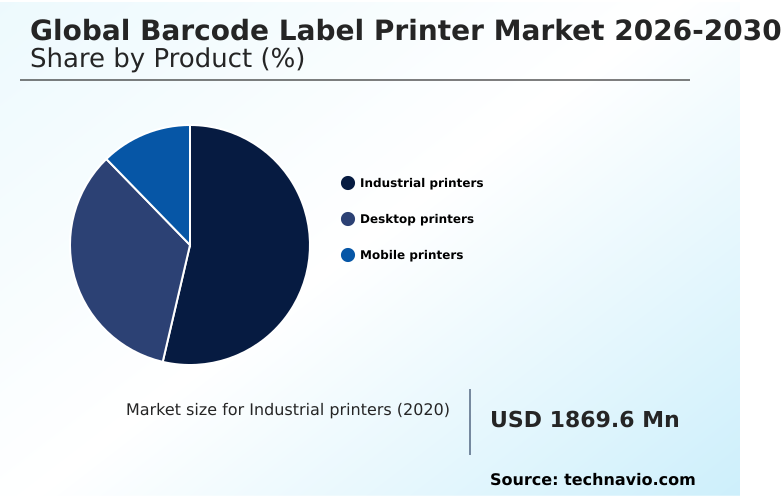
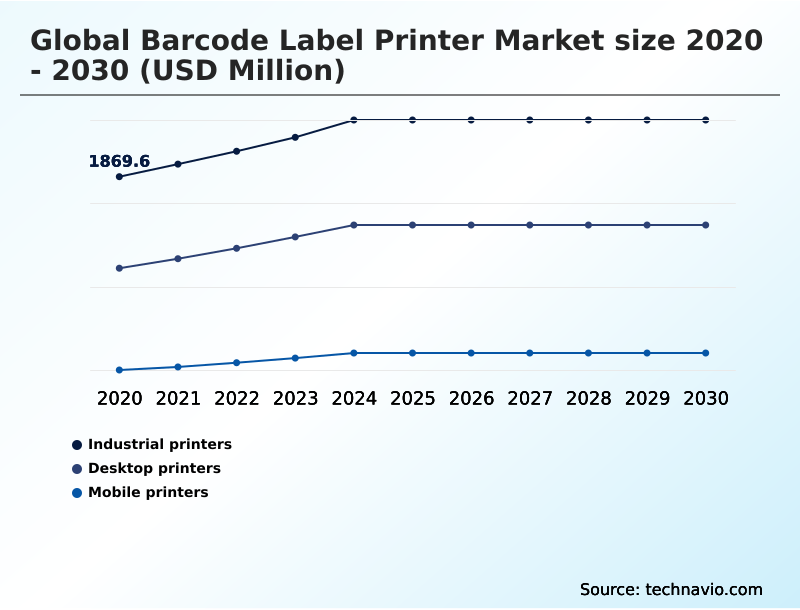
The Industrial printers segment was valued at USD 2.29 billion in 2024 and showed a gradual increase during the forecast period.
Regional Analysis
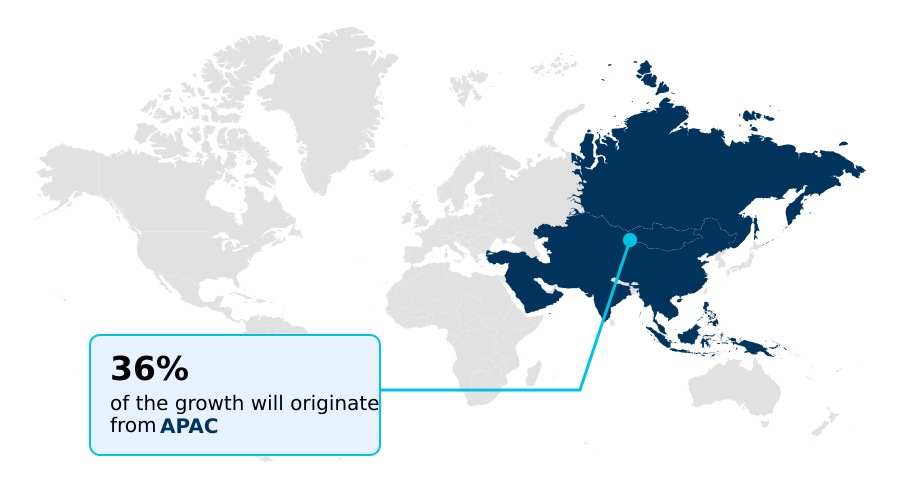
APAC is estimated to contribute 35.7% to the growth of the global market during the forecast period.Technavio’s analysts have elaborately explained the regional trends and drivers that shape the market during the forecast period.
See How Barcode Label Printer Market Demand is Rising in APAC Get Free Sample
The geographic landscape of the Barcode Label Printer sector reveals significant divergence in technological adoption and supply chain strategies. The APAC region demonstrates accelerated equipment deployment, driven by massive e-commerce networks demanding high-volume shipping label execution across sprawling distribution centers.
In contrast, the North America market exhibits a highly mature operational profile, prioritizing sophisticated RFID tag encoding barcode printers to support complex omnichannel order fulfillment architectures.
This strategic focus in North America has enhanced inventory visibility by 24% compared to developing regions relying on conventional direct thermal printing.
Furthermore, stringent product traceability directives have compelled European logistics operators to heavily invest in automated linerless labeling systems integration, reducing non-recyclable backing waste by 40%.
Meanwhile, specific cold-chain logistics requirements across South America are forcing local agricultural exporters to adopt ruggedized thermal transfer mechanisms, decreasing temperature-related scanning failures by 15% and ensuring continuous operational compliance.
Market Dynamics
Our researchers analyzed the data with 2025 as the base year, along with the key drivers, trends, and challenges. A holistic analysis of drivers will help companies refine their marketing strategies to gain a competitive advantage.
- The ongoing evolution of the Barcode Label Printer ecosystem highlights a fundamental shift toward highly intelligent application-specific identification hardware. Enterprise facility managers increasingly evaluate the operational merits of thermal transfer vs direct thermal printing to determine the optimal balance between label longevity and consumable costs across diverse supply chain environments.
- In sectors requiring extreme environmental resilience, barcode label printing for cold-chain logistics has become indispensable, ensuring that pharmaceutical and agricultural tracking identifiers remain legible through prolonged exposure to sub-zero temperatures and high moisture levels.
- To manage surging daily parcel volumes, regional distribution hubs are heavily prioritizing high-volume shipping label execution, deploying networked industrial printers that minimize mechanical downtime and accelerate package sortation.
- Concurrently, corporate sustainability mandates are driving the automated linerless labeling systems integration into retail and light-industrial workflows, directly eliminating silicone backing waste while allowing rolls to hold up to 40% more printable media than standard configurations. This efficiency gain significantly reduces the labor hours dedicated to media changeovers, optimizing overall workforce allocation.
- Furthermore, large-scale manufacturing and defense networks are mandating the deployment of RFID tag encoding barcode printers to achieve granular real-time asset visibility without requiring direct line-of-sight scanning.
- By transitioning to these advanced dual-function printing systems, organizations experience processing speeds nearly double those of traditional manual barcode auditing, demonstrating the immense business value of integrating sophisticated data capture technologies into modern enterprise operations.
What are the key market drivers leading to the rise in the adoption of Barcode Label Printer Industry?
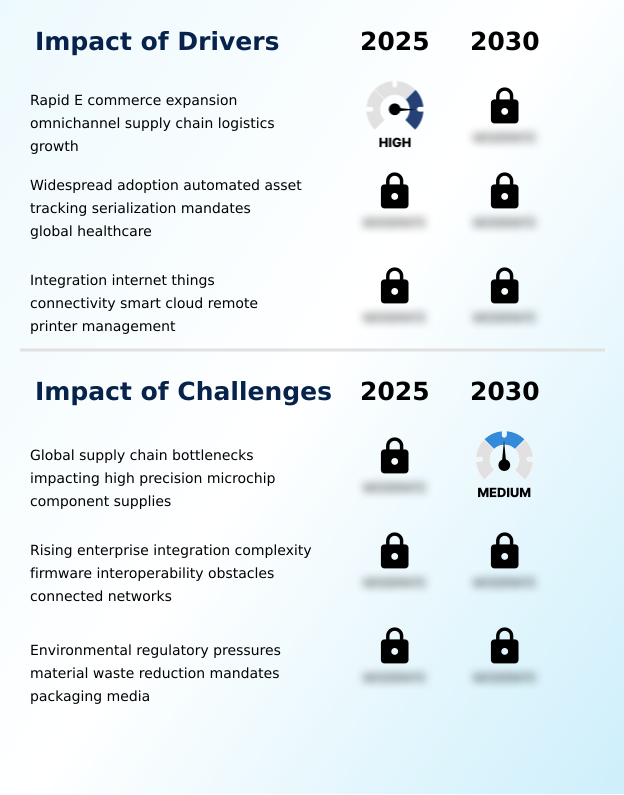
- The rapid expansion of e-commerce platforms alongside omnichannel supply chain logistics growth serves as the primary driver propelling the market.
- The rapid acceleration of e-commerce logistics and omnichannel order fulfillment models functions as the primary catalyst propelling the Barcode Label Printer sector.
- Modern fulfillment centers require unparalleled tracking accuracy to manage complex inventory movements, driving massive investments in smart factory upgrades and advanced digital infrastructure.
- By integrating robust printing hardware into automated warehousing systems, enterprise operators have improved order picking efficiency by 25%.
- The necessity for rigorous industrial component tracking forces manufacturers to deploy heavy-duty equipment capable of continuously generating high-density matrix codes without degrading print quality.
- This commitment to continuous process automation eliminates localized data entry bottlenecks, reducing overall supply chain processing delays by 18% and ensuring that facilities can seamlessly execute high-velocity shipping mandates.
What are the market trends shaping the Barcode Label Printer Industry?
- The rapid shift toward eco-friendly linerless labeling and waste elimination media is an upcoming market trend.
- The widespread adoption of linerless labeling technology is fundamentally reshaping operational workflows within the Barcode Label Printer sector. Enterprises are transitioning away from traditional media formats to eliminate non-recyclable backing waste and maximize continuous printing uptime. This strategic shift has lowered consumable shipping weights by 15%, directly reducing enterprise carbon footprints and logistical expenses.
- Consequently, hardware engineers are redesigning internal thermal transfer mechanisms and specialized components to resist aggressive pressure-sensitive adhesives, extending the lifecycle between mandatory platen roller replacement cycles by 20%. To further enhance distribution throughput, high-speed automated sorting facilities are heavily integrating dynamic print-and-apply engines capable of executing variable-length formatting without manual intervention.
- By coupling these advanced output systems with automated inline verification, logistics providers have successfully minimized unreadable barcode errors by 30%, ensuring rapid package sortation and vastly improving end-to-end supply chain reliability.
What challenges does the Barcode Label Printer Industry face during its growth?
- Global supply chain bottlenecks impacting high-precision microchip component supplies represent a key challenge affecting industry growth.
- Persistent semiconductor supply chain vulnerabilities impacting sophisticated microchip availability present a formidable structural challenge for the Barcode Label Printer sector. Modern industrial barcode printers depend heavily on proprietary logic boards and precision thermal printhead engineering to execute complex identification tasks continuously.
- Disruptions in these essential electronic component deliveries have extended hardware procurement lead times, decreasing immediate equipment availability by 15% for expanding logistics networks. Furthermore, the integration of advanced radio-frequency identification encoding and smart network controllers requires strict cybersecurity synchronization with cloud-native enterprise resource platforms.
- Navigating these dense firmware interoperability hurdles places immense labor strain on corporate IT departments, leading to a 20% increase in integration costs and frequently delaying the deployment of predictive maintenance analytics across distributed warehouse environments.
Exclusive Technavio Analysis on Customer Landscape
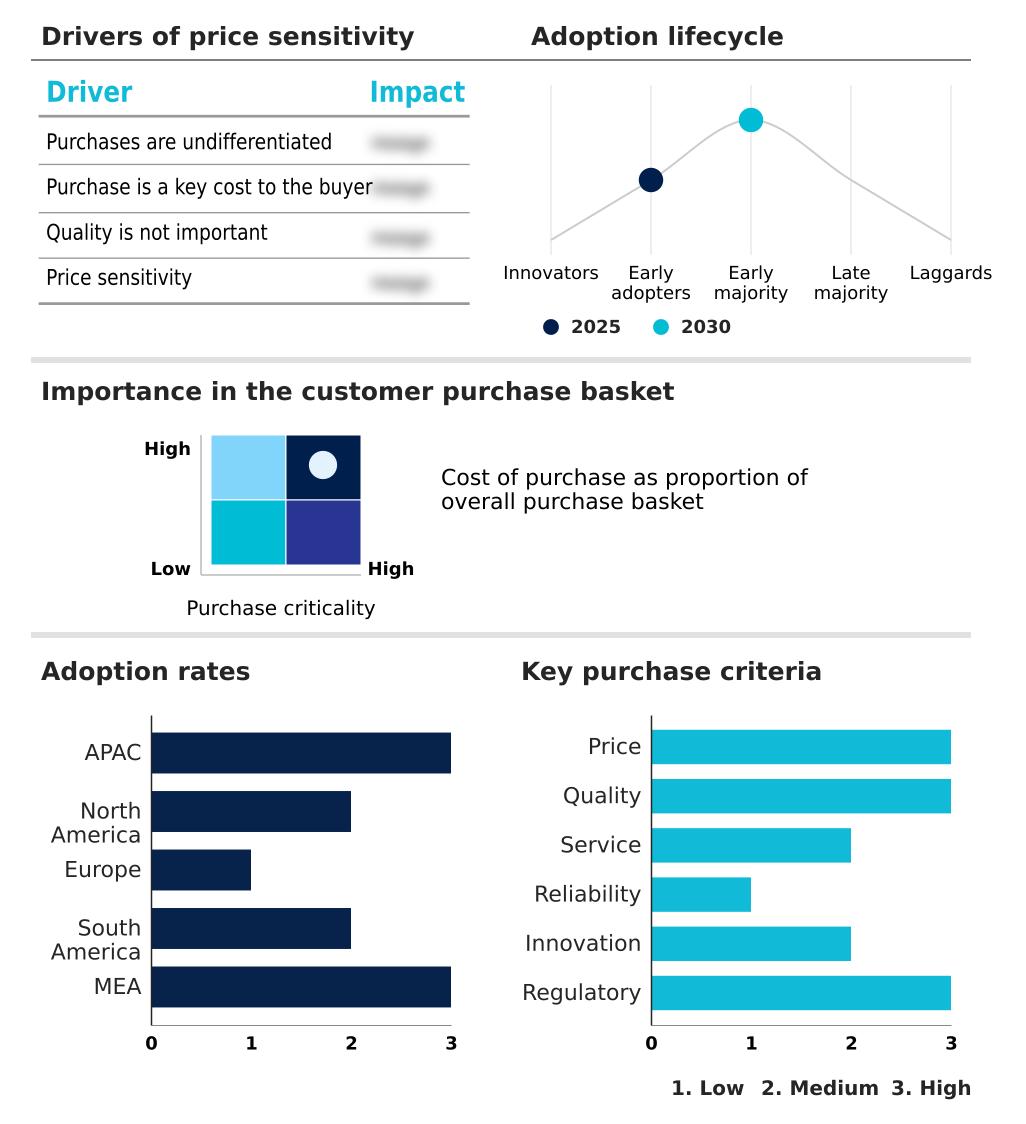
The barcode label printer market forecasting report includes the adoption lifecycle of the market, covering from the innovator’s stage to the laggard’s stage. It focuses on adoption rates in different regions based on penetration. Furthermore, the barcode label printer market report also includes key purchase criteria and drivers of price sensitivity to help companies evaluate and develop their market growth analysis strategies.
Customer Landscape of Barcode Label Printer Industry
Competitive Landscape
Companies are implementing various strategies, such as strategic alliances, barcode label printer market forecast, partnerships, mergers and acquisitions, geographical expansion, and product/service launches, to enhance their presence in the industry.
BIXOLON CO. LTD. - The provider delivers advanced industrial and desktop barcode label printers featuring AI-driven predictive maintenance and high-speed thermal transfer capabilities to optimize logistics and automated warehouse inventory tracking.
The industry research and growth report includes detailed analyses of the competitive landscape of the market and information about key companies, including:
- BIXOLON CO. LTD.
- Bizerba SE and Co. KG
- Brady Corp.
- Brother Industries Ltd.
- cab Produkttechnik GmbH
- Carl Valentin GmbH
- Citizen Systems Europe GmbH
- DASCOM Corp.
- GoDEX International Co. Ltd.
- Honeywell International Inc.
- Microplex Printware AG
- Novexx Solutions GmbH
- Primera Technology Inc.
- SATO Holdings Corp.
- Seiko Epson Corp.
- STAR MICRONICS Co.
- Toshiba Tec Corp.
- TSC Auto ID Technology Co. Ltd.
- Xiamen Hanin Co. Ltd.
- Zebra Technologies Corp.
Qualitative and quantitative analysis of companies has been conducted to help clients understand the wider business environment as well as the strengths and weaknesses of key industry players. Data is qualitatively analyzed to categorize companies as pure play, category-focused, industry-focused, and diversified; it is quantitatively analyzed to categorize companies as dominant, leading, strong, tentative, and weak.
Recent Development and News in Barcode label printer market
- In the Technology Hardware, Storage and Peripherals industry, the widespread integration of edge-computing operating environments within supply chain networks has localized data processing, directly impacting Barcode Label Printer demand by necessitating autonomous standalone printing terminals.
- Strict environmental regulatory pressures mandating the reduction of electronic and packaging waste have accelerated the adoption of sustainable operational hardware, driving Barcode Label Printer manufacturers to develop specialized anti-adhesive paper paths for linerless media.
- The rapid digital transformation of industrial automation through IoT connectivity has established new predictive maintenance benchmarks, forcing the Barcode Label Printer market to incorporate onboard sensors that monitor total media consumption and motor temperature to prevent downtime.
- Global semiconductor supply chain bottlenecks impacting the availability of high-precision microcontrollers have restricted production outputs for advanced digital hardware, subsequently extending delivery schedules for high-volume Barcode Label Printer deployments across regional fulfillment hubs.
Dive into Technavio’s robust research methodology, blending expert interviews, extensive data synthesis, and validated models for unparalleled Barcode Label Printer Market insights. See full methodology.
| Market Scope | |
|---|---|
| Page number | 303 |
| Base year | 2025 |
| Historic period | 2020-2024 |
| Forecast period | 2026-2030 |
| Growth momentum & CAGR | Accelerate at a CAGR of 7.2% |
| Market growth 2026-2030 | USD 1921.7 million |
| Market structure | Fragmented |
| YoY growth 2025-2026(%) | 6.7% |
| Key countries | China, Japan, India, South Korea, Indonesia, Australia, US, Canada, Mexico, Germany, UK, France, Italy, Spain, The Netherlands, Brazil, Argentina, Chile, Saudi Arabia, UAE, South Africa, Israel and Turkey |
| Competitive landscape | Leading Companies, Market Positioning of Companies, Competitive Strategies, and Industry Risks |
Research Analyst Overview
- The Barcode Label Printer landscape operates as a mission-critical component of international supply chain infrastructure, evolving rapidly to meet unprecedented data capture requirements. Boardroom executives are increasingly prioritizing the integration of advanced radio-frequency identification encoding into standard thermal hardware to achieve real-time asset visibility and mitigate inventory shrinkage. This strategic shift transforms localized printing units into edge-computing network nodes.
- By deploying smart network controllers, IT administrators can now seamlessly manage thousands of decentralized printers, resolving firmware vulnerabilities without initiating costly physical maintenance cycles. The implementation of predictive maintenance analytics has successfully reduced unexpected hardware downtime by 28%, optimizing overall equipment effectiveness across high-speed manufacturing lines.
- Furthermore, the transition toward high-density matrix codes requires exceptional precision from direct thermal printing mechanisms to guarantee flawless optical verification during logistics sortation. These technological advancements ensure that robust automated identification networks remain central to enterprise operational planning, facilitating stringent regulatory compliance and supporting complex distribution architectures seamlessly.
What are the Key Data Covered in this Barcode Label Printer Market Research and Growth Report?
-
What is the expected growth of the Barcode Label Printer Market between 2026 and 2030?
-
USD 1.92 billion, at a CAGR of 7.2%
-
-
What segmentation does the market report cover?
-
The report is segmented by Product (Industrial printers, Desktop printers, and Mobile printers), Application (Manufacturing, Transportation and logistics, Retail, Healthcare, and Others), Connectivity (Wired, and Wireless) and Geography (APAC, North America, Europe, South America, Middle East and Africa)
-
-
Which regions are analyzed in the report?
-
APAC, North America, Europe, South America and Middle East and Africa
-
-
What are the key growth drivers and market challenges?
-
Rapid E commerce expansion omnichannel supply chain logistics growth, Global supply chain bottlenecks impacting high precision microchip component supplies
-
-
Who are the major players in the Barcode Label Printer Market?
-
BIXOLON CO. LTD., Bizerba SE and Co. KG, Brady Corp., Brother Industries Ltd., cab Produkttechnik GmbH, Carl Valentin GmbH, Citizen Systems Europe GmbH, DASCOM Corp., GoDEX International Co. Ltd., Honeywell International Inc., Microplex Printware AG, Novexx Solutions GmbH, Primera Technology Inc., SATO Holdings Corp., Seiko Epson Corp., STAR MICRONICS Co., Toshiba Tec Corp., TSC Auto ID Technology Co. Ltd., Xiamen Hanin Co. Ltd. and Zebra Technologies Corp.
-
Market Research Insights
- The Barcode Label Printer functions as critical infrastructure for modern supply chains, enabling precise industrial component tracking and seamless operational workflows. As product traceability directives become stricter across jurisdictions, enterprises are upgrading legacy systems to support compliant chemical safety labeling and high-density matrix codes.
- This transition to advanced identification technology has reduced labeling compliance violations by 18% across major manufacturing hubs. Furthermore, the rapid proliferation of urban micro-fulfillment centers demands compact high-speed printing hardware, accelerating last-mile delivery processing times by 25%.
- By integrating these intelligent printing solutions into centralized networks, organizations have enhanced real-time inventory management accuracy by 30%, driving significant cost reductions and optimizing overall resource allocation.
We can help! Our analysts can customize this barcode label printer market research report to meet your requirements.
 RIA -