


Biocatalysis And Biocatalyst Market Size 2026-2030
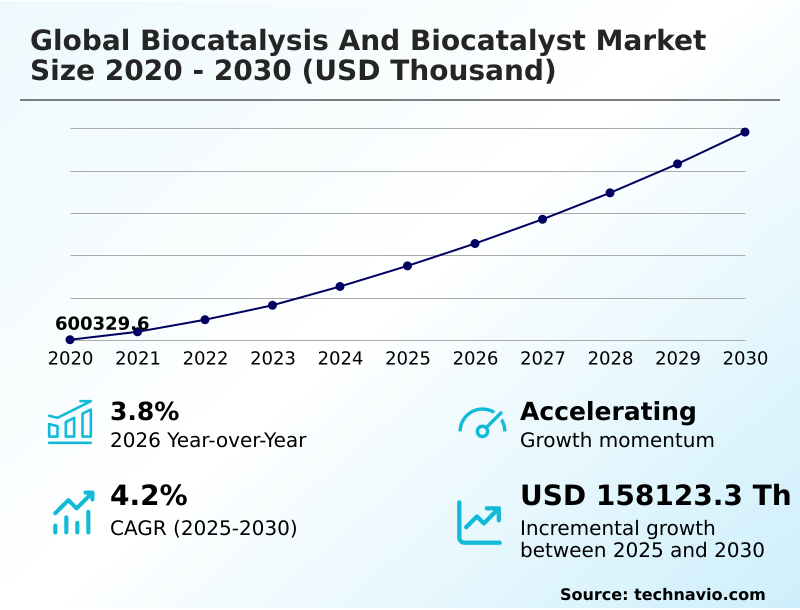
The biocatalysis and biocatalyst market size is valued to increase by USD 158.12 million, at a CAGR of 4.2% from 2025 to 2030. Accelerated adoption of green chemistry and sustainable industrial practices will drive the biocatalysis and biocatalyst market.
Major Market Trends & Insights
- Europe dominated the market and accounted for a 34.7% growth during the forecast period.
- By Application - Biofuels segment was valued at USD 193.72 million in 2024
- By Type - Hydrolases segment accounted for the largest market revenue share in 2024
Market Size & Forecast
- Market Opportunities:
- Market Future Opportunities: USD 158.12 million
- CAGR from 2025 to 2030 : 4.2%
Market Summary
- The biocatalysis and biocatalyst market is undergoing a significant transformation, driven by the global shift toward sustainable industrial practices and green chemistry. This evolution is underpinned by advances in protein engineering and synthetic biology, which enable the design of highly specific enzymes for diverse applications.
- Key trends include the development of multi-enzyme cascades for streamlined manufacturing and the use of biocatalysts for plastic degradation, supporting a circular economy.
- For instance, a pharmaceutical firm can leverage engineered enzymes for the asymmetric synthesis of a complex chiral intermediate, achieving over 99% purity in a single step, thereby slashing production costs and waste compared to traditional multi-step chemical routes. This enhances overall yield and reduces the environmental footprint.
- However, the market faces challenges such as the high initial cost of transitioning to enzyme-based systems and the technical limitations related to enzyme stability under harsh industrial conditions. Overcoming these hurdles is crucial for broadening the adoption of biocatalytic solutions from high-value niche products to large-scale commodity chemical production.
What will be the Size of the Biocatalysis And Biocatalyst Market during the forecast period?
Get Key Insights on Market Forecast (PDF) Get Free Sample
How is the Biocatalysis And Biocatalyst Market Segmented?
The biocatalysis and biocatalyst industry research report provides comprehensive data (region-wise segment analysis), with forecasts and estimates in "USD thousand" for the period 2026-2030, as well as historical data from 2020-2024 for the following segments.
- Application
- Biofuels
- Biopharmaceuticals
- Detergents
- Food and beverages
- Type
- Hydrolases
- Oxidoreductases
- Transferases
- Source
- Microorganisms
- Plants
- Animals
- Geography
- North America
- US
- Canada
- Mexico
- Europe
- Germany
- UK
- France
- APAC
- China
- Japan
- South Korea
- Middle East and Africa
- South Africa
- Saudi Arabia
- UAE
- South America
- Brazil
- Argentina
- Rest of World (ROW)
- North America
By Application Insights
The biofuels segment is estimated to witness significant growth during the forecast period.
The biofuels segment is propelled by the global imperative for sustainable energy, with biocatalysis at its core. This process involves the critical lignocellulosic biomass conversion into fermentable sugars, primarily through enzymatic hydrolysis using enzymes like cellulases.
The industry relies on a range of hydrolases, including lipases, amylases, and proteases, to achieve high stereoselectivity. Progress in this area hinges on enzyme discovery and enhancement via techniques like protein folding simulation for better catalytic activity prediction.
The goal is to develop biocatalysts with superior enzyme stability and industrial robustness, capable of handling non-natural substrates in biorefineries. Innovations in enzyme technology have led to process yields improving by over 15% compared to legacy systems.
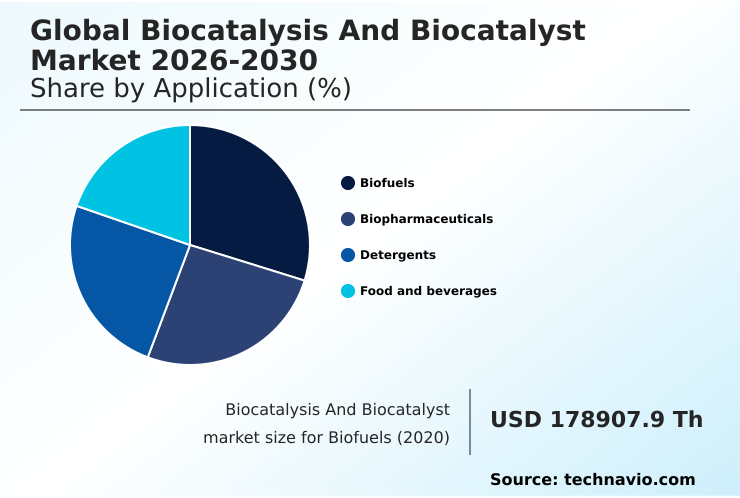
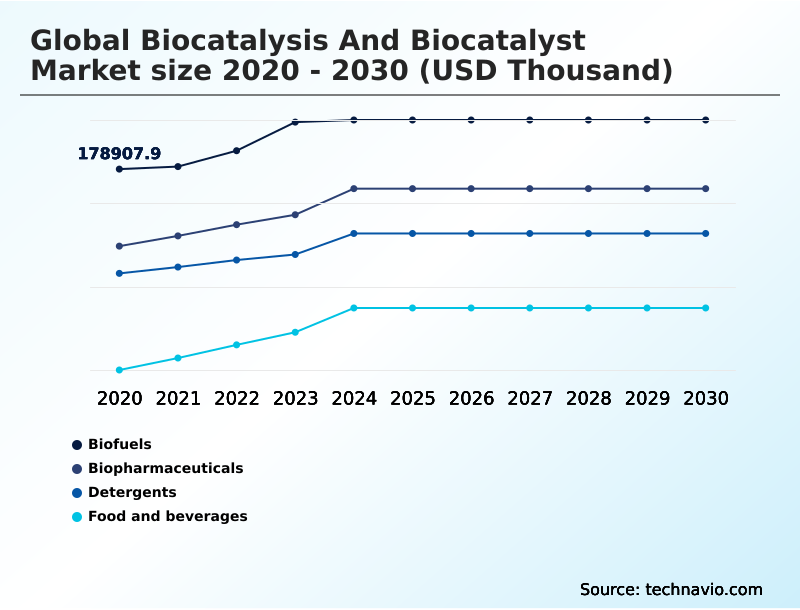
The Biofuels segment was valued at USD 193.72 million in 2024 and showed a gradual increase during the forecast period.
Regional Analysis
Europe is estimated to contribute 34.7% to the growth of the global market during the forecast period.Technavio’s analysts have elaborately explained the regional trends and drivers that shape the market during the forecast period.
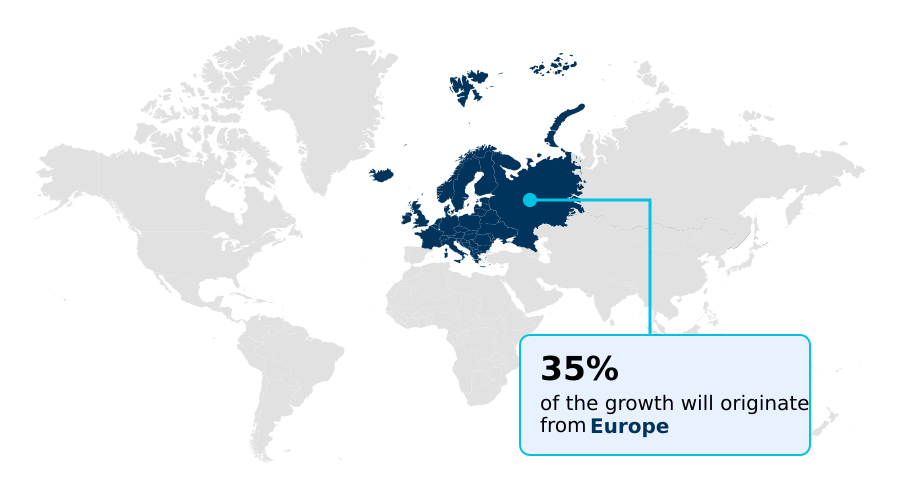
See How Biocatalysis And Biocatalyst Market Demand is Rising in Europe Get Free Sample
The geographic landscape is defined by regional specialization, with North America and Europe leading in high-value applications.
Metabolic pathway design and synthetic biology tools are central to innovation in these regions, particularly for active pharmaceutical ingredient synthesis where enzymes like transferases and oxidoreductases are crucial.
APAC is emerging as a manufacturing hub, driven by applications in textiles and food processing, focusing on efficiency gains like achieving superior results in low-temperature wash cycles, which can reduce household energy consumption by up to 25%.
South America leverages its agricultural strength for biofuel production, utilizing enzymes for the gas fermentation process.
Innovations are also seen in food technology, such as improving plant protein functionality and dough structure optimization for better moisture retention in baking, showcasing the market's global reach and diverse application-driven growth.
The expansion in APAC is forecasted at 5.0%, outpacing Europe's 4.6%.
Market Dynamics
Our researchers analyzed the data with 2025 as the base year, along with the key drivers, trends, and challenges. A holistic analysis of drivers will help companies refine their marketing strategies to gain a competitive advantage.
- The biocatalysis and biocatalyst market is advancing through several strategic avenues, each contributing to its industrial viability and sustainability. The cost-effectiveness of industrial biocatalysis is a primary focus, with innovations in biocatalysis for specialty chemicals production demonstrating significant improvements. For example, ai-driven enzyme design and optimization is revolutionizing how enzymes are developed.
- This is complemented by enzyme engineering for enhanced thermostability and sophisticated biocatalyst immobilization techniques and materials, which extend catalyst lifecycles. Processes are being streamlined through continuous flow biocatalysis systems and novel chemo-enzymatic routes for fine chemicals, leading to process efficiencies more than double those of legacy systems. The production backbone, microbial fermentation for enzyme production, is becoming more efficient.
- Specific applications are also expanding; oxidoreductases in pharmaceutical synthesis, hydrolases for biofuel production, and transferase applications in chiral amine synthesis are becoming industry standards. Furthermore, biocatalytic solutions for plastic recycling are crucial for the circular economy. The use of enzymes in consumer goods is evident in biocatalysis in detergent formulations.
- The market is also addressing critical needs through enzymatic routes for active pharmaceutical ingredients and biocatalysis for carbon dioxide conversion, all while navigating complex regulatory frameworks for engineered enzymes.
- The expansion includes specialized applications like biocatalysis in food and beverage processing, plant-derived enzymes for clean-label products, and animal-derived enzymes in cheese making, demonstrating the technology's broad impact on sustainable manufacturing with biocatalysts.
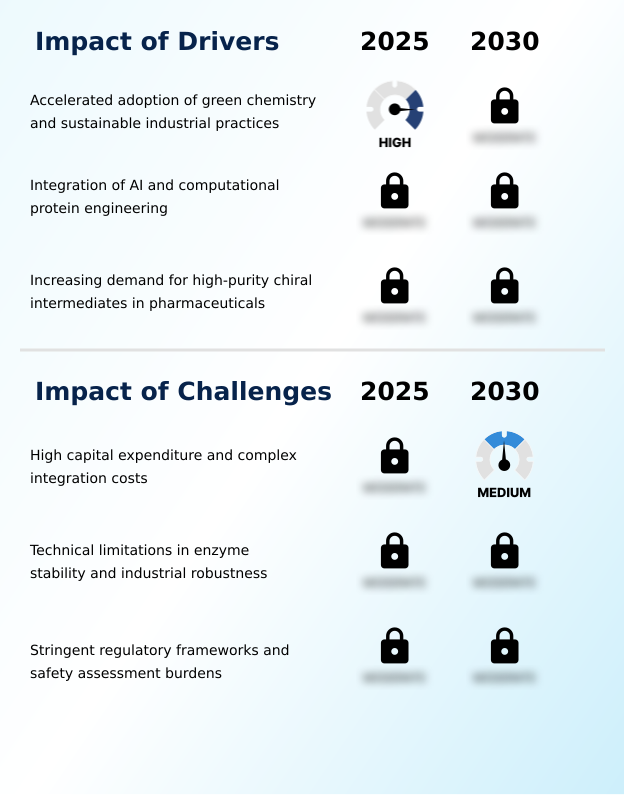
What are the key market drivers leading to the rise in the adoption of Biocatalysis And Biocatalyst Industry?
- The accelerated adoption of green chemistry principles and sustainable industrial practices serves as a key driver for the market's growth.
- Key market drivers are centered on sustainability and technological advancement. The adoption of green chemistry principles is compelling industries to seek cleaner production methods, reducing the environmental factor e-factor of chemical synthesis.
- This is particularly evident in the pharmaceutical sector's demand for high-purity chiral intermediates and enantiopure compounds, which are essential for creating safer small-molecule drugs.
- Innovations in computational protein engineering and directed evolution platforms are accelerating the design of enzymes like ketoreductases and transaminases for complex chiral intermediates synthesis. This digital approach has reduced R&D timelines by up to 50%.
- Furthermore, the move toward bio-derived feedstocks is supported by the construction of dedicated fermentation facility infrastructure for producing bio-based surfactants and enabling large-scale commodity chemicals production.
What are the market trends shaping the Biocatalysis And Biocatalyst Industry?
- The proliferation of hybrid chemo-enzymatic synthesis is an upcoming market trend for complex molecule production, which strategically combines traditional and biocatalytic methods to enhance manufacturing efficiency.
- Emerging trends are reshaping industrial chemistry, with hybrid chemo-enzymatic synthesis and multi-enzyme cascades enabling more efficient production routes. The shift towards continuous flow manufacturing enhances productivity and allows for better process control, leading to a 40% reduction in energy usage in certain applications. A significant area of innovation is enzymatic plastic degradation, which supports circular economy goals.
- Here, specialized esterases and cutinases are used for the post-consumer waste treatment of polymers into high-purity monomers suitable for re-use in food-grade packaging, achieving superior regioselectivity and improving the overall atom economy of the recycling process. This trend extends to the development of enzymes for polyurethane degradation and polyamide degradation, expanding the scope of waste stream valorization.
- The application of enzymatic cascades is proving crucial for these complex transformations.
What challenges does the Biocatalysis And Biocatalyst Industry face during its growth?
- High capital expenditure and the complex integration costs of biocatalytic systems present a key challenge affecting the industry's growth.
- Significant challenges persist, primarily the high capital costs associated with adopting bioreactor technology and integrating it into existing workflows. The initial investment is often substantial, with specialized equipment like downstream purification units and membrane filtration systems increasing project costs by over 20% in some cases.
- Technical hurdles include the need for advanced enzyme immobilization techniques to ensure catalyst reusability and process intensification. The use of genetically modified microorganisms as production hosts also introduces complex regulatory hurdles.
- To overcome these barriers and foster a resilient supply chain resilience for the circular bioeconomy, the industry is exploring molecular farming, biomining, and bioleaching, as well as developing cold-adapted enzymes. This allows for the efficient production of specialty amino acid derivatives and aroma chemicals production in a more sustainable manner.
Exclusive Technavio Analysis on Customer Landscape
The biocatalysis and biocatalyst market forecasting report includes the adoption lifecycle of the market, covering from the innovator’s stage to the laggard’s stage. It focuses on adoption rates in different regions based on penetration. Furthermore, the biocatalysis and biocatalyst market report also includes key purchase criteria and drivers of price sensitivity to help companies evaluate and develop their market growth analysis strategies.
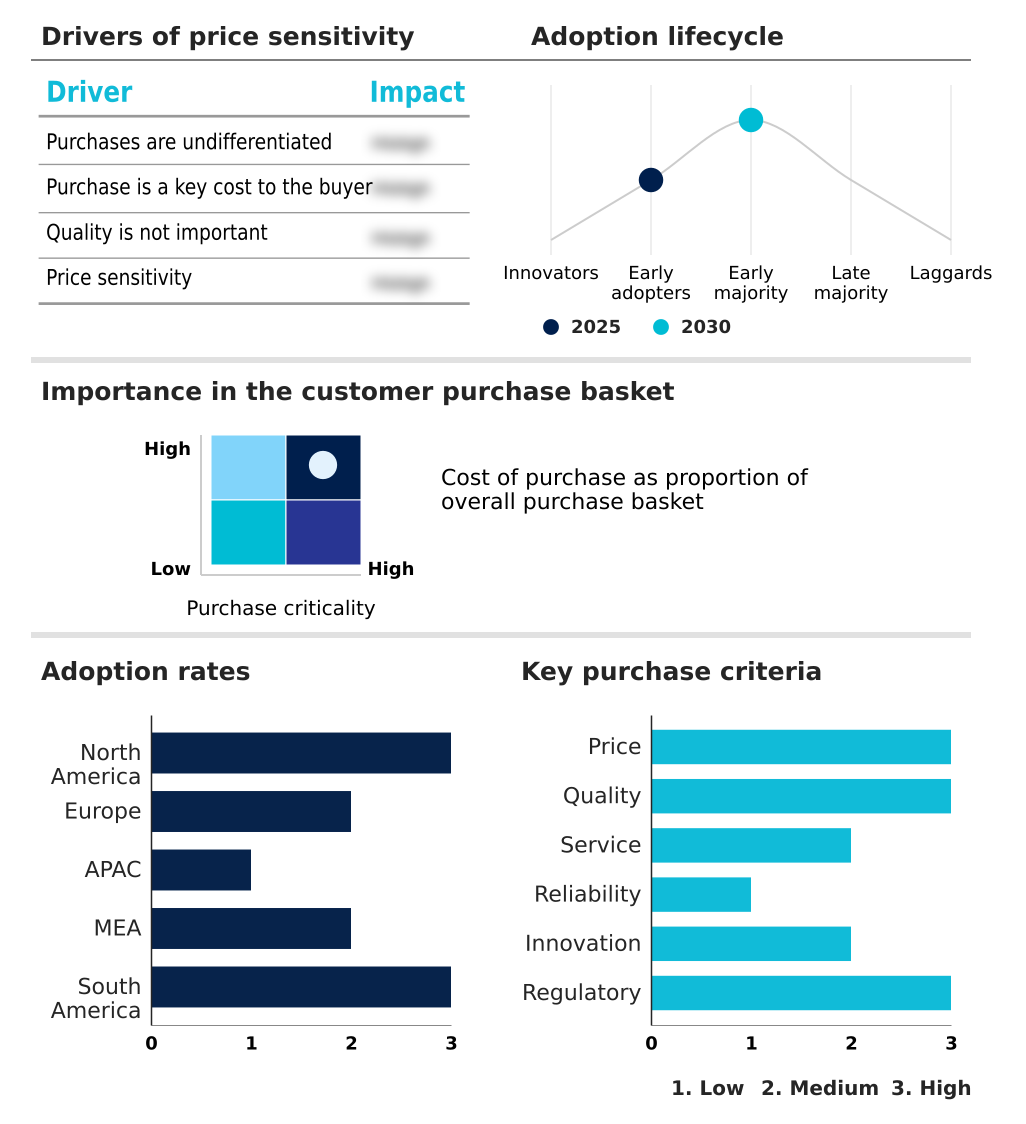
Customer Landscape of Biocatalysis And Biocatalyst Industry
Competitive Landscape
Companies are implementing various strategies, such as strategic alliances, biocatalysis and biocatalyst market forecast, partnerships, mergers and acquisitions, geographical expansion, and product/service launches, to enhance their presence in the industry.
AB Enzymes GmbH - Offers enzyme solutions for food processing, baking, and diverse industrial applications, focusing on process optimization and product quality.
The industry research and growth report includes detailed analyses of the competitive landscape of the market and information about key companies, including:
- AB Enzymes GmbH
- Advanced Enzyme Technologies
- Amano Enzyme Inc.
- Antheia Inc.
- Arzeda Corp.
- BASF SE
- Biocatalysts Ltd.
- c-LEcta GmbH
- Codexis Inc.
- Creative Enzymes
- DSM Firmenich AG
- DuPont de Nemours Inc.
- Enzyme Development Corp.
- Enzymicals AG
- Evonik Industries AG
- Kerry Group Plc
- Nagase and Co. Ltd.
- Novonesis Group
- Prozomix Ltd.
- Solyve SAS
Qualitative and quantitative analysis of companies has been conducted to help clients understand the wider business environment as well as the strengths and weaknesses of key industry players. Data is qualitatively analyzed to categorize companies as pure play, category-focused, industry-focused, and diversified; it is quantitatively analyzed to categorize companies as dominant, leading, strong, tentative, and weak.
Recent Development and News in Biocatalysis and biocatalyst market
- In June 2025, BASF SE finalized the construction of a large-scale fermentation facility in Germany specifically dedicated to producing bio-based surfactants through enzymatic pathways.
- In October 2025, Merck and Company announced the successful implementation of a multi-enzyme cascade for the manufacturing of a novel oncology therapeutic, replacing a five-step chemical synthesis.
- In January 2026, Novonesis announced the successful pilot of a new enzymatic system designed to depolymerize complex mixed-plastic waste into reusable raw materials for the textile industry.
- In March 2026, Arzeda reported a major milestone in its strategic partnership with a global agrochemical corporation, delivering a novel, computationally designed transaminase to produce a key herbicide intermediate.
Dive into Technavio’s robust research methodology, blending expert interviews, extensive data synthesis, and validated models for unparalleled Biocatalysis And Biocatalyst Market insights. See full methodology.
| Market Scope | |
|---|---|
| Page number | 306 |
| Base year | 2025 |
| Historic period | 2020-2024 |
| Forecast period | 2026-2030 |
| Growth momentum & CAGR | Accelerate at a CAGR of 4.2% |
| Market growth 2026-2030 | USD 158123.3 thousand |
| Market structure | Fragmented |
| YoY growth 2025-2026(%) | 3.8% |
| Key countries | US, Canada, Mexico, Germany, UK, France, Italy, Spain, Sweden, China, Japan, South Korea, India, Australia, Indonesia, South Africa, Saudi Arabia, UAE, Egypt, Nigeria, Brazil, Argentina and Chile |
| Competitive landscape | Leading Companies, Market Positioning of Companies, Competitive Strategies, and Industry Risks |
Research Analyst Overview
- The biocatalysis and biocatalyst market is defined by its pivotal role in advancing sustainable manufacturing through green chemistry principles. Innovations in computational protein engineering, metabolic pathway design, and the use of synthetic biology tools are enabling the creation of highly specialized enzymes. This includes the development of hydrolases, oxidoreductases, transferases, lipases, proteases, amylases, cellulases, esterases, cutinases, ketoreductases, and transaminases.
- These biocatalysts are essential for achieving high stereoselectivity and regioselectivity in processes like chiral intermediates synthesis and active pharmaceutical ingredient synthesis. Boardroom decisions increasingly focus on investing in technologies like multi-enzyme cascades and continuous flow manufacturing to improve atom economy and reduce the environmental factor e-factor.
- A key business driver is the ability to replace petrochemicals with bio-based surfactants produced via lignocellulosic biomass conversion and enzymatic hydrolysis. Strategic initiatives involve enzyme immobilization, molecular farming, and gas fermentation process, alongside biomining and bioleaching. Firms utilizing directed evolution platforms have reported achieving yields 30% higher than traditional chemical routes, showcasing a clear ROI.
- This transition necessitates new infrastructure, including downstream purification units and membrane filtration systems, and even leverages cold-adapted enzymes for energy savings, all supported by genetically modified microorganisms.
What are the Key Data Covered in this Biocatalysis And Biocatalyst Market Research and Growth Report?
-
What is the expected growth of the Biocatalysis And Biocatalyst Market between 2026 and 2030?
-
USD 158.12 million, at a CAGR of 4.2%
-
-
What segmentation does the market report cover?
-
The report is segmented by Application (Biofuels, Biopharmaceuticals, Detergents, and Food and beverages), Type (Hydrolases, Oxidoreductases, and Transferases), Source (Microorganisms, Plants, and Animals) and Geography (North America, Europe, APAC, Middle East and Africa, South America)
-
-
Which regions are analyzed in the report?
-
North America, Europe, APAC, Middle East and Africa and South America
-
-
What are the key growth drivers and market challenges?
-
Accelerated adoption of green chemistry and sustainable industrial practices, High capital expenditure and complex integration costs
-
-
Who are the major players in the Biocatalysis And Biocatalyst Market?
-
AB Enzymes GmbH, Advanced Enzyme Technologies, Amano Enzyme Inc., Antheia Inc., Arzeda Corp., BASF SE, Biocatalysts Ltd., c-LEcta GmbH, Codexis Inc., Creative Enzymes, DSM Firmenich AG, DuPont de Nemours Inc., Enzyme Development Corp., Enzymicals AG, Evonik Industries AG, Kerry Group Plc, Nagase and Co. Ltd., Novonesis Group, Prozomix Ltd. and Solyve SAS
-
Market Research Insights
- The market's dynamics are shaped by innovations in enzyme discovery and protein folding simulation, which significantly accelerate the development of biocatalysts with enhanced enzyme stability and industrial robustness. The application of these advanced enzymes leads to tangible business outcomes, with some chemo-enzymatic processes achieving yields 30% higher than traditional chemical routes.
- This push for efficiency is also seen in the development of high-purity chiral intermediates and enantiopure compounds, which are critical for the pharmaceutical industry.
- The strategic construction of new fermentation facility infrastructure supports the scaling of bio-derived feedstocks, with continuous flow systems demonstrating a 40% reduction in energy usage compared to conventional batch synthesis, reinforcing the economic and environmental advantages of biocatalytic technologies.
We can help! Our analysts can customize this biocatalysis and biocatalyst market research report to meet your requirements.
 RIA -
RIA - 
