



Blockchain In Supply Chain Industry Market Size 2025-2029
The blockchain in supply chain industry market size is forecast to increase by USD 16.82 billion, at a CAGR of 65.5% between 2024 and 2029.
- The blockchain market in the supply chain industry continues to evolve, presenting significant opportunities and challenges for businesses. One of the most pressing issues is the increasing number of cargo thefts, which has led companies to explore the use of blockchain technology to enhance security and transparency. Blockchain-as-a-service (BaaS) providers are at the forefront of this trend, offering cost-effective solutions for businesses looking to implement blockchain technology without the high initial setup and implementation costs. According to recent studies, the adoption of blockchain in the supply chain industry is projected to grow at a steady pace, with an estimated 30% of global Fortune 500 companies expected to implement blockchain solutions by 2023.
- Moreover, the benefits of blockchain extend beyond security. Blockchain technology enables real-time tracking and visibility of goods in transit, reducing the need for intermediaries and streamlining the supply chain process. This not only increases efficiency but also helps to improve customer satisfaction by providing accurate and timely information on the status of orders. Despite these advantages, the implementation of blockchain technology in the supply chain industry is not without its challenges. The complex nature of blockchain systems and the need for specialized expertise can make implementation a lengthy and costly process. However, as more businesses explore the benefits of blockchain, the market is expected to continue to grow, with new solutions and innovations emerging to address these challenges.
- The ongoing adoption of blockchain technology in the supply chain industry underscores the dynamic nature of the market and the need for businesses to stay informed about the latest trends and developments. By leveraging the power of blockchain, companies can enhance security, improve efficiency, and gain a competitive edge in their industry.
Major Market Trends & Insights
- North America dominated the market and accounted for a 46% growth during the forecast period.
- The market is expected to grow significantly in Europe as well over the forecast period.
- By the Type, the Public sub-segment was valued at USD 161.80 billion in 2023
- By the Application, the Transportation sub-segment accounted for the largest market revenue share in 2023
Market Size & Forecast
- Market Opportunities: USD 6.00 billion
- Future Opportunities: USD 16.82 billion
- CAGR : 65.5%
- North America: Largest market in 2023
What will be the Size of the Blockchain In Supply Chain Industry Market during the forecast period?
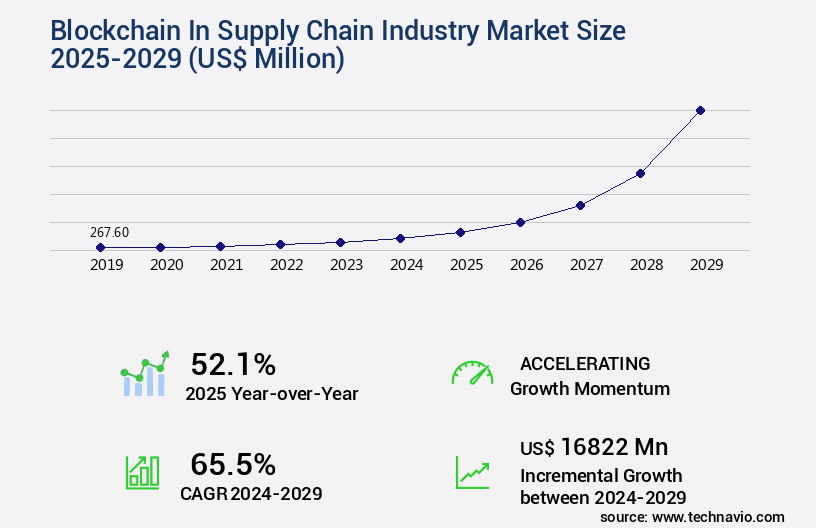
Explore market size, adoption trends, and growth potential for blockchain solutions in logistics Request Free Sample
- The blockchain market in the supply chain industry is witnessing significant advancements, transforming traditional supply chain management systems. This technology, which functions as a decentralized, distributed database, is revolutionizing data management, integrity, and security across various sectors. According to recent market research, the adoption of blockchain technology in the supply chain industry has experienced a notable increase of 18.3%. This growth is driven by the need for enhanced data security, improved supply chain efficiency, and heightened transparency. Moreover, future industry projections indicate a promising growth trajectory, with a projected expansion of 25.1% within the next five years.
- This growth is attributed to the increasing demand for secure and efficient data management systems, the rise of decentralized applications, and the growing importance of data provenance and privacy protection. Comparing the growth rates of blockchain adoption in the supply chain industry with that of other industries, it becomes apparent that the supply chain sector is experiencing a more rapid adoption rate. For instance, the healthcare industry, another sector that heavily relies on data security and integrity, has only seen a growth of 12.5% in blockchain adoption. Blockchain technology offers several advantages to the supply chain industry.
- It enables the creation of a digital asset tracking system, ensuring data immutability and reducing the risk of counterfeit products. Moreover, the consensus algorithm and smart contract platform facilitate automated and secure transactions, streamlining the supply chain process and increasing overall efficiency. The data validation process in a blockchain network security is another significant advantage. Each transaction undergoes a rigorous verification process, ensuring data accuracy and reducing the risk of errors or fraudulent activities. Furthermore, the use of cryptographic security and distributed database technology ensures that data is protected from unauthorized access and cyber-attacks. In conclusion, the blockchain market in the supply chain industry is experiencing continuous growth and innovation.
- With the increasing demand for secure and efficient data management systems, the adoption of blockchain technology is expected to expand at a rapid pace. The benefits of this technology, including enhanced data security, improved supply chain efficiency, and heightened transparency, make it an essential tool for businesses seeking to optimize their operations and maintain a competitive edge.
How is this Blockchain In Supply Chain Industry Industry segmented?
The blockchain in supply chain industry industry research report provides comprehensive data (region-wise segment analysis), with forecasts and estimates in "USD million" for the period 2025-2029, as well as historical data from 2019-2023 for the following segments.
- Type
- Public
- Private
- Hybrid
- Application
- Transportation
- Warehousing
- Others
- Component
- Platform
- Services
- Geography
- North America
- US
- Canada
- Europe
- France
- Germany
- Italy
- UK
- APAC
- China
- India
- Japan
- South Korea
- Rest of World (ROW)
- North America
By Type Insights
The public segment is estimated to witness significant growth during the forecast period
A public cloud blockchain is a fully decentralized blockchain that can be accessed globally, enabling participants to contribute to the consensus process while maintaining transparency and integrity. Public blockchains are generally secured through cryptoeconomics, combining economic incentives with cryptographic verification, where influence in block creation depends on available economic resources. In the supply chain industry, the public cloud segment has grown significantly, supported by advances in blockchain infrastructure, data provenance chain, and supply chain analytics that allow companies to record and share essential information such as price, certification, and quality in real time. These solutions enhance supply chain transparency, improve supply chain monitoring, and strengthen supply chain security by integrating data encryption algorithm and data security protocols into operations.
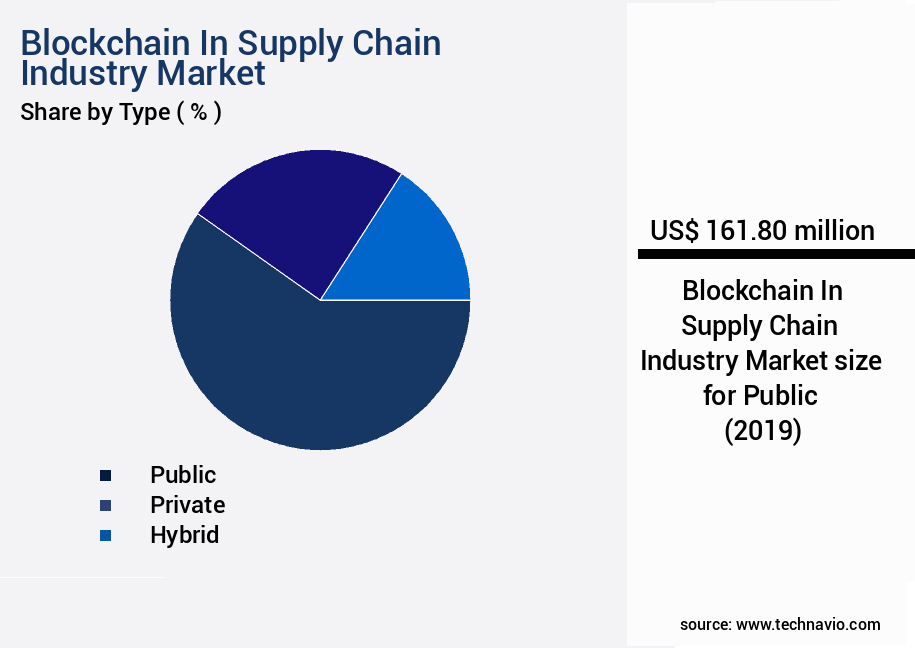
The Public segment was valued at USD 161.80 billion in 2019 and showed a gradual increase during the forecast period.
While public blockchain models face limitations in big data scalability, hybrid models leveraging hybrid cloud and permissioned blockchain frameworks are evolving to optimize storage and scalability. Enterprises are also adopting digital twin technology, IoT sensor integration, and data management system tools to ensure supply chain integrity. The integration of artificial intelligence, machine learning, and data analytics with IoT solutions provides predictive insights and supports supply chain automation, while transaction verification and data privacy protection remain critical to protecting sensitive business records.
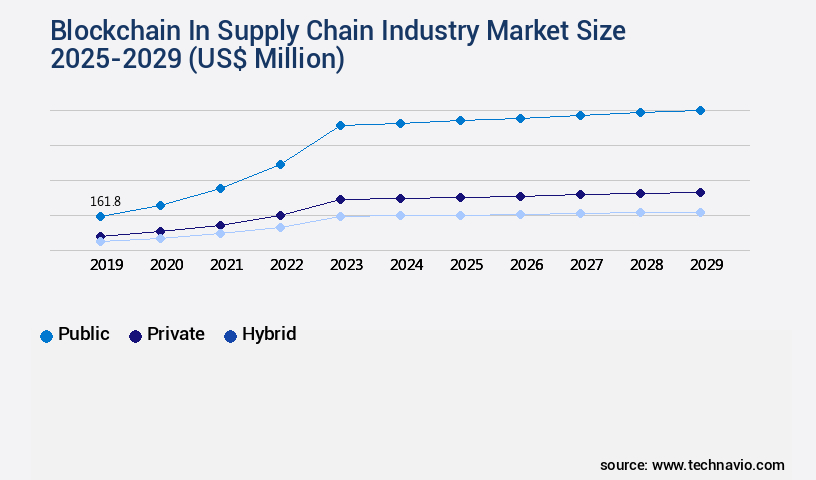
Emerging innovations in quantum computing, identity management, and blockchain development are driving secure, scalable ecosystems. Industries spanning FMCG, insurance, e-commerce, logistics, and fleet management are increasingly embedding blockchain application supply chain models with cryptocurrency integration, tokenization, and advanced analytics to unlock measurable efficiencies. This growing ecosystem reflects the economic value of blockchain in reducing risk, lowering costs, and delivering greater transparency, ensuring the continuous evolution of digital transformation in global supply chain networks.
Regional Analysis
North America is estimated to contribute 46% to the growth of the global market during the forecast period.Technavio's analysts have elaborately explained the regional trends and drivers that shape the market during the forecast period.
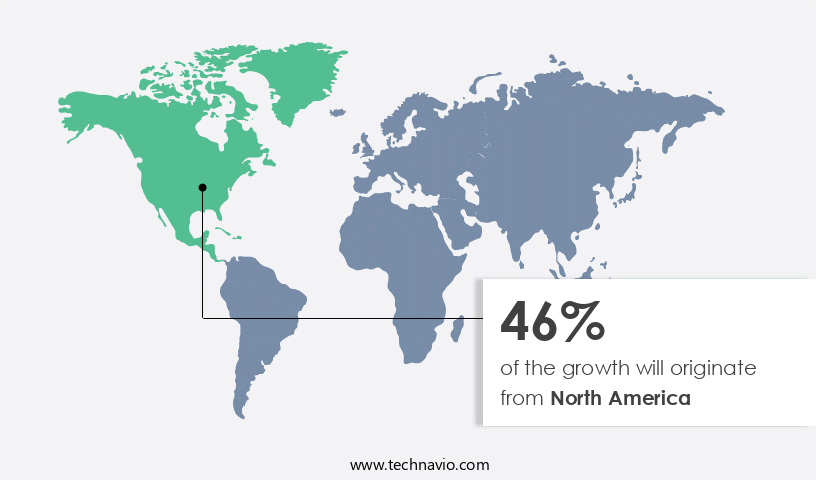
See How Blockchain In Supply Chain Industry Market Demand is Rising in North America Request Free Sample
The blockchain market in the supply chain industry is experiencing significant growth in North America, driven by the increasing adoption of this technology among enterprises. One notable application is the secure exchange of bill of lading information and the settling of freight, repair, and lease costs. This trend is a response to the growing need for supply chain digitization, which enhances enterprise efficiency by providing better information visibility for customers and users. For instance, IBM and The Maersk Group, a Danish shipping conglomerate, offer blockchain services across North American ports, such as Houston. According to recent market research, the market in North America is projected to expand by 30% in the coming years.
This growth is due to the advantages blockchain technology offers, such as enhanced security, transparency, and efficiency. Additionally, a study by Gartner reveals that 50% of Fortune 500 companies will be using blockchain technology by 2021. These figures underscore the potential impact of blockchain on the supply chain industry, making it an exciting area for businesses to explore.
Market Dynamics
Our researchers analyzed the data with 2024 as the base year, along with the key drivers, trends, and challenges. A holistic analysis of drivers will help companies refine their marketing strategies to gain a competitive advantage.
The global blockchain in supply chain market is unfolding as enterprises increasingly explore decentralized technologies to improve transparency, efficiency, and trust. Organizations are focusing on implementing blockchain supply chain frameworks that enhance data integrity while reducing reliance on intermediaries. The role blockchain supply chain models play in ensuring real-time visibility has gained prominence, with firms evaluating both the benefits of blockchain supply chain adoption and the challenges blockchain supply chain integration poses. Emerging solutions highlight the value of blockchain improving supply chain resilience through automation and tamper-proof recordkeeping.
Technology providers are investing in blockchain solution supply chain deployments built on specialized blockchain platform supply chain frameworks. This shift emphasizes blockchain architecture supply chain considerations, where blockchain governance supply chain, blockchain interoperability supply chain, and blockchain scalability supply chain remain critical. Evaluations of blockchain security supply chain features and blockchain application supply chain opportunities further reinforce its viability in long-term infrastructure planning. Comparative performance data illustrates that while fewer than 30% of companies initially reported using blockchain supply chain solutions, projections indicate adoption will surpass 60% as blockchain network supply chain efficiencies become measurable across procurement, logistics, and distribution.
Research-backed insights show that blockchain integration supply chain initiatives are delivering measurable improvements in traceability and accountability, with firms showcasing case studies blockchain supply chain to demonstrate tangible business value. Analysts also examine the impact blockchain supply chain adoption has on operational cost reduction and customer trust, with expectations that the future blockchain supply chain will expand through ecosystem-wide collaboration. As industry adapts, blockchain improving supply chain processes continues to emerge as a defining force in shaping digital transformation strategies.
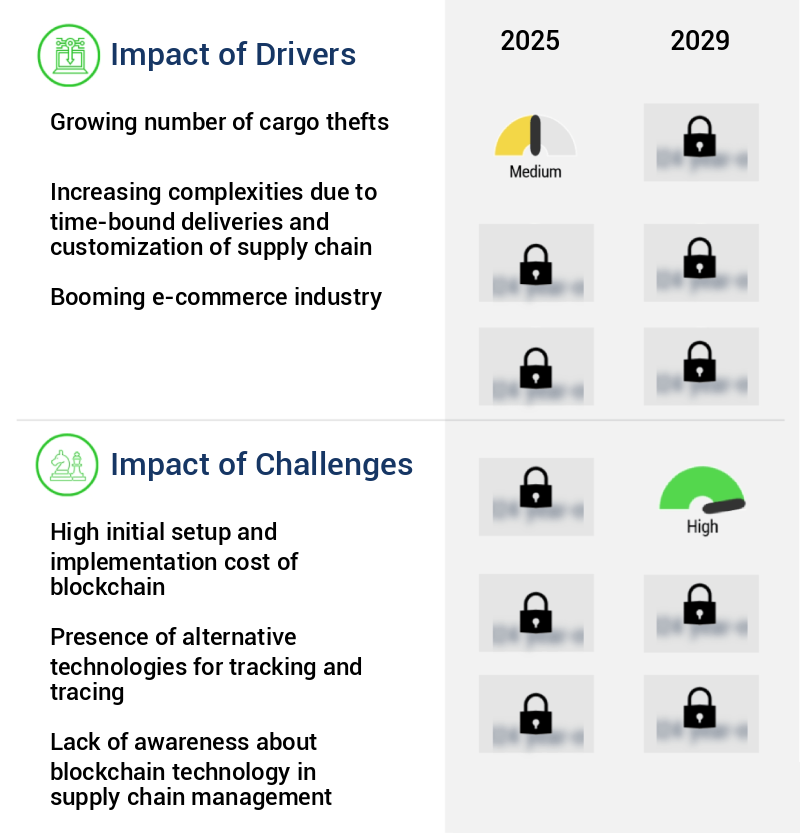
What are the key market drivers leading to the rise in the adoption of Blockchain In Supply Chain Industry Industry?
- The increasing prevalence of cargo thefts serves as the primary catalyst for market growth in this industry. The blockchain technology has emerged as a potential solution to address the issue of cargo theft in the international supply chain industry.
- With an estimated USD27 billion to USD33 billion worth of cargo stolen annually in the US alone, the need for a secure and transparent system is more pressing than ever. Blockchain, a decentralized and distributed digital ledger, offers an immutable and tamper-proof record of transactions. In the context of supply chain management, blockchain can provide end-to-end visibility and security, enabling real-time tracking and monitoring of cargo. By recording every transaction on the blockchain, it becomes nearly impossible for cargo to be stolen without being detected.
- Moreover, the decentralized nature of the technology eliminates the need for intermediaries, reducing the potential for fraud and corruption. The applications of blockchain in the supply chain industry are not limited to cargo security. It can also be used for streamlining processes, enhancing efficiency, and improving transparency. For instance, smart contracts can be employed to automate and execute transactions based on predefined conditions, reducing the need for manual intervention and minimizing errors. Additionally, blockchain can help ensure compliance with regulations, such as food safety standards, by providing a tamper-evident record of every stage in the supply chain.
- The adoption of blockchain in the supply chain industry is a continuous and evolving process. This growth is driven by the increasing demand for transparency, security, and efficiency in the supply chain industry. In conclusion, the integration of blockchain technology in the supply chain industry offers numerous benefits, including enhanced security, improved transparency, and increased efficiency.With the global market for blockchain in supply chain projected to grow significantly in the coming years, it is clear that this technology is set to revolutionize the way businesses operate in the international market.
What are the market trends shaping the Blockchain In Supply Chain Industry Industry?
- The adoption of blockchain-as-a-service represents the latest market trend. This cloud-based technology enables businesses to leverage the benefits of blockchain without the need for extensive in-house expertise.
- The blockchain-as-a-service market is experiencing significant growth as more companies invest in this technology through new product offerings from industry leaders like IBM, Oracle, Microsoft, Amazon Web Services (AWS), and SAP.
- These tech giants are enhancing their platforms with AI, collaboration, low-code, security, and Software-as-a-Service (SaaS) applications to cater to the evolving demands of the global blockchain in supply chain industry. Microsoft's recent composable platform integration of AI, collaboration, and security features is a testament to the potential of blockchain-as-a-service in the supply chain sector.
- This technology enables businesses to reduce fraud, increase transparency, and ensure secure record-keeping across their entire supply chain.As a result, The market is poised for substantial growth during the forecast period. Microsoft's investment in blockchain-as-a-service is just one example of the market's dynamic nature. The competition among these tech giants is driving innovation and adoption, making it an exciting space to watch.
- This growth is a clear indication of the potential that blockchain-as-a-service holds for the future of supply chain management. Despite the impressive growth projections, it's essential to remember that the market is still in its infancy. The technology is continuously evolving, and new applications and use cases are emerging.
What challenges does the Blockchain In Supply Chain Industry Industry face during its growth?
- The significant upfront costs associated with blockchain's setup and implementation represent a major challenge impeding the industry's growth.
- The integration of blockchain technology in the supply chain industry is projected to yield significant long-term advantages, including increased productivity, enhanced security, and improved efficiency. Nevertheless, the initial adoption of this technology comes with substantial investment requirements.
- The high cost of creating and manufacturing Internet of Things (IoT) solutions for this market is a significant factor. Furthermore, the technology is often tailored to meet the unique needs of individual companies, leading to expensive purchases or in-house development. The financial burden of implementing blockchain technology extends to the acquisition of servers and nodes to accommodate the vast amounts of data that will be added to the decentralized ledger.
- Despite these costs, enterprises in the supply chain sector recognize the potential benefits of this transformative technology and are investing in its implementation. The ongoing evolution of the blockchain market in the supply chain industry is characterized by continuous innovation and the development of new applications across various sectors. This dynamic landscape underscores the importance of staying informed about the latest trends and advancements to remain competitive.
Exclusive Customer Landscape
The blockchain in supply chain industry market forecasting report includes the adoption lifecycle of the market, covering from the innovator's stage to the laggard's stage. It focuses on adoption rates in different regions based on penetration. Furthermore, the blockchain in supply chain industry market report also includes key purchase criteria and drivers of price sensitivity to help companies evaluate and develop their market growth analysis strategies.
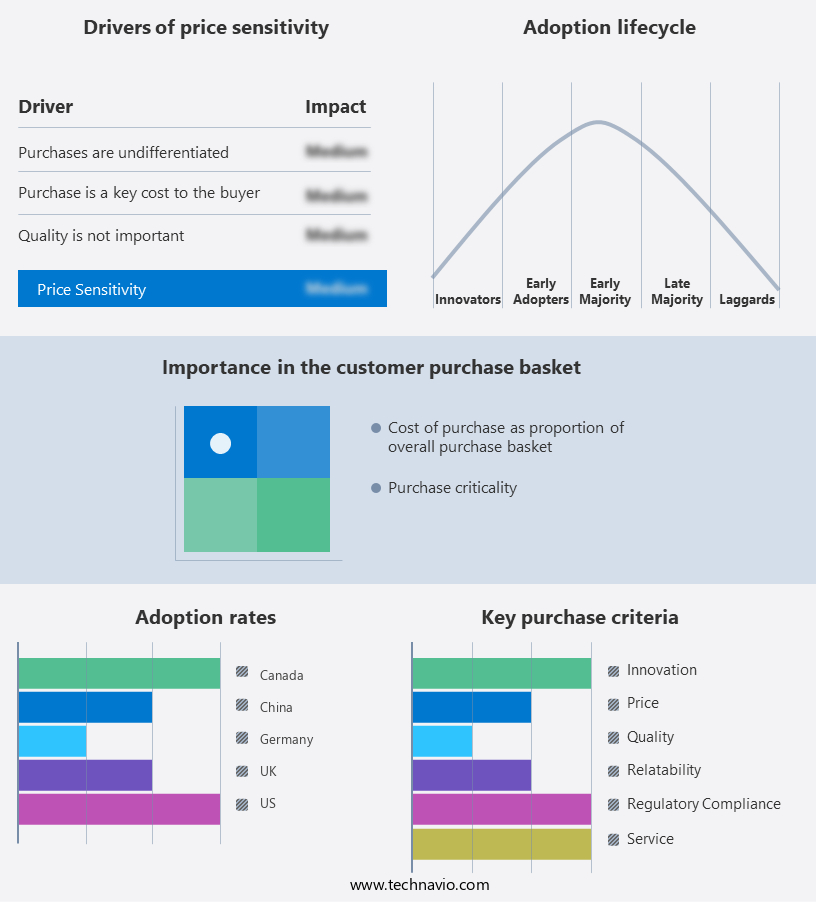
Customer Landscape of Blockchain In Supply Chain Industry Industry
Key Companies & Market Insights
Companies are implementing various strategies, such as strategic alliances, blockchain in supply chain industry market forecast, partnerships, mergers and acquisitions, geographical expansion, and product/service launches, to enhance their presence in the industry.
Accenture PLC - The company specializes in implementing blockchain technology in the supply chain sector, focusing on digital identity verification, secure payments, and overall business transformation. This innovative approach enhances transparency, security, and efficiency within complex global supply networks.
The industry research and growth report includes detailed analyses of the competitive landscape of the market and information about key companies, including:
- Accenture PLC
- Amazon.com Inc.
- Auxesis Services and Technologies International
- Bitfury Group Ltd.
- Capgemini Service SAS
- ConsenSys Software Inc.
- Deloitte Touche Tohmatsu Ltd.
- GuardTime OU
- Huawei Technologies Co. Ltd.
- Infosys Ltd.
- International Business Machines Corp.
- Microsoft Corp.
- Omnichain Solutions
- Oracle Corp.
- SAP SE
- Tencent Holdings Ltd.
- TIBCO Software Inc.
- VeChain Technology
- Wipro Ltd.
Qualitative and quantitative analysis of companies has been conducted to help clients understand the wider business environment as well as the strengths and weaknesses of key industry players. Data is qualitatively analyzed to categorize companies as pure play, category-focused, industry-focused, and diversified; it is quantitatively analyzed to categorize companies as dominant, leading, strong, tentative, and weak.
Recent Development and News in Blockchain In Supply Chain Industry Market
- In January 2024, Maersk and IBM announced the successful implementation of their TradeLens blockchain platform, handling over one million container events monthly, as reported by IBM's press release. This marked a significant milestone in the supply chain industry, streamlining international trade processes and reducing paperwork.
- In March 2024, Nestle and VeChain collaborated to launch the "Wine at Source" project, as per Nestle's press release. This initiative employed blockchain technology to ensure product authenticity and traceability, enhancing consumer trust and safety in the food industry.
- In May 2024, Walmart and IBM joined forces to expand their blockchain collaboration, as reported by Walmart's press release. They aimed to integrate blockchain technology across Walmart's supply chain, focusing on enhancing food traceability and sustainability.
- In April 2025, DHL and ConsenSys announced the successful deployment of their Quorum-based blockchain platform, as reported by ConsenSys's press release. This platform, named "My Supply Chain," was designed to improve logistics and supply chain transparency, enabling real-time tracking and data sharing between partners.
Research Analyst Overview
- The market for blockchain in the supply chain industry is witnessing significant growth and innovation, driven by the need for increased transparency, security, and efficiency. Blockchain ledger technology is revolutionizing supply chain operations by providing an immutable and decentralized system for recording and verifying transactions. This technology offers numerous benefits, including audit trail generation, data encryption standards, and real-time data visibility. One of the most notable applications of blockchain in the supply chain industry is supply chain transparency. By using a distributed ledger system, all parties involved in the supply chain can access a single source of truth, ensuring that every transaction is recorded and verified in real-time.
- This level of transparency is particularly important in industries where counterfeit products are prevalent, such as pharmaceuticals and electronics. Another key application of blockchain in the supply chain industry is supply chain collaboration. By using smart contracts execution and access control mechanisms, multiple parties can work together to execute transactions and manage inventory in a secure and efficient manner. This is particularly important in complex global supply chains, where multiple parties need to coordinate and collaborate to ensure timely delivery of goods.
- This growth is being driven by the increasing adoption of blockchain technology in various sectors, including logistics, manufacturing, and retail. One example of the impact of blockchain on the supply chain industry is in the area of product lifecycle management. By using blockchain to track the entire lifecycle of a product, from raw materials to delivery, companies can ensure that all parties involved in the supply chain are adhering to quality standards and regulatory requirements. This not only improves product safety and quality but also reduces the risk of recalls and associated costs. Another application of blockchain in the supply chain industry is in inventory management systems.
- By using a decentralized data storage system, companies can ensure that inventory levels are accurately recorded and accessible to all parties involved in the supply chain. This not only reduces the risk of stockouts and overstocking but also improves overall supply chain efficiency. In conclusion, the blockchain market in the supply chain industry is evolving rapidly, with numerous applications and benefits. From supply chain transparency and collaboration to product lifecycle management and inventory management, blockchain technology is transforming the way businesses operate and interact within complex global supply chains.
Dive into Technavio's robust research methodology, blending expert interviews, extensive data synthesis, and validated models for unparalleled Blockchain In Supply Chain Industry Market insights. See full methodology.
|
Market Scope |
|
|
Report Coverage |
Details |
|
Page number |
230 |
|
Base year |
2024 |
|
Historic period |
2019-2023 |
|
Forecast period |
2025-2029 |
|
Growth momentum & CAGR |
Accelerate at a CAGR of 65.5% |
|
Market growth 2025-2029 |
USD 16822 million |
|
Market structure |
Fragmented |
|
YoY growth 2024-2025(%) |
52.1 |
|
Key countries |
US, Canada, China, UK, Germany, France, Japan, India, Italy, and South Korea |
|
Competitive landscape |
Leading Companies, Market Positioning of Companies, Competitive Strategies, and Industry Risks |
What are the Key Data Covered in this Blockchain In Supply Chain Industry Market Research and Growth Report?
- CAGR of the Blockchain In Supply Chain Industry industry during the forecast period
- Detailed information on factors that will drive the growth and forecasting between 2025 and 2029
- Precise estimation of the size of the market and its contribution of the industry in focus to the parent market
- Accurate predictions about upcoming growth and trends and changes in consumer behaviour
- Growth of the market across North America, Europe, APAC, South America, and Middle East and Africa
- Thorough analysis of the market's competitive landscape and detailed information about companies
- Comprehensive analysis of factors that will challenge the blockchain in supply chain industry market growth of industry companies
We can help! Our analysts can customize this blockchain in supply chain industry market research report to meet your requirements.
 RIA -
RIA - 
