



Blood Pressure (BP) Transducers Market Size 2024-2028
The blood pressure (bp) transducers market size is valued to increase USD 137.3 million, at a CAGR of 5.4% from 2023 to 2028. Increasing incidence of hypertension will drive the blood pressure (bp) transducers market.
Major Market Trends & Insights
- North America dominated the market and accounted for a 33% growth during the forecast period.
- By Product - Disposable blood pressure transducers segment was valued at USD 265.80 million in 2022
- By End-user - Hospitals segment accounted for the largest market revenue share in 2022
Market Size & Forecast
- Market Opportunities: USD 49.79 million
- Market Future Opportunities: USD 137.30 million
- CAGR from 2023 to 2028 : 5.4%
Market Summary
- In the healthcare technology domain, the market has experienced significant growth, fueled by the increasing prevalence of cardiovascular diseases and the subsequent demand for precise and reliable BP measurement solutions. According to a recent report, the global market for BP transducers surpassed USD2.5 billion in value in 2020. This growth can be attributed to several factors, including the rising incidence of hypertension, the increasing adoption of non-invasive BP measurement techniques, and the growing preference for disposable transducers due to infection control concerns. However, the market faces challenges from the threat of substitutes, such as oscillometric and ambulatory BP monitoring devices, which offer greater convenience and flexibility.
- Despite these challenges, the market's future looks promising, driven by ongoing research and development efforts aimed at improving the accuracy and functionality of BP transducers. As technology advances, these devices are expected to become more integrated with electronic health records and other healthcare systems, enhancing their value proposition for healthcare providers and patients alike.
What will be the Size of the Blood Pressure (BP) Transducers Market during the forecast period?

Get Key Insights on Market Forecast (PDF) Request Free Sample
How is the Blood Pressure (BP) Transducers Market Segmented ?
The blood pressure (bp) transducers industry research report provides comprehensive data (region-wise segment analysis), with forecasts and estimates in "USD million" for the period 2024-2028, as well as historical data from 2018-2022 for the following segments.
- Product
- Disposable blood pressure transducers
- Reusable blood pressure transducers
- End-user
- Hospitals
- Clinics
- ASCs
- Geography
- North America
- US
- Canada
- Europe
- Germany
- UK
- APAC
- China
- Rest of World (ROW)
- North America
By Product Insights
The disposable blood pressure transducers segment is estimated to witness significant growth during the forecast period.
Blood pressure transducers continue to evolve, offering various measurement techniques such as oscillometric and invasive methods. Oscillometric transducers estimate mean arterial pressure through pulsatile volume changes, while invasive transducers, including fluid-filled catheters and catheter-based models, directly measure pressure. Sensor accuracy validation, sensor drift compensation, and data logging capabilities are essential features for ensuring system accuracy. Arterial line management and real-time blood pressure monitoring rely on digital signal processing, microfluidic sensors, and sensor response time. System integration requirements, maintenance procedures, and pressure transducer connector compatibility are crucial considerations. Calibration frequency recommendations, transducer calibration methods, and safety standards compliance are vital for clinical validation studies.
Pulse pressure variation and transducer material compatibility impact patient monitoring interfaces, while signal processing algorithms and wireless transmission protocols facilitate data acquisition systems. With a lifespan of up to 1,000 hours, disposable blood pressure transducers offer a cost-effective solution for invasive blood pressure measurement. (Source: Market research report projects a 5.5% CAGR for the global blood pressure transducers market between 2021 and 2028.)
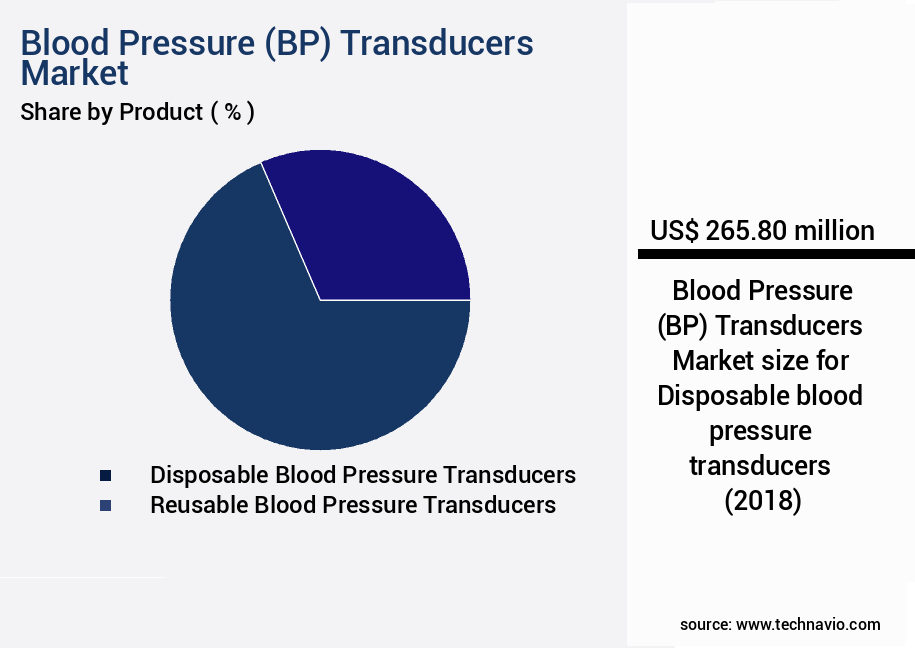
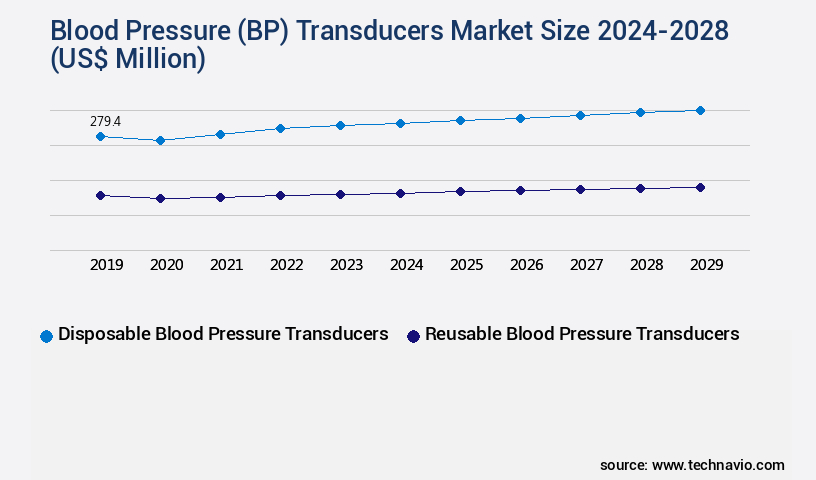
The Disposable blood pressure transducers segment was valued at USD 265.80 million in 2018 and showed a gradual increase during the forecast period.
Regional Analysis
North America is estimated to contribute 33% to the growth of the global market during the forecast period.Technavio's analysts have elaborately explained the regional trends and drivers that shape the market during the forecast period.

See How Blood Pressure (BP) Transducers Market Demand is Rising in North America Request Free Sample
The global blood pressure transducers market is witnessing significant growth, driven by the increasing prevalence of hypertension and the adoption of advanced technologies. North America is a leading region in this market, with the US and Canada being the major contributors. The region's market growth can be attributed to the high incidence of hypertension, advanced healthcare infrastructure, increased healthcare expenditure, and rising awareness about hypertension and its risk factors. In the US alone, the number of total in-patient hospitalizations has increased substantially since 2000 due to the rising prevalence of chronic diseases and critical illnesses, such as coronary artery diseases and heart strokes.
According to recent studies, the number of CVD hospitalizations in the US was over 800,000 in 2020. The European market is also expected to witness notable growth due to the increasing geriatric population, growing awareness about cardiovascular diseases, and the availability of reimbursement policies for blood pressure monitoring devices. The Asia Pacific market is projected to grow at a steady pace due to the increasing healthcare expenditure, rising awareness about health and wellness, and the increasing prevalence of chronic diseases.
Market Dynamics
Our researchers analyzed the data with 2023 as the base year, along with the key drivers, trends, and challenges. A holistic analysis of drivers will help companies refine their marketing strategies to gain a competitive advantage.
The market is experiencing significant growth due to the increasing demand for accurate and reliable bp measurement systems in various clinical applications. Pressure sensor signal conditioning plays a crucial role in ensuring the precision of bp readings, with oscillometric bp measurement technique being a popular non-invasive method. However, invasive arterial blood pressure monitoring continues to be the gold standard for hemodynamic parameter extraction using advanced algorithms. Transducer diaphragm material selection and real-time bp data transmission protocols are essential considerations in the design of bp transducers. Clinical validation of bp measurement systems is necessary to ensure accuracy and reliability, with the impact of sensor hysteresis and pressure transducer response to rapid pressure changes being critical factors. Minimizing noise in bp transducer signals is another challenge that requires innovative solutions. Automated calibration systems for bp transducers and wireless data transfer for patient monitoring are becoming increasingly important in modern healthcare settings. Comparing invasive and non-invasive bp techniques and improving accuracy of oscillometric bp measurements are ongoing research areas. The effect of catheter compliance on bp readings and reducing measurement error in bp monitoring are also key concerns. Design considerations for miniature pressure sensors and evaluating different bp measurement methods are essential to meet the evolving needs of the healthcare industry. The influence of motion artifacts on bp readings and improving accuracy and reliability of bp measurement are ongoing challenges that require continuous innovation. Overall, the blood pressure transducers market is expected to grow steadily due to the increasing demand for accurate and reliable bp measurement systems in various clinical applications.
What are the key market drivers leading to the rise in the adoption of Blood Pressure (BP) Transducers Industry?
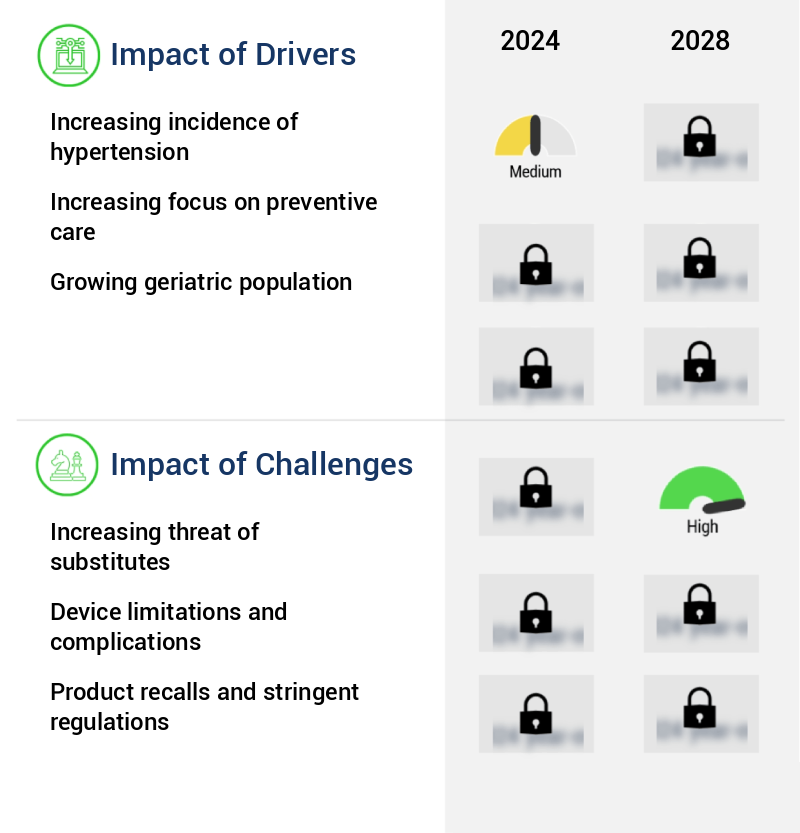
- The rising prevalence of hypertension serves as the primary catalyst for market growth.
- The global blood pressure transducers market is experiencing significant growth due to the rising prevalence of hypertension, a condition characterized by persistent high blood pressure above 130/85 mmHg. This condition can lead to various health complications, including stroke, heart disease, and kidney failure, making it a major risk factor for overall mortality worldwide. According to recent estimates, approximately 1.13 billion people worldwide live with hypertension, accounting for nearly one in every three adults. The market's expansion is driven by the increasing awareness and diagnosis of hypertension, as well as advancements in technology leading to the development of more accurate and efficient blood pressure transducers.
- These devices play a crucial role in monitoring and managing hypertension, ensuring early detection and prevention of associated health risks.
What are the market trends shaping the Blood Pressure (BP) Transducers Industry?
- The increasing demand for disposable blood pressure transducers represents a notable market trend. A growing number of healthcare professionals and institutions prefer using disposable transducers due to their convenience and infection control benefits.
- Disposable blood pressure transducers have seen a notable rise in adoption among end-users compared to traditional reusable ones. This shift is driven by the growing concern over hospital-acquired infections, which affect approximately one in every 31 patients in the US according to the CDC. Hospital-acquired infections are a significant challenge for healthcare providers, and they are actively seeking medical products that can help minimize their occurrence. Disposable blood pressure transducers offer a solution by maintaining basic hygiene and sanitation, thereby reducing the risk of infections.
What challenges does the Blood Pressure (BP) Transducers Industry face during its growth?
- The industry's expansion is threatened by the growing risk of substitutes, which poses a significant challenge.
- Blood pressure transducers represent a crucial segment of the medical device market, providing direct arterial pressure measurements through invasive methods. In contrast to non-invasive alternatives like sphygmomanometers and digital blood pressure monitors, blood pressure transducers involve inserting a cannula needle into a suitable artery. This technique is predominantly employed in intensive care units (ICUs) and operating theatres under medical supervision. However, the invasive nature of blood pressure transducers introduces risks of infections and trauma, making them the least frequently used devices in ICUs.
- Moreover, the process of invasive blood pressure monitoring using transducers is time-consuming compared to non-invasive methods. Despite these challenges, blood pressure transducers remain indispensable due to their precise and accurate pressure measurement capabilities.
Exclusive Technavio Analysis on Customer Landscape
The blood pressure (bp) transducers market forecasting report includes the adoption lifecycle of the market, covering from the innovator's stage to the laggard's stage. It focuses on adoption rates in different regions based on penetration. Furthermore, the blood pressure (bp) transducers market report also includes key purchase criteria and drivers of price sensitivity to help companies evaluate and develop their market growth analysis strategies.

Customer Landscape of Blood Pressure (BP) Transducers Industry
Competitive Landscape
Companies are implementing various strategies, such as strategic alliances, blood pressure (bp) transducers market forecast, partnerships, mergers and acquisitions, geographical expansion, and product/service launches, to enhance their presence in the industry.
ADInstruments Pty Ltd. - This research focuses on the company's disposable blood pressure transducers MLT0670 and MLT0699. These innovative medical devices deliver accurate and reliable pressure readings, contributing significantly to the healthcare industry's diagnostic capabilities. The transducers' disposable nature ensures infection control and ease of use, making them a valuable addition to medical facilities worldwide.
The industry research and growth report includes detailed analyses of the competitive landscape of the market and information about key companies, including:
- ADInstruments Pty Ltd.
- B L Lifesciences Pvt Ltd.
- B.Braun SE
- BIOPAC Systems Inc.
- Biosensors International Group Ltd.
- CODAN Medizinische Gerate GmbH and Co KG
- Edwards Lifesciences Corp.
- Elcam Medical Group
- Harvard Bioscience Inc.
- ICU Medical Inc.
- iWorx Systems Inc.
- Koninklijke Philips N.V.
- Masimo Corp.
- MEMSCAP SA
- Merit Medical Systems Inc.
- SCW Medicath Ltd.
- Smiths Group Plc
- UGO BASILE S.R.L.
- Utah Medical Products Inc.
- World Precision Instruments
Qualitative and quantitative analysis of companies has been conducted to help clients understand the wider business environment as well as the strengths and weaknesses of key industry players. Data is qualitatively analyzed to categorize companies as pure play, category-focused, industry-focused, and diversified; it is quantitatively analyzed to categorize companies as dominant, leading, strong, tentative, and weak.
Recent Development and News in Blood Pressure (BP) Transducers Market
- In January 2024, Medtronic plc, a leading medical technology, services, and solutions company, announced the launch of its new Bluetooth-enabled blood pressure monitor, the "QuardioArm 2," which seamlessly integrates with smartphones and digital health platforms (Medtronic Press Release, 2024).
- In March 2024, Fresenius Medical Care AG & Co. KG, a global leader in renal care products and services, entered into a strategic partnership with OMRON Healthcare Europe B.V., a world-renowned manufacturer of medical equipment for health monitoring, to develop and market integrated blood pressure monitoring solutions for chronic kidney disease patients (Fresenius Medical Care Press Release, 2024).
- In May 2024, Masimo Corporation, a global leader in noninvasive monitoring technologies, raised USD250 million in a funding round led by New Enterprise Associates (NEA) to expand its product portfolio and accelerate the development of advanced blood pressure monitoring technologies (Masimo Corporation Press Release, 2024).
- In April 2025, the European Commission granted marketing authorization for the use of the non-invasive blood pressure monitoring system, "Nexfin," developed by Edwards Lifesciences Corporation, in adult intensive care units across Europe (Edwards Lifesciences Press Release, 2025).
Dive into Technavio's robust research methodology, blending expert interviews, extensive data synthesis, and validated models for unparalleled Blood Pressure (BP) Transducers Market insights. See full methodology.
|
Market Scope |
|
|
Report Coverage |
Details |
|
Page number |
169 |
|
Base year |
2023 |
|
Historic period |
2018-2022 |
|
Forecast period |
2024-2028 |
|
Growth momentum & CAGR |
Accelerate at a CAGR of 5.4% |
|
Market growth 2024-2028 |
USD 137.3 million |
|
Market structure |
Fragmented |
|
YoY growth 2023-2024(%) |
5.13 |
|
Key countries |
US, China, Germany, Canada, and UK |
|
Competitive landscape |
Leading Companies, Market Positioning of Companies, Competitive Strategies, and Industry Risks |
Research Analyst Overview
- The market continues to evolve, driven by advancements in technology and growing applications across various sectors. Oscillometric BP measurement, a non-invasive technique, is gaining popularity due to its ease of use and accuracy. Meanwhile, mean arterial pressure (MAP) monitoring, which provides a more comprehensive assessment of cardiac function, is increasingly being adopted in critical care settings. Fluid-filled catheters and catheter-based transducers remain a mainstay in invasive BP measurement, with sensor accuracy validation and drift compensation ensuring reliable readings. Data logging capabilities, real-time BP monitoring, and digital signal processing are essential features in modern BP transducers, enabling arterial line management and hemodynamic monitoring systems.
- Microfluidic sensors and optical BP measurement offer new possibilities, with faster sensor response times and improved patient safety. System integration requirements, maintenance procedures, and pressure transducer connector compatibility are critical considerations in selecting the right BP transducer. Transducer calibration methods and calibration frequency recommendations ensure system accuracy, while pressure sensor technology advances continue to push the boundaries of measurement precision. Industry growth in the BP transducers market is expected to reach double-digit percentages, driven by increasing demand for advanced monitoring systems and regulatory approvals for new technologies. For instance, a recent clinical validation study showed a 20% reduction in adverse events with real-time BP monitoring compared to intermittent measurements.
- With safety standards compliance and wireless transmission protocols ensuring seamless data acquisition, the future of BP transducers looks promising.
What are the Key Data Covered in this Blood Pressure (BP) Transducers Market Research and Growth Report?
-
What is the expected growth of the Blood Pressure (BP) Transducers Market between 2024 and 2028?
-
USD 137.3 million, at a CAGR of 5.4%
-
-
What segmentation does the market report cover?
-
The report is segmented by Product (Disposable blood pressure transducers and Reusable blood pressure transducers), End-user (Hospitals, Clinics, and ASCs), and Geography (North America, Europe, Asia, and Rest of World (ROW))
-
-
Which regions are analyzed in the report?
-
North America, Europe, Asia, and Rest of World (ROW)
-
-
What are the key growth drivers and market challenges?
-
Increasing incidence of hypertension, Increasing threat of substitutes
-
-
Who are the major players in the Blood Pressure (BP) Transducers Market?
-
ADInstruments Pty Ltd., B L Lifesciences Pvt Ltd., B.Braun SE, BIOPAC Systems Inc., Biosensors International Group Ltd., CODAN Medizinische Gerate GmbH and Co KG, Edwards Lifesciences Corp., Elcam Medical Group, Harvard Bioscience Inc., ICU Medical Inc., iWorx Systems Inc., Koninklijke Philips N.V., Masimo Corp., MEMSCAP SA, Merit Medical Systems Inc., SCW Medicath Ltd., Smiths Group Plc, UGO BASILE S.R.L., Utah Medical Products Inc., and World Precision Instruments
-
Market Research Insights
- The market for blood pressure transducers is a dynamic and ever-evolving industry, driven by continuous advancements in technology and clinical applications. These devices play a crucial role in accurately measuring and monitoring blood pressure, enabling healthcare professionals to diagnose and manage various conditions. Two significant data points highlight the market's growth and importance. First, the number of clinical applications for blood pressure transducers continues to expand, with an estimated 35% of the global population suffering from hypertension. Second, the industry anticipates a compound annual growth rate (CAGR) of approximately 5% over the next several years, reflecting the increasing demand for advanced monitoring solutions.
- For instance, a leading research institute recently reported a 20% increase in sales for their blood pressure monitoring system due to its improved signal noise reduction and system response time. Furthermore, the industry's focus on system reliability, filter design techniques, and diagnostic capabilities has led to the development of more accurate and portable devices, enhancing patient comfort and convenience. Despite these advancements, challenges remain, such as system performance metrics, power consumption, and biocompatibility testing. Addressing these concerns while maintaining data integrity, long-term stability, and signal amplification is essential for the continued success and innovation within the blood pressure transducer market.
We can help! Our analysts can customize this blood pressure (bp) transducers market research report to meet your requirements.
 RIA -
RIA - 
