



Bovine Mastitis Treatment System Market Size 2024-2028
The bovine mastitis treatment system market size is forecast to increase by USD 551.33 million at a CAGR of 5.34% between 2023 and 2028.
- The market is witnessing significant growth due to the increasing prevalence of mastitis in dairy herds. Mastitis is a common inflammatory condition that affects the udder of dairy cows, leading to production losses and increased treatment costs. To address this issue, there is an emerging trend towards the adoption of automated detection systems and precision medicine.
- These advanced technologies enable early identification and treatment of mastitis, reducing the severity of the condition and minimizing the use of antibiotics. However, cost constraints remain a challenge for the widespread adoption of these systems. Despite this, the market is expected to grow steadily, driven by the need for improved animal health and productivity in the dairy industry.
What will be the Size of the Bovine Mastitis Treatment System Market During the Forecast Period?

- The market is a significant segment within the dairy industry, addressing inflammatory conditions that affect the mammary gland and udder tissue in cattle. Economic losses due to mastitis, caused by pathogens, poor hygiene, physical injury, and environmental factors, are substantial. Awareness of mastitis and its impact on animal health, milk quality, and antibiotic resistance continues to grow.
- Drug development focuses on improving treatment efficacy, reducing antibiotic usage, and minimizing side effects. Treatment systems include intramammary and systemic administrations, with teat sealants playing a crucial role in on-site treatment. Mild, moderate, and severe cases require varying levels of intervention, from veterinary hospitals and clinics to farmer-administered treatments.
- Treatment advancements, such as MILEUTIS technology, aim to enhance teat health and address antibiotic resistance. Ongoing research and animal welfare funding are essential to improving mastitis management and mitigating its economic and animal welfare implications.
How is this Bovine Mastitis Treatment System Industry segmented and which is the largest segment?
The bovine mastitis treatment system industry research report provides comprehensive data (region-wise segment analysis), with forecasts and estimates in "USD million" for the period 2024-2028, as well as historical data from 2018-2022 for the following segments.
- Product
- Antibiotics
- Others
- Route Of Administration
- Intramammary
- Systemic
- Geography
- North America
- US
- Europe
- Germany
- France
- Asia
- China
- India
- Rest of World (ROW)
- North America
By Product Insights
- The antibiotics segment is estimated to witness significant growth during the forecast period.
In the global market for bovine mastitis treatment systems, antibiotics play a crucial role in managing infections and restoring the health of dairy cattle. Major pharmaceutical companies, such as Zoetis Inc. And Boehringer Ingelheim International GmbH, offer specialized antibiotic products for mastitis treatment. Zoetis provides a range of broad-spectrum antibiotics, including ceftiofur, which targets various mastitis-causing bacteria. Boehringer Ingelheim offers a diverse portfolio of antibiotics, including penicillin-based drugs and cephalosporins, designed to combat mastitis pathogens. These companies invest significantly in drug development and maintain robust distribution networks to ensure timely access to effective antibiotic solutions for dairy farmers. Antibiotics are essential for addressing mastitis infections efficiently and reducing economic losses in the dairy industry.
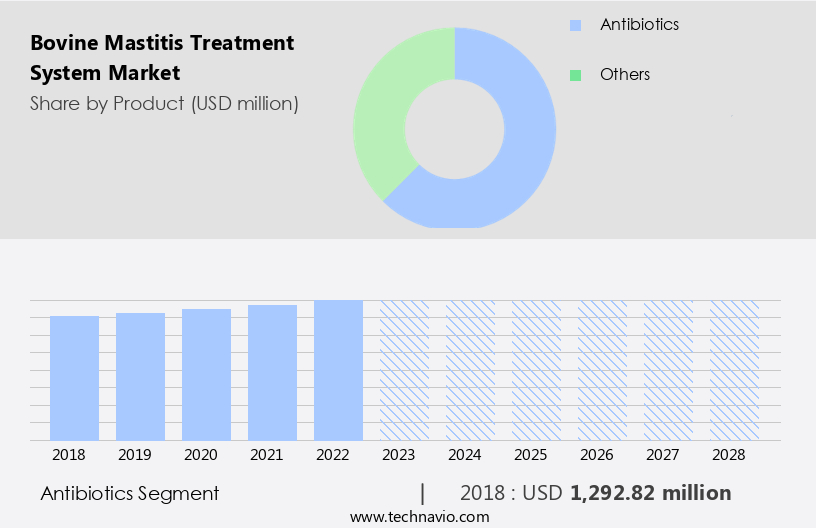
Get a glance at the Bovine Mastitis Treatment System Industry report of share of various segments Request Free Sample
The Antibiotics segment was valued at USD 1.29 billion in 2018 and showed a gradual increase during the forecast period.
Regional Analysis
- North America is estimated to contribute 35% to the growth of the global market during the forecast period.
Technavio's analysts have elaborately explained the regional trends and drivers that shape the market during the forecast period.

For more insights on the market share of various regions, Request Free Sample
In North America, the market for bovine mastitis treatment systems is well-established, driven by the dairy industry's advanced infrastructure and veterinary services. Key players in this market include multinational pharmaceutical companies, specialized biotechnology firms, and veterinary equipment manufacturers. Pharmaceutical companies, in particular, play a significant role, providing essential medications such as antibiotics for mastitis treatment. Strict regulatory compliance with authorities like the FDA and Health Canada ensures the safety and efficacy of these products. The market focuses on prevention, diagnosis, and treatment of mastitis in dairy cattle, contributing to improved animal welfare, milk quality, and overall dairy production.
Market Dynamics
Our researchers analyzed the data with 2023 as the base year, along with the key drivers, trends, and challenges. A holistic analysis of drivers will help companies refine their marketing strategies to gain a competitive advantage.
What are the key market drivers leading to the rise in the adoption of Bovine Mastitis Treatment System Industry?
Increasing prevalence of mastitis is the key driver of the market.
- The market is experiencing growth due to the rising incidence of mastitis in dairy cattle. Mastitis, an inflammatory condition affecting the mammary gland and udder tissue, can lead to economic losses for the dairy industry through decreased milk production, compromised milk quality, and increased treatment costs. The primary causes of mastitis include bacterial infections, poor hygiene, physical injury, and environmental stressors. Dairy farmers are investing in advanced treatment solutions to manage and control mastitis, as it is one of the most common and costly diseases in the industry. Treatment approaches range from on-site treatment for mild cases to veterinary hospital and clinic care for severe cases.
- Drug development, including antibiotics and teat sealants, plays a significant role in mastitis treatment, with various routes of administration such as intramammary and systemic. Mastitis treatment advancements are focused on addressing antibiotic resistance, animal welfare, and milk quality. Animal husbandry practices, including clean housing, dry housing, and hygiene maintenance, are crucial in preventing mastitis. Players specializing in veterinary healthcare are also collaborating with animal health organizations and funding bodies to support research and development in mastitis treatment and prevention. In conclusion, the increasing incidence of mastitis in dairy cattle and the associated economic losses are driving the growth of the market.
- Effective treatment solutions are essential to maintain dairy cow health, improve milk quality, and minimize healthcare expenditures. Ongoing research and development efforts in mastitis treatment and prevention are crucial to addressing this pervasive health issue in the dairy industry.
What are the market trends shaping the Bovine Mastitis Treatment System Industry?
Emergence and adoption of automated detection systems and precision medicine is the upcoming market trend.
- The Bovine Mastitis market is experiencing significant growth due to technological advancements in treatment systems. Mastitis, an inflammatory condition affecting the mammary gland and udder tissue of dairy cows, results in economic loss for the dairy industry due to milk quality reduction, healthcare expenditures, and animal welfare concerns. Pathogens, poor hygiene, and physical injury are common causes of mastitis. companies in this market are developing innovative solutions to address mastitis, including automated detection systems that monitor cow behavior, milk production, and udder health parameters in real-time. These systems utilize advanced sensors and algorithms to detect early signs of mastitis, enabling prompt intervention and preventing infection spread.
- Additionally, precision medicine approaches are being integrated into mastitis treatment systems to provide personalized treatment plans based on individual cow data. Digitalization and connectivity are also driving growth in the market, with companies developing integrated mastitis management platforms that offer comprehensive solutions for dairy farmers. These platforms provide real-time data analysis, treatment recommendations, and veterinary support, enabling farmers to optimize teat health, milk quality, and animal health. Treatment advancements include the use of drug prevention methods, such as teat sealants and antibiotics, administered via intramammary or systemic routes. However, concerns regarding antibiotic resistance and animal welfare require continued research and development of alternative treatment methods.
- Hygiene maintenance, including clean housing and dry housing, is crucial in preventing mastitis. The veterinary healthcare industry plays a vital role in providing on-site treatment for mild, moderate, and severe cases, ensuring optimal dairy cow health and milk secretion.
What challenges does the Bovine Mastitis Treatment System Industry face during its growth?
Cost constraints associated with bovine mastitis treatment systems is a key challenge affecting the industry growth.
- The market is driven by the economic losses incurred by the dairy industry due to inflammatory responses in the udder tissue of dairy cows. Mastitis, an infection of the mammary gland, can lead to milk quality issues, animal welfare concerns, and healthcare expenditures. Pathogens, poor hygiene, and physical injury are common causes of mastitis. Treatment approaches include the use of antibiotics via intramammary or systemic administration, teat sealants, and on-site treatment in veterinary hospitals and clinics. Mild cases may be managed with drug prevention and hygiene maintenance, while moderate and severe cases require more intensive interventions. Treatment advancements, such as animal welfare funding for research and development, aim to minimize milk secretion disruptions and antibiotic resistance.
- Dairy cow health relies on cleanliness, dry housing, and veterinary healthcare industry support. The cost of bovine mastitis treatment systems varies significantly, with basic systems costing between USD500 and USD5,000 and advanced systems costing USD10,000 to USD100,000 or more, along with ongoing expenses for medications, veterinary consultations, and maintenance.
Exclusive Customer Landscape
The bovine mastitis treatment system market forecasting report includes the adoption lifecycle of the market, covering from the innovator's stage to the laggard's stage. It focuses on adoption rates in different regions based on penetration. Furthermore, the bovine mastitis treatment system market report also includes key purchase criteria and drivers of price sensitivity to help companies evaluate and develop their market growth analysis strategies.
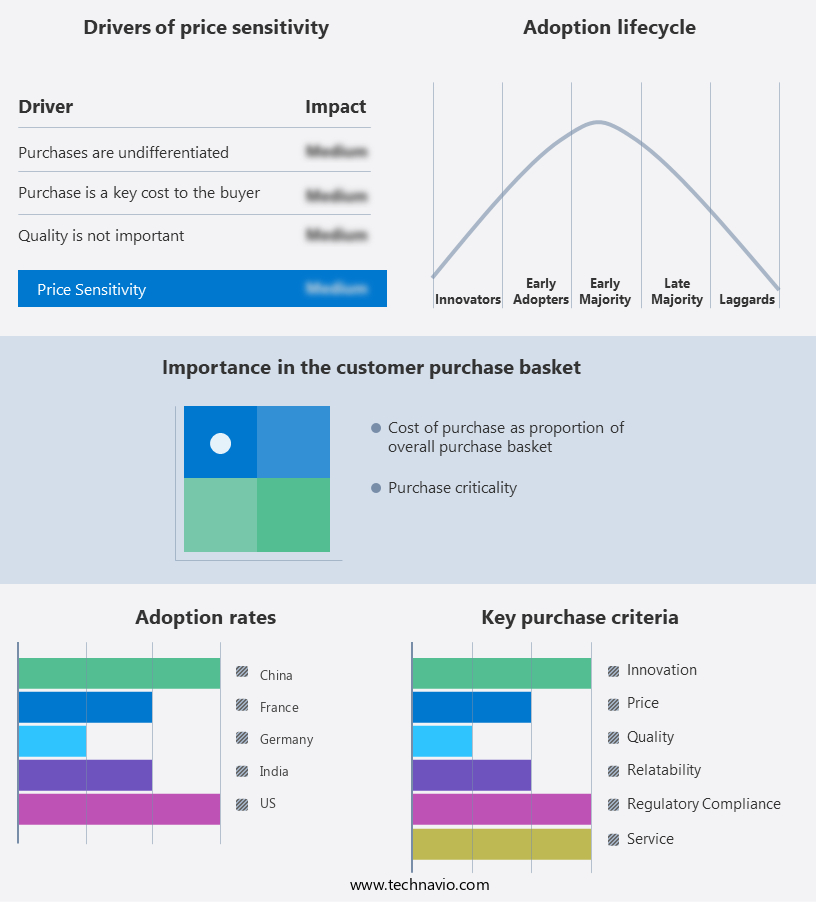
Customer Landscape
Key Companies & Market Insights
Companies are implementing various strategies, such as strategic alliances, bovine mastitis treatment system market forecast, partnerships, mergers and acquisitions, geographical expansion, and product/service launches, to enhance their presence in the industry.
Advanced Animal Diagnostics - The company provides advanced bovine mastitis treatment solutions, including the QScout Multilevel Diagnosis (MLD) system. This innovative technology delivers precise, quarter-level diagnoses, ensuring reliable and actionable results. By utilizing cutting-edge technology, farmers can make informed decisions to effectively treat and prevent bovine mastitis, ultimately improving herd health and productivity.
The industry research and growth report includes detailed analyses of the competitive landscape of the market and information about key companies, including:
- Advanced Animal Diagnostics
- Armenta
- Bio-Vet
- Boehringer Ingelheim International GmbH
- Ceva Sante Animale
- Elanco Animal Health Inc.
- Endovac Animal Health
- Forte Healthcare Ltd.
- HIPRA S A
- Huvepharma EOOD
- ImmuCell Corp.
- Merck KGaA
- Neogen Corp.
- Nimrod Veterinary Products Ltd.
- Norbrook Laboratories Ltd.
- Vetoquinol SA
- Virbac Group
- West Way Health
- Zoetis Inc.
- Thermo Fisher Scientific Inc.
Qualitative and quantitative analysis of companies has been conducted to help clients understand the wider business environment as well as the strengths and weaknesses of key industry players. Data is qualitatively analyzed to categorize companies as pure play, category-focused, industry-focused, and diversified; it is quantitatively analyzed to categorize companies as dominant, leading, strong, tentative, and weak.
Research Analyst Overview
Bovine mastitis, an inflammatory condition affecting the mammary gland and udder tissue of dairy cattle, continues to pose a significant challenge for the dairy industry. This condition, characterized by various pathogens, physical injury, and poor hygiene, results in economic loss due to decreased milk production, increased healthcare expenditures, and reduced milk quality. The awareness of bovine mastitis and its impact on dairy cow health has led to advancements in drug development and treatment systems. The market for bovine mastitis treatment systems is witnessing substantial growth, driven by the increasing incidence of the disease and the need for effective and efficient treatment methods.
The treatment for bovine mastitis can be categorized based on the route of administration, including intramammary and systemic. Intramammary treatment involves the direct application of drugs into the mammary gland, while systemic treatment involves administering drugs through the bloodstream. Both methods have their advantages and disadvantages, and the choice of treatment depends on the severity of the case. Mild cases of bovine mastitis can be treated through on-site treatment at veterinary hospitals and clinics or through teat sealants. Moderate and severe cases may require hospitalization and intensive treatment, which can include intravenous antibiotics and supportive care. The development of new drugs and treatment systems is a critical aspect of the bovine mastitis treatment market.
For instance, Mileutis, a new intramammary antibiotic, has gained approval for use in dairy cattle in several countries. This drug, which targets specific pathogens, offers advantages such as shorter treatment durations and reduced antibiotic resistance. Animal welfare funding and the veterinary healthcare industry's focus on dairy cow health have also contributed to the growth of the bovine mastitis treatment market. Teat health and milk quality are essential components of dairy production, and the prevention of mastitis through hygiene maintenance and clean housing is a priority for dairy farmers. However, the issue of antibiotic resistance remains a concern in the bovine mastitis treatment market.
The overuse and misuse of antibiotics in animal agriculture can lead to the development of antibiotic-resistant bacteria, posing a threat to both animal and human health. Therefore, there is a growing emphasis on developing alternative treatment methods and reducing the reliance on antibiotics. In conclusion, the market is a dynamic and evolving industry, driven by the increasing incidence of the disease, the need for effective treatment methods, and the focus on animal welfare and milk quality. The development of new drugs and treatment systems, as well as the prevention of mastitis through hygiene maintenance and clean housing, are essential components of the market's growth. However, the issue of antibiotic resistance and the need for alternative treatment methods remain significant challenges that require ongoing research and innovation.
|
Market Scope |
|
|
Report Coverage |
Details |
|
Page number |
159 |
|
Base year |
2023 |
|
Historic period |
2018-2022 |
|
Forecast period |
2024-2028 |
|
Growth momentum & CAGR |
Accelerate at a CAGR of 5.34% |
|
Market growth 2024-2028 |
USD 551.33 million |
|
Market structure |
Fragmented |
|
YoY growth 2023-2024(%) |
4.5 |
|
Key countries |
US, Germany, France, India, and China |
|
Competitive landscape |
Leading Companies, Market Positioning of Companies, Competitive Strategies, and Industry Risks |
What are the Key Data Covered in this Bovine Mastitis Treatment System Market Research and Growth Report?
- CAGR of the Bovine Mastitis Treatment System industry during the forecast period
- Detailed information on factors that will drive the growth and forecasting between 2024 and 2028
- Precise estimation of the size of the market and its contribution of the industry in focus to the parent market
- Accurate predictions about upcoming growth and trends and changes in consumer behaviour
- Growth of the market across North America, Europe, Asia, and Rest of World (ROW)
- Thorough analysis of the market's competitive landscape and detailed information about companies
- Comprehensive analysis of factors that will challenge the bovine mastitis treatment system market growth of industry companies
We can help! Our analysts can customize this bovine mastitis treatment system market research report to meet your requirements.
 RIA -
RIA - 
