



Animal Healthcare Market Size 2026-2030
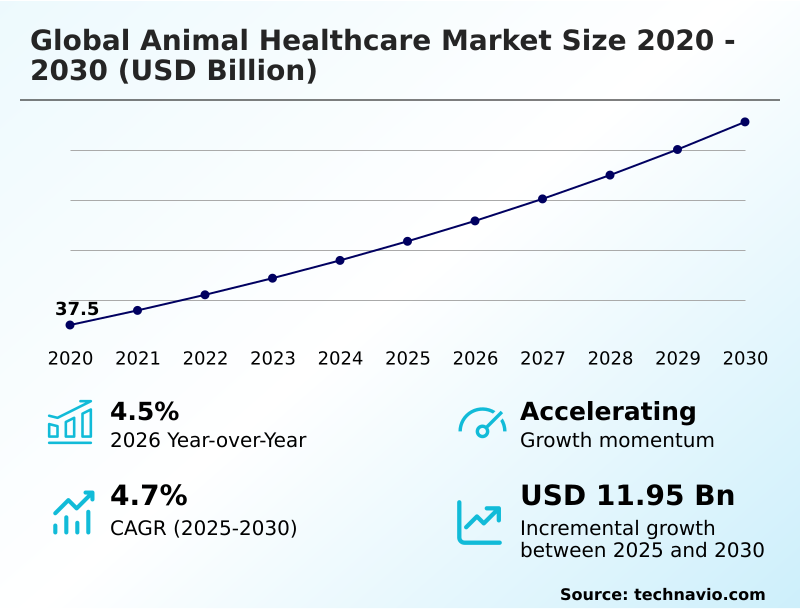
The animal healthcare market size is valued to increase by USD 11.95 billion, at a CAGR of 4.7% from 2025 to 2030. Escalating global demand for animal protein and heightened focus on food security will drive the animal healthcare market.
Major Market Trends & Insights
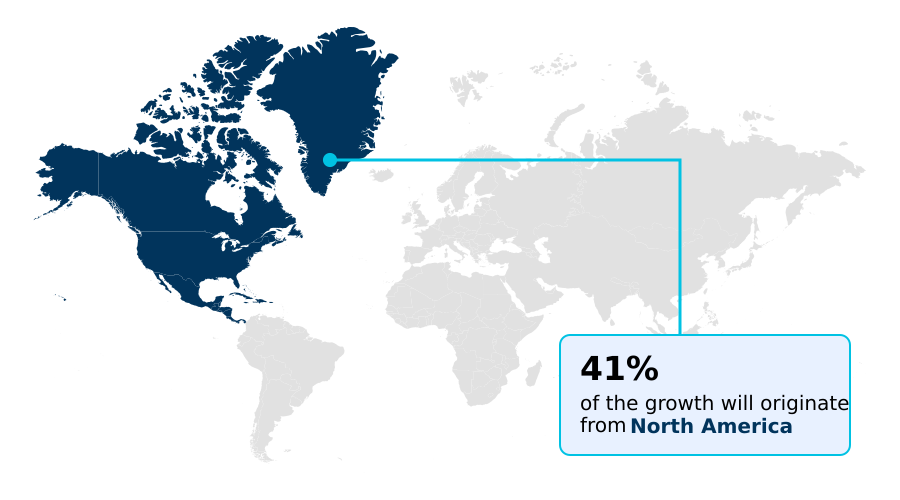
- North America dominated the market and accounted for a 41% growth during the forecast period.
- By Product - Pharmaceutical segment was valued at USD 19.08 billion in 2024
- By Animal Type - Livestock segment accounted for the largest market revenue share in 2024
Market Size & Forecast
- Market Opportunities: USD 20.32 billion
- Market Future Opportunities: USD 11.95 billion
- CAGR from 2025 to 2030 : 4.7%
Market Summary
- The animal healthcare market is undergoing a significant evolution, driven by the dual forces of the powerful pet humanization trend and the unceasing global demand for animal-derived protein.
- In the companion animal segment, owners' perception of pets as family members fuels higher companion animal healthcare spending and a demand for advanced veterinary therapies mirroring human medicine, including monoclonal antibody therapy and treatments for chronic conditions. This has made pet wellness and nutrition a major focus. Concurrently, the production animal health market is critical for ensuring global food security.
- A business scenario involving a large-scale poultry operation highlights this, where an investment in recombinant vector vaccines and herd health management software can prevent a disease outbreak, safeguarding a supply chain that provides food for millions. This necessitates continuous veterinary pharmaceutical development and innovation in animal vaccine technology, focusing on feed conversion efficiency and sustainable livestock farming practices.
- The market is also being reshaped by digital animal health solutions, which improve diagnostics and management across all sectors, from individual pet care to large-scale agriculture.
What will be the Size of the Animal Healthcare Market during the forecast period?
Get Key Insights on Market Forecast (PDF) Get Free Sample
How is the Animal Healthcare Market Segmented?
The animal healthcare industry research report provides comprehensive data (region-wise segment analysis), with forecasts and estimates in "USD million" for the period 2026-2030, as well as historical data from 2020-2024 for the following segments.
- Product
- Pharmaceutical
- Feed additive
- Biologicals
- Animal type
- Livestock
- Companion animals
- Distribution channel
- VHC
- Pharmacies and drug stores
- E-commerce
- Direct sales
- Geography
- North America
- US
- Canada
- Mexico
- Europe
- Germany
- UK
- France
- Asia
- Rest of World (ROW)
- North America
By Product Insights
The pharmaceutical segment is estimated to witness significant growth during the forecast period.
The pharmaceutical segment is a core component, driven by innovation in therapeutics that address a wide range of health issues.
In the companion animal space, spending is influenced by the demand for advanced treatments in areas like companion animal oncology and complex veterinary surgical interventions.
For livestock, the focus is on products that ensure productivity and align with food safety and animal health goals. This includes broad-spectrum parasiticides and a strategic push to combat antimicrobial resistance (amr).
The animal feed additives market is also critical, with probiotic feed supplements and prebiotic feed supplements gaining traction as alternatives to traditional growth promoters.
The use of companion animal genomics is enhancing the development of targeted therapies through animal health ai applications, with some combination products improving compliance by over 15%.
This segment's evolution is also shaped by the expanding animal diagnostics market and the growth of the veterinary biologics market, which are crucial for effective livestock disease prevention.
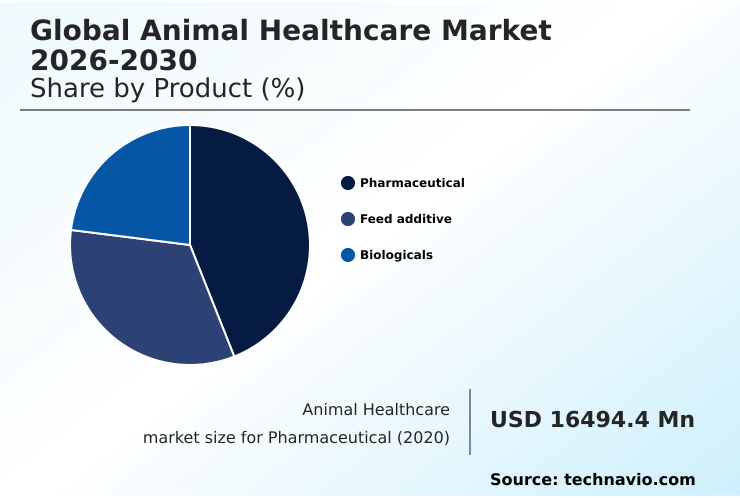
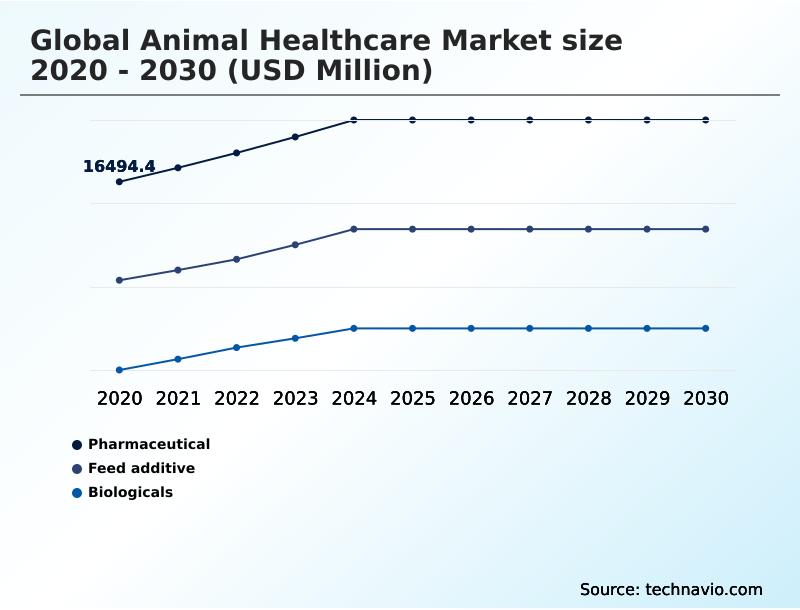
The Pharmaceutical segment was valued at USD 19.08 billion in 2024 and showed a gradual increase during the forecast period.
Regional Analysis
North America is estimated to contribute 41% to the growth of the global market during the forecast period.Technavio’s analysts have elaborately explained the regional trends and drivers that shape the market during the forecast period.
See How Animal Healthcare Market Demand is Rising in North America Get Free Sample
The global geographic landscape is led by North America, which accounts for 41% of the market's incremental growth, but the fastest expansion is seen in Asia, with a growth rate of 5.8%.
Asia's rapid growth is propelled by government-led zoonotic disease surveillance programs and the modernization of its production animal health market, particularly in poultry health solutions and swine health management.
The adoption of precision livestock farming, utilizing tools like electronic ear tags, rumen bolus sensors, and automated camera monitoring, has improved herd productivity by over 10% in key Asian markets.
In mature regions, the focus is on specialized sectors like equine health and wellness and sustainable aquaculture health. Across all regions, animal disease traceability is a growing priority, enhancing biosecurity and supporting international trade in the ruminant health management sector.
Market Dynamics
Our researchers analyzed the data with 2025 as the base year, along with the key drivers, trends, and challenges. A holistic analysis of drivers will help companies refine their marketing strategies to gain a competitive advantage.
- The global animal healthcare market is experiencing a significant technological transformation, with a clear divergence in innovation between the companion and production animal segments. The impact of pet humanization on vet services continues to drive demand for highly specific treatments, such as monoclonal antibodies for canine atopic dermatitis and advanced point-of-care diagnostics for feline viruses.
- The development of genomic testing for hereditary canine diseases and stem cell therapy for equine joint disease exemplifies the push toward personalized medicine for pets. Simultaneously, the production animal sector is focused on systemic solutions to global challenges. Innovations like rna vaccines for swine flu prevention and the development of alternatives to antibiotics in poultry farming are critical.
- The use of telehealth platforms for rural veterinary care and wearable sensors for equine health monitoring demonstrates the integration of digital tools to improve access and outcomes. On the agricultural side, precision livestock farming for dairy herds, which can improve yield by up to 8%, is becoming standard.
- A major focus is reducing amr with probiotic feed supplements, which addresses a key public health concern. The economic impact of foot and mouth disease continues to underscore the role of vaccines in food security. This complex environment creates challenges, from managing the supply chain for veterinary biologics to navigating compliance challenges in animal drug approval.
- The rise of an ai platform for veterinary drug discovery promises to accelerate innovation, while consolidating veterinary practices pricing power alters market dynamics.
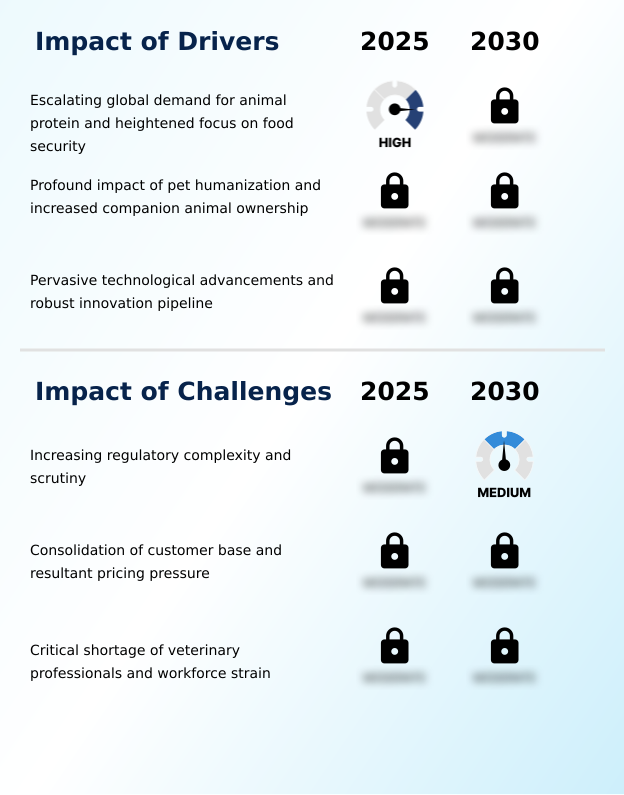
What are the key market drivers leading to the rise in the adoption of Animal Healthcare Industry?
- The market is fundamentally driven by the escalating global demand for animal protein and an intensified focus on ensuring worldwide food security.
- Market growth is propelled by scientific innovation in both the production and companion animal sectors. The demand for advanced treatments, fueled by high companion animal healthcare spending, is driving significant R&D in veterinary pharmaceutical development.
- This includes breakthroughs like monoclonal antibody therapy and therapeutic proteins, which are transforming the management of chronic diseases and have shown to improve quality of life scores by up to 40% in treated animals.
- The global push for food security and sustainable livestock farming necessitates continuous improvements in animal vaccine technology and biologics manufacturing.
- Innovations in herd health management software and AI-powered drug discovery are enhancing feed conversion efficiency, with some systems enabling a 10% reduction in feed waste.
- The expansion of animal health nutraceuticals also supports this drive toward efficiency and sustainability, contributing to overall global food security.
What are the market trends shaping the Animal Healthcare Industry?
- A definitive paradigm shift is occurring, moving away from reactive treatments toward a more proactive and holistic approach focused on preventative care and overall animal wellness.
- A defining trend is the integration of digital animal health solutions, profoundly influenced by the pet humanization trend impact. The rise of veterinary telehealth platforms and wearable health sensors for animal welfare monitoring is creating a connected ecosystem, allowing for proactive health management and improving treatment adherence by over 20%.
- This digital shift, a key part of advanced veterinary therapies, is enabling more personalized pet wellness and nutrition plans and facilitating the growth of pet care e-commerce. Furthermore, innovation in biologics is accelerating, with the development of next-generation dna and rna vaccines and immunomodulator products like bacteriophage therapy.
- These are critical for addressing emerging animal diseases, with some new platforms reducing vaccine development timelines by 30% compared to traditional methods. Veterinary practice management software is evolving to integrate these new data streams, enhancing clinic efficiency.
What challenges does the Animal Healthcare Industry face during its growth?
- The industry faces a significant challenge from increasing regulatory complexity and heightened scrutiny over product safety, efficacy, and environmental impact.
- The market faces considerable headwinds from an increasingly complex animal health regulatory landscape and shifting veterinary practice economics. The stringent requirements for product approval, particularly concerning food animal residue avoidance and zoonotic disease control, add significant time and cost to development, with regulatory submission costs increasing by an estimated 25% over the past decade.
- The rise of veterinary services consolidation and the growing pet insurance market impact are creating intense pricing pressure, compelling a re-evaluation of the animal health supply chain. This environment complicates the commercialization of novel treatments like stem cell therapies and custom animal drug compounding.
- Furthermore, the reliance on precise diagnostics, from point-of-care diagnostics and in-clinic diagnostic equipment to more advanced gene-based diagnostics, requires significant capital investment from clinics, affecting their financial stability and purchasing decisions. This dynamic creates a barrier to the adoption of cutting-edge technology that is essential for advancing veterinary public health.
Exclusive Technavio Analysis on Customer Landscape
The animal healthcare market forecasting report includes the adoption lifecycle of the market, covering from the innovator’s stage to the laggard’s stage. It focuses on adoption rates in different regions based on penetration. Furthermore, the animal healthcare market report also includes key purchase criteria and drivers of price sensitivity to help companies evaluate and develop their market growth analysis strategies.
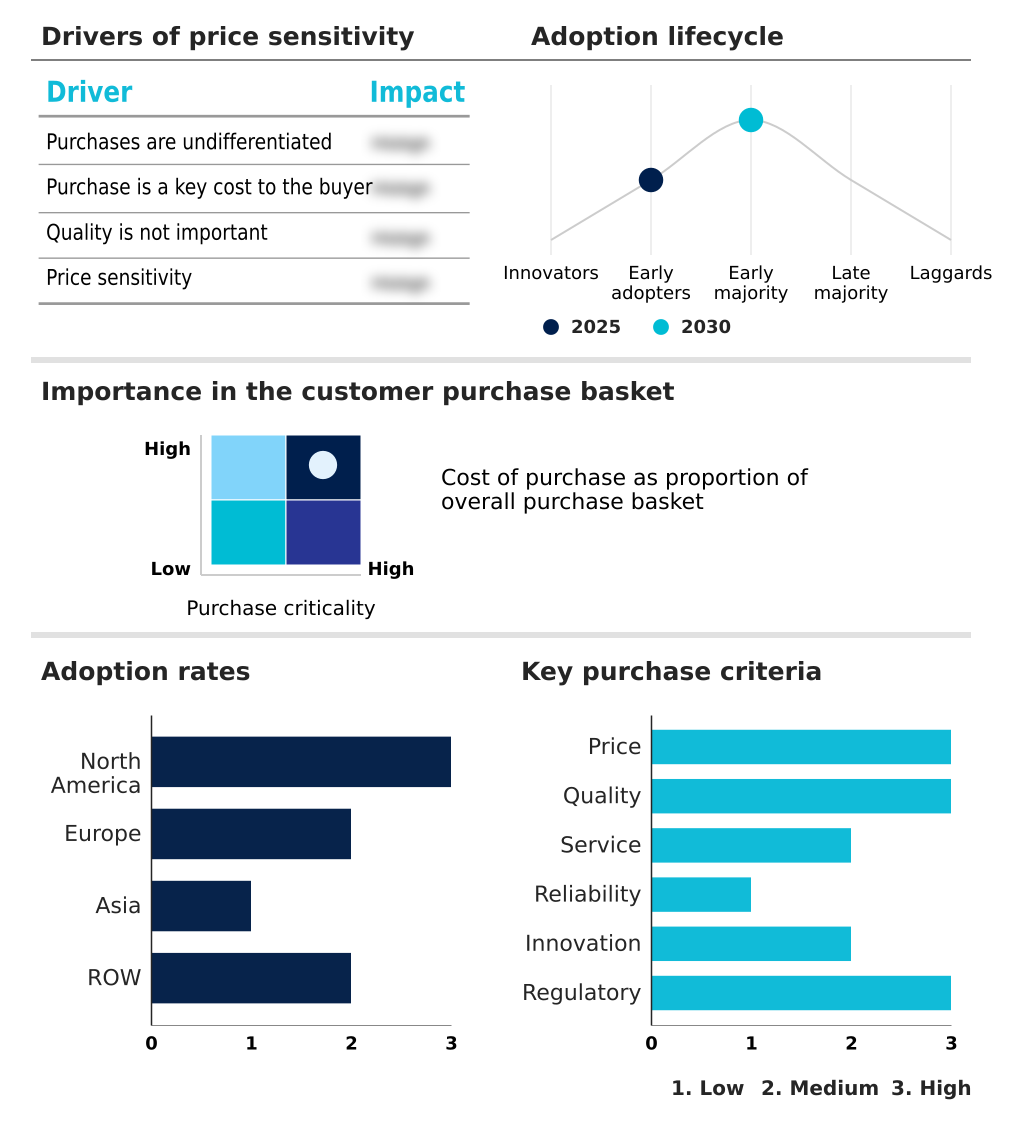
Customer Landscape of Animal Healthcare Industry
Competitive Landscape
Companies are implementing various strategies, such as strategic alliances, animal healthcare market forecast, partnerships, mergers and acquisitions, geographical expansion, and product/service launches, to enhance their presence in the industry.
Bimeda Holdings Ltd. - Offers an extensive range of veterinary pharmaceuticals, vaccines, and health products for livestock, poultry, and companion animals.
The industry research and growth report includes detailed analyses of the competitive landscape of the market and information about key companies, including:
- Bimeda Holdings Ltd.
- Boehringer Ingelheim GmbH
- Ceva Sante Animale
- Covetrus Inc.
- Dechra Pharmaceuticals Plc
- Elanco Animal Health Inc.
- HIPRA SA
- Huvepharma Inc
- IDEXX Laboratories Inc.
- Kyoritsuseiyaku Corp.
- Mars Inc.
- Neogen Corp.
- Norbrook Laboratories Ltd.
- Phibro Animal Health Corp.
- Vetoquinol SA
- Virbac Group
- Zenoaq
- Zoetis Inc.
Qualitative and quantitative analysis of companies has been conducted to help clients understand the wider business environment as well as the strengths and weaknesses of key industry players. Data is qualitatively analyzed to categorize companies as pure play, category-focused, industry-focused, and diversified; it is quantitatively analyzed to categorize companies as dominant, leading, strong, tentative, and weak.
Recent Development and News in Animal healthcare market
- In February 2025, Mission Veterinary Partners completed its merger with Southern Veterinary Partners, creating one of the largest veterinary hospital networks in the United States with over 750 locations.
- In January 2025, Elanco Animal Health launched Credelio Quattro, a broad-spectrum chewable tablet for dogs providing comprehensive protection against ticks, fleas, heartworm, and intestinal worms.
- In January 2025, Ceva Sante Animale announced a significant licensing agreement with Touchlight to use its enzymatic doggybone DNA (dbDNA) technology for developing and commercializing animal health vaccines.
- In May 2025, a revised guideline from the European Medicines Agency (EMA) on the benefit-risk balance of veterinary medicinal products officially came into effect, establishing a more systematic and transparent evaluation process.
Dive into Technavio’s robust research methodology, blending expert interviews, extensive data synthesis, and validated models for unparalleled Animal Healthcare Market insights. See full methodology.
| Market Scope | |
|---|---|
| Page number | 286 |
| Base year | 2025 |
| Historic period | 2020-2024 |
| Forecast period | 2026-2030 |
| Growth momentum & CAGR | Accelerate at a CAGR of 4.7% |
| Market growth 2026-2030 | USD 11949.8 million |
| Market structure | Fragmented |
| YoY growth 2025-2026(%) | 4.5% |
| Key countries | US, Canada, Mexico, Germany, UK, France, Italy, Spain, The Netherlands, China, Japan, India, South Korea, Indonesia, Thailand, Brazil, South Africa, Argentina, Saudi Arabia, Turkey, Colombia, UAE and Israel |
| Competitive landscape | Leading Companies, Market Positioning of Companies, Competitive Strategies, and Industry Risks |
Research Analyst Overview
- The animal healthcare market is defined by a consistent drive toward sophisticated medical solutions and preventative care. The pipeline is robust, featuring innovations like therapeutic proteins, stem cell therapies, and advanced biologics manufacturing processes that are creating new treatment paradigms in companion animal oncology and for chronic diseases.
- The development of dna and rna vaccines alongside recombinant vector vaccines is pivotal for addressing emerging pathogens and mitigating antimicrobial resistance (amr). In diagnostics, the proliferation of point-of-care diagnostics, in-clinic diagnostic equipment, and gene-based diagnostics allows for earlier and more precise interventions.
- A key boardroom consideration is the increasing investment required for ai-powered drug discovery, where early adopters have shown an ability to shorten development timelines by up to 25%. This technological shift is complemented by digital tools like veterinary practice management software and herd health management software, which optimize clinic and farm operations.
- The market for broad-spectrum parasiticides remains a staple, ensuring baseline health and animal welfare monitoring across all segments.
What are the Key Data Covered in this Animal Healthcare Market Research and Growth Report?
-
What is the expected growth of the Animal Healthcare Market between 2026 and 2030?
-
USD 11.95 billion, at a CAGR of 4.7%
-
-
What segmentation does the market report cover?
-
The report is segmented by Product (Pharmaceutical, Feed additive, and Biologicals), Animal Type (Livestock, and Companion animals), Distribution Channel (VHC, Pharmacies and drug stores, E-commerce, and Direct sales) and Geography (North America, Europe, Asia, Rest of World (ROW))
-
-
Which regions are analyzed in the report?
-
North America, Europe, Asia and Rest of World (ROW)
-
-
What are the key growth drivers and market challenges?
-
Escalating global demand for animal protein and heightened focus on food security, Increasing regulatory complexity and scrutiny
-
-
Who are the major players in the Animal Healthcare Market?
-
Bimeda Holdings Ltd., Boehringer Ingelheim GmbH, Ceva Sante Animale, Covetrus Inc., Dechra Pharmaceuticals Plc, Elanco Animal Health Inc., HIPRA SA, Huvepharma Inc, IDEXX Laboratories Inc., Kyoritsuseiyaku Corp., Mars Inc., Neogen Corp., Norbrook Laboratories Ltd., Phibro Animal Health Corp., Vetoquinol SA, Virbac Group, Zenoaq and Zoetis Inc.
-
Market Research Insights
- The market's dynamism is fueled by a convergence of sociocultural shifts and technological progress. The profound pet humanization trend impact has led to unprecedented companion animal healthcare spending, with a recent survey showing that owners using digital animal health solutions are 20% more likely to pursue advanced veterinary therapies.
- In the production sector, which is central to global food security, the adoption of new animal vaccine technology and herd health management software has resulted in up to a 15% improvement in feed conversion efficiency. The focus on sustainable livestock farming and pet wellness and nutrition is creating new opportunities in the animal health nutraceuticals and veterinary pharmaceutical development fields.
- This evolution underscores a market where emotional investment and economic imperatives collectively drive innovation.
We can help! Our analysts can customize this animal healthcare market research report to meet your requirements.
 RIA -
RIA - 
