



Casting Resin Market Size 2024-2028
The casting resin market size is forecast to increase by USD 2.54 billion, at a CAGR of 6.78% between 2023 and 2028.
- The market is experiencing significant growth, driven primarily by the increasing demand from the automotive industry. This sector's expansion is fueled by the rising production of electric and hybrid vehicles, which require lightweight and durable components. Furthermore, the increasing demand for waterborne polyurethane coatings is contributing to market growth. These coatings offer advantages such as reduced environmental impact and improved performance, making them a preferred choice for various industries, including automotive and construction. However, the market faces challenges, including the volatile prices of raw materials.
- The fluctuations in the cost of raw materials, such as polyurethane and isocyanates, can significantly impact the profitability of casting resin manufacturers. Producers must closely monitor raw material prices and explore alternative sources or production methods to mitigate these risks and maintain competitiveness. Effective supply chain management and strategic partnerships can help companies navigate these challenges and capitalize on the market's growth opportunities.
What will be the Size of the Casting Resin Market during the forecast period?
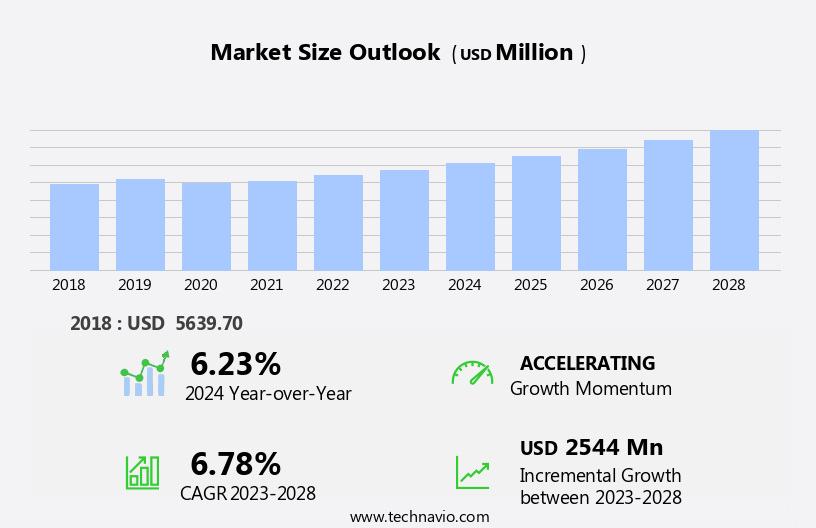
Explore in-depth regional segment analysis with market size data - historical 2018-2022 and forecasts 2024-2028 - in the full report.
Request Free Sample
Casting resins continue to play a pivotal role in various industries, with their applications evolving in response to market dynamics and technological advancements. These versatile materials are utilized in the manufacturing of casting molds and compounds, with each application demanding specific properties. Phenolic resins, for instance, are renowned for their flame retardancy, making them a preferred choice in sectors where fire safety is paramount. Meanwhile, acrylic resins offer excellent UV resistance, crucial for outdoor applications. Chemical resistance is a key consideration in industries such as automotive and oil and gas, leading to the increasing popularity of vinyl ester resins.
The integration of advanced materials like carbon fiber and Aramid Fiber into casting resins enhances their mechanical strength and dimensional stability. Moreover, the advent of 3D printing technology has expanded the scope of casting resins, enabling the production of intricate and complex components. Environmental considerations are a significant factor influencing the casting resins market. The shift towards bio-based resins and recyclable options reflects this trend. ISO and ASTM standards ensure the quality and safety of these materials, while mold release agents facilitate the smooth removal of castings from molds. Casting processes require stringent adherence to safety regulations, with curing agents and chemical formulations playing a crucial role in ensuring a successful casting outcome.
Epoxy resins offer excellent thermal conductivity, making them suitable for high-performance applications. Silicone resins provide flexibility and durability, making them ideal for art and crafts and jewelry making. Continuous innovation in casting equipment and resin formulation addresses challenges such as air entrapment and casting defects, ensuring the production of high-quality castings. The ongoing unfolding of market activities and evolving patterns underscores the dynamic nature of the casting resins market.
How is this Casting Resin Industry segmented?
The casting resin industry research report provides comprehensive data (region-wise segment analysis), with forecasts and estimates in "USD million" for the period 2024-2028, as well as historical data from 2018-2022 for the following segments.
- Type
- Polyurethane
- Epoxy
- Unsaturated polyester
- End-user
- Automotive
- Building and construction
- Electrical and electronics
- Transportation and others
- Geography
- North America
- US
- Europe
- Germany
- APAC
- China
- India
- Japan
- Rest of World (ROW)
- North America
.
By Type Insights
The polyurethane segment is estimated to witness significant growth during the forecast period.
Polyurethane casting resins are a type of high-performance material widely used in various industries due to their exceptional properties, including UV resistance, chemical resistance, and high tensile and flexural strength. These resins adhere strongly to casting molds and form a durable bond with casting compounds, ensuring dimensional stability and impact resistance in the final casted product. ISO standards ensure consistent quality and safety in the production and application of these resins. Bio-based resins are gaining popularity due to their eco-friendly nature, aligning with environmental considerations. Casting processes using these resins reduce carbon emissions and minimize waste. Carbon fiber reinforced casting resins offer enhanced mechanical strength and thermal conductivity, making them suitable for use in high-performance applications.
Phenolic and epoxy resins are also commonly used in casting applications due to their flame retardancy and excellent adhesion properties. Curing agents and mold release agents are essential components in the casting process, ensuring proper curing time and preventing sticking to the mold. Recyclable resins and 3D printing technologies are emerging trends in the casting resins market, offering increased flexibility and reduced production costs. Surface preparation and proper casting equipment are crucial factors in achieving a defect-free casting process. Silicone resins are used as mold release agents due to their low toxicity and excellent release properties. Casting resins find applications in various industries, including automotive, construction, aerospace, and art and crafts.
Casting standards and regulations ensure safety and consistency in the production and application of these resins. Casting defects, such as air entrapment and curing issues, can be minimized through proper process control and resin formulation. Jewelry making and art and crafts are niche markets for casting resins, where they offer a cost-effective and versatile solution for creating intricate designs and shapes. Overall, the casting resins market is evolving to meet the demands of various industries, with a focus on sustainability, innovation, and cost-effectiveness.
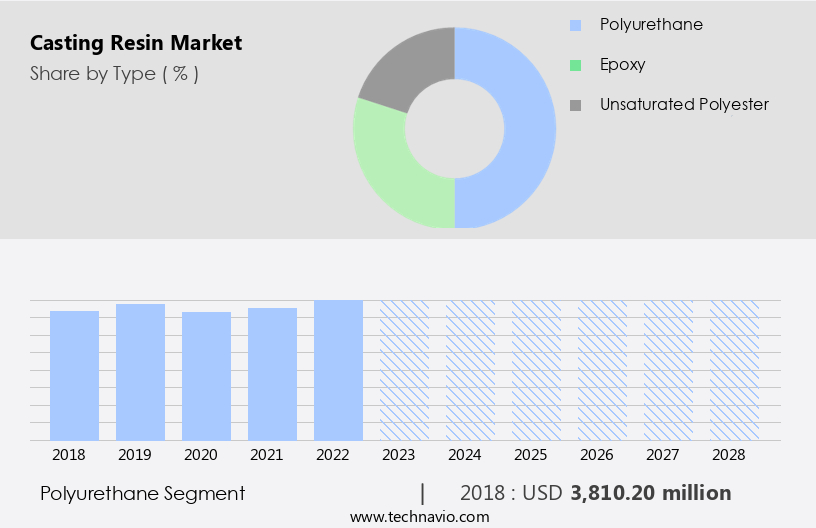
The Polyurethane segment was valued at USD 3.81 billion in 2018 and showed a gradual increase during the forecast period.
Regional Analysis
APAC is estimated to contribute 61% to the growth of the global market during the forecast period.Technavio’s analysts have elaborately explained the regional trends and drivers that shape the market during the forecast period.
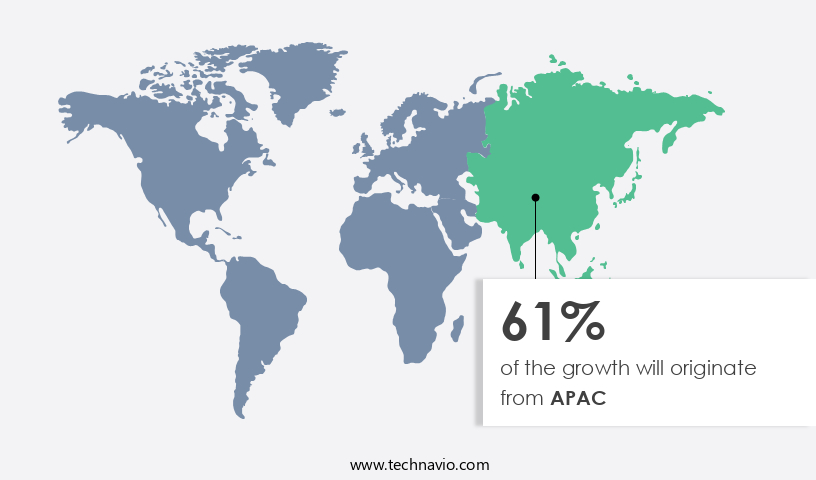
The market in the Pacific region is experiencing notable growth due to the expansion of the commercial and residential construction sector and increasing economic development. This growth is driving demand for casting resins in industries such as wood and furniture, electrical and electronics, automotive, and transportation. New infrastructure projects are expected to boost the demand for polyurethane coatings during the forecast period. In Asia Pacific, economic growth in countries like India, China, and Indonesia, among others, and rising foreign investments have led to an increase in per capita income. This economic growth is fueling the demand for casting resins in various applications.
ISO standards and safety regulations are crucial factors influencing the market. The use of bio-based resins and sustainable casting processes is gaining popularity due to environmental considerations. Casting molds and compounds, as well as casting equipment, are essential components of the casting process. Chemical resistance, UV resistance, and flame retardancy are important properties of casting resins. The market also offers a range of casting resins with different properties, including acrylic resins, vinyl ester resins, epoxy resins, and phenolic resins. Casting defects, such as air entrapment and mold release issues, can impact the quality of the final product. Therefore, the use of mold release agents and curing agents is crucial to ensure the successful production of casting parts.
The use of carbon fiber, glass fiber, aramid fiber, and other reinforcing materials is increasing in casting processes to improve mechanical strength, flexural strength, and thermal conductivity. Recyclable resins are also gaining popularity due to their environmental benefits. Three-dimensional (3D) printing technology is emerging as a viable alternative to traditional casting processes, offering advantages such as reduced production time and lower material costs. However, it also presents challenges, such as the need for specialized equipment and the high cost of raw materials. Casting resins find applications in various industries, including art and crafts, jewelry making, and industrial manufacturing. The market is expected to continue evolving, with new product developments and technological advancements driving growth.
Market Dynamics
Our researchers analyzed the data with 2023 as the base year, along with the key drivers, trends, and challenges. A holistic analysis of drivers will help companies refine their marketing strategies to gain a competitive advantage.
What are the key market drivers leading to the rise in the adoption of Casting Resin Industry?
- The automotive industry's increasing demand serves as the primary driver for market growth.
- Cast iron plays a significant role in the manufacturing of engine components in the automotive industry, including bushings, differential shells, cylinder blocks, suspensions, and steering parts. The demand for engines with increased horsepower in heavy commercial vehicles and tractors is driving the consumption of cast iron for cylinder blocks and cylinder heads. The US automotive industry is experiencing a high growth rate due to the increasing sales of passenger and commercial vehicles, leading to an uptick in the usage of cast iron.
- This trend is expected to continue during the forecast period, as the automotive sector's expansion will necessitate the production of more engine parts, thereby increasing the demand for cast iron.
What are the market trends shaping the Casting Resin Industry?
- The market trend indicates a rising demand for waterborne polyurethane coatings. This eco-friendly alternative to traditional coatings is gaining popularity due to its numerous benefits.
- Waterborne polyurethane coatings have gained significant traction in various industries due to their superior properties and environmental benefits. These coatings are extensively used in sectors such as automobiles, construction, marine, oil and gas, aerospace, and mining, primarily as primers. They provide excellent resistance to heat, abrasion, and chemicals, ensuring superior adherence. In contrast to solvent-borne coatings, which have severe environmental impacts, waterborne polyurethane coatings release fewer organic compounds, making them less toxic and flammable. Moreover, waterborne polyurethane coatings are relatively more cost-effective than their solvent-borne counterparts as they do not require additives, thinners, or hardeners.
- Additionally, fewer quantities of these coatings are needed to cover a surface area compared to other variants. Adhering to ISO standards and offering UV resistance, these bio-based resins are increasingly preferred for casting molds and casting compounds. Ensuring safety regulations, waterborne polyurethane coatings are an immersive and harmonious solution for various industries.
What challenges does the Casting Resin Industry face during its growth?
- The volatile pricing of raw materials poses a significant challenge to the industry's growth trajectory.
- The market is experiencing significant growth due to the increasing demand for lightweight and durable components in various industries. Casting equipment manufacturers are focusing on utilizing casting resins, such as phenolic resins and acrylic resins, to produce high-performance parts with superior tensile strength, dimensional stability, and impact resistance. Mold release agents are essential in the casting process to ensure the smooth removal of the cured part from the mold. Moreover, the need for flame retardancy in casting resins is escalating due to stringent safety regulations in industries like automotive and construction. Environmental considerations are also driving the market, as many casting resin manufacturers are investing in eco-friendly alternatives to traditional resins.
- Innovations in technology, such as 3D printing, are disrupting the casting industry, offering faster production times and reduced material waste. However, the high cost of 3D printing technology and the need for specialized equipment and expertise limit its widespread adoption. In conclusion, the market is witnessing dynamic growth due to the increasing demand for high-performance components, the need for flame retardancy, and the adoption of innovative technologies. Manufacturers are investing in R&D to differentiate their products and remain competitive in the market.
Exclusive Customer Landscape
The casting resin market forecasting report includes the adoption lifecycle of the market, covering from the innovator’s stage to the laggard’s stage. It focuses on adoption rates in different regions based on penetration. Furthermore, the casting resin market report also includes key purchase criteria and drivers of price sensitivity to help companies evaluate and develop their market growth analysis strategies.
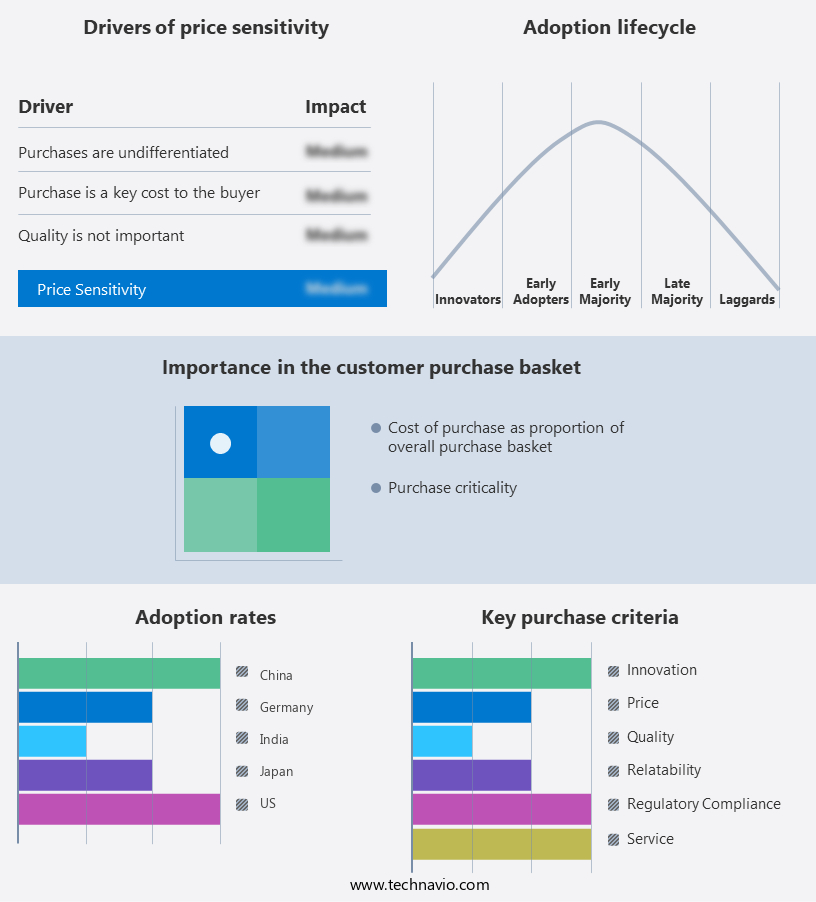
Customer Landscape
Key Companies & Market Insights
Companies are implementing various strategies, such as strategic alliances, casting resin market forecast, partnerships, mergers and acquisitions, geographical expansion, and product/service launches, to enhance their presence in the industry.
Aditya Birla Management Corp. Pvt. Ltd. - The company specializes in supplying high-performance casting resins, including Epoxy Resins, to various industries.
The industry research and growth report includes detailed analyses of the competitive landscape of the market and information about key companies, including:
- Aditya Birla Management Corp. Pvt. Ltd.
- Alchemie Ltd.
- ASAHI YUKIZAI CORP.
- Atul Ltd.
- carbonblack composites
- Chang Chun Group
- CHEMZEST
- China Petrochemical Corp.
- Covestro AG
- DIC Corp.
- Gougeon Brothers Inc.
- Hexion Inc.
- Huntsman International LLC
- Kolon Industries Inc.
- Kukdo Chemical Co. Ltd.
- Polytek Development Corp.
- RESOLTECH SAS
- Schmid Industrieholding GmbH
- Specialty Resin Chemical
- Suzhou Xingye Materials Technology Co. Ltd.
Qualitative and quantitative analysis of companies has been conducted to help clients understand the wider business environment as well as the strengths and weaknesses of key industry players. Data is qualitatively analyzed to categorize companies as pure play, category-focused, industry-focused, and diversified; it is quantitatively analyzed to categorize companies as dominant, leading, strong, tentative, and weak.
Recent Development and News in Casting Resin Market
- In February 2023, BASF SE, a leading chemical producer, announced the expansion of its Ultramid AKR-X high-performance polyamide (PA) casting resins product line. This expansion aims to cater to the growing demand for lightweight and durable components in the automotive and transportation industries (BASF press release, 2023).
- In March 2024, Covestro AG, a global materials science company, entered into a strategic partnership with 3D Systems, a leading additive manufacturing solutions provider. This collaboration focuses on the development and commercialization of casting resins for large-format 3D printing applications, targeting industries such as automotive, aerospace, and construction (Covestro press release, 2024).
- In May 2024, Hexion Inc., a global Specialty Chemicals company, completed the acquisition of Momentive Performance Materials Inc. This transaction significantly expanded Hexion's portfolio in the casting resins market, enhancing its position as a leading supplier of epoxy and polyurethane casting resins (Hexion press release, 2024).
- In October 2025, the European Union (EU) introduced new regulations on the use of casting resins in food contact applications. The regulations set stricter limits on certain chemicals, such as bisphenol A (BPA), and require manufacturers to comply with these standards by 2027 (European Commission press release, 2025). This initiative is expected to drive innovation in the development of alternative casting resins that meet the new requirements.
Research Analyst Overview
- The market encompasses a diverse range of materials, including thermoset and thermoplastic resins, reactive and non-reactive types, and resin blends. Characterization and testing play crucial roles in ensuring casting quality control. Resin analysis, using techniques such as finite element analysis and casting simulation, optimizes the casting process and enhances manufacturing efficiency. Emerging casting materials, like upcycled resins and casting robotics, are revolutionizing the industry. Casting design principles and engineering advancements continue to shape the competitive landscape. Casting certification and optimization further boost product quality and customer confidence. Resin market trends lean towards cost-effective manufacturing and eco-friendly solutions.
- Recycling and upcycling initiatives are gaining traction, reducing waste and minimizing environmental impact. Casting automation and casting technology advancements continue to streamline production processes and improve overall efficiency. In the realm of casting process optimization, non-reactive resins offer versatility and predictability, while thermoset resins provide superior strength and durability. Casting industry outlook remains positive, with continued growth expected due to increasing demand for high-performance and cost-effective casting solutions. The casting market analysis reveals a dynamic landscape, with ongoing research and development driving innovation and expansion. Casting technology advancements and casting manufacturing costs remain key factors influencing market trends.
- Overall, the casting industry continues to evolve, offering exciting opportunities for businesses and innovators alike.
Dive into Technavio’s robust research methodology, blending expert interviews, extensive data synthesis, and validated models for unparalleled Casting Resin Market insights. See full methodology.
|
Market Scope |
|
|
Report Coverage |
Details |
|
Page number |
168 |
|
Base year |
2023 |
|
Historic period |
2018-2022 |
|
Forecast period |
2024-2028 |
|
Growth momentum & CAGR |
Accelerate at a CAGR of 6.78% |
|
Market growth 2024-2028 |
USD 2544 million |
|
Market structure |
Fragmented |
|
YoY growth 2023-2024(%) |
6.23 |
|
Key countries |
China, US, Germany, India, and Japan |
|
Competitive landscape |
Leading Companies, Market Positioning of Companies, Competitive Strategies, and Industry Risks |
What are the Key Data Covered in this Casting Resin Market Research and Growth Report?
- CAGR of the Casting Resin industry during the forecast period
- Detailed information on factors that will drive the growth and forecasting between 2024 and 2028
- Precise estimation of the size of the market and its contribution of the industry in focus to the parent market
- Accurate predictions about upcoming growth and trends and changes in consumer behaviour
- Growth of the market across APAC, North America, Europe, South America, and Middle East and Africa
- Thorough analysis of the market’s competitive landscape and detailed information about companies
- Comprehensive analysis of factors that will challenge the casting resin market growth of industry companies
We can help! Our analysts can customize this casting resin market research report to meet your requirements.
 RIA -
RIA - 
