



Citizen Services AI Market Size 2026-2030
The citizen services ai market size is valued to increase by USD 36.63 billion, at a CAGR of 27.5% from 2025 to 2030. Critical mandate for administrative efficiency and cost containment will drive the citizen services ai market.
Major Market Trends & Insights
- North America dominated the market and accounted for a 38% growth during the forecast period.
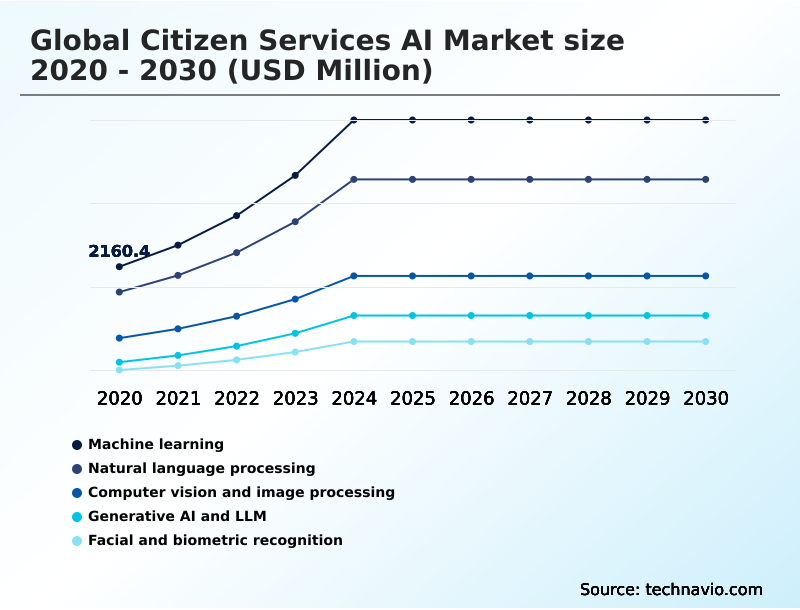
- By Technology - Machine learning segment was valued at USD 4.48 billion in 2024
- By End-user - Public safety and emergency response segment accounted for the largest market revenue share in 2024
Market Size & Forecast
- Market Opportunities: USD 45.93 billion
- Market Future Opportunities: USD 36.63 billion
- CAGR from 2025 to 2030 : 27.5%
Market Summary
- The citizen services AI market represents a strategic shift in public administration, leveraging advanced technology to modernize service delivery. It involves the application of machine learning and data analytics to automate routine tasks, personalize interactions, and derive actionable insights for proactive, data-informed governance.
- For example, in emergency response, predictive resource allocation models analyze real-time data to position medical services and fire departments more effectively, optimizing response times during critical incidents. This transition is driven by the need for enhanced operational efficiency and rising public expectations for accessible, 24/7 support, often delivered through ai-driven citizen engagement platforms.
- Central to this evolution are core technologies like natural language processing for multilingual support and computer vision for infrastructure monitoring. The market focuses on improving service accessibility and building more resilient, responsive public institutions, with a strong emphasis on algorithmic bias mitigation strategies to ensure equitable outcomes for all citizens.
- This move toward digital-first administration is a foundational element ensuring the sustainability of public service models.
What will be the Size of the Citizen Services AI Market during the forecast period?
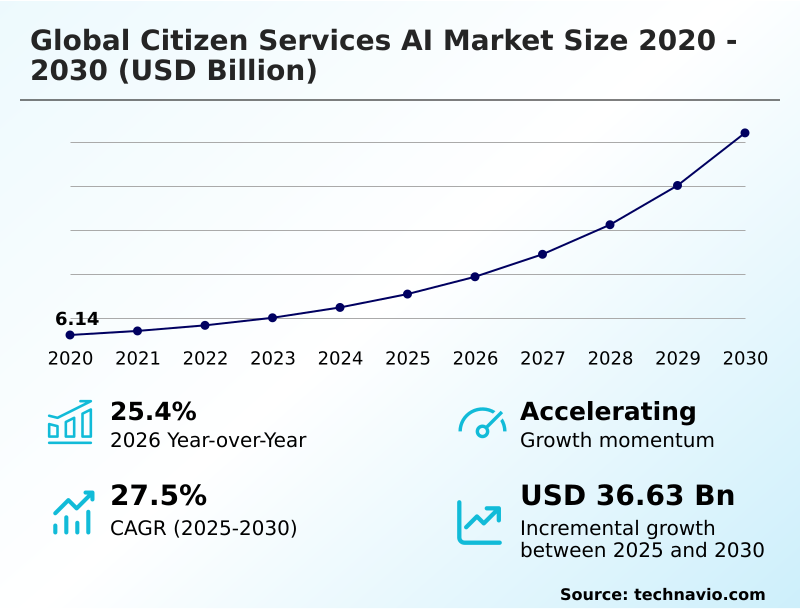
Get Key Insights on Market Forecast (PDF) Get Free Sample
How is the Citizen Services AI Market Segmented?
The citizen services ai industry research report provides comprehensive data (region-wise segment analysis), with forecasts and estimates in "USD million" for the period 2026-2030, as well as historical data from 2020-2024 for the following segments.
- Technology
- Machine learning
- Natural language processing
- Computer vision and image processing
- Generative AI and LLM
- Facial and biometric recognition
- End-user
- Public safety and emergency response
- Traffic and transportation management
- Healthcare and social services
- Utilities and smart infrastructure
- Others
- Component
- Solutions
- Services
- Geography
- North America
- US
- Canada
- Mexico
- APAC
- China
- Japan
- India
- Europe
- Germany
- UK
- France
- Middle East and Africa
- Saudi Arabia
- UAE
- South Africa
- South America
- Brazil
- Argentina
- Rest of World (ROW)
- North America
By Technology Insights
The machine learning segment is estimated to witness significant growth during the forecast period.
Machine learning is a foundational element, enabling public administration systems to improve operational processes. This technology supports a vast range of applications, where its ability to derive actionable insights from complex data is a primary adoption driver.
Anomaly detection models have improved fraud identification in benefits claims by over 20%, a key use case for machine learning for fraud detection. The use of federated learning models is growing for training algorithms without centralizing sensitive data.
Explainable ai (xai) frameworks and public service delivery automation are being integrated to ensure transparent and efficient automated document processing workflows that build public trust in proactive governance models.
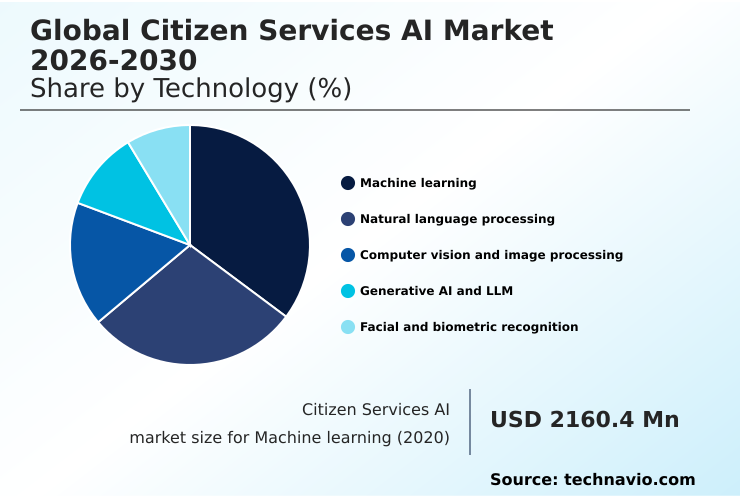
The Machine learning segment was valued at USD 4.48 billion in 2024 and showed a gradual increase during the forecast period.
Regional Analysis
North America is estimated to contribute 38% to the growth of the global market during the forecast period.Technavio’s analysts have elaborately explained the regional trends and drivers that shape the market during the forecast period.
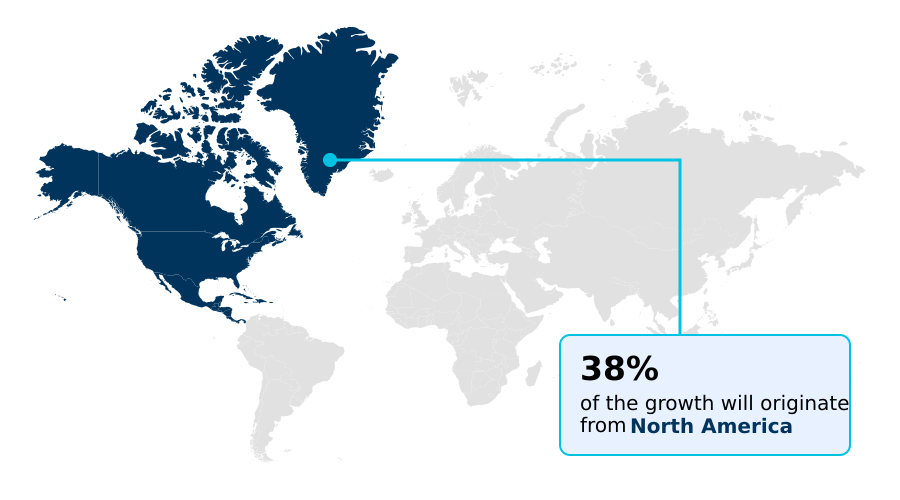
See How Citizen Services AI Market Demand is Rising in North America Get Free Sample
North America is a dominant region, characterized by large-scale contracts for biometric authentication for digital identity and other advanced systems. However, the APAC region is the fastest-growing market, with a projected growth rate of 28.3%, slightly outpacing North America's 27.1%.
This growth in APAC is fueled by massive investments in smart city ai applications and mobile-first service delivery.
In Europe, the market is shaped by a strong focus on ethical ai in public administration and ai ethics and governance, guided by regulations that mandate transparency.
There is also a strong emphasis on natural language processing for multilingual support and computer vision for infrastructure monitoring.
Market Dynamics
Our researchers analyzed the data with 2025 as the base year, along with the key drivers, trends, and challenges. A holistic analysis of drivers will help companies refine their marketing strategies to gain a competitive advantage.
- The practical application of AI is reshaping government functions at a granular level. The use of ai for social benefit eligibility verification is automating complex checks, while ai for tax administration automation is enhancing revenue collection efficiency. In urban environments, ai in traffic and transportation management works in tandem with ai in public transport scheduling optimization to reduce congestion.
- For instance, optimizing public transit routes has been shown to yield cost savings more than double those achieved through ai for urban planning and development alone. Public safety is being transformed through ai in emergency response optimization and predictive ai in public safety resource allocation.
- Core infrastructure benefits from ai for predictive infrastructure maintenance and ai for optimizing public utility grids, ensuring reliability. Citizen interaction is improved by ai for multilingual citizen support services and ai for personalized healthcare appointment notifications. Administrative backlogs are being cleared through ai applications in judicial case management and ai in streamlining permit application processing.
- The technology is also applied to ai for automating government procurement, ai in digital voter registration systems, and ai for managing social welfare programs. Governments are leveraging ai for real-time sentiment analysis to gauge public opinion, while ai for public health surveillance and prediction, ai in customs and border protection, and ai for environmental impact monitoring address broader societal challenges.
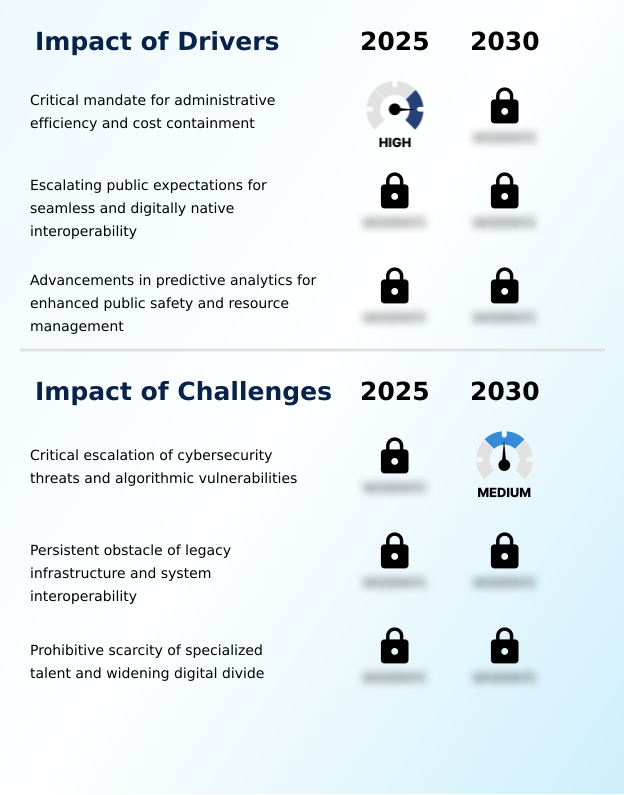
What are the key market drivers leading to the rise in the adoption of Citizen Services AI Industry?
- The critical mandate for public sector agencies to achieve higher levels of administrative efficiency while containing costs is a primary market driver.
- The urgent need for administrative efficiency is a core market driver, compelling agencies to adopt solutions like automated decision-making systems which reduce manual processing costs by over 30%.
- Escalating public expectations for seamless digital experiences are also critical, promoting the use of sophisticated technologies for citizen journey mapping. A major impetus is the growing sophistication of predictive analytics for public safety and infrastructure management.
- This enables data-informed governance through predictive resource allocation, shifting from reactive to preventative strategies. This move toward interoperability of government systems is essential for creating unified user experiences and maximizing asset utility.
What are the market trends shaping the Citizen Services AI Industry?
- The evolution toward proactive governance is a defining market trend, characterized by hyper-personalized systems that anticipate citizen needs before they are explicitly stated.
- A key trend is the shift toward proactive service models through hyper-personalization engines, which utilize behavioral signals to anticipate citizen needs. This approach improves citizen satisfaction scores by over 15%. The strategic implementation of sovereign ai frameworks and strict data residency compliance is also gaining momentum, particularly in Europe, to protect sensitive information.
- Furthermore, generative ai for public communication is being integrated into ai-driven citizen engagement platforms to facilitate inclusive and multilingual interactions. These systems can reduce response times by up to 40% through advanced conversational interfaces, creating a more accessible government.
What challenges does the Citizen Services AI Industry face during its growth?
- A key challenge affecting industry growth is the critical escalation of sophisticated cybersecurity threats and inherent vulnerabilities within algorithmic systems.
- A primary challenge is the escalation of sophisticated cyber threats, including model inversion attacks and prompt injection, which target public infrastructures. The deployment of agentic ai introduces new risks regarding predictability, demanding robust prompt injection defense mechanisms and advanced ai-driven threat detection.
- The need for comprehensive ai-enhanced cybersecurity for government is critical, as a single failure can lead to a permanent loss of public trust. The integration of cutting-edge AI with antiquated legacy systems also poses a significant technical challenge, as modernization costs can be 50% higher than originally budgeted.
Exclusive Technavio Analysis on Customer Landscape
The citizen services ai market forecasting report includes the adoption lifecycle of the market, covering from the innovator’s stage to the laggard’s stage. It focuses on adoption rates in different regions based on penetration. Furthermore, the citizen services ai market report also includes key purchase criteria and drivers of price sensitivity to help companies evaluate and develop their market growth analysis strategies.
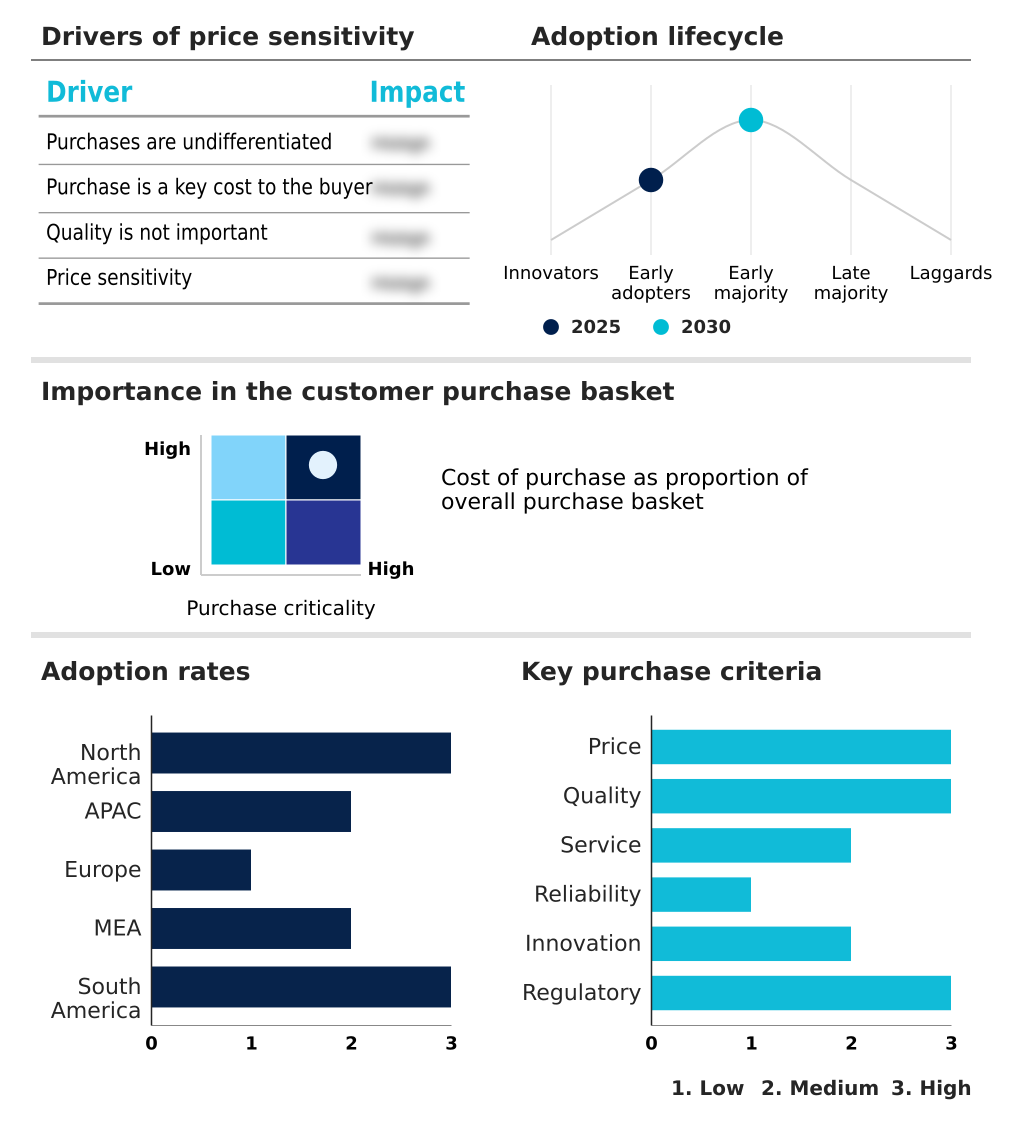
Customer Landscape of Citizen Services AI Industry
Competitive Landscape
Companies are implementing various strategies, such as strategic alliances, citizen services ai market forecast, partnerships, mergers and acquisitions, geographical expansion, and product/service launches, to enhance their presence in the industry.
Accenture Plc - Offerings include AI-driven engagement platforms, intelligent automation for government services, digital transformation consulting, and advanced analytics for mission-critical operations.
The industry research and growth report includes detailed analyses of the competitive landscape of the market and information about key companies, including:
- Accenture Plc
- Amazon.com Inc.
- Booz Allen Hamilton Corp.
- Capgemini SE
- CGI Inc.
- Google LLC
- IBM Corp.
- Leidos Holdings Inc.
- Microsoft Corp.
- NVIDIA Corp.
- Oracle Corp.
- Palantir Technologies Inc.
- Pegasystems Inc.
- Salesforce Inc.
- SAP SE
- SAS Institute Inc.
- ServiceNow Inc.
- Tyler Technologies Inc.
- Unisys Corp.
- Verint Systems Inc.
Qualitative and quantitative analysis of companies has been conducted to help clients understand the wider business environment as well as the strengths and weaknesses of key industry players. Data is qualitatively analyzed to categorize companies as pure play, category-focused, industry-focused, and diversified; it is quantitatively analyzed to categorize companies as dominant, leading, strong, tentative, and weak.
Recent Development and News in Citizen services ai market
- In September 2025, Microsoft Corp. launched a new initiative aimed at integrating its AI tools into local government operations to enhance citizen engagement through more personalized services.
- In November 2025, Amazon.com Inc. (via Amazon Web Services) announced an investment of up to $50 billion to expand its AI and supercomputing infrastructure for United States government agencies, aiming to accelerate critical missions.
- In February 2026, Microsoft Corp. announced a $50 billion commitment to foster the growth of artificial intelligence across the Global South, focusing on strengthening AI infrastructure and partnerships with governments in Asia, Africa, and Latin America.
- In April 2025, Palantir Technologies Inc. entered a partnership with the US Department of Health and Human Services to create an AI-driven pandemic preparedness and public health response system named the National Health Shield.
Dive into Technavio’s robust research methodology, blending expert interviews, extensive data synthesis, and validated models for unparalleled Citizen Services AI Market insights. See full methodology.
| Market Scope | |
|---|---|
| Page number | 316 |
| Base year | 2025 |
| Historic period | 2020-2024 |
| Forecast period | 2026-2030 |
| Growth momentum & CAGR | Accelerate at a CAGR of 27.5% |
| Market growth 2026-2030 | USD 36629.5 million |
| Market structure | Fragmented |
| YoY growth 2025-2026(%) | 25.4% |
| Key countries | US, Canada, Mexico, China, Japan, India, South Korea, Australia, Indonesia, Germany, UK, France, Italy, Spain, The Netherlands, Saudi Arabia, UAE, South Africa, Israel, Turkey, Brazil, Argentina and Chile |
| Competitive landscape | Leading Companies, Market Positioning of Companies, Competitive Strategies, and Industry Risks |
Research Analyst Overview
- The market is rapidly maturing from isolated pilot projects to the large-scale deployment of integrated platforms. The adoption of conversational interfaces and hyper-personalization engines is becoming standard for improving citizen engagement. Boardroom-level decisions are increasingly focused on the implementation of sovereign ai frameworks to ensure data security and regulatory compliance.
- The core technology stack includes sophisticated predictive analytics for public safety and computer vision for infrastructure monitoring, which rely on federated learning models to process decentralized data securely. As systems evolve, the use of agentic ai and automated decision-making systems necessitates robust prompt injection defense and countermeasures against model inversion attacks.
- To maintain trust, explainable ai (xai) frameworks and strong ai-driven threat detection are critical. This ecosystem also leverages generative ai for public communication, natural language processing for multilingual support, and biometric authentication for digital identity, with some agencies reporting a 30% reduction in document processing time.
What are the Key Data Covered in this Citizen Services AI Market Research and Growth Report?
-
What is the expected growth of the Citizen Services AI Market between 2026 and 2030?
-
USD 36.63 billion, at a CAGR of 27.5%
-
-
What segmentation does the market report cover?
-
The report is segmented by Technology (Machine learning, Natural language processing, Computer vision and image processing, Generative AI and LLM, and Facial and biometric recognition), End-user (Public safety and emergency response, Traffic and transportation management, Healthcare and social services, Utilities and smart infrastructure, and Others), Component (Solutions, and Services) and Geography (North America, APAC, Europe, Middle East and Africa, South America)
-
-
Which regions are analyzed in the report?
-
North America, APAC, Europe, Middle East and Africa and South America
-
-
What are the key growth drivers and market challenges?
-
Critical mandate for administrative efficiency and cost containment, Critical escalation of cybersecurity threats and algorithmic vulnerabilities
-
-
Who are the major players in the Citizen Services AI Market?
-
Accenture Plc, Amazon.com Inc., Booz Allen Hamilton Corp., Capgemini SE, CGI Inc., Google LLC, IBM Corp., Leidos Holdings Inc., Microsoft Corp., NVIDIA Corp., Oracle Corp., Palantir Technologies Inc., Pegasystems Inc., Salesforce Inc., SAP SE, SAS Institute Inc., ServiceNow Inc., Tyler Technologies Inc., Unisys Corp. and Verint Systems Inc.
-
Market Research Insights
- The market is defined by a push toward proactive governance models that anticipate citizen needs. The implementation of robust digital identity verification systems and a focus on ethical ai in public administration are building public trust, which is critical for adoption. Efforts to ensure interoperability of government systems are breaking down data silos, enabling a 360-degree citizen view.
- For instance, regions with high digital literacy show adoption rates for AI-powered services that are 25% higher than in other areas. The use of machine learning for fraud detection has reduced improper payments by up to 15% in early deployments, demonstrating clear ROI and driving further investment in the sector.
We can help! Our analysts can customize this citizen services ai market research report to meet your requirements.
 RIA -
RIA - 
