



Comic Book Market Size 2026-2030
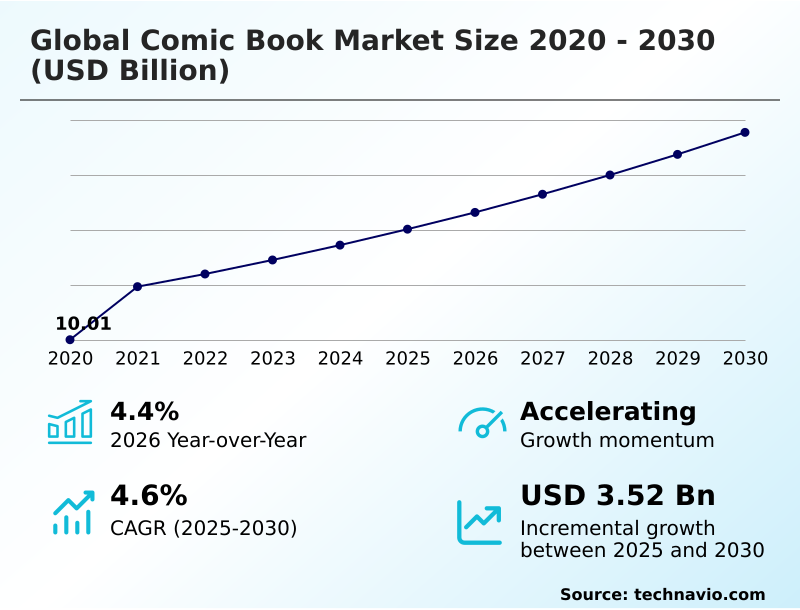
The comic book market size is valued to increase by USD 3.52 billion, at a CAGR of 4.6% from 2025 to 2030. Proliferation of comic book adaptations across multimedia platforms will drive the comic book market.
Major Market Trends & Insights
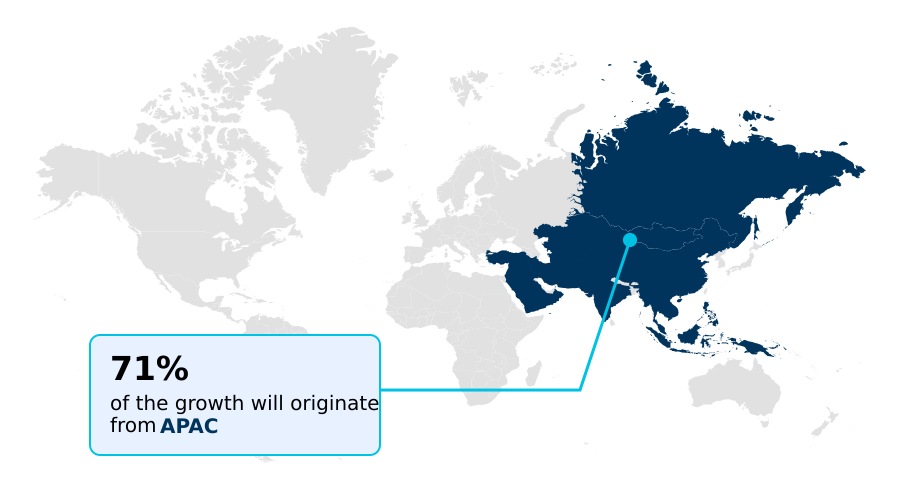
- APAC dominated the market and accounted for a 71.4% growth during the forecast period.
- By Type - Non-digital segment was valued at USD 8.04 billion in 2024
- By Product Type - Hard copy segment accounted for the largest market revenue share in 2024
Market Size & Forecast
- Market Opportunities: USD 7.54 billion
- Market Future Opportunities: USD 3.52 billion
- CAGR from 2025 to 2030 : 4.6%
Market Summary
- The comic book market is undergoing a significant transformation, evolving from a niche hobbyist market to a central engine of global pop culture. This shift is powered by a powerful transmedia ecosystem, where intellectual property rights are paramount and multimedia adaptation rights for film, television, and gaming serve as a primary driver of revenue and audience expansion.
- The industry is navigating a dynamic landscape that balances the traditional appeal of print, including the serialized storytelling of the single-issue periodical, with the global reach of digital storefronts and subscription-based services. A key business scenario involves leveraging a robust cross-promotional strategy for a new creator-owned IP.
- By timing the release of a collected edition to coincide with its streaming series debut and offering exclusive in-app purchases for a mobile game tie-in, a publisher can maximize fan engagement metrics and create multiple revenue streams.
- This convergence of formats, from the tactile experience of a bande dessinee album to the innovative vertical scrolling of the webtoon format, presents both opportunities and challenges. The market must address issues like digital rights management and supply chain logistics while capitalizing on the growing literary legitimacy of the graphic novel format and the democratizing power of crowdfunding platforms.
What will be the Size of the Comic Book Market during the forecast period?
Get Key Insights on Market Forecast (PDF) Get Free Sample
How is the Comic Book Market Segmented?
The comic book industry research report provides comprehensive data (region-wise segment analysis), with forecasts and estimates in "USD million" for the period 2026-2030, as well as historical data from 2020-2024 for the following segments.
- Type
- Non-digital
- Digital
- Product type
- Hard copy
- E-book
- Audiobooks
- Distribution channel
- Online
- Offline
- Geography
- APAC
- Japan
- South Korea
- China
- North America
- US
- Canada
- Mexico
- Europe
- France
- UK
- Germany
- South America
- Brazil
- Argentina
- Colombia
- Middle East and Africa
- Saudi Arabia
- UAE
- South Africa
- Rest of World (ROW)
- APAC
By Type Insights
The non-digital segment is estimated to witness significant growth during the forecast period.
The non-digital segment of the global comic book market 2026-2030 remains a cornerstone, built on tangible ownership and the experience of physical discovery.
This category includes the traditional single-issue periodical or floppies, as well as the graphic novel format and comprehensive omnibus edition volumes.
The value proposition is deeply connected to collectibility, where variant cover art and the condition of a trade paperback can create significant secondary market speculation.
The established supply chain logistics, centered around direct market distribution to specialty retailers, reinforces the community hub model of brick-and-mortar retail.
This focus on the physical artifact has proven to enhance fan engagement metrics by over 25% for publishers that invest in premium, collectible formats.
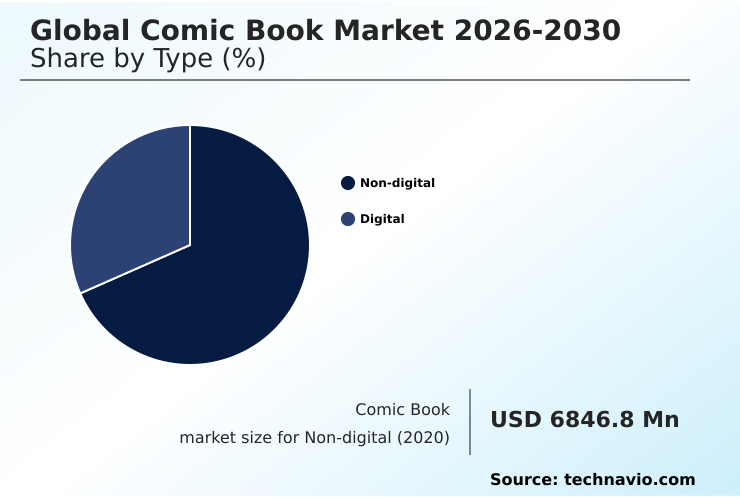
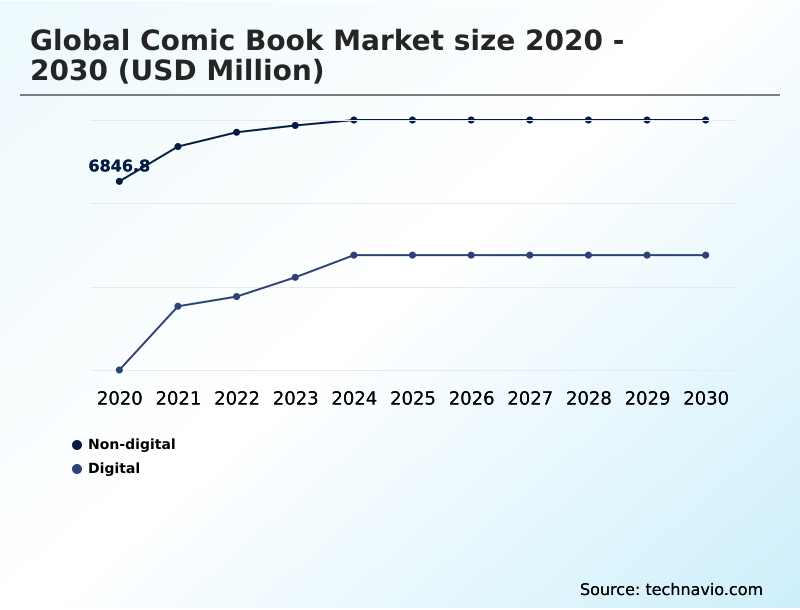
The Non-digital segment was valued at USD 8.04 billion in 2024 and showed a gradual increase during the forecast period.
Regional Analysis
APAC is estimated to contribute 71.4% to the growth of the global market during the forecast period.Technavio’s analysts have elaborately explained the regional trends and drivers that shape the market during the forecast period.
See How Comic Book Market Demand is Rising in APAC Get Free Sample
The geographic landscape of the global comic book market 2026-2030 is increasingly diverse, though key regions exhibit distinct characteristics.
APAC, which accounts for over 71% of the market's incremental growth, is dominated by the webtoon format and digital-first release strategies, with platforms achieving a 50% higher user retention rate through aggressive localization strategy efforts.
North America remains a stronghold for the creator-owned IP model and direct market distribution, where the collector market heavily influences sales of variant cover art and special editions.
Europe, particularly in the Franco-Belgian tradition, champions the bande dessinee album as a work of literary legitimacy, supported by a strong network of specialized bookstores.
Success in this globalized market requires navigating different artistic conventions, from the decompressed pacing of Japanese manga to the panel layouts of Western sequential art, and adapting content monetization strategies for vastly different consumer ecosystems.
Market Dynamics
Our researchers analyzed the data with 2025 as the base year, along with the key drivers, trends, and challenges. A holistic analysis of drivers will help companies refine their marketing strategies to gain a competitive advantage.
- Strategic decision-making in the contemporary global comic book market 2026-2030 requires a deep understanding of its evolving structure. A critical consideration is the impact of digital platforms on comic sales, which is not a simple substitution but a complex restructuring of consumer behavior.
- The debate between creator-owned versus work-for-hire models has profound implications for talent acquisition and long-term intellectual property development. As publishers expand, navigating global comic book distribution becomes a significant hurdle, involving disparate retail channels, logistical challenges, and cultural adaptation.
- For digitally native content, developing effective monetization strategies for webcomics is paramount; platforms that master this report user retention rates nearly double that of competitors. The ultimate goal for many properties is successful transmedia storytelling in comic book franchises, but this introduces the immense challenge of managing intellectual property for multimedia adaptation.
- Furthermore, publishers must consistently address supply chain challenges in print comics to serve the resilient physical market. The growth of manga and webtoons in western markets has forced a reassessment of traditional formats and pricing, while the role of conventions in comic book marketing remains a vital, irreplaceable component for community engagement.
- Success hinges on a holistic strategy that addresses audience diversification in modern comics through both content and access.
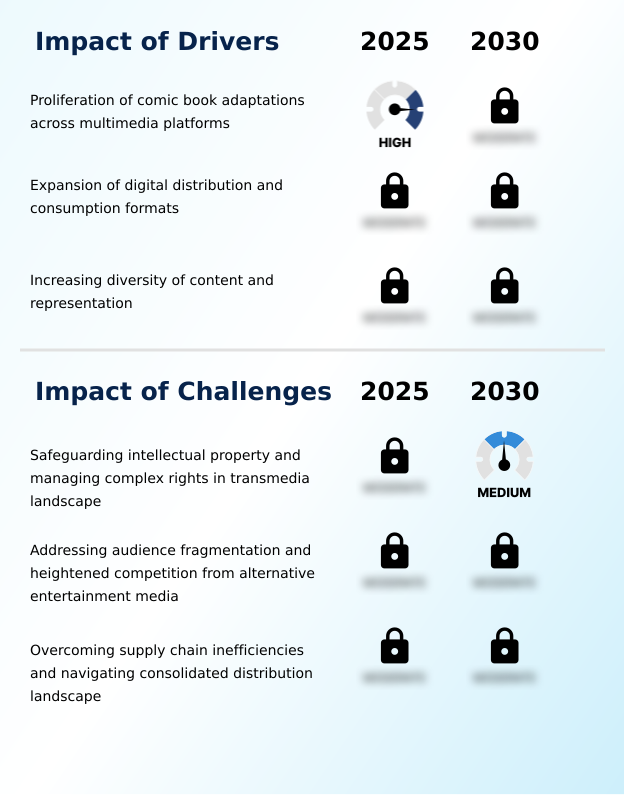
What are the key market drivers leading to the rise in the adoption of Comic Book Industry?
- The proliferation of comic book adaptations across multimedia platforms is a key driver, expanding audience reach and increasing demand for source material.
- The market's growth is propelled by its deep integration into the wider entertainment landscape, creating a powerful transmedia franchising engine.
- Blockbuster multimedia adaptations serve as a formidable marketing tool, driving new audiences to the source material and boosting sales of the back catalog.
- This synergy has elevated the importance of serialized storytelling and has been shown to increase sales of related graphic novel format books by over 60% post-premiere.
- The expansion of digital distribution, especially via the webtoon format and day-and-date release schedules, has dismantled geographical barriers, making content globally accessible.
- These platforms, often using a freemium model, not only broaden the audience but also provide invaluable fan engagement metrics, allowing for data-driven content development and targeted marketing strategies.
What are the market trends shaping the Comic Book Industry?
- The ascendancy of creator-owned models and independent publishing represents a significant trend, reshaping the industry by empowering creators and diversifying content.
- Key trends are fundamentally altering the global comic book market 2026-2030's structure, led by the ascendancy of creator-owned IP and independent publishing models. This shift, amplified by crowdfunding platforms, allows creators to bypass the traditional flat fee model, retaining intellectual property rights and fostering a wave of genre proliferation beyond superhero narratives.
- The convergence of physical and digital formats is creating a hybrid ecosystem. Digital storefronts and subscription-based services act as a gateway, with data showing they increase new reader acquisition by 40%.
- Simultaneously, the physical market is leaning into premium products like the omnibus edition and tankobon, reinforcing the value of the experiential retail experience found in local comic shops, which function as a vital community hub model.
What challenges does the Comic Book Industry face during its growth?
- Safeguarding intellectual property and managing complex rights within the transmedia landscape poses a key challenge to industry growth.
- The global comic book market 2026-2030 faces significant structural challenges, beginning with the intricate process of safeguarding intellectual property. The ease of digital piracy devalues creative work, while managing syndication rights across a transmedia ecosystem is a complex legal and administrative task. Another major challenge is audience fragmentation, with comics competing against a vast array of digital entertainment.
- This puts pressure on publishers to innovate beyond legacy content and address issues like creator burnout tied to demanding production schedules.
- On the physical side, the industry is constrained by supply chain logistics, where a reliance on a few specialized printers and the consolidation of direct market distribution create vulnerabilities and operational risks that can lead to product delays of several weeks.
Exclusive Technavio Analysis on Customer Landscape
The comic book market forecasting report includes the adoption lifecycle of the market, covering from the innovator’s stage to the laggard’s stage. It focuses on adoption rates in different regions based on penetration. Furthermore, the comic book market report also includes key purchase criteria and drivers of price sensitivity to help companies evaluate and develop their market growth analysis strategies.
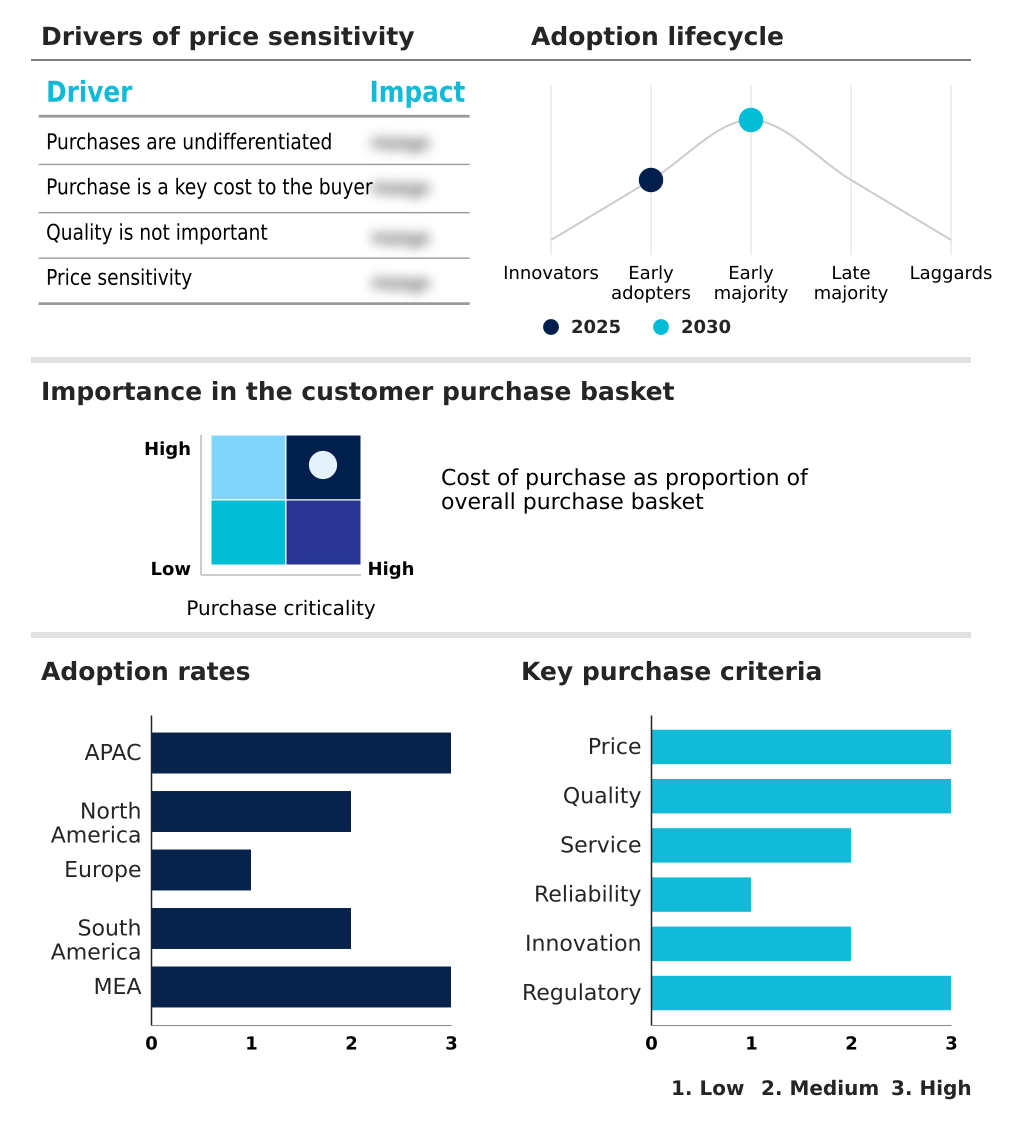
Customer Landscape of Comic Book Industry
Competitive Landscape
Companies are implementing various strategies, such as strategic alliances, comic book market forecast, partnerships, mergers and acquisitions, geographical expansion, and product/service launches, to enhance their presence in the industry.
AfterShock Media - Offerings include a diverse portfolio of comic books, graphic novels, and digital media spanning multiple genres, focusing on both creator-owned properties and licensed franchises.
The industry research and growth report includes detailed analyses of the competitive landscape of the market and information about key companies, including:
- AfterShock Media
- Ahoy Comics LLC
- Archie Comics Publications Inc.
- Aspen MLT Inc.
- Black Mask Studios
- Boom Entertainment Inc.
- Creative Mind Energy LLC
- DMG Entertainment Inc.
- Dynamic Forces Inc.
- Embracer Group AB
- Fantagraphics
- Humanoids Inc.
- Idea and Design Works LLC
- Image Comics Inc.
- Lion Forge Animation
- Rebellion Group Holdings Ltd.
- Scout Comics and Entertainment Holdings Inc.
- The Walt Disney Co.
- Warner Bros Discovery Inc.
- Zenescope Entertainment Inc.
Qualitative and quantitative analysis of companies has been conducted to help clients understand the wider business environment as well as the strengths and weaknesses of key industry players. Data is qualitatively analyzed to categorize companies as pure play, category-focused, industry-focused, and diversified; it is quantitatively analyzed to categorize companies as dominant, leading, strong, tentative, and weak.
Recent Development and News in Comic book market
- In March 2025, Warner Bros. Discovery Inc.'s DC Comics announced the relaunch of its Vertigo imprint, a strategic initiative to attract top creative talent by offering competitive creator-owned deals.
- In May 2025, The Walt Disney Co.'s Marvel Comics initiated a formal realignment of its publishing schedule to create stronger synergy with its film and streaming properties, timing comic releases to coincide with major media premieres.
- In May 2025, Image Comics Inc. announced a new ongoing series titled 'Escape' from creators Rick Remender and Daniel Acuna, reinforcing the publisher's commitment to high-profile, creator-owned projects.
- In January 2025, Naver Webtoon invested in the creative economy of Thailand by conducting an intensive training camp for local comic creators, a move designed to cultivate a regional talent pipeline and localize content for a key growth market.
Dive into Technavio’s robust research methodology, blending expert interviews, extensive data synthesis, and validated models for unparalleled Comic Book Market insights. See full methodology.
| Market Scope | |
|---|---|
| Page number | 292 |
| Base year | 2025 |
| Historic period | 2020-2024 |
| Forecast period | 2026-2030 |
| Growth momentum & CAGR | Accelerate at a CAGR of 4.6% |
| Market growth 2026-2030 | USD 3522.4 million |
| Market structure | Fragmented |
| YoY growth 2025-2026(%) | 4.4% |
| Key countries | Japan, South Korea, China, India, Australia, Indonesia, US, Canada, Mexico, France, UK, Germany, Italy, Spain, The Netherlands, Brazil, Argentina, Colombia, Saudi Arabia, UAE, South Africa, Israel and Turkey |
| Competitive landscape | Leading Companies, Market Positioning of Companies, Competitive Strategies, and Industry Risks |
Research Analyst Overview
- The comic book market has matured into a sophisticated entertainment sector where the management of intellectual property rights is a primary boardroom-level concern. The value of a deep back catalog and the potential of a new creator-owned IP are weighed with equal gravity, as both fuel the powerful transmedia ecosystem.
- Decisions around syndication rights and multimedia adaptation rights are no longer afterthoughts but core components of a property's initial development. Publishers are executing complex cross-promotional strategy plans that integrate digital-first release schedules with the established rhythms of direct market distribution for the physical trade paperback and collected edition.
- This requires a mastery of formats, from the traditional sequential art of a single-issue periodical to the innovative vertical scrolling of the webtoon format. The most successful operators are those that leverage a cohesive brand across platforms; data indicates that a coordinated launch can improve new title awareness by over 30% compared to siloed efforts.
- Navigating digital rights management, supply chain logistics, and the nuances of the work-for-hire versus creator-owned models is now fundamental to achieving sustained profitability and market leadership.
What are the Key Data Covered in this Comic Book Market Research and Growth Report?
-
What is the expected growth of the Comic Book Market between 2026 and 2030?
-
USD 3.52 billion, at a CAGR of 4.6%
-
-
What segmentation does the market report cover?
-
The report is segmented by Type (Non-digital, and Digital), Product Type (Hard copy, E-book, and Audiobooks), Distribution Channel (Online, and Offline) and Geography (APAC, North America, Europe, South America, Middle East and Africa)
-
-
Which regions are analyzed in the report?
-
APAC, North America, Europe, South America and Middle East and Africa
-
-
What are the key growth drivers and market challenges?
-
Proliferation of comic book adaptations across multimedia platforms, Safeguarding intellectual property and managing complex rights in transmedia landscape
-
-
Who are the major players in the Comic Book Market?
-
AfterShock Media, Ahoy Comics LLC, Archie Comics Publications Inc., Aspen MLT Inc., Black Mask Studios, Boom Entertainment Inc., Creative Mind Energy LLC, DMG Entertainment Inc., Dynamic Forces Inc., Embracer Group AB, Fantagraphics, Humanoids Inc., Idea and Design Works LLC, Image Comics Inc., Lion Forge Animation, Rebellion Group Holdings Ltd., Scout Comics and Entertainment Holdings Inc., The Walt Disney Co., Warner Bros Discovery Inc. and Zenescope Entertainment Inc.
-
Market Research Insights
- The comic book market is defined by a dynamic interplay between legacy business practices and digital disruption. The rise of independent publishing models challenges the dominance of the traditional work-for-hire system, offering creators greater control and financial stakes.
- Data shows that titles launched through direct-to-consumer crowdfunding platforms can achieve initial funding goals 30% faster than those relying on traditional publisher advances. Simultaneously, the industry leverages the strengths of both physical and digital channels.
- Experiential retail at brick-and-mortar stores, which serve as community hubs, drives sales of premium print editions, while subscription-based services have improved reader discovery rates by 40%. This hybrid approach, catering to both the collector market and a new generation of digital-native readers, is critical for navigating audience fragmentation and competing in a crowded entertainment landscape.
We can help! Our analysts can customize this comic book market research report to meet your requirements.
 RIA -
RIA - 
