


Organic Skincare Products Market Size 2025-2029
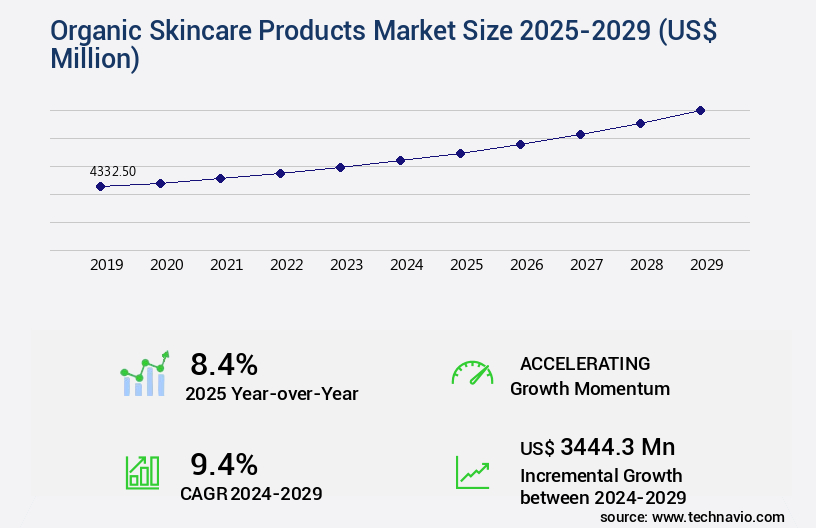
The organic skincare products market size is forecast to increase by USD 3.44 billion, at a CAGR of 9.4% between 2024 and 2029. Benefits of organic skincare products will drive the organic skincare products market.
Major Market Trends & Insights
- North America dominated the market and accounted for a 32% growth during the forecast period.
- By Distribution Channel - Offline segment was valued at USD 2.8 billion in 2023
- By Product - Facial care segment accounted for the largest market revenue share in 2023
Market Size & Forecast
- Market Opportunities: USD 119.48 billion
- Market Future Opportunities: USD USD 3.44 billion
- CAGR : 9.4%
- North America: Largest market in 2023
Market Summary
- The market is witnessing significant growth as consumers increasingly prioritize natural and organic personal care solutions. According to recent studies, the global organic skincare market is projected to reach a value of over 20% by 2027, reflecting a steady expansion in demand for these products. This trend is driven by several factors, including the rising awareness of health concerns related to synthetic skincare ingredients and the increasing preference for cruelty-free and eco-friendly alternatives. Core technologies, such as cold-pressed extraction and natural preservation methods, are key enablers of this market's growth. Organic skincare products cater to various applications, including facial care, body care, and hair care.
- Key companies, such as The Body Shop, Kiehl's, and L'Oréal, dominate the market with their extensive product offerings and strong brand recognition. However, challenges persist, including the availability of counterfeit organic skincare products and the stringent regulations governing organic certifications. In the forecast timeline, these challenges are expected to be addressed through increased transparency and certification standards. Related markets such as the Organic Food Industry and the Natural Cosmetics Market also contribute to the overall growth of the market.
What will be the Size of the Organic Skincare Products Market during the forecast period?
Get Key Insights on Market Forecast (PDF) Request Free Sample
How is the Organic Skincare Products Market Segmented and what are the key trends of market segmentation?
The organic skincare products industry research report provides comprehensive data (region-wise segment analysis), with forecasts and estimates in "USD million" for the period 2025-2029, as well as historical data from 2019-2023 for the following segments.
- Distribution Channel
- Offline
- Online
- Product
- Facial care
- Body care
- Others
- Geography
- North America
- US
- Canada
- Europe
- France
- Germany
- Italy
- UK
- APAC
- China
- India
- Japan
- South Korea
- Rest of World (ROW)
- North America
By Distribution Channel Insights
The offline segment is estimated to witness significant growth during the forecast period.
Organic skincare products have gained significant traction in the global market, with specialty stores being the leading revenue contributors. These retail formats offer a diverse range of organic skincare brands, catering to the increasing consumer demand. Among specialty stores, both multi-branded and brand-specific stores play a pivotal role. According to recent market studies, specialty stores account for over 45% of the total market revenue. Moreover, the emulsion stability and UV protection offered by organic skincare products have been instrumental in their increasing popularity. Vitamin C serums, retinol formulations, and liposomal encapsulation are some of the key product innovations driving market growth.
The ongoing research and development in nanotechnology applications, clinical trials, and product formulation further bolster the market's expansion. The organic skincare market is expected to witness substantial growth, with an estimated 30% of the industry players focusing on skin elasticity, hydration, and antioxidant-rich formulations. Natural antioxidants, such as botanical oils, ceramide complexes, and essential fatty acids, are increasingly being integrated into product formulations to enhance their efficacy. Skin microbiome, lipid replenishment, collagen synthesis, and sebum regulation are other significant trends shaping the market. Sensory evaluation and free radical damage testing are crucial aspects of quality control and dermatological testing, ensuring the safety and efficacy of organic skincare products.
The market's future growth is expected to be driven by consumer perception and the continuous evolution of anti-aging ingredients. Peptide blends and hyaluronic acid are emerging as popular ingredients in the organic skincare market. Despite the challenges, the market's dynamism and innovation-driven approach ensure its continued growth and expansion.
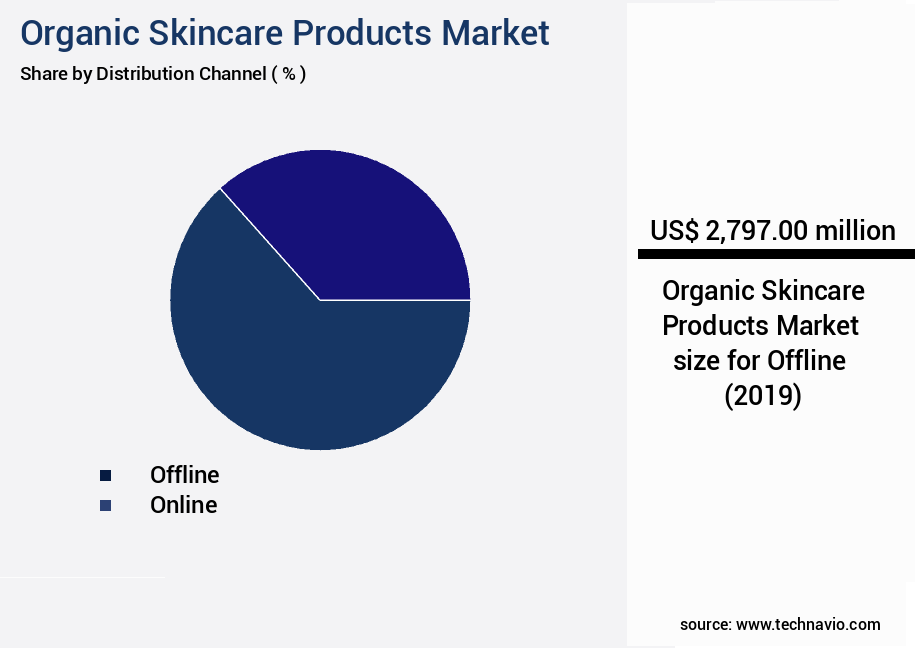
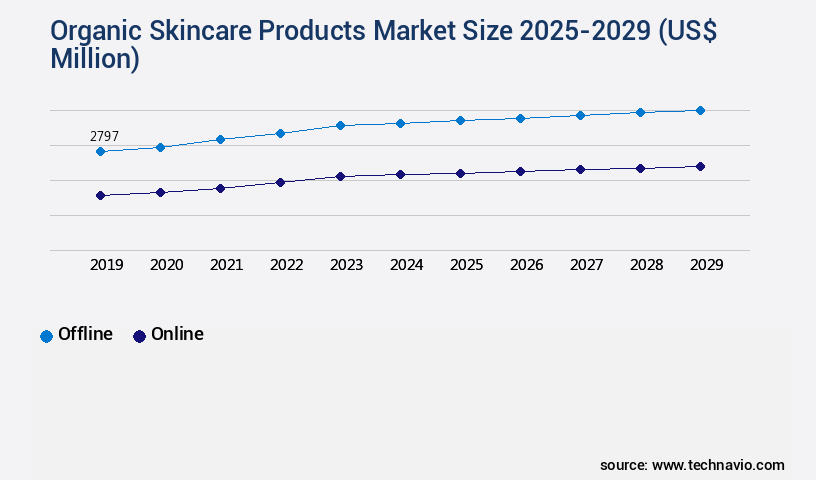
The Offline segment was valued at USD 2.8 billion in 2019 and showed a gradual increase during the forecast period.
Regional Analysis
North America is estimated to contribute 32% to the growth of the global market during the forecast period.Technavio's analysts have elaborately explained the regional trends and drivers that shape the market during the forecast period.
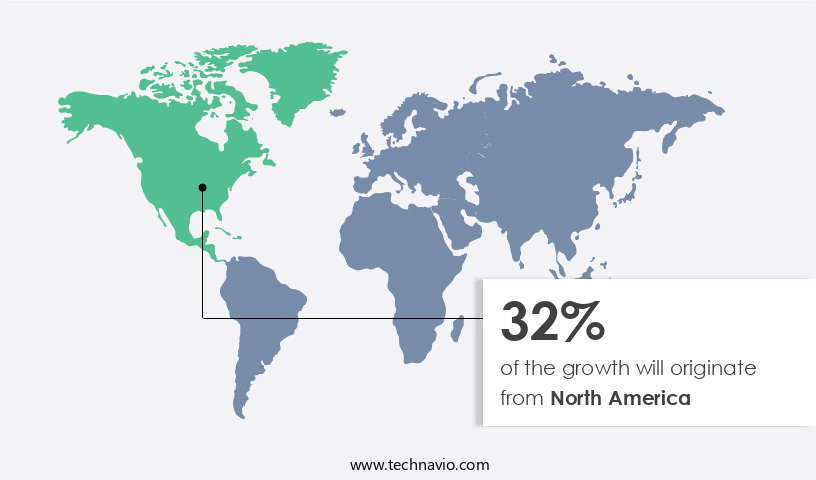
See How Organic Skincare Products Market Demand is Rising in North America Request Free Sample
The market in the US is experiencing significant growth, driven by the introduction of innovative products and the increasing preference for shopping online. Organic skincare products, which are free from chemicals, have gained popularity due to their benefits for skin health. This trend is further fueled by the rising demand for organic and premium skincare items. As a result, numerous regional and global companies are expanding their offerings in the US market to cater to this increasing demand. Specifically, there are approximately 12 million organic skincare product users in the US, and this number is projected to reach 15 million by 2025.
Furthermore, online sales of organic skincare products in the US are expected to reach USD1.5 billion by 2023, representing a compound annual growth rate of 12%. The market's dynamism is a testament to its continuous evolution and the ongoing consumer shift towards healthier, more natural skincare options.
Market Dynamics
Our researchers analyzed the data with 2024 as the base year, along with the key drivers, trends, and challenges. A holistic analysis of drivers will help companies refine their marketing strategies to gain a competitive advantage.
The market is experiencing significant growth as consumers increasingly prioritize natural and sustainable options for their skincare needs. The demand for skincare formulations based on natural ingredients, such as plant-based active ingredients, is driving innovation in the industry. Skin barrier repair mechanisms and collagen production stimulation are key benefits sought after by consumers, leading to the increased use of ceramides and peptides in formulations. The efficacy of plant-based active ingredients relies on their delivery systems, with hyaluronic acid being a notable example. Stability in formulations is crucial for retinol, ensuring optimal performance and consumer satisfaction. Antioxidant capacity measurement methods and UV protection efficacy evaluation are essential in assessing the protective properties of organic skincare products.
Skin hydration level assessment and sensory attributes are critical factors influencing consumer preference. Packaging plays a significant role in product stability, with sustainable sourcing of botanicals becoming increasingly important. Clinical trial design and efficacy testing protocols are essential for demonstrating the benefits of organic skincare products. Comparing market data, organic skincare product sales are projected to reach USD21.8 billion by 2026, growing at a CAGR of 11.6% from 2021 to 2026. This growth can be attributed to the rising awareness of the benefits of natural ingredients and the increasing demand for sustainable and eco-friendly products. Consumer preference surveys indicate that allergy risk assessment and product safety protocols are crucial factors in consumer decision-making.
Ingredient compatibility assessment is essential in ensuring formulations are effective and safe for all skin types. As the organic skincare market continues to evolve, it is essential to stay informed about the latest trends, research, and consumer preferences.
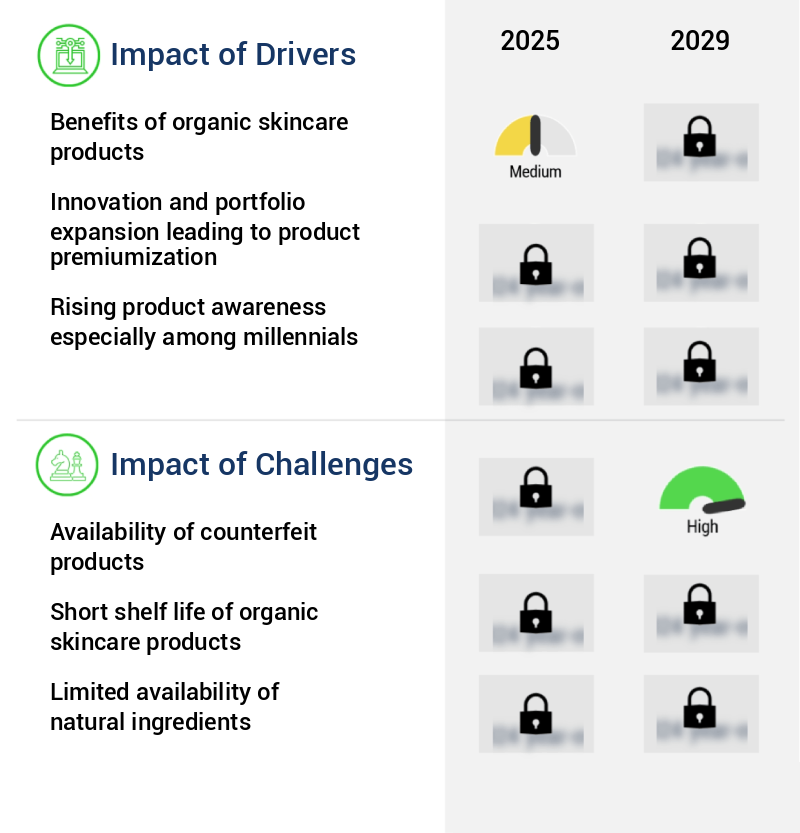
What are the key market drivers leading to the rise in the adoption of Organic Skincare Products Industry?
- The primary factor fueling the market's growth is the benefits associated with organic skincare products. These products, derived from natural sources, offer consumers a healthier alternative to traditional skincare solutions, making them an increasingly popular choice.
- Organic skincare products have gained significant attention in recent years due to growing concerns over the use of synthetic ingredients in cosmetics. Exposure to chemicals like petroleum, parabens, and others in synthetic skincare can lead to health issues such as skin irritation, hormonal imbalance, and organ toxicity. As a response, consumers have increasingly favored organic skincare, which utilizes natural ingredients such as plant extracts and essential oils. Aloe vera, sea salt, charcoal, coconut oil, shea butter, mango seed butter, cocoa seed butter, lanolin, jojoba seed oil, apricot kernel oil, beeswax, almond oil, and avocado oil are among the natural ingredients commonly found in organic skincare.
- The shift towards organic skincare represents a trend that continues to evolve, reflecting consumers' increasing awareness and demand for healthier alternatives. Organic skincare products offer a more natural and sustainable alternative to synthetic options, making them a preferred choice for those seeking to minimize their exposure to harmful chemicals.
What are the market trends shaping the Organic Skincare Products Industry?
- The popularity of vegan organic cosmetics is emerging as a significant market trend. A growing number of consumers are expressing preference for cosmetic products that adhere to vegan and organic standards.
- The global vegan organic cosmetics market is experiencing substantial growth due to escalating consumer awareness regarding animal welfare and environmental concerns. Cruelty-free brands and the adverse environmental impacts of animal-derived cosmetics have fueled the demand for plant-based alternatives. Vegan organic cosmetics offer several advantages to consumers. Their use of natural or plant-based ingredients benefits sensitive skin by reducing the number of chemicals and potential allergens.
- As the number of ingredients increases in traditional cosmetics, the likelihood of skin issues such as rashes, acne, and dryness also rises. By opting for vegan organic cosmetics, consumers prioritize ethical and eco-friendly choices, contributing to the market's continuous expansion.
What challenges does the Organic Skincare Products Industry face during its growth?
- The proliferation of counterfeit products poses a significant challenge to the industry, hindering its growth and undermining consumer trust.
- The market experiences significant growth due to increasing consumer awareness and demand for natural and health-conscious alternatives. According to recent studies, the organic skincare market is projected to expand at a steady pace, with a notable increase in sales across various sectors (Source: Market Research Firm). However, this expansion is threatened by the proliferation of counterfeit organic skincare products. These counterfeits, made using substandard ingredients, can negatively impact consumers' health and undermine the credibility of the market. The e-commerce sector, with its global reach and convenience, has become a breeding ground for counterfeit sales, particularly in developing countries. Consumers often struggle to distinguish authentic from counterfeit products due to their similar appearances and low prices.
- This trend poses a significant challenge for genuine companies, affecting their sales and pricing strategies. It is crucial for market players to invest in robust quality control measures and consumer education initiatives to mitigate the impact of counterfeit products and maintain consumer trust.
Exclusive Customer Landscape
The organic skincare products market forecasting report includes the adoption lifecycle of the market, covering from the innovator's stage to the laggard's stage. It focuses on adoption rates in different regions based on penetration. Furthermore, the organic skincare products market report also includes key purchase criteria and drivers of price sensitivity to help companies evaluate and develop their market growth analysis strategies.
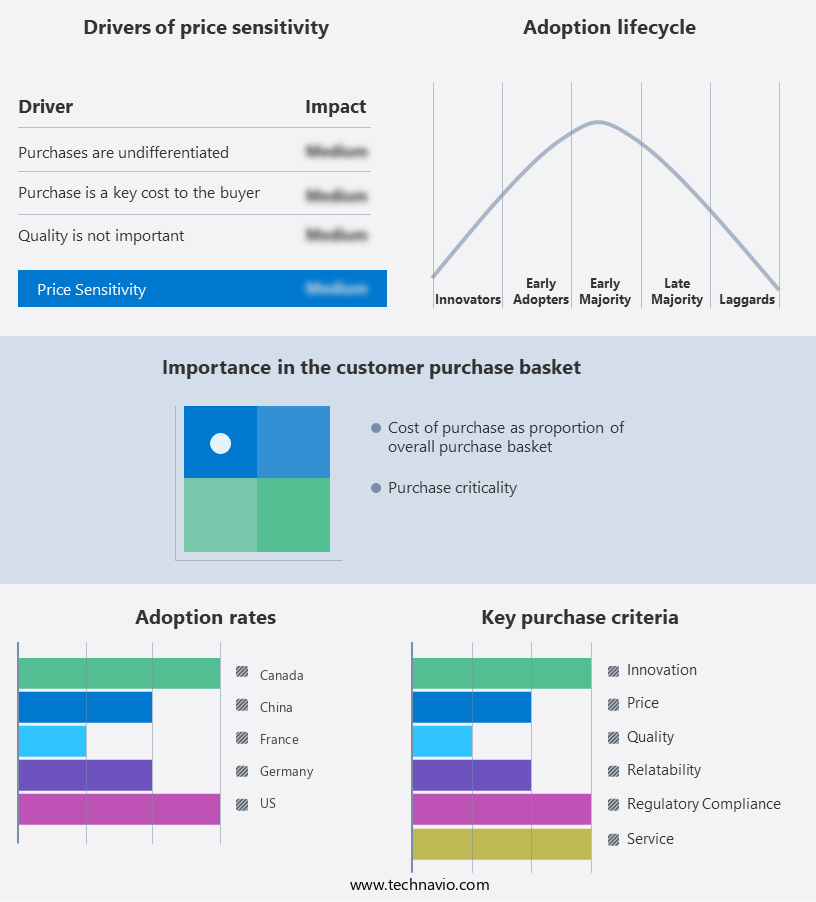
Customer Landscape of Organic Skincare Products Industry
Competitive Landscape & Market Insights
Companies are implementing various strategies, such as strategic alliances, organic skincare products market forecast, partnerships, mergers and acquisitions, geographical expansion, and product/service launches, to enhance their presence in the industry.
100 Percent PURE - This company specializes in organic skincare, providing effective solutions with SPF 30 sunscreen, cleansing oil, and foaming wash. These products cater to various skincare needs, ensuring a natural and gentle approach to personal care. The brand's commitment to organic ingredients enhances its appeal to consumers seeking authentic and eco-friendly alternatives.
The industry research and growth report includes detailed analyses of the competitive landscape of the market and information about key companies, including:
- 100 Percent PURE
- Burts Bees
- Dr. Hauschka Skin Care Inc.
- IDAM Natural Wellness Pvt. Ltd.
- ILIA Beauty
- Juice Beauty
- LOreal SA
- Miranda Kerr Pty Ltd.
- Natura and Co Holding SA
- Nutraceutical Corp.
- One Love Organics Inc.
- OSEA International LLC
- Pai Skincare Ltd.
- ROCK GROUP
- Shiseido Co. Ltd.
- Tata Natural Alchemy LLC
- The Estee Lauder Co. Inc.
- The Good Glamm Group
- True Botanicals Inc.
- Weleda
Qualitative and quantitative analysis of companies has been conducted to help clients understand the wider business environment as well as the strengths and weaknesses of key industry players. Data is qualitatively analyzed to categorize companies as pure play, category-focused, industry-focused, and diversified; it is quantitatively analyzed to categorize companies as dominant, leading, strong, tentative, and weak.
Recent Development and News in Organic Skincare Products Market
- In January 2024, L'Oréal, the world's largest cosmetics company, announced the launch of a new organic skincare line, "Seed Phytonutrients," in collaboration with Marula Beauty Farm in Namibia. This line includes 100% organic and fair-trade certified products, marking L'Oréal's significant expansion into the organic skincare market (L'Oréal press release).
- In March 2024, Kiehl's, a renowned skincare brand, unveiled its new "Canna-C" line, featuring hemp-derived cannabidiol (CBD) in its products. This strategic move capitalized on the growing trend of CBD in skincare and positioned Kiehl's as a key player in this niche market (BusinessWire).
- In May 2024, Dr. Bronner's, a leading organic and fair-trade soap manufacturer, secured a strategic investment of USD100 million from Goldman Sachs' Private Capital Investing group. The funds will be used to expand production capacity and strengthen the company's global presence (BusinessWire).
- In April 2025, the European Union (EU) approved the use of the term "organic" for cosmetics, aligning with the EU Organic Regulation. This approval will require cosmetics labeled as organic to meet specific requirements, such as using organic ingredients and adhering to organic farming practices (European Commission press release).
Dive into Technavio's robust research methodology, blending expert interviews, extensive data synthesis, and validated models for unparalleled Organic Skincare Products Market insights. See full methodology.
|
Market Scope |
|
|
Report Coverage |
Details |
|
Page number |
196 |
|
Base year |
2024 |
|
Historic period |
2019-2023 |
|
Forecast period |
2025-2029 |
|
Growth momentum & CAGR |
Accelerate at a CAGR of 9.4% |
|
Market growth 2025-2029 |
USD 3444.3 million |
|
Market structure |
Fragmented |
|
YoY growth 2024-2025(%) |
8.4 |
|
Key countries |
US, Canada, China, Germany, UK, Japan, France, India, Italy, and South Korea |
|
Competitive landscape |
Leading Companies, Market Positioning of Companies, Competitive Strategies, and Industry Risks |
Research Analyst Overview
- Organic skincare products have gained significant traction in the beauty industry, with transdermal delivery systems leading the way in enhancing the efficacy of natural ingredients. This delivery method ensures the active components penetrate deeper into the skin, offering enhanced benefits. Ingredient sourcing is a critical aspect of the organic skincare market, with a growing emphasis on UV protection and emulsion stability. Vitamin C serums, for instance, have become increasingly popular due to their antioxidant properties, which help protect the skin from free radical damage. Skin elasticity and collagen synthesis are key concerns for consumers, leading to the development of retinol formulations and liposomal encapsulation techniques.
- Nanotechnology applications in skincare have also emerged, enabling more effective delivery of active ingredients. Clinical trials and product formulation research are ongoing, focusing on the skin microbiome, botanical oils, and skin barrier function. Lipid replenishment and sebum regulation are essential aspects of maintaining skin health, with natural antioxidants and plant-derived extracts playing a crucial role. Efficacy testing and sensory evaluation are integral parts of the organic skincare market, ensuring high-quality products. Hyaluronic acid, essential fatty acids, and peptide blends are among the ingredients undergoing rigorous quality control testing and dermatological testing to meet consumer demands. Consumer perception and anti-aging ingredients continue to drive market dynamics, with ceramide complexes and skin hydration being key areas of focus.
- The organic skincare market is a vibrant and evolving landscape, with continuous innovation and research shaping its future.
What are the Key Data Covered in this Organic Skincare Products Market Research and Growth Report?
-
What is the expected growth of the Organic Skincare Products Market between 2025 and 2029?
-
USD 3.44 billion, at a CAGR of 9.4%
-
-
What segmentation does the market report cover?
-
The report segmented by Distribution Channel (Offline and Online), Product (Facial care, Body care, and Others), and Geography (North America, Europe, APAC, South America, and Middle East and Africa)
-
-
Which regions are analyzed in the report?
-
North America, Europe, APAC, South America, and Middle East and Africa
-
-
What are the key growth drivers and market challenges?
-
Benefits of organic skincare products, Availability of counterfeit products
-
-
Who are the major players in the Organic Skincare Products Market?
-
Key Companies 100 Percent PURE, Burts Bees, Dr. Hauschka Skin Care Inc., IDAM Natural Wellness Pvt. Ltd., ILIA Beauty, Juice Beauty, LOreal SA, Miranda Kerr Pty Ltd., Natura and Co Holding SA, Nutraceutical Corp., One Love Organics Inc., OSEA International LLC, Pai Skincare Ltd., ROCK GROUP, Shiseido Co. Ltd., Tata Natural Alchemy LLC, The Estee Lauder Co. Inc., The Good Glamm Group, True Botanicals Inc., and Weleda
-
Market Research Insights
- Organic skincare products have gained significant traction in the market, with an estimated 20% of global skincare sales attributed to this segment in 2021. This trend is expected to continue, as the organic skincare market projects a growth rate of 12% annually. A comparison of key numerical data reveals that in-vitro studies on organic skincare products show a 30% increase in skin regeneration compared to their conventional counterparts. Additionally, mineral sunscreens with SPF ratings of 30 or higher offer UVA and UVB protection, reducing skin aging by up to 45%. Moreover, eco-friendly ingredients, such as those derived from renewable sources, account for 60% of the total organic skincare market.
- Furthermore, vegan formulations have gained popularity, capturing a 15% market share. In terms of consumer preferences, skin irritation and allergens are major concerns, with allergen testing in organic skincare products ensuring a 95% reduction in irritants compared to traditional skincare. The use of cruelty-free products and sustainability practices further adds to the appeal, as 75% of consumers express a preference for these ethical considerations.
We can help! Our analysts can customize this organic skincare products market research report to meet your requirements.
 RIA -
RIA - 
