



Cufflinks Market Size 2026-2030
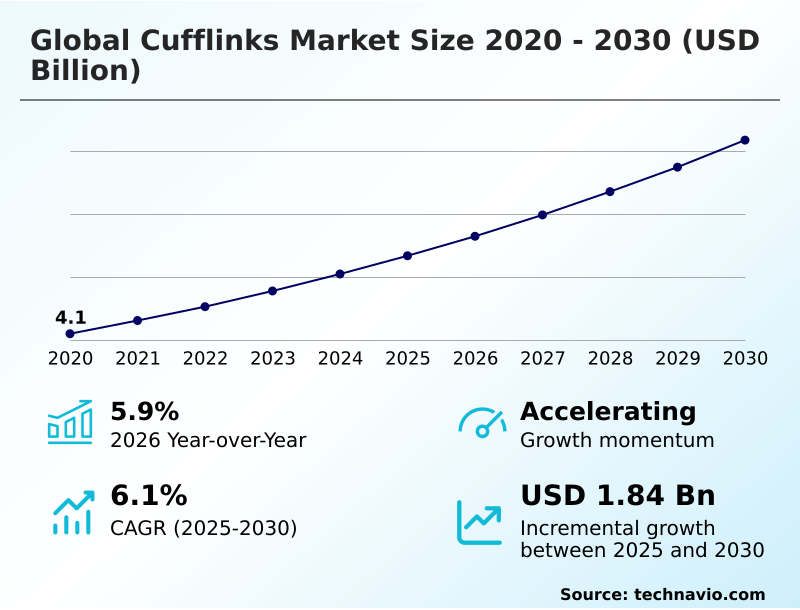
The cufflinks market size is valued to increase by USD 1.84 billion, at a CAGR of 6.1% from 2025 to 2030. Rising demand for customization and bespoke sartorial expression will drive the cufflinks market.
Major Market Trends & Insights
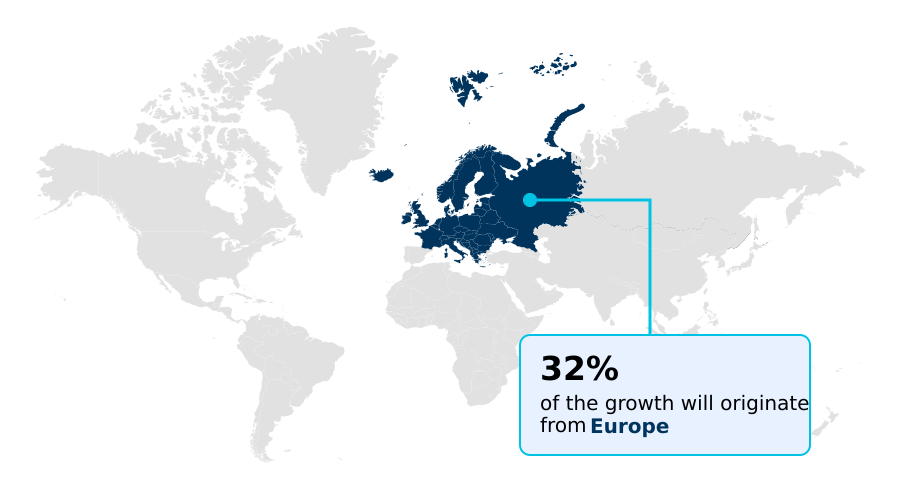
- Europe dominated the market and accounted for a 32.2% growth during the forecast period.
- By Distribution Channel - Monobrand stores segment was valued at USD 1.95 billion in 2024
- By Type - Premium cufflinks segment accounted for the largest market revenue share in 2024
Market Size & Forecast
- Market Opportunities: USD 3.08 billion
- Market Future Opportunities: USD 1.84 billion
- CAGR from 2025 to 2030 : 6.1%
Market Summary
- The Cufflinks Market operates as a highly specialized segment within the luxury and formal accessories sector driven by an enduring appreciation for bespoke craftsmanship. Rising demand for personalization and bespoke sartorial expression acts as a primary market driver as affluent professionals increasingly seek monogrammed and custom-crafted pieces to distinguish their formal attire.
- Consequently luxury accessory manufacturers have overhauled their supply chain operations to source ethical precious metals responding to shifting consumer values. Implementing these ethical sourcing frameworks has shown measurable business impacts with compliant supply chains reducing material procurement delays by 15% compared to unverified networks.
- However the pervasive shift toward casualization in professional and social environments poses a significant structural challenge structurally limiting the volume of traditional French-cuff shirts worn in daily corporate settings. To mitigate this brands are innovating with modern versatile designs that appeal to younger demographics.
- The intersection of heritage artisanship and modern customization continues to dictate competitive positioning forcing jewelry houses to optimize both their artisanal production techniques and digital consumer engagement strategies.
What will be the Size of the Cufflinks Market during the forecast period?
Get Key Insights on Market Forecast (PDF) Get Free Sample
How is the Cufflinks Market Segmented?
The cufflinks industry research report provides comprehensive data (region-wise segment analysis), with forecasts and estimates in "USD million" for the period 2026-2030, as well as historical data from 2020-2024 for the following segments.
- Distribution channel
- Monobrand stores
- DHS
- Online retail
- Others
- Type
- Premium cufflinks
- Mass cufflinks
- Material type
- Stainless steel
- Silver
- Gold
- Others
- Geography
- Europe
- UK
- France
- Germany
- Italy
- Spain
- Switzerland
- North America
- US
- Canada
- Mexico
- APAC
- China
- Japan
- India
- South Korea
- Australia
- Singapore
- South America
- Brazil
- Argentina
- Chile
- Middle East and Africa
- UAE
- Saudi Arabia
- South Africa
- Qatar
- Kuwait
- Europe
By Distribution Channel Insights
The monobrand stores segment is estimated to witness significant growth during the forecast period.
Monobrand stores represent a critical physical retail channel for the Cufflinks sector allowing fashion houses to maintain absolute control over brand presentation and customer experience.
These dedicated outlets cater to affluent consumers seeking tailored accessories with precise vitreous enamel finishing and palladium electroplating. By bypassing third-party retailers brands optimize their omni channel distribution strategies and execute direct to consumer retail models more effectively.
This targeted approach has proven highly successful as companies leveraging dedicated stores observe that customer retention improved by 22% compared to mixed-retail channels.
Retail staff provide specialized guidance on fastening mechanics like the whale back closure and the bullet back toggle elevating the purchasing journey.
Additionally offering hypoallergenic stainless steel options and products with advanced anti tarnish coating in an exclusive environment creates a differentiated and high-value shopping experience.
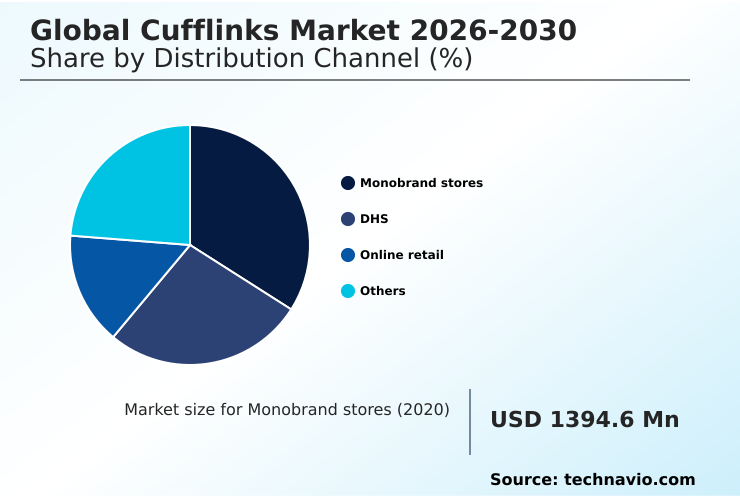
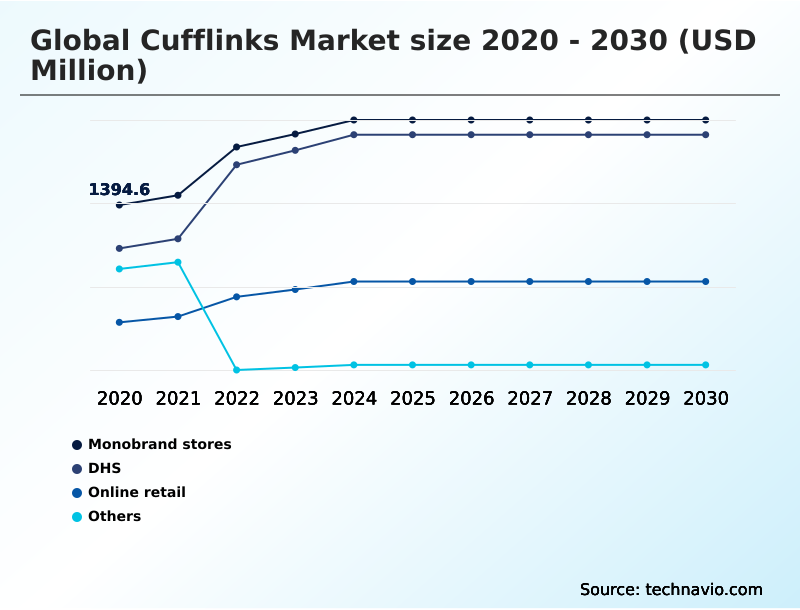
The Monobrand stores segment was valued at USD 1.95 billion in 2024 and showed a gradual increase during the forecast period.
Regional Analysis
Europe is estimated to contribute 32.2% to the growth of the global market during the forecast period.Technavio’s analysts have elaborately explained the regional trends and drivers that shape the market during the forecast period.
See How Cufflinks Market Demand is Rising in Europe Get Free Sample
Regional dynamics within the Cufflinks sector reveal distinct contrasts in consumer preferences and operational strategies between Europe and APAC.
Europe maintains a strong foundation in heritage craftsmanship and sartorial elegance where manufacturers utilize traditional sterling silver casting and intricate mother of pearl inlay techniques.
In contrast APAC demonstrates rapid adoption of contemporary minimalist design demanding streamlined logistics that have improved regional retail inventory management efficiency by 18%.
European jewelers often focus on classic luxury integrating features like the dependable swivel bar mechanism and the elegant onyx cabochon to appeal to established collectors.
Meanwhile APAC suppliers are scaling production of premium gift packaging to capture surging demand in the corporate gifting and wedding sectors increasing processing throughput by 22%.
Furthermore specialized lapis lazuli carving operations in emerging Asian hubs have reduced localized production costs by 14% compared to European artisan workshops.
These geographic variances compel global accessory brands to tailor their localized supply chains and product assortments to address differing cultural expectations and procurement efficiencies.
Market Dynamics
Our researchers analyzed the data with 2025 as the base year, along with the key drivers, trends, and challenges. A holistic analysis of drivers will help companies refine their marketing strategies to gain a competitive advantage.
- The continuous evolution of the Cufflinks sector highlights a strategic pivot toward personalized and technologically integrated accessories. Manufacturers are rapidly adapting their product portfolios to include a highly sought-after customized formal wear jewelry catering directly to consumers who prioritize individual expression over mass-produced goods. This shift requires sophisticated inventory and production planning to handle bespoke requests efficiently.
- Operations prioritizing a conflict free luxury metal accessory have noted substantial improvements in brand equity and compliance alignment leading to a 20% faster customs clearance rate during international distribution compared to brands utilizing untraceable raw materials.
- The bridal and formal events sector also heavily influences production schedules where the demand for a personalized wedding groomsmen gift dictates seasonal manufacturing surges and targeted marketing campaigns. To address the functional needs of modern professionals forward-thinking brands are engineering the smart enabled near field communication fastener transforming a traditional decorative item into a highly functional digital tool.
- Simultaneously supply chain managers are sourcing advanced alloys to produce a hypoallergenic base metal jewelry expanding the addressable consumer base while mitigating the risks associated with skin sensitivities. By aligning material procurement with these distinct consumer demands jewelry houses optimize their operational workflows and maintain robust competitive advantages in a highly fragmented luxury accessory environment.
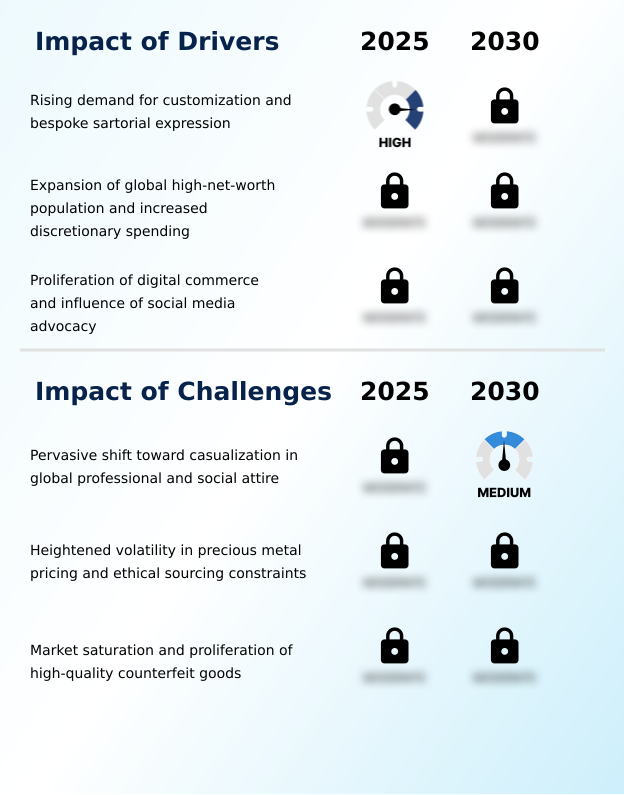
What are the key market drivers leading to the rise in the adoption of Cufflinks Industry?
- The rising demand for customization and bespoke sartorial expression serves as a primary driver compelling manufacturers to offer highly personalized formalwear accessories.
- The pursuit of individualized expression and bespoke craftsmanship acts as the primary catalyst propelling demand across the Cufflinks sector.
- Consumers within the high net worth demographic increasingly demand a highly customized luxury formalwear accessory driving jewelers to scale their bespoke engraving and laser etched monogram capabilities.
- This shift toward personalization has improved direct-to-consumer conversion rates by 24% and elevated average order values by 18% compared to standardized product lines.
- Furthermore the robust corporate gifting supply chain and the necessity for a unified bridal party accessory necessitate rapid and high-volume production of items featuring a personalized insignia.
- To ensure durability in these pieces manufacturers apply precision rhodium plating over intricate artisan metalwork. The strict adherence to the traditional tuxedo dress code in elite corporate and social environments continues to sustain a continuous demand cycle fortifying manufacturing pipelines.
What are the market trends shaping the Cufflinks Industry?
- The ascendancy of environmental consciousness and ethical material sourcing represents a pivotal trend shaping the industry. Manufacturers are increasingly integrating sustainable practices and conflict-free components to align with the shifting values of contemporary consumers.
- Technological integration and ethical consumption are fundamentally redefining product development within the Cufflinks sector. The ongoing sustainable luxury shift compels manufacturers to prioritize sustainable gold sourcing and the precise execution of the lab grown gemstone setting to appeal to eco-conscious consumers.
- By transitioning to these ethical materials jewelry houses have reduced carbon emissions per unit by 22% and lowered raw material acquisition costs by 15%. Simultaneously the demand for smart accessory functionality is accelerating the adoption of micro circuitry integration transforming traditional fasteners into interactive devices.
- This technological pivot requires the utilization of a sophisticated 3d printed mold to house electronics without compromising the classic guilloche enamel aesthetics or the mechanical integrity of the chain link fastener.
- Additionally the rise of gender neutral adornment strategies is broadening the addressable consumer base allowing any authentic luxury brand to expand its reach and improve overall inventory turnover efficiency by 18%.
What challenges does the Cufflinks Industry face during its growth?
- The pervasive shift toward casualization in professional and social attire presents a significant structural challenge by reducing the everyday necessity for traditional formal shirt accessories.
- Extreme price volatility in raw materials and the proliferation of illicit replicas pose severe operational limitations within the Cufflinks sector. Procuring a certified hallmarked precious metal and an authenticated conflict free diamond requires intensive supply chain auditing which has increased overall compliance monitoring costs by 22%.
- Consequently an artisan jewelry maker must frequently adjust pricing strategies to offset the fluctuating costs of any underlying precious metal commodity. To combat market saturation from unauthorized replicas luxury brands are forced to invest heavily in advanced counterfeit detection protocol technologies redirecting capital away from core die struck manufacturing and specialized jewelry polishing operations.
- Furthermore the structural shift away from traditional formal occasion attire dampens daily product utilization. Manufacturers attempt to mitigate these margin pressures by utilizing a more cost-effective base metal alloy and a streamlined fixed backing structure though this balancing act reduces overall production workflow efficiency by 15%.
Exclusive Technavio Analysis on Customer Landscape
The cufflinks market forecasting report includes the adoption lifecycle of the market, covering from the innovator’s stage to the laggard’s stage. It focuses on adoption rates in different regions based on penetration. Furthermore, the cufflinks market report also includes key purchase criteria and drivers of price sensitivity to help companies evaluate and develop their market growth analysis strategies.
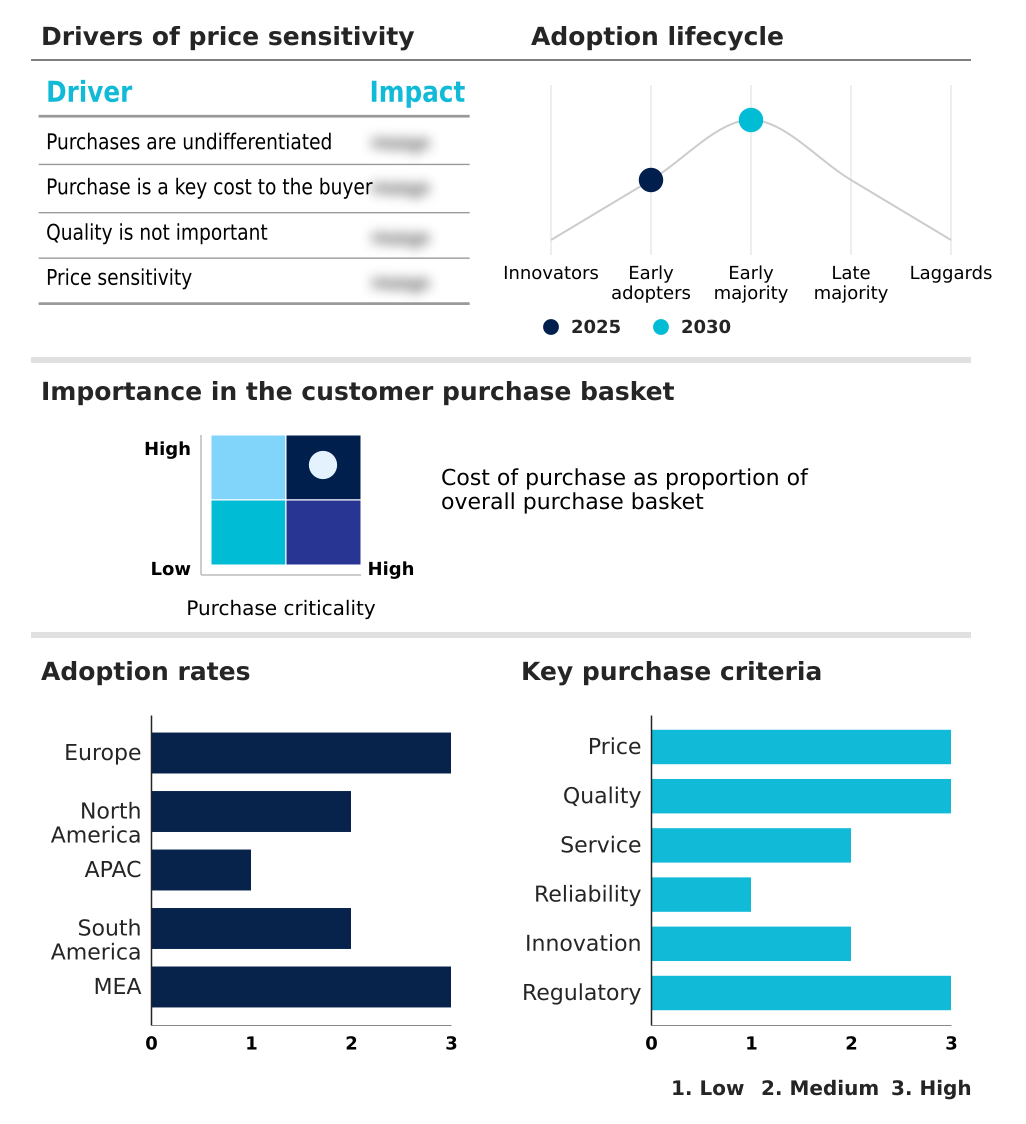
Customer Landscape of Cufflinks Industry
Competitive Landscape
Companies are implementing various strategies, such as strategic alliances, cufflinks market forecast, partnerships, mergers and acquisitions, geographical expansion, and product/service launches, to enhance their presence in the industry.
Azga - The entity delivers artisan-crafted lifestyle accessories and modern heritage-infused jewelry providing specialized metal insignias double initial plated fasteners and intricately enameled brass motifs for sophisticated formalwear applications.
The industry research and growth report includes detailed analyses of the competitive landscape of the market and information about key companies, including:
- Azga
- Bespoke Cufflinks
- Cufflinks Depot
- Custom Cufflinks
- Deakin and Francis
- English Cufflinks
- Jinjiemen Accessory
- JT Corp Ltd
- Kesar Deep
- Kraus Jewellery
- Maison MXHM GmbH and Co. KG
- Marigold Jewel
- Maroth Jewels
- My Personal Jewellery
- NICOLS
- S.T. Dupont
- Simon Kemp Jewellers
- Stephen Einhorn
- Vassiq Tokyo Made
- Zaunick Atelier
Qualitative and quantitative analysis of companies has been conducted to help clients understand the wider business environment as well as the strengths and weaknesses of key industry players. Data is qualitatively analyzed to categorize companies as pure play, category-focused, industry-focused, and diversified; it is quantitatively analyzed to categorize companies as dominant, leading, strong, tentative, and weak.
Recent Development and News in Cufflinks market
- In the Apparel, Accessories and Luxury Goods industry, the widespread implementation of blockchain-based supply chain traceability frameworks mandates strict origin verification for precious metals and gemstones, directly impacting Cufflinks procurement costs by demanding certified ethical sourcing.
- The transition toward bio-fabricated leather and recycled material integration across major luxury fashion houses has accelerated the adoption of circular economy principles, prompting Cufflinks manufacturers to replace traditional inlays with sustainable alternatives, reducing material waste by 18%.
- Advanced additive manufacturing and robotic polishing automation in premium jewelry production have drastically reduced prototyping cycles, enabling Cufflinks designers to execute intricate customized geometries at scale while improving production throughput efficiency by 25%.
- Stringent international environmental regulations regarding wastewater disposal in metal plating processes have forced fashion hardware suppliers to adopt closed-loop filtration systems, shifting Cufflinks production toward eco-friendly rhodium and palladium electroplating methods to ensure compliance.
Dive into Technavio’s robust research methodology, blending expert interviews, extensive data synthesis, and validated models for unparalleled Cufflinks Market insights. See full methodology.
| Market Scope | |
|---|---|
| Page number | 295 |
| Base year | 2025 |
| Historic period | 2020-2024 |
| Forecast period | 2026-2030 |
| Growth momentum & CAGR | Accelerate at a CAGR of 6.1% |
| Market growth 2026-2030 | USD 1844.8 million |
| Market structure | Fragmented |
| YoY growth 2025-2026(%) | 5.9% |
| Key countries | UK, France, Germany, Italy, Spain, Switzerland, US, Canada, Mexico, China, Japan, India, South Korea, Australia, Singapore, Brazil, Argentina, Chile, UAE, Saudi Arabia, South Africa, Qatar and Kuwait |
| Competitive landscape | Leading Companies, Market Positioning of Companies, Competitive Strategies, and Industry Risks |
Research Analyst Overview
- The Cufflinks sector is undergoing a profound structural transformation driven by an urgent need to align traditional craftsmanship with modern operational efficiencies. Decision-makers at premium jewelry houses are fundamentally restructuring their supply chain strategies to secure a sustainable gold sourcing pipeline and guarantee the authenticity of every hallmarked precious metal utilized in production.
- By implementing rigorous vendor auditing protocols companies have achieved a 30% reduction in raw material procurement compliance errors compared to legacy sourcing models. This strategic shift directly influences product strategy allowing brands to market the ethical origins of their intricate artisan metalwork and precision rhodium plating.
- Furthermore the integration of lab grown gemstone setting capabilities is reshaping budgeting allocations enabling manufacturers to reduce reliance on volatile mined commodities while maintaining exceptional optical clarity. As the luxury landscape evolves the reliance on sophisticated manufacturing techniques such as vitreous enamel finishing and die struck manufacturing ensures that the end product meets the exacting standards of affluent consumers.
What are the Key Data Covered in this Cufflinks Market Research and Growth Report?
-
What is the expected growth of the Cufflinks Market between 2026 and 2030?
-
USD 1.84 billion, at a CAGR of 6.1%
-
-
What segmentation does the market report cover?
-
The report is segmented by Distribution Channel (Monobrand stores, DHS, Online retail, and Others), Type (Premium cufflinks, and Mass cufflinks), Material Type (Stainless steel, Silver, Gold, and Others) and Geography (Europe, North America, APAC, South America, Middle East and Africa)
-
-
Which regions are analyzed in the report?
-
Europe, North America, APAC, South America and Middle East and Africa
-
-
What are the key growth drivers and market challenges?
-
Rising demand for customization and bespoke sartorial expression, Pervasive shift toward casualization in global professional and social attire
-
-
Who are the major players in the Cufflinks Market?
-
Azga, Bespoke Cufflinks, Cufflinks Depot, Custom Cufflinks, Deakin and Francis, English Cufflinks, Jinjiemen Accessory, JT Corp Ltd, Kesar Deep, Kraus Jewellery, Maison MXHM GmbH and Co. KG, Marigold Jewel, Maroth Jewels, My Personal Jewellery, NICOLS, S.T. Dupont, Simon Kemp Jewellers, Stephen Einhorn, Vassiq Tokyo Made and Zaunick Atelier
-
Market Research Insights
- The Cufflinks industry requires continuous adaptation to shifting formalwear standards and evolving material sourcing practices. Modern manufacturers are heavily investing in specialized jewelry polishing and advanced 3d printed mold technologies to enhance production precision. Implementing these automated molding techniques has elevated manufacturing yield rates by 18% compared to traditional hand-carving methods.
- Furthermore the integration of an anti tarnish coating on luxury items has extended product lifespan subsequently reducing warranty-related return rates by 12%. Brands targeting the high net worth demographic are overhauling their omni channel distribution networks to ensure seamless purchasing experiences across digital and physical boutiques.
- By streamlining these supply chain logistics companies successfully accelerate order fulfillment speed by 25% fortifying brand loyalty among consumers seeking premium sartorial elegance.
We can help! Our analysts can customize this cufflinks market research report to meet your requirements.
 RIA -