


Delta Robots Market Size 2025-2029
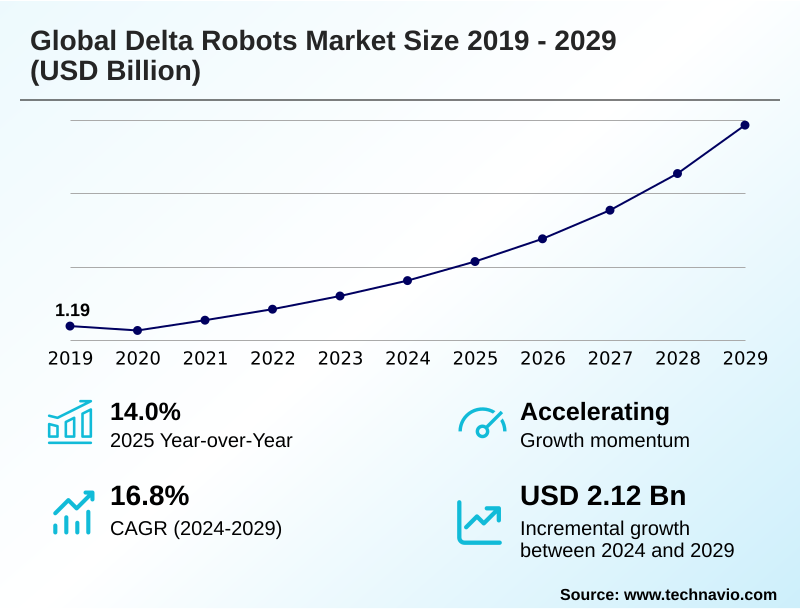
The delta robots market size is valued to increase by USD 2.12 billion, at a CAGR of 16.8% from 2024 to 2029. Growing demand for delta robots in packaging applications will drive the delta robots market.
Major Market Trends & Insights
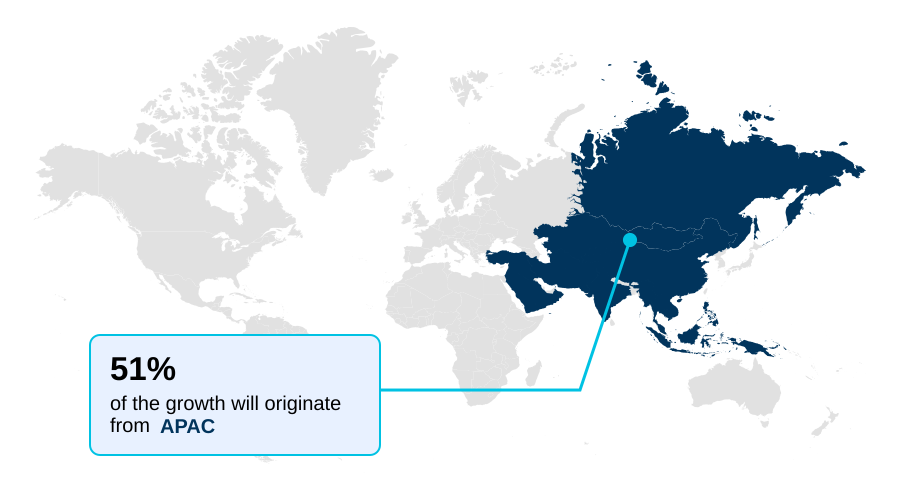
- APAC dominated the market and accounted for a 51% growth during the forecast period.
- By Type - 4 Axis segment was valued at USD 618.8 million in 2023
- By End-user - Food and beverages segment accounted for the largest market revenue share in 2023
Market Size & Forecast
- Market Opportunities: USD 2.75 billion
- Market Future Opportunities: USD 2.12 billion
- CAGR from 2024 to 2029 : 16.8%
Market Summary
- The delta robots market is characterized by a strong demand for high-speed automation solutions, particularly within the food and beverage, pharmaceutical, and electronics sectors. These industries leverage the inherent advantages of parallel kinematic robots, such as high acceleration and precision, to optimize pick-and-place applications, packaging, and assembly tasks.
- The adoption of vision-guided robotics and advanced robotic controllers allows these systems to handle complex sorting and handling operations on fast-moving production lines. For example, a food processing business can deploy a series of washdown-compatible delta robots to sort and pack delicate baked goods directly from a conveyor.
- This not only significantly increases throughput but also adheres to strict hygienic design standards, minimizing contamination risks. However, the market also faces constraints from the inherent technical limitations of these robots, including restricted payload capacity and a confined, dome-shaped work envelope, which makes them unsuitable for heavy-duty material handling.
- Additionally, the high initial capital expenditure and the availability of alternative robotic systems, like SCARA robots for certain assembly tasks, moderate the adoption rate, especially among small and medium-sized enterprises.
What will be the Size of the Delta Robots Market during the forecast period?
Get Key Insights on Market Forecast (PDF) Get Free Sample
How is the Delta Robots Market Segmented?
The delta robots industry research report provides comprehensive data (region-wise segment analysis), with forecasts and estimates in "USD million" for the period 2025-2029, as well as historical data from 2019-2023 for the following segments.
- Type
- 4 Axis
- 6 Axis
- 3 Axis
- End-user
- Food and beverages
- Electrical and electronics
- Pharmaceuticals
- Application
- Pick and place
- Palletizing and packaging
- Assembly
- Material handling
- Others
- Geography
- APAC
- China
- Japan
- India
- Europe
- Germany
- UK
- France
- North America
- US
- Canada
- Mexico
- South America
- Brazil
- Argentina
- Colombia
- Middle East and Africa
- Saudi Arabia
- UAE
- South Africa
- Rest of World (ROW)
- APAC
By Type Insights
The 4 axis segment is estimated to witness significant growth during the forecast period.
The 4-axis delta robot segment is defined by the integration of a rotational R-axis, which provides critical part orientation capabilities.
This function allows the end-effector to not only pick an object but also to rotate it before placement, a requirement for many electronics assembly and complex packaging applications. This added flexibility significantly expands the operational scope beyond simple pick-and-place automation.
For instance, in manufacturing processes requiring precise component alignment, these systems offer a distinct advantage over 3-axis variants. The evolution of the parallel kinematic structure in these robots, often involving lightweight carbon fiber arms, supports high-speed automation.
The integration of advanced robotic controllers and vision-guided robotics further enhances their precision, with some systems achieving a repeatability precision below 3 microns, enabling effective use in micro-assembly and micro-automation tasks.
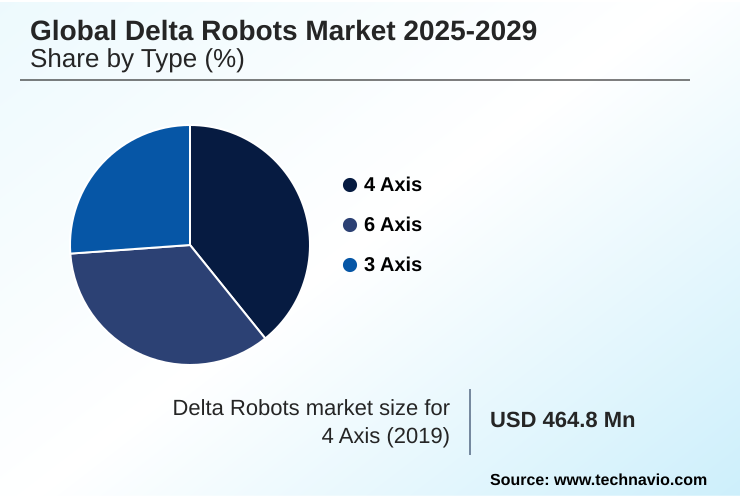
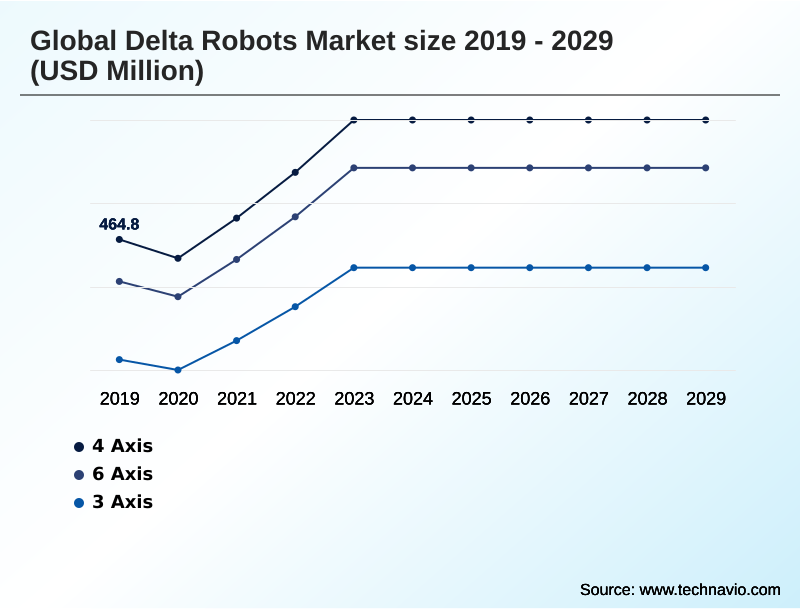
The 4 Axis segment was valued at USD 618.8 million in 2023 and showed a gradual increase during the forecast period.
Regional Analysis
APAC is estimated to contribute 51% to the growth of the global market during the forecast period.Technavio’s analysts have elaborately explained the regional trends and drivers that shape the market during the forecast period.
See How Delta Robots Market Demand is Rising in APAC Get Free Sample
The geographic landscape of the delta robots market is dominated by APAC, which accounts for over 51% of the market's incremental growth.
This is driven by the region's massive electronics industry, where high-speed automation and robotic part handling are essential for assembling consumer devices in countries like China, Japan, and South Korea.
In contrast, growth in North America and Europe is largely propelled by the food and beverage packaging and pharmaceutical sorting sectors.
Stringent food safety regulations in these regions mandate the use of washdown-compatible and hygienic design robots, making the technology a strategic investment.
While North America shows strong growth, the competitive environment and continuous innovation from robotics companies headquartered in APAC ensure the region's continued leadership in both production and adoption of delta robot technology.
Market Dynamics
Our researchers analyzed the data with 2024 as the base year, along with the key drivers, trends, and challenges. A holistic analysis of drivers will help companies refine their marketing strategies to gain a competitive advantage.
- Strategic implementation of high-speed pick and place automation is a critical focus for manufacturers aiming to enhance operational efficiency. A central consideration in this process is selecting the appropriate robotic system, often involving a detailed comparison of a 4-axis vs. a 6-axis delta robot. For many tasks, such as primary packaging in food processing, a 4-axis model provides sufficient dexterity.
- However, more complex assembly operations may necessitate the advanced capabilities of a 6-axis system. A key enabler for all configurations is the effective practice of integrating machine vision with delta robots, which allows for dynamic tracking and handling of objects on a production line.
- Organizations must also carefully evaluate the total cost of implementing delta robots, which includes not only the hardware but also integration, programming, and safety infrastructure. Understanding technical constraints, such as delta robot payload capacity limitations, is crucial to avoid misapplication. A thorough analysis of the delta robot's work envelope ensures the system can meet all required pick-and-place points.
- This detailed planning can yield significant returns; facilities that optimize for both payload and reach report up to a 15% greater efficiency in floor space utilization compared to those with suboptimal configurations. The choice between a delta robot and a SCARA robot ultimately depends on the specific speed and reach requirements of the pick-and-place task.
- Properly integrating these systems is a key factor in improving throughput with delta robots and achieving a competitive advantage.
What are the key market drivers leading to the rise in the adoption of Delta Robots Industry?
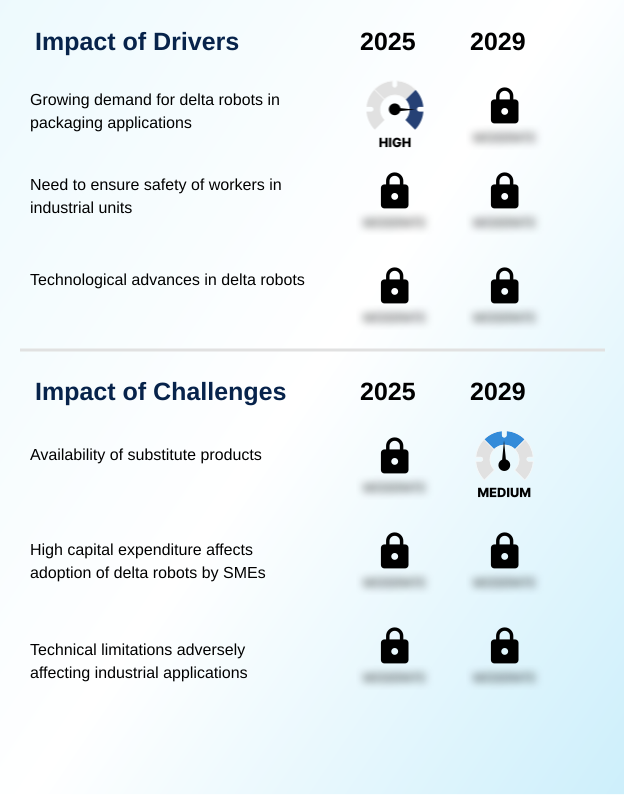
- The growing demand for delta robots, particularly in high-speed packaging applications across the food and beverage, pharmaceutical, and electronics industries, is a key driver of market growth.
- Market growth is primarily driven by the escalating demand for high-speed automation to improve manufacturing efficiency and ensure worker safety.
- In packaging applications, delta robots can increase production throughput by as much as 50% compared to traditional methods, offering a significant competitive advantage.
- The need to protect workers from repetitive motion injuries and hazardous environments is another powerful driver; automating these tasks can reduce related workplace incidents by over 70%.
- Technological advances are also expanding the market, with modern delta robots featuring enhanced payload capacity and greater flexibility.
- The integration of sophisticated end-effectors and vision-guided robotics allows these systems to perform complex pick-and-place automation and material handling tasks that were previously unfeasible, boosting their adoption across various industries.
What are the market trends shaping the Delta Robots Industry?
- A prominent market trend is the increasing focus on reducing the overall size of delta robots. This development is driven by the demand for compact automation solutions in micro-assembly and space-constrained production environments.
- Key market trends are centered on enhancing the performance and applicability of delta robots through technological innovation. There is a significant focus on miniaturization, with newer models designed for micro-automation tasks achieving a repeatability precision of under 3 microns, essential for the electronics assembly sector.
- The development of advanced software and motion control systems is also critical, enabling smoother and faster operational cycles. For instance, the latest robotic controllers can reduce programming time for new tasks by up to 25%. Furthermore, the integration of advanced 3D machine vision technology is becoming standard.
- These vision-guided robotics systems improve pick accuracy to over 99% on fast-moving and disorganized product flows, drastically reducing errors in food and beverage packaging and pharmaceutical sorting operations.
What challenges does the Delta Robots Industry face during its growth?
- The availability of substitute products, such as SCARA and cartesian robots for certain applications, presents a key challenge to the market's growth.
- Despite strong drivers, the market faces challenges that temper its growth. The primary constraint is the availability of substitute products, particularly SCARA and Cartesian robots, which are often preferred for applications requiring heavier payload capacity or a larger, rectangular work envelope.
- A delta robot's payload capacity is typically limited to under 15 lbs, making it unsuitable for many material handling tasks. The high initial capital expenditure is another significant barrier, especially for small and medium-sized enterprises (SMEs). A fully integrated delta robot cell can require an investment several times that of a manual workstation.
- Furthermore, their parallel kinematic structure, while enabling high speed, inherently limits the end-effector's dexterity and reach, confining their use to a specific niche of high-speed, lightweight handling tasks.
Exclusive Technavio Analysis on Customer Landscape
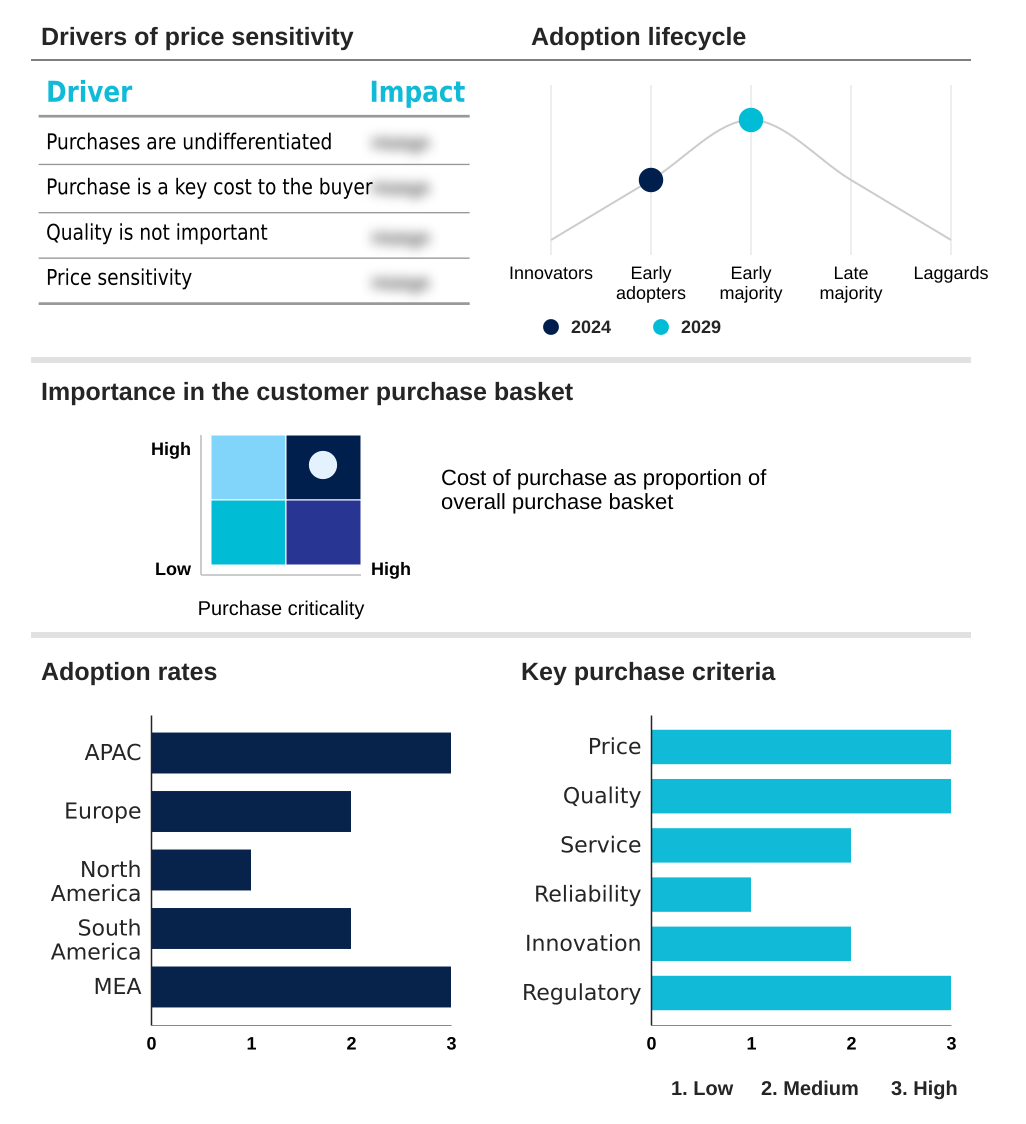
The delta robots market forecasting report includes the adoption lifecycle of the market, covering from the innovator’s stage to the laggard’s stage. It focuses on adoption rates in different regions based on penetration. Furthermore, the delta robots market report also includes key purchase criteria and drivers of price sensitivity to help companies evaluate and develop their market growth analysis strategies.
Customer Landscape of Delta Robots Industry
Competitive Landscape
Companies are implementing various strategies, such as strategic alliances, delta robots market forecast, partnerships, mergers and acquisitions, geographical expansion, and product/service launches, to enhance their presence in the industry.
Acrome Robotik - Provides turnkey delta robot systems with integrated vision and controllers, targeting academic and research applications in robotics and automation.
The industry research and growth report includes detailed analyses of the competitive landscape of the market and information about key companies, including:
- Acrome Robotik
- Cama 1 S.p.A.
- Codian Robotics BV
- Delta Electronics Inc.
- DENSO Corp.
- FANUC Corp.
- GSK CNC Equipment Co. Ltd.
- Hiwin Technologies Corp.
- igus GmbH
- Kawasaki Heavy Industries Ltd.
- MIDEA Group Co. Ltd.
- NACHI FUJIKOSHI Corp.
- OMRON Corp.
- ONExia Inc.
- Robert Bosch GmbH
- Seiko Epson Corp.
- Yaskawa Electric Corp.
Qualitative and quantitative analysis of companies has been conducted to help clients understand the wider business environment as well as the strengths and weaknesses of key industry players. Data is qualitatively analyzed to categorize companies as pure play, category-focused, industry-focused, and diversified; it is quantitatively analyzed to categorize companies as dominant, leading, strong, tentative, and weak.
Recent Development and News in Delta robots market
- In September 2024, Robert Bosch GmbH announced the acquisition of a European startup specializing in advanced end-of-arm-tooling (EOAT) for approximately USD 45 million, aiming to strengthen its offerings for the pharmaceutical packaging sector.
- In November 2024, FANUC Corp. launched its new DR-4iB series of delta robots, which feature a proprietary AI-driven vision system that enhances sorting accuracy by 15% in high-speed, variable-product-flow environments.
- In February 2025, Yaskawa Electric Corp. formed a strategic partnership with a leading industrial software company to integrate digital twin and predictive maintenance analytics into its MOTOMAN delta robot controllers, targeting a 20% reduction in unscheduled downtime for users.
- In April 2025, Seiko Epson Corp. unveiled a new generation of compact, high-speed delta robots at Hannover Messe, demonstrating a cycle time of under 0.25 seconds for complex pick-and-place tasks within a minimal footprint, designed specifically for the electronics assembly market.
Dive into Technavio’s robust research methodology, blending expert interviews, extensive data synthesis, and validated models for unparalleled Delta Robots Market insights. See full methodology.
| Market Scope | |
|---|---|
| Page number | 301 |
| Base year | 2024 |
| Historic period | 2019-2023 |
| Forecast period | 2025-2029 |
| Growth momentum & CAGR | Accelerate at a CAGR of 16.8% |
| Market growth 2025-2029 | USD 2119.8 million |
| Market structure | Fragmented |
| YoY growth 2024-2025(%) | 14.0% |
| Key countries | China, Japan, India, South Korea, Australia, Indonesia, Germany, UK, France, Italy, The Netherlands, Spain, US, Canada, Mexico, Brazil, Argentina, Colombia, Saudi Arabia, UAE, South Africa, Israel and Turkey |
| Competitive landscape | Leading Companies, Market Positioning of Companies, Competitive Strategies, and Industry Risks |
Research Analyst Overview
- The delta robots market is centered on the application of parallel kinematic robots, which are distinguished by their lightweight carbon fiber arms and parallel link mechanism. This structure facilitates the high acceleration necessary for high-speed pick-and-place applications within a distinctive dome-shaped work envelope.
- The core technology, involving sophisticated robotic controllers and motion control systems, enables precise movements of the end-effector for tasks ranging from packaging to assembly. A key trend influencing boardroom decisions is the growing requirement for regulatory compliance in sensitive industries.
- The adoption of washdown-compatible robots with a hygienic design is no longer just an operational choice but a strategic imperative to mitigate risks in food and pharmaceutical production, where systems must withstand rigorous sanitation protocols.
- Integrating advanced machine vision technology and conveyor tracking allows for dynamic robotic part handling, with some automated systems achieving cycle time reductions of over 60% compared to manual processes. While payload capacity remains a key consideration, advancements in materials and design continue to expand the application scope of both 3-axis delta robots and 4-axis delta robots in high-throughput environments.
What are the Key Data Covered in this Delta Robots Market Research and Growth Report?
-
What is the expected growth of the Delta Robots Market between 2025 and 2029?
-
USD 2.12 billion, at a CAGR of 16.8%
-
-
What segmentation does the market report cover?
-
The report is segmented by Type (4 Axis, 6 Axis, and 3 Axis), End-user (Food and beverages, Electrical and electronics, and Pharmaceuticals), Application (Pick and place, Palletizing and packaging, Assembly, Material handling, and Others) and Geography (APAC, Europe, North America, South America, Middle East and Africa)
-
-
Which regions are analyzed in the report?
-
APAC, Europe, North America, South America and Middle East and Africa
-
-
What are the key growth drivers and market challenges?
-
Growing demand for delta robots in packaging applications , Availability of substitute products
-
-
Who are the major players in the Delta Robots Market?
-
Acrome Robotik, Cama 1 S.p.A., Codian Robotics BV, Delta Electronics Inc., DENSO Corp., FANUC Corp., GSK CNC Equipment Co. Ltd., Hiwin Technologies Corp., igus GmbH, Kawasaki Heavy Industries Ltd., MIDEA Group Co. Ltd., NACHI FUJIKOSHI Corp., OMRON Corp., ONExia Inc., Robert Bosch GmbH, Seiko Epson Corp. and Yaskawa Electric Corp.
-
Market Research Insights
- Market dynamics are heavily influenced by the push for greater efficiency in high-speed automation across several key sectors. In food and beverage packaging, implementing delta robots has been shown to boost line throughput by over 30% compared to manual methods.
- Similarly, for pharmaceutical sorting, the technology facilitates compliance with stringent regulations by reducing human contact, leading to a 90% decrease in potential contamination events. In the demanding field of electronics assembly, the precision of vision-guided robotics allows for the accurate placement of miniature components, improving first-pass yield rates significantly.
- These advancements in robotic kitting and material handling are critical as manufacturers seek to optimize production. The adoption of robotic systems in secondary packaging operations and within cleanroom environments demonstrates a clear return on investment, often realized in under 24 months through labor savings and enhanced productivity.
We can help! Our analysts can customize this delta robots market research report to meet your requirements.
 RIA -
RIA - 
