
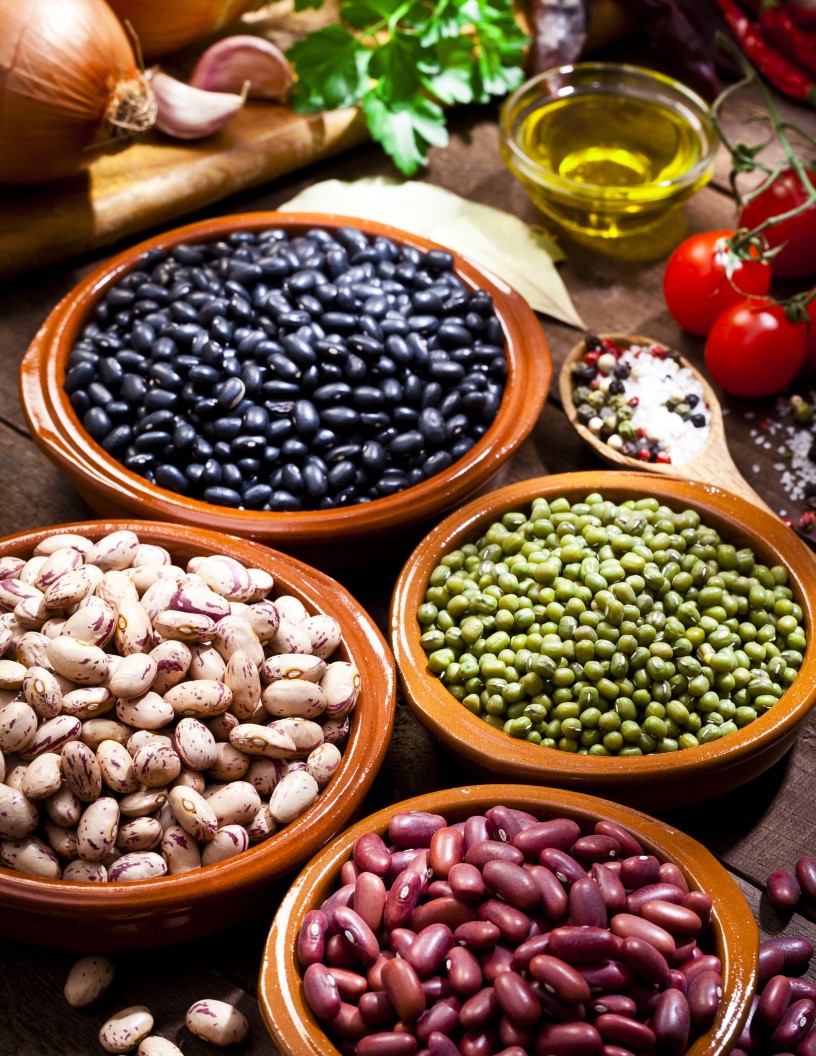


Dietary Fiber Market Size 2024-2028
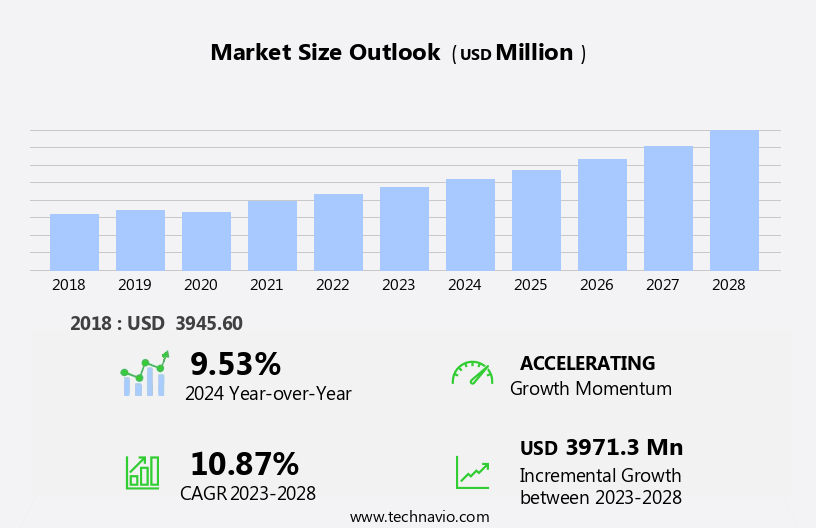
The dietary fiber market size is forecast to increase by USD 3.97 billion, at a CAGR of 10.87% between 2023 and 2028.
- The market is driven by the growing awareness and recognition of the health benefits associated with high-fiber foods. Consumers are increasingly seeking out fiber-rich products to support digestive health, reduce cholesterol levels, and manage weight. This trend is further fueled by the rising demand from emerging economies, where the adoption of Western diets and increasing health consciousness are driving growth. Additionally, the demand for prebiotic ingredients, which contain prebiotic compounds that promote the growth of beneficial gut bacteria, is on the rise. However, the market faces challenges from stringent food regulations. Governments and regulatory bodies are implementing strict guidelines to ensure the safety and quality of fiber-containing foods, which can increase production costs and limit innovation. Companies must navigate these regulations while also addressing consumer demands for natural, clean-label products.
- To capitalize on market opportunities and navigate challenges effectively, businesses should focus on developing innovative, fiber-rich products that meet regulatory requirements and consumer preferences. Additionally, partnerships and collaborations with regulatory bodies and industry associations can help companies stay informed and compliant with the latest regulations.
What will be the Size of the Dietary Fiber Market during the forecast period?
Explore in-depth regional segment analysis with market size data - historical 2018-2022 and forecasts 2024-2028 - in the full report.
Request Free Sample
The market continues to evolve, driven by ongoing research and development in fiber sources, extraction methods, and applications. Soluble fiber, with its high viscosity and ability to form a gel-like substance in the presence of water, is increasingly utilized as a weight management aid and for blood sugar control. Insoluble fiber, known for its water holding capacity and ability to increase stool bulk, is essential for digestive health and colonic health benefits. Pectin, a complex polysaccharide, is a functional fiber source gaining attention for its prebiotic effects and potential impact on gut microbiota. The extraction of pectin from various plant sources is a subject of ongoing research, as is the optimization of pectin's viscosity and solubility for various applications.
Hemicellulose, another complex carbohydrate, is a promising source of dietary fiber with a diverse range of types and properties. Its impact on glycemic index, viscosity measurement, and fiber digestion rate is under investigation, as is its potential synergy with probiotics. Fiber labeling standards continue to evolve, with a focus on transparency and accuracy in fiber content claims. Lignin composition and its role in fiber quality assessment are also areas of active research, as is the food matrix effect on fiber bioavailability. The ongoing exploration of fiber's role in various sectors, from food and beverage to pharmaceuticals and nutraceuticals, ensures a dynamic and evolving market landscape.
From fiber fortification and fiber supplementation to cholesterol reduction and colonic health benefits, the potential applications of dietary fiber are vast and continually unfolding.
How is this Dietary Fiber Industry segmented?
The dietary fiber industry research report provides comprehensive data (region-wise segment analysis), with forecasts and estimates in "USD million" for the period 2024-2028, as well as historical data from 2018-2022 for the following segments.
- End-user
- Food and beverage
- Pharmaceuticals
- Animal and pet feed
- Type
- Insoluble
- Soluble
- Raw Material
- Fruits & Vegetables
- Cereals & Grains
- Nuts & Seeds
- Legumes
- Geography
- North America
- US
- Canada
- Europe
- France
- Germany
- Italy
- UK
- Middle East and Africa
- Egypt
- KSA
- Oman
- UAE
- APAC
- China
- India
- Japan
- South America
- Argentina
- Brazil
- Rest of World (ROW)
- North America
By End-user Insights
The food and beverage segment is estimated to witness significant growth during the forecast period.
Dietary fibers, integral to maintaining optimal health, are increasingly utilized in food production due to their ability to prevent diabetes mellitus, bolster immune functions, and reduce the risk of cardiovascular diseases. The nutritional benefits, coupled with their technological properties, make dietary fibers a sought-after ingredient for food manufacturers. These fibers, predominantly derived from agricultural products and by-products, are essential for enhancing their functional properties. Resistant starch content, soluble and insoluble fiber types, hemicellulose, and cellulose are key components of dietary fibers. Soluble fibers, with high viscosity and water holding capacity, contribute to satiety response, blood sugar control, and cholesterol reduction.
Insoluble fibers, on the other hand, increase stool bulk and promote gut microbiota health. Functional fiber sources, such as pectin, inulin, and prebiotics, offer additional health benefits, including digestive health markers, probiotic synergy, and fiber degradation. Fiber labeling standards ensure transparency and accuracy in product information, while fiber extraction methods and fiber fortification maintain consistent product quality. The impact of dietary fiber on the glycemic index, gut microbiota, and food matrix are critical factors in food product development. Fermentation byproducts, lignin composition, and fiber digestion rate are also essential considerations for manufacturers. Incorporating dietary fibers into food products not only addresses nutritional needs but also offers opportunities for innovation in various food categories.
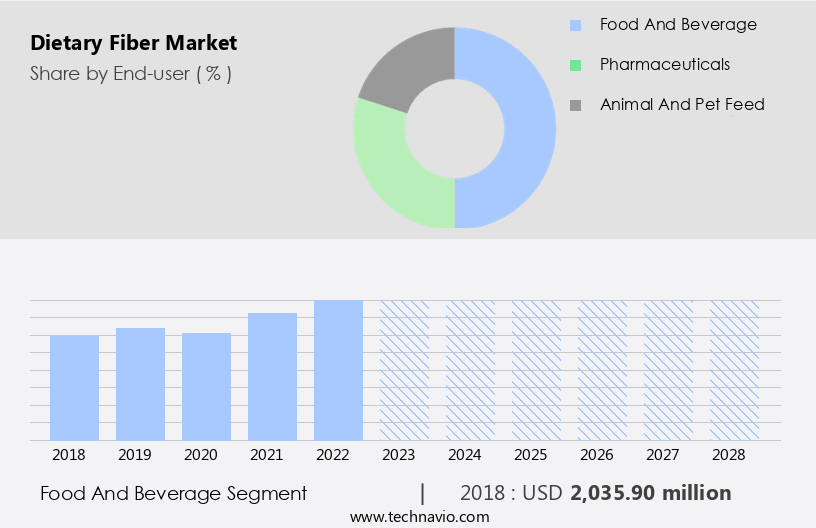
The Food and beverage segment was valued at USD 2.04 billion in 2018 and showed a gradual increase during the forecast period.
Regional Analysis
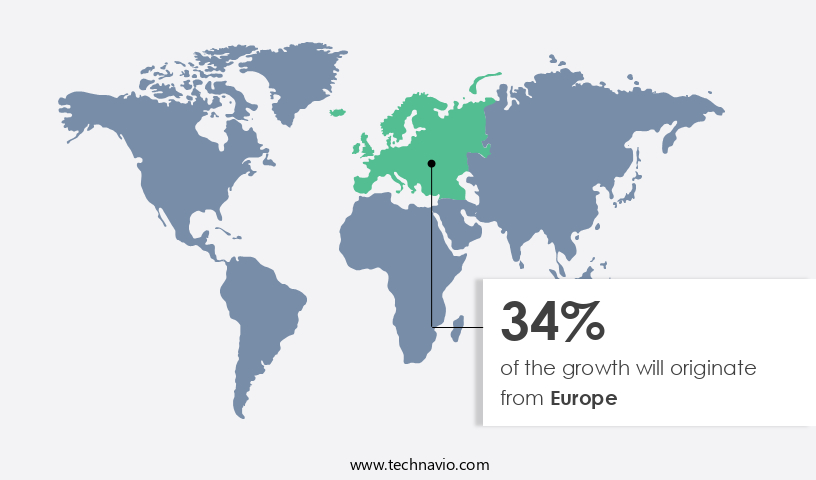
Europe is estimated to contribute 34% to the growth of the global market during the forecast period.Technavio's analysts have elaborately explained the regional trends and drivers that shape the market during the forecast period.
The North American market is experiencing significant growth due to increasing consumer awareness and preference for high-fiber foods. Fiber bioavailability and resistant starch content are key factors driving demand for functional fiber sources. Digestive health markers, such as viscosity measurement and satiety response, are essential considerations for consumers seeking weight management aids. Hemicellulose types and their glycemic index impact are also influential in fiber selection. Fiber supplementation, including soluble and insoluble fiber types, offers various health benefits, such as water holding capacity, gut microbiota impact, and colonic health benefits. Pectin extraction and fiber labeling standards are important for transparency and consumer trust.
Lignin composition and fiber quality assessment are crucial for cellulose properties and fermentation byproducts. Blood sugar control, cholesterol reduction, and probiotic synergy are significant health benefits associated with dietary fiber. Fiber fortification and prebiotic fiber effects contribute to fiber degradation and fiber intake levels. Inulin properties and dietary fiber analysis are essential for product development and market innovation. The US dominates the North American the market, with aggressive product launches catering to the growing demand for digestive health benefits. The younger population's trend towards raw, organic, and functional food products further fuels market growth. Overall, the market in North America is evolving to meet consumers' increasing demand for fiber-rich, health-conscious food options.
Market Dynamics
The Global dietary fiber market is experiencing significant expansion, driven by increasing consumer focus on gut health and weight management. This heightened awareness fuels demand for various forms, including soluble dietary fiber, insoluble dietary fiber, and particularly prebiotic fiber, which is gaining traction. The market for dietary fiber supplements and high-fiber snacks is booming, reflecting shifts in healthy food trends. As a crucial component in many products, functional food ingredients like inulin and resistant starch are seeing widespread adoption in new product development fiber. The dietary fiber industry trends highlight a strong correlation with the plant-based diet influence, further propelling dietary fiber market growth. The increasing consumer awareness dietary fiber's role in blood sugar control and its diverse nutraceutical applications are key drivers shaping the expanding dietary fiber market size.
Our researchers analyzed the data with 2023 as the base year, along with the key drivers, trends, and challenges. A holistic analysis of drivers will help companies refine their marketing strategies to gain a competitive advantage.
What are the key market drivers leading to the rise in the adoption of Dietary Fiber Industry?
- The significant health benefits derived from consuming high-fiber foods serve as the primary market driver.
- The global health consciousness trend has gained significant momentum due to the increasing prevalence of obesity and related health issues, such as heart diseases. According to the World Health Organization (WHO), approximately 39 million children under the age of 5 were obese in 2021. In response, consumers worldwide are prioritizing their health and fitness by focusing on the nutritional value of their diets. One essential nutrient gaining prominence is dietary fiber. Dietary fiber, a non-digestible carbohydrate, plays a crucial role in maintaining digestive health and overall well-being. It is classified into two types: soluble and insoluble.
- Soluble fiber, which is fermented in the large intestine, aids in weight management by increasing satiety and reducing calorie intake. Insoluble fiber, on the other hand, promotes regular bowel movements and adds bulk to the stool. Functional fiber sources, such as resistant starch and hemicellulose types, have gained popularity due to their added health benefits. Resistant starch, which is resistant to digestion in the small intestine, acts as a prebiotic and improves fiber bioavailability. Hemicellulose, a complex polysaccharide, is rich in fiber and has a low glycemic index impact, making it an ideal choice for individuals with diabetes.
- Moreover, fiber supplementation is a viable solution for those who struggle to meet their daily fiber requirements through their diet alone. Viscosity measurement and digestive health markers are essential factors in evaluating the effectiveness of fiber supplements. As consumers become more health-conscious, the demand for fiber-rich foods and supplements is expected to surge, making it a promising market.
What are the market trends shaping the Dietary Fiber Industry?
- Emerging economies are experiencing a surging demand that represents the latest market trend. This increasing need from developing countries is a significant factor shaping the business landscape.
- The market is experiencing significant growth due to increasing consumer awareness and demand for healthier food options. Dietary fiber, which includes both soluble and insoluble types, plays a crucial role in maintaining digestive health and providing various health benefits. Soluble fiber, known for its water-holding capacity, contributes to a satiety response, helping consumers feel full for longer periods. Insoluble fiber types, on the other hand, contribute to the bulking effect and promote regular bowel movements. The impact of dietary fiber on gut microbiota is another key factor driving market growth. Pectin extraction is a common method used to obtain dietary fiber from fruits and vegetables.
- Fiber labeling standards are essential to ensure accurate and clear communication of fiber content to consumers. Lignin composition is also a critical aspect of dietary fiber, as it affects the colonic health benefits. As consumers become more health-conscious, the demand for foods and beverages with high dietary fiber content continues to rise. This trend is particularly noticeable in emerging economies such as China, Brazil, India, and Russia, where the market for dietary fiber is in a growth stage. Dietary fiber companies are increasingly investing in these markets to cater to the rising demand for nutritional food products.
- In summary, the market is experiencing growth due to increasing consumer awareness and demand for healthier food options. The health benefits associated with dietary fiber, including its impact on gut microbiota and colonic health, are driving market growth. Consumer interest in foods and beverages with high dietary fiber content is particularly strong in emerging economies, making them attractive markets for dietary fiber companies.
What challenges does the Dietary Fiber Industry face during its growth?
- The stringent food regulations pose a significant challenge to the growth of the industry. Adhering to these regulations, which are essential for ensuring food safety and quality, requires substantial resources and compliance efforts from industry players.
- The market encounters challenges in adhering to the rigorous regulations set by authorities, hindering new entrants and product launches. In the US, for instance, foods labeled as high in fiber must contain a minimum of 5 grams (0.17 ounces) per serving and 8 grams (0.28 ounces) of whole grain. The US Food and Drug Administration (FDA) mandates that manufacturers of packaged food disclose nutritional information on product packaging. In Europe, under the Nutrition and Health Claims Regulation (NHCR), a food product can only be classified as high in fiber if it contains 6 grams of fiber per 100 grams of every serving.
- Fiber extraction methods, such as mechanical and enzymatic processes, play a crucial role in fiber quality assessment. Prebiotic fiber effects, fiber degradation, and fermentation byproducts are significant factors influencing fiber's health benefits. Cellulose properties, including its crystalline structure and degree of polymerization, are essential considerations in fiber fortification. The assessment of fiber quality is essential to ensure the desired health benefits and to meet regulatory requirements.
Exclusive Customer Landscape
The dietary fiber market forecasting report includes the adoption lifecycle of the market, covering from the innovator's stage to the laggard's stage. It focuses on adoption rates in different regions based on penetration. Furthermore, the dietary fiber market report also includes key purchase criteria and drivers of price sensitivity to help companies evaluate and develop their market growth analysis strategies.
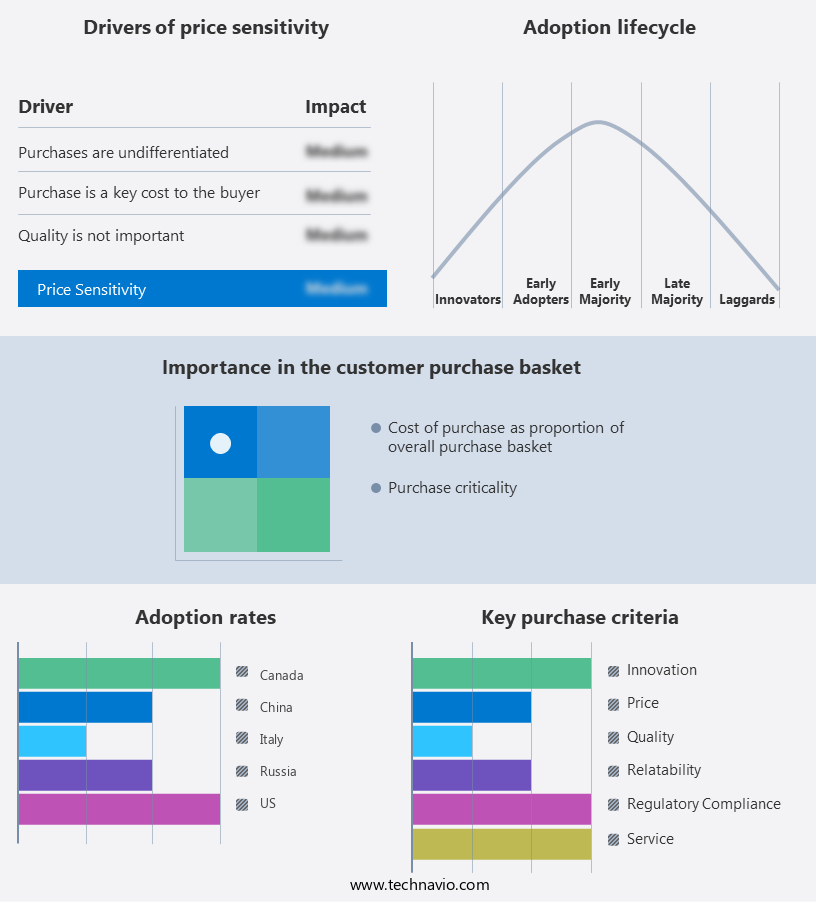
Customer Landscape
Key Companies & Market Insights
Companies are implementing various strategies, such as strategic alliances, dietary fiber market forecast, partnerships, mergers and acquisitions, geographical expansion, and product/service launches, to enhance their presence in the industry.
BEYOND BIOPHARMA CO. LTD. - This company specializes in providing dietary fiber solutions, including Cargill's soluble fiber offerings, to enhance food and beverage products' nutritional value and consumer health benefits.
The industry research and growth report includes detailed analyses of the competitive landscape of the market and information about key companies, including:
- BEYOND BIOPHARMA CO. LTD.
- Cargill Inc.
- Cooperatie Koninklijke Cosun UA
- COSUCRA
- DuPont de Nemours Inc.
- FrieslandCampina
- FutureCeuticals
- Herbafood Ingredients GmbH
- Ingredion Inc.
- Interfiber Ltd.
- International Flavors and Fragrances Inc.
- J RETTENMAIER and SOHNE GmbH and Co KG
- Kerry Group Plc
- Matsutani Chemical Industry Co. Ltd.
- Meiji Holdings Co. Ltd.
- NEXIRA
- Roquette Freres SA
- Sudzucker AG
- Tate and Lyle PLC
- Tereos Participations
Qualitative and quantitative analysis of companies has been conducted to help clients understand the wider business environment as well as the strengths and weaknesses of key industry players. Data is qualitatively analyzed to categorize companies as pure play, category-focused, industry-focused, and diversified; it is quantitatively analyzed to categorize companies as dominant, leading, strong, tentative, and weak.
Recent Development and News in Dietary Fiber Market
- In January 2024, Danone Manifesto Ventures, a global investment organization focused on sustainable food startups, announced a strategic investment in Fiberstar, Inc., a leading producer of water-soluble dietary fibers. This collaboration aimed to expand Danone's portfolio of health-focused products (Danone Manifesto Ventures Press Release, 2024).
- In March 2024, DuPont Nutrition & Biosciences, a global biotech company, launched a new dietary fiber ingredient, Danisco⢠NOVELU® P50, which offered improved prebiotic properties and gut health benefits. This launch marked a significant technological advancement in the market (DuPont Nutrition & Biosciences Press Release, 2024).
- In May 2024, Ingredion Incorporated, a leading global ingredient solutions provider, acquired Provenance Specialty Foods, a U.S.-based company specializing in plant-based and clean-label ingredients, including dietary fibers. This acquisition expanded Ingredion's offerings and capabilities in the market (Ingredion Incorporated Press Release, 2024).
- In April 2025, the European Food Safety Authority (EFSA) approved the health claim for the dietary fiber, Sunfiber®, produced by Taiyo International, Inc. The approval allowed food manufacturers to make specific health claims related to the fiber's ability to improve bowel function (EFSA Journal, 2025).
Research Analyst Overview
- The market is experiencing significant growth, driven by increasing consumer awareness of its health benefits. Fiber's role in cardiovascular health, metabolic syndrome management, and colon cancer risk reduction is well-established. Intestinal transit time and nutrient absorption are improved, leading to immune function boost and inflammation reduction. Food processing impact on fiber's sensory properties and shelf life stability is a key consideration in fiber ingredient selection. Prebiotic fiber types, such as inulin and oligofructose, promote probiotic growth and modulate the gut microbiome.
- Fiber-rich foods like fruits, vegetables, and whole grains are essential, but fiber supplement formulations offer convenience and consistency. Age-related changes in fiber needs and fiber source identification are also important considerations. Fiber characterization and texture modification techniques enable the development of fiber ingredients with desirable properties for various applications, including obesity prevention and type 2 diabetes management.
Dive into Technavio's robust research methodology, blending expert interviews, extensive data synthesis, and validated models for unparalleled Dietary Fiber Market insights. See full methodology.
|
Market Scope |
|
|
Report Coverage |
Details |
|
Page number |
169 |
|
Base year |
2023 |
|
Historic period |
2018-2022 |
|
Forecast period |
2024-2028 |
|
Growth momentum & CAGR |
Accelerate at a CAGR of 10.87% |
|
Market growth 2024-2028 |
USD 3971.3 million |
|
Market structure |
Fragmented |
|
YoY growth 2023-2024(%) |
9.53 |
|
Key countries |
US, Canada, Germany, UK, Italy, France, China, India, Japan, Brazil, Egypt, UAE, Oman, Argentina, KSA, UAE, Brazil, and Rest of World (ROW) |
|
Competitive landscape |
Leading Companies, Market Positioning of Companies, Competitive Strategies, and Industry Risks |
What are the Key Data Covered in this Dietary Fiber Market Research and Growth Report?
- CAGR of the Dietary Fiber industry during the forecast period
- Detailed information on factors that will drive the growth and forecasting between 2024 and 2028
- Precise estimation of the size of the market and its contribution of the industry in focus to the parent market
- Accurate predictions about upcoming growth and trends and changes in consumer behaviour
- Growth of the market across North America, Europe, APAC, South America, and Middle East and Africa
- Thorough analysis of the market's competitive landscape and detailed information about companies
- Comprehensive analysis of factors that will challenge the dietary fiber market growth of industry companies
We can help! Our analysts can customize this dietary fiber market research report to meet your requirements.
 RIA -
RIA - 
