



Digital Twin For Discrete Manufacturing Market Size 2026-2030
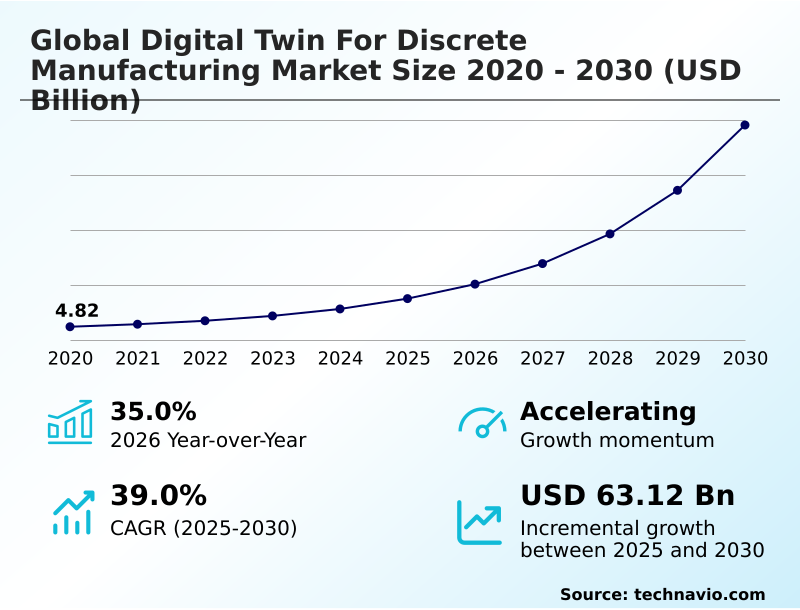
The digital twin for discrete manufacturing market size is valued to increase by USD 63.12 billion, at a CAGR of 39% from 2025 to 2030. Acceleration of industry 4.0 and integration of Industrial Internet of Things (IIoT) will drive the digital twin for discrete manufacturing market.
Major Market Trends & Insights
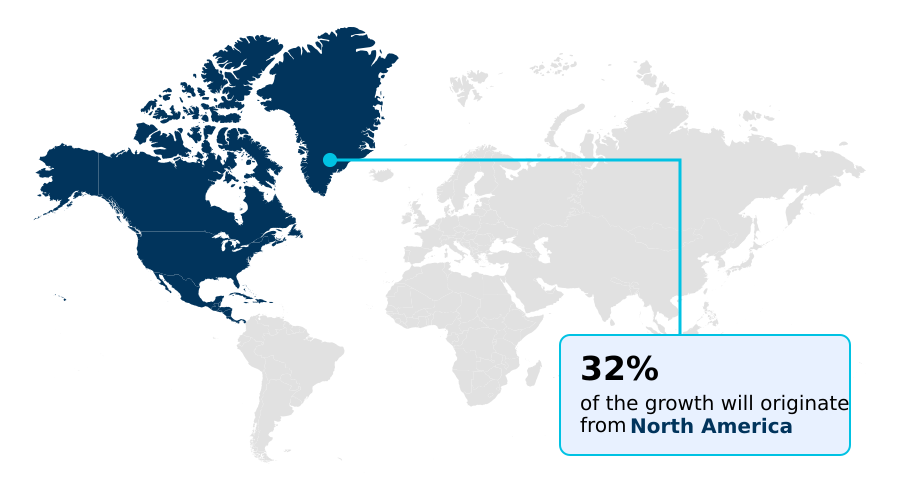
- North America dominated the market and accounted for a 31.7% growth during the forecast period.
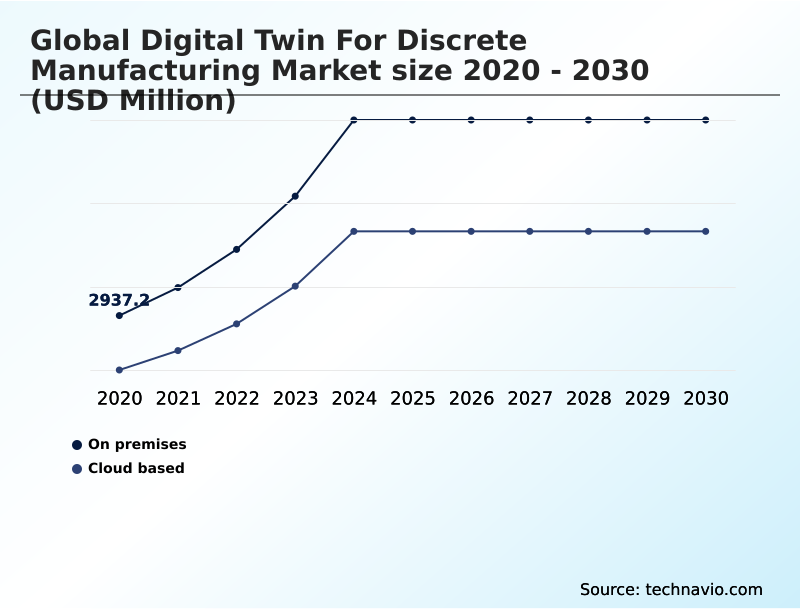
- By Deployment - On premises segment was valued at USD 6.72 billion in 2024
- By End-user - Automotive manufacturing segment accounted for the largest market revenue share in 2024
Market Size & Forecast
- Market Opportunities: USD 73.35 billion
- Market Future Opportunities: USD 63.12 billion
- CAGR from 2025 to 2030 : 39%
Market Summary
- The digital twin for discrete manufacturing market is advancing beyond simple visualization to become a cornerstone of intelligent industrial operations. This evolution is driven by the need for enhanced operational efficiency and accelerated product innovation in sectors like automotive and electronics.
- The technology integrates real-time data streams into high-fidelity virtual models, enabling predictive maintenance that anticipates equipment failures and optimizes asset performance throughout its lifecycle. A key trend is the fusion with generative AI, allowing for the autonomous creation of optimized designs and production schedules.
- For instance, an automotive OEM can simulate millions of miles for an electric vehicle's battery performance in a virtual environment, drastically reducing physical testing costs and development timelines. While implementation complexity and data security remain concerns, the strategic benefits of improved agility and reduced time-to-market are compelling.
- The ability to create a seamless digital thread from design to service is fundamentally reshaping how complex products are made and maintained in the global digital twin for discrete manufacturing market 2026-2030.
What will be the Size of the Digital Twin For Discrete Manufacturing Market during the forecast period?
Get Key Insights on Market Forecast (PDF) Get Free Sample
How is the Digital Twin For Discrete Manufacturing Market Segmented?
The digital twin for discrete manufacturing industry research report provides comprehensive data (region-wise segment analysis), with forecasts and estimates in "USD million" for the period 2026-2030, as well as historical data from 2020-2024 for the following segments.
- Deployment
- On premises
- Cloud based
- End-user
- Automotive manufacturing
- Aerospace and defense
- Industrial machinery
- Electronics and semiconductor
- Medical devices
- Application
- Predictive maintenance
- Design and engineering
- Production planning and scheduling
- Quality management
- Geography
- North America
- US
- Canada
- Mexico
- APAC
- China
- Japan
- India
- Europe
- UK
- Germany
- France
- Middle East and Africa
- Saudi Arabia
- UAE
- South Africa
- South America
- Brazil
- Argentina
- Colombia
- Rest of World (ROW)
- North America
By Deployment Insights
The on premises segment is estimated to witness significant growth during the forecast period.
On-premises deployment remains a significant choice for discrete manufacturers, driven by stringent data security and intellectual property protection needs.
This model ensures that sensitive operational data, including proprietary designs, remains within an organization's direct control, a critical factor for sectors like aerospace and defense.
This approach facilitates low-latency connections essential for high-speed production lines and supports deep integration with legacy manufacturing systems. While requiring substantial upfront investment, the control and reliability it offers are paramount for operational resilience.
For instance, manufacturers utilizing on-premises digital twins for workforce training simulation have reported a 20% reduction in onboarding errors.
This model underpins sustainable manufacturing practices by enabling detailed energy consumption modeling and material lifecycle analysis, aligning with circular economy principles and agile product development.
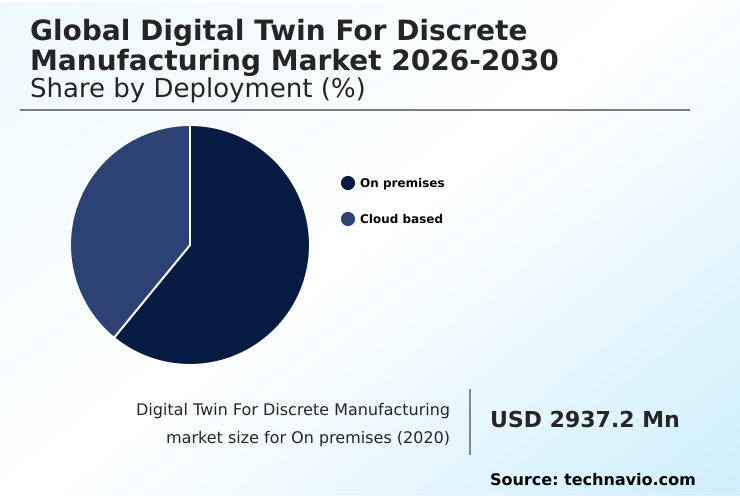
The On premises segment was valued at USD 6.72 billion in 2024 and showed a gradual increase during the forecast period.
Regional Analysis
North America is estimated to contribute 31.7% to the growth of the global market during the forecast period.Technavio’s analysts have elaborately explained the regional trends and drivers that shape the market during the forecast period.
See How Digital Twin For Discrete Manufacturing Market Demand is Rising in North America Get Free Sample
The geographic landscape is shaped by distinct regional initiatives and economic forces. In North America, a nearshoring manufacturing boom is accelerating adoption, with a focus on supply chain resilience and data sovereignty compliance.
This region accounts for 31.7% of the market's incremental growth, driven by digital infrastructure investment in the US and Canada.
In APAC, the rise of industrial internet platforms is central, as nations like China and South Korea aim for zero-defect manufacturing goals. European adoption is heavily influenced by sustainability regulations.
Across these regions, digital twins are pivotal for production line optimization and prescriptive operations, with some manufacturers achieving a 25% reduction in time spent on virtual prototyping cycles.
This allows for rapid component geometry optimization and facilitates remote collaboration tools, enhancing root cause analysis capabilities with photorealistic rendering.
Market Dynamics
Our researchers analyzed the data with 2025 as the base year, along with the key drivers, trends, and challenges. A holistic analysis of drivers will help companies refine their marketing strategies to gain a competitive advantage.
- The application of digital twin technology is expanding across various sectors, demonstrating its versatility and impact on modern industrial practices. The digital twin for automotive manufacturing is crucial for managing the transition to electric vehicles, particularly in virtual commissioning for production lines and optimizing EV manufacturing processes.
- Similarly, the aerospace and defense digital twin focuses on ensuring the reliability and lifecycle management of complex assets. For producers of heavy equipment, the digital twin for industrial machinery provides a pathway to predictive maintenance and enhanced service offerings.
- In high-tech sectors, the electronics and semiconductor digital twin is indispensable for managing microscopic precision, such as in semiconductor fab digital twin optimization. The medical device manufacturing digital twin ensures regulatory compliance and product efficacy.
- Across all these industries, specific applications are driving adoption; the digital twin for predictive maintenance, for example, shows adoption rates nearly double those of quality management applications in some sectors. Use cases like the digital twin for design engineering and production planning digital twin simulation are foundational for reducing time-to-market with digital twins.
- Deployments vary, with cloud-based digital twin solutions offering scalability, while on-premises digital twin deployment caters to high-security needs. The technology's future is tied to trends like generative AI in digital twins and the industrial metaverse for manufacturing, which promise even greater levels of automation and insight for the digital twin for asset lifecycle and supply chain visibility.
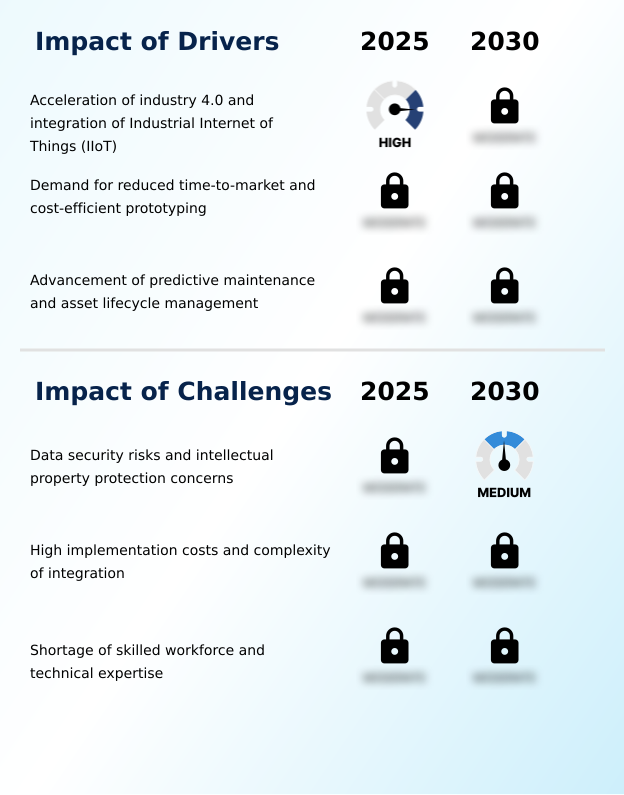
What are the key market drivers leading to the rise in the adoption of Digital Twin For Discrete Manufacturing Industry?
- The acceleration of Industry 4.0, along with the deep integration of the Industrial Internet of Things (IIoT), is a primary driver for market expansion.
- Market expansion is fueled by the drive toward smart factory implementation, which hinges on the deep integration of operational and information technologies. This IT/OT convergence, powered by IIoT sensor networks, feeds constant data from SCADA systems into high-fidelity virtual replicas.
- The use of edge computing data processing ensures that this information is analyzed with minimal latency, enabling immediate adjustments on the factory floor and improving overall equipment effectiveness (OEE) by up to 15%.
- This software-defined architecture is the backbone for enterprise AI applications that run complex multiphysics simulations.
- By integrating with existing manufacturing execution system (MES) synchronization and product lifecycle management (PLM) integration frameworks, companies can achieve a 99.5% data synchronization rate between the physical asset and its digital counterpart, enabling advanced computer-aided engineering (CAE) capabilities.
What are the market trends shaping the Digital Twin For Discrete Manufacturing Industry?
- The convergence of generative AI with cognitive capabilities is creating dynamic, self-learning digital twins. This evolution moves beyond static replicas to enable prescriptive operational models.
- Key trends are reshaping the market by moving from static models to dynamic, intelligent systems. The emergence of cognitive digital twins, which leverage AI for self-optimization, is central to this shift. These systems support advanced asset lifecycle management (ALM) and enable true closed-loop manufacturing.
- The industrial metaverse, a convergence of spatial computing with extended reality (XR), is creating immersive virtual reality (VR) environments for collaboration and training. An augmented reality (AR) overlay can guide technicians through complex repairs using predictive maintenance algorithms, improving first-time fix rates by up to 30%. This evolution relies on real-time data integration to maintain digital thread continuity.
- Moreover, virtual commissioning within these environments allows for physics-based simulation of entire production lines, reducing setup times by as much as 50% before physical deployment.
What challenges does the Digital Twin For Discrete Manufacturing Industry face during its growth?
- Significant data security risks combined with concerns over intellectual property protection present a key challenge affecting the industry's growth trajectory.
- Despite strong drivers, significant challenges hinder widespread adoption, particularly for small and medium-sized enterprises. The high cost and complexity of the virtual validation process, which requires specialized software and skilled personnel, is a primary barrier, with initial implementation costs running 50% higher than traditional MES upgrades. Ensuring seamless data flow for cyber-physical systems is difficult, often impeded by legacy equipment.
- This complexity makes it challenging to implement servitization business models or achieve lights-out manufacturing. Furthermore, the technology must support high-mix, low-volume production to provide a clear ROI, a capability that only 35% of current platforms adequately address. The process of dimensional data analysis and as-built vs as-designed comparison for closed-loop quality control requires substantial data harmonization.
- Achieving effective what-if scenario analysis for mass customization enablement depends heavily on generative design capabilities and robust systems engineering, which are not yet universally available.
Exclusive Technavio Analysis on Customer Landscape
The digital twin for discrete manufacturing market forecasting report includes the adoption lifecycle of the market, covering from the innovator’s stage to the laggard’s stage. It focuses on adoption rates in different regions based on penetration. Furthermore, the digital twin for discrete manufacturing market report also includes key purchase criteria and drivers of price sensitivity to help companies evaluate and develop their market growth analysis strategies.
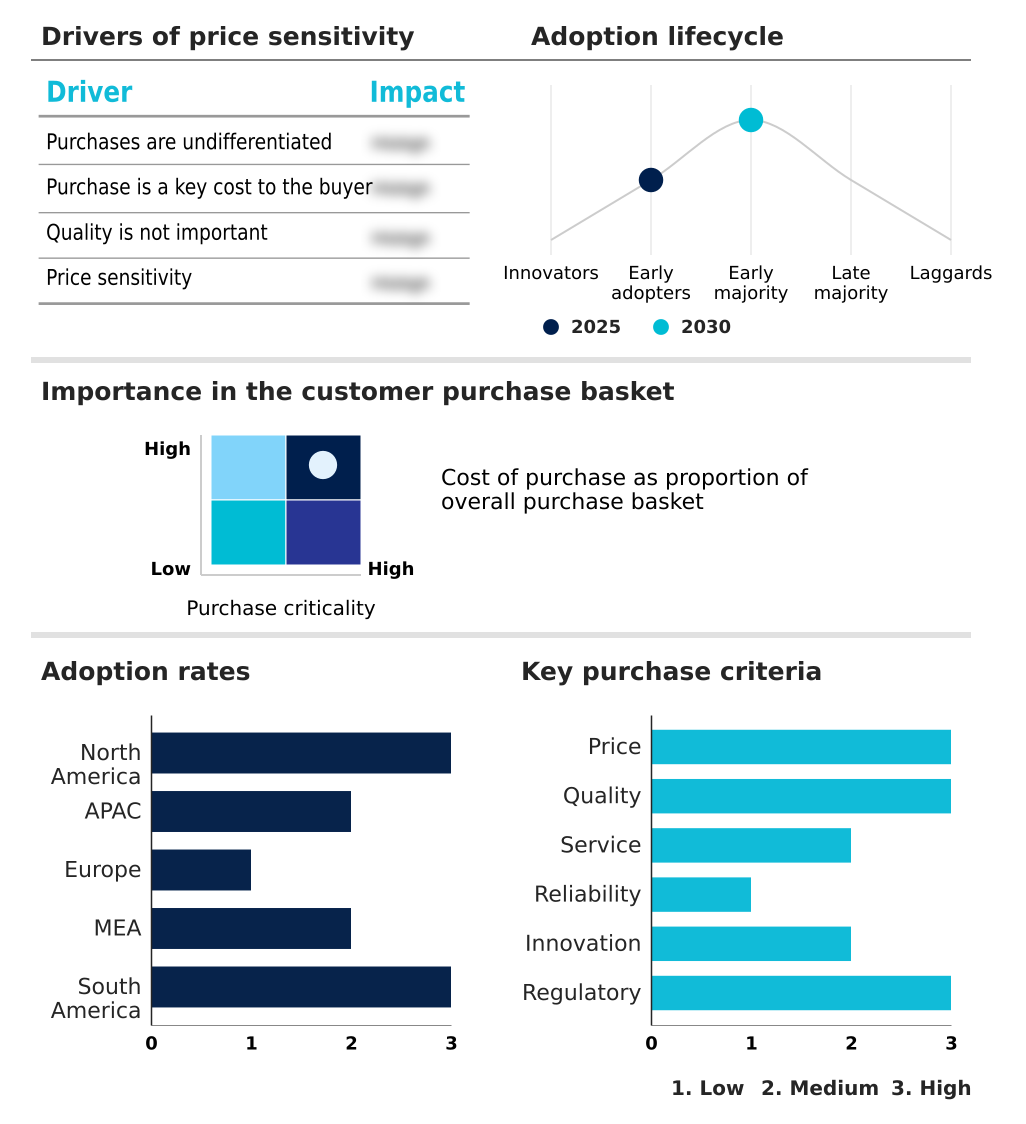
Customer Landscape of Digital Twin For Discrete Manufacturing Industry
Competitive Landscape
Companies are implementing various strategies, such as strategic alliances, digital twin for discrete manufacturing market forecast, partnerships, mergers and acquisitions, geographical expansion, and product/service launches, to enhance their presence in the industry.
ABB Ltd. - Solutions create dynamic digital replicas of industrial assets, enabling performance monitoring, process simulation, and data-driven operational optimization across the manufacturing lifecycle.
The industry research and growth report includes detailed analyses of the competitive landscape of the market and information about key companies, including:
- ABB Ltd.
- Amazon.com Inc.
- ANSYS Inc.
- Autodesk Inc.
- Bentley Systems Inc.
- C3.ai Inc.
- Dassault Systemes SE
- GE Vernova Inc.
- Hexagon AB
- Honeywell International Inc.
- Matterport Inc.
- Microsoft Corp.
- NVIDIA Corp.
- Oracle Corp.
- PTC Inc.
- Robert Bosch GmbH
- Rockwell Automation Inc.
- SAP SE
- Schneider Electric SE
- Siemens AG
Qualitative and quantitative analysis of companies has been conducted to help clients understand the wider business environment as well as the strengths and weaknesses of key industry players. Data is qualitatively analyzed to categorize companies as pure play, category-focused, industry-focused, and diversified; it is quantitatively analyzed to categorize companies as dominant, leading, strong, tentative, and weak.
Recent Development and News in Digital twin for discrete manufacturing market
- In September 2024, NVIDIA Corp. launched an update to its Omniverse platform, featuring enhanced real-time physics simulation and AI-powered avatars for collaborative design reviews in virtual factory environments.
- In November 2024, Microsoft Corp. announced a strategic collaboration with Rockwell Automation Inc. to integrate Azure OpenAI Service with FactoryTalk InnovationSuite, enabling cognitive digital twins that leverage natural language for production optimization.
- In February 2025, Siemens Digital Industries Software announced an expansion of its Xcelerator portfolio, introducing a specialized AI-driven digital twin module for mid-sized discrete manufacturers to reduce virtual prototyping cycles by an estimated 30%.
- In April 2025, Schneider Electric SE introduced a new module for its EcoStruxure platform that uses digital twins to create verifiable Digital Product Passports, helping discrete manufacturers comply with new European sustainability regulations.
Dive into Technavio’s robust research methodology, blending expert interviews, extensive data synthesis, and validated models for unparalleled Digital Twin For Discrete Manufacturing Market insights. See full methodology.
| Market Scope | |
|---|---|
| Page number | 321 |
| Base year | 2025 |
| Historic period | 2020-2024 |
| Forecast period | 2026-2030 |
| Growth momentum & CAGR | Accelerate at a CAGR of 39% |
| Market growth 2026-2030 | USD 63121.7 million |
| Market structure | Fragmented |
| YoY growth 2025-2026(%) | 35.0% |
| Key countries | US, Canada, Mexico, China, Japan, India, South Korea, Australia, Indonesia, UK, Germany, France, Italy, The Netherlands, Spain, Saudi Arabia, UAE, South Africa, Israel, Turkey, Brazil, Argentina and Colombia |
| Competitive landscape | Leading Companies, Market Positioning of Companies, Competitive Strategies, and Industry Risks |
Research Analyst Overview
- The market is defined by a sophisticated interplay of technologies that create an end-to-end digital thread continuity. At its core, physics-based simulation combines with real-time data integration from SCADA and MES synchronization to create high-fidelity virtual replicas. This enables advanced applications like virtual commissioning and closed-loop manufacturing.
- Predictive maintenance algorithms and multiphysics simulation are pivotal for asset lifecycle management (ALM), directly improving overall equipment effectiveness (OEE). The design phase is transformed by computer-aided engineering (CAE) and generative design, with firms achieving over a 30% reduction in virtual prototyping cycles.
- Downstream, closed-loop quality control is achieved through as-built vs as-designed comparison using dimensional data analysis for root cause analysis. This entire ecosystem, supported by photorealistic rendering and PLM integration, allows for prescriptive operations.
- For boardrooms, the adoption of digital product passports (DPP) through systems engineering is becoming a key strategic tool for demonstrating ESG compliance and managing material lifecycle analysis for the circular economy, connecting operational technology directly to corporate governance and sustainability mandates.
What are the Key Data Covered in this Digital Twin For Discrete Manufacturing Market Research and Growth Report?
-
What is the expected growth of the Digital Twin For Discrete Manufacturing Market between 2026 and 2030?
-
USD 63.12 billion, at a CAGR of 39%
-
-
What segmentation does the market report cover?
-
The report is segmented by Deployment (On premises, and Cloud based), End-user (Automotive manufacturing, Aerospace and defense, Industrial machinery, Electronics and semiconductor, and Medical devices), Application (Predictive maintenance, Design and engineering, Production planning and scheduling, and Quality management) and Geography (North America, APAC, Europe, Middle East and Africa, South America)
-
-
Which regions are analyzed in the report?
-
North America, APAC, Europe, Middle East and Africa and South America
-
-
What are the key growth drivers and market challenges?
-
Acceleration of industry 4.0 and integration of Industrial Internet of Things (IIoT), Data security risks and intellectual property protection concerns
-
-
Who are the major players in the Digital Twin For Discrete Manufacturing Market?
-
ABB Ltd., Amazon.com Inc., ANSYS Inc., Autodesk Inc., Bentley Systems Inc., C3.ai Inc., Dassault Systemes SE, GE Vernova Inc., Hexagon AB, Honeywell International Inc., Matterport Inc., Microsoft Corp., NVIDIA Corp., Oracle Corp., PTC Inc., Robert Bosch GmbH, Rockwell Automation Inc., SAP SE, Schneider Electric SE and Siemens AG
-
Market Research Insights
- The market's momentum is defined by the convergence of advanced technologies that enable smart factory implementation. The integration of IT/OT convergence and IIoT sensor networks provides the foundation for enterprise AI applications, while edge computing data processing ensures real-time responsiveness.
- This software-defined architecture supports servitization business models and agile product development, with some firms improving new product introduction timelines by 25%. Technologies like the industrial metaverse, leveraging extended reality (XR), are transforming collaboration. The push for operational resilience is fueling the nearshoring manufacturing boom and reshoring manufacturing activities, where digital infrastructure investment is critical.
- These systems enhance supply chain resilience and end-to-end traceability, with deployments showing up to a 15% improvement in efficiency for high-mix, low-volume production and mass customization enablement, driving toward zero-defect manufacturing goals.
We can help! Our analysts can customize this digital twin for discrete manufacturing market research report to meet your requirements.
 RIA -
RIA - 
