


Drone Technology In Education Sector Market Size 2025-2029
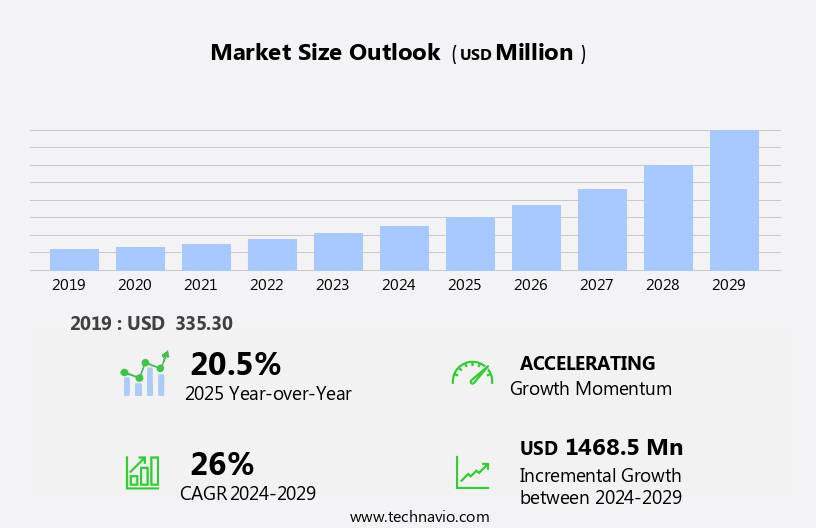
The drone technology in education sector market size is forecast to increase by USD 1.47 billion at a CAGR of 26% between 2024 and 2029.
- The Drone Technology in Education sector is experiencing significant growth, driven by the increasing emphasis on Science, Technology, Engineering, and Mathematics (STEM) education and the rising adoption of online retail channels for purchasing educational products. The integration of drone technology in education offers unique learning opportunities, particularly in fields such as engineering, geography, and environmental sciences. This trend is expected to continue as educators seek innovative ways to engage students and prepare them for future careers. However, the market is not without challenges. Safety concerns related to the operation of drones in educational settings remain a significant hurdle. As the demand for skilled drone operators rises, educational establishments are investing in smart education to provide students with valuable, future-ready skills.
- Regulations governing the use of drones in educational institutions vary widely, and ensuring the safety of students, staff, and property is a top priority. Addressing these challenges will require collaboration between educators, regulatory bodies, and it providers to establish best practices and guidelines for safe and effective implementation of in education. Companies seeking to capitalize on this market opportunity must prioritize safety and regulatory compliance while delivering innovative and effective solutions to meet the evolving needs of educators and students. Unmanned aerial vehicles (UAVs), or drones, are increasingly being adopted In the education sector for security purposes due to rising concerns over campus safety.
What will be the Size of the Drone Technology In Education Sector Market during the forecast period?
- The market in the education sector in the United States is experiencing significant growth due to the increasing adoption of drones for various applications. Drones are being utilized for multispectral and thermal imaging, aerial videography, field data collection, and remote sensing applications, among others. The integration of drones in education is driven by drone-driven innovation and the availability of drone platforms for research projects. Drone safety protocols and certification standards are essential considerations in this market, ensuring safe and effective drone operations. Drones enable photography and video recording for wildlife monitoring, public service missions, and land surveillance methods.
- Advancements include rotary-wing and fixed-wing drones, hybrid drones, and drone mapping capabilities. Hyperspectral imaging and data visualization tools further enhance the utility in education. The market is expected to continue growing as drone-based surveys and drone industry trends shape the future of this dynamic technology. These institutions provide e-learning, STEM classes, group sessions, private lessons, and flying courses, incorporating live video chats, multilingual teachers, and pilot certification.
How is this Drone Technology In Education Sector Industry segmented?
The drone technology in education sector industry research report provides comprehensive data (region-wise segment analysis), with forecasts and estimates in "USD million" for the period 2025-2029, as well as historical data from 2019-2023 for the following segments.
- Application
- Security surveillance
- Learning
- End-user
- Higher education sector
- K-12 sector
- Type
- Wing drones
- Multi-rotor drones
- Single rotor drones
- Hybrid drones
- Geography
- North America
- US
- Canada
- APAC
- Australia
- China
- India
- Japan
- South Korea
- Europe
- Germany
- UK
- South America
- Brazil
- Middle East and Africa
- North America
By Application Insights
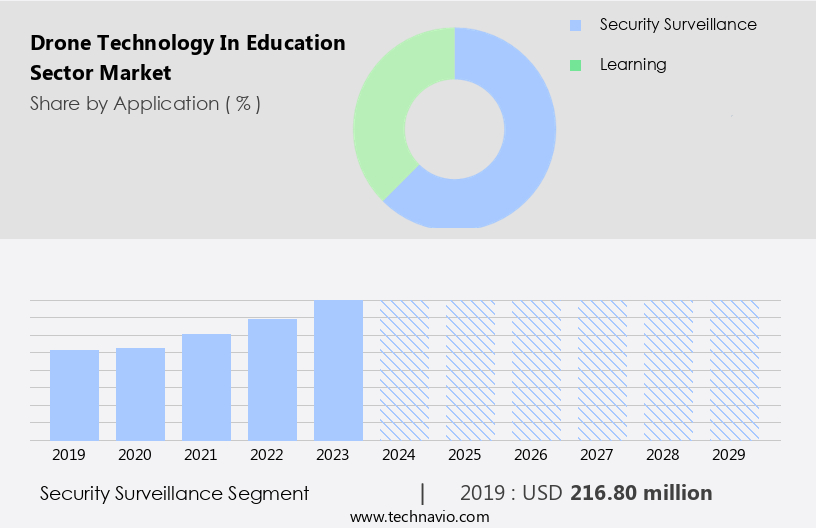
The security surveillance segment is estimated to witness significant growth during the forecast period. The Drone Ecosystem in the education sector is witnessing significant growth due to the integration of emerging technologies such as Artificial Intelligence (AI), Software Developers, and Drone Simulation. This technological advancement is revolutionizing STEM Education by providing Hands-on Learning experiences in Data Analysis, Flight Planning, and Drone Safety. The adoption of Drone Technology is expanding beyond Aerial Photography to include Precision Agriculture, Infrastructure Inspection, GIS Mapping, Environmental Monitoring, Disaster Response, and Data Collection. Service Providers and Drone Manufacturers are collaborating to offer Drone Training, Pilot Certification, and Mission Control solutions. The use of Drone Technology is also fostering Career Development opportunities in areas like Drone Software, Computer Vision, Machine Learning, the Internet of Things, and Big Data.
Get a glance at the market report of share of various segments Request Free Sample
The Security surveillance segment was valued at USD 216.80 billion in 2019 and showed a gradual increase during the forecast period.
Regional Analysis
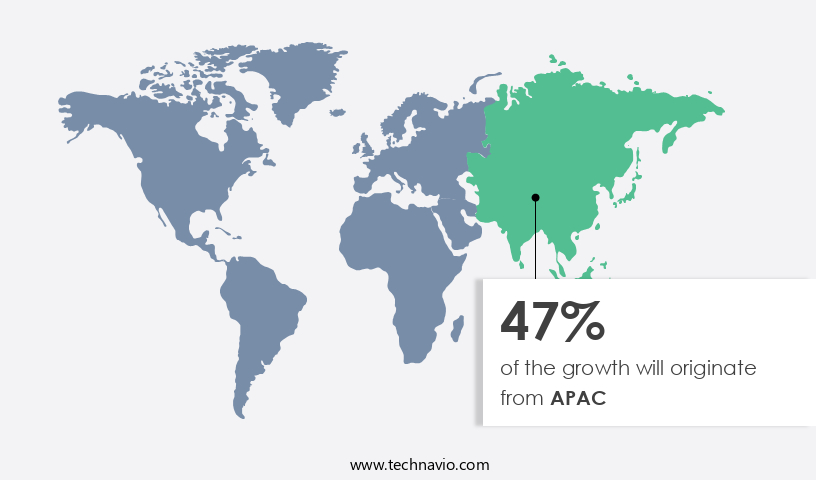
APAC is estimated to contribute 47% to the growth of the global market during the forecast period. Technavio's analysts have elaborately explained the regional trends and drivers that shape the market during the forecast period.
For more insights on the market size of various regions, Request Free Sample
The Drone Ecosystem in the education sector is experiencing significant growth due to the increasing number of institutions offering drone training and the integration of drone technology into STEM education. Students can learn about drones through various methods, including e-learning, group classes, private sessions, and flying classes. Institutions offer features such as live video chats, screen-sharing, multilingual teachers, and certification programs to enhance the learning experience. Moreover, there is a growing emphasis on fostering innovation in drone technology. For instance, North Carolina State University is preparing engineering graduates to develop drone computing technology. The education sector is also utilizing drones for applications such as precision agriculture, infrastructure inspection, GIS mapping, environmental monitoring, disaster response, and aerial photography.
Drone technology adoption in education is further driven by emerging technologies such as artificial intelligence, machine learning, data analytics, and computer vision. These technologies enable advanced data collection, analysis, and processing, enhancing the educational experience and promoting critical thinking skills. Additionally, drone simulations, virtual reality, and augmented reality provide hands-on learning opportunities for students. Service providers, software developers, and drone manufacturers are collaborating to create drone curricula and training programs. The integration of drones into education is also facilitated by advancements in flight planning, data management, and drone safety. Overall, the adoption of drone technology in education offers career development opportunities and prepares students for the workforce of the future.
Market Dynamics
Our researchers analyzed the data with 2024 as the base year, along with the key drivers, trends, and challenges. A holistic analysis of drivers will help companies refine their marketing strategies to gain a competitive advantage.
What are the key market drivers leading to the rise in the adoption of Drone Technology In Education Sector Industry?
- Increased emphasis on STEM education is the key driver of the market. The global education sector has witnessed significant advancements in technology integration over the last decade, with a particular focus on Science, Technology, Engineering, and Mathematics (STEM) education. This trend is driven by the increasing demand for skilled workforce in STEM fields and the efforts of governments in developed countries to encourage STEM education. Schools and educational institutions are adopting advanced technology and hardware systems to enhance teaching and learning experiences. They are investing in various teaching and learning aids and solutions, as well as making infrastructural changes to accommodate these technologies. The adoption of drone technology in education is a prime example of this trend. Drones offer unique opportunities for hands-on learning experiences, particularly in fields such as engineering, geography, and environmental science. As the use of drones in education continues to grow, it is expected that this technology will play a crucial role in preparing the next generation of innovators and problem solvers.
- Drones equipped with sensors and cameras enable farmers to monitor crop health, soil moisture levels, and identify potential issues, leading to improved crop yields and reduced water usage. Service providers are playing a pivotal role in the drone market by offering infrastructure inspection, GIS mapping, and data analysis services. Drones can capture high-resolution images and data, which can be analyzed to identify potential issues, optimize operations, and make informed decisions. Drones are also being used for environmental monitoring, disaster response, and data collection in educational research. Hands-on learning experiences offer students an opportunity to gain practical skills and knowledge in various fields, from aerial photography and 3D modeling to data management and flight planning.
What are the market trends shaping the Drone Technology In Education Sector Industry?
- Increasing adoption of online retail channels for purchasing educational products is the upcoming market trend. The global market for drone technology in education is experiencing significant growth, driven in part by the expansion of online retail channels. Online sales platforms provide increased visibility for educational drone offerings from market companies, contributing to market growth. Some companies have also established partnerships with local retailers, such as Aeromotus Unmanned Aerial Vehicles Trading LLC in the UAE, offering DJI drones. Although the online segment currently holds a smaller market share compared to offline channels, it is projected to grow at a faster rate during the forecast period. These regulations cover aspects such as safety, privacy, and data security. This trend is attributed to the convenience and extensive product offerings available online.
- Drone technology adoption in education is also driving career development opportunities. Pilot certification programs, mission control training, and drone training courses are emerging, providing students with the necessary skills to enter the workforce. Drone clubs and competitions offer a platform for students to showcase their skills and collaborate with peers. Emerging technologies such as augmented reality, virtual reality, and cloud computing are being integrated into drone software to enhance user experience and data analysis capabilities. Payload systems and data management tools enable users to collect and process large amounts of data, making drones an essential tool for big data applications.
What challenges does the Drone Technology In Education Sector Industry face during its growth?
- Challenges related to safety aspects is a key challenge affecting the industry growth. Drones in the education sector face unique challenges, differing from their use in other industries. Unlike manned aircraft, drones do not adhere to stringent safety regulations. One significant issue is their susceptibility to failure during operations at night, leading to potential breakdowns. To mitigate risks, drones must be restricted from flying near airports and sensitive areas, such as military installations. Compliance with regulatory standards, including geo-fencing in remote-control software, is essential to prevent harm to manned aircraft and infrastructure. However, low-end consumer drones used in education may lack these security features.
- This necessitates continuous research and development to ensure drone safety and effectiveness in educational applications. Drone Clubs and Virtual Reality are promoting Experiential Learning through Drone Competitions and 3D Modeling. Moreover, Drone Technology is enhancing critical thinking skills by enabling Data Management, Remote Sensing, and Flight Control. The integration of Drone Technology in education is also facilitating Drone Curriculum and Drone Integration in Vocational Training. The future of education lies in the fusion of Drone Technology with Augmented Reality, Virtual Reality, and Cloud Computing to create learning experiences. Despite the numerous benefits, it is crucial to ensure Drone Safety and adhere to Air Traffic Management regulations. The deployment of Drone Technology in education is an essential step towards preparing the workforce for the future and addressing the challenges of the 21st century.
Exclusive Customer Landscape
The drone technology in education sector market forecasting report includes the adoption lifecycle of the market, covering from the innovator's stage to the laggard's stage. It focuses on adoption rates in different regions based on penetration. Furthermore, the drone technology in education sector market report also includes key purchase criteria and drivers of price sensitivity to help companies evaluate and develop their market growth analysis strategies.
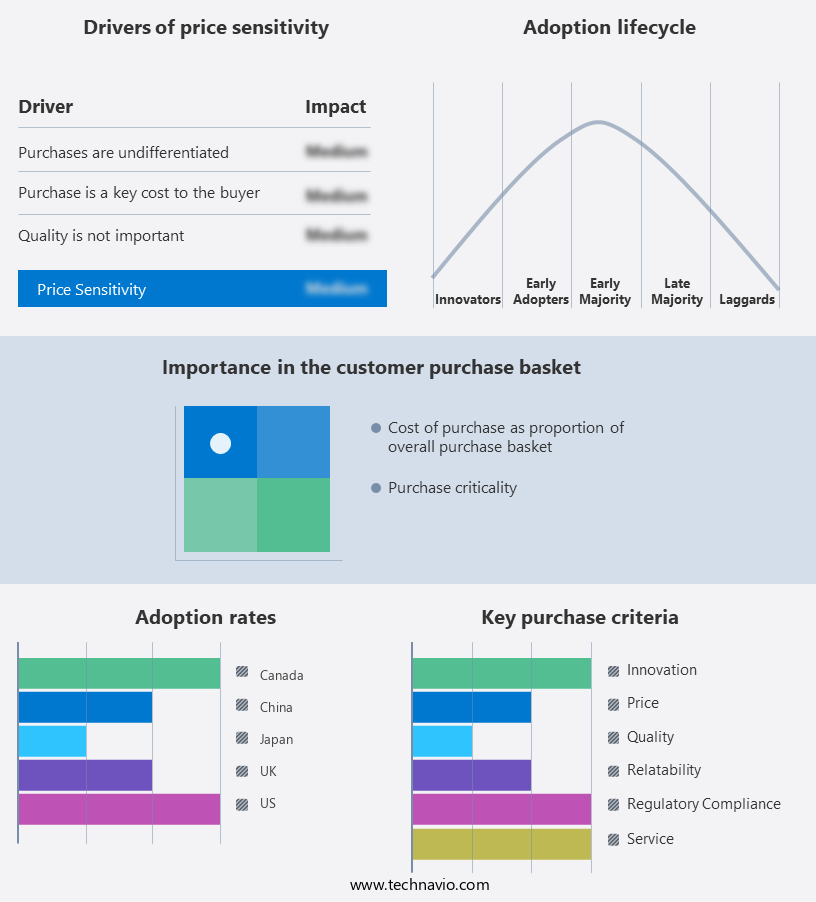
Customer Landscape
Key Companies & Market Insights
Companies are implementing various strategies, such as strategic alliances, drone technology in education sector market forecast, partnerships, mergers and acquisitions, geographical expansion, and product/service launches, to enhance their presence in the industry.
Draganfly Inc. - The company specializes in implementing advanced drone technology within the education sector. PlutoX, a solution we offer, enhances learning experiences through aerial data collection and analysis.
The industry research and growth report includes detailed analyses of the competitive landscape of the market and information about key companies, including:
- Draganfly Inc.
- Drona Aviation Pvt. Ltd.
- EHang Holdings Ltd.
- GoPro Inc.
- Guangdong Aircraft Industrial Co. Ltd.
- Guangzhou XAG Co. Ltd.
- Makeblock Co. Ltd.
- Parrot Drones SAS
- Pix4D SA
- Robolink Inc.
- Shenzhen Fimi Robot Technology Co. Ltd.
- Shenzhen Hubsan Technology Co. Ltd.
- Shenzhen RYZE Tech Co. Ltd.
- Skydio Inc.
- SZ DJI Technology Co. Ltd.
- Traxxas
- Yamaha Motor Co. Ltd.
- Yuneec International Co. Ltd.
- ZEROTECH Intelligence Technology Co. Ltd.
Qualitative and quantitative analysis of companies has been conducted to help clients understand the wider business environment as well as the strengths and weaknesses of key industry players. Data is qualitatively analyzed to categorize companies as pure play, category-focused, industry-focused, and diversified; it is quantitatively analyzed to categorize companies as dominant, leading, strong, tentative, and weak.
Research Analyst Overview
Drone technology, a rapidly evolving sector, is revolutionizing various industries by providing aerial perspectives and data collection capabilities. In the education sector, drones are being integrated to enhance STEM (Science, Technology, Engineering, and Mathematics) education and offer new opportunities for vocational training. The drone ecosystem is witnessing significant growth as software developers infuse artificial intelligence (AI) and machine learning algorithms to enhance drone capabilities. Drone simulation software is a crucial component of this ecosystem, allowing users to train and experiment with drone technology in a controlled environment. Precision agriculture is one of the primary sectors benefiting from drone technology adoption.
The drone technology market in the education sector is experiencing exponential growth, integrating rotarywing drones into academic curricula and research projects. This innovation offers numerous benefits, including multispectral imaging for environmental studies and agricultural research. Drone maintenance and certification standards are crucial aspects of this burgeoning industry. Institutions must ensure safe and effective drone operations through proper upkeep and adherence to regulatory guidelines. Drone education resources, such as online courses and workshops, are essential for students and educators to acquire the necessary skills.
Integration strategies for drones in education include collaboration with industry partners, the development of interdisciplinary programs, and the implementation of real-world projects. Drone-based research projects span various fields, from archaeology and geology to ecology and agriculture. The drone market growth is fueled by continuous technology advancements, such as improved sensors, longer flight times, and more sophisticated software. These advancements enable more complex applications, expanding the potential for educational and research opportunities. Drone technology is revolutionizing education by providing innovative tools for multispectral imaging, research, and hands-on learning experiences. As the market continues to evolve, the possibilities for integrating drones into academic programs will only grow.
Drone safety and flight planning software are critical components of the drone ecosystem, ensuring safe and efficient drone operations. Remote sensing and computer vision technologies enable drones to collect and analyze data, providing valuable insights for various applications. The integration of drones in education is driving innovation and student engagement. Educational robotics and experiential learning offer students a unique opportunity to apply theoretical knowledge to practical applications, fostering critical thinking and problem-solving skills. Drone startups and manufacturers are continuously innovating and developing new drone technologies, expanding the potential applications and use cases in various industries, including education. The future of drone technology in education is promising, offering new opportunities for hands-on learning, data analysis, and career development.
|
Market Scope |
|
|
Report Coverage |
Details |
|
Page number |
214 |
|
Base year |
2024 |
|
Historic period |
2019-2023 |
|
Forecast period |
2025-2029 |
|
Growth momentum & CAGR |
Accelerate at a CAGR of 26% |
|
Market growth 2025-2029 |
USD 1.47 billion |
|
Market structure |
Fragmented |
|
YoY growth 2024-2025(%) |
20.5 |
|
Key countries |
US, Japan, Canada, China, UK, India, South Korea, Australia, Brazil, and Germany |
|
Competitive landscape |
Leading Companies, Market Positioning of Companies, Competitive Strategies, and Industry Risks |
What are the Key Data Covered in this Drone Technology In Education Sector Market Research and Growth Report?
- CAGR of the Drone Technology In Education Sector industry during the forecast period
- Detailed information on factors that will drive the growth and forecasting between 2025 and 2029
- Precise estimation of the size of the market and its contribution of the industry in focus to the parent market
- Accurate predictions about upcoming growth and trends and changes in consumer behaviour
- Growth of the market across North America, APAC, Europe, South America, and Middle East and Africa
- Thorough analysis of the market's competitive landscape and detailed information about companies
- Comprehensive analysis of factors that will challenge the drone technology in education sector market growth of industry companies
We can help! Our analysts can customize this drone technology in education sector market research report to meet your requirements.
 RIA -
RIA - 
