


Smart Education Market Analysis, Size, and Forecast 2026-2030: North America (US, Canada, and Mexico), Europe (Germany, UK, and France), APAC (China, India, and Japan), South America (Brazil, Argentina, and Colombia), Middle East and Africa (Saudi Arabia, UAE, and South Africa), and Rest of World (ROW)

Smart Education Market Analysis, Size, and Forecast 2026-2030:
North America (US, Canada, and Mexico), Europe (Germany, UK, and France), APAC (China, India, and Japan), South America (Brazil, Argentina, and Colombia), Middle East and Africa (Saudi Arabia, UAE, and South Africa), and Rest of World (ROW)

Published: Mar 2026 295 Pages SKU: IRTNTR40431

Market Overview at a Glance

$701.1 B
Market Opportunity
21.1%
CAGR 2025 - 2030
40%
North America Growth
$250.3 B
Academics segment 2024

Smart Education Market Size 2026-2030

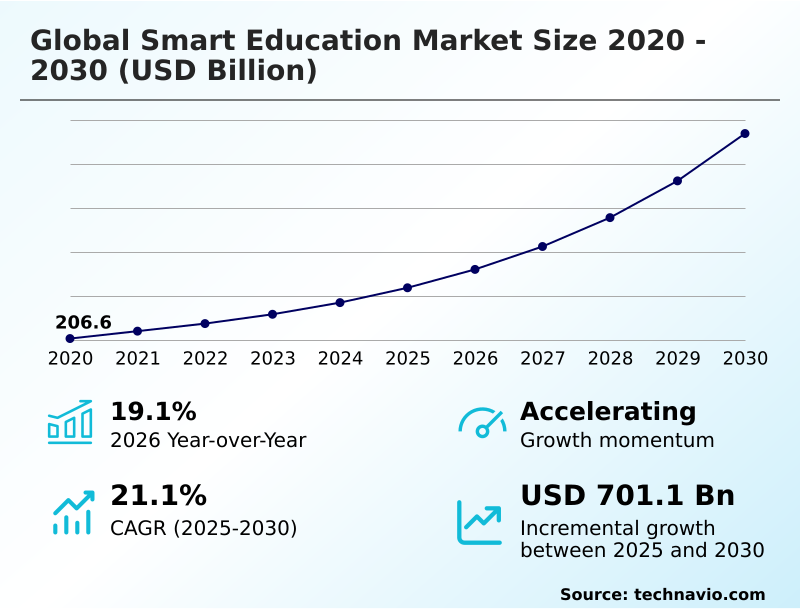
The smart education market size is valued to increase by USD 701.1 billion, at a CAGR of 21.1% from 2025 to 2030. Proliferation of generative artificial intelligence and adaptive learning ecosystems will drive the smart education market.

Major Market Trends & Insights

  • North America dominated the market and accounted for a 40% growth during the forecast period.
  • By End-user - Academics segment was valued at USD 250.3 billion in 2024
  • By Component - Service segment accounted for the largest market revenue share in 2024

Market Size & Forecast

  • Market Opportunities: USD 931.9 billion
  • Market Future Opportunities: USD 701.1 billion
  • CAGR from 2025 to 2030 : 21.1%

Market Summary

  • The smart education market is undergoing a significant transformation, moving beyond basic content digitization to create intelligent, responsive learning environments. This evolution is driven by the integration of artificial intelligence and machine learning, which enable hyper-personalized educational experiences tailored to individual learner needs.
  • Instead of a uniform approach, modern platforms analyze student performance data in real-time to adjust curriculum difficulty and provide targeted remedial resources. This shift is redefining the role of educators, empowering them as facilitators of knowledge rather than just content deliverers.
  • For instance, in a corporate training scenario, an adaptive platform can map an employee's existing skills against future business needs and automatically generate a personalized upskilling pathway, enhancing workforce agility. The convergence of hardware, like interactive displays, and cloud-based software creates immersive educational settings.
  • However, the persistent digital divide and concerns around data privacy remain significant issues, influencing the development and deployment of these advanced technological solutions across both academic and corporate sectors.

What will be the Size of the Smart Education Market during the forecast period?
Get Key Insights on Market Forecast (PDF) Request Free Sample

How is the Smart Education Market Segmented?

The smart education industry research report provides comprehensive data (region-wise segment analysis), with forecasts and estimates in "USD billion" for the period 2026-2030, as well as historical data from 2020-2024 for the following segments.

  • End-user
    • Academics
    • Corporate
  • Component
    • Service
    • Software
    • Hardware
  • Learning method
    • Blended learning
    • Collaborative learning
    • Virtual instructor led training
    • Others
  • Geography
    • North America
      • US
      • Canada
      • Mexico
    • Europe
      • Germany
      • UK
      • France
    • APAC
      • China
      • India
      • Japan
    • South America
      • Brazil
      • Argentina
      • Colombia
    • Middle East and Africa
      • Saudi Arabia
      • UAE
      • South Africa
    • Rest of World (ROW)

By End-user Insights

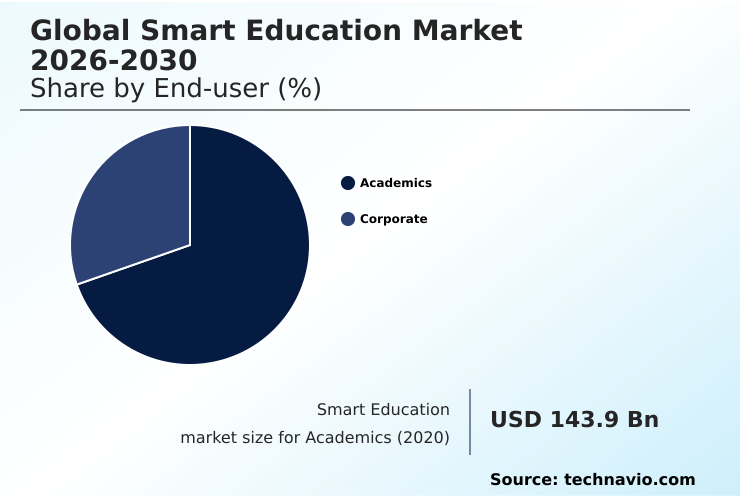
The academics segment is estimated to witness significant growth during the forecast period.

The academics segment is rapidly evolving from simple digitization toward deploying intelligent, adaptive learning ecosystems. K-12 and higher education institutions are now prioritizing platforms using curriculum design automation and neural processing units to provide personalized instruction.

This includes the adoption of edge-computing capable devices that support offline AI functionality, which has been shown to improve student engagement by up to 25% in under-connected districts.

The focus is on integrating AI-driven features like socratic-style tutoring bots directly into learning tools interoperability (LTI) compliant systems.

This trend reflects a strategic shift toward using multi-agent AI architectures and extended reality to enhance pedagogical outcomes rather than just managing administrative tasks within student information systems.
Request Free Sample

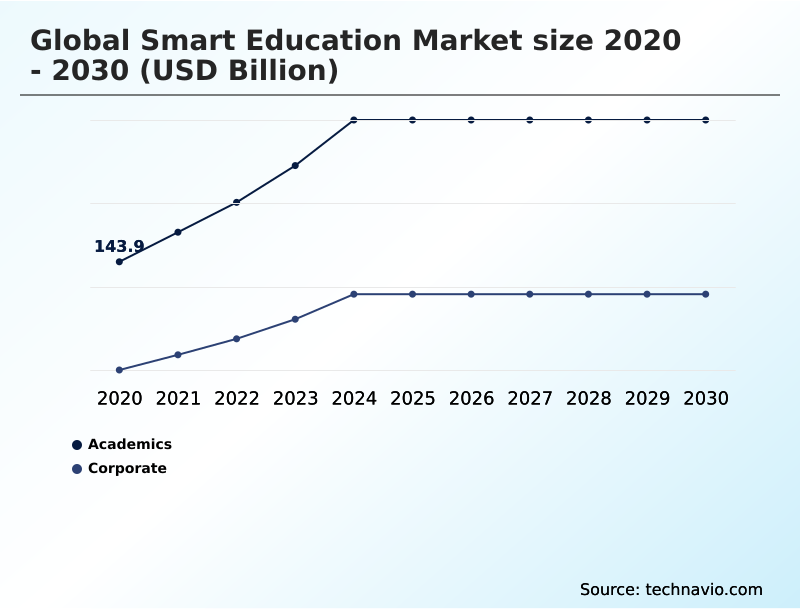
The Academics segment was valued at USD 250.3 billion in 2024 and showed a gradual increase during the forecast period.
Request Free Sample

Regional Analysis

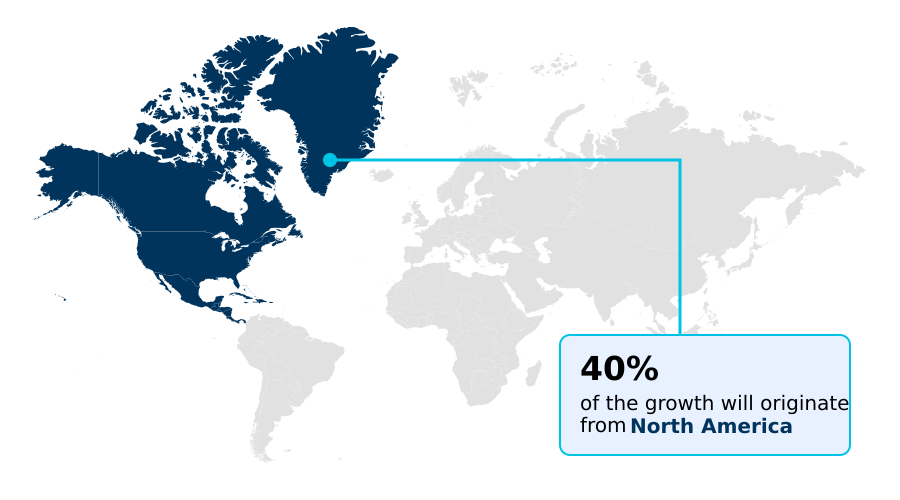
North America is estimated to contribute 40% to the growth of the global market during the forecast period.Technavio’s analysts have elaborately explained the regional trends and drivers that shape the market during the forecast period.
See How Smart Education Market Demand is Rising in North America Request Free Sample

The market landscape shows distinct regional priorities. North America, representing nearly 40% of the incremental growth, focuses on predictive analytics and AI-powered coaching tools to improve student retention.

Europe prioritizes AI governance and compliance with data protection mandates, favoring solutions that offer robust managed services.

Meanwhile, APAC is the fastest-growing region, with an expansion rate over 21%, driven by mobile-first strategies and the deployment of interactive flat panels and cloud-based learning. This region leverages technology to bridge educational gaps.

South America and the Middle East and Africa are adopting adaptive learning paths and virtual collaboration tools to upskill their workforces, with a focus on scalable, cost-effective platforms that can operate in diverse infrastructure environments.

Market Dynamics

Our researchers analyzed the data with 2025 as the base year, along with the key drivers, trends, and challenges. A holistic analysis of drivers will help companies refine their marketing strategies to gain a competitive advantage.

  • Strategic decision-making in the smart education sector now revolves around assessing the ROI of smart education tools, a process complicated by diverse technological pathways. The role of AI in corporate learning is expanding, with a significant focus on reducing the administrative burden for educators and leveraging skills analytics for corporate upskilling.
  • Platforms are increasingly evaluated on their ability to provide AI for personalized learning paths and their effectiveness in using generative AI for curriculum development. A key industry goal is implementing AI-powered student retention strategies. The market is also heavily investing in immersive learning for complex procedures, primarily through VR for vocational training simulations.
  • The move toward spatial computing in technical education is creating new opportunities but also highlighting the challenges of the digital divide in education. On the governance side, the impact of data privacy on edtech is forcing vendors to prioritize ethical AI in student assessment and focus on securing student data in cloud platforms.
  • The transition from LMS to TXP is well underway, with a push for interoperability in micro-credentialing ecosystems. This includes exploring the use of blockchain for learning records. Poorly integrated systems can lead to significant user friction, with some studies showing teacher stress levels increasing by more than 50% compared to those using unified, AI-native LXP for skills intelligence.
  • Ultimately, success hinges on proving the value of agentic AI in learning management and demonstrating clear blended learning model effectiveness analytics.
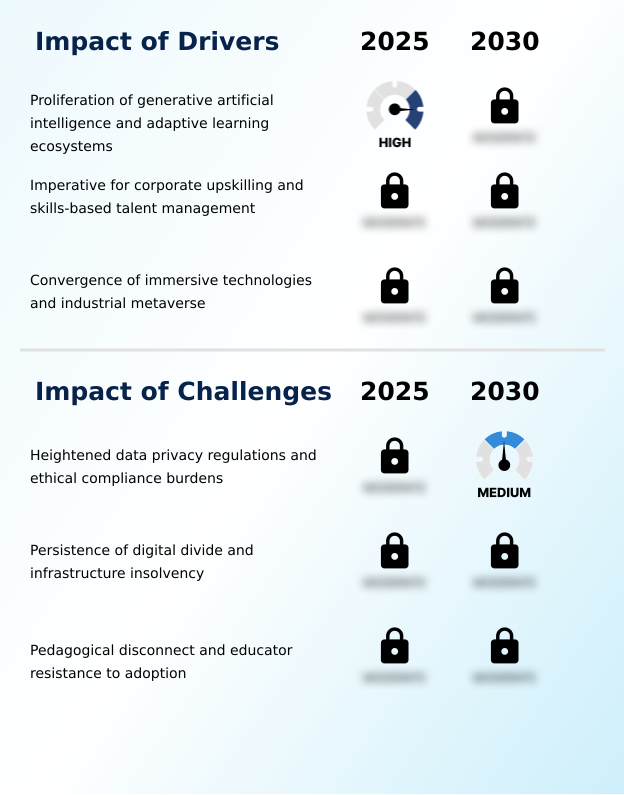
What are the key market drivers leading to the rise in the adoption of Smart Education Industry?

  • The proliferation of generative artificial intelligence and the development of adaptive learning ecosystems are key drivers for market growth.

  • The market's acceleration is primarily fueled by the deep integration of generative artificial intelligence into student engagement platforms and learning management systems. These AI-native learning ecosystems offer personalized instruction at scale, using large language models for remedial content generation.
  • This is leading to a 40% reduction in administrative workload for educators. Another key driver is the corporate pivot to skills-based organizational planning, creating strong demand for skills intelligence platforms that facilitate internal mobility.
  • The maturation of immersive technologies, including augmented reality, is also critical, enabling physics-accurate 3D simulations in digital twin environments. This democratizes access to high-risk training, with adoption increasing by over 25% in technical fields.

What are the market trends shaping the Smart Education Industry?

  • A key market trend is the transition from generative artificial intelligence to agentic AI. These autonomous systems are now being integrated into learning ecosystems.

  • The evolution from generative to agentic AI systems is a defining trend, where autonomous agents execute multi-step workflows, moving beyond simple content creation. This shift to human-in-the-loop AI architectures promises to improve instructor efficiency by over 35%.
  • The mainstreaming of spatial computing and immersive technologies like virtual reality is transforming vocational training, with some programs reporting a 20% increase in knowledge retention. Concurrently, the rise of interoperable micro-credentialing ecosystems, often using blockchain ledger technologies, is creating a unified data fabric between learning and employment.
  • This unbundling of traditional degrees addresses the demand for skills-based analytics and verifiable proof of competency, supported by talent experience platforms and digital badging, reshaping how value is measured in education.

What challenges does the Smart Education Industry face during its growth?

  • Heightened data privacy regulations and the increasing burden of ethical compliance present a key challenge to industry growth.

  • Significant challenges persist, stemming from the conflict between data analytics needs and stringent data privacy regulations. The use of biometric monitoring systems and tools prone to algorithmic bias faces intense scrutiny, leading to development delays that can be 50% longer in regulated markets. This necessitates heavy investment in data sovereign infrastructure and algorithmic transparency.
  • The pervasive digital divide also impedes growth, as the total cost of ownership for advanced hardware proves prohibitive for many institutions. Furthermore, a pedagogical disconnect results in educator resistance; with over 60% of teachers reporting increased stress from disjointed platforms, the lack of professional development for proactive teaching assistants remains a critical barrier to adoption.

Exclusive Technavio Analysis on Customer Landscape

The smart education market forecasting report includes the adoption lifecycle of the market, covering from the innovator’s stage to the laggard’s stage. It focuses on adoption rates in different regions based on penetration. Furthermore, the smart education market report also includes key purchase criteria and drivers of price sensitivity to help companies evaluate and develop their market growth analysis strategies.
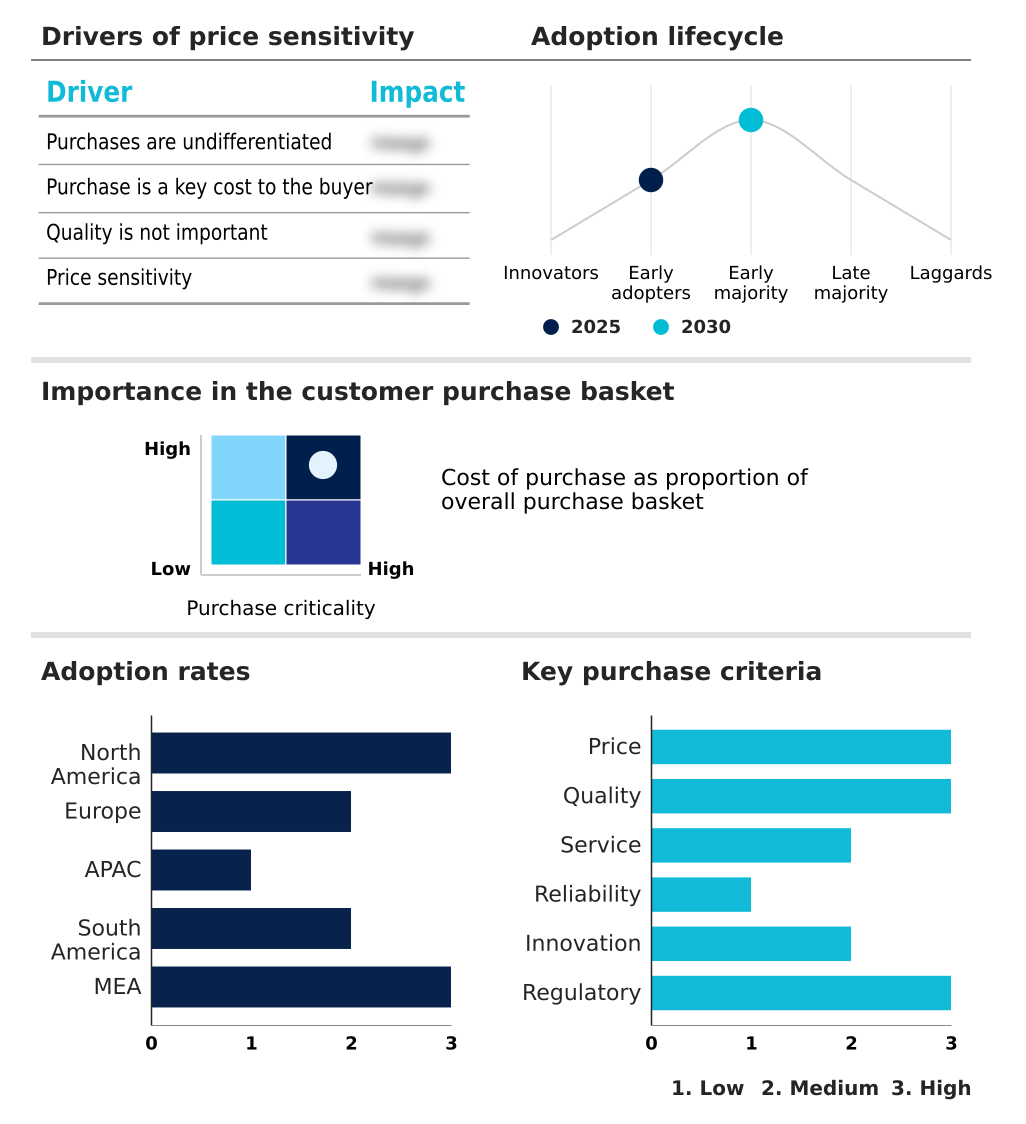
Customer Landscape of Smart Education Industry

Competitive Landscape

Companies are implementing various strategies, such as strategic alliances, smart education market forecast, partnerships, mergers and acquisitions, geographical expansion, and product/service launches, to enhance their presence in the industry.

Allen Communication Learning - Offerings include custom digital learning and training solutions, designed to deliver personalized and engaging educational experiences for various organizational needs.

The industry research and growth report includes detailed analyses of the competitive landscape of the market and information about key companies, including:

  • Allen Communication Learning
  • Adobe Inc.
  • Blackboard Inc.
  • Cengage Learning Inc.
  • Cisco Systems Inc.
  • Cornerstone OnDemand Inc.
  • D2L Corp.
  • Ellucian Co.
  • Google LLC
  • Instructure Holdings Inc.
  • McGraw Hill LLC
  • Microsoft Corp.
  • Oracle Corp.
  • Paradiso Solutions
  • Pearson Plc
  • Promethean World Ltd.
  • Skillsoft Corp.
  • Docebo Inc.

Qualitative and quantitative analysis of companies has been conducted to help clients understand the wider business environment as well as the strengths and weaknesses of key industry players. Data is qualitatively analyzed to categorize companies as pure play, category-focused, industry-focused, and diversified; it is quantitatively analyzed to categorize companies as dominant, leading, strong, tentative, and weak.

Recent Development and News in Smart education market

  • In August 2025, Cornerstone OnDemand Inc. launched its Galaxy Skills Graph update, an AI-powered ontology designed to dynamically update skill definitions and match internal talent with projects based on verified proficiency.
  • In June 2025, Unity Software Inc. launched the Unity Education Spatial Layer, a platform designed as a foundational engine for creating physics-accurate 3D learning simulations for technical education without requiring coding expertise.
  • In April 2025, Anthology Inc. launched Anthology Autonomous, a module for its Blackboard Learn ecosystem that introduces AI agents capable of autonomously building course structures and performing initial grading of student essays.
  • In March 2025, Instructure Holdings, Inc. announced the general availability of its Canvas Intelligent Agent suite, which uses generative AI to help instructional designers create course structures, lesson plans, and student-facing Socratic bots.

Dive into Technavio’s robust research methodology, blending expert interviews, extensive data synthesis, and validated models for unparalleled Smart Education Market insights. See full methodology.

Market Scope
Page number 295
Base year 2025
Historic period 2020-2024
Forecast period 2026-2030
Growth momentum & CAGR Accelerate at a CAGR of 21.1%
Market growth 2026-2030 USD 701.1 billion
Market structure Fragmented
YoY growth 2025-2026(%) 19.1%
Key countries US, Canada, Mexico, Germany, UK, France, Italy, Spain, The Netherlands, China, India, Japan, South Korea, Australia, Indonesia, Brazil, Argentina, Colombia, Saudi Arabia, UAE, South Africa, Egypt and Qatar
Competitive landscape Leading Companies, Market Positioning of Companies, Competitive Strategies, and Industry Risks

Request Free Sample

Research Analyst Overview

  • The market is undergoing a fundamental re-architecture, moving toward AI-native learning ecosystems. The integration of generative artificial intelligence and large language models into learning management systems is no longer a novelty but a core expectation. This powers everything from curriculum design automation to socratic-style tutoring bots.
  • We are seeing a transition toward skills-based organizational planning, driving demand for skills intelligence platforms and tools that support interoperable micro-credentialing and digital badging. This is underpinned by sophisticated skills-based analytics.
  • On the technology front, the convergence of virtual reality, augmented reality, and mixed reality into cohesive extended reality experiences is creating new paradigms for training, supported by physics-accurate 3D simulations in digital twin environments. This move into spatial computing is being accelerated by hardware with dedicated neural processing units.
  • The deployment of autonomous agents and multi-agent AI architectures to handle multi-step workflows signifies a shift to agentic AI systems. However, this progress is tempered by boardroom-level concerns over data privacy regulations, which demand algorithmic transparency and place restrictions on biometric monitoring systems.
  • Platforms must now also support learning and employment records, acting as comprehensive learning experience platforms or talent experience platforms. This evolution is evident across all hardware, from interactive flat panels to personal devices, as the industry uses predictive analytics to improve outcomes, with some tools reducing content creation time by over 90%.
  • The rise of virtual labs completes this transformative picture.

What are the Key Data Covered in this Smart Education Market Research and Growth Report?

  • What is the expected growth of the Smart Education Market between 2026 and 2030?

    • USD 701.1 billion, at a CAGR of 21.1%

  • What segmentation does the market report cover?

    • The report is segmented by End-user (Academics, and Corporate), Component (Service, Software, and Hardware), Learning Method (Blended learning, Collaborative learning, Virtual instructor led training, and Others) and Geography (North America, Europe, APAC, South America, Middle East and Africa)

  • Which regions are analyzed in the report?

    • North America, Europe, APAC, South America and Middle East and Africa

  • What are the key growth drivers and market challenges?

    • Proliferation of generative artificial intelligence and adaptive learning ecosystems, Heightened data privacy regulations and ethical compliance burdens

  • Who are the major players in the Smart Education Market?

    • Allen Communication Learning, Adobe Inc., Blackboard Inc., Cengage Learning Inc., Cisco Systems Inc., Cornerstone OnDemand Inc., D2L Corp., Ellucian Co., Google LLC, Instructure Holdings Inc., McGraw Hill LLC, Microsoft Corp., Oracle Corp., Paradiso Solutions, Pearson Plc, Promethean World Ltd., Skillsoft Corp. and Docebo Inc.

Market Research Insights

  • The market's dynamism is driven by a strategic shift toward measurable outcomes and efficiency. The adoption of AI-powered coaching tools has been shown to increase learner engagement by over 25% compared to traditional online modules. Concurrently, platforms that automate administrative tasks are reducing teacher workload by up to 40%, allowing educators to focus on high-value mentorship.
  • This focus on efficiency is critical, as institutions implementing unified student information systems with embedded analytics report a 15% higher student retention rate. The move toward skills-based hiring is further fueling demand for platforms that provide verifiable digital badging and real-time assessment.
  • Solutions that support hyflex course designs and offer robust AI governance are gaining a significant competitive advantage in this evolving landscape.

We can help! Our analysts can customize this smart education market research report to meet your requirements.

Get in touch

1. Executive Summary

1.1 Market overview

Executive Summary - Chart on Market Overview
Executive Summary - Data Table on Market Overview
Executive Summary - Chart on Global Market Characteristics
Executive Summary - Chart on Market by Geography
Executive Summary - Chart on Market Segmentation by End-user
Executive Summary - Chart on Market Segmentation by Component
Executive Summary - Chart on Market Segmentation by Learning Method
Executive Summary - Chart on Incremental Growth
Executive Summary - Data Table on Incremental Growth
Executive Summary - Chart on Company Market Positioning

2. Technavio Analysis

2.1 Analysis of price sensitivity, lifecycle, customer purchase basket, adoption rates, and purchase criteria

2.2 Criticality of inputs and Factors of differentiation

Chart on Overview on criticality of inputs and factors of differentiation

2.3 Factors of disruption

Chart on Overview on factors of disruption

2.4 Impact of drivers and challenges

Chart on Impact of drivers and challenges in 2025 and 2030

3. Market Landscape

3.1 Market ecosystem

Chart on Parent Market
Data Table on - Parent Market

3.2 Market characteristics

Chart on Market characteristics analysis

3.3 Value chain analysis

Chart on Value chain analysis

4. Market Sizing

4.1 Market definition

Data Table on Offerings of companies included in the market definition

4.2 Market segment analysis

Market segments

4.3 Market size 2025

4.4 Market outlook: Forecast for 2025-2030

Chart on Global - Market size and forecast 2025-2030 ($ billion)
Data Table on Global - Market size and forecast 2025-2030 ($ billion)
Chart on Global Market: Year-over-year growth 2025-2030 (%)
Data Table on Global Market: Year-over-year growth 2025-2030 (%)

5. Historic Market Size

5.1 Global Smart Education Market 2020 - 2024

Historic Market Size - Data Table on Global Smart Education Market 2020 - 2024 ($ billion)

5.2 End-user segment analysis 2020 - 2024

Historic Market Size - End-user Segment 2020 - 2024 ($ billion)

5.3 Component segment analysis 2020 - 2024

Historic Market Size - Component Segment 2020 - 2024 ($ billion)

5.4 Learning Method segment analysis 2020 - 2024

Historic Market Size - Learning Method Segment 2020 - 2024 ($ billion)

5.5 Geography segment analysis 2020 - 2024

Historic Market Size - Geography Segment 2020 - 2024 ($ billion)

5.6 Country segment analysis 2020 - 2024

Historic Market Size - Country Segment 2020 - 2024 ($ billion)

6. Qualitative Analysis

6.1 Impact of AI on Global Smart Education Market

7. Five Forces Analysis

7.1 Five forces summary

Five forces analysis - Comparison between 2025 and 2030

7.2 Bargaining power of buyers

Bargaining power of buyers - Impact of key factors 2025 and 2030

7.3 Bargaining power of suppliers

Bargaining power of suppliers - Impact of key factors in 2025 and 2030

7.4 Threat of new entrants

Threat of new entrants - Impact of key factors in 2025 and 2030

7.5 Threat of substitutes

Threat of substitutes - Impact of key factors in 2025 and 2030

7.6 Threat of rivalry

Threat of rivalry - Impact of key factors in 2025 and 2030

7.7 Market condition

Chart on Market condition - Five forces 2025 and 2030

8. Market Segmentation by End-user

8.1 Market segments

Chart on End-user - Market share 2025-2030 (%)
Data Table on End-user - Market share 2025-2030 (%)

8.2 Comparison by End-user

Chart on Comparison by End-user
Data Table on Comparison by End-user

8.3 Academics - Market size and forecast 2025-2030

Chart on Academics - Market size and forecast 2025-2030 ($ billion)
Data Table on Academics - Market size and forecast 2025-2030 ($ billion)
Chart on Academics - Year-over-year growth 2025-2030 (%)
Data Table on Academics - Year-over-year growth 2025-2030 (%)

8.4 Corporate - Market size and forecast 2025-2030

Chart on Corporate - Market size and forecast 2025-2030 ($ billion)
Data Table on Corporate - Market size and forecast 2025-2030 ($ billion)
Chart on Corporate - Year-over-year growth 2025-2030 (%)
Data Table on Corporate - Year-over-year growth 2025-2030 (%)

8.5 Market opportunity by End-user

Market opportunity by End-user ($ billion)
Data Table on Market opportunity by End-user ($ billion)

9. Market Segmentation by Component

9.1 Market segments

Chart on Component - Market share 2025-2030 (%)
Data Table on Component - Market share 2025-2030 (%)

9.2 Comparison by Component

Chart on Comparison by Component
Data Table on Comparison by Component

9.3 Service - Market size and forecast 2025-2030

Chart on Service - Market size and forecast 2025-2030 ($ billion)
Data Table on Service - Market size and forecast 2025-2030 ($ billion)
Chart on Service - Year-over-year growth 2025-2030 (%)
Data Table on Service - Year-over-year growth 2025-2030 (%)

9.4 Software - Market size and forecast 2025-2030

Chart on Software - Market size and forecast 2025-2030 ($ billion)
Data Table on Software - Market size and forecast 2025-2030 ($ billion)
Chart on Software - Year-over-year growth 2025-2030 (%)
Data Table on Software - Year-over-year growth 2025-2030 (%)

9.5 Hardware - Market size and forecast 2025-2030

Chart on Hardware - Market size and forecast 2025-2030 ($ billion)
Data Table on Hardware - Market size and forecast 2025-2030 ($ billion)
Chart on Hardware - Year-over-year growth 2025-2030 (%)
Data Table on Hardware - Year-over-year growth 2025-2030 (%)

9.6 Market opportunity by Component

Market opportunity by Component ($ billion)
Data Table on Market opportunity by Component ($ billion)

10. Market Segmentation by Learning Method

10.1 Market segments

Chart on Learning Method - Market share 2025-2030 (%)
Data Table on Learning Method - Market share 2025-2030 (%)

10.2 Comparison by Learning Method

Chart on Comparison by Learning Method
Data Table on Comparison by Learning Method

10.3 Blended learning - Market size and forecast 2025-2030

Chart on Blended learning - Market size and forecast 2025-2030 ($ billion)
Data Table on Blended learning - Market size and forecast 2025-2030 ($ billion)
Chart on Blended learning - Year-over-year growth 2025-2030 (%)
Data Table on Blended learning - Year-over-year growth 2025-2030 (%)

10.4 Collaborative learning - Market size and forecast 2025-2030

Chart on Collaborative learning - Market size and forecast 2025-2030 ($ billion)
Data Table on Collaborative learning - Market size and forecast 2025-2030 ($ billion)
Chart on Collaborative learning - Year-over-year growth 2025-2030 (%)
Data Table on Collaborative learning - Year-over-year growth 2025-2030 (%)

10.5 Virtual instructor led training - Market size and forecast 2025-2030

Chart on Virtual instructor led training - Market size and forecast 2025-2030 ($ billion)
Data Table on Virtual instructor led training - Market size and forecast 2025-2030 ($ billion)
Chart on Virtual instructor led training - Year-over-year growth 2025-2030 (%)
Data Table on Virtual instructor led training - Year-over-year growth 2025-2030 (%)

10.6 Others - Market size and forecast 2025-2030

Chart on Others - Market size and forecast 2025-2030 ($ billion)
Data Table on Others - Market size and forecast 2025-2030 ($ billion)
Chart on Others - Year-over-year growth 2025-2030 (%)
Data Table on Others - Year-over-year growth 2025-2030 (%)

10.7 Market opportunity by Learning Method

Market opportunity by Learning Method ($ billion)
Data Table on Market opportunity by Learning Method ($ billion)

11. Customer Landscape

11.1 Customer landscape overview

Analysis of price sensitivity, lifecycle, customer purchase basket, adoption rates, and purchase criteria

12. Geographic Landscape

12.1 Geographic segmentation

Chart on Market share by geography 2025-2030 (%)
Data Table on Market share by geography 2025-2030 (%)

12.2 Geographic comparison

Chart on Geographic comparison
Data Table on Geographic comparison

12.3 North America - Market size and forecast 2025-2030

Chart on North America - Market size and forecast 2025-2030 ($ billion)
Data Table on North America - Market size and forecast 2025-2030 ($ billion)
Chart on North America - Year-over-year growth 2025-2030 (%)
Data Table on North America - Year-over-year growth 2025-2030 (%)
Chart on Regional Comparison - North America
Data Table on Regional Comparison - North America

12.3.1 US - Market size and forecast 2025-2030

Chart on US - Market size and forecast 2025-2030 ($ billion)
Data Table on US - Market size and forecast 2025-2030 ($ billion)
Chart on US - Year-over-year growth 2025-2030 (%)
Data Table on US - Year-over-year growth 2025-2030 (%)

12.3.2 Canada - Market size and forecast 2025-2030

Chart on Canada - Market size and forecast 2025-2030 ($ billion)
Data Table on Canada - Market size and forecast 2025-2030 ($ billion)
Chart on Canada - Year-over-year growth 2025-2030 (%)
Data Table on Canada - Year-over-year growth 2025-2030 (%)

12.3.3 Mexico - Market size and forecast 2025-2030

Chart on Mexico - Market size and forecast 2025-2030 ($ billion)
Data Table on Mexico - Market size and forecast 2025-2030 ($ billion)
Chart on Mexico - Year-over-year growth 2025-2030 (%)
Data Table on Mexico - Year-over-year growth 2025-2030 (%)

12.4 Europe - Market size and forecast 2025-2030

Chart on Europe - Market size and forecast 2025-2030 ($ billion)
Data Table on Europe - Market size and forecast 2025-2030 ($ billion)
Chart on Europe - Year-over-year growth 2025-2030 (%)
Data Table on Europe - Year-over-year growth 2025-2030 (%)
Chart on Regional Comparison - Europe
Data Table on Regional Comparison - Europe

12.4.1 Germany - Market size and forecast 2025-2030

Chart on Germany - Market size and forecast 2025-2030 ($ billion)
Data Table on Germany - Market size and forecast 2025-2030 ($ billion)
Chart on Germany - Year-over-year growth 2025-2030 (%)
Data Table on Germany - Year-over-year growth 2025-2030 (%)

12.4.2 UK - Market size and forecast 2025-2030

Chart on UK - Market size and forecast 2025-2030 ($ billion)
Data Table on UK - Market size and forecast 2025-2030 ($ billion)
Chart on UK - Year-over-year growth 2025-2030 (%)
Data Table on UK - Year-over-year growth 2025-2030 (%)

12.4.3 France - Market size and forecast 2025-2030

Chart on France - Market size and forecast 2025-2030 ($ billion)
Data Table on France - Market size and forecast 2025-2030 ($ billion)
Chart on France - Year-over-year growth 2025-2030 (%)
Data Table on France - Year-over-year growth 2025-2030 (%)

12.4.4 Italy - Market size and forecast 2025-2030

Chart on Italy - Market size and forecast 2025-2030 ($ billion)
Data Table on Italy - Market size and forecast 2025-2030 ($ billion)
Chart on Italy - Year-over-year growth 2025-2030 (%)
Data Table on Italy - Year-over-year growth 2025-2030 (%)

12.4.5 Spain - Market size and forecast 2025-2030

Chart on Spain - Market size and forecast 2025-2030 ($ billion)
Data Table on Spain - Market size and forecast 2025-2030 ($ billion)
Chart on Spain - Year-over-year growth 2025-2030 (%)
Data Table on Spain - Year-over-year growth 2025-2030 (%)

12.4.6 The Netherlands - Market size and forecast 2025-2030

Chart on The Netherlands - Market size and forecast 2025-2030 ($ billion)
Data Table on The Netherlands - Market size and forecast 2025-2030 ($ billion)
Chart on The Netherlands - Year-over-year growth 2025-2030 (%)
Data Table on The Netherlands - Year-over-year growth 2025-2030 (%)

12.5 APAC - Market size and forecast 2025-2030

Chart on APAC - Market size and forecast 2025-2030 ($ billion)
Data Table on APAC - Market size and forecast 2025-2030 ($ billion)
Chart on APAC - Year-over-year growth 2025-2030 (%)
Data Table on APAC - Year-over-year growth 2025-2030 (%)
Chart on Regional Comparison - APAC
Data Table on Regional Comparison - APAC

12.5.1 China - Market size and forecast 2025-2030

Chart on China - Market size and forecast 2025-2030 ($ billion)
Data Table on China - Market size and forecast 2025-2030 ($ billion)
Chart on China - Year-over-year growth 2025-2030 (%)
Data Table on China - Year-over-year growth 2025-2030 (%)

12.5.2 India - Market size and forecast 2025-2030

Chart on India - Market size and forecast 2025-2030 ($ billion)
Data Table on India - Market size and forecast 2025-2030 ($ billion)
Chart on India - Year-over-year growth 2025-2030 (%)
Data Table on India - Year-over-year growth 2025-2030 (%)

12.5.3 Japan - Market size and forecast 2025-2030

Chart on Japan - Market size and forecast 2025-2030 ($ billion)
Data Table on Japan - Market size and forecast 2025-2030 ($ billion)
Chart on Japan - Year-over-year growth 2025-2030 (%)
Data Table on Japan - Year-over-year growth 2025-2030 (%)

12.5.4 South Korea - Market size and forecast 2025-2030

Chart on South Korea - Market size and forecast 2025-2030 ($ billion)
Data Table on South Korea - Market size and forecast 2025-2030 ($ billion)
Chart on South Korea - Year-over-year growth 2025-2030 (%)
Data Table on South Korea - Year-over-year growth 2025-2030 (%)

12.5.5 Australia - Market size and forecast 2025-2030

Chart on Australia - Market size and forecast 2025-2030 ($ billion)
Data Table on Australia - Market size and forecast 2025-2030 ($ billion)
Chart on Australia - Year-over-year growth 2025-2030 (%)
Data Table on Australia - Year-over-year growth 2025-2030 (%)

12.5.6 Indonesia - Market size and forecast 2025-2030

Chart on Indonesia - Market size and forecast 2025-2030 ($ billion)
Data Table on Indonesia - Market size and forecast 2025-2030 ($ billion)
Chart on Indonesia - Year-over-year growth 2025-2030 (%)
Data Table on Indonesia - Year-over-year growth 2025-2030 (%)

12.6 South America - Market size and forecast 2025-2030

Chart on South America - Market size and forecast 2025-2030 ($ billion)
Data Table on South America - Market size and forecast 2025-2030 ($ billion)
Chart on South America - Year-over-year growth 2025-2030 (%)
Data Table on South America - Year-over-year growth 2025-2030 (%)
Chart on Regional Comparison - South America
Data Table on Regional Comparison - South America

12.6.1 Brazil - Market size and forecast 2025-2030

Chart on Brazil - Market size and forecast 2025-2030 ($ billion)
Data Table on Brazil - Market size and forecast 2025-2030 ($ billion)
Chart on Brazil - Year-over-year growth 2025-2030 (%)
Data Table on Brazil - Year-over-year growth 2025-2030 (%)

12.6.2 Argentina - Market size and forecast 2025-2030

Chart on Argentina - Market size and forecast 2025-2030 ($ billion)
Data Table on Argentina - Market size and forecast 2025-2030 ($ billion)
Chart on Argentina - Year-over-year growth 2025-2030 (%)
Data Table on Argentina - Year-over-year growth 2025-2030 (%)

12.6.3 Colombia - Market size and forecast 2025-2030

Chart on Colombia - Market size and forecast 2025-2030 ($ billion)
Data Table on Colombia - Market size and forecast 2025-2030 ($ billion)
Chart on Colombia - Year-over-year growth 2025-2030 (%)
Data Table on Colombia - Year-over-year growth 2025-2030 (%)

12.7 Middle East and Africa - Market size and forecast 2025-2030

Chart on Middle East and Africa - Market size and forecast 2025-2030 ($ billion)
Data Table on Middle East and Africa - Market size and forecast 2025-2030 ($ billion)
Chart on Middle East and Africa - Year-over-year growth 2025-2030 (%)
Data Table on Middle East and Africa - Year-over-year growth 2025-2030 (%)
Chart on Regional Comparison - Middle East and Africa
Data Table on Regional Comparison - Middle East and Africa

12.7.1 Saudi Arabia - Market size and forecast 2025-2030

Chart on Saudi Arabia - Market size and forecast 2025-2030 ($ billion)
Data Table on Saudi Arabia - Market size and forecast 2025-2030 ($ billion)
Chart on Saudi Arabia - Year-over-year growth 2025-2030 (%)
Data Table on Saudi Arabia - Year-over-year growth 2025-2030 (%)

12.7.2 UAE - Market size and forecast 2025-2030

Chart on UAE - Market size and forecast 2025-2030 ($ billion)
Data Table on UAE - Market size and forecast 2025-2030 ($ billion)
Chart on UAE - Year-over-year growth 2025-2030 (%)
Data Table on UAE - Year-over-year growth 2025-2030 (%)

12.7.3 South Africa - Market size and forecast 2025-2030

Chart on South Africa - Market size and forecast 2025-2030 ($ billion)
Data Table on South Africa - Market size and forecast 2025-2030 ($ billion)
Chart on South Africa - Year-over-year growth 2025-2030 (%)
Data Table on South Africa - Year-over-year growth 2025-2030 (%)

12.7.4 Egypt - Market size and forecast 2025-2030

Chart on Egypt - Market size and forecast 2025-2030 ($ billion)
Data Table on Egypt - Market size and forecast 2025-2030 ($ billion)
Chart on Egypt - Year-over-year growth 2025-2030 (%)
Data Table on Egypt - Year-over-year growth 2025-2030 (%)

12.7.5 Qatar - Market size and forecast 2025-2030

Chart on Qatar - Market size and forecast 2025-2030 ($ billion)
Data Table on Qatar - Market size and forecast 2025-2030 ($ billion)
Chart on Qatar - Year-over-year growth 2025-2030 (%)
Data Table on Qatar - Year-over-year growth 2025-2030 (%)

12.8 Market opportunity by geography

Market opportunity by geography ($ billion)
Data Tables on Market opportunity by geography ($ billion)

13. Drivers, Challenges, and Opportunity

13.1 Market drivers

Proliferation of generative artificial intelligence and adaptive learning ecosystems
Imperative for corporate upskilling and skills-based talent management
Convergence of immersive technologies and industrial metaverse

13.2 Market challenges

Heightened data privacy regulations and ethical compliance burdens
Persistence of digital divide and infrastructure insolvency
Pedagogical disconnect and educator resistance to adoption

13.3 Impact of drivers and challenges

Impact of drivers and challenges in 2025 and 2030

13.4 Market opportunities

Transition from generative to agentic artificial intelligence in learning ecosystems
Mainstreaming of spatial computing and immersive vocational training
Rise of interoperable micro-credentialing and skills-based analytics

14. Competitive Landscape

14.1 Overview

14.2

Overview on criticality of inputs and factors of differentiation

14.3 Landscape disruption

Overview on factors of disruption

14.4 Industry risks

Impact of key risks on business

15. Competitive Analysis

15.1 Companies profiled

Companies covered

15.2 Company ranking index

15.3 Market positioning of companies

Matrix on companies position and classification

15.4 Allen Communication Learning

Allen Communication Learning - Overview
Allen Communication Learning - Product / Service
Allen Communication Learning - Key offerings
SWOT

15.5 Adobe Inc.

Adobe Inc. - Overview
Adobe Inc. - Business segments
Adobe Inc. - Key news
Adobe Inc. - Key offerings
Adobe Inc. - Segment focus
SWOT

15.6 Blackboard Inc.

Blackboard Inc. - Overview
Blackboard Inc. - Product / Service
Blackboard Inc. - Key offerings
SWOT

15.7 Cengage Learning Inc.

Cengage Learning Inc. - Overview
Cengage Learning Inc. - Product / Service
Cengage Learning Inc. - Key offerings
SWOT

15.8 Cisco Systems Inc.

Cisco Systems Inc. - Overview
Cisco Systems Inc. - Business segments
Cisco Systems Inc. - Key news
Cisco Systems Inc. - Key offerings
Cisco Systems Inc. - Segment focus
SWOT

15.9 Cornerstone OnDemand Inc.

Cornerstone OnDemand Inc. - Overview
Cornerstone OnDemand Inc. - Product / Service
Cornerstone OnDemand Inc. - Key news
Cornerstone OnDemand Inc. - Key offerings
SWOT

15.10 D2L Corp.

D2L Corp. - Overview
D2L Corp. - Product / Service
D2L Corp. - Key news
D2L Corp. - Key offerings
SWOT

15.11 Ellucian Co.

Ellucian Co. - Overview
Ellucian Co. - Product / Service
Ellucian Co. - Key offerings
SWOT

15.12 Google LLC

Google LLC - Overview
Google LLC - Product / Service
Google LLC - Key offerings
SWOT

15.13 Instructure Holdings Inc.

Instructure Holdings Inc. - Overview
Instructure Holdings Inc. - Product / Service
Instructure Holdings Inc. - Key news
Instructure Holdings Inc. - Key offerings
SWOT

15.14 McGraw Hill LLC

McGraw Hill LLC - Overview
McGraw Hill LLC - Product / Service
McGraw Hill LLC - Key news
McGraw Hill LLC - Key offerings
SWOT

15.15 Microsoft Corp.

Microsoft Corp. - Overview
Microsoft Corp. - Business segments
Microsoft Corp. - Key news
Microsoft Corp. - Key offerings
Microsoft Corp. - Segment focus
SWOT

15.16 Oracle Corp.

Oracle Corp. - Overview
Oracle Corp. - Business segments
Oracle Corp. - Key news
Oracle Corp. - Key offerings
Oracle Corp. - Segment focus
SWOT

15.17 Pearson Plc

Pearson Plc - Overview
Pearson Plc - Business segments
Pearson Plc - Key news
Pearson Plc - Key offerings
Pearson Plc - Segment focus
SWOT

15.18 Skillsoft Corp.

Skillsoft Corp. - Overview
Skillsoft Corp. - Business segments
Skillsoft Corp. - Key news
Skillsoft Corp. - Key offerings
Skillsoft Corp. - Segment focus
SWOT

16. Appendix

16.1 Scope of the report

Market definition
Objectives
Notes and caveats

16.2 Inclusions and exclusions checklist

Inclusions checklist
Exclusions checklist

16.3 Currency conversion rates for US$

16.4 Research methodology

16.5 Data procurement

Information sources

16.6 Data validation

16.7 Validation techniques employed for market sizing

16.8 Data synthesis

16.9 360 degree market analysis

16.10 List of abbreviations

Research Methodology

Technavio presents a detailed picture of the market by way of study, synthesis, and summation of data from multiple sources. The analysts have presented the various facets of the market with a particular focus on identifying the key industry influencers. The data thus presented is comprehensive, reliable, and the result of extensive research, both primary and secondary.

INFORMATION SOURCES

Primary sources

  • Manufacturers and suppliers
  • Channel partners
  • Industry experts
  • Strategic decision makers

Secondary sources

  • Industry journals and periodicals
  • Government data
  • Financial reports of key industry players
  • Historical data
  • Press releases

DATA ANALYSIS

Data Synthesis

  • Collation of data
  • Estimation of key figures
  • Analysis of derived insights

Data Validation

  • Triangulation with data models
  • Reference against proprietary databases
  • Corroboration with industry experts

REPORT WRITING

Qualitative

  • Market drivers
  • Market challenges
  • Market trends
  • Five forces analysis

Quantitative

  • Market size and forecast
  • Market segmentation
  • Geographical insights
  • Competitive landscape

Interested in this report?

Get your sample now to see our research methodology and insights!

Download Now

Frequently Asked Questions

Smart Education market growth will increase by USD 701.1 billion during 2026-2030.

The Smart Education market is expected to grow at a CAGR of 21.1% during 2026-2030.

Smart Education market is segmented by End-user (Academics, Corporate) Component (Service, Software, Hardware) Learning method (Blended learning, Collaborative learning, Virtual instructor led training, Others)

Allen Communication Learning, Adobe Inc., Blackboard Inc., Cengage Learning Inc., Cisco Systems Inc., Cornerstone OnDemand Inc., D2L Corp., Ellucian Co., Google LLC, Instructure Holdings Inc., McGraw Hill LLC, Microsoft Corp., Oracle Corp., Paradiso Solutions, Pearson Plc, Promethean World Ltd., Skillsoft Corp., Docebo Inc. are a few of the key vendors in the Smart Education market.

North America will register the highest growth rate of 40% among the other regions. Therefore, the Smart Education market in North America is expected to garner significant business opportunities for the vendors during the forecast period.

US, Canada, Mexico, Germany, UK, France, Italy, Spain, The Netherlands, China, India, Japan, South Korea, Australia, Indonesia, Brazil, Argentina, Colombia, Saudi Arabia, UAE, South Africa, Egypt, Qatar

  • Proliferation of generative artificial intelligence and adaptive learning ecosystems is the driving factor this market.

The Smart Education market vendors should focus on grabbing business opportunities from the End-user segment as it accounted for the largest market share in the base year.
RIA - Research AI Assistant
Ask RIA
