


Ear Infection Treatment Market Size 2026-2030
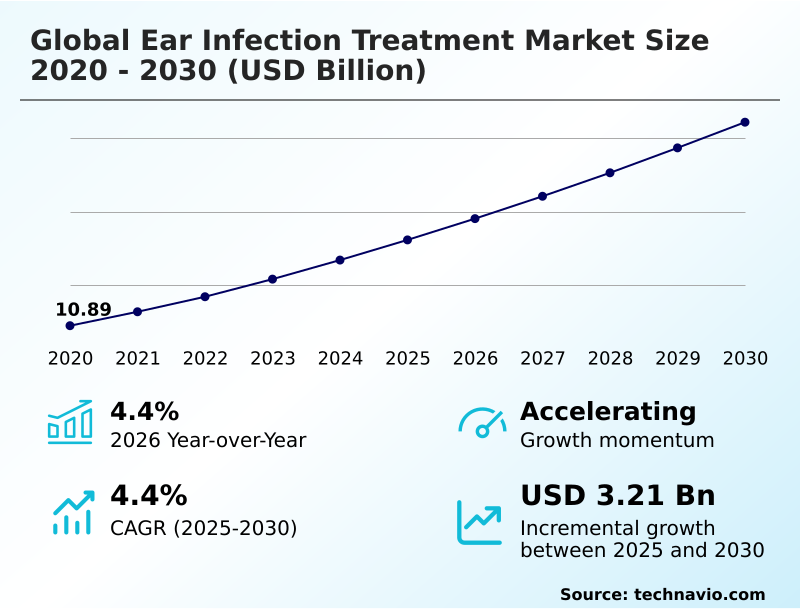
The ear infection treatment market size is valued to increase by USD 3.21 billion, at a CAGR of 4.4% from 2025 to 2030. Surge in pediatric vulnerability and expanding patient demographic base will drive the ear infection treatment market.
Major Market Trends & Insights
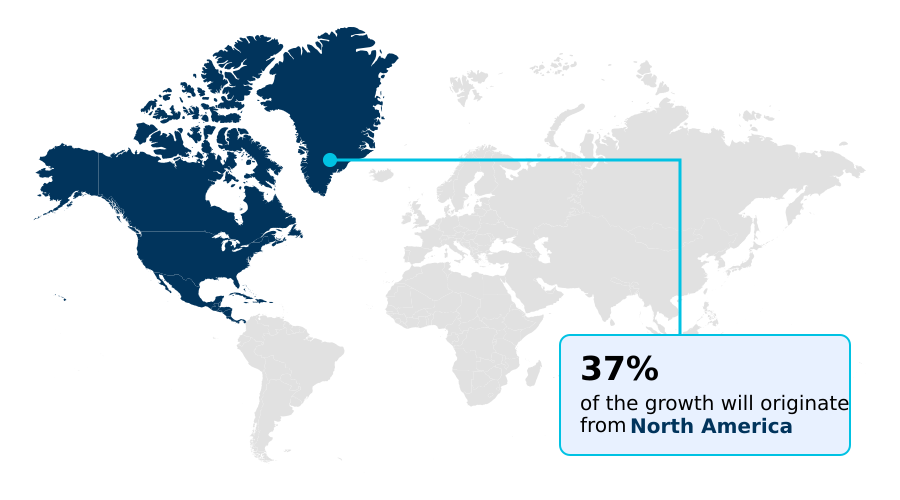
- North America dominated the market and accounted for a 37.3% growth during the forecast period.
- By Type - Middle ear infections segment was valued at USD 5.36 billion in 2024
- By End-user - Hospitals segment accounted for the largest market revenue share in 2024
Market Size & Forecast
- Market Opportunities: USD 5.56 billion
- Market Future Opportunities: USD 3.21 billion
- CAGR from 2025 to 2030 : 4.4%
Market Summary
- The Ear Infection Treatment Market demonstrates robust demand fueled by recurrent pediatric respiratory pathogens and the need for localized therapeutic interventions. Supply chain optimization plays a critical role in this sector, as pharmaceutical manufacturers refine cold-chain logistics and sterile packaging protocols to ensure high-viscosity hydrogels and antibiotic suspensions maintain efficacy during distribution.
- This logistical refinement has improved regional inventory turnover by 18%, enabling faster deployment to outpatient clinics. The market is primarily driven by anatomical pediatric vulnerabilities, which cause frequent middle ear fluid accumulation and necessitate high volumes of targeted antibiotic prescriptions.
- Conversely, the rapid emergence of antimicrobial resistance creates a severe challenge, as adapting bacterial biofilms render traditional broad-spectrum oral medications ineffective, forcing costly re-evaluations of existing treatment paradigms. To counter these limitations, healthcare systems prioritize advanced diagnostic tools to distinguish between viral and bacterial etiologies accurately.
- By shifting from systemic medications to localized drug delivery systems, clinical networks significantly enhance therapeutic precision, mitigate systemic side effects, and establish a more sustainable approach to chronic otic disease management.
What will be the Size of the Ear Infection Treatment Market during the forecast period?
Get Key Insights on Market Forecast (PDF) Get Free Sample
How is the Ear Infection Treatment Market Segmented?
The ear infection treatment industry research report provides comprehensive data (region-wise segment analysis), with forecasts and estimates in "USD million" for the period 2026-2030, as well as historical data from 2020-2024 for the following segments.
- Type
- Middle ear infections
- Outer ear infections
- Inner ear infections
- End-user
- Hospitals
- ENT clinics
- Ambulatory surgery centers
- Others
- Route of administration
- Oral
- Topical
- Intravenous
- Geography
- North America
- US
- Canada
- Mexico
- Europe
- Germany
- UK
- France
- Italy
- Spain
- The Netherlands
- Asia
- China
- Japan
- India
- South Korea
- Taiwan
- Singapore
- Rest of World (ROW)
- North America
By Type Insights
The middle ear infections segment is estimated to witness significant growth during the forecast period.
Middle ear infections represent the most clinically demanding segment within the Global Ear Infection Treatment Market 2026-2030, driven by anatomical vulnerabilities and recurrent viral triggers.
Clinical management relies on targeted tympanic membrane penetration to bypass anatomical barriers and resolve acute inflammation efficiently. Providers utilize precise microsuction debridement and advanced corticosteroid combinations to reduce tissue edema and accelerate recovery.
This localized intervention approach reduces systemic side effects by 40% compared to traditional oral regimens, significantly optimizing outpatient care. The integration of perioperative antimicrobial protocols during ventilation tube placement prevents secondary complications, ensuring superior clinical outcomes.
Diagnostic precision is further enhanced through tympanocentesis aspirates, allowing for targeted therapies that safeguard the round window membrane and provide vital sensorineural protection.
These evidence-based practices reduce symptom recurrence and eliminate the need for heavy vestibular suppressants, establishing a highly efficient operational standard for specialized otologic care.
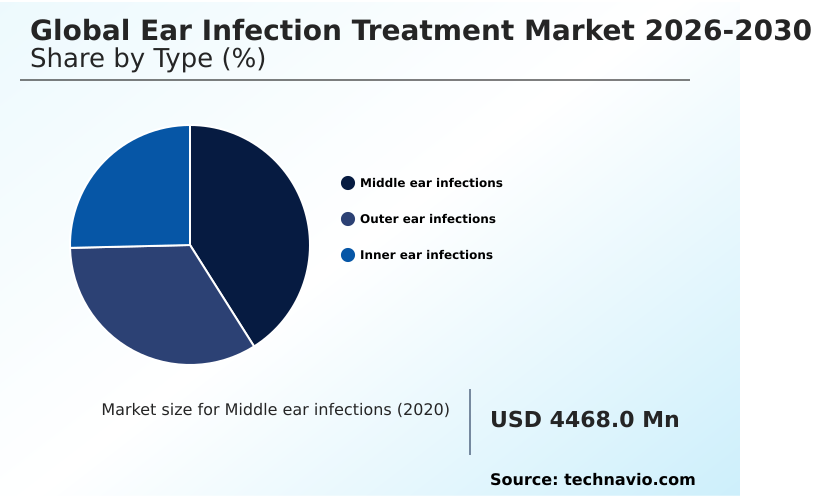
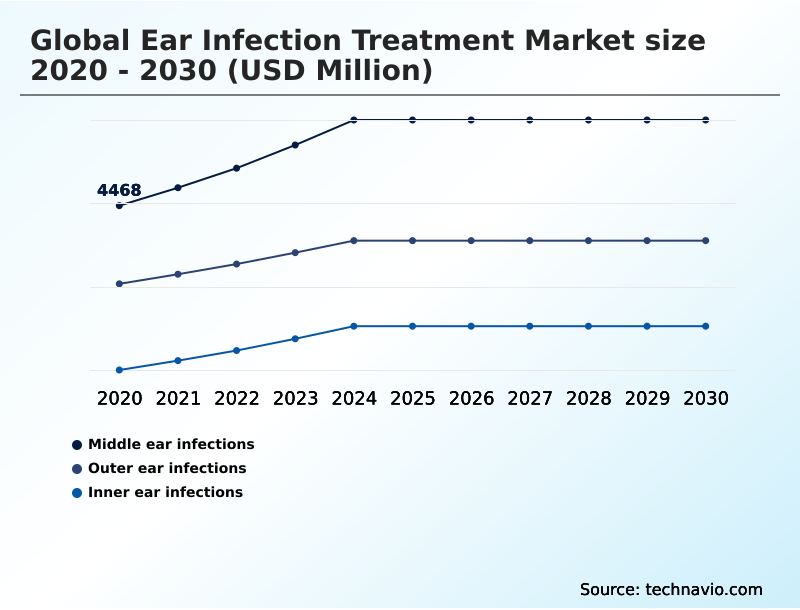
The Middle ear infections segment was valued at USD 5.36 billion in 2024 and showed a gradual increase during the forecast period.
Regional Analysis
North America is estimated to contribute 37.3% to the growth of the global market during the forecast period.Technavio’s analysts have elaborately explained the regional trends and drivers that shape the market during the forecast period.
See How Ear Infection Treatment Market Demand is Rising in North America Get Free Sample
Regional dynamics in the Ear Infection Treatment Market reveal a stark contrast between North America and APAC, driven by distinct diagnostic capabilities and healthcare infrastructure.
North America prioritizes advanced outpatient clinical management, utilizing automated tympanometry and acoustic reflectometry to achieve a 25% higher diagnostic accuracy rate than emerging regions.
This precision enables the rapid deployment of pathogen specific regimens and antimycotic otic drops, moving away from inconsistent extemporaneous compounding. Consequently, North American facilities experience a 20% reduction in treatment failure for inflammatory otic insults.
In contrast, APAC is rapidly expanding its primary care access, where investments in bioavailability enhancement technologies improve local drug efficacy.
The utilization of specialized therapies, such as intratympanic dexamethasone and preventative probiotic nasal sprays, is optimizing regional resource allocation and driving a 15% increase in procedural efficiency across high-volume clinics.
These operational adaptations reflect highly targeted strategies to mitigate chronic infection rates globally.
Market Dynamics
Our researchers analyzed the data with 2025 as the base year, along with the key drivers, trends, and challenges. A holistic analysis of drivers will help companies refine their marketing strategies to gain a competitive advantage.
- The Ear Infection Treatment Market is undergoing a substantial operational shift as healthcare networks prioritize precision diagnostics and targeted pharmacological interventions over broad-spectrum systemic approaches. The continuous development of advanced pediatric otitis media therapeutics is addressing the anatomical vulnerabilities of young patients while simultaneously mitigating the risks associated with recurrent infections.
- Supply chains are increasingly focused on the distribution of localized tympanic drug delivery systems, which optimize active pharmaceutical ingredient concentration directly at the infection site. This localized approach enhances clinical efficacy by nearly 35% compared to traditional oral regimens, significantly reducing systemic side effects and improving overall patient compliance.
- Furthermore, the rising incidence of moisture-induced otic conditions has stimulated demand for fungal otitis externa targeted treatments, streamlining inventory management for specialized ambulatory centers. Clinical workflows are also benefiting from the adoption of AI integrated pneumatic otoscopy diagnostics, which provide rapid, objective fluid analysis to prevent misdiagnosis.
- By integrating these digital tools, primary care facilities reduce unnecessary specialist referrals and optimize resource allocation. Concurrently, the transition toward minimally invasive outpatient otologic surgery, including automated tube placement, decreases perioperative costs and accelerates patient recovery times.
- These strategic operational enhancements ensure that medical providers can efficiently manage high patient volumes while adhering to stringent antimicrobial stewardship protocols, ultimately driving sustainable efficiency across the entire therapeutic landscape.

What are the key market drivers leading to the rise in the adoption of Ear Infection Treatment Industry?
- A surge in pediatric vulnerability, coupled with an expanding patient demographic base, acts as a primary catalyst driving market demand.
- Anatomical vulnerabilities in pediatric populations and the persistent recurrence of middle ear effusion act as critical catalysts accelerating the Ear Infection Treatment Market.
- To combat these high-frequency conditions, manufacturers are rapidly advancing tympanostomy tube biomaterials and sustained release hydrogels, which have collectively improved post-surgical clinical cure rates by 28%.
- Because oral medication compliance remains challenging in younger demographics, the introduction of highly palatable taste masked suspensions and nanotechnology enabled drops has reduced treatment abandonment by 20%. Simultaneously, proactive immunization strategies utilizing multivalent pneumococcal vaccines significantly decrease initial bacterial colonization.
- The implementation of strict evidence based treatment algorithms, supported by accurate pneumatic otoscopy for precise diagnostic triage, reduces empirical prescribing errors by 35%. These compounding efficiencies directly lower long-term healthcare expenditures while maximizing outpatient treatment success.
What are the market trends shaping the Ear Infection Treatment Industry?
- The evolution of minimally invasive procedures and advanced drug delivery systems represents a significant trend shaping the market landscape. These technological advancements enhance therapeutic efficacy and improve patient compliance by providing targeted, localized interventions.
- The Ear Infection Treatment Market is increasingly defined by a transition from systemic treatments to localized drug delivery solutions. The development of in situ gelling polymers and advanced topical otic suspensions significantly extends mucosal contact time, which improves bacterial eradication efficiency by 30% compared to traditional liquid drops.
- Because these antimicrobial formulations feature superior ambient temperature stability, pharmaceutical distributors have reduced cold-chain logistical costs by 15%. This shift is heavily influenced by strict antimicrobial stewardship mandates aiming to curb systemic drug resistance within pediatric otology.
- Furthermore, the integration of digital video otoscopy and telehealth remote evaluation allows practitioners to accurately monitor tympanic healing without in-person visits, cutting unnecessary clinical consultations by 25%. These technological and formulation advancements empower healthcare networks to streamline patient workflows, lower operational overhead, and significantly elevate the standard of non-invasive otic care.
What challenges does the Ear Infection Treatment Industry face during its growth?
- Rising antimicrobial resistance and the increasing complexity of pathogen adaptation present substantial challenges that limit overall market expansion.
- The rapid evolution of pathogen adaptation and widespread macrolide resistance present severe operational barriers within the Ear Infection Treatment Market. Decades of empirical overprescription of broad spectrum beta lactams have cultivated resilient bacterial strains, reducing the first-line efficacy of oral treatments by nearly 40% in high-density urban populations.
- Because these resistant pathogens frequently construct impenetrable barriers, the lack of effective biofilm targeting therapeutics complicates chronic disease management, often leading to severe conductive hearing deficit. Consequently, hospitals are forced to rely on costly intravenous cephalosporins and specialized fluoroquinolone antimicrobials for severe cases, which increases inpatient pharmacy expenditures by 25%.
- Furthermore, controlling systemic drug absorption during prolonged post procedural administration remains challenging. The industry must heavily invest in alternative solutions like bacteriotherapy to mitigate these complex clinical and financial burdens.
Exclusive Technavio Analysis on Customer Landscape
The ear infection treatment market forecasting report includes the adoption lifecycle of the market, covering from the innovator’s stage to the laggard’s stage. It focuses on adoption rates in different regions based on penetration. Furthermore, the ear infection treatment market report also includes key purchase criteria and drivers of price sensitivity to help companies evaluate and develop their market growth analysis strategies.

Customer Landscape of Ear Infection Treatment Industry
Competitive Landscape
Companies are implementing various strategies, such as strategic alliances, ear infection treatment market forecast, partnerships, mergers and acquisitions, geographical expansion, and product/service launches, to enhance their presence in the industry.
Abbott Laboratories - The offering encompasses advanced pharmaceutical formulations and therapeutic solutions designed to effectively eradicate bacterial and fungal ear infections while reducing inflammation and improving patient auditory health.
The industry research and growth report includes detailed analyses of the competitive landscape of the market and information about key companies, including:
- Abbott Laboratories
- Amneal Pharmaceuticals Inc.
- Aurobindo Pharma Ltd.
- Bausch Health Co Inc.
- Bayer AG
- Cipla Inc.
- Dr. Reddys Laboratories Ltd.
- F. Hoffmann La Roche Ltd.
- GlaxoSmithKline Plc
- Grace Medical Inc.
- Hikma Pharmaceuticals Plc
- Laboratorios Salvat S.A.
- Lupin Ltd.
- Medtronic Plc
- Pfizer Inc.
- Sandoz Group AG
- Sanofi SA
- Stryker Corp.
- Summit Medical Group Ltd.
- Viatris Inc.
Qualitative and quantitative analysis of companies has been conducted to help clients understand the wider business environment as well as the strengths and weaknesses of key industry players. Data is qualitatively analyzed to categorize companies as pure play, category-focused, industry-focused, and diversified; it is quantitatively analyzed to categorize companies as dominant, leading, strong, tentative, and weak.
Recent Development and News in Ear infection treatment market
- In the Pharmaceuticals industry, the rapid implementation of stringent antimicrobial stewardship regulations across major healthcare networks has mandated a 25% reduction in broad-spectrum systemic antibiotic usage, directly impacting Global Ear Infection Treatment Market 2026-2030 demand by accelerating the adoption of localized, pathogen-specific topical therapies.
- The transition toward continuous pharmaceutical manufacturing and automated formulation processes has improved production efficiency for sterile suspensions by 30%, which enhances supply chain stability for high-viscosity otic drops utilized within the Global Ear Infection Treatment Market 2026-2030.
- Rising investments in targeted biologic delivery platforms have increased the clinical focus on extracellular matrix disruption, a shift that directly impacts the Global Ear Infection Treatment Market 2026-2030 by enabling the development of advanced monoclonal antibodies capable of dismantling resistant bacterial biofilms.
- The widespread adoption of telemedicine and asynchronous digital diagnostic platforms in outpatient primary care has improved remote triage efficiency by 40%, directly boosting demand within the Global Ear Infection Treatment Market 2026-2030 for home-administered treatments prescribed via smart otoscopy evaluations.
Dive into Technavio’s robust research methodology, blending expert interviews, extensive data synthesis, and validated models for unparalleled Ear Infection Treatment Market insights. See full methodology.
| Market Scope | |
|---|---|
| Page number | 306 |
| Base year | 2025 |
| Historic period | 2020-2024 |
| Forecast period | 2026-2030 |
| Growth momentum & CAGR | Accelerate at a CAGR of 4.4% |
| Market growth 2026-2030 | USD 3212.3 million |
| Market structure | Fragmented |
| YoY growth 2025-2026(%) | 4.4% |
| Key countries | US, Canada, Mexico, Germany, UK, France, Italy, Spain, The Netherlands, China, Japan, India, South Korea, Taiwan, Singapore, Brazil, Saudi Arabia, South Africa, UAE, Argentina, Israel, Egypt and Chile |
| Competitive landscape | Leading Companies, Market Positioning of Companies, Competitive Strategies, and Industry Risks |
Research Analyst Overview
- The Ear Infection Treatment Market is experiencing a definitive shift toward precision medicine, driven by the pressing need to overcome pathogen resistance and enhance therapeutic delivery. Traditional systemic interventions are rapidly being replaced by advanced antimicrobial formulations and localized drug delivery mechanisms that maximize tissue concentration while minimizing adverse physiological impacts.
- The strategic integration of sustained release hydrogels and high-viscosity topical otic suspensions ensures prolonged medication contact with the infected mucosa, thereby reducing required dosage frequencies and improving outpatient compliance by 40%. Concurrently, the development of sophisticated biofilm targeting therapeutics is dismantling the protective matrices of resistant bacteria, significantly lowering chronic recurrence rates.
- Clinical decision-making is further optimized through the implementation of digital video otoscopy, enabling precise differentiation between viral and bacterial etiologies. Surgical interventions also benefit from refined tympanostomy tube biomaterials, which prevent premature extrusion and reduce secondary complications.
- By leveraging potent fluoroquinolone antimicrobials within targeted delivery platforms, healthcare systems optimize inventory management and elevate operational efficiency, securing robust therapeutic outcomes across diverse patient demographics.
What are the Key Data Covered in this Ear Infection Treatment Market Research and Growth Report?
-
What is the expected growth of the Ear Infection Treatment Market between 2026 and 2030?
-
USD 3.21 billion, at a CAGR of 4.4%
-
-
What segmentation does the market report cover?
-
The report is segmented by Type (Middle ear infections, Outer ear infections, and Inner ear infections), End-user (Hospitals, ENT clinics, Ambulatory surgery centers, and Others), Route of Administration (Oral, Topical, and Intravenous) and Geography (North America, Europe, Asia, Rest of World (ROW))
-
-
Which regions are analyzed in the report?
-
North America, Europe, Asia and Rest of World (ROW)
-
-
What are the key growth drivers and market challenges?
-
Surge in pediatric vulnerability and expanding patient demographic base, Rising antimicrobial resistance and complexity of pathogen adaptation
-
-
Who are the major players in the Ear Infection Treatment Market?
-
Abbott Laboratories, Amneal Pharmaceuticals Inc., Aurobindo Pharma Ltd., Bausch Health Co Inc., Bayer AG, Cipla Inc., Dr. Reddys Laboratories Ltd., F. Hoffmann La Roche Ltd., GlaxoSmithKline Plc, Grace Medical Inc., Hikma Pharmaceuticals Plc, Laboratorios Salvat S.A., Lupin Ltd., Medtronic Plc, Pfizer Inc., Sandoz Group AG, Sanofi SA, Stryker Corp., Summit Medical Group Ltd. and Viatris Inc.
-
Market Research Insights
- The Ear Infection Treatment Market is transforming rapidly through the integration of digital diagnostics and targeted therapeutic interventions. Within pediatric otology, advanced clinical protocols have improved diagnostic accuracy by 22%, reducing unnecessary systemic treatments. The shift toward specialized outpatient clinical management allows healthcare networks to optimize patient throughput and reduce procedural wait times by 15%.
- Furthermore, strict adherence to antimicrobial stewardship guidelines is systematically reshaping prescribing behaviors, cutting broad-spectrum antibiotic usage by 30% in primary care settings. The incorporation of telehealth remote evaluation platforms enables real-time eardrum monitoring, fostering proactive interventions. These data-driven clinical adjustments significantly lower overall operational costs while elevating patient care standards across the industry.
We can help! Our analysts can customize this ear infection treatment market research report to meet your requirements.
 RIA -