



Endoscopic Vessel Harvesting Market Size 2024-2028
The endoscopic vessel harvesting market size is forecast to increase by USD 118 million, at a CAGR of 4.5% between 2023 and 2028.
- The Endoscopic Vessel Harvesting (EVH) market witnesses significant growth due to the increasing volume of endoscopic procedures and a growing target population in need of cardiovascular treatments. This trend is particularly noticeable in emerging countries, where the prevalence of cardiovascular diseases is on the rise, creating a vast opportunity for market expansion in the healthcare industry. However, the market faces challenges, including stringent regulations and product recalls. These obstacles necessitate rigorous adherence to regulatory standards and continuous quality improvement efforts to mitigate risks and maintain consumer trust.
- Companies in the EVH market must navigate these challenges while capitalizing on the market's potential for growth. Strategic partnerships, innovation, and robust regulatory compliance are key strategies for companies to differentiate themselves and thrive in this dynamic market.
What will be the Size of the Endoscopic Vessel Harvesting Market during the forecast period?
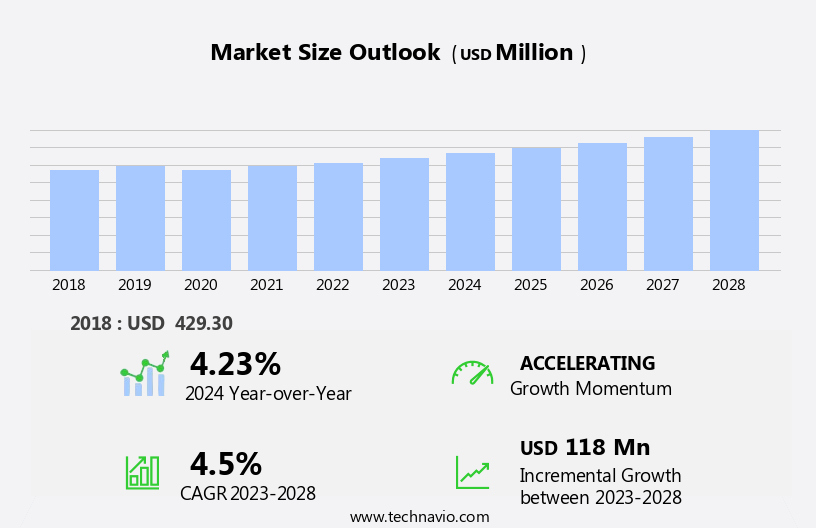
Explore in-depth regional segment analysis with market size data - historical 2018-2022 and forecasts 2024-2028 - in the full report.
Request Free Sample
The market continues to evolve, driven by advancements in various sectors. Surgical training is enhanced through data mining and virtual reality training, enabling more effective skills acquisition. Wound closure and infection prevention are improved through the integration of biocompatible materials and tissue sealing techniques. Three-dimensional imaging and expert systems facilitate more precise surgical planning and robotic surgery. Healthcare economics is influenced by procedural time reduction and inventory management, while clinical outcomes are optimized through data analysis and predictive modeling. Surgical teams collaborate using surgical navigation and anesthesia management systems, ensuring safety standards and patient satisfaction. Vessel harvesting techniques advance with endoscopic cameras and energy sources, enabling minimally invasive surgery and remote surgery.
Pre-operative assessment, risk assessment, and image processing are crucial components of surgical workflow, ensuring regulatory compliance and quality assurance. Surgical instruments, including endoscopic sutures and surgical staplers, are engineered for precision cutting and tissue morcellation. Hospitals invest in hospital infrastructure, including operating rooms and sterile processing, to accommodate these advancements. Artificial intelligence and machine learning are integrated into surgical procedures, enabling outcome prediction and adverse event mitigation. Energy delivery systems and surgical adhesives are developed to enhance surgical efficiency and safety. The market remains dynamic, with ongoing innovation in surgical procedures, patient recovery, and surgical robotics. The integration of these technologies continues to reshape the landscape of healthcare delivery.
How is this Endoscopic Vessel Harvesting Industry segmented?
The endoscopic vessel harvesting industry research report provides comprehensive data (region-wise segment analysis), with forecasts and estimates in "USD million" for the period 2024-2028, as well as historical data from 2018-2022 for the following segments.
- Type
- Disposable EVH system
- Reusable EVH system
- Geography
- North America
- US
- Europe
- Germany
- UK
- APAC
- China
- Japan
- Rest of World (ROW)
- North America
By Type Insights
The disposable EVH system segment is estimated to witness significant growth during the forecast period.
Disposable Endoscopic Vessel Harvesting (EVH) systems are essential tools in Cardiac Artery Bypass Grafting (CABG) procedures, providing a healthy blood artery for bypassing heart blockages. EVH systems have shown clinical trial advantages over traditional open procedures, such as reduced infection and wound risks, less postoperative discomfort and swelling, faster recovery with minimal scarring, and enhanced patient satisfaction. The minimally invasive EVH approach typically requires only a small incision of approximately one inch and employs specialized devices for artery inspection and removal. In laparoscopic surgery, EVH utilizes data mining and surgical planning to optimize procedures, reduce procedural time, and improve surgical efficiency.
Surgical teams leverage 3D imaging and image processing for precise visualization and guidance during the procedure. Robotic surgery and expert systems offer enhanced precision and control, while surgical instruments made of biocompatible materials ensure patient safety and infection prevention. Regulatory compliance is crucial in EVH, with data acquisition and analysis, inventory management, and predictive modeling ensuring adherence to safety standards. Machine learning and artificial intelligence enable outcome prediction and risk assessment, while minimally invasive surgery and sterile processing contribute to patient recovery and infection control. Energy delivery systems, surgical workflow, and supply chain optimization further streamline the surgical procedures.
Quality assurance and safety standards are maintained through surgical robotics, surgical skills training, and virtual reality simulations. Endoscopic cameras and image guidance systems ensure precise visualization during the procedure, while energy sources and surgical adhesives facilitate tissue sealing and precision cutting. Post-operative care, patient satisfaction, and clinical trials are essential components of the EVH market, with remote surgery and anesthesia management enhancing accessibility and convenience. In conclusion, the market is characterized by continuous innovation and advancement, with a focus on minimally invasive procedures, enhanced patient outcomes, and regulatory compliance. The integration of technologies such as data mining, 3D imaging, expert systems, laparoscopic surgery, robotic surgery, and artificial intelligence is driving market growth and improving surgical efficiency and patient care.
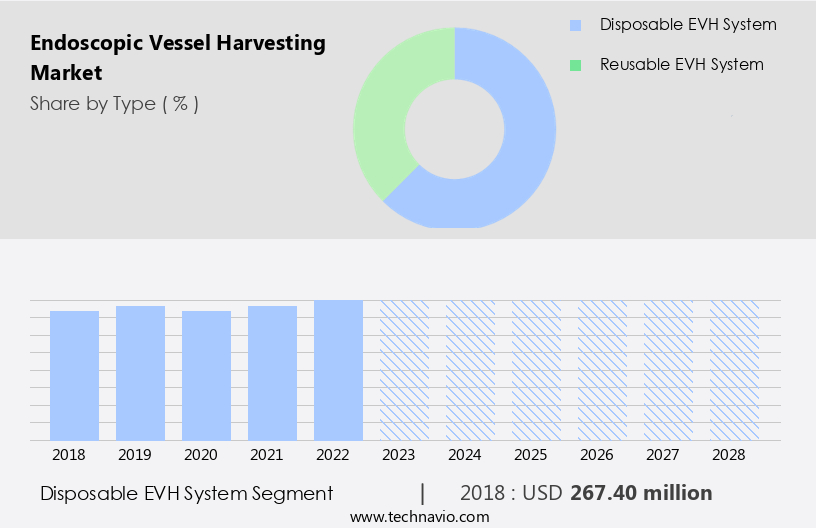
The Disposable EVH system segment was valued at USD 267.40 million in 2018 and showed a gradual increase during the forecast period.
Regional Analysis
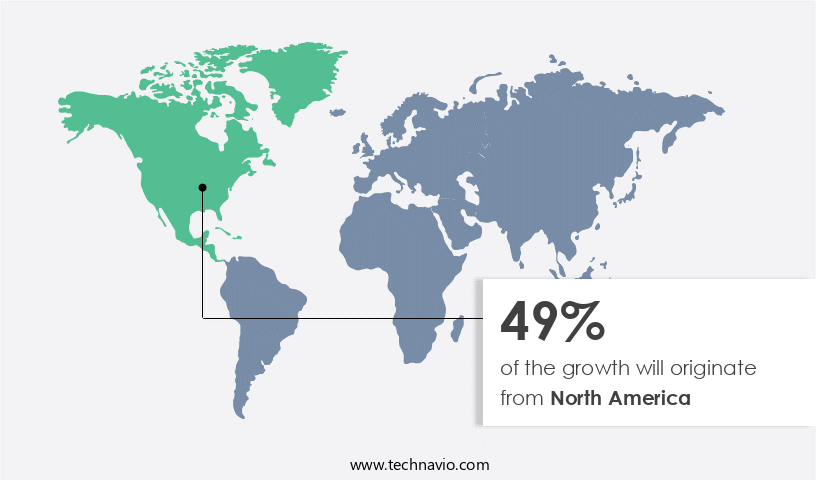
North America is estimated to contribute 49% to the growth of the global market during the forecast period. Technavio's analysts have elaborately explained the regional trends and drivers that shape the market during the forecast period.
The market is experiencing significant growth due to the increasing incidence of chronic diseases, such as arthritis and Gastrointestinal (GI) disorders, which necessitate diagnostic medical procedures like endoscopy. These procedures provide visuals of the interior of the body and organs, unattainable through standard examinations. Moreover, the market is driven by rising patient awareness and the importance of preventive healthcare. For instance, Olympus, a leading market participant, designates March as Colon Cancer Awareness Month, organizing various programs to spread awareness. Advanced technologies, such as data mining, 3D imaging, expert systems, and robotic surgery, are revolutionizing surgical procedures, enabling minimally invasive surgeries and improving patient recovery.
Surgical planning, infection prevention, and clinical outcomes are crucial factors influencing market trends. Biocompatible materials, energy delivery systems, and surgical instruments are essential components of endoscopic vessel harvesting techniques. Regulatory compliance, safety standards, and quality assurance are paramount in ensuring successful surgical workflows. Machine learning and predictive modeling are transforming inventory management and supply chain operations. Clinical trials and patient satisfaction are key indicators of market growth, while complications rate and adverse events are areas of ongoing research. Surgical navigation, tissue sealing, and anesthesia management are integral parts of the surgical procedures, with precision cutting, surgical staplers, and endoscopic cameras enhancing surgical efficiency.
Image processing, image guidance, and outcome prediction are essential for accurate diagnosis and treatment. Light sources, surgical adhesives, and vessel harvesting techniques are critical components of the endoscopic procedures. The market is also witnessing the emergence of remote surgery, virtual reality training, and surgical robotics, which are revolutionizing surgical skills development. Hospital infrastructure, optical fibers, and surgical workflow optimization are also key areas of focus.
Market Dynamics
Our researchers analyzed the data with 2023 as the base year, along with the key drivers, trends, and challenges. A holistic analysis of drivers will help companies refine their marketing strategies to gain a competitive advantage.
What are the key market drivers leading to the rise in the adoption of Endoscopic Vessel Harvesting Industry?
- The market's expansion is primarily attributed to the rising number of endoscopic procedures and the increasing target population. This trend is driven by advancements in minimally invasive medical procedures and the growing demand for early diagnosis and treatment of various medical conditions.
- The Endoscopic Vessel Harvesting (EVH) market has experienced notable growth in recent years, driven primarily by the increasing prevalence of chronic conditions and an aging population in the US. Chronic diseases, such as heart disease and diabetes, affect approximately 60% and 40% of adults in the US, respectively, according to the Centers for Disease Control and Prevention (CDC). These conditions account for around 86% of the country's annual healthcare expenditure, totaling USD2.7 trillion. In 2021, there were 3,817 heart transplants performed in the US, highlighting the significant need for advanced surgical techniques like EVH. This market growth is underpinned by advancements in surgical efficiency, including tissue morcellation, optical fibers, surgical adhesives, and vessel harvesting techniques.
- Furthermore, the integration of endoscopic cameras, artificial intelligence, precision cutting, surgical staplers, and predictive modeling in surgical workflows has streamlined supply chain processes and improved post-operative care. Medical devices, energy sources, and surgical workflow continue to shape the market landscape, with ongoing research and development efforts focused on enhancing surgical outcomes and reducing complications.
What are the market trends shaping the Endoscopic Vessel Harvesting Industry?
- Emerging countries present a significant growth potential that is currently a prominent market trend. Businesses seeking expansion opportunities should consider investing in these regions.
- The market is experiencing significant growth due to various factors. Surgical teams are increasingly adopting this minimally invasive technique for harvesting vessels during laparoscopic surgery, leading to shorter procedural times and improved clinical outcomes. Advancements in technology, such as 3D imaging and expert systems, enable more precise and efficient vessel harvesting, reducing the risk of complications and enhancing surgical planning. Healthcare economics also play a crucial role in market growth. Biocompatible materials used in endoscopic vessel harvesting ensure infection prevention and reduce the need for post-surgical wound closure. Furthermore, data acquisition and data mining facilitate better surgical training and procedural analysis, optimizing resource utilization and reducing costs.
- Robotic surgery is another driving factor, as it offers increased precision, reduced trauma, and faster recovery times. Market companies are focusing on emerging economies, where there is significant growth potential due to improved healthcare infrastructure, government initiatives, and better economic conditions. For instance, in Japan, the government is promoting the usage of advanced medical devices and procedures by raising awareness and collaborating with companies to increase their presence and generate higher revenues.
What challenges does the Endoscopic Vessel Harvesting Industry face during its growth?
- The strict regulatory environment and frequent product recalls pose a significant challenge to the industry's growth.
- Endoscopic Vessel Harvesting (EVH) is a minimally invasive procedure used in surgical procedures for harvesting coronary arteries and veins for bypass grafting. The EVH market faces numerous challenges due to the stringent regulatory requirements. EVH is classified under Class II medical devices, and gaining regulatory approval is a complex process. Technical challenges are prevalent during the clinical trial phase, making it difficult and costly for companies to launch new products. Regulatory bodies impose strict labeling requirements and regulatory frameworks for EVH, which adds to the complexity and cost of product development. Moreover, image processing, energy delivery systems, and image guidance are critical components of EVH technology.
- The integration of machine learning algorithms and inventory management systems can enhance the efficiency and accuracy of these components. Outcome prediction and quality assurance are essential for patient recovery and surgical skills development. However, adverse events associated with EVH, such as bleeding, infection, and damage to the vessels, necessitate continuous research and development. Surgical robotics and endoscopic sutures are also used in EVH procedures. Ensuring regulatory compliance and safety standards for these technologies is crucial. Light sources and image processing systems play a significant role in the success of EVH procedures. The market dynamics of EVH are influenced by various factors, including technological advancements, regulatory frameworks, and clinical trial outcomes.
- Manufacturers must prioritize safety, quality, and patient outcomes to succeed in this competitive market.
Exclusive Customer Landscape
The endoscopic vessel harvesting market forecasting report includes the adoption lifecycle of the market, covering from the innovator's stage to the laggard's stage. It focuses on adoption rates in different regions based on penetration. Furthermore, the endoscopic vessel harvesting market report also includes key purchase criteria and drivers of price sensitivity to help companies evaluate and develop their market growth analysis strategies.
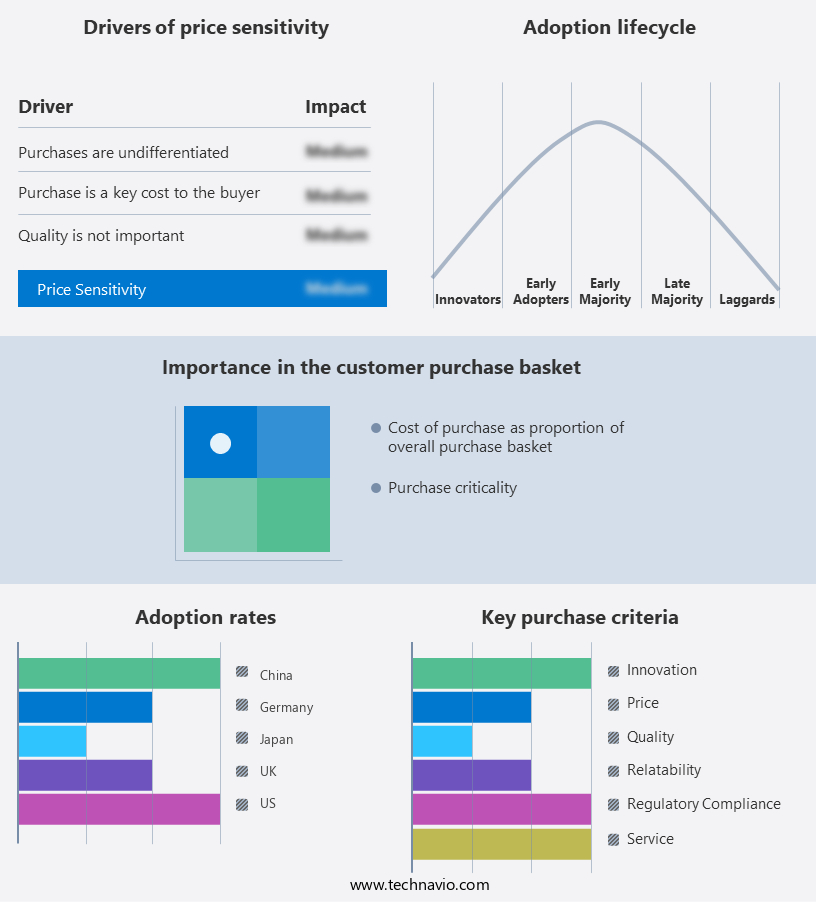
Customer Landscape
Key Companies & Market Insights
Companies are implementing various strategies, such as strategic alliances, endoscopic vessel harvesting market forecast, partnerships, mergers and acquisitions, geographical expansion, and product/service launches, to enhance their presence in the industry.
Cardio Medical GmbH - The company manufactures a soft tissue retractor, the Sterling Device, engineered for effective tissue retraction during surgical procedures.
The industry research and growth report includes detailed analyses of the competitive landscape of the market and information about key companies, including:
- Cardio Medical GmbH
- CardioPrecision Ltd.
- Conmed Corp.
- ELITE LIFECARE
- Getinge AB
- HOYA CORP.
- Johnson and Johnson Services Inc.
- KARL STORZ SE and Co. KG
- LivaNova PLC
- Med Europe Srl
- Medical Instruments SpA
- Medtronic Plc
- Olympus Corp.
- Saphena Medical Inc.
- Smith and Nephew plc
- Stryker Corp.
- Teleflex Inc.
- Terumo Corp.
- Troge Medical GmbH
- Xcellance Medical Technologies Pvt. Ltd.
- Zimmer Biomet Holdings Inc.
Qualitative and quantitative analysis of companies has been conducted to help clients understand the wider business environment as well as the strengths and weaknesses of key industry players. Data is qualitatively analyzed to categorize companies as pure play, category-focused, industry-focused, and diversified; it is quantitatively analyzed to categorize companies as dominant, leading, strong, tentative, and weak.
Recent Development and News in Endoscopic Vessel Harvesting Market
- In January 2024, Medtronic plc, a leading medical technology company, announced the FDA approval of its Endovascular Harvesting System for coronary artery bypass grafting procedures. This innovative technology allows for endoscopic harvesting, reducing the need for traditional surgical methods and minimizing patient trauma (Medtronic Press Release, 2024).
- In March 2024, Boston Scientific Corporation and Ethicon, a part of Johnson & Johnson, entered into a strategic partnership to co-develop and commercialize endoscopic vessel harvesting technologies. This collaboration combines Boston Scientific's expertise in endoscopic procedures with Ethicon's experience in surgical techniques, aiming to expand their product offerings and address the growing demand for minimally invasive procedures (Boston Scientific Press Release, 2024).
- In May 2024, Maquet Holding B.V., a global provider of medical technology and services, completed the acquisition of EndoVasix Ltd., a pioneer in endoscopic vessel harvesting technology. This acquisition strengthened Maquet's position in the endovascular market and provided them with access to EndoVasix's proprietary technology, enhancing their product portfolio (Maquet Holding Press Release, 2024).
- In April 2025, Edwards Lifesciences Corporation, a global leader in patient care technologies, received CE Mark approval for its EndoHarvest Endoscopic Vessel Harvesting System. This approval allows the company to commercialize the system in Europe, expanding its reach in the minimally invasive cardiac surgery market (Edwards Lifesciences Press Release, 2025).
Research Analyst Overview
- The Endoscopic Vessel Harvesting (EVH) market encompasses advanced technologies and techniques for harvesting vessels, particularly in cardiac and thoracic surgeries. EVH employs precision dissection, energy delivery, and vessel visualization to minimize vascular damage during the procedure. Hemodynamic monitoring and tissue handling ensure optimal patient care, while comparative effectiveness research and risk management facilitate informed decision-making. Medical imaging plays a crucial role in pre-operative planning, enabling accurate diagnosis and assessment of vascular occlusion. Performance indicators and industry standards guide quality control, ensuring the effectiveness and safety of EVH harvester systems. Professional societies and medical education contribute to the ongoing advancements in surgical innovation.
- Tissue analysis and diagnostic imaging facilitate the evaluation of wound healing and bypass surgery outcomes. Technology transfer and energy delivery systems further enhance the efficiency and versatility of EVH. Vascular grafts and tissue handling techniques are essential components of EVH, ensuring the successful implantation of grafts. Quality control and endowrist instruments enable surgeons to perform complex procedures with minimal invasiveness and improved outcomes. In the realm of general surgery, EVH is increasingly being adopted due to its benefits in reducing complications and improving patient outcomes. The integration of EVH with hemodynamic monitoring, tissue analysis, and surgical innovation continues to drive market growth and advancements in vascular surgery.
Dive into Technavio's robust research methodology, blending expert interviews, extensive data synthesis, and validated models for unparalleled Endoscopic Vessel Harvesting Market insights. See full methodology.
|
Market Scope |
|
|
Report Coverage |
Details |
|
Page number |
134 |
|
Base year |
2023 |
|
Historic period |
2018-2022 |
|
Forecast period |
2024-2028 |
|
Growth momentum & CAGR |
Accelerate at a CAGR of 4.5% |
|
Market growth 2024-2028 |
USD 118 million |
|
Market structure |
Fragmented |
|
YoY growth 2023-2024(%) |
4.23 |
|
Key countries |
US, Germany, UK, China, and Japan |
|
Competitive landscape |
Leading Companies, Market Positioning of Companies, Competitive Strategies, and Industry Risks |
What are the Key Data Covered in this Endoscopic Vessel Harvesting Market Research and Growth Report?
- CAGR of the Endoscopic Vessel Harvesting industry during the forecast period
- Detailed information on factors that will drive the growth and forecasting between 2024 and 2028
- Precise estimation of the size of the market and its contribution of the industry in focus to the parent market
- Accurate predictions about upcoming growth and trends and changes in consumer behaviour
- Growth of the market across North America, Europe, Asia, and Rest of World (ROW)
- Thorough analysis of the market's competitive landscape and detailed information about companies
- Comprehensive analysis of factors that will challenge the endoscopic vessel harvesting market growth of industry companies
We can help! Our analysts can customize this endoscopic vessel harvesting market research report to meet your requirements.
 RIA -
RIA - 
