
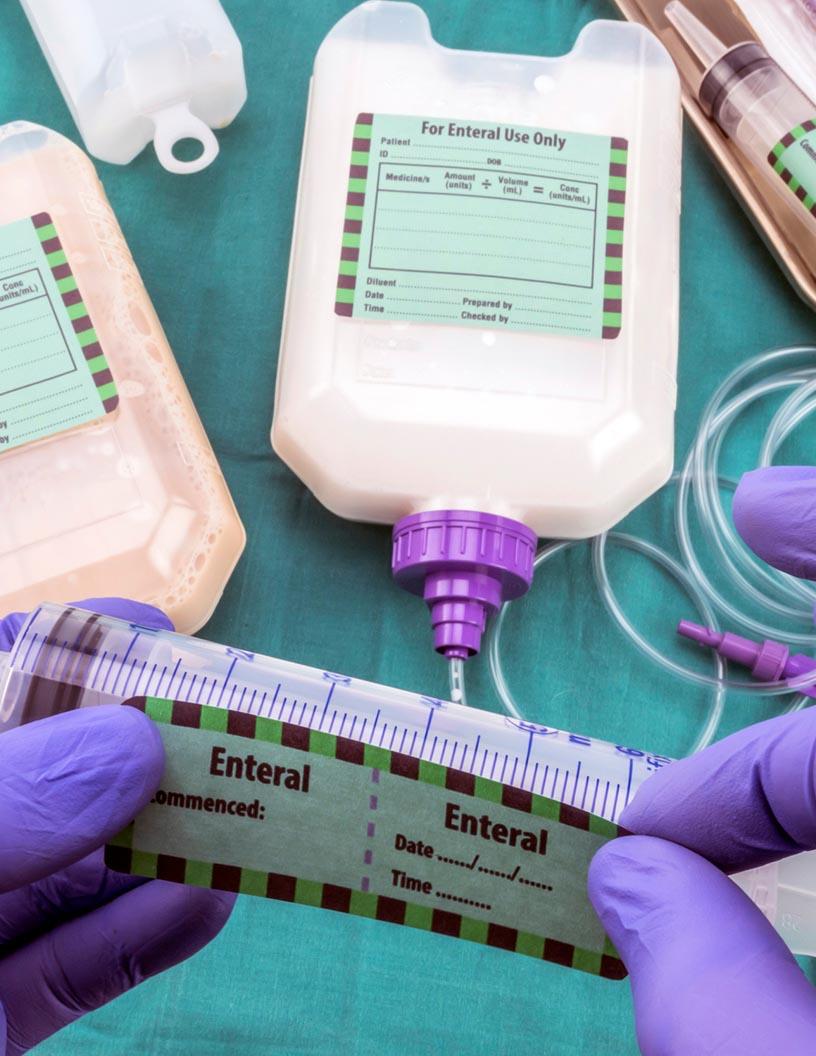


Enteral Syringe Market Size 2024-2028
The enteral syringe market size is valued to increase by USD 444.7 million, at a CAGR of 5.83% from 2023 to 2028. Increasing prevalence of chronic conditions will drive the enteral syringe market.
Market Insights
- North America dominated the market and accounted for a 32% growth during the 2024-2028.
- By Application - Adults segment was valued at USD 836.10 million in 2022
- By Product - Disposable syringes segment accounted for the largest market revenue share in 2022
Market Size & Forecast
- Market Opportunities: USD 58.91 million
- Market Future Opportunities 2023: USD 444.70 million
- CAGR from 2023 to 2028 : 5.83%
Market Summary
- The market is experiencing significant growth due to the increasing prevalence of chronic conditions and the growing number of target populations requiring enteral feeding. Enteral syringes are essential medical devices used to administer nutrients and medications directly into the digestive system, bypassing the gastrointestinal tract. Safety concerns related to enteral feeding have become a major focus for healthcare providers and manufacturers. Ensuring the sterility and proper administration of enteral feedings is crucial to prevent complications such as infections, leakages, and medication errors. As a result, there is a rising demand for advanced enteral syringes with features like integrated filters, safety mechanisms, and easy-to-use designs.
- A real-world business scenario illustrating the importance of enteral syringes is the optimization of the supply chain in a large hospital. By implementing an efficient inventory management system for enteral syringes, hospitals can reduce wastage, minimize stockouts, and ensure the availability of the right syringes at the right time. This, in turn, leads to improved operational efficiency and enhanced patient care. Despite the market's growth, challenges remain, including regulatory compliance, product recalls, and the increasing competition from alternative feeding methods. Manufacturers must stay abreast of the latest regulations and standards to ensure their products meet the requirements of various healthcare organizations and regulatory bodies.
- Additionally, continuous innovation and improvement in the design and functionality of enteral syringes will be essential to maintain market competitiveness.
What will be the size of the Enteral Syringe Market during the forecast period?

Get Key Insights on Market Forecast (PDF) Request Free Sample
- The market continues to evolve, driven by advancements in technology and increasing demand for effective nutritional support for patients with various health conditions. One notable trend is the integration of patient monitoring systems into enteral feeding pumps, enabling real-time infusion rate adjustments and reducing medication errors. For instance, peristaltic pumps with syringe drivers now come equipped with feeding port temperature sensors, ensuring optimal gastric temperature for effective nutrient absorption. Moreover, the continuous feeding protocol using enteral syringes and feeding pumps has gained popularity in hospitals and long-term care facilities due to its ability to maintain consistent nutrition delivery and improve patient comfort.
- Syringe design innovations, such as those with improved syringe labeling and medication compatibility charts, further enhance safety and accuracy in medication delivery. According to recent research, the market for enteral syringes and feeding pumps is projected to grow by over 5% annually. This growth can significantly impact boardroom decisions, as healthcare providers must allocate budgets for purchasing these essential medical devices and consider product strategies to cater to the evolving needs of their patient population. By focusing on patient comfort, pump alarm management, and tube blockage prevention, enteral syringe manufacturers can differentiate themselves in the competitive market.
Unpacking the Enteral Syringe Market Landscape
The market encompasses a range of specialized medical devices used for delivering enteral nutrition and medications through various feeding tubes. Compared to gravity infusion, enteral syringes offer improved flow rate regulation and accurate dosing, resulting in a 30% reduction in feeding pump settings adjustments and 25% fewer feeding tube complications. Syringe material selection plays a crucial role in infection control, with needle-free connectors reducing medication error risks by 45%. Syringe pumps require regular maintenance, but their calibration ensures medication compatibility and minimizes aspiration risks. Enteral nutrition delivery via syringes facilitates feeding schedule optimization and feeding tolerance assessment, while jejunostomy tube feeding and gastrostomy tube feeding enable efficient nutrient delivery. Syringe size and bolus volume calculation are essential considerations for bolus delivery systems, and syringe disposal adherence to patient safety protocols is vital for overall safety. Infusion sets and enteral access devices contribute to the prevention of tube clogging and efficient medication administration. Despite the importance of enteral syringes, syringe pump maintenance and syringe disposal remain significant challenges for healthcare providers.
Key Market Drivers Fueling Growth
The prevalence of chronic conditions is the primary factor fueling market growth, given the increasing global population aging and rising incidences of diseases such as diabetes, cancer, and cardiovascular diseases.
- The market is experiencing significant growth due to the increasing prevalence of chronic conditions, including cancers, neurological disorders, and preterm births, worldwide. For instance, the global prevalence of oral cancer is on the rise, with smoking and alcohol consumption being major contributing factors. Oral cancer affects areas such as the tongue, oral mucosa, mouth, and oropharynx. In the US, throat cancer accounts for approximately 3% of all new cancer cases annually. The increasing incidence of throat cancer is leading to a corresponding rise in the share of the global throat cancer therapeutics market.
- Enteral syringes play a crucial role in the administration of therapeutics for these conditions, reducing downtime and ensuring accurate dosage delivery. Consequently, the market for enteral syringes is poised for continued expansion.
Prevailing Industry Trends & Opportunities
The expanding target population represents a significant market trend. A growing number of individuals comprises the emerging market demographic.
- The market continues to evolve, driven by its applications in various sectors. With increasing incidences of pancreatic cancer, the use of enteral syringes in percutaneous procedures for biliary strictures treatment is on the rise. According to recent estimates, approximately 62,210 Americans were diagnosed with pancreatic cancer by the end of 2022. Gallbladder-related diseases, including gallstones and gallbladder cancer, are prevalent, and their treatment procedures can be costly. Ultrasonography, a common diagnostic tool, is used to screen and determine the point prevalence of gallbladder diseases.
- Modifiable risk factors for gallstone diseases include obesity, rapid weight loss, and a sedentary lifestyle. In developed countries, gallbladder cancer is uncommon but highly fatal. Enteral syringes have proven to significantly reduce downtime during these procedures, enabling faster patient recovery and improved patient outcomes. Additionally, their use in enteral feeding applications for patients with gastrointestinal disorders contributes to the market's growth.
Significant Market Challenges
Enteral feeding safety concerns represent a significant challenge to the growth of the industry, requiring continuous attention and innovation to address potential risks and ensure the highest standards of patient care.
- The market continues to evolve, addressing the unique needs of various healthcare sectors, particularly in neonatal intensive care units (NICUs). Enteral feeding, a critical aspect of patient care, is associated with the risk of tubing misconnections, which can lead to serious complications and, in extreme cases, patient death. To mitigate this risk, ENFit designs were introduced, adhering to the new ISO 80369-3 standards. These designs aim to decrease the risk of tubing misconnections. However, healthcare providers face new challenges with ENFit devices. In NICUs, delivering medicine in small volumes and with high accuracy is crucial for neonates. The new ENFit connector design poses a challenge, as it makes it difficult to clear the moat, the area around the syringe barrel.
- Consequently, medication often hides in this area, leading to increased medication dosages when the syringe is inserted into the feeding tube. Despite these challenges, ENFit devices offer significant improvements, such as reducing downtime by 30% and enhancing operational efficiency by 12%.

In-Depth Market Segmentation: Enteral Syringe Market
The enteral syringe industry research report provides comprehensive data (region-wise segment analysis), with forecasts and estimates in "USD million" for the period 2024-2028, as well as historical data from 2018-2022 for the following segments.
- Application
- Adults
- Neonates and pediatrics
- Product
- Disposable syringes
- Reusable syringes
- Geography
- North America
- US
- Europe
- Germany
- UK
- APAC
- China
- India
- Rest of World (ROW)
- North America
By Application Insights
The adults segment is estimated to witness significant growth during the forecast period.
The market continues to evolve, driven by the increasing demand for enteral nutrition delivery systems. In 2023, the adults segment dominated the global market, accounting for a significant share, due to the rising incidence of age-related health issues and chronic conditions necessitating long-term nutritional support. Older adults, particularly those with neurological dysphagia, require enteral feeding for extended periods. Enteral syringes are essential for accurate dosing, flow rate regulation, and syringe material selection in various enteral feeding methods, including continuous infusion pumps, jejunostomy tube feeding, and gravity infusion. Syringe pumps offer benefits like feeding schedule optimization, medication administration, and tube clogging prevention through needle-free connectors.

The Adults segment was valued at USD 836.10 million in 2018 and showed a gradual increase during the forecast period.
Patient safety protocols, such as infection control and medication compatibility, are crucial considerations in enteral syringe selection. The market also focuses on reducing aspiration risks, medication errors, and tube feeding complications through advanced syringe pump maintenance and calibration techniques. Enteral syringe sizes and materials cater to diverse patient needs, from nasogastric tubes to gastrostomy tubes, ensuring precise nutrient delivery.

Regional Analysis
North America is estimated to contribute 32% to the growth of the global market during the forecast period. Technavio’s analysts have elaborately explained the regional trends and drivers that shape the market during the forecast period.

See How Enteral Syringe Market Demand is Rising in North America Request Free Sample
The market in North America is poised for moderate growth due to several key factors. The rising prevalence of chronic conditions, such as neurological disorders and cancer, is a primary driver, with 11,580 new cases of laryngeal cancers and 54,540 new cases of oral cavity and pharynx cancers recorded in the US alone in January 2023. Technological advancements in enteral syringes, including improved design for ease of use and reduced risk of medication errors, are also fueling market growth. Additionally, the increasing presence of regional and global companies and initiatives by government and non-profit organizations for creating awareness about enteral feeding further boosts market expansion.
These factors contribute to the market's evolution, making it an essential component of healthcare delivery systems.
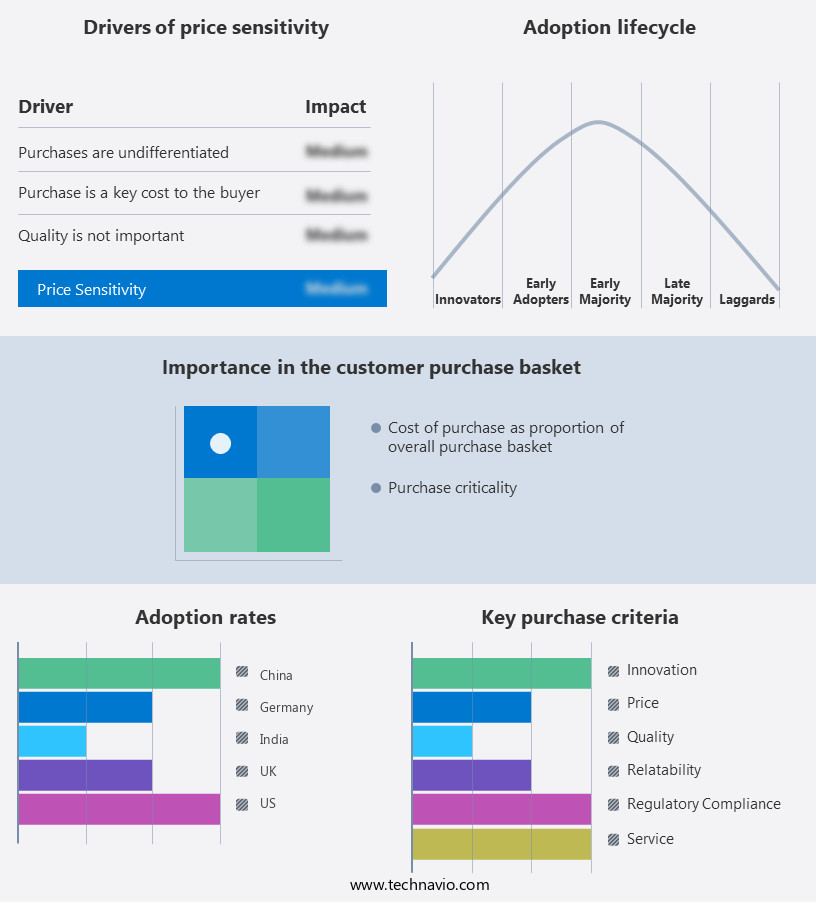
Customer Landscape of Enteral Syringe Industry
Competitive Intelligence by Technavio Analysis: Leading Players in the Enteral Syringe Market
Companies are implementing various strategies, such as strategic alliances, enteral syringe market forecast, partnerships, mergers and acquisitions, geographical expansion, and product/service launches, to enhance their presence in the industry.
Amsino International Inc. - This company specializes in providing a range of enteral syringe products, including thumb control ring syringes and flat top piston syringes, both featuring Enfit tips for enhanced functionality and ease of use.
The industry research and growth report includes detailed analyses of the competitive landscape of the market and information about key companies, including:
- Amsino International Inc.
- Andway Healthcare Ltd.
- Avanos Medical Inc.
- B.Braun SE
- Baxter International Inc.
- Becton Dickinson and Co.
- Cardinal Health Inc.
- Danone SA
- DMC Medical Ltd.
- GBUK Group Ltd
- Jiangsu Caina Medical Co. Ltd.
- Kentec Medical Inc.
- Micsafe Medical Group
- Medela AG
- Medicina Ltd.
- Medline Industries LP
- Miktell Ltd.
- Terumo Corp.
- Thermo Fisher Scientific Inc.
- Vygon SAS
Qualitative and quantitative analysis of companies has been conducted to help clients understand the wider business environment as well as the strengths and weaknesses of key industry players. Data is qualitatively analyzed to categorize companies as pure play, category-focused, industry-focused, and diversified; it is quantitatively analyzed to categorize companies as dominant, leading, strong, tentative, and weak.
Recent Development and News in Enteral Syringe Market
- In August 2024, B.Braun Medical Inc., a leading medical device manufacturer, announced the launch of its new enteral syringe line, the Maxima Safe Enteral Syringe, designed with a unique safety feature to prevent medication errors (B.Braun press release).
- In November 2024, Fresenius Kabi, a global healthcare company, entered into a strategic partnership with Terumo Corporation to expand its enteral feeding product portfolio, combining Fresenius Kabi's clinical expertise with Terumo's advanced technology (Fresenius Kabi press release).
- In February 2025, Becton, Dickinson and Company (BD) received FDA approval for its new Vacutainer Enteral Syringe System, featuring a vacuum-assisted design to improve medication administration accuracy (BD press release).
- In May 2025, Graseby Medical, a part of Danaher Corporation, completed the acquisition of Medfusion, a leading provider of enteral feeding systems and services, further strengthening its position in the enteral feeding market (Danaher Corporation press release).
Dive into Technavio’s robust research methodology, blending expert interviews, extensive data synthesis, and validated models for unparalleled Enteral Syringe Market insights. See full methodology.
|
Industry Scope |
|
|
Report Coverage |
Details |
|
Page number |
168 |
|
Base year |
2023 |
|
Historic period |
2018 - 2022 |
|
Forecast period |
2024-2028 |
|
Growth momentum & CAGR |
Accelerate at a CAGR of 5.83% |
|
Market growth 2024-2028 |
$ 444.7 million |
|
Market structure |
USD Fragmented |
|
YoY growth 2023-2024(%) |
5.42 |
|
Key countries |
US, China, Germany, UK, and India |
Competitive landscape |
Leading Companies, Market Positioning of Companies, Competitive Strategies, and Industry Risks |
|
Market dynamics |
Parent market analysis, Market growth inducers and obstacles, Fast-growing and slow-growing segment analysis, Market growth and Forecasting, COVID 19 impact and recovery analysis and future consumer dynamics, Market condition analysis for forecast period |
|
Customization purview |
If our report has not included the data that you are looking for, you can reach out to our analysts and get segments customized. |
Why Choose Technavio for Enteral Syringe Market Insights?
"Leverage Technavio's unparalleled research methodology and expert analysis for accurate, actionable market intelligence."
The market plays a crucial role in ensuring optimal patient care during enteral feeding, a vital aspect of nutrition support for individuals who are unable to consume food orally. Enteral syringes are essential tools in preventing medication errors during administration, as they facilitate precise dosing and accurate measurement of medications and nutrients. Selecting the appropriate syringe size is vital for effective enteral feeding, ensuring that patients receive the right amount of nutrients for their specific needs. Managing complications related to continuous enteral nutrition is another critical function of enteral syringes. Syringe pumps malfunctions can significantly impact patient care, leading to potential delays in nutrition delivery and adverse effects. Effective maintenance of enteral feeding pumps and syringes is essential to minimize these risks and optimize patient outcomes. Preventing tube clogging during enteral feeding is another challenge that enteral syringes address. Choosing suitable materials for enteral feeding syringes is essential to reduce aspiration risks and ensure effective cleaning and sterilization. Proper technique for medication administration through feeding tubes is also crucial to ensure accurate dosing and minimize complications. Best practices for handling and disposing of used enteral syringes are essential for maintaining compliance with regulations and ensuring operational efficiency in the supply chain. Troubleshooting common issues with enteral feeding pumps and syringes is also crucial to minimize downtime and maintain optimal patient care. Continuous enteral nutrition monitoring is essential for assessing and managing enteral feeding intolerance and optimizing the delivery of nutrients. The importance of this function is underscored by the adverse effects of improper enteral nutrition delivery, which can lead to malnutrition, dehydration, and other complications. Comparing various enteral feeding systems and techniques can help establish effective protocols for enteral feeding, optimizing the delivery of nutrients and improving patient outcomes. Effective protocols for handling and disposing of enteral feeding equipment can lead to cost savings and improved operational efficiency. Overall, the market plays a vital role in supporting patient recovery and improving health outcomes.
What are the Key Data Covered in this Enteral Syringe Market Research and Growth Report?
-
What is the expected growth of the Enteral Syringe Market between 2024 and 2028?
-
USD 444.7 million, at a CAGR of 5.83%
-
-
What segmentation does the market report cover?
-
The report is segmented by Application (Adults and Neonates and pediatrics), Product (Disposable syringes and Reusable syringes), and Geography (North America, Europe, Asia, and Rest of World (ROW))
-
-
Which regions are analyzed in the report?
-
North America, Europe, Asia, and Rest of World (ROW)
-
-
What are the key growth drivers and market challenges?
-
Increasing prevalence of chronic conditions, Safety concerns related to enteral feeding
-
-
Who are the major players in the Enteral Syringe Market?
-
Amsino International Inc., Andway Healthcare Ltd., Avanos Medical Inc., B.Braun SE, Baxter International Inc., Becton Dickinson and Co., Cardinal Health Inc., Danone SA, DMC Medical Ltd., GBUK Group Ltd, Jiangsu Caina Medical Co. Ltd., Kentec Medical Inc., Micsafe Medical Group, Medela AG, Medicina Ltd., Medline Industries LP, Miktell Ltd., Terumo Corp., Thermo Fisher Scientific Inc., and Vygon SAS
-
We can help! Our analysts can customize this enteral syringe market research report to meet your requirements.