


Patient Monitoring Equipment Market Size 2024-2028
The patient monitoring equipment market size is forecast to increase by USD 21.3 billion, at a CAGR of 8.3% between 2023 and 2028.
- The market is driven by the increasing demand for remote patient monitoring, enabling healthcare providers to monitor patients outside of traditional hospital settings. This trend is particularly significant in the context of chronic disease management and post-hospital care. Additionally, advancements in patient monitoring technology continue to shape the market, with innovations such as wearable devices and wireless sensors enhancing the capabilities of medical equipment. However, the market faces challenges due to stringent regulations on medical equipment, requiring manufacturers to adhere to rigorous safety and efficacy standards.
- These regulations add complexity to the development and commercialization process, necessitating significant investment in research and development and regulatory compliance. Companies seeking to capitalize on market opportunities must navigate these regulatory hurdles while also addressing the evolving needs of healthcare providers and patients. Effective strategic planning and operational execution will be crucial for success in this dynamic and growing market.
What will be the Size of the Patient Monitoring Equipment Market during the forecast period?
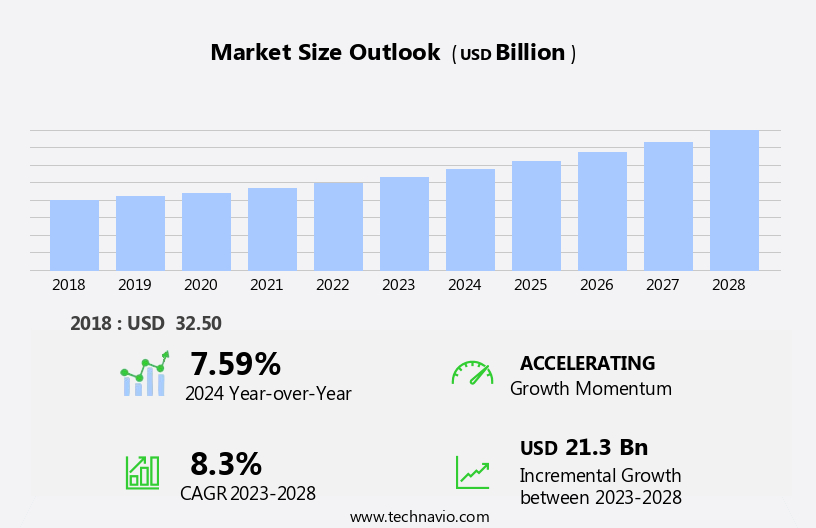
Explore in-depth regional segment analysis with market size data - historical 2018-2022 and forecasts 2024-2028 - in the full report.
Request Free Sample
The market continues to evolve, driven by advancements in technology and the growing demand for remote healthcare solutions. EEG monitoring, non-invasive blood pressure, ECG monitoring technology, blood pressure telemetry, sleep apnea detection, holter monitors, SpO2 monitoring systems, wearable sensors, and end-tidal CO2 monitoring are integral components of this dynamic market. These technologies enable continuous vital signs monitoring, real-time data transmission, and cloud-based storage, enhancing the efficiency and effectiveness of healthcare delivery. The integration of biometric data acquisition, patient portal access, and remote diagnostics tools into patient monitoring systems allows for central monitoring station analysis and interoperability with electronic health records.
Cardiac rhythm analysis and neurological monitoring are essential applications, while data security protocols ensure the protection of sensitive patient information. Respiratory rate tracking and pulse oximetry sensors are crucial for assessing patient health, particularly in home healthcare monitoring and telemedicine integration. The market's continuous unfolding is marked by the development of remote patient monitoring platforms, wireless data transmission, and patient data analytics, all aimed at improving patient safety and streamlining healthcare services.
How is this Patient Monitoring Equipment Industry segmented?
The patient monitoring equipment industry research report provides comprehensive data (region-wise segment analysis), with forecasts and estimates in "USD billion" for the period 2024-2028, as well as historical data from 2018-2022 for the following segments.
- End-user
- Hospitals
- Clinics
- Ambulatory care services
- Type
- Bed-side patient monitoring equipment
- Remote patient monitoring equipment
- Geography
- North America
- US
- Canada
- Europe
- Germany
- UK
- APAC
- China
- Rest of World (ROW)
- North America
By End-user Insights
The hospitals segment is estimated to witness significant growth during the forecast period.
Patient monitoring equipment is essential in hospitals, with a significant focus on enhancing patient safety, cost-effectiveness, and remote monitoring solutions. Driven by technological advancements and the rising prevalence of chronic diseases, the market for patient monitoring devices is witnessing notable growth. These devices continuously monitor vital signs, including heart rate, blood pressure, oxygen saturation, and respiratory rate, providing real-time data to healthcare professionals. This early detection of anomalies allows for timely intervention, preventing adverse events and improving patient outcomes. Medical-grade sensors play a crucial role in patient monitoring, offering accurate and reliable data. Cloud-based storage and patient portal access facilitate easy access to critical patient information.
Real-time monitoring platforms enable remote diagnostics tools, such as ECG monitoring technology, non-invasive blood pressure, and continuous glucose monitoring, to be used in remote patient monitoring. Telemedicine integration further extends the reach of patient monitoring, enabling healthcare professionals to assess and diagnose patients from a distance. Advanced monitoring techniques, such as heart rate variability, capnography monitoring, and neurological monitoring, provide valuable insights into patient health. Data security protocols ensure the confidentiality and integrity of patient data. Interoperability standards enable seamless integration of various monitoring systems, ensuring efficient and effective healthcare delivery. Remote patient monitoring and home healthcare monitoring are becoming increasingly popular, allowing patients to receive care in the comfort of their own homes while reducing hospital readmissions and healthcare costs.
Wearable sensors and wireless data transmission enable continuous monitoring, while pulse oximetry sensors and patient data analytics provide valuable insights for healthcare professionals. In summary, patient monitoring equipment plays a vital role in ensuring patient safety, optimizing resource utilization, and improving patient outcomes in hospitals. With the growing aging population and the increasing prevalence of chronic diseases, the demand for patient monitoring devices is expected to continue growing, driven by technological advancements and the need for cost-effective healthcare solutions.
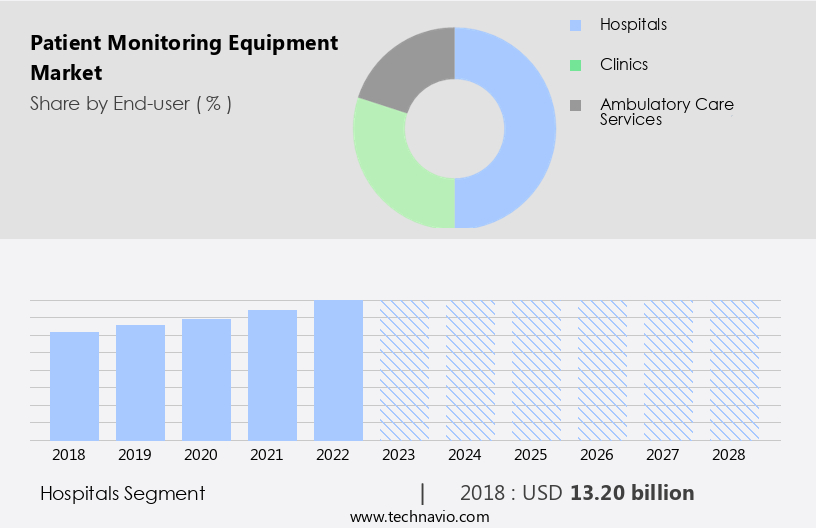
The Hospitals segment was valued at USD 13.20 billion in 2018 and showed a gradual increase during the forecast period.
Regional Analysis
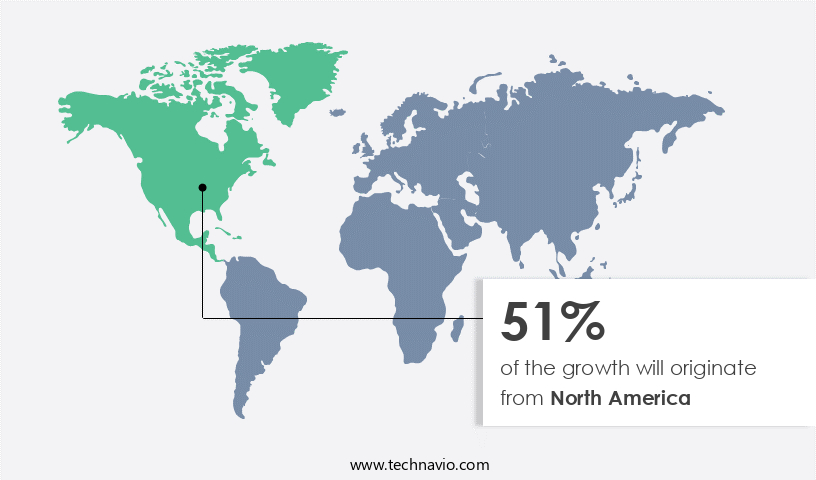
North America is estimated to contribute 51% to the growth of the global market during the forecast period.Technavio’s analysts have elaborately explained the regional trends and drivers that shape the market during the forecast period.
The market in North America experienced significant growth in 2023, driven by technological innovations and the increasing geriatric population. Advanced healthcare infrastructure and high disposable income and living standards in the region have fueled the demand for portable homecare devices and state-of-the-art medical equipment. Patients and healthcare providers in North America have a strong preference for patient monitoring devices with features such as wireless connectivity, remote monitoring capabilities, and data analytics. Key technologies in the market include temperature monitoring devices, invasive and non-invasive blood pressure monitors, medical grade sensors, heart rate variability monitoring, cloud-based storage, continuous glucose monitoring, biometric data acquisition, patient portal access, real-time monitoring platforms, EEG monitoring, capnography monitoring, and pulse oximetry sensors.
These technologies enable remote patient monitoring, telemedicine integration, and home healthcare monitoring. Additionally, the market is focused on data security protocols, interoperability standards, and patient safety alerts to ensure the secure and efficient transmission and analysis of patient data. Other emerging trends include wearable sensors for continuous vital signs monitoring, cardiac rhythm analysis, respiratory rate tracking, neurological monitoring, and sleep apnea detection. Overall, the North American the market is expected to continue its growth trajectory, driven by the demand for advanced medical technologies and the aging population.
Market Dynamics
Our researchers analyzed the data with 2023 as the base year, along with the key drivers, trends, and challenges. A holistic analysis of drivers will help companies refine their marketing strategies to gain a competitive advantage.
What are the key market drivers leading to the rise in the adoption of Patient Monitoring Equipment Industry?
- The increasing demand for remote patient monitoring is the primary market driver, enabling healthcare providers to deliver efficient and effective care while enhancing patient convenience and autonomy.
- Remote patient monitoring (RPM) is a critical aspect of modern healthcare, allowing providers to monitor patients outside traditional settings, such as homes or remote consultations. This trend has gained momentum due to the increasing preference for home care and limited healthcare facility access. Patient monitoring equipment plays a pivotal role in RPM by transmitting vital data wirelessly, enabling healthcare professionals to assess patients' health status and vital parameters in real-time from a remote location. Temperature monitoring devices, invasive blood pressure sensors, heart rate variability monitors, continuous glucose monitoring systems, and biometric data acquisition tools are essential components of patient monitoring equipment.
- These devices transmit real-time data to cloud-based storage platforms, ensuring continuous monitoring and easy access to patient information through patient portals. Cloud-based storage and real-time monitoring platforms facilitate seamless data sharing among healthcare providers, improving patient care coordination and enabling early intervention. Continuous monitoring of vital signs and health status reduces hospital readmissions, enhances patient convenience, and enables early detection of potential health issues. Medical-grade sensors ensure accurate and reliable data acquisition, while heart rate variability analysis provides valuable insights into a patient's overall health and stress levels. Biometric data acquisition tools offer a comprehensive view of a patient's health, contributing to more informed decision-making and personalized care plans.
- In conclusion, patient monitoring equipment plays a vital role in remote patient monitoring, facilitating accurate, real-time data acquisition and transmission, and enabling healthcare professionals to provide effective, personalized care to patients from a distance.
What are the market trends shaping the Patient Monitoring Equipment Industry?
- The trend in the healthcare industry is leaning towards advanced patient monitoring equipment. This sector is witnessing significant progress and innovation.
- Patient monitoring equipment has evolved significantly with the advent of wireless and wearable devices. These innovations enable continuous monitoring of vital signs and physiological parameters without restricting patient mobility. Wearable sensors support non-invasive blood pressure measurement using oscillometric technology, ECG monitoring through ECG monitoring technology, and SpO2 monitoring systems. Additionally, blood pressure telemetry and end-tidal CO2 monitoring are other essential features. Artificial Intelligence (AI) and Machine Learning (ML) technologies have revolutionized patient monitoring equipment. They enhance accuracy, automate data analysis, and provide predictive analytics.
- These technologies can identify trends and patterns in patient data, enabling early detection of health condition changes, predictive patient outcomes, and personalized treatment plans. Non-invasive sleep apnea detection through Holter monitors is another significant development. These advancements have transformed healthcare delivery, ensuring timely intervention and improved patient outcomes.
What challenges does the Patient Monitoring Equipment Industry face during its growth?
- The stringent regulations governing medical equipment pose a significant challenge to the industry's growth, requiring companies to adhere to rigorous safety and efficacy standards in order to bring new products to market.
- Patient monitoring equipment is subject to rigorous regulatory oversight in the US, with the Food and Drug Administration (FDA) and other agencies enforcing stringent compliance requirements. Manufacturers must adhere to quality system regulations governing design, manufacturing, labeling, and reporting of adverse events. Regulatory agencies closely scrutinize these practices to ensure the safety and efficacy of patient monitoring equipment. Advancements in technology have led to the development of innovative patient monitoring solutions, including remote diagnostics tools, vital signs monitoring, cardiac rhythm analysis, respiratory rate tracking, and neurological monitoring. Central monitoring stations enable healthcare providers to monitor multiple patients remotely, improving efficiency and patient outcomes.
- Interoperability standards facilitate seamless data exchange between different monitoring systems, enhancing the overall effectiveness of patient care. The market is driven by the growing need for remote patient monitoring, increasing prevalence of chronic diseases, and the rising demand for cost-effective healthcare solutions. Data security protocols are essential to protect sensitive patient information, and manufacturers must prioritize cybersecurity to mitigate risks. As the market continues to evolve, it is crucial for manufacturers to stay abreast of regulatory requirements and technological advancements to remain competitive.
Exclusive Customer Landscape
The patient monitoring equipment market forecasting report includes the adoption lifecycle of the market, covering from the innovator’s stage to the laggard’s stage. It focuses on adoption rates in different regions based on penetration. Furthermore, the patient monitoring equipment market report also includes key purchase criteria and drivers of price sensitivity to help companies evaluate and develop their market growth analysis strategies.
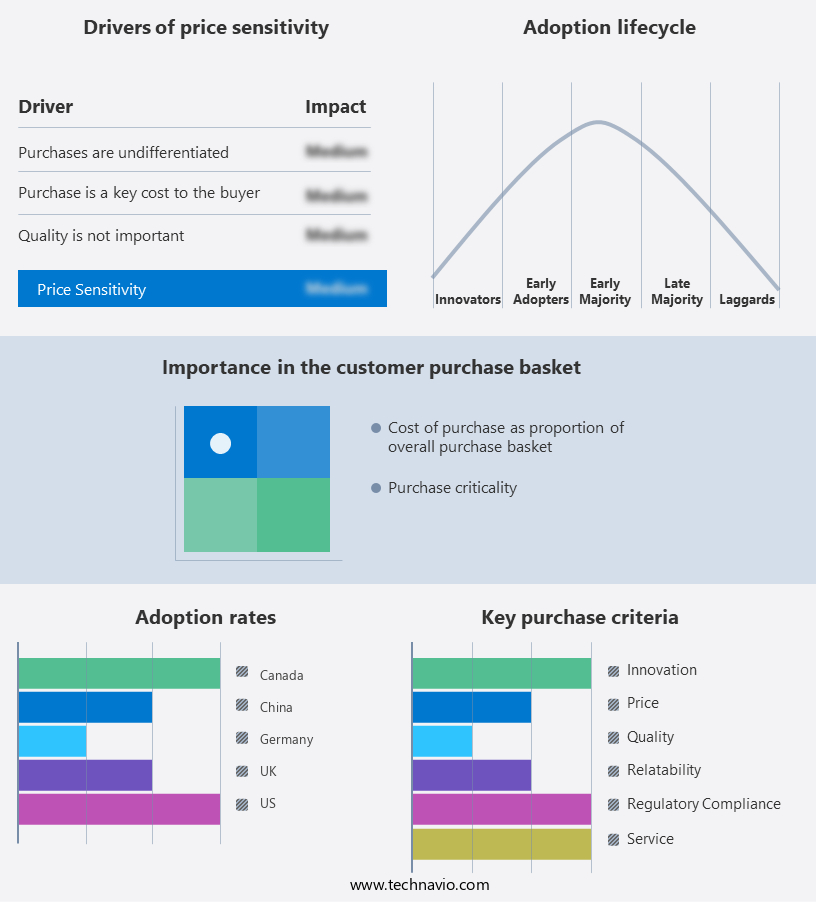
Customer Landscape
Key Companies & Market Insights
Companies are implementing various strategies, such as strategic alliances, patient monitoring equipment market forecast, partnerships, mergers and acquisitions, geographical expansion, and product/service launches, to enhance their presence in the industry.
Abbott Laboratories - The company specializes in advanced patient monitoring technology, including the Freestyle Libre system for continuous glucose monitoring. This innovative device delivers real-time glucose readings without requiring frequent finger pricks, enhancing patient convenience and enabling proactive diabetes management.
The industry research and growth report includes detailed analyses of the competitive landscape of the market and information about key companies, including:
- Abbott Laboratories
- Analog Devices Inc.
- BIOTRONIK SE and Co. KG
- Compumedics Ltd.
- Contec Medical Systems Co. Ltd.
- Dexcom Inc.
- Dragerwerk AG and Co. KGaA
- F. Hoffmann La Roche Ltd.
- Fortive Corp.
- General Electric Co.
- Johnson and Johnson Services Inc.
- Koninklijke Philips N.V.
- Masimo Corp.
- Medtronic Plc
- Shenzhen Mindray BioMedical Electronics Co. Ltd
- Natus Medical Inc.
- Nihon Kohden Corp.
- OMRON Corp.
- Siemens AG
- Smiths Group Plc
Qualitative and quantitative analysis of companies has been conducted to help clients understand the wider business environment as well as the strengths and weaknesses of key industry players. Data is qualitatively analyzed to categorize companies as pure play, category-focused, industry-focused, and diversified; it is quantitatively analyzed to categorize companies as dominant, leading, strong, tentative, and weak.
Recent Development and News in Patient Monitoring Equipment Market
- In January 2024, Medtronic plc, a global healthcare solutions company, announced the launch of its new patient monitoring system, "Guardian Real-Time Glucose Monitoring System," designed for continuous glucose monitoring in intensive care unit patients. This innovative solution aims to improve patient safety and clinical outcomes (Medtronic Press Release, 2024).
- In March 2024, Philips and Microsoft Corporation entered into a strategic partnership to develop integrated health informatics solutions. This collaboration combines Philips' clinical expertise and patient monitoring devices with Microsoft's Azure cloud platform, aiming to enhance healthcare services and patient care (Philips Press Release, 2024).
- In April 2025, Masimo Corporation, a leading provider of noninvasive patient monitoring technologies, closed a USD500 million funding round, bringing its total valuation to over USD10 billion. This significant investment will support the company's continued growth and innovation in the patient monitoring market (Masimo Press Release, 2025).
- In May 2025, the U.S. Food and Drug Administration (FDA) granted approval for the use of Abbott's FreeStyle Libre Pro Glucose Sensing System in hospital inpatient settings. This approval marks a significant expansion of the system's applications, enabling real-time glucose monitoring for hospitalized patients (Abbott Press Release, 2025).
Research Analyst Overview
- The market is experiencing significant growth, driven by the integration of advanced technologies such as remote monitoring software, home health tech, and wearable medical devices. Clinical workflow efficiency is improved through the use of these technologies, enabling real-time monitoring of patient vital signs and predictive analytics. Remote health monitoring allows for early intervention and improved patient outcomes, while medical device regulation ensures safety and interoperability. Signal processing algorithms and diagnostic imaging integration enhance the accuracy of patient data, leading to more effective clinical decision support. Health data security is a critical concern, with data visualization dashboards and patient engagement tools providing secure access to vital information.
- Sensor data integration and medical device connectivity enable seamless communication between devices, reducing healthcare costs. Advanced analytics and personalized medicine are transforming patient care, with body area networks and wireless medical sensors providing rich physiological data. Alarm management systems and clinical decision support tools help healthcare providers respond effectively to patient needs, while mobile health applications offer convenience and accessibility. In summary, the market is dynamic and evolving, with a focus on improving patient outcomes, reducing costs, and enhancing clinical workflow efficiency. Technologies such as remote monitoring software, predictive analytics, and medical device interoperability are driving innovation and shaping the future of healthcare.
Dive into Technavio’s robust research methodology, blending expert interviews, extensive data synthesis, and validated models for unparalleled Patient Monitoring Equipment Market insights. See full methodology.
|
Market Scope |
|
|
Report Coverage |
Details |
|
Page number |
169 |
|
Base year |
2023 |
|
Historic period |
2018-2022 |
|
Forecast period |
2024-2028 |
|
Growth momentum & CAGR |
Accelerate at a CAGR of 8.3% |
|
Market growth 2024-2028 |
USD 21.3 billion |
|
Market structure |
Fragmented |
|
YoY growth 2023-2024(%) |
7.59 |
|
Key countries |
US, Germany, UK, Canada, and China |
|
Competitive landscape |
Leading Companies, Market Positioning of Companies, Competitive Strategies, and Industry Risks |
What are the Key Data Covered in this Patient Monitoring Equipment Market Research and Growth Report?
- CAGR of the Patient Monitoring Equipment industry during the forecast period
- Detailed information on factors that will drive the growth and forecasting between 2024 and 2028
- Precise estimation of the size of the market and its contribution of the industry in focus to the parent market
- Accurate predictions about upcoming growth and trends and changes in consumer behaviour
- Growth of the market across North America, Europe, Asia, and Rest of World (ROW)
- Thorough analysis of the market’s competitive landscape and detailed information about companies
- Comprehensive analysis of factors that will challenge the patient monitoring equipment market growth of industry companies
We can help! Our analysts can customize this patient monitoring equipment market research report to meet your requirements.
 RIA -
RIA - 
