



Europe Vodka Market Size 2025-2029
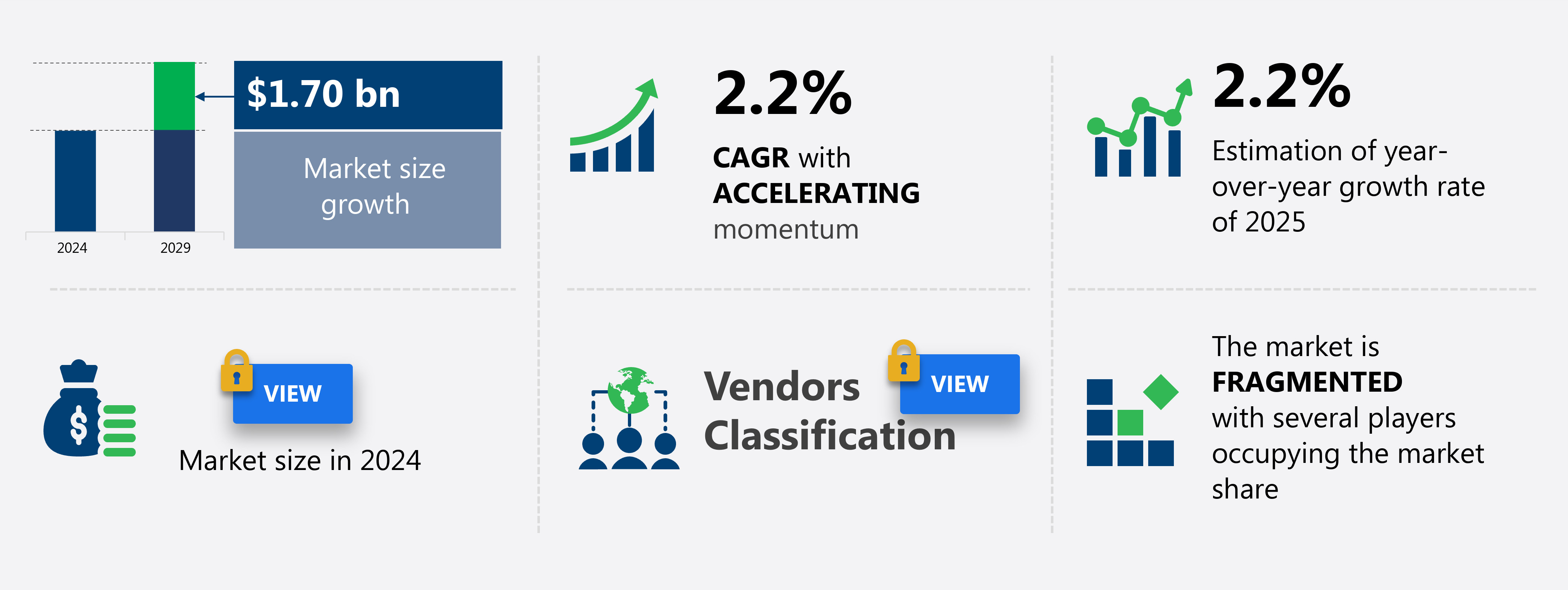
The Europe vodka market size is forecast to increase by USD 1.70 billion at a CAGR of 2.2% between 2024 and 2029.
- The European vodka market is experiencing significant growth, driven by the increasing preference for premium vodka and the rising trend of craft vodka production. This market is poised for expansion, with consumers' shifting preferences towards higher-end vodka offerings and the emergence of artisanal distilleries. However, the market faces challenges that may impact its growth potential. Regulatory hurdles, such as stringent alcohol regulations and licensing requirements, can impede market penetration. Additionally, supply chain inconsistencies, including raw material availability and transportation challenges, can pose operational difficulties for vodka producers.
- Despite these challenges, companies can capitalize on the market's growth opportunities by focusing on product innovation, sustainable production methods, and strategic partnerships. By addressing these challenges and leveraging market trends, vodka producers can effectively navigate the European market and establish a strong market presence.
What will be the size of the Europe Vodka Market during the forecast period?
- In Europe's vibrant vodka market, various trends and initiatives shape consumer behavior and brand equity. Vodka connoisseurs seek authentic experiences through niche markets and sustainability initiatives, such as eco-friendly packaging and responsible production methods. Vodka festivals and events showcase the culture and appreciation for this spirit, attracting a diverse target audience. Innovation trends include digital marketing campaigns, bartender education, and mixology competitions, enhancing branding strategies and customer loyalty.
- Vodka industry partnerships foster collaboration and collaboration, driving product development and influencer marketing. Vodka appreciation extends beyond traditional consumption, with lifestyle and appreciation movements shaping the market. Vodka branding strategies continue to evolve, reflecting the dynamic nature of this dynamic and diverse market.
How is this market segmented?
The market research report provides comprehensive data (region-wise segment analysis), with forecasts and estimates in "USD billion" for the period 2025-2029, as well as historical data from 2019-2023 for the following segments.
- Distribution Channel
- Off-trade
- On-trade
- Product
- Unflavored
- Flavored
- Premium
- End-use
- Household
- Commercial
- Geography
- Europe
- France
- Germany
- Russia
- UK
- Europe
By Distribution Channel Insights
The off-trade segment is estimated to witness significant growth during the forecast period.
The European vodka market encompasses a substantial off-trade sector, where sales occur outside of traditional on-premise establishments. Supermarkets and hypermarkets serve as significant retail channels for vodka in Europe, stocking a diverse range of brands and price points. These shops often feature dedicated liquor sections, providing consumers with ample choices. Specialty liquor stores, focusing on alcoholic beverages, also contribute to the market's off-trade segment, offering an extensive selection of vodka brands and flavors. Ultra-premium and luxury vodka brands often find their way into these channels, catering to consumers seeking high-quality, refined spirits. Ingredients, such as organic food and beverage or locally sourced grains, set these brands apart, contributing to their premium pricing.
Vodka's smoothness and aroma play a crucial role in consumer preferences, with some brands emphasizing these characteristics through innovative filtration processes or aging techniques. On-premise consumption continues to be a significant market driver, with bars, restaurants, and clubs offering vodka mixed drinks and shots. Regulations governing the production, distribution, and advertising of vodka ensure a consistent quality standard across brands. The distillation process, filtration techniques, and aging process all influence the final product's taste and finish. Vodka's versatility extends to various promotional strategies, with brands focusing on premium pricing, sponsorships, and limited-edition releases to capture consumer attention. The market's competition intensifies as brands differentiate themselves through unique flavors, packaging, and sustainability initiatives. Despite the competition, vodka's popularity remains strong, with consumers continuing to explore new brands and innovations.
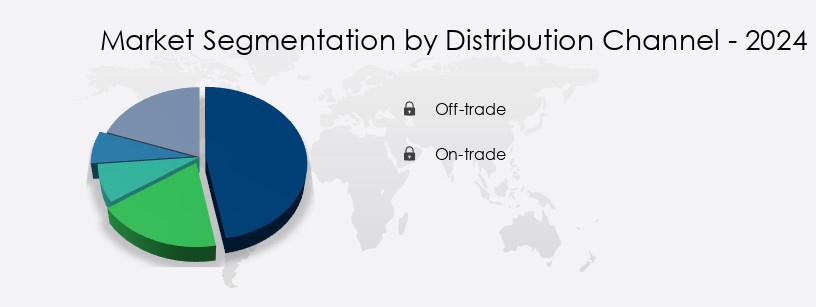
The Off-trade segment was valued at USD billion in 2019 and showed a gradual increase during the forecast period.
Market Dynamics
Our researchers analyzed the data with 2024 as the base year, along with the key drivers, trends, and challenges. A holistic analysis of drivers will help companies refine their marketing strategies to gain a competitive advantage.
The Vodka market grows with premium vodka for bars and organic vodka for retail. Vodka market trends 2025 emphasize craft vodka production and flavored vodka for cocktails. Vodka for hospitality and vodka for e-commerce drive demand, per vodka market forecast 2029. Sustainable vodka distillation leverages vodka for luxury venues, while vodka for home consumption ensures accessibility. Vodka for event catering and vodka for millennials enhance appeal. Vodka for cultural heritage, advanced vodka production, and vodka supply chain optimize growth. Vodka for regulatory compliance, vodka for global markets, vodka for premium dining, vodka for innovative blends, and vodka for B2B sectors propel expansion through 2029.
What are the Europe Vodka Market market drivers leading to the rise in adoption of the Industry?
- The surge in consumer preference for high-end vodka brands is the primary factor fueling market growth. The European vodka market experiences growing demand for premium vodka due to shifting consumer preferences and increased disposable income. European consumers, now more affluent, seek superior taste experiences, making premium vodka an attractive choice over cheaper alternatives. Europe's economic expansion has led to an increase in disposable income, enabling consumers to invest in high-quality goods such as premium vodka. Additionally, the expansion of nightlife and cocktail culture in Europe contributes to the rise in demand for premium vodka. Popular cocktails, including martinis and cosmopolitans, frequently feature premium vodka as a primary ingredient.
- The market values product quality and sustainability, with a focus on the distillation and filtration processes, gluten-free options, and eco-friendly packaging. Vodka aging is also gaining popularity, adding another dimension to the vodka market trends.
What are the Europe Vodka Market market trends shaping the Industry?
- The increasing popularity of craft vodka represents a significant market trend. This emerging trend reflects consumers' growing preference for artisanal spirits produced in small batches with unique flavors and production methods.
- The European vodka market has experienced significant growth in the demand for craft vodka brands. Consumers are increasingly seeking high-quality, artisanal spirits with unique flavors and production processes. In contrast to mass-produced vodka, craft vodka is typically made in small batches using traditional ingredients. The production process often involves multiple distillations, resulting in a smoother and more refined taste. Producers emphasize the craftsmanship and expertise involved in creating these vodkas, highlighting their dedication to detail and authentic methods. The rise of craft vodka is evident in both on-premise consumption and retail channels. While some consumers enjoy savoring these vodkas at bars and restaurants, others prefer purchasing them from specialty stores or online retailers.
- Despite the increasing popularity of craft vodka, taxes on spirits remain a challenge for producers and importers. However, the market's growth is driven by the demand for premium and ultra-premium vodka, which commands a higher price point. Flavored vodkas, another popular segment, cater to diverse consumer preferences and contribute to the overall growth of the market.
How does Europe Vodka Market market faces challenges face during its growth?
- The negative consequences associated with the consumption of vodka pose a significant challenge to the industry's growth trajectory. The European vodka market faces significant challenges due to increasing health concerns among consumers. With vodka's high alcohol content, excessive consumption can lead to various health issues, such as liver damage, addiction, and accidents. Moreover, the rise in binge drinking, particularly among young individuals, has intensified these concerns. Additionally, the growing obesity rates and the focus on calorie intake have led consumers to seek lower-calorie alternatives. Vodka, often mixed with sweet drinks or consumed in cocktails, can contribute to an excessive calorie intake.
- To cater to this trend, vodka innovation focuses on producing organic and lower-calorie options. The competition in the premium and luxury vodka segments remains fierce, with manufacturers continually striving to differentiate their offerings through unique finishes and flavors. Despite these challenges, the market continues to show steady sales, particularly in off-premise consumption channels.
Exclusive Europe Vodka Market Customer Landscape
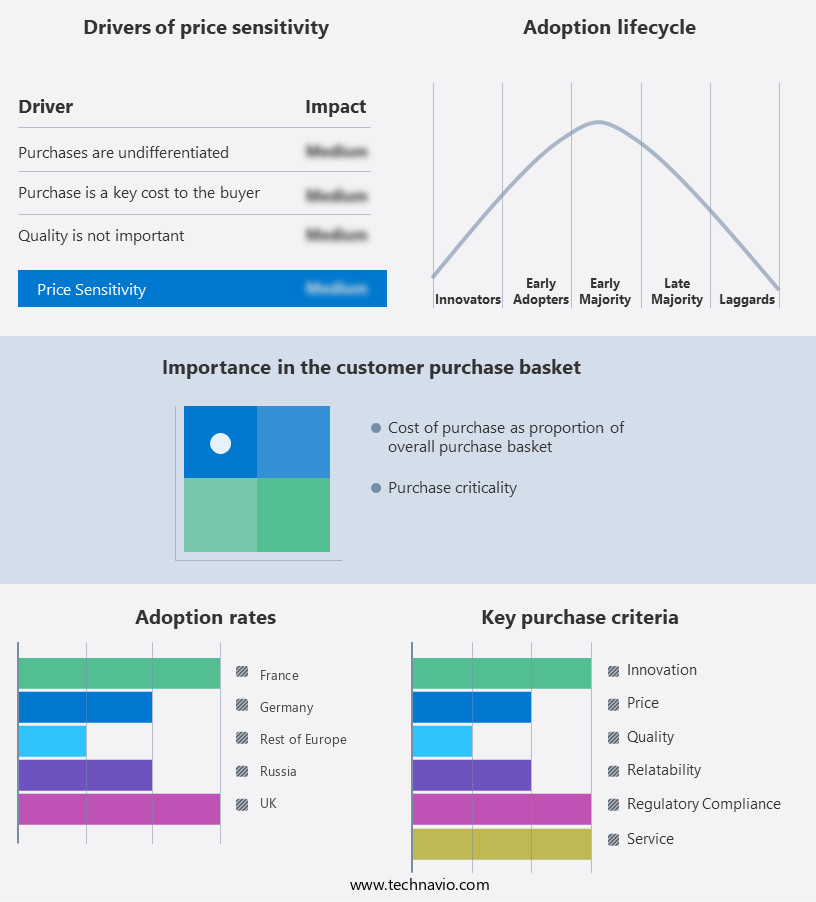
The market forecasting report includes the adoption lifecycle of the market, covering from the innovator's stage to the laggard's stage. It focuses on adoption rates in different regions based on penetration. Furthermore, the report also includes key purchase criteria and drivers of price sensitivity to help companies evaluate and develop their market growth analysis strategies.
Customer Landscape
Key Companies & Market Insights
Companies are implementing various strategies, such as strategic alliances, market forecast partnerships, mergers and acquisitions, geographical expansion, and product/service launches, to enhance their presence in the market.
The market research and growth report includes detailed analyses of the competitive landscape of the market and information about key companies, including:
- Abtshof Magdeburg GmbH
- Alcohol Siberian Group Ltd.
- Anheuser Busch InBev SA NV
- Bacardi and Co Ltd
- Beam Suntory Inc.
- BrewDog Plc
- Brown Forman Corp.
- Diageo PLC
- Ellustria Ltd.
- Highland Liquor Co. Ltd.
- JSC Rosspirtprom
- LVMH Moet Hennessy Louis Vuitton SE
- Molson Coors Beverage Co.
- MOSCOW DISTILLERY CRISTALL
- Novabev Group
- Pernod Ricard SA
- Roust
- Stock Spirits Group
- Stoli Group S.ar.l.
- Yaroslavl Distillery LLC
Qualitative and quantitative analysis of companies has been conducted to help clients understand the wider business environment as well as the strengths and weaknesses of key market players. Data is qualitatively analyzed to categorize companies as pure play, category-focused, industry-focused, and diversified; it is quantitatively analyzed to categorize companies as dominant, leading, strong, tentative, and weak.
Recent Development and News in Vodka Market In Europe
- In February 2024, Diageo, a leading spirits producer, announced the launch of its new premium vodka brand, Belenkaya, in Europe. This expansion aims to cater to the growing demand for high-end spirits in the region (Diageo Press Release, 2024).
- In June 2025, Pernod Ricard and Beluga Group, a Russian luxury vodka producer, signed a strategic partnership to distribute Beluga vodka in Europe. This collaboration will strengthen Pernod Ricard's presence in the premium vodka segment (Pernod Ricard Press Release, 2025).
- In September 2024, Absolut Vodka, a part of Pernod Ricard, unveiled its new product, Absolut Elyx, in Europe. Absolut Elyx is a copper-distilled vodka, marking a significant technological advancement in the production process for the brand (Absolut Vodka Press Release, 2024).
- In March 2025, the European Union (EU) implemented new regulations on alcohol labeling, including stricter rules on alcohol content and ingredient listings. This initiative aims to provide consumers with clearer and more accurate information about the products they purchase (European Commission Press Release, 2025).
Research Analyst Overview
The European vodka market continues to evolve, with dynamic market trends shaping its landscape. Vodka brands strive to differentiate themselves through various means, such as focusing on vodka smoothness and innovative ingredients. Ultra-premium vodka, with its refined taste and luxurious appeal, has gained significant traction in recent years. Vodka blending techniques have become increasingly sophisticated, leading to the emergence of unique flavor profiles. On-premise consumption, particularly in bars and restaurants, remains a significant segment, driving demand for high-quality offerings. Vodka taxes and regulations vary across European countries, impacting pricing and market access. Flavored vodka, with its wide array of options, continues to captivate consumers, driving retail sales.
Vodka imports from countries like Russia and Poland have influenced the market, bringing diverse offerings and competitive pricing. Vodka distribution channels have expanded, with off-premise sales through supermarkets and online platforms growing in popularity. Innovation in vodka production, such as organic and gluten-free options, sustainability initiatives, and new distillation and filtration techniques, are shaping the future of the market. Competition remains fierce, with premium, luxury, and super-premium vodka brands vying for market share. Vodka advertising and marketing strategies have evolved, focusing on experiential activations and influencer partnerships. Vodka cocktails and mixed drinks have gained popularity, further expanding the market's reach.
The vodka market's continuous dynamism reflects its ability to adapt to evolving consumer preferences and market conditions. As trends and consumer behaviors shift, vodka brands must remain agile and innovative to stay competitive.
Dive into Technavio's robust research methodology, blending expert interviews, extensive data synthesis, and validated models for unparalleled Vodka Market in Europe insights. See full methodology.
|
Market Scope |
|
|
Report Coverage |
Details |
|
Page number |
161 |
|
Base year |
2024 |
|
Historic period |
2019-2023 |
|
Forecast period |
2025-2029 |
|
Growth momentum & CAGR |
Accelerate at a CAGR of 2.2% |
|
Market growth 2025-2029 |
USD 1.70 billion |
|
Market structure |
Fragmented |
|
YoY growth 2024-2025(%) |
2.2 |
|
Competitive landscape |
Leading Companies, Market Positioning of Companies, Competitive Strategies, and Industry Risks |
What are the Key Data Covered in this Market Research Report?
- CAGR of the market during the forecast period
- Detailed information on factors that will drive the market growth and forecasting between 2025 and 2029
- Precise estimation of the size of the market and its contribution of the market in focus to the parent market
- Accurate predictions about upcoming market growth and trends and changes in consumer behaviour
- Growth of the market across Europe
- Thorough analysis of the market's competitive landscape and detailed information about companies
- Comprehensive analysis of factors that will challenge the growth of market companies
Have questions about our market research report? Connect with our Principal Consultant for exclusive insights.