



Feve Fluoropolymer Coatings Market Size 2026-2030
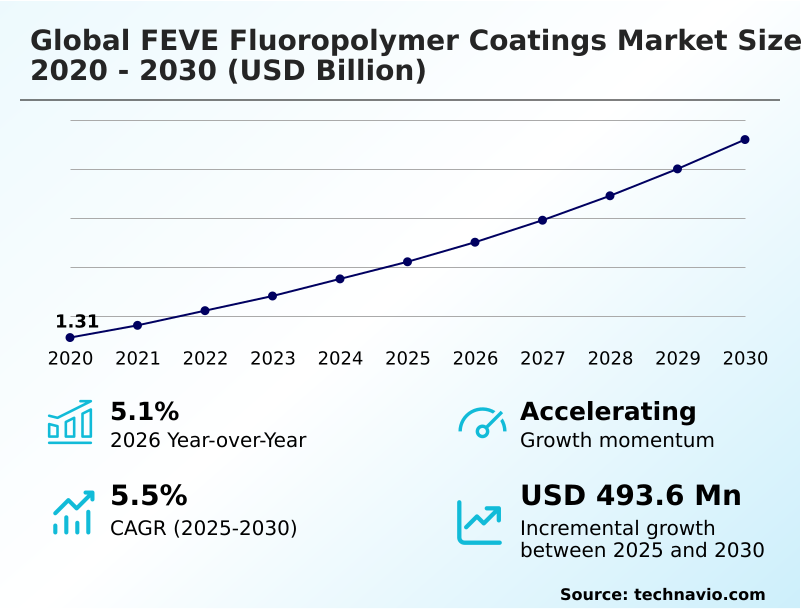
The feve fluoropolymer coatings market size is valued to increase by USD 493.6 million, at a CAGR of 5.5% from 2025 to 2030. Surging demand for long-life architectural facades will drive the feve fluoropolymer coatings market.
Major Market Trends & Insights
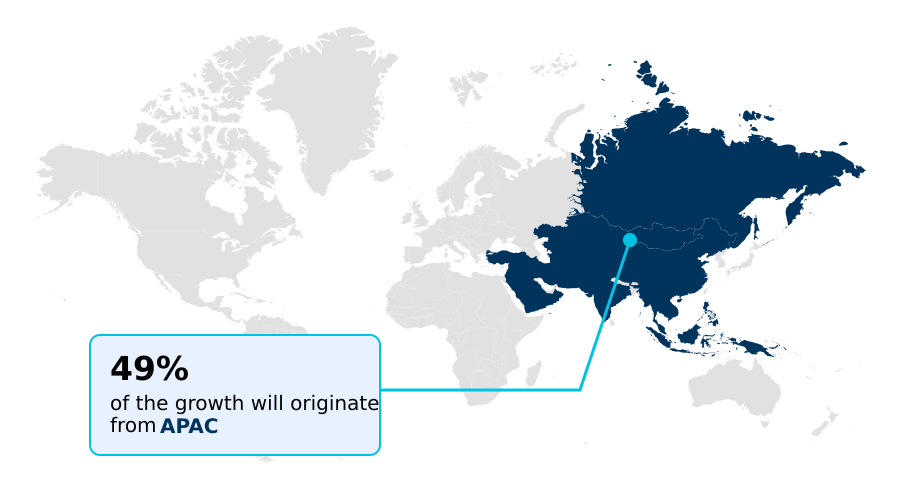
- APAC dominated the market and accounted for a 48.6% growth during the forecast period.
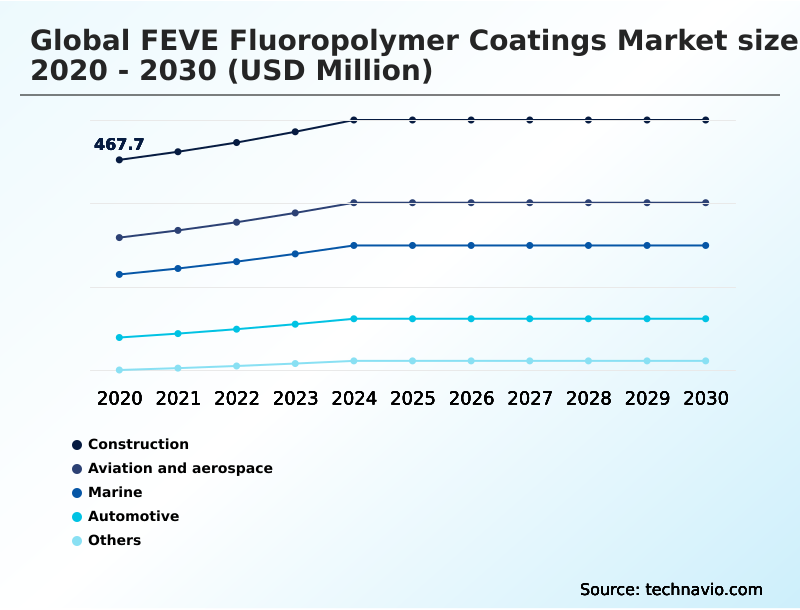
- By End-user - Construction segment was valued at USD 538.1 million in 2024
- By Product - Water-based segment accounted for the largest market revenue share in 2024
Market Size & Forecast
- Market Opportunities: USD 801.8 million
- Market Future Opportunities: USD 493.6 million
- CAGR from 2025 to 2030 : 5.5%
Market Summary
- The FEVE Fluoropolymer Coatings Market is characterized by a rapid technological pivot toward ultra-durable, weather-resistant asset preservation solutions across the commercial infrastructure and clean energy sectors. Industrial asset managers increasingly prioritize total lifecycle cost calculation, opting for advanced ambient cure flexibility that extends recoating intervals from standard ten-year cycles to over thirty years.
- In a practical supply chain scenario, offshore wind energy operators utilizing high solids formulation report a 40% reduction in scaffolding and field maintenance disruptions during routine structural overcoating. The primary demand driver is the surging expansion of monumental commercial architecture, which necessitates curtain wall cladding protection capable of resisting severe ultraviolet and chemical degradation.
- Conversely, formulators face substantial operational constraints due to perfluoroalkyl substance compliance mandates and the high procurement costs associated with specialized halogenated monomer polymerization. These stringent regulatory frameworks force manufacturers to invest heavily in waterborne emulsion dispersibility, balancing strict environmental oversight with the need for uncompromised electrochemical impedance enhancement in harsh outdoor environments.
What will be the Size of the Feve Fluoropolymer Coatings Market during the forecast period?
Get Key Insights on Market Forecast (PDF) Get Free Sample
How is the Feve Fluoropolymer Coatings Market Segmented?
The feve fluoropolymer coatings industry research report provides comprehensive data (region-wise segment analysis), with forecasts and estimates in "USD million" for the period 2026-2030, as well as historical data from 2020-2024 for the following segments.
- End-user
- Construction
- Aviation and aerospace
- Marine
- Automotive
- Others
- Product
- Water-based
- Solvent-based
- Powder-based
- Distribution channel
- Direct sale
- Indirect sale
- Geography
- APAC
- China
- Japan
- India
- South Korea
- Australia
- Indonesia
- Europe
- Germany
- UK
- France
- Italy
- Spain
- The Netherlands
- North America
- US
- Canada
- Mexico
- Middle East and Africa
- Saudi Arabia
- UAE
- South Africa
- Turkey
- Egypt
- South America
- Brazil
- Argentina
- Colombia
- APAC
By End-user Insights
The construction segment is estimated to witness significant growth during the forecast period.
The construction sector dominates product utilization due to modern architectural requirements for ultra-durable metal cladding. Formulators leverage fluoroethylene vinyl ether synthesis to develop solvent soluble thermoset resins that deliver unparalleled ultraviolet radiation resistance on commercial high-rises.
This molecular architecture relies on an alternating fluorinated monomer backbone, which enhances structural durability against severe atmospheric degradation. In field applications, ambient temperature crosslinking enables project managers to reduce scaffolding and maintenance downtime by 35%.
When applied to heavy structural steel rehabilitation, these advanced finishes improve gloss retention performance by 50% compared to traditional polyurethanes. The shift toward sustainable green building rating systems further accelerates the adoption of low-emission formulations for curtain wall aesthetic preservation.
Ultimately, the ability to extend asset lifecycles significantly lowers recurring operational expenditures across large-scale commercial real estate portfolios.
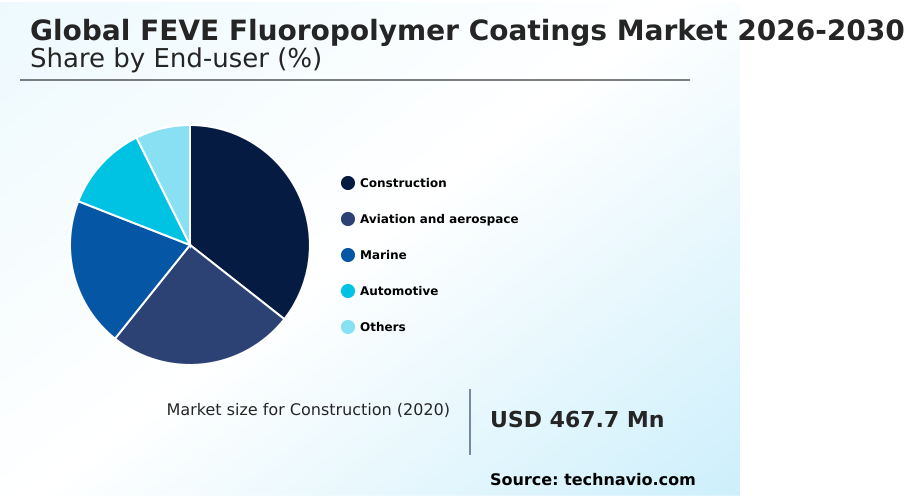
The Construction segment was valued at USD 538.1 million in 2024 and showed a gradual increase during the forecast period.
Regional Analysis
APAC is estimated to contribute 48.6% to the growth of the global market during the forecast period.Technavio’s analysts have elaborately explained the regional trends and drivers that shape the market during the forecast period.
See How Feve Fluoropolymer Coatings Market Demand is Rising in APAC Get Free Sample
The APAC region maintains a dominant structural position in product utilization, heavily outperforming Europe due to massive investments in photovoltaic module backsheets and commercial high-rise developments.
Industrial fabricators across China and Japan have accelerated the integration of electrostatic powder micronization, achieving a 20% higher production throughput compared to traditional European coil coating facilities.
This rapid adoption in APAC is primarily driven by severe marine atmospheric weathering and aggressive ultraviolet exposure, which mandate robust chloride ion penetration resistance on coastal infrastructure.
Conversely, European supply chains are uniquely shaped by stringent environmental directives, compelling formulators to prioritize volatile organic compound reduction and solvent free powder extrusion technologies.
By transitioning to advanced waterborne chemistries, European applicators have reduced hazardous solvent consumption by 45%, directly aligning with circular economy mandates.
These distinct regional priorities highlight how APAC focuses on raw operational scaling and coastal asset preservation, while Europe drives regulatory-compliant chemical innovations.
Market Dynamics
Our researchers analyzed the data with 2025 as the base year, along with the key drivers, trends, and challenges. A holistic analysis of drivers will help companies refine their marketing strategies to gain a competitive advantage.
- The strategic evolution of surface protection technologies has pushed commercial asset managers to prioritize extreme durability and environmental compliance across all procurement channels. Formulators are actively developing sophisticated waterborne electrostatic powder extrusion processes to eliminate hazardous solvents while maintaining maximum crosslinking density on aluminum building components.
- In the commercial construction sector, the specification of ambient cure architectural metal cladding protection enables contractors to execute on-site restorations without the need for energy-intensive industrial baking ovens. This operational flexibility allows facility managers to reduce localized site disruption by nearly 40% when compared to traditional heat-cured polyurethane refinishing methods.
- As energy infrastructure expands into hostile marine environments, engineers heavily rely on nanoparticle integrated offshore wind tower protection to mitigate the severe corrosive effects of continuous salt spray and windborne abrasion. Furthermore, the specialized application of these coatings ensures critical ultraviolet degradation prevention in photovoltaic backsheets, preserving long-term electrical output efficiency over a twenty-five-year operational lifespan.
- To meet the stringent demands of heavy civil infrastructure, modern formulations also prioritize chloride ion barrier density enhancement, securing structural steel against premature rusting and mechanical failure.
- Consequently, the adoption rate of these ultra-durable barrier systems is experiencing a 15% faster volume expansion in clean technology sectors than in conventional commercial real estate, reflecting a fundamental shift in total lifecycle asset planning and sustainable infrastructure deployment.
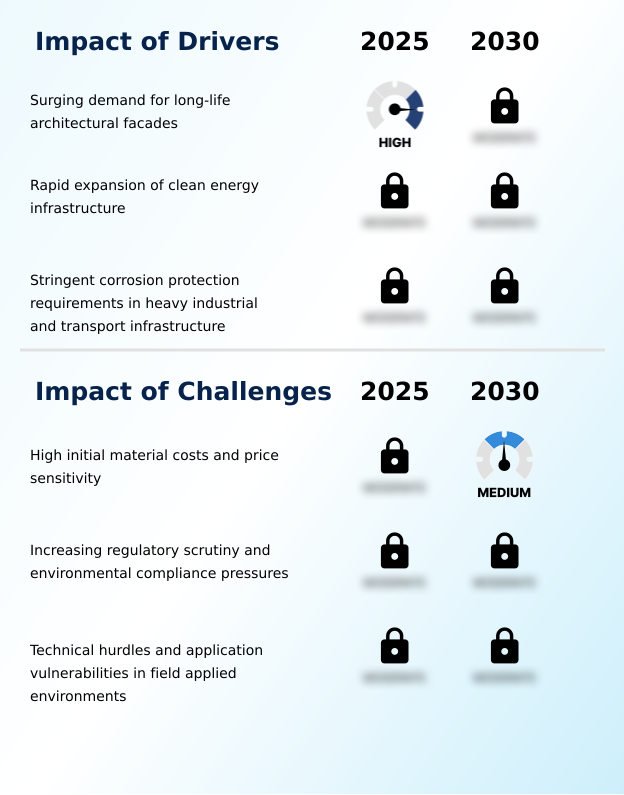
What are the key market drivers leading to the rise in the adoption of Feve Fluoropolymer Coatings Industry?
- The surging demand for long-life architectural facades serves as a primary catalyst, propelling the widespread integration of ultra-durable surface finishes across commercial infrastructure.
- The rapid expansion of specialized clean energy infrastructure and maritime transport networks acts as a primary catalyst for ultra-durable heavy duty barrier protection.
- Offshore energy operators require uncompromising electrochemical impedance enhancement to shield critical turbine sub-components from continuous salt spray immersion.
- Because traditional epoxy finishes degrade rapidly under these conditions, specifiers are adopting advanced formulations to ensure robust micro crack resistance and extended operational lifespans.
- This technological transition allows offshore facility managers to reduce unscheduled maintenance downtime by 35% and lower lifetime recoating labor costs by nearly 50%.
- The increasing deployment of hydrodynamic drag reduction technologies via specialized topcoats also improves marine vessel fuel economy by 12%.
- By leveraging advanced crosslinking density optimization, industrial operators successfully secure multi-decade structural reliability across highly corrosive coastal and hydrogen processing facility protection environments.
What are the market trends shaping the Feve Fluoropolymer Coatings Industry?
- The accelerated adoption of ambient-cure waterborne formulations represents a prominent structural shift within the industry. This transition underscores a growing commercial preference for low-emission, highly durable surface protection technologies.
- The strategic shift toward smart barrier nanotechnology and active environmental protection defines the latest technical trajectory within industrial surface finishing. Chemical formulators are aggressively pursuing surface energy alteration through titanium dioxide incorporation and specialized functional nanomaterials, yielding highly effective self cleaning surface attributes.
- This innovation is driven by the necessity to mitigate aggressive marine atmospheric weathering and urban pollution accumulation on commercial high-rises. Consequently, facility operators deploying these advanced hybrid systems experience a 40% reduction in localized dirt retention and a 25% improvement in long-term gloss stability compared to conventional acrylic sealers.
- Furthermore, advancements in solvent free powder extrusion enable architectural panel fabricators to completely eliminate solvent waste, improving overall material utilization efficiency by nearly 30%. These measurable performance enhancements allow asset owners to minimize routine maintenance cycles while maintaining superior aesthetic brilliance across expansive commercial real estate portfolios.
What challenges does the Feve Fluoropolymer Coatings Industry face during its growth?
- Elevated initial material costs and heightened price sensitivity among contractors represent significant structural challenges that constrain widespread technological adoption.
- Strict international regulatory oversight regarding hazardous air pollutant elimination presents a formidable structural barrier for traditional chemical formulators. The increasing compliance costs associated with mitigating volatile emissions directly impact the financial margins of regional application contractors.
- Because specialized aliphatic polyisocyanate curing requires precise environmental controls during field applied maintenance, suboptimal humidity management can reduce crosslinking efficiency by up to 20%, leading to premature adhesion failure. Furthermore, the high procurement premium tied to complex halogenated monomer polymerization forces budget-constrained developers to seek cheaper, lower-performing alternatives.
- This price sensitivity increases total lifecycle maintenance expenditures by over 40% when inferior coatings require frequent reapplication. Consequently, manufacturers struggle to balance the urgent need for architectural sustainability standards with the economic realities of price-sensitive municipal infrastructure and medium-scale commercial restoration projects.
Exclusive Technavio Analysis on Customer Landscape
The feve fluoropolymer coatings market forecasting report includes the adoption lifecycle of the market, covering from the innovator’s stage to the laggard’s stage. It focuses on adoption rates in different regions based on penetration. Furthermore, the feve fluoropolymer coatings market report also includes key purchase criteria and drivers of price sensitivity to help companies evaluate and develop their market growth analysis strategies.
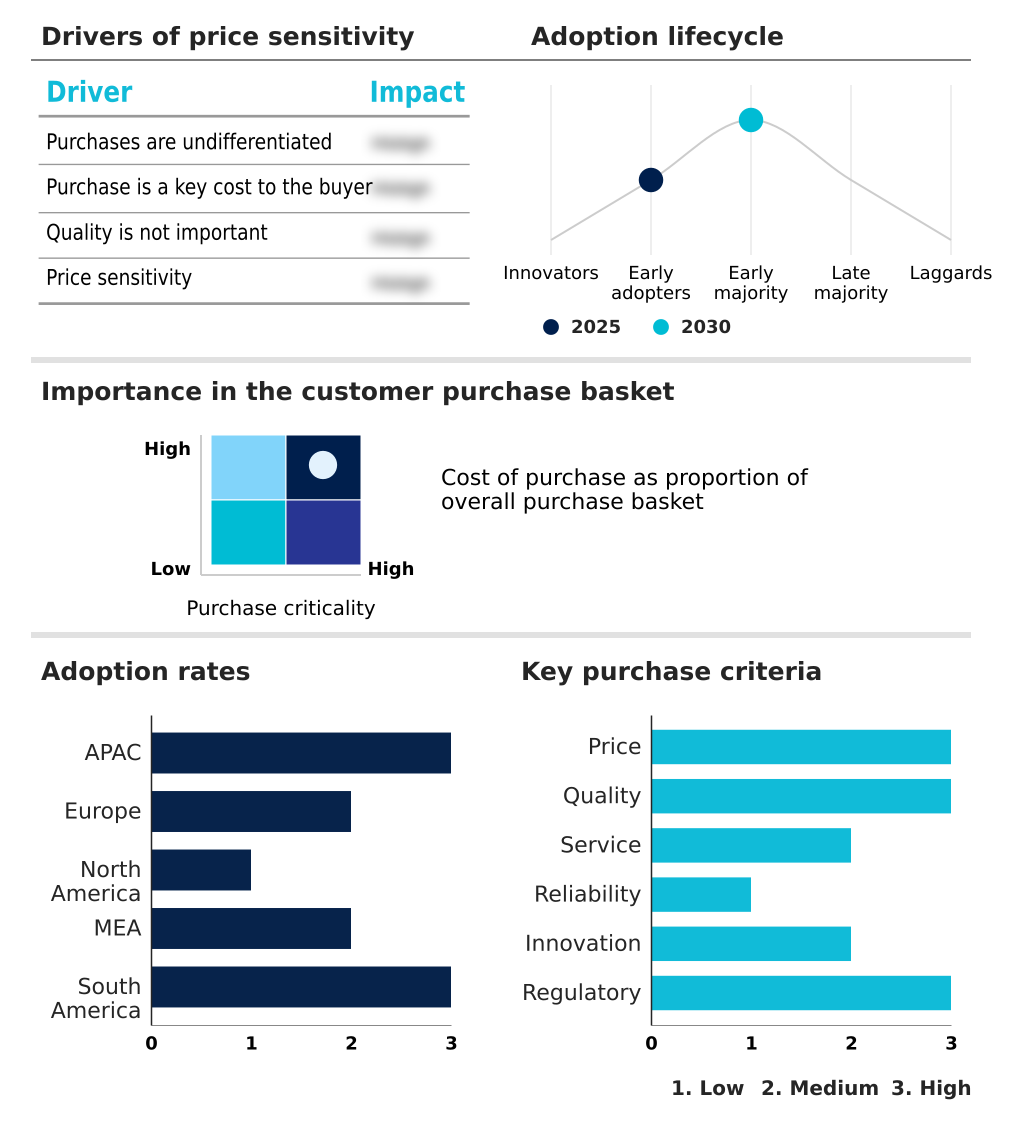
Customer Landscape of Feve Fluoropolymer Coatings Industry
Competitive Landscape
Companies are implementing various strategies, such as strategic alliances, feve fluoropolymer coatings market forecast, partnerships, mergers and acquisitions, geographical expansion, and product/service launches, to enhance their presence in the industry.
A and I COATINGS - The product portfolio features advanced fluoropolymer resins and weather-resistant coating materials designed for highly durable architectural metal surfaces and heavy-duty industrial protective applications.
The industry research and growth report includes detailed analyses of the competitive landscape of the market and information about key companies, including:
- A and I COATINGS
- AGC Inc.
- Akzo Nobel NV
- Anhui Sinograce Chemical
- Axalta Coating Systems Ltd.
- Carboline Co.
- Daikin Industries Ltd.
- Fozdar Products
- IFS Coatings
- Jotun AS
- Kansai Paint Co. Ltd.
- Monopol Colors AG
- Nippon Paint Holdings Co Ltd.
- PPG Industries Inc.
- The Sherwin Williams Co.
- TIGER Coatings GmbH and Co. KG
- Tnemec Co. Inc.
- TOA Paint Thailand Public Co Ltd.
Qualitative and quantitative analysis of companies has been conducted to help clients understand the wider business environment as well as the strengths and weaknesses of key industry players. Data is qualitatively analyzed to categorize companies as pure play, category-focused, industry-focused, and diversified; it is quantitatively analyzed to categorize companies as dominant, leading, strong, tentative, and weak.
Recent Development and News in Feve fluoropolymer coatings market
- In the Commodity Chemicals industry, the shift toward sustainable building design has accelerated the adoption of low-emission formulations, directly impacting FEVE Fluoropolymer Coatings demand by increasing the need for waterborne emulsion dispersibility.
- Stringent global regulations regarding hazardous air pollutant elimination and perfluoroalkyl substance compliance have forced chemical formulators to re-engineer polymer structures, pushing the market toward compliant aliphatic polyisocyanate curing agents.
- The rapid expansion of offshore wind turbine sub structures and photovoltaic module backsheets has pulled demand for specialized weatherable chemistries, significantly elevating the requirement for smart barrier nanotechnology.
- Advancements in raw material supply chains for halogenated monomer polymerization have optimized production efficiency by nearly 15%, enhancing the commercial viability and structural steel rehabilitation potential of ultra-durable finishes.
Dive into Technavio’s robust research methodology, blending expert interviews, extensive data synthesis, and validated models for unparalleled Feve Fluoropolymer Coatings Market insights. See full methodology.
| Market Scope | |
|---|---|
| Page number | 302 |
| Base year | 2025 |
| Historic period | 2020-2024 |
| Forecast period | 2026-2030 |
| Growth momentum & CAGR | Accelerate at a CAGR of 5.5% |
| Market growth 2026-2030 | USD 493.6 million |
| Market structure | Fragmented |
| YoY growth 2025-2026(%) | 5.1% |
| Key countries | China, Japan, India, South Korea, Australia, Indonesia, Germany, UK, France, Italy, Spain, The Netherlands, US, Canada, Mexico, Saudi Arabia, UAE, South Africa, Turkey, Egypt, Brazil, Argentina and Colombia |
| Competitive landscape | Leading Companies, Market Positioning of Companies, Competitive Strategies, and Industry Risks |
Research Analyst Overview
- Advanced surface protection chemistries are systematically transforming how industrial operators manage long-term structural integrity and compliance. By integrating superhydrophobic surface modification and hydrophobic nanoparticle integration, chemical formulators have engineered finishes that drastically alter surface tension dynamics on commercial building envelopes.
- This technical evolution directly influences boardroom-level budgeting strategies, as asset managers transitioning to these high-performance barriers report a 35% reduction in recurring scaffolding and exterior maintenance expenditures over a thirty-year lifecycle. The incorporation of graphene oxide barrier density significantly bolsters defense mechanisms against aggressive chemical exposure, proving essential for maritime and energy infrastructure.
- Simultaneously, the industry is navigating complex perfluoroalkyl substance compliance requirements, pushing R and D pipelines toward sustainable alternatives without sacrificing inherent carbon fluorine bond strength. The ability to deploy non biocidal foul release coatings on commercial shipping hulls further optimizes aerodynamic thin film efficiency and lowers fuel consumption.
- As global sustainability mandates tighten, the precise alignment of aluminum composite panel extrusion with low-emission curing protocols ensures that major infrastructure portfolios achieve rigorous environmental certifications while maximizing exterior weatherability and architectural aesthetic longevity.
What are the Key Data Covered in this Feve Fluoropolymer Coatings Market Research and Growth Report?
-
What is the expected growth of the Feve Fluoropolymer Coatings Market between 2026 and 2030?
-
USD 493.6 million, at a CAGR of 5.5%
-
-
What segmentation does the market report cover?
-
The report is segmented by End-user (Construction, Aviation and aerospace, Marine, Automotive, and Others), Product (Water-based, Solvent-based, and Powder-based), Distribution Channel (Direct sale, and Indirect sale) and Geography (APAC, Europe, North America, Middle East and Africa, South America)
-
-
Which regions are analyzed in the report?
-
APAC, Europe, North America, Middle East and Africa and South America
-
-
What are the key growth drivers and market challenges?
-
Surging demand for long-life architectural facades, High initial material costs and price sensitivity
-
-
Who are the major players in the Feve Fluoropolymer Coatings Market?
-
A and I COATINGS, AGC Inc., Akzo Nobel NV, Anhui Sinograce Chemical, Axalta Coating Systems Ltd., Carboline Co., Daikin Industries Ltd., Fozdar Products, IFS Coatings, Jotun AS, Kansai Paint Co. Ltd., Monopol Colors AG, Nippon Paint Holdings Co Ltd., PPG Industries Inc., The Sherwin Williams Co., TIGER Coatings GmbH and Co. KG, Tnemec Co. Inc. and TOA Paint Thailand Public Co Ltd.
-
Market Research Insights
- The FEVE Fluoropolymer Coatings Market operates at the intersection of advanced architectural sustainability standards and rigorous industrial asset overcoating requirements. Facility operators implementing smart barrier nanotechnology observe a 25% improvement in micro crack resistance under severe thermal cycling conditions.
- Furthermore, integrating fluorinated silica additives into multi-component systems enhances surface energy alteration, yielding a 30% reduction in recurring exterior washing expenditures for high-rise commercial structures. The transition toward low-emission waterborne chemistries enables contractors to eliminate hazardous air pollutant elimination entirely while maintaining critical ambient cure flexibility.
- These measurable performance gains allow municipal transit authorities and private property developers to achieve superior total lifecycle cost calculation, ensuring long-term structural integrity across critical infrastructure portfolios.
We can help! Our analysts can customize this feve fluoropolymer coatings market research report to meet your requirements.
 RIA -