


Fine Arts Logistics Market Size 2026-2030
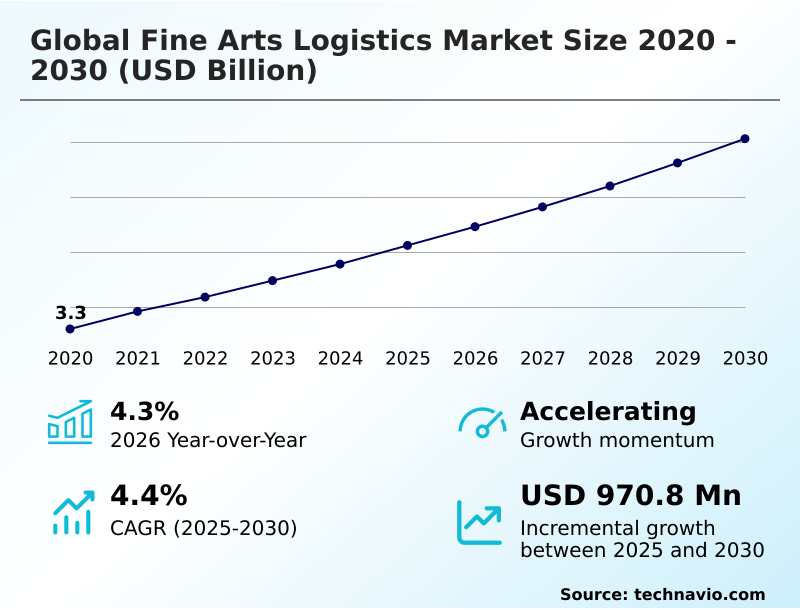
The fine arts logistics market size is valued to increase by USD 970.8 million, at a CAGR of 4.4% from 2025 to 2030. Implementation of complex trade policies and surging demand for integrated customs brokerage will drive the fine arts logistics market.
Major Market Trends & Insights
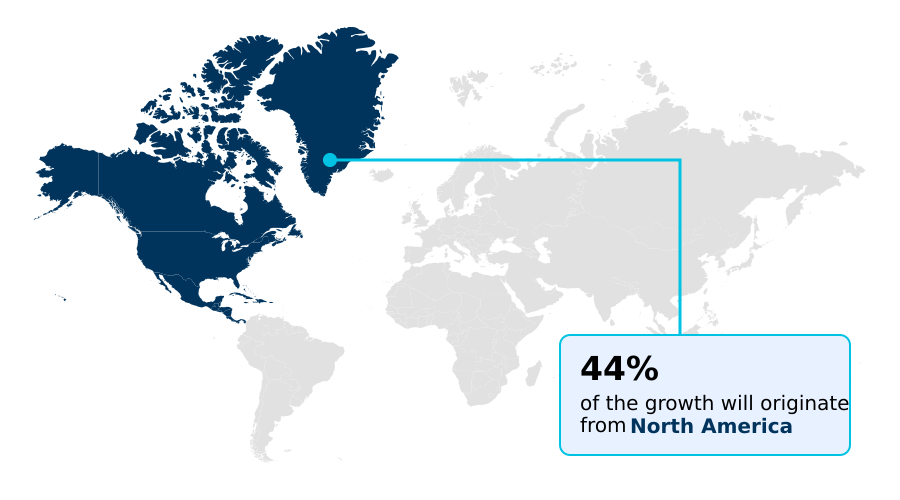
- North America dominated the market and accounted for a 44.2% growth during the forecast period.
- By End-user - Art dealers and galleries segment was valued at USD 1.68 billion in 2024
- By Type - Transportation segment accounted for the largest market revenue share in 2024
Market Size & Forecast
- Market Opportunities: USD 1.72 billion
- Market Future Opportunities: USD 970.8 million
- CAGR from 2025 to 2030 : 4.4%
Market Summary
- The fine arts logistics market is undergoing a profound evolution, driven by the financialization of art and the globalization of cultural exhibitions. This necessitates a shift from basic transport to comprehensive, high-value service chains. Specialized providers now function as supply chain architects, offering solutions that include climate-controlled shipping, hyper-secure warehousing, and expert legal compliance navigation.
- A key business scenario involves a gallery orchestrating a multi-city exhibition tour for a major artist. It relies on a single logistics partner to manage everything from museum-grade crating and air-ride suspension vehicles to complex customs brokerage and time-critical exhibition logistics.
- By leveraging blockchain-based provenance and real-time IoT tracking, the gallery ensures an unbroken chain-of-custody documentation, satisfying fine art insurance underwriting requirements and facilitating seamless white-glove installation at each venue. This integrated approach, which includes the use of freeport facilities for tax-advantaged storage, is becoming the standard for protecting and managing high-value cultural assets in a complex global landscape.
What will be the Size of the Fine Arts Logistics Market during the forecast period?
Get Key Insights on Market Forecast (PDF) Get Free Sample
How is the Fine Arts Logistics Market Segmented?
The fine arts logistics industry research report provides comprehensive data (region-wise segment analysis), with forecasts and estimates in "USD million" for the period 2026-2030, as well as historical data from 2020-2024 for the following segments.
- End-user
- Art dealers and galleries
- Auction houses
- Museum and art fair
- Others
- Type
- Transportation
- Storage
- Packaging
- Others
- Product type
- Paintings
- Sculptures
- Antiques
- Photography
- Others
- Geography
- North America
- US
- Canada
- Mexico
- Europe
- UK
- Germany
- France
- APAC
- China
- Japan
- India
- South America
- Brazil
- Argentina
- Middle East and Africa
- UAE
- Saudi Arabia
- South Africa
- Rest of World (ROW)
- North America
By End-user Insights
The art dealers and galleries segment is estimated to witness significant growth during the forecast period.
The art dealers and galleries segment is a primary driver for the fine arts logistics market, with entities ranging from boutique dealers to multinational franchises requiring specialized transportation and storage.
The globalization of the commercial art sector necessitates sophisticated international freight forwarding and expert customs clearance to move high-value pieces across borders.
A critical shift is the integration of e-commerce, which has transformed operational needs, demanding direct-to-consumer shipping solutions that maintain stringent environmental controls. Supporting this, providers offer end-to-end services including bespoke crating and white-glove installation.
This pivot to digital has improved efficiency, with some galleries increasing their e-commerce fulfillment speed fivefold by synchronizing inventory and shipping, significantly reducing manual handling errors and enhancing client satisfaction.
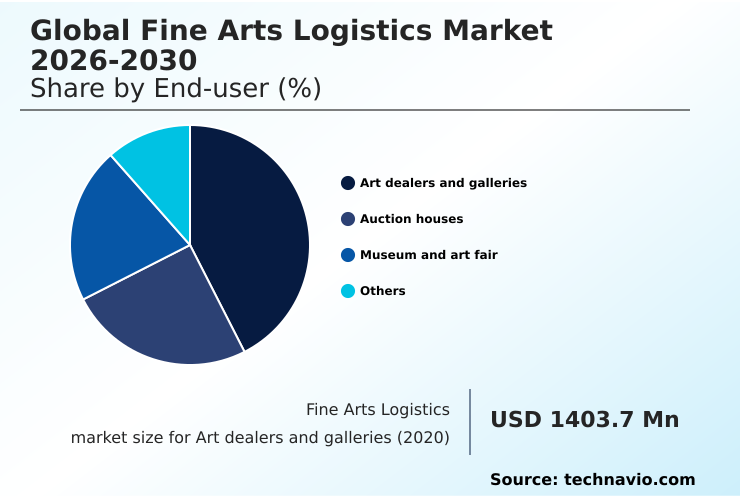
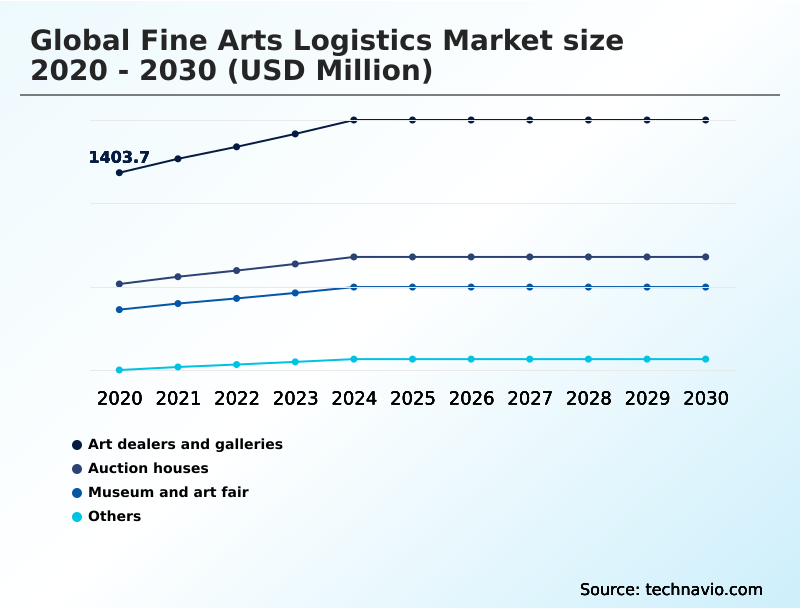
The Art dealers and galleries segment was valued at USD 1.68 billion in 2024 and showed a gradual increase during the forecast period.
Regional Analysis
North America is estimated to contribute 44.2% to the growth of the global market during the forecast period.Technavio’s analysts have elaborately explained the regional trends and drivers that shape the market during the forecast period.
See How Fine Arts Logistics Market Demand is Rising in North America Get Free Sample
The geographic landscape of the market is defined by a dichotomy between established and emerging hubs.
North America accounts for over 44% of the market's incremental growth, driven by its dense concentration of collectors and institutions demanding sophisticated solutions like air-ride suspension vehicles and specialized customs brokerage services.
In contrast, APAC is the fastest-growing region, where the primary challenge is mitigating extreme environmental conditions. Here, logistics providers deploying advanced climate control systems have been shown to reduce humidity-related damage to sensitive artworks by over 60%.
This investment in technology, including vibration-dampening technology and sustainable logistics practices, is critical for serving new institutional art hubs and managing time-critical exhibition logistics, ensuring the region’s successful integration into the global art trade and securing its position as a major center for art commerce.
Market Dynamics
Our researchers analyzed the data with 2025 as the base year, along with the key drivers, trends, and challenges. A holistic analysis of drivers will help companies refine their marketing strategies to gain a competitive advantage.
- Navigating the fine arts logistics market requires a deep understanding of its intricate cost structures and operational demands. The cost of climate-controlled art transport is a primary consideration for collectors and institutions, who must balance expense against the risk of irreparable damage.
- Best practices for packing paintings for shipping, which involve multi-layered, climate-buffered casing, differ significantly from the engineering required for how to ship large sculptures internationally, a process often involving custom rigging and specialized flatbed transit. The financial strategy extends to storage, where the tax implications of freeport art storage are making these facilities integral for high-value portfolio management.
- Concurrently, a push for environmental responsibility is promoting sustainable alternatives to wooden art crates, with some reusable solutions reducing packaging costs by up to 25% over a three-year cycle compared to single-use options. This shift aligns with evolving insurance requirements for museum loans, which increasingly scrutinize the entire logistics chain.
- These factors compound the existing challenges in cross-border art logistics, where using IoT for tracking valuable artwork and understanding environmental controls for photographic art storage are becoming standard expectations. Furthermore, navigating logistics for major events like Art Basel Qatar demands a level of precision and technological integration that defines the top tier of the industry.
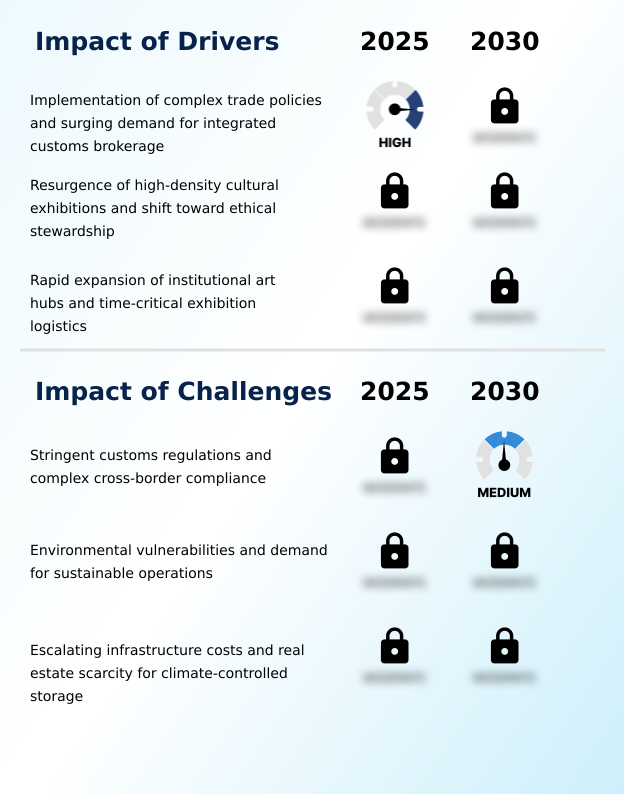
What are the key market drivers leading to the rise in the adoption of Fine Arts Logistics Industry?
- The implementation of complex trade policies is a key market driver, fueling surging demand for integrated customs brokerage solutions.
- Market growth is propelled by the convergence of regulatory complexity, cultural expansion, and institutional demand.
- The implementation of complex international trade policies has created an urgent need for integrated customs brokerage services, where specialized providers can reduce tariff-related penalties by more than 95%.
- Simultaneously, a global resurgence of high-density cultural exhibitions and art fairs fuels demand for flawless, time-critical exhibition logistics, including museum-grade crating and white-glove installation.
- This is particularly evident in emerging economic regions, where the demand for specialized exhibition logistics has grown by 50% in recent years.
- This rapid expansion of institutional art hubs, especially in APAC, compels logistics organizations to scale resources and deliver unparalleled precision to support the globalization of the fine art trade through services like monumental sculpture rigging and secure art storage solutions.
What are the market trends shaping the Fine Arts Logistics Industry?
- The integration of advanced digitalization and the Internet of Things (IoT) for real-time tracking is a transformative trend, enhancing transparency and security throughout the fine art supply chain.
- The market is being reshaped by three dominant trends: digitalization, sustainability, and infrastructural innovation. Advanced digitalization, including IoT tracking and blockchain-based provenance verification, provides unprecedented transparency. This technology can expedite customs clearance by up to 40% by offering immutable chain-of-custody documentation.
- Secondly, a profound shift towards decarbonization and sustainable art handling practices is compelling providers to adopt reusable packaging materials, with some solutions reducing packaging waste by over 85%. This push for sustainable logistics is transforming operational models. Finally, the proliferation of elite, airport-adjacent freeport facilities meets the demand for hyper-secure, tax-advantaged art investment storage.
- These hubs are becoming autonomous ecosystems, offering services like on-site conservation and private viewing rooms, thereby streamlining the global art trade and ensuring the meticulous preservation of priceless assets.
What challenges does the Fine Arts Logistics Industry face during its growth?
- Stringent customs regulations and the complexities of cross-border compliance present a primary challenge to the industry's growth.
- The market confronts significant operational and financial challenges. Stringent customs regulations and complex cross-border compliance demand substantial investment in legal expertise and technology, as even minor errors can lead to costly delays. Balancing the intensive energy needs of art preservation with sustainability mandates presents another hurdle; constructing a single climate-controlled storage facility can cost 200% more than a standard warehouse.
- Furthermore, the operational expenses for fine art insurance underwriting, specialized packaging, and advanced security, coupled with real estate scarcity in global art hubs, continue to escalate.
- The energy consumption required for active climate control in these facilities can account for up to 70% of operational costs, creating a profound paradox for firms striving to meet both preservation standards and environmental targets. These pressures are compelling consolidation and strategic partnerships to share the financial burden of infrastructure development.
Exclusive Technavio Analysis on Customer Landscape
The fine arts logistics market forecasting report includes the adoption lifecycle of the market, covering from the innovator’s stage to the laggard’s stage. It focuses on adoption rates in different regions based on penetration. Furthermore, the fine arts logistics market report also includes key purchase criteria and drivers of price sensitivity to help companies evaluate and develop their market growth analysis strategies.
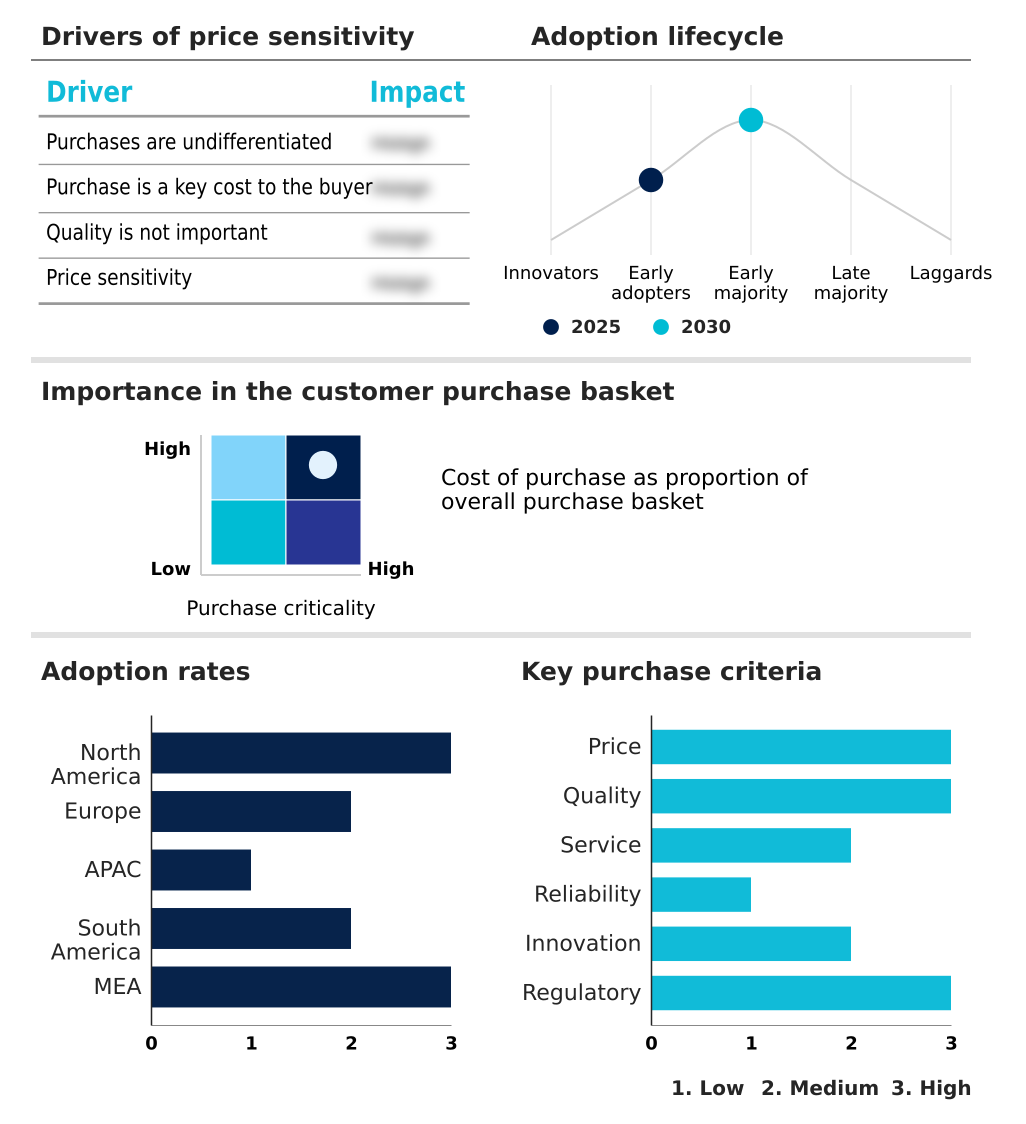
Customer Landscape of Fine Arts Logistics Industry
Competitive Landscape
Companies are implementing various strategies, such as strategic alliances, fine arts logistics market forecast, partnerships, mergers and acquisitions, geographical expansion, and product/service launches, to enhance their presence in the industry.
Artex Art Services s.r.o. - Technology-driven platforms enhance operational efficiency by streamlining global shipping, customs management, and insurance for high-value artworks and collectibles.
The industry research and growth report includes detailed analyses of the competitive landscape of the market and information about key companies, including:
- Artex Art Services s.r.o.
- Atelier 4 Inc.
- Bovis Group
- Cadogan Tate Group Ltd
- Constantine Ltd
- CONVELIO SAS
- Crozier Fine Arts Inc.
- Dietl International Services Inc.
- DSV AS
- Gander and White Shipping Ltd
- hasenkamp Holding GmbH
- KunstTrans Holding GmbH
- Masterpiece International Ltd
- Momart Ltd
- Mtec Fine Art Ltd.
- Poul Schou AS
- Rock it Cargo USA LLC
- uShip Inc.
- Yamato Transport Co. Ltd.
Qualitative and quantitative analysis of companies has been conducted to help clients understand the wider business environment as well as the strengths and weaknesses of key industry players. Data is qualitatively analyzed to categorize companies as pure play, category-focused, industry-focused, and diversified; it is quantitatively analyzed to categorize companies as dominant, leading, strong, tentative, and weak.
Recent Development and News in Fine arts logistics market
- In August 2025, Hasenkamp Group acquired a minority stake in the Scandinavian specialist logistics company MTAB to expand high-quality specialized logistics capabilities for sensitive cultural goods across Northern Europe.
- In April 2025, Convelio expanded its integrated customs and compliance ecosystem in the United States to help clients navigate new import tariffs, providing insulated transit solutions to bypass freight industry delays.
- In March 2025, Adexin introduced a suite of software solutions integrating artificial intelligence, blockchain, and IoT sensors to streamline logistics, tracking, and security for the North American art transport sector.
- In April 2025, the Airport Authority Hong Kong formalized plans to integrate a massive, standalone fine art storage facility into its Skytopia airport city to attract global family offices and support the trading of private art collections.
Dive into Technavio’s robust research methodology, blending expert interviews, extensive data synthesis, and validated models for unparalleled Fine Arts Logistics Market insights. See full methodology.
| Market Scope | |
|---|---|
| Page number | 307 |
| Base year | 2025 |
| Historic period | 2020-2024 |
| Forecast period | 2026-2030 |
| Growth momentum & CAGR | Accelerate at a CAGR of 4.4% |
| Market growth 2026-2030 | USD 970.8 million |
| Market structure | Fragmented |
| YoY growth 2025-2026(%) | 4.3% |
| Key countries | US, Canada, Mexico, UK, Germany, France, Italy, Switzerland, The Netherlands, China, Japan, India, South Korea, Singapore, Australia, Brazil, Argentina, Chile, UAE, Saudi Arabia, South Africa, Israel and Qatar |
| Competitive landscape | Leading Companies, Market Positioning of Companies, Competitive Strategies, and Industry Risks |
Research Analyst Overview
- The fine arts logistics market is maturing into a highly sophisticated sector where operational excellence is intrinsically linked to technological adoption and infrastructure investment. The core service of climate-controlled shipping is now table stakes; competitive differentiation is achieved through integrated offerings like museum-grade crating, expert customs brokerage, and flawless white-glove installation.
- A pivotal trend influencing boardroom decisions on capital expenditure is the convergence of sustainability and technology. For instance, investments in IoT tracking systems, which can reduce asset misplacement incidents by over 90%, are often paired with the adoption of reusable packaging materials as part of a broader sustainable logistics strategy.
- This requires advanced infrastructure, from freeport facilities with geothermal heating to air-ride suspension vehicles and fleets that support vibration-dampening technology. Ensuring security through biometric security controls and providing transparent chain-of-custody documentation via blockchain-based provenance are no longer niche offerings but central to managing risk and meeting the demands of time-critical exhibition logistics in a globalized art economy.
What are the Key Data Covered in this Fine Arts Logistics Market Research and Growth Report?
-
What is the expected growth of the Fine Arts Logistics Market between 2026 and 2030?
-
USD 970.8 million, at a CAGR of 4.4%
-
-
What segmentation does the market report cover?
-
The report is segmented by End-user (Art dealers and galleries, Auction houses, Museum and art fair, and Others), Type (Transportation, Storage, Packaging, and Others), Product Type (Paintings, Sculptures, Antiques, Photography, and Others) and Geography (North America, Europe, APAC, South America, Middle East and Africa)
-
-
Which regions are analyzed in the report?
-
North America, Europe, APAC, South America and Middle East and Africa
-
-
What are the key growth drivers and market challenges?
-
Implementation of complex trade policies and surging demand for integrated customs brokerage, Stringent customs regulations and complex cross-border compliance
-
-
Who are the major players in the Fine Arts Logistics Market?
-
Artex Art Services s.r.o., Atelier 4 Inc., Bovis Group, Cadogan Tate Group Ltd, Constantine Ltd, CONVELIO SAS, Crozier Fine Arts Inc., Dietl International Services Inc., DSV AS, Gander and White Shipping Ltd, hasenkamp Holding GmbH, KunstTrans Holding GmbH, Masterpiece International Ltd, Momart Ltd, Mtec Fine Art Ltd., Poul Schou AS, Rock it Cargo USA LLC, uShip Inc. and Yamato Transport Co. Ltd.
-
Market Research Insights
- Market dynamics are increasingly shaped by a focus on risk mitigation and efficiency, where the adoption of digital condition reporting has reduced insurance disputes by over 30%. Comprehensive secure art storage solutions are pivotal, as is sophisticated exhibition logistics management to support global art fairs.
- For private collector services, the emphasis is on discretion and flawless execution, while museum loan logistics demand impeccable provenance records. Specialized packing protocols, which can decrease transit damage incidents by up to 95% compared to standard freight, are crucial for both auction house logistics and international art shipping.
- Furthermore, effective gallery inventory management systems provide the transparency needed for art investment storage, with many clients now requiring full customs compliance for art as part of any end-to-end service.
We can help! Our analysts can customize this fine arts logistics market research report to meet your requirements.
 RIA -
RIA - 
