
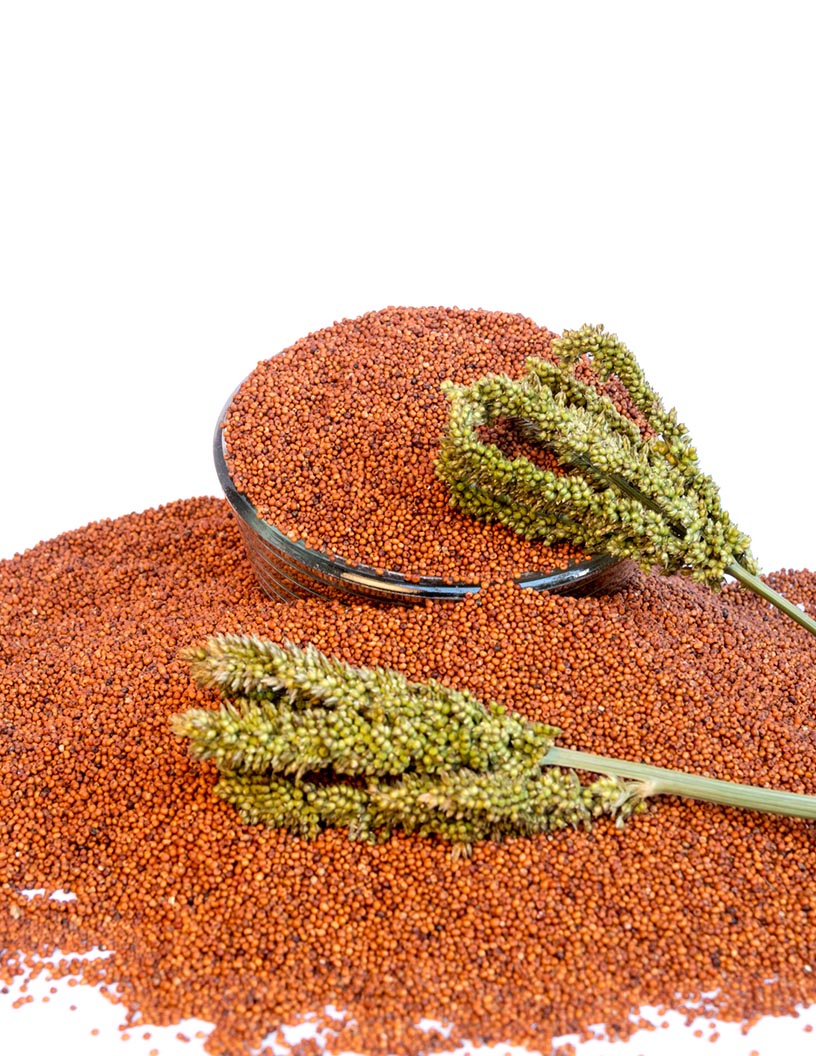


Finger Millet Market Size 2024-2028
The finger millet market size is forecast to increase by USD 5.21 billion at a CAGR of 6.78% between 2023 and 2028.
- Finger millet, a nutrient-dense crop known for its low glycemic index, offers significant opportunities in the health food industry. The key driver for the market is its property of aiding diabetes control, making it an attractive option for consumers seeking healthier alternatives. However, the market faces challenges, primarily due to the shortage of millet processing units. This scarcity hinders the production capacity expansion and limits the market's growth potential. Companies looking to capitalize on this market can explore partnerships with processing unit providers or invest in setting up their own facilities to address the processing bottleneck.
- Additionally, focusing on research and development to create value-added products, such as flour or flakes, can cater to the growing demand for finger millet in various applications. By addressing these challenges, market players can effectively tap into the potential of the market and cater to the increasing consumer preference for healthier food options.
What will be the Size of the Finger Millet Market during the forecast period?

- Finger millet, a nutrient-dense ancient grain, continues to gain traction in various sectors due to its unique properties and evolving market dynamics. From traceability to innovation, the market exhibits a dynamic and continuous nature. Finger millet's traceability is increasingly important as consumers demand transparency and sustainability. This has led to advancements in distribution channels, ensuring a reliable supply of high-quality finger millet to retailers and end consumers. In the retail sector, finger millet's versatility is showcased through various applications, such as pasta, beverages, and baked goods. The nutritional benefits of finger millet, including its high iron content and gluten-free status, have fueled its growth in the health food market.
- Standards and certifications play a crucial role in maintaining consistency and credibility, ensuring consumer trust. Finger millet's potential as a functional ingredient in various food and beverage applications continues to unfold, with ongoing research and innovation driving new product development. Finger millet's cultivation and processing techniques are continually evolving to improve yield and quality, with a focus on precision agriculture practices and hybrid varieties. The grain's fiber content and antioxidant properties make it an attractive option for both food and beverage industries. As consumer preferences shift towards healthier, more sustainable options, the market is poised for continued growth and innovation.
How is this Finger Millet Industry segmented?
The finger millet industry research report provides comprehensive data (region-wise segment analysis), with forecasts and estimates in "USD million" for the period 2024-2028, as well as historical data from 2018-2022 for the following segments.
- Application
- Food source
- Fodder
- Baking
- Distribution Channel
- Supermarkets
- Online Retail
- Direct Sales
- Distributors
- Category Type
- Food & Beverage
- Animal Feed
- Pharmaceuticals
- Product Types
- Whole Grain
- Flour
- Processed Foods
- End-User
- Household
- Commercial
- Industrial
- Geography
- North America
- US
- Mexico
- Europe
- France
- Germany
- Italy
- Spain
- UK
- Middle East and Africa
- UAE
- APAC
- Australia
- China
- India
- Japan
- South Korea
- South America
- Brazil
- Rest of World (ROW)
- North America
By Application Insights
The food source segment is estimated to witness significant growth during the forecast period.
Finger millet, a nutrient-dense grain, is gaining popularity in the global food industry due to its numerous health benefits. Rich in iron and calcium, finger millet is commonly used to alleviate health conditions such as anemia and aid in managing depression, insomnia, and anxiety. Finger millet's hypoglycemic noodles, made from its flour, have a low glycemic index, making them an ideal food for individuals with blood sugar concerns. The cultivation of finger millet is prevalent in various parts of India, where it is used to make traditional dishes like dosa, murukku, and chapati. Finger millet's amino acid content helps regulate appetite, contributing to weight management.
The market for finger millet is projected to expand due to its potential health benefits in addressing conditions like high blood pressure, liver and heart problems, and asthma. The finger millet value chain encompasses cultivation, processing, packaging, distribution, and retail. Processing includes milling, baking, and creating various products like porridge, beverages, pasta, and snacks. Regulations play a crucial role in ensuring food safety and quality, with standards such as organic certification and gluten-free labeling driving consumer demand. Finger millet's innovation extends to creating new products like bread and flour, with ongoing research exploring its fiber and antioxidant properties.
The sustainable farming practices employed in finger millet cultivation and the availability of finger millet hybrids and breeding programs contribute to its growing appeal. The market's future looks promising, with increasing consumer awareness and demand for healthy, nutritious food options.
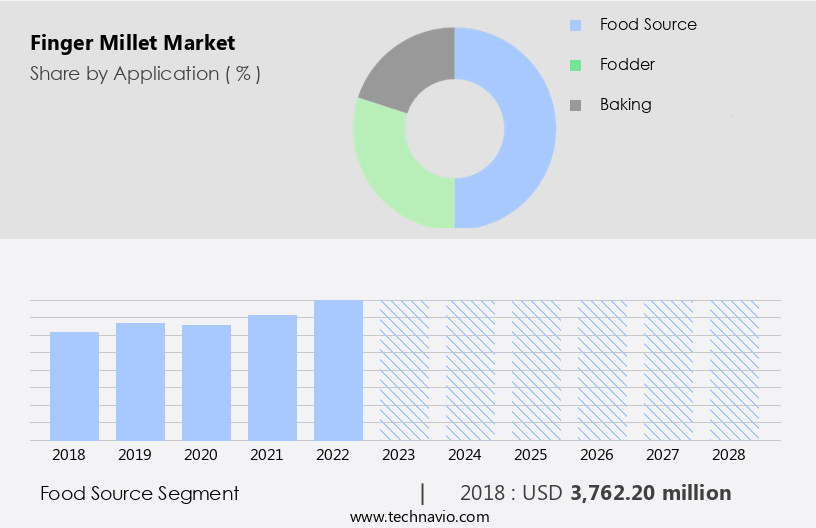
The Food source segment was valued at USD 3.76 billion in 2018 and showed a gradual increase during the forecast period.
Regional Analysis
APAC is estimated to contribute 49% to the growth of the global market during the forecast period.Technavio's analysts have elaborately explained the regional trends and drivers that shape the market during the forecast period.

Finger millets, a staple food in Asia Pacific countries like India and China, are gaining popularity due to their nutritional value and versatility. The long summer months in these regions make finger millet cultivation an essential farming practice, especially in areas where other food resources are scarce. The increasing urbanization and improved transportation and distribution strategies in these countries have led to a surge in demand for finger millets in urban markets. Finger millets are not only consumed as a food source but also used as fodder due to their high nutritive value and digestibility compared to other crops. In India, the growing urbanization and rising incomes have resulted in a significant increase in the demand for livestock products, which, in turn, has fueled the demand for fodder made from finger millets.
Finger millet processing, packaging, and distribution have seen significant advancements, leading to an increase in the availability of finger millet-based products such as porridge, bakery items, pasta, and beverages. The adoption of sustainable farming practices, regenerative agriculture, and traceability systems has also gained momentum, ensuring the production of high-quality finger millets. Research and innovation have led to the development of new finger millet varieties, hybrids, and breeding techniques, enhancing yield and improving the overall quality of the grain. The market is subject to various regulations, ensuring the safety and quality of the produce. Finger millet is a gluten-free grain, making it an attractive alternative for individuals with gluten intolerance.
Its high calcium, iron, protein, and fiber content makes it a popular choice for health-conscious consumers. Finger millet flour and grain are widely used in various recipes, including traditional dishes and innovative culinary creations. The market for finger millet-based products is expected to grow, driven by increasing consumer awareness and demand for nutritious and sustainable food sources.
Market Dynamics
Our researchers analyzed the data with 2023 as the base year, along with the key drivers, trends, and challenges. A holistic analysis of drivers will help companies refine their marketing strategies to gain a competitive advantage.
The Finger Millet Market flourishes with organic finger millet India and finger millet for gluten-free diets. Ragi flour market trends drive finger millet for health foods, supported by sustainable finger millet farming. Finger millet export markets expand, with ragi-based snack products and finger millet for baking industry gaining traction. The finger millet market forecast highlights high-nutrient finger millet and ragi for plant-based diets. Finger millet for infant foods and eco-friendly ragi packaging align with wellness trends, while finger millet for APAC markets grows. Finger millet processing tech optimizes the finger millet supply chain, and ragi flour for retail meets demand. Finger millet for diabetes diets, organic ragi for wellness, and finger millet agricultural trends ensure robust growth.
What are the key market drivers leading to the rise in the adoption of Finger Millet Industry?
- Finger millet's low maintenance requirements are a significant factor driving its market demand. This crop's resilience and ease of cultivation make it an attractive option for farmers and investors alike.
- Finger millet is an increasingly valuable crop due to its resilience in arid and semi-arid regions, where water scarcity is common. This crop thrives in conditions that are inhospitable to other crops, such as rice, wheat, sugarcane, and banana, which require substantial water resources. Finger millets can withstand temperatures up to 116.6 F, making them a viable alternative for farmers facing the challenges of climate change. The crop's water efficiency is another significant advantage, as it requires only 25% of the rainfall needed by other crops. Finger millet breeding has led to the development of hybrids with enhanced nutritional value.
- These hybrids are rich in protein, antioxidants, and essential minerals, making them a nutritious addition to diets. Finger millet's organic certification is also gaining popularity due to its health benefits and eco-friendly farming practices. Finger millet milling is a crucial process that ensures the preservation of its nutritional value. Proper milling techniques are essential to maintain the nutrient content and texture of the grain. The antioxidant properties of finger millet make it an attractive ingredient in the food industry, particularly in the production of functional foods and beverages. Certification programs, such as organic and fair trade, are essential to ensuring the ethical and sustainable production of finger millet.
- These certifications provide consumers with confidence in the product's quality and origin. In conclusion, finger millet's unique characteristics and health benefits make it a promising crop for farmers and consumers alike, particularly in regions where water scarcity and climate change pose significant challenges.
What are the market trends shaping the Finger Millet Industry?
- Diabetes management is a growing market trend, with a strong focus on effective property control. Property control refers to the efficient management and regulation of diabetes, which is increasingly prioritized in the healthcare industry.
- Finger millet, a nutritious grain with a low glycemic index, is gaining popularity due to its health benefits. With an increasing number of people diagnosed with diabetes, there is a growing demand for foods that help manage blood sugar levels. Finger millet, rich in fiber and dietary polyphenols, fits the bill. Its slow digestion property keeps the blood sugar level in check. The market is witnessing growth due to this health advantage. Finger millet is not only used as a food grain but also in the production of bakery items and porridge. The processing and packaging of finger millet are crucial to maintain its nutritional value and extend its shelf life.
- Regulations play a significant role in the market. Stringent regulations ensure the quality and safety of finger millet products. Research and development activities are ongoing to explore the potential uses of finger millet in various industries, including food and beverage, cosmetics, and pharmaceuticals. The demand for finger millet is on the rise, and cultivation is increasing to meet the growing demand. Sustainable farming practices are being adopted to ensure a consistent supply of high-quality finger millet. The market dynamics are favorable, with increasing awareness of the health benefits of finger millet and the growing demand for healthy food alternatives.
What challenges does the Finger Millet Industry face during its growth?
- The insufficient number of millet processing units poses a significant challenge to the expansion and growth of the industry.
- Finger millet, a nutritious minor millet, is predominantly produced in countries like India. However, the lack of proper processing units near millet fields results in increased transportation costs for local farmers. This issue forces producers to transport their crops to distant processing locations, leading to a price burden for both farmers and consumers. India's largest producers, such as those in Tamil Nadu, Odisha, and Madhya Pradesh, often need to transport their finger millet to Maharashtra for processing. This lengthy supply chain increases the cost of production and ultimately affects the retail price. To address this challenge, implementing finger millet traceability systems and establishing processing units closer to production areas could potentially reduce costs and improve the overall efficiency of the market.
- Furthermore, the development of finger millet pasta, beverages, and gluten-free bread can expand the market and increase consumption. Ensuring finger millet meets specific standards and regulations will also contribute to its growth.
Exclusive Customer Landscape
The finger millet market forecasting report includes the adoption lifecycle of the market, covering from the innovator's stage to the laggard's stage. It focuses on adoption rates in different regions based on penetration. Furthermore, the finger millet market report also includes key purchase criteria and drivers of price sensitivity to help companies evaluate and develop their market growth analysis strategies.
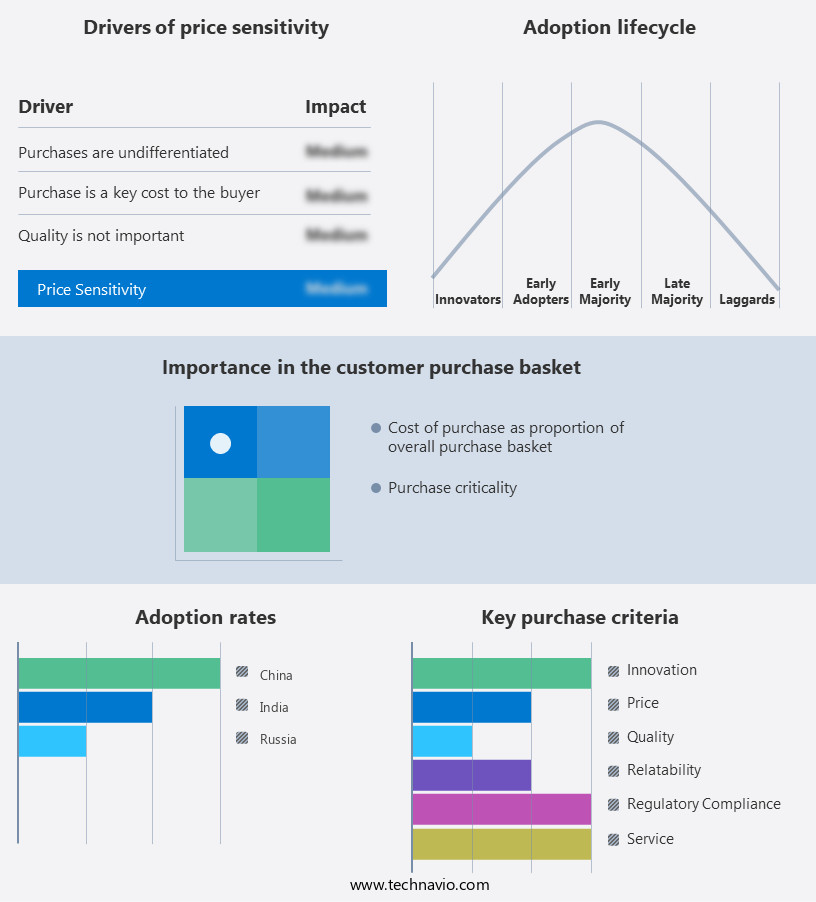
Customer Landscape
Key Companies & Market Insights
Companies are implementing various strategies, such as strategic alliances, finger millet market forecast, partnerships, mergers and acquisitions, geographical expansion, and product/service launches, to enhance their presence in the industry.
The industry research and growth report includes detailed analyses of the competitive landscape of the market and information about key companies, including:
- Bühler Group
- Nestlé
- Cargill
- Archer Daniels Midland
- General Mills
- ITC Limited
- Patanjali Ayurved
- Bagrry's India
- MTR Foods
- 24 Mantra Organic
- Organic Tattva
- EcoFarms India
- Slurrp Farm
- True Elements
- Annapurna Agro
- Shreeji Foods
- Millets for Health
- Nature's Basket
- Big Basket
- Jiwa
Qualitative and quantitative analysis of companies has been conducted to help clients understand the wider business environment as well as the strengths and weaknesses of key industry players. Data is qualitatively analyzed to categorize companies as pure play, category-focused, industry-focused, and diversified; it is quantitatively analyzed to categorize companies as dominant, leading, strong, tentative, and weak.
Recent Development and News in Finger Millet Market
- In February 2024, the International Crops Research Institute for the Semi-Arid Tropics (ICRISAT) announced the successful development of a new finger millet variety, 'Kalinga Masuri', which exhibits higher yield and improved nutritional content. This breakthrough was a significant technological advancement for the market, as it addresses the challenges of low productivity and poor nutritional value in traditional finger millet varieties (ICRISAT, 2024).
- In October 2024, a major strategic partnership was formed between Olam International, a leading agribusiness company, and the Ethiopian Grain Trade Enterprise. This collaboration aimed to boost finger millet production and processing in Ethiopia, the largest producer of finger millet, through capacity building, infrastructure development, and market access improvements (Olam International, 2024).
- In March 2025, the Indian government launched the National Finger Millet Mission, a comprehensive initiative to enhance the production, processing, and marketing of finger millets. The mission aims to increase the production of finger millets by 2 million tons over the next five years, providing a significant boost to the Indian the market (Ministry of Agriculture and Farmers Welfare, 2025).
Research Analyst Overview
Finger millet, a nutritious and ancient grain, is experiencing notable market activity and trends. Adoption of finger millet is increasing due to its high nutritional value and potential as a substitute for rice and wheat. Brands are investing in finger millet to capitalize on its health benefits and unique taste. Awareness campaigns aim to educate consumers about its uses and benefits. However, finger millet faces challenges, including limited brand recognition and competition from established grains. Biotechnology is being explored to improve production yields and resistance to pests.
The finger millet market is gaining attention due to its high nutritional value, strong drought tolerance, and potential for poverty alleviation and rural development. Increasing awareness and adoption are driven by its role in food security, nutritional security, and water conservation. Despite challenges like limited branding, weak marketing, and lack of clear food labeling, opportunities exist in value-added products and investment in biotechnology and genetic modification. Rising price trends reflect demand, but competitors and substitutes pose risks. Still, its positive environmental impact, soil health benefits, and social impact make finger millet a sustainable crop with promising future prospects.
Marketing strategies focus on positioning finger millet as a sustainable and healthier alternative. Competitors in the grain market continue to pose threats, but opportunities exist for innovative and strategic players. Production techniques and sustainability practices are crucial for maintaining market competitiveness.
Dive into Technavio's robust research methodology, blending expert interviews, extensive data synthesis, and validated models for unparalleled Finger Millet Market insights. See full methodology.
|
Market Scope |
|
|
Report Coverage |
Details |
|
Page number |
157 |
|
Base year |
2023 |
|
Historic period |
2018-2022 |
|
Forecast period |
2024-2028 |
|
Growth momentum & CAGR |
Accelerate at a CAGR of 6.78% |
|
Market growth 2024-2028 |
USD 5206.2 million |
|
Market structure |
Fragmented |
|
YoY growth 2023-2024(%) |
6.23 |
|
Key countries |
US, China, Germany, Japan, UK, Australia, India, France, Brazil, UAE, Rest of World (ROW), Saudi Arabia, France, South Korea, Mexico, Italy, and Spain |
|
Competitive landscape |
Leading Companies, Market Positioning of Companies, Competitive Strategies, and Industry Risks |
What are the Key Data Covered in this Finger Millet Market Research and Growth Report?
- CAGR of the Finger Millet industry during the forecast period
- Detailed information on factors that will drive the growth and forecasting between 2024 and 2028
- Precise estimation of the size of the market and its contribution of the industry in focus to the parent market
- Accurate predictions about upcoming growth and trends and changes in consumer behaviour
- Growth of the market across APAC, Middle East and Africa, Europe, South America, and North America
- Thorough analysis of the market's competitive landscape and detailed information about companies
- Comprehensive analysis of factors that will challenge the finger millet market growth of industry companies
We can help! Our analysts can customize this finger millet market research report to meet your requirements.