
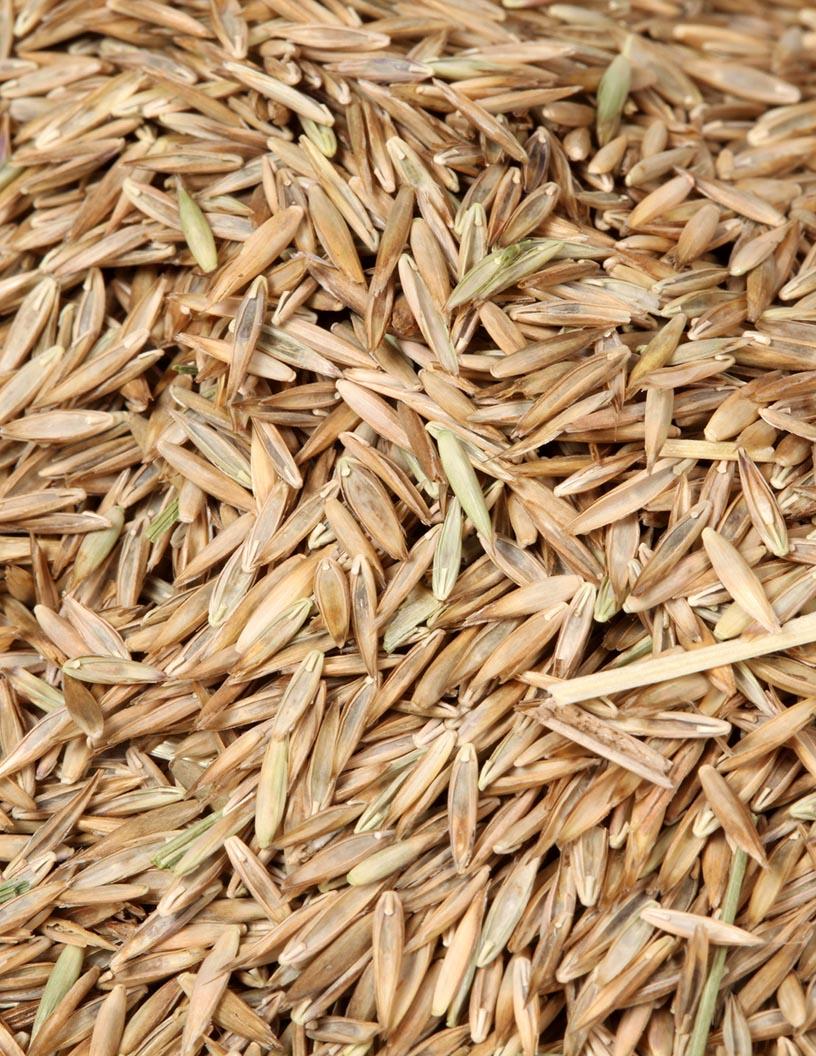


France Forage Seed Market Size 2024-2028
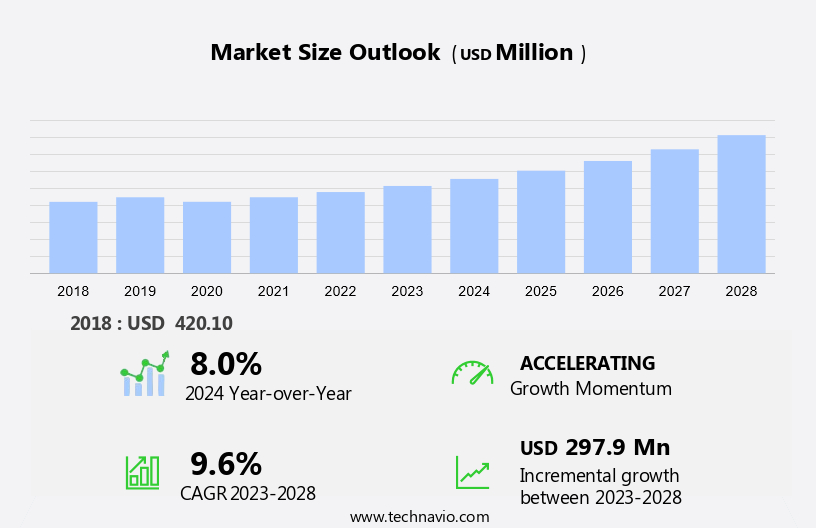
The France forage seed market size is forecast to increase by USD 297.9 million at a CAGR of 9.6% between 2023 and 2028.
- The market is experiencing significant growth due to several key factors. The increased demand for dairy products, driven by the European Union's milk production quotas, is leading to a higher demand for forage seeds to produce quality feed for livestock. Furthermore, the trend towards crossbred livestock production is also boosting the market, as these animals require specific nutrient-rich forages to thrive. However, a challenge facing the market is the unwillingness of farmers to pay high prices for forage seeds, which may limit market growth. Despite this, the market is expected to continue expanding due to the growing demand for high-quality animal feed and the need to maintain productivity In the agricultural sector.
What will be the size of the France Forage Seed Market during the forecast period?
- The market is characterized by a focus on improving soil health and sustainability, driven by concerns over soil erosion, organic matter depletion, and fertility. Modern cultivation practices incorporate the use of nitrogen fertilizer, but there is a growing trend toward reducing energy costs and environmental impact by utilizing legumes and improving soil quality. Marginal crop lands are being reclaimed through the use of forage crops, which provide essential nutrients and improve soil structure. Water filtration and internal drainage are also important considerations, as are disease reduction and weed population management. Cereal crops and forage seeds are often grown in rotation to enhance crop yields and economic viability.
- Sustainability initiatives, such as carbon sequestering and greenhouse gas reduction, are increasingly important, as are advancements in harvesting equipment and the use of rhizobia bacteria for nitrogen fixation. Root decay, volatilization, leaching, and soil nutrient levels are ongoing challenges In the market, requiring continuous research and innovation. Protein levels and soil structure are key factors in determining forage seed selection, as they impact both animal nutrition and long-term soil health.
How is this market segmented and which is the largest segment?
The market research report provides comprehensive data (region-wise segment analysis), with forecasts and estimates in "USD million" for the period 2024-2028, as well as historical data from 2018-2022 for the following segments.
- Crop Type
- Cereals
- Legumes
- Grasses
- Product
- Inorganic
- Organic
- Geography
- France
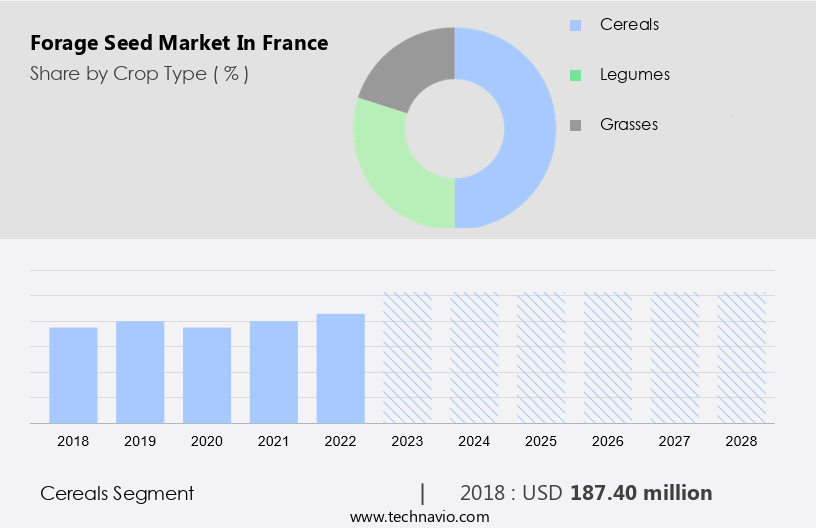
By Crop Type Insights
- The cereals segment is estimated to witness significant growth during the forecast period.
The market witnessed significant growth In the cereals segment in 2023. companies are strategically expanding their offerings to include forage seeds to boost sales. Cereal crops, such as cereals for human consumption, hold popularity due to their ease of preparation and consumption. Breakfast cereals, in particular, are preferred for their nutritional benefits and convenience. Whole grain and high-fiber cereals are gaining traction as healthier alternatives to traditional meals. The convenience and health benefits of cereals are expected to maintaIn their appeal In the coming years. Additionally, forage seeds contribute to soil health by increasing organic matter, fertility, and soil structure.
They also aid in water filtration, internal drainage, disease reduction, and weed population control, ultimately improving crop yields. Economically, forage seeds contribute to carbon sequestering and greenhouse gas reduction. Furthermore, they provide nutrient-rich materials for livestock feed, green manure, and cover crops. The versatility of forage seeds extends to various industries, including food and beverage, paper manufacturing, cosmetics, mining, and oil drilling.
Get a glance at the market share of various segments Request Free Sample
The cereals segment was valued at USD 187.40 million in 2018 and showed a gradual increase during the forecast period.
Market Dynamics
Our researchers analyzed the data with 2023 as the base year, along with the key drivers, trends, and challenges. A holistic analysis of drivers will help companies refine their marketing strategies to gain a competitive advantage.
What are the key market drivers leading to the rise in adoption of France Forage Seed Market?
Increased demand for dairy products is the key driver of the market.
- The market experiences significant growth due to the increasing consumption of dairy products, driven by factors such as urbanization, income levels, and cultural preferences. This trend is leading farmers to invest in high-quality forage seeds to enhance soil fertility, combat soil erosion, and improve crop yields on marginal lands. Forage seeds, particularly legumes like Cyamopsis tetragonoloba, contribute to soil quality by increasing organic matter, nitrogen fixation through Rhizobia bacteria, and water filtration through internal drainage. Additionally, these seeds aid in disease reduction, weed population control, and nutrient retention. The demand for protein-rich forage seeds extends beyond the dairy industry, as they are also used as livestock feeds, green manure, and cover crops.
- Forage seeds offer numerous benefits, including carbon sequestering, greenhouse gas reduction, and the production of by-products like galactomannan gum, used as thickeners, stabilizers, and in various industries such as salad dressings, ice cream, yogurt, paper manufacturing, cosmetics, mining, and oil drilling. The use of modern cultivation techniques and nitrogen fertilizers can impact soil structure, water-holding capacity, and compaction. Proper harvesting equipment and management practices are crucial to minimize root decay, volatilization, leaching, and soil N levels. Farmers must consider plant morphology, moisture requirements, and protein levels when selecting forage seeds to optimize their investments and maintain sustainable agricultural practices.
What are the market trends shaping the France Forage Seed Market?
Increase in production of crossbred livestock is the upcoming trend In the market.
- The market is driven by the need to improve soil fertility and address issues such as soil erosion and water filtration. Modern cultivation techniques have led to the increased use of nitrogen fertilizer, but high energy costs and concerns over nutrient leaching, volatilization, and root decay have led farmers to explore alternative solutions. Organic matter plays a crucial role in soil quality, and the use of legumes like Cyamopsis tetragonoloba as green manure or cover crops helps enhance soil fertility and reduce disease populations. These legumes, with their erect, bushy, herbaceous growth and trifoliate leaves, white or rose coloured flowers, and hard seeds, offer various benefits.
- They contribute to carbon sequestering and greenhouse gas reduction, improve soil structure and water-holding capacity, and reduce compaction. Guar, a legume with high protein levels and yield potential, is used to produce galactomannan gum, a thickener and stabilizer in various industries, including salad dressings, ice cream, yoghurt, paper manufacturing, cosmetics, mining, and oil drilling. The economics of forage seed production are influenced by factors such as crop yields, weed populations, and market prices for guar yield, guar meal, and by-product protein-rich materials. Farmers must invest in harvesting equipment and consider factors like moisture levels and plant morphology to optimize their forage seed production. Rhizobia bacteria play a key role in nitrogen fixation, contributing to the overall health and productivity of the soil.
What challenges does France Forage Seed Market face during the growth?
Unwillingness of farmers to pay high price for forage seeds is a key challenge affecting the market growth.
- In France, the forage seed market is influenced by various factors, including soil erosion, organic matter, fertility, and modern cultivation practices. Farmers aim to maintain soil fertility and improve soil quality through the use of forage seeds, particularly legumes, which contribute to water filtration, internal drainage, disease reduction, and nitrogen fixation through rhizobia bacteria. However, economic pressures force farmers to prioritize cost-effective solutions, leading to a preference for lower-priced seeds despite potential yield and nutrient losses. These inputs include nitrogen fertilizer, which can increase energy costs, and herbicides to manage weed populations. Forage seeds, such as those of Cyamopsis tetragonoloba, offer benefits like carbon sequestering and greenhouse gas reduction.
- However, farmers' focus on cost control may lead them to overlook these advantages. Forage seeds are used in various industries, including food and beverage, paper manufacturing, cosmetics, mining, and oil drilling, as an agricultural commodity, vegetable, snack, livestock feed, green manure, and cover crop. Despite their versatility and potential benefits, the market dynamics necessitate a balance between competitive pricing and quality for forage seed suppliers.
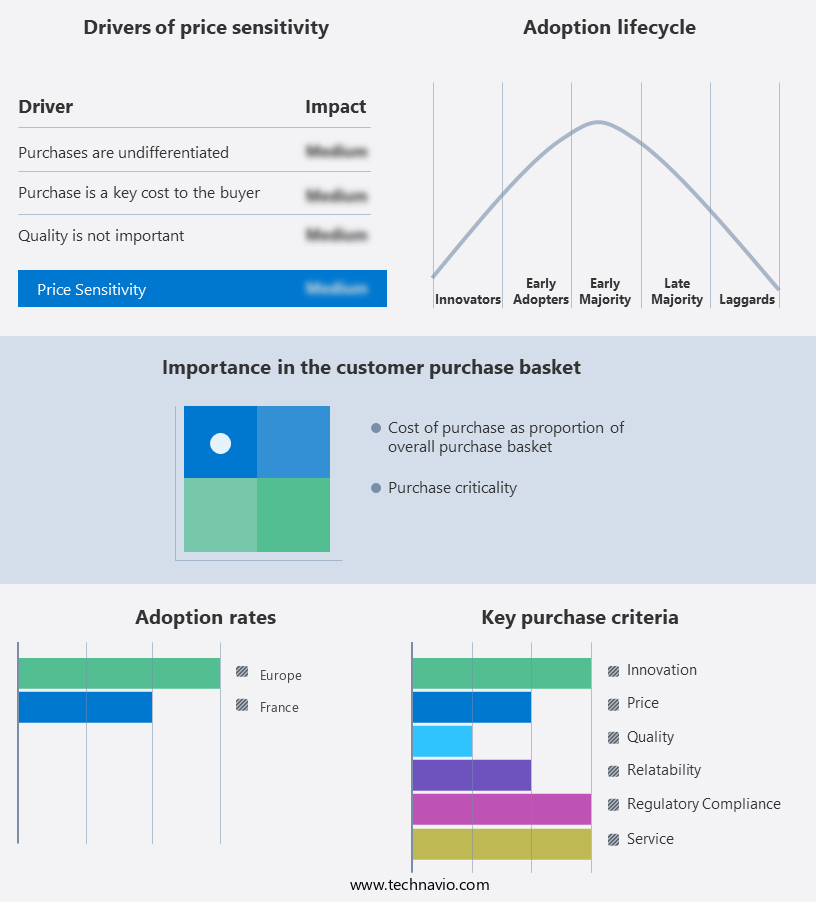
Exclusive France Forage Seed Market Customer Landscape
The market forecasting report includes the adoption lifecycle of the market, market growth and forecasting, covering from the innovator's stage to the laggard's stage. It focuses on adoption rates in different regions based on penetration. Furthermore, the report also includes key purchase criteria and drivers of price sensitivity to help companies evaluate and develop their market growth analysis strategies.
Customer Landscape
Key Companies & Market Insights
Companies are implementing various strategies, such as strategic alliances, market forecast partnerships, mergers and acquisitions, geographical expansion, and product/service launches, to enhance their presence In the market.
The market research and growth report includes detailed analyses of the competitive landscape of the market and information about key companies, including:
- Barenbrug Holland BV
- Cerience
- Corteva Inc.
- DLF Seeds AS
- Grassland Oregon
- Jouffray Drillaud SAS
- KWS SAAT SE and Co. KGaA
- LIDEA France
- Limagrain Field Seeds
- MAS Seeds
- PANAM SAS
- RAGT SA
- Semences de France
- Trevor Cope Seeds Ltd.
- Union Francaise des Semenciers
Qualitative and quantitative analysis of companies has been conducted to help clients understand the wider business environment as well as the strengths and weaknesses of key market players. Data is qualitatively analyzed to categorize companies as pure play, category-focused, industry-focused, and diversified; it is quantitatively analyzed to categorize companies as dominant, leading, strong, tentative, and weak.
Research Analyst Overview
The market is a significant sector within the agricultural industry, characterized by its focus on modern cultivation techniques and the production of high-quality seeds for various applications. This market is driven by several factors, including the need to maintain soil fertility and improve soil quality. Modern cultivation practices play a crucial role In the forage seed market. Farmers in France employ various methods to enhance soil fertility, such as the use of nitrogen fertilizer and the incorporation of organic matter. However, the increasing focus on reducing energy costs and minimizing environmental impact has led to a shift towards more sustainable practices. Legumes, for instance, are gaining popularity due to their ability to fix nitrogen from the atmosphere through rhizobia bacteria, thereby reducing the need for synthetic fertilizers. Soil quality is another critical factor influencing the market. The importance of maintaining soil structure, water-holding capacity, and nutrient levels is well recognized. Forage crops, such as cereals and legumes, are often used to improve soil quality by increasing organic matter and reducing soil erosion.
Additionally, the use of cover crops and green manure helps to enhance soil structure and reduce weed populations, thereby improving overall crop yields. The market is diverse, with a range of crops catering to various applications. Cereal crops, such as oats and barley, are commonly used for livestock feeds, while legumes, such as cyamopsis tetragonoloba, are used to produce guar gum, a thickener and stabilizer in various industries, including food and beverage, paper manufacturing, and cosmetics. The economics of the forage seed market are influenced by several factors, including crop yields, protein levels, and market demand. For instance, the demand for protein-rich materials, such as guar meal, has been increasing due to its use as a valuable by-product in various industries. Additionally, the market for cover crops and green manure is growing as farmers seek to reduce their reliance on synthetic fertilizers and improve soil health.
Thus, the market is also influenced by market dynamics, such as disease reduction and water filtration. For example, the use of disease-resistant varieties helps to reduce the need for pesticides and herbicides, thereby improving sustainability and reducing environmental impact. Additionally, the use of forage crops for water filtration and internal drainage helps to improve water quality and reduce the need for external irrigation. Thus, the market is a dynamic and evolving sector that plays a crucial role In the agricultural industry. It is driven by several factors, including the need to maintain soil fertility and improve soil quality, the shift towards more sustainable practices, and the growing demand for protein-rich materials and sustainable agricultural practices. The market is diverse, with a range of crops catering to various applications, and is influenced by several market dynamics, including disease reduction and water filtration.
|
Market Scope |
|
|
Report Coverage |
Details |
|
Page number |
114 |
|
Base year |
2023 |
|
Historic period |
2018-2022 |
|
Forecast period |
2024-2028 |
|
Growth momentum & CAGR |
Accelerate at a CAGR of 9.6% |
|
Market growth 2024-2028 |
USD 297.9 million |
|
Market structure |
Fragmented |
|
YoY growth 2023-2024(%) |
8.0 |
|
Competitive landscape |
Leading Companies, Market Positioning of Companies, Competitive Strategies, and Industry Risks |
What are the Key Data Covered in this Market Report?
- CAGR of the market during the forecast period
- Detailed information on factors that will drive the market growth and forecasting between 2024 and 2028
- Precise estimation of the size of the market and its contribution of the market in focus to the parent market
- Accurate predictions about upcoming market growth and trends and changes in consumer behaviour
- Growth of the market across France
- Thorough analysis of the market's competitive landscape and detailed information about companies
- Comprehensive analysis of factors that will challenge the growth of market companies
We can help! Our analysts can customize this market research report to meet your requirements Get in touch
 RIA -
RIA - 
