
Freeze Dried Coffee Market Analysis, Size, and Forecast 2026-2030: APAC (China, Japan, and India), Europe (Germany, UK, and France), North America (US, Canada, and Mexico), South America (Brazil, Argentina, and Chile), Middle East and Africa (Saudi Arabia, UAE, and South Africa), and Rest of World (ROW)

Freeze Dried Coffee Market Analysis, Size, and Forecast 2026-2030:
APAC (China, Japan, and India), Europe (Germany, UK, and France), North America (US, Canada, and Mexico), South America (Brazil, Argentina, and Chile), Middle East and Africa (Saudi Arabia, UAE, and South Africa), and Rest of World (ROW)

Published: Oct 2026 293 Pages SKU: IRTNTR72987

Market Overview at a Glance

$3.42 B
Market Opportunity
4.7%
CAGR 2025 - 2030
42.2%
APAC Growth
$10.89 B
Offline segment 2024

Freeze Dried Coffee Market Size 2026-2030

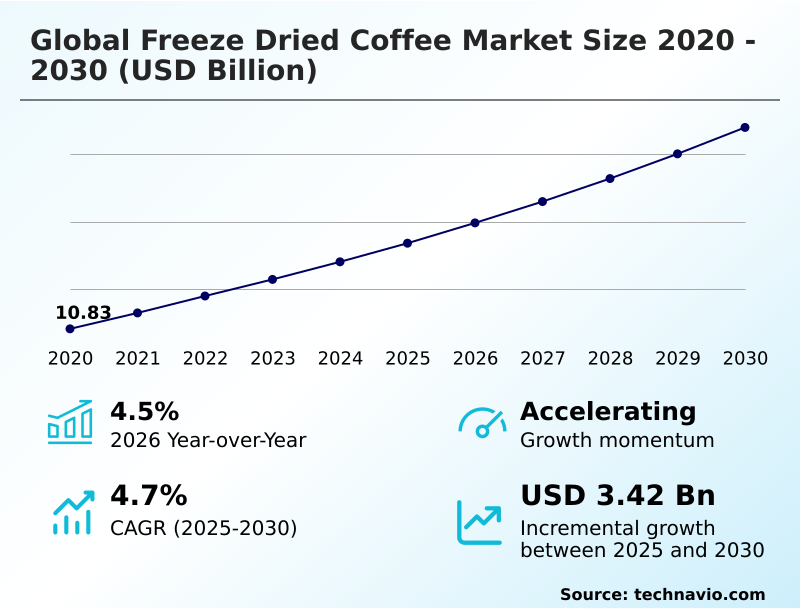
The freeze dried coffee market size is valued to increase by USD 3.42 billion, at a CAGR of 4.7% from 2025 to 2030. Demand grows for premium convenience will drive the freeze dried coffee market.

Major Market Trends & Insights

  • APAC dominated the market and accounted for a 42.2% growth during the forecast period.
  • By Distribution Channel - Offline segment was valued at USD 10.89 billion in 2024
  • By Flavor - Optical segment accounted for the largest market revenue share in 2024

Market Size & Forecast

  • Market Opportunities: USD 5.95 billion
  • Market Future Opportunities: USD 3.42 billion
  • CAGR from 2025 to 2030 : 4.7%

Market Summary

  • The Freeze Dried Coffee Market is undergoing a profound structural transformation characterized by a rapid shift from conventional instant formats to technologically advanced soluble alternatives. Manufacturers are increasingly utilizing sub-zero vacuum sublimation to preserve the delicate aroma molecule retention and single-origin profiles that consumers demand.
  • In a recent supply chain optimization scenario, beverage processors upgraded their deep vacuum chambers with high capacity refrigeration units, resulting in a 25% improvement in sublimation cycle efficiency. This operational enhancement directly mitigates the severe headwinds caused by high sublimation energy cost.
  • The escalating need for time-efficiency determinant routines acts as a primary driver, compelling consumers to seek replacements for heat-damaged spray-dried alternatives that offer sensory excellence. Conversely, the intensive capital expenditure management required to maintain industrial vacuum pumps presents a formidable challenge, often compressing operating margins for regional producers.
  • Advanced sublimation technologies implementation remains critical for scaling production capacity without escalating batch failure risk.

What will be the Size of the Freeze Dried Coffee Market during the forecast period?
Get Key Insights on Market Forecast (PDF) Get Free Sample

How is the Freeze Dried Coffee Market Segmented?

The freeze dried coffee industry research report provides comprehensive data (region-wise segment analysis), with forecasts and estimates in "USD million" for the period 2026-2030, as well as historical data from 2020-2024 for the following segments.

  • Distribution channel
    • Offline
    • Online
  • Flavor
    • Optical
    • Non-flavored
    • Flavored varieties
  • Packaging
    • Jars
    • Sachets
    • Pouches
    • Bulk packaging
  • Geography
    • APAC
      • China
      • Japan
      • India
      • South Korea
      • Australia
      • Indonesia
    • Europe
      • Germany
      • UK
      • France
      • Italy
      • Spain
      • The Netherlands
    • North America
      • US
      • Canada
      • Mexico
    • South America
      • Brazil
      • Argentina
      • Chile
    • Middle East and Africa
      • Saudi Arabia
      • UAE
      • South Africa
      • Turkey
      • Israel

By Distribution Channel Insights

The offline segment is estimated to witness significant growth during the forecast period.

The offline segment of the Freeze Dried Coffee Market remains the primary touchpoint for mainstream consumer engagement, heavily driven by the necessity for instant product availability.

Retail environments allow consumers to physically assess sustainable packaging innovations and labels detailing ethical sourcing transparency. Physical distribution networks optimize supply chain efficiencies, ensuring consistent inventory rotation that achieves a product spoilage reduction of 15%.

This operational stability is crucial for preserving the delicate soluble coffee crystals and volatile aromatic compounds inherent to the lyophilization process. Large-scale brick-and-mortar establishments provide dedicated aisle space that enhances brand visibility for premiumized soluble format offerings.

By facilitating immediate cross-merchandising opportunities, offline channels support high velocity consumer orders while maintaining cup-to-cup consistency, allowing manufacturers to leverage precise granulation techniques directly to discerning shoppers seeking cafe quality flavor within a convenient soluble format.
Get Free Sample

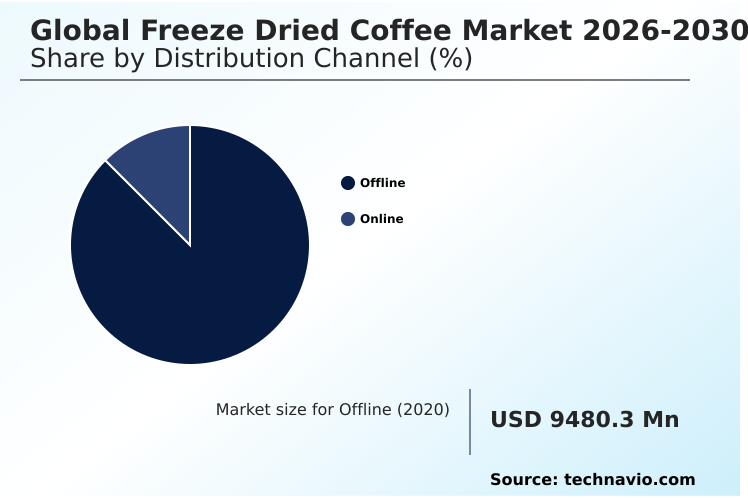
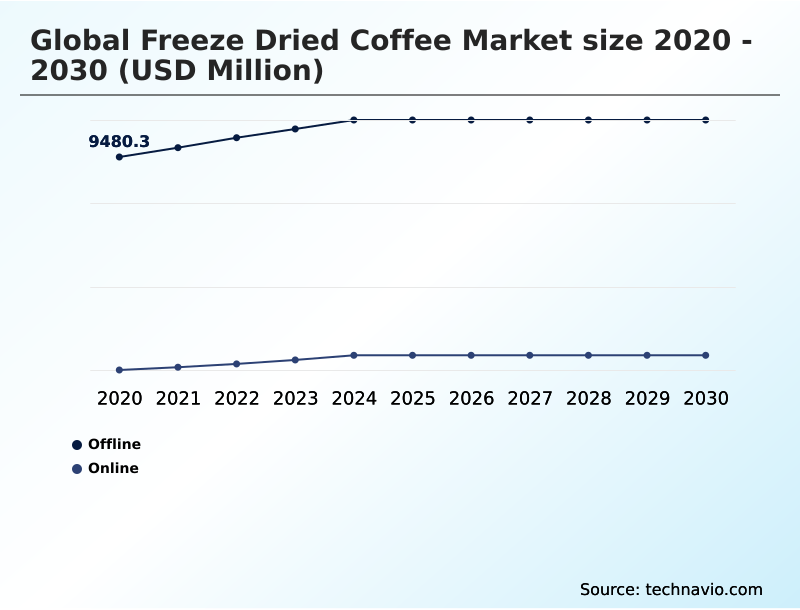
The Offline segment was valued at USD 10.89 billion in 2024 and showed a gradual increase during the forecast period.
Get Free Sample

Regional Analysis

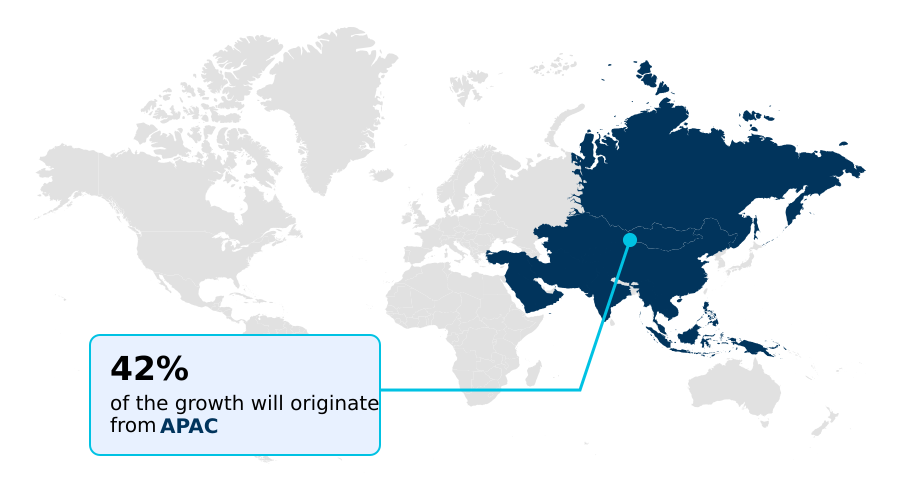
APAC is estimated to contribute 42.2% to the growth of the global market during the forecast period.Technavio’s analysts have elaborately explained the regional trends and drivers that shape the market during the forecast period.
See How Freeze Dried Coffee Market Demand is Rising in APAC Get Free Sample

The Freeze Dried Coffee Market exhibits distinct regional disparities driven by technological adoption and consumer behavior. APAC demonstrates rapid operational scaling, with manufacturers improving product spoilage reduction metrics by 20% through the deployment of advanced deep vacuum chambers.

In contrast, Europe prioritizes premiumization, achieving a 15% higher penetration rate for dehydrated coffee extracts that utilize a precise flash freezing sequence to ensure superior aroma molecule retention.

The transition toward this thermal evaporation alternative allows European processors to maintain absolute portion control and cup-to-cup consistency for institutional buyers. Furthermore, APAC facilities have improved sublimation cycle efficiency by 22%, mitigating batch failure risk and enabling cost-effective distribution.

These geographic variations highlight how localized operational strategies adapt to distinct supply chain pressures, ensuring that both emerging and mature markets optimize their processing frameworks to meet shifting consumer demands.

Market Dynamics

Our researchers analyzed the data with 2025 as the base year, along with the key drivers, trends, and challenges. A holistic analysis of drivers will help companies refine their marketing strategies to gain a competitive advantage.

  • The structural evolution of the Freeze Dried Coffee Market relies heavily on continuous technological refinement and supply chain optimization. As consumer expectations for sensory excellence rise, manufacturers are moving away from traditional thermal processing to adopt the sub zero vacuum sublimation process, which guarantees superior structural integrity of the coffee crystals.
  • This transition is crucial for volatile aromatic compounds preservation, ensuring that the final beverage replicates the complex profile of freshly brewed coffee. Comparatively, facilities executing advanced sublimation technologies implementation have recorded a 30% reduction in processing bottlenecks compared to legacy systems, directly enhancing inventory turnaround times and operational planning.
  • The growing demand for cold beverages has also spurred innovation in soluble coffee cold liquid dissolution, allowing premium instant coffee to blend seamlessly without thermal activation. This capability opens new distribution avenues within the ready-to-drink and convenience sectors.
  • However, managing the lyophilization process energy consumption remains a critical compliance and budgeting focus, prompting processors to invest in closed-loop refrigeration and energy-recovery systems. By optimizing these sophisticated production variables, brands can effectively navigate raw material cost volatility while meeting the stringent quality standards expected by modern consumers.
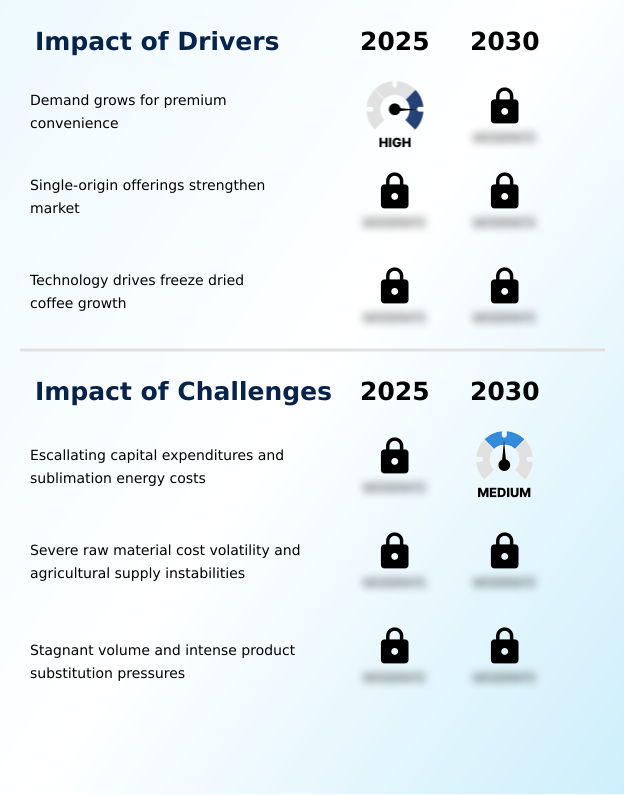
What are the key market drivers leading to the rise in the adoption of Freeze Dried Coffee Industry?

  • The escalating demand for premium convenience serves as a primary driver propelling market expansion.

  • The escalating premium convenience demand among single-person households acts as a formidable driver propelling the Freeze Dried Coffee Market.
  • As the time-efficiency determinant shapes purchasing behavior, consumers are rapidly abandoning traditional brewing rituals and heat-damaged spray-dried alternatives in favor of a premiumized soluble format that guarantees sensory excellence.
  • To meet this volume, manufacturers have deployed next-generation industrial vacuum pumps, reducing operational cycle times by 20% and lowering energy use by 15%. Simultaneously, the shift toward sustainable packaging innovations, particularly lightweight recyclable pouches, has decreased logistics overhead by 12%.
  • These operational efficiencies allow beverage brands to maintain competitive pricing while fulfilling the strict quality expectations of a fast-paced, urbanized consumer base.

What are the market trends shaping the Freeze Dried Coffee Industry?

  • Premiumization for single-origin, specialized varieties is emerging as a prominent market trend.

  • The Freeze Dried Coffee Market is increasingly characterized by the rapid adoption of single-origin profiles and organic certifications as consumers demand greater ethical sourcing transparency. This behavioral shift compels processors to upgrade their infrastructure with advanced sublimation technologies and high capacity refrigeration units.
  • By enhancing manufacturing agility, production facilities have reduced energy waste by 18% and improved machine uptime by 25%, effectively buffering against localized utility tariffs. The integration of predictive supply chain modeling has further decreased the impact of agricultural supply instabilities by 22%, allowing brands to navigate raw material cost volatility with greater precision.
  • These structural trends enable companies to optimize capital expenditure management while continuously delivering premiumized beverage formats to discerning urban demographics.

What challenges does the Freeze Dried Coffee Industry face during its growth?

  • Escalating capital expenditures and sublimation energy costs represent key challenges impeding industry growth.

  • The Freeze Dried Coffee Market faces substantial operational constraints primarily tied to the high sublimation energy cost inherent to the lyophilization process. Executing precise sub-zero vacuum sublimation for flavor complexity preservation requires immense power, driving up facility overhead by 24% during peak tariff periods.
  • Maintaining gentle crystallization to protect volatile aromatic compounds limits production speed, creating bottlenecks that delay output by up to 18%. These structural limitations severely compress operating margins, particularly when attempting to scale back-of-house operations for institutional catering networks. Furthermore, adjusting production lines to accommodate the shifting consumption patterns of professional hybrid-work schedules restricts manufacturing flexibility by 15%.
  • Consequently, the elevated retail pricing of these premium formats inhibits rapid mass adoption among budget conscious consumer groups.

Exclusive Technavio Analysis on Customer Landscape

The freeze dried coffee market forecasting report includes the adoption lifecycle of the market, covering from the innovator’s stage to the laggard’s stage. It focuses on adoption rates in different regions based on penetration. Furthermore, the freeze dried coffee market report also includes key purchase criteria and drivers of price sensitivity to help companies evaluate and develop their market growth analysis strategies.
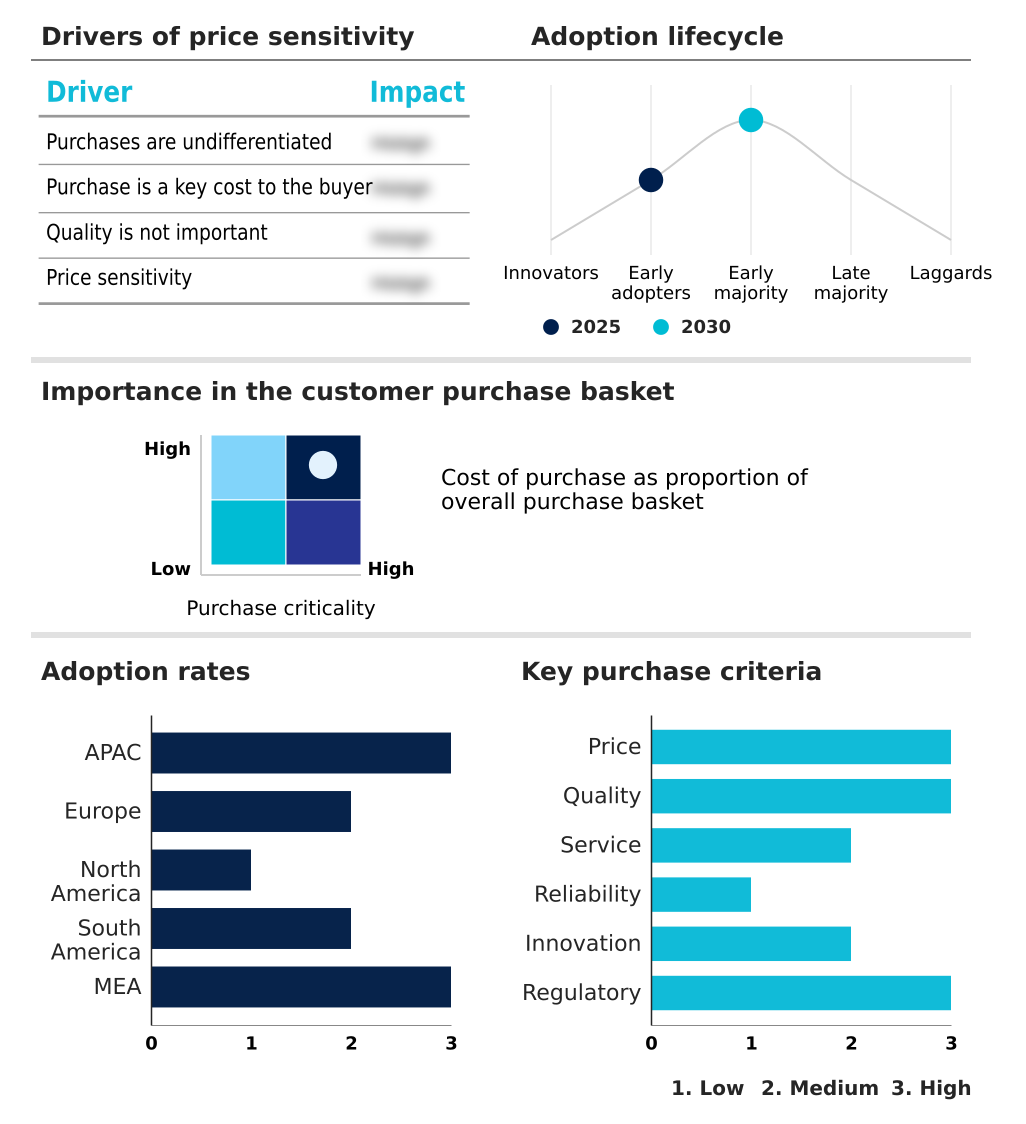
Customer Landscape of Freeze Dried Coffee Industry

Competitive Landscape

Companies are implementing various strategies, such as strategic alliances, freeze dried coffee market forecast, partnerships, mergers and acquisitions, geographical expansion, and product/service launches, to enhance their presence in the industry.

Alois Dallmayr KG - The vendor provides premium freeze dried coffee solutions, utilizing advanced dehydration processes to preserve volatile aromas and deliver superior flavor complexity for convenience-driven consumer segments.

The industry research and growth report includes detailed analyses of the competitive landscape of the market and information about key companies, including:

  • Alois Dallmayr KG
  • CCL Products India Ltd
  • Clipper Teas
  • Food Empire Holdings Ltd
  • Grupo Nutresa
  • HACO Holding AG
  • illycaffe SpA
  • JDE Peets NV
  • Julius Meinl Coffee Group
  • Mount Hagen Coffee
  • Nestle SA
  • Olam Food Ingredients
  • Starbucks Corp.
  • Strauss Group Ltd.
  • Tata Consumer Products Ltd.
  • Tchibo GmbH
  • The Kraft Heinz Co.
  • UCC Ueshima Coffee Co. Ltd
  • Unilever PLC
  • Waka Coffee Inc.

Qualitative and quantitative analysis of companies has been conducted to help clients understand the wider business environment as well as the strengths and weaknesses of key industry players. Data is qualitatively analyzed to categorize companies as pure play, category-focused, industry-focused, and diversified; it is quantitatively analyzed to categorize companies as dominant, leading, strong, tentative, and weak.

Recent Development and News in Freeze dried coffee market

  • In the Packaged Foods and Meats industry, the widespread adoption of stringent food safety regulations under frameworks like the Food Safety Modernization Act has necessitated advanced track-and-trace solutions, directly impacting Freeze Dried Coffee demand by requiring manufacturers to enhance ethical sourcing transparency and batch traceability.
  • The integration of automated inventory control systems across global distribution centers has reduced cross-docking times by 22%, directly impacting Freeze Dried Coffee demand by minimizing exposure risks and preserving the integrity of moisture-sensitive soluble coffee crystals during transit.
  • The transition toward sustainable packaging mandates, such as the European Union Packaging and Packaging Waste Directive, has accelerated the adoption of lightweight recyclable pouches, directly impacting Freeze Dried Coffee demand by lowering long-distance transportation costs and fuel consumption metrics.
  • The expansion of specialized direct to consumer channels and e-commerce subscription models for premium pantry staples has improved last-mile delivery efficiency by 18%, directly impacting Freeze Dried Coffee demand by facilitating broader accessibility for budget conscious consumer groups seeking premium convenience.

Dive into Technavio’s robust research methodology, blending expert interviews, extensive data synthesis, and validated models for unparalleled Freeze Dried Coffee Market insights. See full methodology.

Market Scope
Page number 293
Base year 2025
Historic period 2020-2024
Forecast period 2026-2030
Growth momentum & CAGR Accelerate at a CAGR of 4.7%
Market growth 2026-2030 USD 3416.2 million
Market structure Fragmented
YoY growth 2025-2026(%) 4.5%
Key countries China, Japan, India, South Korea, Australia, Indonesia, Germany, UK, France, Italy, Spain, The Netherlands, US, Canada, Mexico, Brazil, Argentina, Chile, Saudi Arabia, UAE, South Africa, Turkey and Israel
Competitive landscape Leading Companies, Market Positioning of Companies, Competitive Strategies, and Industry Risks

Request Free Sample

Research Analyst Overview

  • The Freeze Dried Coffee Market is experiencing a definitive shift toward premiumization, fundamentally altering how beverage conglomerates approach product strategy and operational budgeting. Decision-makers in the boardroom are increasingly prioritizing sustainable packaging innovations and lightweight recyclable pouches to align with stringent environmental compliance mandates, effectively reducing logistics-related carbon emissions by 28%.
  • This strategic pivot requires intensive capital expenditure management to support the integration of advanced sublimation technologies and precise granulation equipment. By transitioning away from heat-damaged spray-dried alternatives, manufacturers achieve exceptional flavor complexity preservation and gentle crystallization, satisfying the sophisticated palates of modern demographics.
  • Furthermore, ensuring ethical sourcing transparency and acquiring organic certifications have become critical for maintaining brand equity in highly competitive retail environments. The reliance on high capacity refrigeration and industrial vacuum pumps necessitates rigorous oversight of localized utility tariffs to protect operating margins.
  • Ultimately, the ability to deliver single-origin profiles and sensory excellence through a premiumized soluble format dictates long-term commercial viability in a market driven by the constant pursuit of time-efficiency determinant solutions.

What are the Key Data Covered in this Freeze Dried Coffee Market Research and Growth Report?

  • What is the expected growth of the Freeze Dried Coffee Market between 2026 and 2030?

    • USD 3.42 billion, at a CAGR of 4.7%

  • What segmentation does the market report cover?

    • The report is segmented by Distribution Channel (Offline, and Online), Flavor (Optical, Non-flavored, and Flavored varieties), Packaging (Jars, Sachets, Pouches, and Bulk packaging) and Geography (APAC, Europe, North America, South America, Middle East and Africa)

  • Which regions are analyzed in the report?

    • APAC, Europe, North America, South America and Middle East and Africa

  • What are the key growth drivers and market challenges?

    • Demand grows for premium convenience, Escallating capital expenditures and sublimation energy costs

  • Who are the major players in the Freeze Dried Coffee Market?

    • Alois Dallmayr KG, CCL Products India Ltd, Clipper Teas, Food Empire Holdings Ltd, Grupo Nutresa, HACO Holding AG, illycaffe SpA, JDE Peets NV, Julius Meinl Coffee Group, Mount Hagen Coffee, Nestle SA, Olam Food Ingredients, Starbucks Corp., Strauss Group Ltd., Tata Consumer Products Ltd., Tchibo GmbH, The Kraft Heinz Co., UCC Ueshima Coffee Co. Ltd, Unilever PLC and Waka Coffee Inc.

Market Research Insights

  • The Freeze Dried Coffee Market demonstrates robust operational shifts as manufacturers adapt to professional hybrid-work schedules and single-person households demanding premium convenience. By integrating advanced analytics into their supply chain, producers have optimized localized utility tariffs management, reducing overhead energy waste by 18%.
  • Furthermore, the adoption of specialized direct to consumer channels has increased direct distribution efficiency by 24%, bypassing traditional retail bottlenecks. This structural pivot allows brands to maintain absolute portion control and cup-to-cup consistency across diverse demographics. Additionally, streamlined back-of-house operations in institutional catering networks have improved order fulfillment speeds by 30%, solidifying the market's reliance on high-performance soluble formats.

We can help! Our analysts can customize this freeze dried coffee market research report to meet your requirements.

Get in touch

1. Executive Summary

1.1 Market overview

Executive Summary - Chart on Market Overview
Executive Summary - Data Table on Market Overview
Executive Summary - Chart on Global Market Characteristics
Executive Summary - Chart on Market by Geography
Executive Summary - Chart on Market Segmentation by Distribution Channel
Executive Summary - Chart on Market Segmentation by Flavor
Executive Summary - Chart on Market Segmentation by Packaging
Executive Summary - Chart on Incremental Growth
Executive Summary - Data Table on Incremental Growth
Executive Summary - Chart on Company Market Positioning

2. Technavio Analysis

2.1 Analysis of price sensitivity, lifecycle, customer purchase basket, adoption rates, and purchase criteria

2.2 Criticality of inputs and Factors of differentiation

Chart on Overview on criticality of inputs and factors of differentiation

2.3 Factors of disruption

Chart on Overview on factors of disruption

2.4 Impact of drivers and challenges

Chart on Impact of drivers and challenges in 2025 and 2030

3. Market Landscape

3.1 Market ecosystem

Chart on Parent Market
Data Table on - Parent Market

3.2 Market characteristics

Chart on Market characteristics analysis

3.3 Value chain analysis

Chart on Value chain analysis

4. Market Sizing

4.1 Market definition

Data Table on Offerings of companies included in the market definition

4.2 Market segment analysis

Market segments

4.3 Market size 2025

4.4 Market outlook: Forecast for 2025-2030

Chart on Global - Market size and forecast 2025-2030 ($ million)
Data Table on Global - Market size and forecast 2025-2030 ($ million)
Chart on Global Market: Year-over-year growth 2025-2030 (%)
Data Table on Global Market: Year-over-year growth 2025-2030 (%)

5. Historic Market Size

5.1 Global Freeze Dried Coffee Market 2020 - 2024

Historic Market Size - Data Table on Global Freeze Dried Coffee Market 2020 - 2024 ($ million)

5.2 Distribution Channel segment analysis 2020 - 2024

Historic Market Size - Distribution Channel Segment 2020 - 2024 ($ million)

5.3 Flavor segment analysis 2020 - 2024

Historic Market Size - Flavor Segment 2020 - 2024 ($ million)

5.4 Packaging segment analysis 2020 - 2024

Historic Market Size - Packaging Segment 2020 - 2024 ($ million)

5.5 Geography segment analysis 2020 - 2024

Historic Market Size - Geography Segment 2020 - 2024 ($ million)

5.6 Country segment analysis 2020 - 2024

Historic Market Size - Country Segment 2020 - 2024 ($ million)

6. Qualitative Analysis

6.1 Impact of AI on Global Freeze Dried Coffee Market

6.2 Impact of geopolitical conflicts on Global Freeze Dried Coffee Market

7. Five Forces Analysis

7.1 Five forces summary

Five forces analysis - Comparison between 2025 and 2030

7.2 Bargaining power of buyers

Bargaining power of buyers - Impact of key factors 2025 and 2030

7.3 Bargaining power of suppliers

Bargaining power of suppliers - Impact of key factors in 2025 and 2030

7.4 Threat of new entrants

Threat of new entrants - Impact of key factors in 2025 and 2030

7.5 Threat of substitutes

Threat of substitutes - Impact of key factors in 2025 and 2030

7.6 Threat of rivalry

Threat of rivalry - Impact of key factors in 2025 and 2030

7.7 Market condition

Chart on Market condition - Five forces 2025 and 2030

8. Market Segmentation by Distribution Channel

8.1 Market segments

Chart on Distribution Channel - Market share 2025-2030 (%)
Data Table on Distribution Channel - Market share 2025-2030 (%)

8.2 Comparison by Distribution Channel

Chart on Comparison by Distribution Channel
Data Table on Comparison by Distribution Channel

8.3 Offline - Market size and forecast 2025-2030

Chart on Offline - Market size and forecast 2025-2030 ($ million)
Data Table on Offline - Market size and forecast 2025-2030 ($ million)
Chart on Offline - Year-over-year growth 2025-2030 (%)
Data Table on Offline - Year-over-year growth 2025-2030 (%)

8.4 Online - Market size and forecast 2025-2030

Chart on Online - Market size and forecast 2025-2030 ($ million)
Data Table on Online - Market size and forecast 2025-2030 ($ million)
Chart on Online - Year-over-year growth 2025-2030 (%)
Data Table on Online - Year-over-year growth 2025-2030 (%)

8.5 Market opportunity by Distribution Channel

Market opportunity by Distribution Channel ($ million)
Data Table on Market opportunity by Distribution Channel ($ million)

9. Market Segmentation by Flavor

9.1 Market segments

Chart on Flavor - Market share 2025-2030 (%)
Data Table on Flavor - Market share 2025-2030 (%)

9.2 Comparison by Flavor

Chart on Comparison by Flavor
Data Table on Comparison by Flavor

9.3 Optical - Market size and forecast 2025-2030

Chart on Optical - Market size and forecast 2025-2030 ($ million)
Data Table on Optical - Market size and forecast 2025-2030 ($ million)
Chart on Optical - Year-over-year growth 2025-2030 (%)
Data Table on Optical - Year-over-year growth 2025-2030 (%)

9.4 Non-flavored - Market size and forecast 2025-2030

Chart on Non-flavored - Market size and forecast 2025-2030 ($ million)
Data Table on Non-flavored - Market size and forecast 2025-2030 ($ million)
Chart on Non-flavored - Year-over-year growth 2025-2030 (%)
Data Table on Non-flavored - Year-over-year growth 2025-2030 (%)

9.5 Flavored varieties - Market size and forecast 2025-2030

Chart on Flavored varieties - Market size and forecast 2025-2030 ($ million)
Data Table on Flavored varieties - Market size and forecast 2025-2030 ($ million)
Chart on Flavored varieties - Year-over-year growth 2025-2030 (%)
Data Table on Flavored varieties - Year-over-year growth 2025-2030 (%)

9.6 Market opportunity by Flavor

Market opportunity by Flavor ($ million)
Data Table on Market opportunity by Flavor ($ million)

10. Market Segmentation by Packaging

10.1 Market segments

Chart on Packaging - Market share 2025-2030 (%)
Data Table on Packaging - Market share 2025-2030 (%)

10.2 Comparison by Packaging

Chart on Comparison by Packaging
Data Table on Comparison by Packaging

10.3 Jars - Market size and forecast 2025-2030

Chart on Jars - Market size and forecast 2025-2030 ($ million)
Data Table on Jars - Market size and forecast 2025-2030 ($ million)
Chart on Jars - Year-over-year growth 2025-2030 (%)
Data Table on Jars - Year-over-year growth 2025-2030 (%)

10.4 Sachets - Market size and forecast 2025-2030

Chart on Sachets - Market size and forecast 2025-2030 ($ million)
Data Table on Sachets - Market size and forecast 2025-2030 ($ million)
Chart on Sachets - Year-over-year growth 2025-2030 (%)
Data Table on Sachets - Year-over-year growth 2025-2030 (%)

10.5 Pouches - Market size and forecast 2025-2030

Chart on Pouches - Market size and forecast 2025-2030 ($ million)
Data Table on Pouches - Market size and forecast 2025-2030 ($ million)
Chart on Pouches - Year-over-year growth 2025-2030 (%)
Data Table on Pouches - Year-over-year growth 2025-2030 (%)

10.6 Bulk packaging - Market size and forecast 2025-2030

Chart on Bulk packaging - Market size and forecast 2025-2030 ($ million)
Data Table on Bulk packaging - Market size and forecast 2025-2030 ($ million)
Chart on Bulk packaging - Year-over-year growth 2025-2030 (%)
Data Table on Bulk packaging - Year-over-year growth 2025-2030 (%)

10.7 Market opportunity by Packaging

Market opportunity by Packaging ($ million)
Data Table on Market opportunity by Packaging ($ million)

11. Customer Landscape

11.1 Customer landscape overview

Analysis of price sensitivity, lifecycle, customer purchase basket, adoption rates, and purchase criteria

12. Geographic Landscape

12.1 Geographic segmentation

Chart on Market share by geography 2025-2030 (%)
Data Table on Market share by geography 2025-2030 (%)

12.2 Geographic comparison

Chart on Geographic comparison
Data Table on Geographic comparison

12.3 APAC - Market size and forecast 2025-2030

Chart on APAC - Market size and forecast 2025-2030 ($ million)
Data Table on APAC - Market size and forecast 2025-2030 ($ million)
Chart on APAC - Year-over-year growth 2025-2030 (%)
Data Table on APAC - Year-over-year growth 2025-2030 (%)
Chart on Regional Comparison - APAC
Data Table on Regional Comparison - APAC

12.3.1 China - Market size and forecast 2025-2030

Chart on China - Market size and forecast 2025-2030 ($ million)
Data Table on China - Market size and forecast 2025-2030 ($ million)
Chart on China - Year-over-year growth 2025-2030 (%)
Data Table on China - Year-over-year growth 2025-2030 (%)

12.3.2 Japan - Market size and forecast 2025-2030

Chart on Japan - Market size and forecast 2025-2030 ($ million)
Data Table on Japan - Market size and forecast 2025-2030 ($ million)
Chart on Japan - Year-over-year growth 2025-2030 (%)
Data Table on Japan - Year-over-year growth 2025-2030 (%)

12.3.3 India - Market size and forecast 2025-2030

Chart on India - Market size and forecast 2025-2030 ($ million)
Data Table on India - Market size and forecast 2025-2030 ($ million)
Chart on India - Year-over-year growth 2025-2030 (%)
Data Table on India - Year-over-year growth 2025-2030 (%)

12.3.4 South Korea - Market size and forecast 2025-2030

Chart on South Korea - Market size and forecast 2025-2030 ($ million)
Data Table on South Korea - Market size and forecast 2025-2030 ($ million)
Chart on South Korea - Year-over-year growth 2025-2030 (%)
Data Table on South Korea - Year-over-year growth 2025-2030 (%)

12.3.5 Australia - Market size and forecast 2025-2030

Chart on Australia - Market size and forecast 2025-2030 ($ million)
Data Table on Australia - Market size and forecast 2025-2030 ($ million)
Chart on Australia - Year-over-year growth 2025-2030 (%)
Data Table on Australia - Year-over-year growth 2025-2030 (%)

12.3.6 Indonesia - Market size and forecast 2025-2030

Chart on Indonesia - Market size and forecast 2025-2030 ($ million)
Data Table on Indonesia - Market size and forecast 2025-2030 ($ million)
Chart on Indonesia - Year-over-year growth 2025-2030 (%)
Data Table on Indonesia - Year-over-year growth 2025-2030 (%)

12.4 Europe - Market size and forecast 2025-2030

Chart on Europe - Market size and forecast 2025-2030 ($ million)
Data Table on Europe - Market size and forecast 2025-2030 ($ million)
Chart on Europe - Year-over-year growth 2025-2030 (%)
Data Table on Europe - Year-over-year growth 2025-2030 (%)
Chart on Regional Comparison - Europe
Data Table on Regional Comparison - Europe

12.4.1 Germany - Market size and forecast 2025-2030

Chart on Germany - Market size and forecast 2025-2030 ($ million)
Data Table on Germany - Market size and forecast 2025-2030 ($ million)
Chart on Germany - Year-over-year growth 2025-2030 (%)
Data Table on Germany - Year-over-year growth 2025-2030 (%)

12.4.2 UK - Market size and forecast 2025-2030

Chart on UK - Market size and forecast 2025-2030 ($ million)
Data Table on UK - Market size and forecast 2025-2030 ($ million)
Chart on UK - Year-over-year growth 2025-2030 (%)
Data Table on UK - Year-over-year growth 2025-2030 (%)

12.4.3 France - Market size and forecast 2025-2030

Chart on France - Market size and forecast 2025-2030 ($ million)
Data Table on France - Market size and forecast 2025-2030 ($ million)
Chart on France - Year-over-year growth 2025-2030 (%)
Data Table on France - Year-over-year growth 2025-2030 (%)

12.4.4 Italy - Market size and forecast 2025-2030

Chart on Italy - Market size and forecast 2025-2030 ($ million)
Data Table on Italy - Market size and forecast 2025-2030 ($ million)
Chart on Italy - Year-over-year growth 2025-2030 (%)
Data Table on Italy - Year-over-year growth 2025-2030 (%)

12.4.5 Spain - Market size and forecast 2025-2030

Chart on Spain - Market size and forecast 2025-2030 ($ million)
Data Table on Spain - Market size and forecast 2025-2030 ($ million)
Chart on Spain - Year-over-year growth 2025-2030 (%)
Data Table on Spain - Year-over-year growth 2025-2030 (%)

12.4.6 The Netherlands - Market size and forecast 2025-2030

Chart on The Netherlands - Market size and forecast 2025-2030 ($ million)
Data Table on The Netherlands - Market size and forecast 2025-2030 ($ million)
Chart on The Netherlands - Year-over-year growth 2025-2030 (%)
Data Table on The Netherlands - Year-over-year growth 2025-2030 (%)

12.5 North America - Market size and forecast 2025-2030

Chart on North America - Market size and forecast 2025-2030 ($ million)
Data Table on North America - Market size and forecast 2025-2030 ($ million)
Chart on North America - Year-over-year growth 2025-2030 (%)
Data Table on North America - Year-over-year growth 2025-2030 (%)
Chart on Regional Comparison - North America
Data Table on Regional Comparison - North America

12.5.1 US - Market size and forecast 2025-2030

Chart on US - Market size and forecast 2025-2030 ($ million)
Data Table on US - Market size and forecast 2025-2030 ($ million)
Chart on US - Year-over-year growth 2025-2030 (%)
Data Table on US - Year-over-year growth 2025-2030 (%)

12.5.2 Canada - Market size and forecast 2025-2030

Chart on Canada - Market size and forecast 2025-2030 ($ million)
Data Table on Canada - Market size and forecast 2025-2030 ($ million)
Chart on Canada - Year-over-year growth 2025-2030 (%)
Data Table on Canada - Year-over-year growth 2025-2030 (%)

12.5.3 Mexico - Market size and forecast 2025-2030

Chart on Mexico - Market size and forecast 2025-2030 ($ million)
Data Table on Mexico - Market size and forecast 2025-2030 ($ million)
Chart on Mexico - Year-over-year growth 2025-2030 (%)
Data Table on Mexico - Year-over-year growth 2025-2030 (%)

12.6 South America - Market size and forecast 2025-2030

Chart on South America - Market size and forecast 2025-2030 ($ million)
Data Table on South America - Market size and forecast 2025-2030 ($ million)
Chart on South America - Year-over-year growth 2025-2030 (%)
Data Table on South America - Year-over-year growth 2025-2030 (%)
Chart on Regional Comparison - South America
Data Table on Regional Comparison - South America

12.6.1 Brazil - Market size and forecast 2025-2030

Chart on Brazil - Market size and forecast 2025-2030 ($ million)
Data Table on Brazil - Market size and forecast 2025-2030 ($ million)
Chart on Brazil - Year-over-year growth 2025-2030 (%)
Data Table on Brazil - Year-over-year growth 2025-2030 (%)

12.6.2 Argentina - Market size and forecast 2025-2030

Chart on Argentina - Market size and forecast 2025-2030 ($ million)
Data Table on Argentina - Market size and forecast 2025-2030 ($ million)
Chart on Argentina - Year-over-year growth 2025-2030 (%)
Data Table on Argentina - Year-over-year growth 2025-2030 (%)

12.6.3 Chile - Market size and forecast 2025-2030

Chart on Chile - Market size and forecast 2025-2030 ($ million)
Data Table on Chile - Market size and forecast 2025-2030 ($ million)
Chart on Chile - Year-over-year growth 2025-2030 (%)
Data Table on Chile - Year-over-year growth 2025-2030 (%)

12.7 Middle East and Africa - Market size and forecast 2025-2030

Chart on Middle East and Africa - Market size and forecast 2025-2030 ($ million)
Data Table on Middle East and Africa - Market size and forecast 2025-2030 ($ million)
Chart on Middle East and Africa - Year-over-year growth 2025-2030 (%)
Data Table on Middle East and Africa - Year-over-year growth 2025-2030 (%)
Chart on Regional Comparison - Middle East and Africa
Data Table on Regional Comparison - Middle East and Africa

12.7.1 Saudi Arabia - Market size and forecast 2025-2030

Chart on Saudi Arabia - Market size and forecast 2025-2030 ($ million)
Data Table on Saudi Arabia - Market size and forecast 2025-2030 ($ million)
Chart on Saudi Arabia - Year-over-year growth 2025-2030 (%)
Data Table on Saudi Arabia - Year-over-year growth 2025-2030 (%)

12.7.2 UAE - Market size and forecast 2025-2030

Chart on UAE - Market size and forecast 2025-2030 ($ million)
Data Table on UAE - Market size and forecast 2025-2030 ($ million)
Chart on UAE - Year-over-year growth 2025-2030 (%)
Data Table on UAE - Year-over-year growth 2025-2030 (%)

12.7.3 South Africa - Market size and forecast 2025-2030

Chart on South Africa - Market size and forecast 2025-2030 ($ million)
Data Table on South Africa - Market size and forecast 2025-2030 ($ million)
Chart on South Africa - Year-over-year growth 2025-2030 (%)
Data Table on South Africa - Year-over-year growth 2025-2030 (%)

12.7.4 Turkey - Market size and forecast 2025-2030

Chart on Turkey - Market size and forecast 2025-2030 ($ million)
Data Table on Turkey - Market size and forecast 2025-2030 ($ million)
Chart on Turkey - Year-over-year growth 2025-2030 (%)
Data Table on Turkey - Year-over-year growth 2025-2030 (%)

12.7.5 Israel - Market size and forecast 2025-2030

Chart on Israel - Market size and forecast 2025-2030 ($ million)
Data Table on Israel - Market size and forecast 2025-2030 ($ million)
Chart on Israel - Year-over-year growth 2025-2030 (%)
Data Table on Israel - Year-over-year growth 2025-2030 (%)

12.8 Market opportunity by geography

Market opportunity by geography ($ million)
Data Tables on Market opportunity by geography ($ million)

13. Drivers, Challenges, and Opportunity

13.1 Market drivers

Demand grows for premium convenience
Single-origin offerings strengthen market
Technology drives freeze dried coffee growth

13.2 Market challenges

Escallating capital expenditures and sublimation energy costs
Severe raw material cost volatility and agricultural supply instabilities
Stagnant volume and intense product substitution pressures

13.3 Impact of drivers and challenges

Impact of drivers and challenges in 2025 and 2030

13.4 Market opportunities

Premiumization for single origin specialized varieties
Expansion of novel soluble formulations optimized for cold liquid dissolution
Specialized direct to consumer channels and e-commerce subscription models

14. Competitive Landscape

14.1 Overview

14.2

Overview on criticality of inputs and factors of differentiation

14.3 Landscape disruption

Overview on factors of disruption

14.4 Industry risks

Impact of key risks on business

15. Competitive Analysis

15.1 Companies profiled

Companies covered

15.2 Company ranking index

15.3 Market positioning of companies

Matrix on companies position and classification

15.4 Alois Dallmayr KG

Alois Dallmayr KG - Overview
Alois Dallmayr KG - Product / Service
Alois Dallmayr KG - Key offerings
SWOT

15.5 Clipper Teas

Clipper Teas - Overview
Clipper Teas - Product / Service
Clipper Teas - Key offerings
SWOT

15.6 Food Empire Holdings Ltd

Food Empire Holdings Ltd - Overview
Food Empire Holdings Ltd - Product / Service
Food Empire Holdings Ltd - Key offerings
SWOT

15.7 Grupo Nutresa

Grupo Nutresa - Overview
Grupo Nutresa - Product / Service
Grupo Nutresa - Key offerings
SWOT

15.8 JDE Peets NV

JDE Peets NV - Overview
JDE Peets NV - Business segments
JDE Peets NV - Key offerings
JDE Peets NV - Segment focus
SWOT

15.9 Julius Meinl Coffee Group

Julius Meinl Coffee Group - Overview
Julius Meinl Coffee Group - Product / Service
Julius Meinl Coffee Group - Key offerings
SWOT

15.10 Nestle SA

Nestle SA - Overview
Nestle SA - Business segments
Nestle SA - Key news
Nestle SA - Key offerings
Nestle SA - Segment focus
SWOT

15.11 Olam Food Ingredients

Olam Food Ingredients - Overview
Olam Food Ingredients - Product / Service
Olam Food Ingredients - Key offerings
SWOT

15.12 Starbucks Corp.

Starbucks Corp. - Overview
Starbucks Corp. - Business segments
Starbucks Corp. - Key offerings
Starbucks Corp. - Segment focus
SWOT

15.13 Strauss Group Ltd.

Strauss Group Ltd. - Overview
Strauss Group Ltd. - Business segments
Strauss Group Ltd. - Key offerings
Strauss Group Ltd. - Segment focus
SWOT

15.14 Tata Consumer Products Ltd.

Tata Consumer Products Ltd. - Overview
Tata Consumer Products Ltd. - Business segments
Tata Consumer Products Ltd. - Key offerings
Tata Consumer Products Ltd. - Segment focus
SWOT

15.15 The Kraft Heinz Co.

The Kraft Heinz Co. - Overview
The Kraft Heinz Co. - Business segments
The Kraft Heinz Co. - Key news
The Kraft Heinz Co. - Key offerings
The Kraft Heinz Co. - Segment focus
SWOT

15.16 UCC Ueshima Coffee Co. Ltd

UCC Ueshima Coffee Co. Ltd - Overview
UCC Ueshima Coffee Co. Ltd - Product / Service
UCC Ueshima Coffee Co. Ltd - Key offerings
SWOT

15.17 Unilever PLC

Unilever PLC - Overview
Unilever PLC - Business segments
Unilever PLC - Key news
Unilever PLC - Key offerings
Unilever PLC - Segment focus
SWOT

15.18 Waka Coffee Inc.

Waka Coffee Inc. - Overview
Waka Coffee Inc. - Product / Service
Waka Coffee Inc. - Key offerings
SWOT

16. Appendix

16.1 Scope of the report

Market definition
Objectives
Notes and caveats

16.2 Inclusions and exclusions checklist

Inclusions checklist
Exclusions checklist

16.3 Currency conversion rates for US$

16.4 Research methodology

16.5 Data procurement

Information sources

16.6 Data validation

16.7 Validation techniques employed for market sizing

16.8 Data synthesis

16.9 360 degree market analysis

16.10 List of abbreviations

Research Methodology

Technavio presents a detailed picture of the market by way of study, synthesis, and summation of data from multiple sources. The analysts have presented the various facets of the market with a particular focus on identifying the key industry influencers. The data thus presented is comprehensive, reliable, and the result of extensive research, both primary and secondary.

INFORMATION SOURCES

Primary sources

  • Manufacturers and suppliers
  • Channel partners
  • Industry experts
  • Strategic decision makers

Secondary sources

  • Industry journals and periodicals
  • Government data
  • Financial reports of key industry players
  • Historical data
  • Press releases

DATA ANALYSIS

Data Synthesis

  • Collation of data
  • Estimation of key figures
  • Analysis of derived insights

Data Validation

  • Triangulation with data models
  • Reference against proprietary databases
  • Corroboration with industry experts

REPORT WRITING

Qualitative

  • Market drivers
  • Market challenges
  • Market trends
  • Five forces analysis

Quantitative

  • Market size and forecast
  • Market segmentation
  • Geographical insights
  • Competitive landscape

Interested in this report?

Get your sample now to see our research methodology and insights!

Download Now

Frequently Asked Questions

Freeze Dried Coffee market growth will increase by USD 3416.2 million during 2026-2030.

The Freeze Dried Coffee market is expected to grow at a CAGR of 4.7% during 2026-2030.

Freeze Dried Coffee market is segmented by Distribution channel (Offline, Online) Flavor (Optical, Non-flavored, Flavored varieties) Packaging (Jars, Sachets, Pouches, Bulk packaging)

Alois Dallmayr KG, CCL Products India Ltd, Clipper Teas, Food Empire Holdings Ltd, Grupo Nutresa, HACO Holding AG, illycaffe SpA, JDE Peets NV, Julius Meinl Coffee Group, Mount Hagen Coffee, Nestle SA, Olam Food Ingredients, Starbucks Corp., Strauss Group Ltd., Tata Consumer Products Ltd., Tchibo GmbH, The Kraft Heinz Co., UCC Ueshima Coffee Co. Ltd, Unilever PLC, Waka Coffee Inc. are a few of the key vendors in the Freeze Dried Coffee market.

APAC will register the highest growth rate of 42.2% among the other regions. Therefore, the Freeze Dried Coffee market in APAC is expected to garner significant business opportunities for the vendors during the forecast period.

China, Japan, India, South Korea, Australia, Indonesia, Germany, UK, France, Italy, Spain, The Netherlands, US, Canada, Mexico, Brazil, Argentina, Chile, Saudi Arabia, UAE, South Africa, Turkey, Israel

  • Demand grows for premium convenience is the driving factor this market.

The Freeze Dried Coffee market vendors should focus on grabbing business opportunities from the Distribution channel segment as it accounted for the largest market share in the base year.
RIA - Research AI Assistant
Ask RIA
