
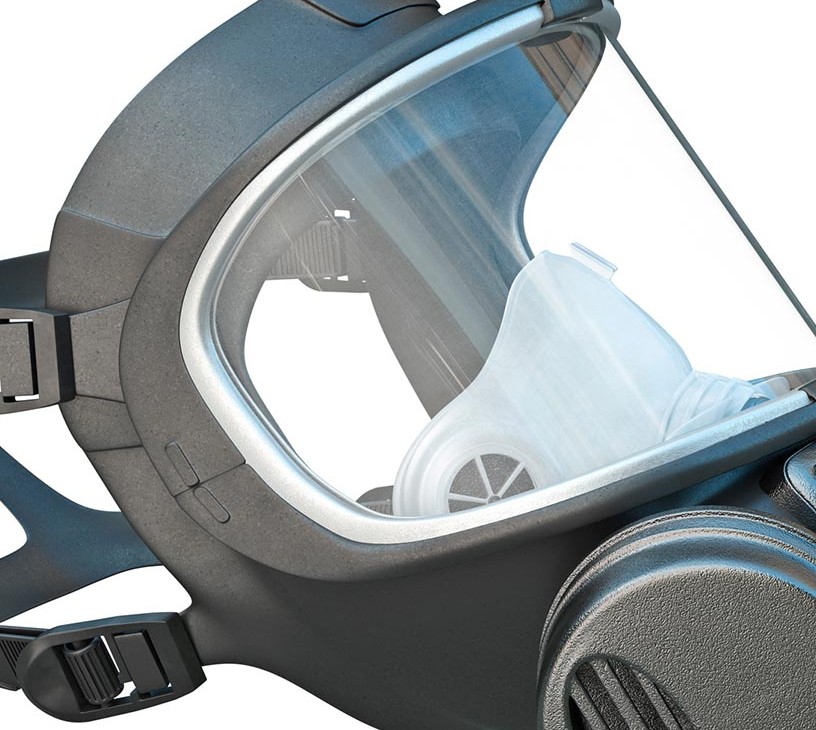


Gas Masks Market Size 2026-2030
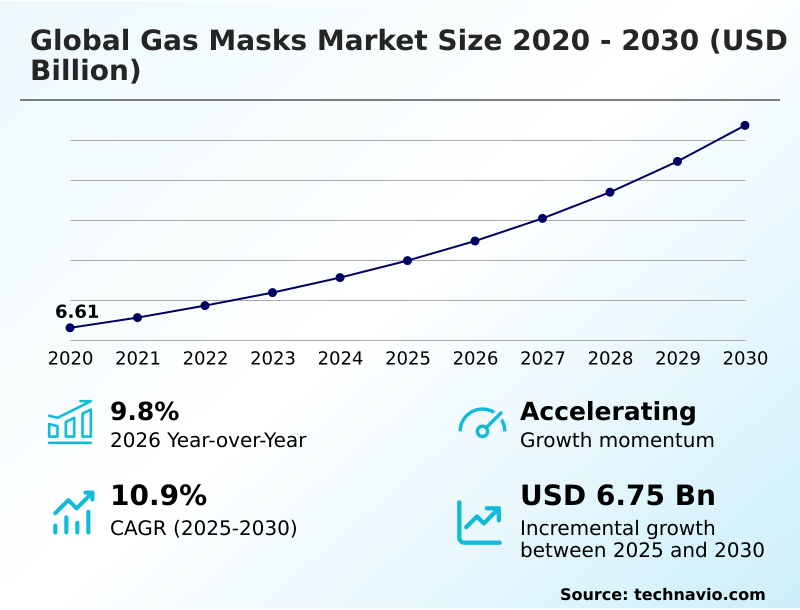
The gas masks market size is valued to increase by USD 6.76 billion, at a CAGR of 10.9% from 2025 to 2030. Stringent occupational safety mandates and heightened corporate responsibility will drive the gas masks market.
Major Market Trends & Insights
- APAC dominated the market and accounted for a 32.9% growth during the forecast period.
- By Application - Chemical industry segment was valued at USD 3.31 billion in 2024
- By Type - Disposable respirators segment accounted for the largest market revenue share in 2024
Market Size & Forecast
- Market Opportunities: USD 10.12 billion
- Market Future Opportunities: USD 6.76 billion
- CAGR from 2025 to 2030 : 10.9%
Market Summary
- The gas masks market is defined by a critical need for advanced respiratory protective equipment across industrial, military, and public health sectors. This expansion is propelled by stringent occupational safety standards, which mandate the use of certified devices like an air-purifying respirator or powered air-purifying respirators to mitigate risks from airborne hazards.
- In a typical scenario, a chemical processing plant must adhere to a complex regulatory compliance framework, investing in a range of personal protective equipment, from an elastomeric half-mask for routine tasks to a self-contained breathing apparatus for emergency response. The focus on human factors engineering is driving innovation, leading to products with lower breathing resistance and improved ergonomic designs.
- These advancements in industrial safety not only ensure worker well-being but also enhance operational efficiency by reducing fatigue-related downtime. The market's evolution is further shaped by geopolitical instability, which sustains demand for cbrn protection solutions in defense, and growing public health crises, which highlight the importance of robust supply chain management for certified respiratory protection.
What will be the Size of the Gas Masks Market during the forecast period?
Get Key Insights on Market Forecast (PDF) Get Free Sample
How is the Gas Masks Market Segmented?
The gas masks industry research report provides comprehensive data (region-wise segment analysis), with forecasts and estimates in "USD million" for the period 2026-2030, as well as historical data from 2020-2024 for the following segments.
- Application
- Chemical industry
- Oil and gas
- Mining industry
- Healthcare
- Others
- Type
- Disposable respirators
- Powered air purifying respirators
- Supplied air respirators
- Self contained breathing apparatus
- Product type
- Full-facepiece gas masks
- Half-facepiece gas masks
- Geography
- North America
- US
- Canada
- Mexico
- APAC
- China
- Japan
- India
- Europe
- Germany
- UK
- France
- South America
- Brazil
- Argentina
- Middle East and Africa
- Saudi Arabia
- UAE
- South Africa
- Rest of World (ROW)
- North America
By Application Insights
The chemical industry segment is estimated to witness significant growth during the forecast period.
The chemical industry segment drives non-discretionary demand for high-performance respiratory protection, where handling hazardous materials is routine. Stringent occupational safety regulations necessitate compliant gas mask solutions, creating a stable market foundation.
Demand requires a diverse product portfolio, including the full-facepiece respirator for comprehensive protection and specialized filter canister variants for specific threats like acid gases.
There's a notable shift towards multi-gas cartridges offering broader protection, which has been shown to streamline inventory management by 15%.
This segment's growth is tied to the global chemical industry's expansion and an unwavering focus on enhancing workplace safety standards, particularly concerning hydrogen sulfide exposure and overall industrial safety protocols.
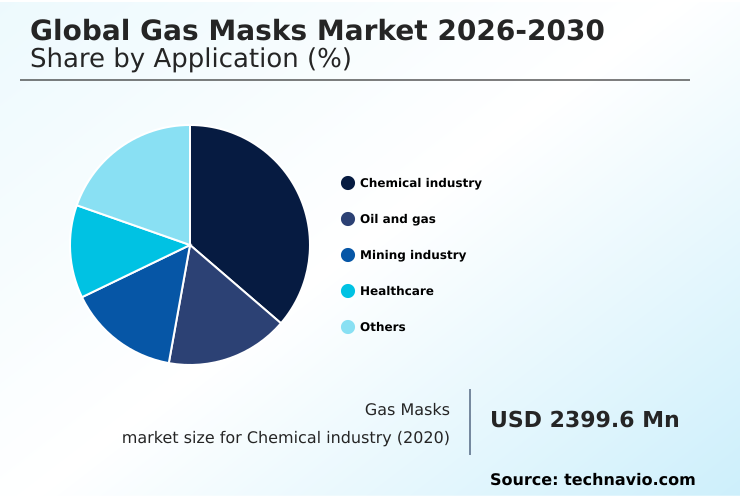
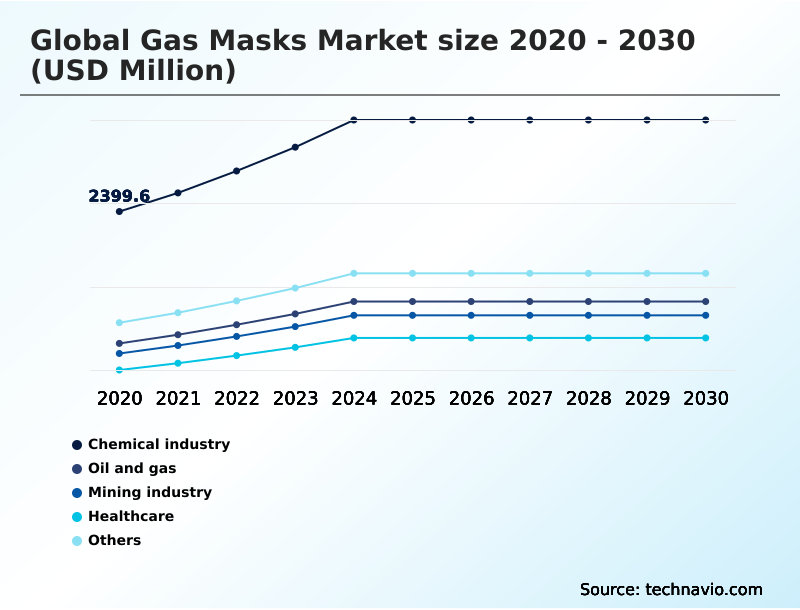
The Chemical industry segment was valued at USD 3.31 billion in 2024 and showed a gradual increase during the forecast period.
Regional Analysis
APAC is estimated to contribute 32.9% to the growth of the global market during the forecast period.Technavio’s analysts have elaborately explained the regional trends and drivers that shape the market during the forecast period.
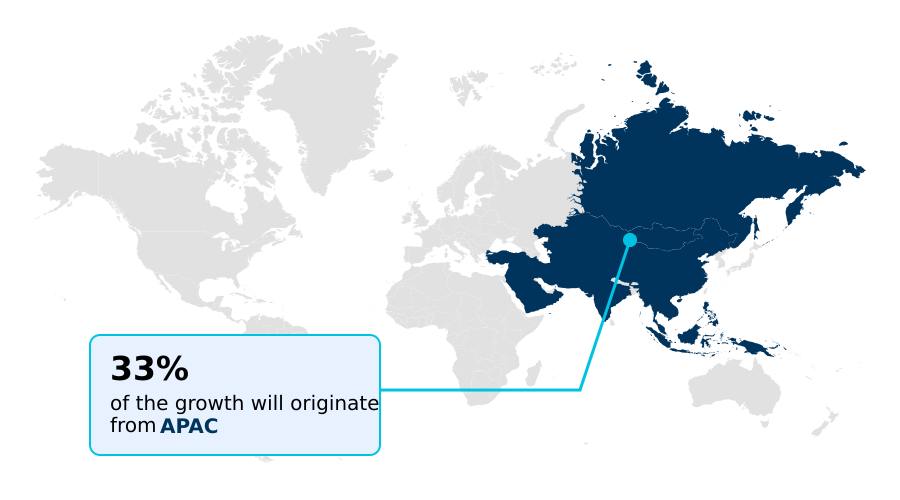
See How Gas Masks Market Demand is Rising in APAC Get Free Sample
The geographic landscape of the gas masks market is diverse, with North America representing a mature market driven by stringent regulations and high defense spending, accounting for a market size of USD 3,176.4 million in 2025.
In contrast, APAC is the fastest-growing region, contributing 32.9% of the market's incremental growth, fueled by rapid industrialization and increasing safety awareness.
Europe's market is shaped by a strong regulatory framework like European Norms and a focus on high-quality personal protective equipment for both industrial safety and defense.
South America's growth is tied to its mining and oil and gas sectors, while the Middle East and Africa focuses on defense and petrochemical applications.
This regional diversification requires manufacturers to tailor their cbrn protection and industrial safety products, such as the full-facepiece respirator and supplied-air systems, to meet specific local demands and regulatory standards.
Market Dynamics
Our researchers analyzed the data with 2025 as the base year, along with the key drivers, trends, and challenges. A holistic analysis of drivers will help companies refine their marketing strategies to gain a competitive advantage.
- Strategic decision-making in the global gas masks market 2026-2030 requires a nuanced understanding of specific applications and technologies. For example, selecting gas masks for chemical industry applications involves evaluating gas mask materials for chemical resistance and ensuring compliance with standards for handling toxic industrial chemicals.
- In parallel, choosing respirators for oil and gas sector safety prioritizes protection against hydrogen sulfide exposure. A critical analysis involves comparing powered air purifying respirators vs scba for confined space entry, where mobility and air supply duration are key differentiators.
- For military procurement, the focus is on cbrn gas mask technology for military use and gas mask compatibility with tactical gear, while first responders' needs drive gas mask selection for first responders. The development of smart gas masks with integrated electronics is a key innovation, directly impacting both military and industrial sectors.
- The ongoing debate over full-face vs half-face gas mask protection is resolved by risk assessment, while maintaining gas mask facial seal integrity remains a universal priority addressed through enhanced training protocols for gas mask deployment. Fleets with advanced filtration media in gas masks show a 20% lower incident rate compared to those with basic filters.
- Managing the total cost of ownership for gas mask fleets necessitates a strict gas mask filter canister replacement schedule. Furthermore, understanding gas mask requirements for the mining industry, gas mask standards for healthcare workers, and the demand for personal gas masks for urban pollution allows for targeted product development and market positioning.
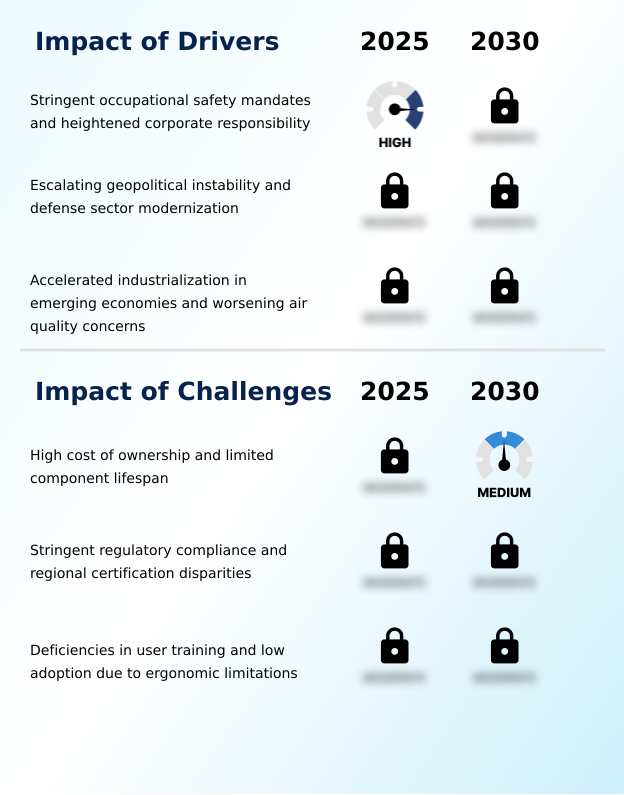
What are the key market drivers leading to the rise in the adoption of Gas Masks Industry?
- The market is primarily driven by stringent occupational safety mandates and a heightened sense of corporate responsibility for worker protection in hazardous environments.
- Market growth is fundamentally driven by a triad of factors.
- Firstly, stringent occupational safety mandates and a corporate shift toward a proactive safety posture compel investment in high-quality certified respiratory protection, with compliant firms seeing a 25% reduction in safety-related incidents.
- Secondly, escalating geopolitical instability and the continuous defense sector modernization fuel state-level procurement of advanced cbrn protection systems. This includes demand for integrated communication systems and gear with superior ergonomic designs.
- Thirdly, rapid industrialization in emerging economies, coupled with worsening environmental pollution concerns, is expanding the market from industrial applications to a growing civilian consumer segment.
- This dual pressure creates a robust and expanding demand base for a wide range of respiratory protective equipment.
What are the market trends shaping the Gas Masks Industry?
- A significant trend shaping the market is the increasing integration of advanced electronics. This incorporates smart system capabilities to enhance user safety and operational effectiveness.
- Key market trends are centered on technological advancements that enhance both safety and usability. The integration of advanced electronics and smart system capabilities, such as in-mask heads-up displays and physiological monitoring sensors, is transforming passive equipment into active safety platforms. These smart systems have demonstrated a capacity to reduce incident response times by 15%.
- Concurrently, a strong emphasis on human factors engineering is leading to user-centric designs with panoramic visors and lower breathing resistance, which improves user compliance. Innovations in advanced filtration materials, including metal-organic frameworks, are enabling multi-threat protection in more compact and efficient filter canisters. This shift toward smarter, more comfortable, and broadly effective personal protective equipment is defining the competitive landscape.
What challenges does the Gas Masks Industry face during its growth?
- A key challenge impacting industry growth is the high total cost of ownership, compounded by the limited lifespan of critical components like filter cartridges.
- The market faces significant challenges related to cost, regulation, and human factors. The high total cost of ownership, driven by limited component lifespan, particularly for the filter canister, acts as a primary economic barrier. For large organizations, managing these assets can represent up to 40% of their annual safety equipment budget.
- Additionally, navigating the stringent and fragmented regulatory compliance framework, with differing standards across regions, multiplies development costs and timelines. Perhaps the most critical challenge is ensuring user training proficiency and overcoming ergonomic limitations.
- Without proper training on achieving facial seal integrity and consistent use, the effectiveness of even the most advanced personal protective equipment is compromised, potentially leading to catastrophic failures.
Exclusive Technavio Analysis on Customer Landscape
The gas masks market forecasting report includes the adoption lifecycle of the market, covering from the innovator’s stage to the laggard’s stage. It focuses on adoption rates in different regions based on penetration. Furthermore, the gas masks market report also includes key purchase criteria and drivers of price sensitivity to help companies evaluate and develop their market growth analysis strategies.
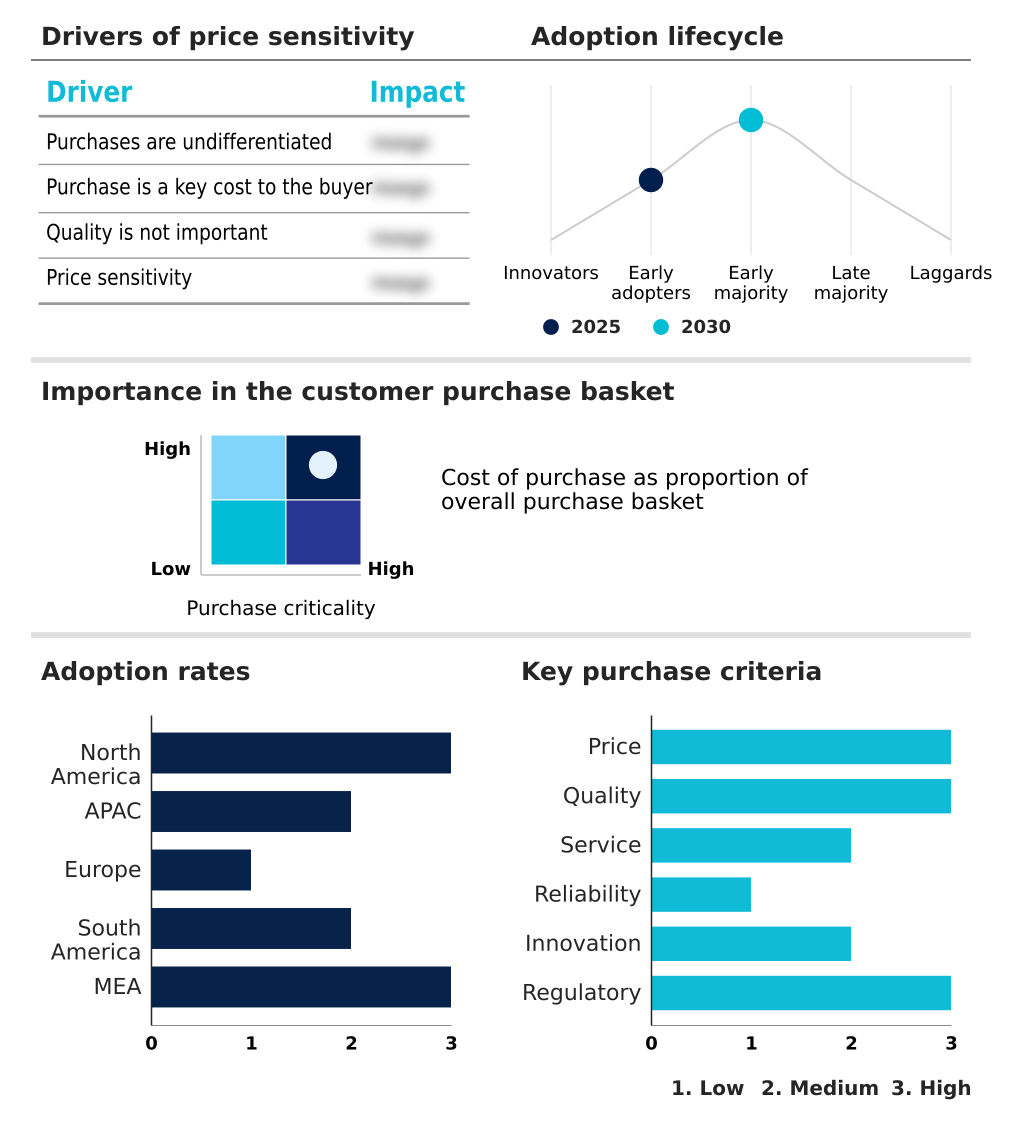
Customer Landscape of Gas Masks Industry
Competitive Landscape
Companies are implementing various strategies, such as strategic alliances, gas masks market forecast, partnerships, mergers and acquisitions, geographical expansion, and product/service launches, to enhance their presence in the industry.
3M Co. - Offerings include advanced full-facepiece reusable respirators designed for critical industrial and emergency response applications, emphasizing comprehensive protection.
The industry research and growth report includes detailed analyses of the competitive landscape of the market and information about key companies, including:
- 3M Co.
- AirBoss of America Corp.
- Avon Polymer Products Ltd.
- CleanSpace Technology Pty Ltd.
- Delta Plus Group SA
- Dragerwerk AG and Co. KGaA
- Duram Mask
- Gentex Corp.
- GVS S.p.A.
- Honeywell International Inc.
- ILC Dover LP
- JSP Ltd.
- Koken Ltd.
- Moldex Metric
- MSA Safety Inc.
- RSG Safety BV
- Shalon Chemical Industries
- SHIGEMATSU WORKS CO. LTD.
- Sundstrom Safety AB
- Trelleborg AB
Qualitative and quantitative analysis of companies has been conducted to help clients understand the wider business environment as well as the strengths and weaknesses of key industry players. Data is qualitatively analyzed to categorize companies as pure play, category-focused, industry-focused, and diversified; it is quantitatively analyzed to categorize companies as dominant, leading, strong, tentative, and weak.
Recent Development and News in Gas masks market
- In February 2025, Thermo Fisher Scientific announced the acquisition of Solventum Corporation's Purification and Filtration business unit, a move aimed at bolstering its capabilities in advanced filtration solutions, including those utilized in gas masks.
- In June 2025, Avon Protection secured a significant delivery order from the United States Department of Defense, valued at approximately USD 18.3 million, for its M50 Joint Service General Purpose mask system.
- In August 2025, India's Ministry of Labour and Employment launched a comprehensive occupational health initiative, which included incentives for small and medium enterprises to adopt standardized personal protective equipment, thereby boosting sales of reusable gas masks.
- In January 2026, Chile's national mining authority enacted a major update to its safety regulations, imposing significantly higher fines for violations related to worker safety and mandating the use of advanced respiratory protection in high-risk mining operations.
Dive into Technavio’s robust research methodology, blending expert interviews, extensive data synthesis, and validated models for unparalleled Gas Masks Market insights. See full methodology.
| Market Scope | |
|---|---|
| Page number | 304 |
| Base year | 2025 |
| Historic period | 2020-2024 |
| Forecast period | 2026-2030 |
| Growth momentum & CAGR | Accelerate at a CAGR of 10.9% |
| Market growth 2026-2030 | USD 6755.0 million |
| Market structure | Fragmented |
| YoY growth 2025-2026(%) | 9.8% |
| Key countries | US, Canada, Mexico, China, Japan, India, South Korea, Australia, Indonesia, Germany, UK, France, Italy, Spain, The Netherlands, Brazil, Argentina, Chile, Saudi Arabia, UAE, South Africa, Israel and Turkey |
| Competitive landscape | Leading Companies, Market Positioning of Companies, Competitive Strategies, and Industry Risks |
Research Analyst Overview
- The gas masks market is evolving through advanced technological integration, where boardroom decisions on R&D investment are pivotal. The push for a superior air-purifying respirator is leading to the adoption of novel technologies beyond traditional activated carbon filters. A modern full-facepiece respirator now often features panoramic visors and may incorporate a heads-up display.
- We see a divergence in demand between powered air-purifying respirators and the self-contained breathing apparatus for different risk scenarios, from industrial safety to cbrn protection. The development of advanced filtration materials like metal-organic frameworks is critical for providing multi-threat protection against chemical warfare agents and toxic industrial chemicals.
- For high-risk sectors dealing with hydrogen sulfide exposure, the emergency escape breathing apparatus and supplied-air systems are essential. Adherence to niosh certification and european norms is non-negotiable for market access. The focus on reducing breathing resistance is a key performance metric, with some advanced filter canister designs improving user stamina by over 15% during prolonged use.
- Innovations in the elastomeric half-mask, physiological monitoring sensors, and overall personal protective equipment design underscore the industry's commitment to enhancing occupational safety.
What are the Key Data Covered in this Gas Masks Market Research and Growth Report?
-
What is the expected growth of the Gas Masks Market between 2026 and 2030?
-
USD 6.76 billion, at a CAGR of 10.9%
-
-
What segmentation does the market report cover?
-
The report is segmented by Application (Chemical industry, Oil and gas, Mining industry, Healthcare, and Others), Type (Disposable respirators, Powered air purifying respirators, Supplied air respirators, and Self contained breathing apparatus), Product Type (Full-facepiece gas masks, and Half-facepiece gas masks) and Geography (North America, APAC, Europe, South America, Middle East and Africa)
-
-
Which regions are analyzed in the report?
-
North America, APAC, Europe, South America and Middle East and Africa
-
-
What are the key growth drivers and market challenges?
-
Stringent occupational safety mandates and heightened corporate responsibility, High cost of ownership and limited component lifespan
-
-
Who are the major players in the Gas Masks Market?
-
3M Co., AirBoss of America Corp., Avon Polymer Products Ltd., CleanSpace Technology Pty Ltd., Delta Plus Group SA, Dragerwerk AG and Co. KGaA, Duram Mask, Gentex Corp., GVS S.p.A., Honeywell International Inc., ILC Dover LP, JSP Ltd., Koken Ltd., Moldex Metric, MSA Safety Inc., RSG Safety BV, Shalon Chemical Industries, SHIGEMATSU WORKS CO. LTD., Sundstrom Safety AB and Trelleborg AB
-
Market Research Insights
- The market dynamics are shaped by a proactive safety posture, where organizations increasingly invest in certified respiratory protection to adhere to occupational health standards. Geopolitical instability drives defense sector modernization and demand for advanced respiratory protective equipment, while accelerated industrialization and environmental pollution concerns expand the civilian consumer segment.
- Managing the total cost of ownership and component lifespan requires robust supply chain management. A key challenge is overcoming ergonomic limitations and ensuring user training proficiency to maintain facial seal integrity, as improper use can negate protection. For instance, adoption of systems with user-centric design principles can increase compliance by up to 25% over legacy models.
- Firms are integrating smart system capabilities and advanced filtration materials to meet the complex regulatory compliance framework, with some systems improving response coordination during industrial accidents or public health crises by 30%.
We can help! Our analysts can customize this gas masks market research report to meet your requirements.
 RIA -
RIA - 
